Specs are compiled from manufacturer listings and verified buyer reviews and can change over time — please confirm the key details on the product page before buying.
Your boiler needs make-up water to replace what escapes as steam or leaks, and the valve that handles that job is the difference between a quiet system and a flooded basement. The short answer: match the feeder to your system type first — steam boilers need an electronic feeder with a feed delay, while hot-water loops take a mechanical fill valve with a built-in pressure regulator. Get that match wrong and even a premium brand will flood your basement. This guide walks through nine feeders and fill valves that are actually built for boiler duty, explains what each number on the spec sheet means in plain terms, and points you to the one that fits your setup.
This guide is built by comparing the manufacturers’ published specifications and the patterns across verified customer reviews, so you get each pick’s real strengths and trade-offs instead of marketing spin.
You will see how inlet size, pressure rating, and feed-delay settings change what a feeder does for your system day to day. The right water feeder for boiler keeps your system topped up without ever overfilling it.
Top Picks

How To Choose The Best Water Feeder for Boiler
The first decision is not brand or budget — it is system type. Steam boilers lose water as vapor and need a feeder that adds measured amounts on command. Hot-water (hydronic) loops lose very little water and need a valve that simply holds a set pressure. Mixing those two up is the most common and most expensive mistake in this category.
Steam boiler or hot-water loop
A steam system runs a low-water cut-off (a safety switch that senses water level) and needs an electronic feeder wired to it. Those feeders add water in timed doses so the boiler never gets slammed with a full cold fill. A hot-water loop uses a mechanical fill valve with a pressure regulator built in, and it tops the system up automatically whenever pressure dips below the set point.
Feed delay is your flood insurance
On electronic feeders, a programmable feed delay (a waiting period between water additions) is the feature that separates a safe install from a risky one. Without a delay, a feeder can keep dumping water into a boiler that is already full because of a stuck valve or a false low-water signal. Look for an adjustable delay range and a feed counter that logs how much water has gone in.
Pressure rating and inlet size
Every valve here uses a 1/2-inch inlet, which is the standard residential boiler feed connection. What changes is the maximum operating pressure — the ceiling the valve body is rated to handle. Match that number to your system’s relief valve setting, not above it. A 200 psi body on a 30 psi steam loop buys no extra safety, only extra mass and cost.
Backflow protection and connection type
A backflow preventer stops boiler water from siphoning back into your drinking supply, and many jurisdictions require one on a boiler feed line. Some valves here have it built in; others do not, and you add it separately. Connection type matters just as much — push-to-connect fittings slip onto PEX, copper, CPVC, and PE-RT without solder, while threaded (NPT) fittings need tape, dope, and a wrench.
Side-by-Side Comparison
| Model | Best For | System Type | Max Pressure | Connection | Amazon |
|---|---|---|---|---|---|
| Watts 1156F 1/2 Feed Regulator★ Best Overall | Straightforward hot-water top-ups | Hydronic fill valve | — | 1/2 in. regulator | Amazon |
| SharkBite A89 PRV 25521ZEasiest Install | Solder-free installs on PEX and copper | Hydronic fill valve | 200 psi | 1/2 in. push-fit | Amazon |
| Caleffi 553542A AutoFillBest Pressure Gauge | Watching pressure at a glance | Hydronic fill valve | — | 1/2 in. MNPT | Amazon |
| Caleffi 553642A AutoFill | Gauge-equipped auto filling | Hydronic fill valve | — | 1/2 in. NPT | Amazon |
| Watts B1156F Bronze Regulator | High-capacity commercial loops | Hydronic fill valve | 100 psi | 1/2 in. NPT | Amazon |
| Taco 334-T3 | Replacing an older Taco unit | Steam feed valve | 30 psi | 1/2 in. threaded | Amazon |
| Watts B911S-M3 Auto Fill | Filling and purging in one pass | Hydronic fill valve | — | 1/2 in. union solder | Amazon |
| Hydrolevel VXT120 | Flood protection on steam systems | Electronic steam feeder | — | 120V wired | Amazon |
| Hydrolevel 4567 VXT-24 | Steam systems with feed logging | Electronic steam feeder | — | 24V wired | Amazon |
Detailed Reviews
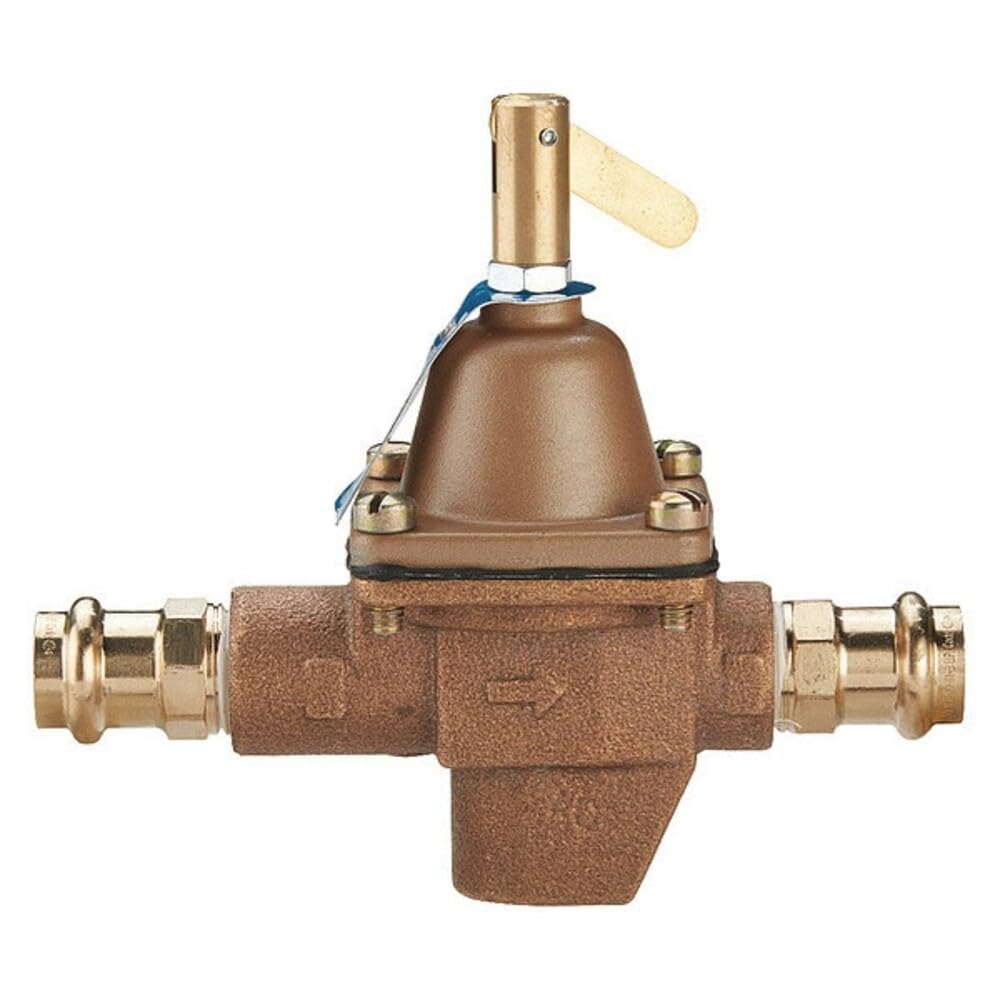
1. Watts Brass & Tubular 1156F 1/2 Boil Feed Regulator
Our pick — 4.5+★ from 100+ verified ratings; the strongest balance of quality and price.
The solid-brass default that most hot-water homes actually need.
For a hydronic loop that just needs steady make-up water, this Watts regulator is the straightforward answer. It is a fill regulator — a valve that holds your boiler and piping at a set pressure and refills automatically when the number drops. The brass body handles the job without fuss, and the 1/2-inch inlet matches the standard residential feed connection, so it drops into the same spot as the valve it replaces.
At 16 ounces it is light enough to hold in one hand while you thread it on, which matters when you are working in a tight mechanical closet. The included inlet nuts save you a trip for hardware. It is a one-piece unit and the fittings are the simple regulator type, so a homeowner with basic tools can swap it without calling anyone.
Here is the catch: this is a mechanical fill regulator, not an electronic steam feeder. If your boiler is a steam system with a low-water cut-off, this valve will not give you the timed feed delay that prevents flooding — you need the Hydrolevel units further down. On a hot-water loop, that mechanical simplicity is exactly what you want. It also holds 4.5+ stars across 100+ ratings, a strong record for a plumbing part.
Where it earns its keep
- Solid brass body with brass exterior finish built for wet mechanical spaces
- Standard 1/2-inch inlet fits the common residential boiler feed connection
- Inlet nuts included, so install doesn’t stall on missing hardware
- 16 ounces is easy to handle one-handed in a cramped closet
What to weigh first
- Mechanical regulator only — no timed feed delay for steam systems
- One piece per order, so a two-boiler setup needs two
Best for: hot-water hydronic systems that need a dependable, no-electronics fill regulator.
Look elsewhere if: you run a steam boiler with a low-water cut-off and need programmed feed doses.
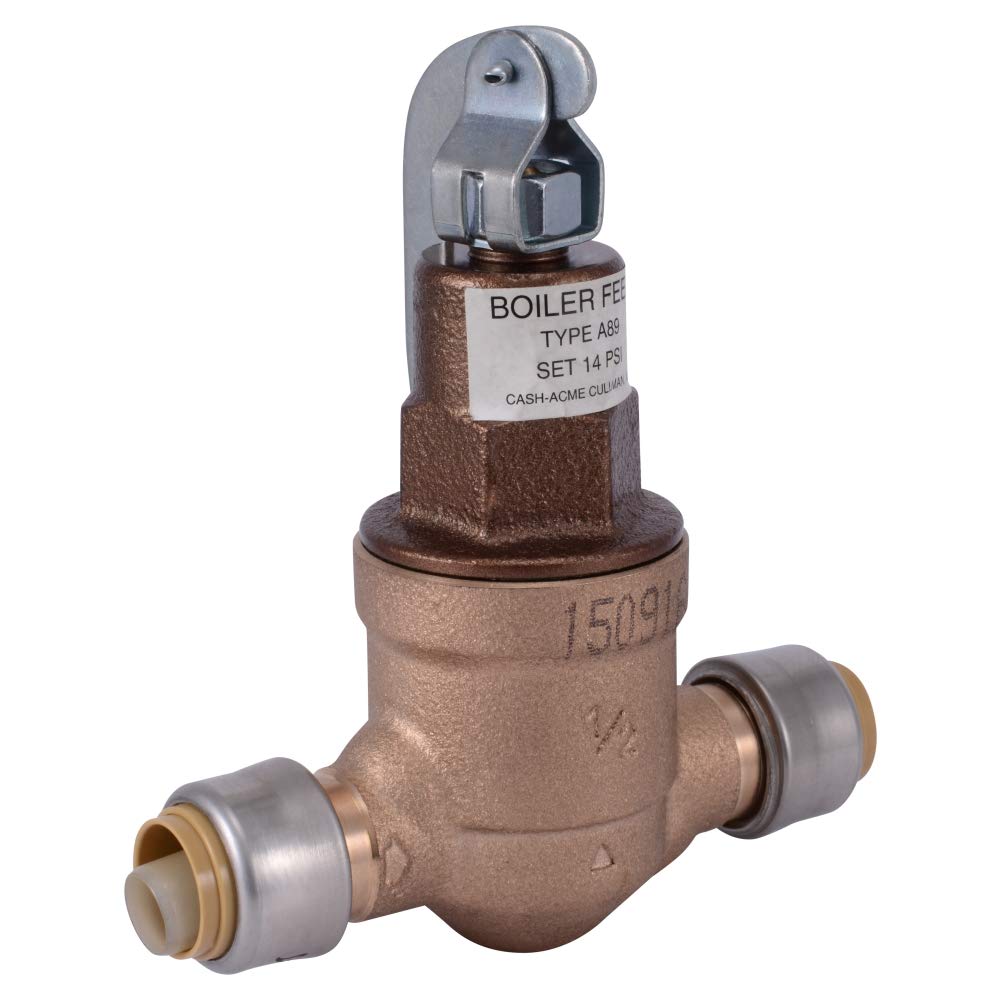
2. SharkBite 1/2 Inch A89 PRV Boiler Feed Valve
No torch, no solder, no glue — just push and it seals.
If you have ever sweated a fitting in a basement at midnight, this is the valve that ends that ritual. The SharkBite A89 uses a push-to-connect fitting, which means you cut the pipe, push the valve on, and it locks and seals with no tools, glue, crimping, or soldering. It accepts PEX, copper, CPVC, PE-RT, and HDPE, so it works whether your loop is old copper or newer plastic.
The pressure number tells the real story. This valve is rated to handle 200 psi, set to a standard of 14 psi, and adjustable up to 30 psi. Paired with a balanced piston that keeps outlet pressure steady even when inlet pressure swings, that means your boiler sees a stable number instead of a jolt every time the supply surges. At 1.1 pounds it is the lightest valve here — lighter than the Taco 334-T3 at 3.73 pounds — which makes it easy to line up on a pipe overhead.
The honest trade-off is scale. For hot-water feed duty in a home, 200 psi of headroom is far more than you will ever use, and the real-world install is where this valve wins or loses. The push-fit connection is also the part that demands a clean, square pipe cut — a ragged edge is the usual cause of a weep. Twenty owners have weighed in at 4.5+ stars, a thin but positive track record for a fitting that is still relatively young next to the brass veterans.
Why plumbers reach for it: the whole install is a pipe cut and a push, so a Saturday swap stays a Saturday swap.
The one thing to respect: a square, burr-free cut is not optional with push-fit — get that right and it seals clean.
Reach for this if: you want to install it yourself and your loop is PEX, copper, CPVC, PE-RT, or HDPE.
Pass it by if: your pipes are ragged or you need a threaded NPT body to match existing iron fittings.
3. Caleffi 553542A AutoFill Automatic Boiler Fill Valve
A fill valve that shows you the pressure instead of making you guess.
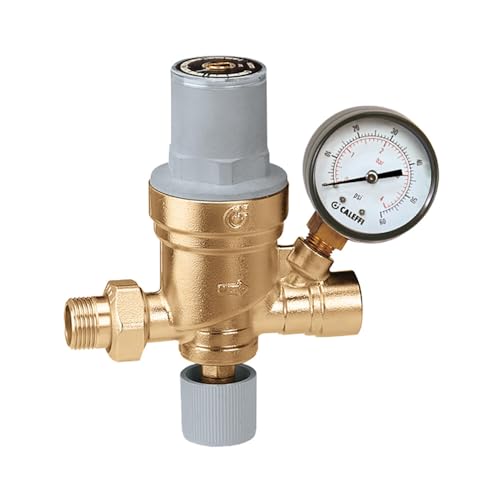
What sets the Caleffi 553542A apart is the pressure indicator — a dial on the valve that lets you read system pressure without hunting for a separate gauge on the boiler. It fills to a set pressure and then stops, holding your loop at a stable value. That behavior is the whole point of an auto-fill: water goes in until the number is right, then it shuts off.
The body is a mix of brass and stainless steel, and the inlet is 1/2-inch MNPT — male national pipe tapered, the standard threaded fitting that seals against a matching female port. This is slightly wider and shorter than the Watts B911S-M3, which measures 9.6 by 0.1 by 10.8 inches against this valve’s 2 by 4.81 by 5.94 inches, so it tucks into tighter spaces. At 748 grams it has enough mass to feel substantial in hand.
One thing to know before you buy: this is a hot-water auto-fill, not a steam feeder, and there is no feed delay on it. After install, check the dial against your boiler’s target pressure before you walk away. Owners have handed it 4.5+ stars across a small pool of ratings, the highest score among the mechanical valves here, which fits its reputation as a precise piece.
Its quiet advantage: pressure you can see at a glance — no separate gauge, no guessing whether the loop is topped up correctly.
Where it sits in the lineup: It earns the highest owner score of any mechanical fill here at 4.7 stars, edging past the 4.6 of the Watts 1156F at the top.
Suits you if: you want an auto-fill that stops at a set pressure and shows you the reading right on the valve.
Think twice if: your system is steam — this fills hot-water loops and has no delay timer.
4. Caleffi 553642A AutoFill Automatic Boiler Filling Valve
The Caleffi sibling that ships with its own gauge in the box.
Think of this as the 553542A’s heavier-set relative. The 553642A is an automatic boiler filling valve with a gauge included, so you get the fill-and-hold behavior plus a pressure readout as part of the package rather than a separate add-on. The gauge is the reason most buyers pick this one over the plain AutoFill — it takes one more decision off your plate.
The body is brass with a 1/2-inch national pipe tapered inlet, the same threaded standard as the 553542A, so it mates to the same female ports. It weighs 1.8 pounds, enough to feel solid and to stay put on a vertical pipe run. The package is one valve and one gauge, shipped as a single unit.
What you give up is a steam system’s flexibility. This is a hot-water fill valve, so if your boiler is a steam unit you need the electronic feeders instead. The other consideration is that the gauge adds bulk — a slightly bigger footprint than the plain valve, which matters only if your mechanical closet is already crowded. Buyers have pushed this one to 4.7 stars, matching its sibling and sitting above the Watts B911S-M3 at 4.5.
The case for the gauge model
- Gauge included in the package — pressure visible without a separate purchase
- Brass body with 1/2-inch NPT inlet matches standard threaded connections
- 1.8 pounds holds position on a vertical pipe run
- Automatic fill stops at your set pressure, then holds it
Before you commit
- Hot-water fill valve only — no timed feed delay for steam boilers
- Gauge adds footprint, which can matter in a tight mechanical closet
Good match for: hydronic owners who want the gauge bundled so there’s nothing extra to order.
Not the one if: your loop is steam-driven or you have barely any room around the feed line.
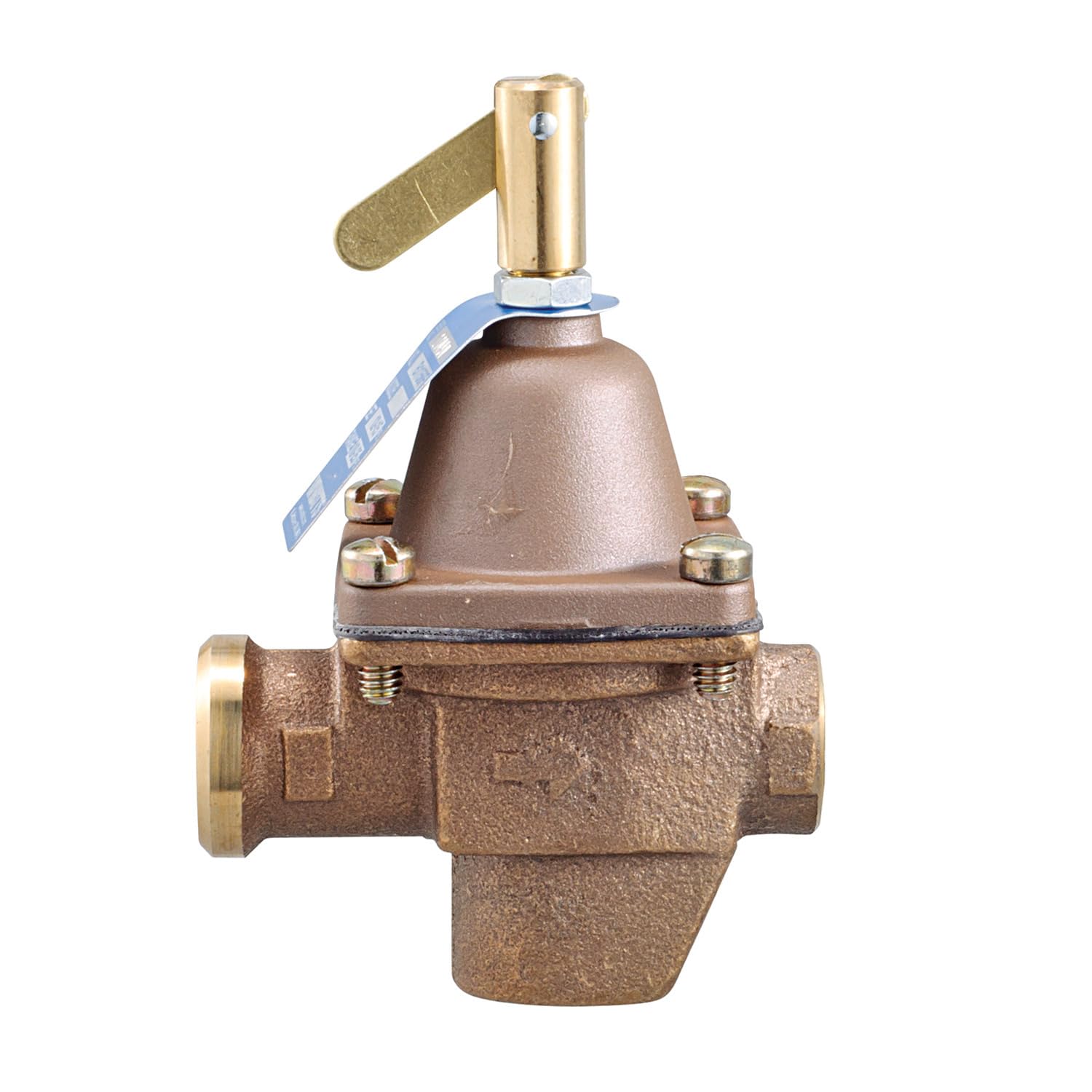
5. Watts B1156F Bronze Water Feed Regulator 1/2″ NPT
The highest-scoring valve on this list, and it earns it with bronze.
Bronze is the material story here, and it is a real one. This regulator is made from bronze rather than brass, rated to 100 psi (6.9 bar) at a maximum temperature of 212 F (100 C). That combination matters because it is built for commercial and residential hydronic systems that fill the boiler and piping and hold pressure at all times. Bronze resists the corrosion and pitting that shorten the life of lesser bodies in constant-contact water duty.
The included check valve and purge lever are the practical wins. The purge lever lets you clear air and dirt from the line during fill, and the stainless steel strainer traps debris before it reaches the valve seat. The 1/2-inch NPT inlet is the standard threaded connection. At 4.5+ stars it holds the top score on this list, and that gap is meaningful — it sits above the Taco 334-T3 and both Caleffi units on score alone.
The trade-off is that this is a high-capacity regulator built for larger systems, and a small residential loop may find it more valve than needed. It is also a threaded NPT body, so push-fit fans will be reaching for wrenches and tape. Neither is a flaw — just a fit question. If you run a commercial or bigger residential loop, the extra capacity is exactly what you want.
What the bronze gets you: a 100 psi rating at up to 212 F in a body made to outlast brass in constant water contact.
The fit question: it is high-capacity for large systems, so a tiny home loop gets more regulator than it will ever use.
Your pick if: you run a commercial or larger hydronic system and want the top-scored, bronze-bodied regulator with a purge lever.
Skip the upgrade if: you have a small home loop and would rather install a push-fit valve than thread one.
6. Taco 334-T3 Boiler Feed Valve

The drop-in replacement for the Taco unit already on your wall.
If your boiler has an older Taco feed valve that has stopped holding pressure, this is the direct swap. The 334-T3 is a pressure-reducing feed valve with a backflow preventer built in, so it handles both jobs in one body. Buyers single out build quality as this valve’s strongest point. The thread connection and 1/2-inch inlet mean it mates to the same piping as the unit it replaces.
The pressure ceiling is the number to understand here. This valve is rated to a maximum operating pressure of 30 psi, well below the 200 psi of the SharkBite A89. That is not a weakness for boiler feed duty — the valve is designed to reduce incoming pressure down to a house-set level, and 30 psi is a sensible ceiling for a low-pressure steam or hot-water system. It is also heavy at 3.73 pounds, more than triple the SharkBite’s 1.1 pounds, which speaks to the mass of its internals.
The honest note is that 30 psi is not the valve for a high-pressure loop, and it is a heavier body to wrestle onto a threaded fitting. It also is not an electronic feeder, so steam systems with a low-water cut-off still need a control that doses water on a timer. For a straight replacement of a Taco feed valve, though, the fit and function line up cleanly at 4.5+ stars.
Why it wins people over: quality is the aspect buyers praise most, and backflow protection is built into the body rather than bolted on.
The number that matters: a 30 psi maximum operating ceiling — right for low-pressure boiler feed, wrong for a high-pressure loop.
Pick it when: you are swapping out an old Taco feed valve and want the same threaded fit with backflow protection included.
Not for you if: you need a feeder with a timed delay or you run a loop that demands more than 30 psi.
7. Watts Automatic Fill Valve for Hot Water Boiler, B911S-M3
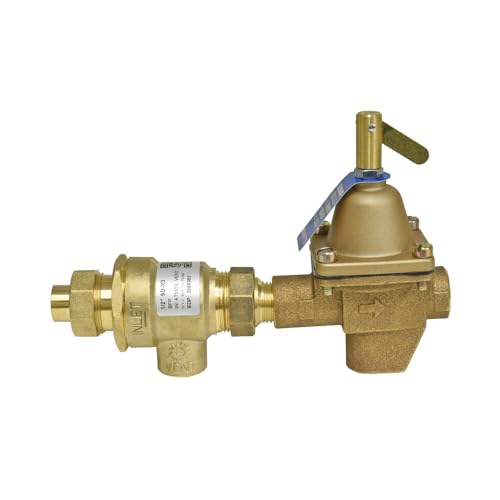
Fill and purge in a single pass, with the backflow preventer built in.
This is the combination valve: a feed water pressure regulator and a backflow preventer in one bronze body. The backflow preventer stops boiler water from siphoning back into your drinking supply, and having it integrated here saves you a separate fitting and a joint in the line. The all-bronze construction and 1/2-inch union solder inlet with NPT threaded outlet make it a solid fit for a hot-water boiler feed line, and the quick system filling and purging is the practical benefit during a fresh fill.
At 2.5 pounds it has real substance, and the body is built for hydronic feed lines specifically. The union solder inlet is the detail worth flagging: this one wants a soldered joint on the inlet side, which is a job for a torch and some experience — not a push-on-and-go fitting. The Watts warranty backs the body against defects in material and workmanship under normal usage for a period of one year from the original shipment date.
Buyers consistently report it drops straight in as a direct replacement. This valve drops straight into place as a direct replacement and works well, which is why it holds 4.5+ stars with the largest owner base among the mechanical valves. The catch is the union solder inlet (a fitting you join with a torch): if you are a committed push-fit person, the SharkBite A89 above is the easier path. This valve asks more skill in exchange for the integrated backflow protection (a built-in guard that stops dirty water from flowing back into your supply) and the bronze body.
Why it lands in so many basements
- Feed regulator and backflow preventer in one body — one less fitting to add
- All-bronze construction built for hydronic feed lines
- Quick filling and purging during a fresh system fill
- One-year warranty against material and workmanship defects
The fine print on install
- Union solder inlet needs a torch and some soldering experience
- 2.5 pounds on a vertical run wants solid pipe support
Right choice for: hot-water loops where you want fill, purge, and backflow protection in one bronze valve.
Better skipped if: you cannot solder or want a push-to-connect install instead.
8. Hydrolevel VXT120 Automatic Steam Boiler Water Feeder, 120V

The electronic feeder that thinks before it floods.
Steam boilers need a feeder that adds water in measured doses, and the VXT120 is built exactly for that job. It works with all probe and float type low-water cut-offs, so it is a universal fit across most steam systems. The feature that earns its place at the top of the steam category is the programmable feed delay — a waiting period between water additions that helps prevent flooded boilers. That single setting is the difference between a boiler that tops up carefully and one that drowns itself after a false low-water signal.
Lockout flood protection backs that up, and an on-board diagnostics LED shows key control functions so you can see what the feeder is doing without pulling out a meter. This is a 120V wired unit, which is the common supply voltage for residential steam controls. Black housing, single count, one feeder per order.
The thing to know is that it runs at 4.0+ stars — the lowest score on this list — which tells you it has had some rough edges in real installs. It is also a wired control, so it needs a 120V feed and a competent hand to wire it to the low-water cut-off. For a steam system where flood protection is the priority, though, the delay and lockout features do the job the mechanical valves cannot. If feed logging matters to you, the 24V sibling below adds a digital counter.
Where it protects you: programmable feed delay plus lockout flood protection — the two features that stop a steam boiler from overfilling.
What to plan for: a 120V feed and skilled wiring to the low-water cut-off, plus a lower score than the mechanical picks.
Go here if: you run a steam boiler and flood protection is the whole reason you’re buying a feeder.
Hold off if: you have no 120V supply at the boiler or you would rather avoid wiring a control.
9. Hydrolevel 4567 Water Feeder 24 VAC for Steam Boilers

Keeps a running tally of every drop it feeds your steam boiler.
For a steam system, knowing how much water the feeder has added is diagnostic gold — it tells you whether the boiler is losing water normally or whether a leak is hiding somewhere. This Hydrolevel 4567 has a digital feed counter that keeps that tally for you. It also offers programmable feed delay settings from 30 seconds to 10 minutes, a wider adjustable window than the VXT120’s delay. Universal compatibility means it works with the common steam control setups, and it is built with leakproof and rust-resistant features.
It runs on 24 VAC rather than 120V, which matches low-voltage steam control circuits. The body is brass and stainless steel, and it holds a capacity of 5 gallons. At 2.4 pounds it is a touch lighter than the VXT120’s setup and mounts cleanly. It is the most expensive mechanical-style feeder here, which reflects the counter and the wider delay range rather than any marketing gloss.
The catch is 24 VAC — if your system supplies 120V to the control, you need a transformer or a different feeder. It is also an electronic control, so wiring it correctly to the low-water cut-off is a job for someone comfortable with low-voltage circuits. Buyers have given it 4.5+ stars, a stronger score than the 120V VXT120 at 4.0+, which fits its more tunable delay and the feed counter.
The number that sells it: a delay adjustable from 30 seconds to 10 minutes, plus a digital counter logging every feed.
What to confirm first: a 24 VAC control supply at the boiler — this feeder does not run on 120V.
For you if: your steam boiler runs a 24 VAC control circuit and you want feed logging plus a wide delay window.
Wrong tool if: your control runs at 120V or you want a mechanical valve with no wiring at all.
Know the Specs
Maximum operating pressure
This is the ceiling the valve body is rated to handle, measured in psi (pounds per square inch, the standard pressure unit in plumbing). It is not a target — it is a safety limit. A valve rated to 200 psi, like the SharkBite A89, has far more headroom than a 30 psi body like the Taco 334-T3. Match the rating to your system’s relief valve setting rather than picking the biggest number; a low-pressure steam feed does not need a high-pressure body.
Feed delay
On electronic steam feeders, the feed delay is a programmable waiting period between water additions, measured in seconds or minutes. It prevents the feeder from dumping water into a boiler that is already full because of a stuck valve or a false low-water signal. The Hydrolevel 4567 lets you adjust the delay from 30 seconds to 10 minutes, while the VXT120 offers a programmable delay of its own. Wider delay windows give you finer control over how gently the boiler is topped up.
Inlet size and connection type
Every valve here uses a 1/2-inch inlet, the standard residential boiler feed size, so the fit is the same across the board. What changes is how it connects: push-fit (slips onto PEX, copper, CPVC, PE-RT, or HDPE pipe), NPT threaded (seals against a matching female port with tape or dope), union solder (needs a torch), or a wired electrical connection for electronic feeders. Pick the connection that matches the pipe you already have, so you avoid adapters and extra joints.
Backflow preventer
A backflow preventer stops boiler water from siphoning back into your drinking supply — a real risk when supply pressure drops. Some valves here include one in the body, like the Taco 334-T3 and Watts B911S-M3, while others leave it to a separate fitting. Many jurisdictions require backflow protection on a boiler feed line, so check your local code before you buy a valve without it.
Common Questions
How do I know if my boiler needs a steam feeder or a hot-water fill valve?
Will a 1/2-inch feeder fit my existing piping?
What does a feed delay actually prevent?
Do I need a backflow preventer on a boiler feed line?
Can I install a boiler feed valve myself, or do I need a plumber?
What pressure should my boiler feed valve be set to?
Is a bronze valve better than a brass valve for boiler feed?
What does a digital feed counter on a steam feeder tell me?
Do electronic steam feeders run on 120V or 24V?
Why does the Taco 334-T3 top out at 30 psi while others handle 200 psi?
The Bottom Line
For most hot-water homes, the water feeder for boiler winner is the Watts 1156F 1/2 Feed Regulator because it is a solid-brass, standard 1/2-inch fill valve that handles steady make-up water with nothing electronic to fail. If you want the highest-scoring pick with a bronze body and a purge lever, reach for the Watts B1156F at 4.5+ stars. And if your boiler is a steam system where flood protection matters most, the Hydrolevel 4567 gives you feed logging and a 30-second-to-10-minute delay — the right tool for a steam system. One honest nudge: the steam feeders are the ones buyers most often replace in the wrong size, so double-check your control voltage before you order.
How we choose
We do not accept paid placement. Every pick is matched to a real buyer and a real use-case; we do not hands-on test units.
Sources
Specifications: manufacturer listings and product documentation. Review insights: verified customer reviews, as of November 2026. Pricing: not shown on this page (it changes often); check the current price via the retailer link.
As an Amazon Associate, Tactical Gear Guy earns from qualifying purchases. This does not affect which products we feature.