Specs are compiled from manufacturer listings and verified buyer reviews and can change over time — please confirm the key details on the product page before buying.
You want music on the run, but you also want to hear the car behind you. That is the whole problem with running headphones, and it is why so many pairs get bought, used twice, and dropped in a drawer. The fix is simple: pick a pair that leaves your ear canal open, hooks over the ear through sweat, and outlasts your longest run. Below are nine pairs that actually do that, sorted by what each one is genuinely good at.
This guide is built by comparing the manufacturers’ published specifications and the patterns across verified customer reviews, so you get each pick’s real strengths and trade-offs instead of marketing spin.
Ear-hook fit, IP rating, and playtime per charge decide whether a pair survives your training block, so check those three first. Every pick here was judged on those three specs, so you can find the right wireless sports headphones for running without wasting a season finding out.
Top Picks


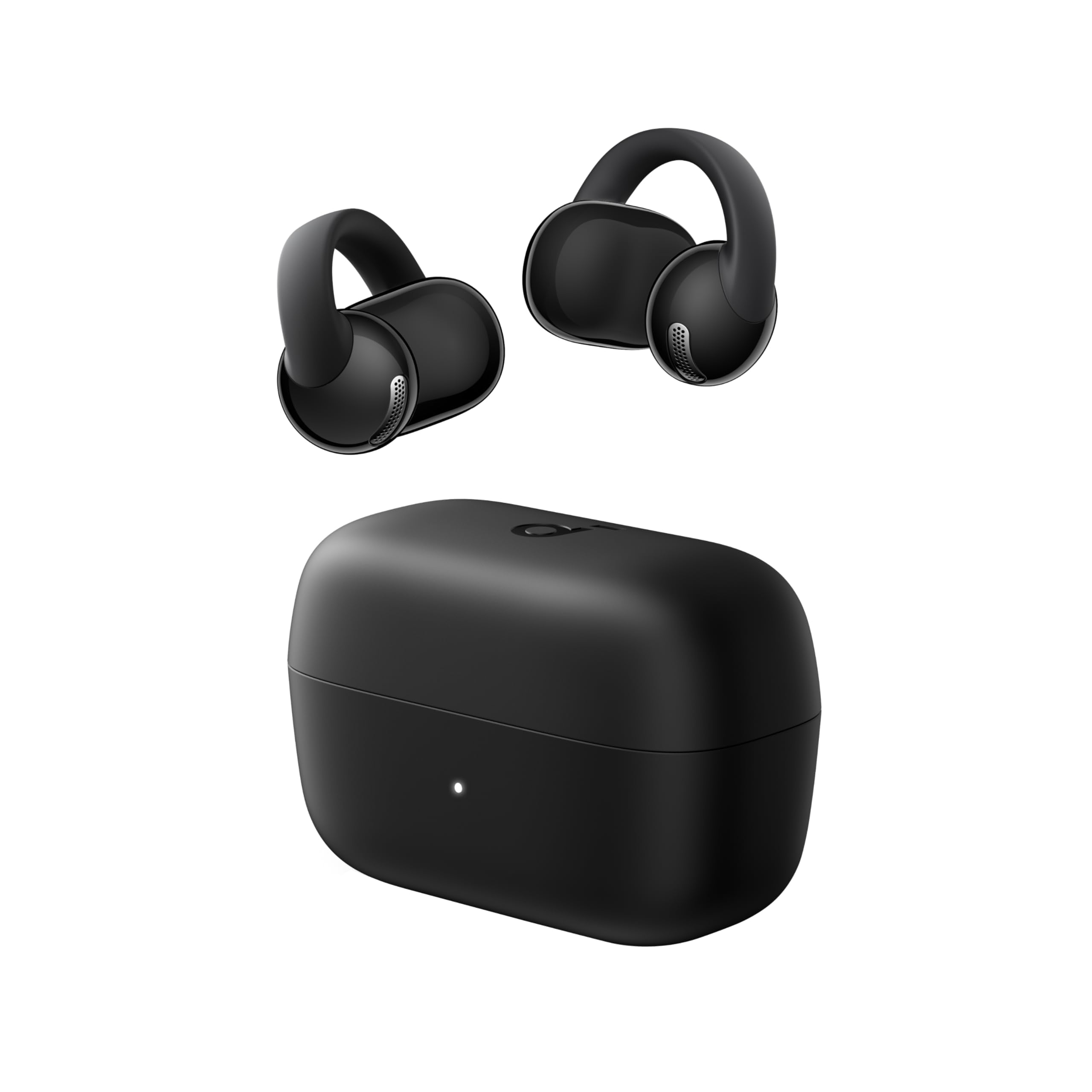
How To Choose The Best Wireless Sports Headphones for Running
Most runners buy sealed in-ears first. They grab a pair of sealed in-ears for the bass, then find out on the first busy road that they cannot hear a cyclist coming. Choosing well starts with one question: do you want your ears open to the world, or sealed off from it? Your answer to that decides if you want bone conduction, an open-ear clip, or a sealed in-ear.
Open-ear, bone conduction, or sealed in-ear
Bone conduction sends sound through your cheekbones and leaves the ear canal completely uncovered, which is why you keep full awareness of traffic and conversation. Open-ear clip designs sit over or around the ear opening rather than inside it, and they deliver more bass than bone conduction while still letting outside sound in. Sealed in-ears give you the most isolation and the deepest bass, but they cut you off from the road — a real consideration if you run near traffic.
The IP rating is the real durability spec
An IP rating is a two-digit score for dust and water protection. The first digit covers dust, the second covers water — so IPX5 means sweat and rain are fine, IP55 adds dust protection, IP67 survives a dunking, and IP68 is the toughest of the group. A “water-resistant” label with no IP number tells you nothing about sweat or rain, so check the digits. None of these pairs are built for swimming unless the listing says so.
How long it really runs
Battery figures come in two flavors: how long the earbuds last on one charge, and how many extra hours the case adds. A pair rated at 10 hours in the buds suits most marathon-training sessions, while a case with 30 or 40 extra hours means you can go a week or more without hunting for a cable. Look at both numbers rather than the big total alone.
Side-by-Side Comparison
| Model | Best For | Battery (Buds / Total) | Water Rating | Weight | Amazon |
|---|---|---|---|---|---|
| Bone Conduction Waterproof Headphones (MJOFFIN)★ Best Overall | Aware runners on a budget | 10 hours / — | IP55 | 22 g | Amazon |
| TOZO OpenEarRingBest Value | Glasses wearers who run long | 10 hours / 40 hours | IPX5 | 5.1 g per bud | Amazon |
| Soundcore C50iBiggest Bass | Big bass on a light clip | 7 hours / 28 hours | IP55 | — | Amazon |
| JBL Endurance Peak 3 (Renewed) | Sweatiest, toughest sessions | 10 hours / 50 hours | IP68 | — | Amazon |
| Soundcore Sport X20 | Gym noise to shut out | 12 hours / 48 hours | IP68 | — | Amazon |
| JBL Soundgear Clips | All-day wear with style | 8 hours / 32 hours | IP54 | — | Amazon |
| Google Pixel Buds 2a | Pixel owners who want ANC | 7 hours / — | Sweat and water resistant | — | Amazon |
| SHOKZ OpenRun | Proven bone conduction for runners | 8 hours / — | IP67 | — | Amazon |
| SHOKZ OpenFit 2+ | Long audio sessions with case | 11 hours / 48 hours | IP55 | 9.4 g | Amazon |
Detailed Reviews
1. Bone Conduction Waterproof Headphones by MJOFFIN
Our pick — 4.5+★ from 350+ verified ratings; the strongest balance of quality and price.
Sound through your cheekbones, ears completely clear, at the lightest weight on this list.
If you run where cars and cyclists share the road, a bone conduction headset is the honest answer, and this one carries it at 22 g — the lightest full headset here. That weight is not a marketing figure. It means the flexible titanium frame rests on your cheekbones and temples without you noticing it five kilometres in, and the ears stay open to a passing car or a shouted warning.
Where it beats the clip-on crop is simplicity. There is no charging case to carry, no earbud to lose, and no question of whether it will still be perched correctly after a hard downhill. Bluetooth 6.0 (the current wireless standard, which pairs fast and holds its link) handles the connection, and the built-in mic with noise-reducing processing keeps calls usable on a treadmill or a quiet street. Ten hours of playtime covers a marathon training session with room to spare, and a full charge takes about 1.5 hours over the included Type-C cable.
Here is the trade you accept. IP55 means sweat and light splashes are fine, but this is not a swimming headphone, and heavy rain will eventually find it. Bone conduction also has less low-end thump than a sealed in-ear — the bass is present and balanced, not punchy. And at 10 hours it sits well below the 40 hours the TOZO OpenEarRing case delivers, so multi-day users will be charging more often than with a case-based pair.
Why runners gravitate to it
- 22 g on a flexible titanium frame — light enough to forget you have it on
- Ears stay fully open, so traffic and conversation come through clearly
- Bluetooth 6.0 for fast pairing and a stable link
- 10 hours of playtime and a 1.5-hour Type-C charge
- Hooks securely around the ear for stable wear on the move
Where it asks you to compromise
- IP55 handles sweat and light splashes but is not built for swimming or heavy rain
- Less bass punch than a sealed in-ear design
- No charging case, so total playtime stays at 10 hours per charge
Reach for this if: you want road awareness, a feather-light fit, and one of the cleanest value plays in open-ear audio.
Look elsewhere if: your runs are in heavy rain or you want the biggest bass on the block.
2. TOZO OpenEarRing Open Ear Earbuds
Forty hours of playback and a bud so light your glasses forget it is there.
Anyone who wears spectacles knows the pain of an earbud that fights the arm of your frames. This set is engineered around that exact problem: each bud weighs 5.1 g and clips to the ear rather than pressing into it, so the glasses arm and the earbud share space without pinching. The silicone is skin-friendly, and the clip-on shape keeps pressure off the ear canal entirely.
The headline number is the case. You get up to 10 hours in the buds and 30 more in the charging case, for 40 hours total — and that case has a digital display so you can see exactly how much is left before you head out. Compare that to the 10-hour no-case bone conduction pick: the TOZO gives you four times the total playtime, which matters if you travel or forget to charge. Bluetooth 5.4 (a newer wireless version built for a stable link) holds up to 20 metres, and latency is held to 60 milliseconds, so audio stays in step with video on a treadmill screen. Custom EQ runs through the TOZO app with 32 preset modes.
The honest catch is water. IPX5 covers sweat and rain, but with no dust digit and no submersion rating, it is the least protected pair in this group — fine for a rainy run, not for a downpour or a poolside session. The 10 mm dynamic driver also delivers solid but not enormous bass. Neither is a dealbreaker for most, but if you sweat hard or run in storms, a higher IP rating is worth chasing.
The case is the story: a 40-hour digital-display case turns charging into a weekly chore instead of a daily one, and the 5.1 g buds make glasses-wearers comfortable for the whole run.
Keep in mind: IPX5 is sweat-and-rain protection only — this is a fair-weather companion, not a wet-weather one.
Pick it for: long training blocks, glasses, and anyone tired of plugging in every night.
Think twice if: you need a submerged-proof rating or you are chasing deep bass.
3. Soundcore C50i by Anker Open Ear Earbuds
The open-ear clip that actually hits, thanks to a 12 mm driver and a titanium hook that bends to your ear.
Open-ear designs usually trade bass for awareness. The C50i narrows that gap with 12 mm dynamic drivers — the biggest driver here alongside the JBL Soundgear Clips — pushing up to 86 dB of output so your playlist still has weight on a hill repeat. The FlexiClip hook is memory titanium, which flexes to your ear shape and stays put through harder sessions.
What wins people over is the sound quality, and it is the feature the C50i is built around: open-ear awareness with punch behind it. The soundcore app adds HearID personalized tuning, EQ modes, and Spatial Audio, plus firmware updates over the air. Bluetooth 6.0 keeps the pairing fast, and AI-filtered mics clean up calls when you are out on a windy pavement. Playtime is 7 hours in the buds and 28 hours with the case, at IP55 for sweat and rain.
The trade-offs are real, though. Battery life and connectivity draw mixed feedback in the wider review pool, so if you value rock-solid pairing above all, this is not the safest bet. Charge time runs to 2 hours — longer than the 1.5 hours of the bone conduction top pick — and 7 hours per charge is on the shorter side for ultrarunners. Most runs will clear it comfortably; back-to-back long days will not.
The case for the C50i
- 12 mm drivers deliver the punch open-ear designs usually lack
- Memory titanium FlexiClip adapts to your ear and holds through workouts
- Bluetooth 6.0 and AI clear calls for outdoor running
- soundcore app with HearID, EQ, and Spatial Audio
What you give up
- 7 hours per charge falls short for ultra-distance days
- Connectivity draws mixed feedback in the broader review pool
- 2-hour charge time is the slowest on this list
Best match for: runners who want open-ear awareness but refuse to give up bass.
Better to skip if: you need all-day battery or the most dependable pairing available.
4. JBL Endurance Peak 3 (Renewed)
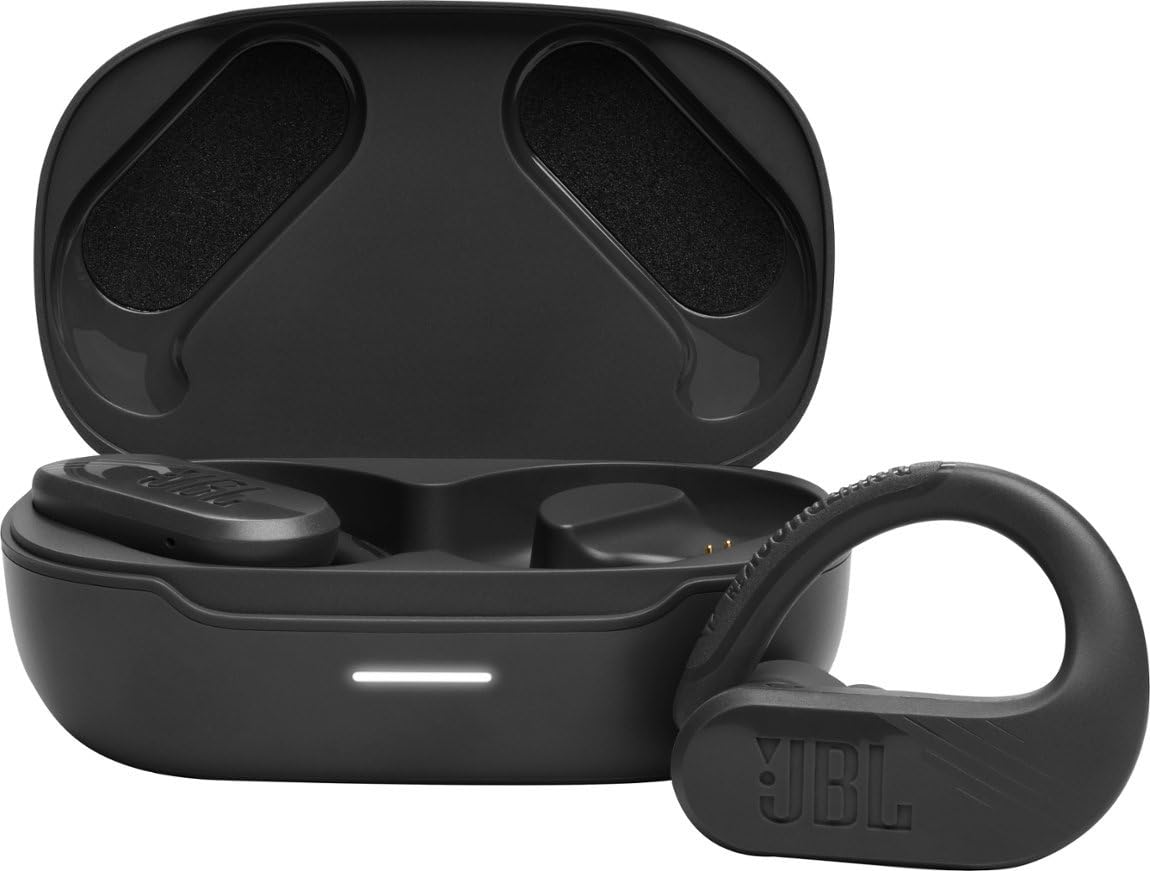
An IP68 rating that survives a rinse, and 50 total hours of playback for the sweat-soaked crowd.
If your workouts leave you drenched, the rating is the spec that matters. IP68 here is the toughest water and dust score in this group — the JBLs can endure 30 minutes at depths up to 1.5 metres in salt or fresh water, so rain, sweat, and a post-run rinse under the tap are all fine. Compare it to the IP55 on the bone conduction pick, and you get a clear step up in protection.
Battery is the other reason to shortlist it. You get 10 hours in the buds and 40 in the case for 50 total, and a speed charge delivers an hour of playtime in 10 minutes — the fastest top-up here. JBL Pure Bass from a 10 mm dynamic driver handles the workout playlist, while Ambient Aware and TalkThru let you hear your surroundings or hold a quick conversation without removing a bud. Four mics with beamforming handle calls.
Two things to note. This is a renewed unit, so it is a refurbished pair rather than a fresh one — an important detail if you prefer new stock. And connectivity draws mixed feedback, with pairing issues show up in the review pool and volume noted as a recurring gripe. Buy it for the IP68 toughness and 50 total hours; learn the pairing routine and it will reward you.
The water story: IP68 with 30 minutes at 1.5 metres means sweat, rain, and a rinse are all covered — a genuine step above the IP55 and IPX5 pairs in this list.
Fair warning: it is a renewed unit, and Bluetooth 5.0 pairing can be fussier than the newer chips elsewhere.
Worth it for: heavy sweaters, outdoor runners in wet weather, and anyone who wants a rinse-proof bud.
Not the one if: you want sealed new stock or the most plug-and-play pairing.
5. Soundcore Sport X20 by Anker

Twelve hours a charge, noise cancelling that mutes the gym, and ear hooks you can actually adjust.
Most runners want awareness, but the gym floor is the opposite problem. The Sport X20 solves it with adaptive noise cancelling to block out clanging weights and loud grunts, with a manual adjustment and a transparency mode to flip back when you need to hear. The adjustable ear hooks rotate up to 30 degrees and extend 4 mm, so you can dial in a fit that does not shift during a run.
The ear-hook adjustment is the detail that earns its place here. Alongside the ANC and the BassUp-tuned 11 mm drivers, the fit is the part that keeps the pair on through the hardest sessions. SweatGuard builds a sealed cavity around the internal parts to hold back water, sweat, and dust while the IP68 rating backs it up. Playtime is 12 hours in the buds and 48 hours with the case, and Bluetooth 5.2 handles the link. The soundcore app opens HearID and EQ tuning.
The honest note is battery and reliability — both draw mixed feedback in the wider reviews, and the 3-hour charge time is the longest here. Comfort and sound quality, though, are the aspects the pair is best known for, and thousands of owners back that up. If your sessions are half treadmill, half road, this is a smart hybrid.
Where it earns the label
- Adaptive noise cancelling for clanging gyms, with a transparency mode to switch back
- Adjustable hooks: 30 degrees rotation and 4 mm extension
- 12 hours in the buds, 48 with the case
- IP68 and SweatGuard sealing for heavy sweat
The parts to know about
- 3-hour charge time is the slowest on the list
- Battery and reliability draw mixed feedback in the wider pool
- ANC is less suited to road running than an open-ear design
Choose it when: your training lives in a loud gym and you want the noise gone.
Leave it for: open-road runners who need to hear traffic — ANC works against you there.
6. JBL Soundgear Clips

A copper clip built for all-day wear, with an angled speaker that keeps your music private.
Some running pairs live in your gym bag; these live on your ears. The memory-wire hook is covered in soft, flexible material and engineered to clip with just the right pressure — enough to stay stable on a run, light enough to forget about by the afternoon. JBL calls it the optimal clipping strength, and that balance is the whole appeal for anyone who wears headphones from warm-up to commute.
Privacy is the clever bit. JBL OpenSound technology angles the speaker to keep sound leakage minimal, and the SonicArc design adds bass while keeping your audio to yourself — the only person who hears your call is you. An 11 mm dynamic driver with Adaptive Bass Boost fills out the low end. Four beamforming mics per ear with an AI-trained algorithm handle calls on breezy days, and multi-point pairing switches between your phone and laptop without a fuss. Playtime is 8 hours in the buds and 32 hours total with the case.
The compromises are worth knowing. IP54 means rain and dust are handled but full submersion is not — a step below the IP67 and IP68 pairs here. Battery life draws mixed feedback in the review pool, and the 10-minute speed charge needs a USB-C cable that is not included. For wear-it-everywhere use with a stylish copper finish, though, it is hard to match.
The design payoff: angled speakers and SonicArc bass keep your music private while the soft memory-wire hook stays comfortable through a full day.
The fine print: no USB-C cable in the box for that 10-minute speed charge, and IP54 stops short of submersion protection.
A great fit for: runners who want one pair for the run and the rest of the day, in a standout copper finish.
Pass if: you need a submersion rating or a charging cable in the box.
7. Google Pixel Buds 2a

An 11 mm driver and a twist-to-adjust stabilizer — the sealed-ear pick for anyone deep in Pixel land.
This one goes against the open-ear grain of the list, and it makes no apologies. Google built the Buds 2a around an 11 mm dynamic speaker driver, Active Noise Cancellation powered by the Tensor A1 chip with Silent Seal 1.5, and a Transparency mode when you want the world back. For a run on a quiet trail, that sealed fit gives you bass and detail the open pairs cannot touch — a 5-band equalizer lets you tune the low end to taste.
The stabilizer is why it holds up for training. A twist in one direction secures the bud during workouts or commutes; a twist the other way relaxes the fit for all-day comfort. Clear Calling blocks wind and background chatter on calls, sweat and water resistance covers the basics, and fast charging is in the mix. Gemini integration and voice control round it out, and it is the natural match if your phone, watch, and tablet all run Pixel.
The trade you make is awareness and battery. Sealed in-ears cut you off from traffic — for a road runner, that is a real problem. Battery life sits at 7 hours per charge, on the lower end here, and the mic fit and comfort draw mixed feedback in the wider pool. If your runs are treadmill and trail with a safe shoulder, the sound quality is worth every minute of it.
Why it earns its spot
- 11 mm driver with ANC and Silent Seal 1.5 for detail and isolation
- Twist-to-adjust stabilizer secures the bud for workouts
- Transparency mode and Clear Calling for windy runs
- Deep Pixel ecosystem integration
The honest trade-offs
- Sealed fit blocks traffic awareness — the opposite of open-ear safety
- 7 hours per charge sits at the low end here
- Fit and comfort draw mixed feedback in the wider pool
Made for: Pixel owners who run quiet routes and want the ANC, sound quality, and Gemini integration to match their phone.
Better chosen elsewhere if: you run near traffic or need long battery between charges.
8. SHOKZ OpenRun Bone Conduction Headphones

The bone conduction pair that became a running default — featherweight wraparound, ears open, 8 hours a charge.
If you have run a race in the last few years, you have seen this shape. SHOKZ rebuilt the form around an 8th generation bone conduction driver that sends sound through your cheekbone straight to the inner ear, leaving your eardrums open to a car or a fellow runner. The wraparound frame is featherweight, the fit is a hook over the temple, and the result is the comfort owners describe without the ear pain that sealed buds can cause.
The protection is a genuine step above most here. IP67 handles sweat, rain, and a quick rinse, with a moisture detection alert to keep the charging safe — though SHOKZ is clear it is not built for swimming. Eight hours of playtime covers most training sessions, and a 10-minute quick charge adds 1.5 hours of battery, the fastest top-up in the group. Magnetic induction charging is used, and multipoint pairing connects two devices.
The fair caveat is reliability and battery in the wider review pool — some report charging or longevity issues over time. Treat the charging contacts with care and it holds up, and the sound and comfort keep it a favourite with runners. If you want a proven open-ear shape with strong awareness and a quick charge, this delivers.
The proven shape: 8th-gen bone conduction keeps your ears completely open, IP67 shrugs off sweat and rain, and a 10-minute charge buys 1.5 hours.
Worth knowing: it is not a swimming headphone, and charging reliability draws mixed feedback in the wider pool.
Pick this instead of: any sealed bud if road awareness is your priority and you want a name runners already trust.
Keep looking if: you want case-based battery or a swimming rating.
9. SHOKZ OpenFit 2+ Open-Ear Earbuds

A 17.3 mm bass driver, Dolby Audio, and 48 hours with the case — the open-ear pair for the long haul.
This is the top of the open-ear stack, and the driver number explains why: a 17.3 mm low-frequency driver delivers thumping bass, while an independent tweeter brings out crisp highs through the DualBoost setup and OpenBass 2.0 algorithm. Add Dolby Audio through the Shokz App and you get a 3D clarity the clip-on pairs cannot offer, all while DirectPitch 2.0 focuses sound toward you and keeps your surroundings audible.
For long sessions, the 9.4 g design with Ultra-Soft Silicone 2.0 cushions contact points, and the nickel-titanium ear hooks hold the fit. Playtime is the story: up to 11 hours in the buds and 48 hours with the case, plus a wireless charging case and a 10-minute quick charge for 2 hours of music. Four AI-enhanced mics handle calls, Multipoint Pairing connects two devices, and the Shokz App customizes button functions and EQ.
The trade is fit and price tier. Fit draws mixed feedback in the wider pool — some buyers report the buds do not stay in their ears — so try the fit before committing. That is a small slice of a very happy owner base. For long training blocks and all-day open-ear listening, the sound and battery are the reward.
The premium argument
- 17.3 mm low-frequency driver plus tweeter for real bass in open-ear form
- 11 hours in the buds, 48 with the wireless charging case
- Dolby Audio and OpenBass 2.0 via the Shokz App
- 9.4 g with Ultra-Soft Silicone 2.0 for long wear
The honest caveats
- Fit draws mixed feedback — some find they do not stay in place
- Top of the price tier, so it is a bigger commitment
- Not a swimming pair despite the IP55 rating
The upgrade pick for: open-ear fans who want bigger bass, Dolby Audio, and a case that lasts most of a week.
Not worth it if: you are unsure about fit or only need a simple run-and-charge pair.
Know the Specs
IP ratings explained
The two digits tell you how well a pair survives dust and water. The first covers dust, the second covers water — so IPX5 means sweat and rain are handled, IP55 adds dust protection, IP67 survives a dunking, and IP68 is the toughest here, built to endure 30 minutes at depths up to 1.5 metres. A pair with no IP number in the listing gives you no real answer on sweat or rain, so check the digits before you run in the wet.
Battery: buds versus case
The figure in the buds is what matters during a run, while the case adds refills on the go. A pair with 10 hours in the buds and 40 in the case gives you 50 total, whereas a case-free 10-hour pair means a charge after every session. Read both numbers — some listings lead with the total figure while the buds themselves last far less.
Driver size and bass
A bigger driver moves more air and generally delivers more low-end. The 12 mm drivers in the Soundcore C50i and JBL Soundgear Clips push harder bass than the 10 mm drivers in the TOZO and JBL Endurance Peak 3, and the 17.3 mm driver in the SHOKZ OpenFit 2+ is the largest here. Driver size says nothing about fit, but it is a fair clue to how much bass punch a pair will give you.
Bone conduction versus open-ear clips
Bone conduction sends sound through the cheekbone and leaves the ear fully uncovered, which is why it keeps traffic loud and your ears cool. Open-ear clips sit over the ear opening and usually give more bass but less raw awareness. If road safety is the priority, bone conduction is the safer shape; if bass matters more and you run on quiet routes, a clip design is the better fit.
Common Questions
Are bone conduction headphones safe to run with in traffic?
Can I wear these headphones with glasses?
What does IP55, IP67, or IP68 actually protect against?
Can I swim with running headphones?
How long do these batteries really last on a run?
Do open-ear headphones have good bass?
Will Bluetooth cut out on a run?
Should I get a case or a case-free pair?
Is a renewed pair like the JBL Endurance Peak 3 worth it?
Which pair charges fastest?
The Bottom Line
For most runners, the wireless sports headphones for running winner is the MJOFFIN Bone Conduction Headphones because it pairs 22 g of featherweight comfort with fully open ears and Bluetooth 6.0 — the safest, lightest way to run with audio. If you want a case that lasts most of a week, grab the TOZO OpenEarRing with its 40-hour digital-display case. And for a rinsable, sweat-proof pair with 50 total hours, the JBL Endurance Peak 3 is the one to reach for — just learn its pairing routine and you will be set.
How we choose
We do not accept paid placement. Every pick is matched to a real buyer and a real use-case; we do not hands-on test units.
Sources
Specifications: manufacturer listings and product documentation. Review insights: verified customer reviews, as of November 2026. Pricing: not shown on this page (it changes often); check the current price via the retailer link.
As an Amazon Associate, Tactical Gear Guy earns from qualifying purchases. This does not affect which products we feature.