Specs are compiled from manufacturer listings and verified buyer reviews and can change over time — please confirm the key details on the product page before buying.
You know the moment your ZeroWater pitcher starts tasting off, and the TDS meter (a small reader that counts dissolved solids in your water) climbs past the number it used to sit at. A replacement filter fixes that, but only the right one: these pitchers are picky about fit, and the wrong cartridge either leaks past the seal or quits in weeks. This guide narrows the field to three filters that genuinely work in ZeroWater hardware and tells you which one matches your pitcher, your wallet, and your patience.
This guide is built by comparing the manufacturers’ published specifications and the patterns across verified customer reviews, so you get each pick’s real strengths and trade-offs instead of marketing spin.
The official four-pack is the safest call for most households, since it is made by the company that builds the pitchers themselves and carries the certification paperwork. Our breakdown of the best zerowater replacement filters covers fit lists, filter life, and where aftermarket cartridges earn their place.
Top Picks

How To Choose A ZeroWater Replacement Filter
The first decision is not brand or price, it is your pitcher’s thread. ZeroWater pitchers and dispensers seat the cartridge on a bottom thread at the base, and newer top-loading systems use a different seating entirely. A filter that threads the wrong way will sit loose, and loose means unfiltered water sneaks past the seal.
Match the model number, not the picture
Every listing here publishes a compatible-model list, and those lists are long for a reason. ZeroWater has shipped dozens of pitcher and dispenser codes over the years, from ZP-010 to ZR-0810N to the ZBD-040 dispenser. Find your model code on the base or the box, then check it appears on the filter’s list before you commit.
Understand what the five stages are doing
ZeroWater’s cartridges use ion exchange (a resin bed that swaps dissolved mineral ions for cleaner ones) across five stages. The result is water with virtually no total dissolved solids, or TDS — the metals, minerals, salts, and ions a meter counts. Strip those minerals out and the water tastes flat and clean rather than minerally.
Plan around filter life, not months
ZeroWater rates its official filter at an estimated 15 gallons, and that figure moves with your water quality. Hard water or heavy use burns through a cartridge faster. The meter is your referee: when it reads 006, the filter is done, whether that took three weeks or three months.
Side-by-Side Comparison
| Model | Best For | Pack Count | Stated Filter Life | Certification | Amazon |
|---|---|---|---|---|---|
| ZeroWater Official 4-Pack★ Best Overall | Most households | 4 filters | 15 gallons each | IAPMO, ANSI | Amazon |
| DESENRUIS 4-Pack | Long-run value | 4 filters | 60 liters each | NSF | Amazon |
| APPLIANCEMATES 2-Pack | Trying an aftermarket filter | 2 filters | 1 month each | — | Amazon |
Detailed Reviews
1. ZeroWater Official Replacement Water Filter, 4-Pack
Our pick — 4.0+★ from 98,500+ verified ratings; the strongest balance of quality and price.
The cartridge built by the same company that built your pitcher, with the paperwork to back it.
This is the shortest route to clean water: four genuine ZeroWater five-stage filters, each rated for an estimated 15 gallons before the meter should read 006. That gallon figure is the honest headline here — it tells you roughly how long a cartridge lasts in normal water, and it is the number every aftermarket filter is quietly measured against.
What the cartridge actually does is swap out dissolved solids through ion exchange across five stages, which is why the water comes out with essentially nothing left in it — no mineral tang, no metallic edge. Fit is broad too, spanning a long list of ZeroWater codes including the ZP-010, ZD-018, ZJ-003, and ZBD-040 dispenser. One important line in the listing: these fit ZeroWater systems only, not the newer Culligan ZeroWater models.
ZeroWater estimates each filter replaces up to 110 single-use plastic bottles, so this four-pack covers roughly 440 bottles before you reorder. The trade-off: this is the genuine article and the reliability shows, but buyers report the cartridge can run dry sooner than the gallon estimate promises when your tap water is on the hard side. Treat the meter as your timer rather than the calendar. Against the aftermarket four-pack in this guide, the honest edge is certification and fit certainty — the ZeroWater set is the one whose model list you never have to second-guess.
Where it earns its keep
- IAPMO and ANSI certification covering PFOA/PFOS, lead, chromium, and mercury
- Estimated 15-gallon filter life per cartridge, four cartridges in the box
- Compatible with a very long list of ZeroWater pitcher and dispenser codes
- BPA-free plastic build and a stated 30-day manufacturer warranty
What to weigh first
- Made for ZeroWater systems only — not the newer Culligan ZeroWater pitchers
- Hard or heavily mineralized water shortens real-world filter life
The safe default: Buy this if you own a ZeroWater pitcher or dispenser and want a filter you never have to fit-check against a model list.
The catch to plan for: The 15-gallon estimate assumes decent water quality — test with your meter and buy the next pack before you hit 006.
2. DESENRUIS Water Filter Replacement, 4-Pack
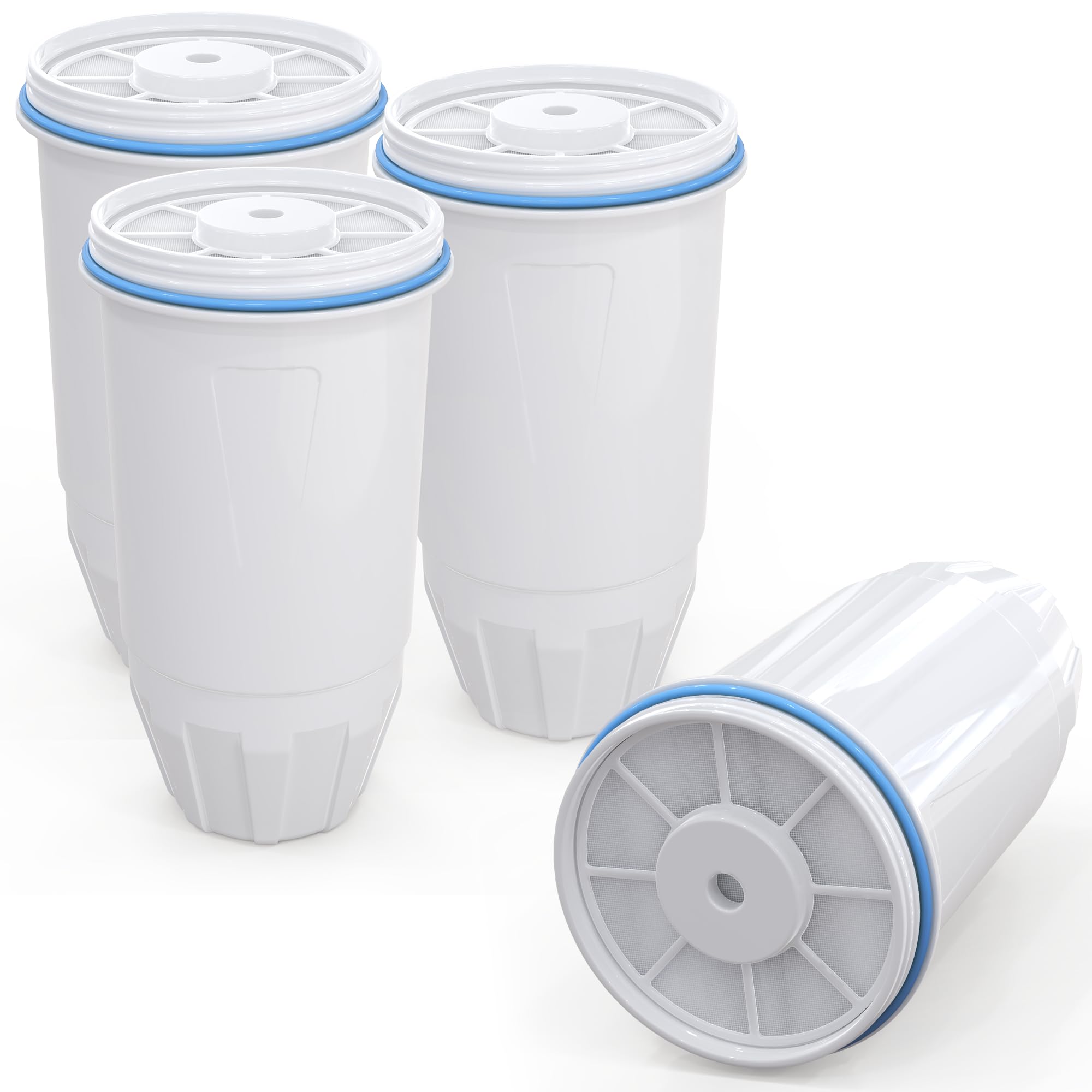
Four cartridges with a stated 60 liters apiece — the volume play for a household that drains pitchers fast.
The number that decides this one is capacity: each DESENRUIS filter is rated for 60 liters of water under normal conditions, and you get four of them in the box. That is a lot of refills between changes, and the brand also claims a gallon filters in 10 minutes, so you are not babysitting the pitcher while it works. The brand also claims up to 160 plastic bottles replaced per filter, the highest bottle figure stated by any filter in this group.
You get a five-layer filtration system using activated carbon (a material that traps impurities), and DESENRUIS claims 30% more carbon content than competing cartridges — a manufacturer figure, but a specific one. The external testing certification is listed as NSF (a recognized safety standard). Fit runs deep across the legacy ZeroWater range, from the ZR-001 and ZR-017 pitchers to the ZD-018 and ZBD-040-1 dispensers, and the brand is upfront that it makes aftermarket filters rather than originals. Against the APPLIANCEMATES two-pack, the numbers are decisive: DESENRUIS ships four filters to that set’s two, and its listed 60 liters per cartridge dwarfs the one-month life the rival lists — on paper, this is the longer runway.
The honest catch sits in owner experience. Feedback on water quality swings both ways, with some buyers finding it works exactly like the original and others reporting it does not perform the same. Compatibility draws the same split, and the most common misfire is buying it for a system it does not thread into. Before you buy, read your pitcher’s model code off the base and confirm it sits on this brand’s list — that is the single step that separates a happy purchase from a return.
Why the volume wins: A stated 60 liters per filter across four cartridges means far fewer reorders than a two-pack with a one-month life, and the 10-minute gallon time keeps the pitcher refilled without a long wait.
Where it asks for trust: This is an aftermarket cartridge, so the fit check is on you — confirm your exact model code appears in the compatibility list rather than assuming any ZeroWater pitcher will take it.
Reach for this if: You go through pitchers quickly and want the longest stated run per cartridge in this group, with four filters in hand.
Pass if: You want the certification paperwork of the original brand and would rather not verify your model code yourself.
3. APPLIANCEMATES Water Filter Replacement 2-Pack
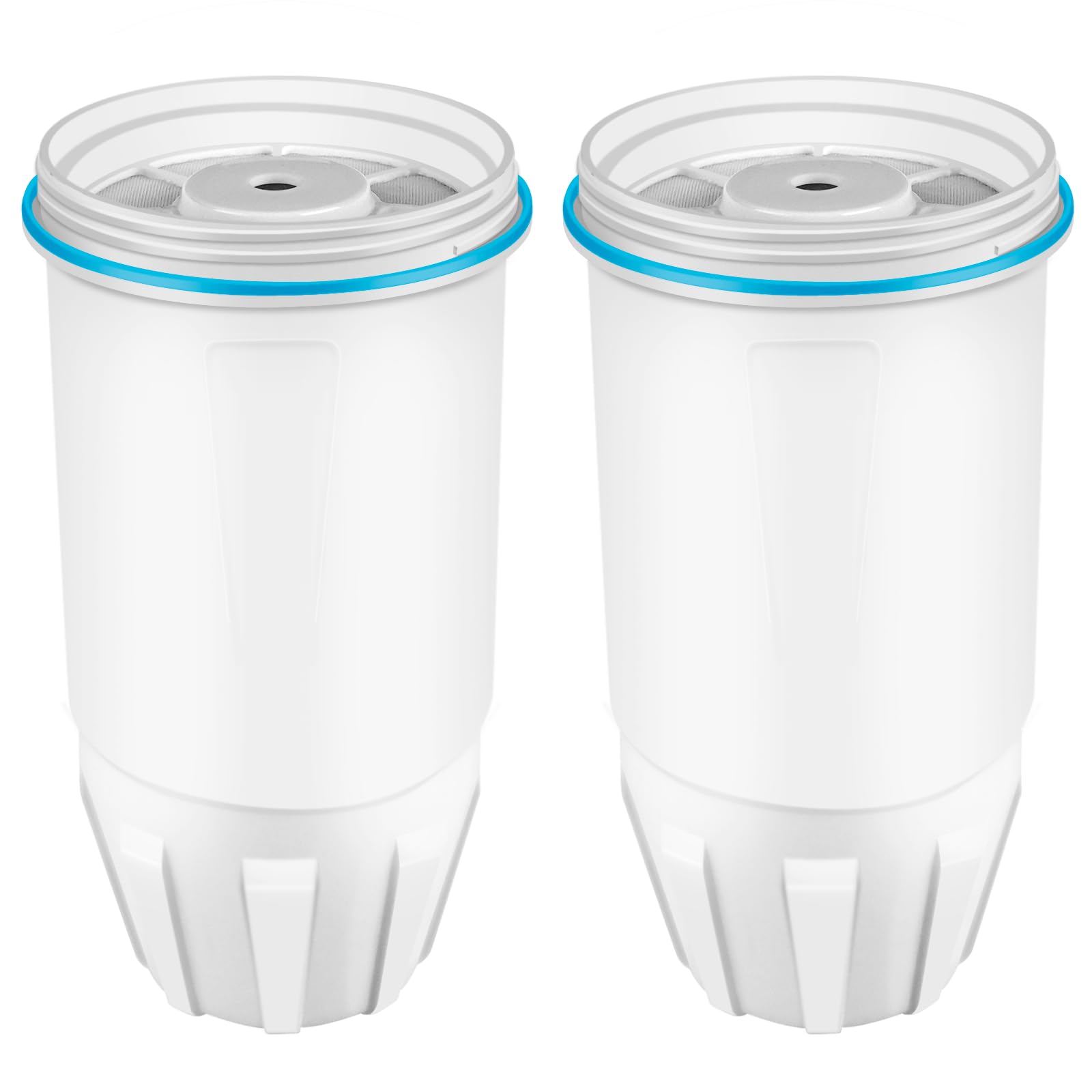
The smallest commitment in the group — two cartridges to test a fit before you buy in bulk.
Want to prove a filter works in your specific pitcher before stocking up? This two-pack is built for exactly that. You get two cartridges, each rated at a one-month filter life that varies with your water condition, made from activated carbon and resin (a bead-like material that catches contaminants). The listing also claims a six-stage system that cuts TDS (total dissolved solids) to zero and removes 99.9% of lead, chlorine, fluoride, and PFOA/PFOS — a manufacturer figure, not a lab result, since this set lists no external certification.
Fit is the whole game here, and APPLIANCEMATES is unusually direct about it: this is for Zero legacy bottom-thread pitchers and dispensers, with a long compatible list running from the ZR-001 and ZR-017 to the ZD-018 and ZBD-040. It is explicit that it does not fit top-loading ZEROF01 systems. That single sentence matters more than any other line on the page — top-loading owners should stop here rather than risk a cartridge that never seats properly. Flow is the other selling point, with the brand stating the water speed stays steady and does not slow as the filter fills, so you are not waiting on a trickle.
Now the size reality: the two-pack gives you two cartridges against the DESENRUIS pack’s four, and its one-month life is the shortest stated figure in this lineup. That makes it the least economical way to buy long-term, even if it is the smallest cash outlay for a trial. What it does have is a clear fit story for bottom-thread hardware and a short soak-in prep — the listing asks you to soak the cartridge in water for 15-30 seconds before use. If your pitcher is a legacy Zero model and you want to test the water before committing to a big box, this is the low-risk way in.
The trial logic: Two cartridges let you confirm fit and taste in your own pitcher before you buy a four-pack, with a stated one-month life per filter.
The buy-in warning: At two filters with the shortest stated life in the lineup, this is a starter set rather than a long-term supply — expect to reorder sooner than with the four-packs above.
Try this when: Your pitcher is a legacy bottom-thread Zero and you want to verify the fit without buying four cartridges sight unseen.
skip it if: You own a top-loading ZEROF01 system — this filter is not built for that seating.
Know the Specs
Total Dissolved Solids (TDS)
TDS is the count of everything dissolved in your water — metals, minerals, salts, and ions. A TDS meter reads that count, and it is the honest way to know when a filter is spent. ZeroWater’s own guide says to swap the cartridge when the meter reads 006, which beats guessing from the calendar because filter life depends on how mineral-heavy your tap water is.
Ion Exchange and Five Stages
Ion exchange is a resin bed that trades dissolved mineral ions for cleaner ones as water passes through, and ZeroWater layers that across five stages. The payoff is water with virtually nothing dissolved in it, which is the taste most owners are chasing. Certification such as IAPMO or NSF testing is what tells you the reduction claims for lead, chromium, and PFOA/PFOS were checked by an outside body.
Filter Life and Gallons
Filter life is the volume of water a cartridge cleans before it gives out, and listings state it in gallons or liters depending on the brand. That figure shifts with your water source, so treat it as an estimate rather than a promise. A cartridge rated for many liters in soft water can run dry far sooner in hard water, which is why the meter, not the box, should set your change date.
Compatibility and Thread Type
ZeroWater pitchers and dispensers seat the cartridge on a bottom thread at the base, while newer top-loading systems seat it from above. A cartridge built for one will not seal in the other, and an unseated filter lets unfiltered water slip past. That is why every listing here publishes a model-code list — check your code against it before you buy, and ignore the brand name on the pitcher alone.
Common Questions
How do I know when to change my ZeroWater filter?
Will these filters fit the new Culligan ZeroWater pitchers?
Do aftermarket filters work as well as the ZeroWater originals?
My pitcher is a ZP-010. Which of these filters fit it?
Why does my filter seem to last less than a month?
Do I need to soak these filters before the first use?
Are top-loading ZeroWater systems supported by these cartridges?
Will a clogged filter slow my pitcher’s flow rate?
Do these filters remove fluoride and chlorine as well as lead?
How many plastic bottles does one filter actually replace?
The Bottom Line
For most households the answer is the ZeroWater Official 4-Pack, because it is the only set here with IAPMO and ANSI certification (independent safety testing) behind its PFOA/PFOS, lead, chromium, and mercury reduction claims, and its fit list covers a very long run of ZeroWater model codes. If you want the longest stated run per cartridge and do not mind confirming your model code yourself, the DESENRUIS 4-Pack lists 60 liters per filter across four cartridges. And if your pitcher is a legacy bottom-thread model and you want to test the fit first, the APPLIANCEMATES 2-Pack keeps the entry small before you stock up.
How we choose
We do not accept paid placement. Every pick is matched to a real buyer and a real use-case; we do not hands-on test units.
Sources
Specifications: manufacturer listings and product documentation. Review insights: verified customer reviews, as of November 2026. Pricing: not shown on this page (it changes often); check the current price via the retailer link.
As an Amazon Associate, Tactical Gear Guy earns from qualifying purchases. This does not affect which products we feature.