Specs are compiled from manufacturer listings and verified buyer reviews and can change over time — please confirm the key details on the product page before buying.
Buying a “zero gravity” shoe is really about one thing: a thick, curved sole that rolls you from heel to toe instead of slapping your foot down flat. That rocker shape is what takes the sting out of a long shift on concrete, and it is also why the first walk can feel strange for a few days. Below you will find the pairs that handle that trade-off best, sorted by what each one is genuinely good at.
This guide is built by comparing the manufacturers’ published specifications and the patterns across verified customer reviews, so you get each pick’s real strengths and trade-offs instead of marketing spin.
Every pick here is a Gravity Defyer model, because that brand’s VersoShock and VersoCloud soles are the ones buyers actually describe when they talk about that rolling, cushioned stride. Read on for the honest breakdown.
Top Picks

How To Choose The Best Zero Gravity Shoes
A zero gravity shoe is a rocker-sole shoe — the sole is built up and curved so it keeps your heel from landing hard and rolls your weight forward. That shape is the whole point of the category, so the first thing to check is whether the sole you are looking at is genuinely rockered or just thick. Everything else follows from there.
Width first, size second
Foot width is where most people get burned. Gravity Defyer sells Medium, Wide, and Extra Wide: Medium is the standard width, Wide runs about ¼” wider than standard, and Extra Wide runs about ½” wider. If you already wear wide shoes or want breathing room at the toes, order Wide or Extra Wide and skip straight past Medium.
Plan on a break-in window
A rocker sole asks different muscles to work, so the maker suggests wearing your new pair 1–2 hours a day for the first 3–5 days. During that week, stick to flat ground and take stairs slowly. That soreness is your body adapting to a new gait, not a defect in the shoe.
Check what arrives in the box
Some models ship with a free orthotic insert and some don’t. If you already wear a prescription orthotic, a removable insole is what you want, so you can swap yours in and keep the rocker sole doing the cushioning work underneath.
Side-by-Side Comparison
| Model | Best For | Rocker Tech | Door Width | Form | Amazon |
|---|---|---|---|---|---|
| GDEFY Hilnor Slides★ Best Overall | Slip-on relief at home | VersoShock | — | Slide sandal | Amazon |
| G-Defy XLR8Widest Fit Range | Wide-foot runners | VersoCloud | M / W / XW | Running shoe | Amazon |
| G-DEFY MehalefSharpest Look | Male cross-training | VersoShock | Wide options | Cross trainer | Amazon |
| Gravity Defyer Energiya | Heaviest cushioning | VersoShock | M / W / XW | Cross trainer | Amazon |
Detailed Reviews
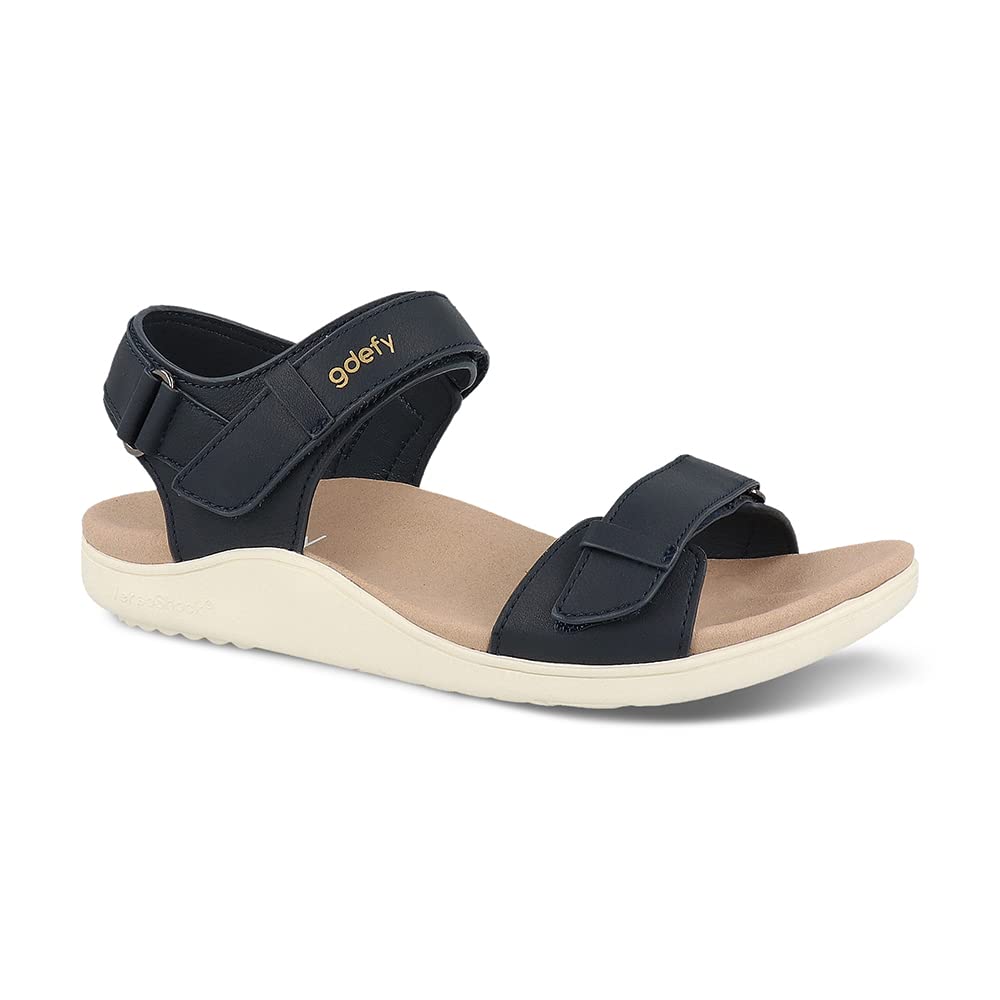
1. Gravity Defyer Women’s GDEFY Hilnor Leather Fashion Slides
Our pick — 4.0+★ from 70+ verified ratings; the strongest balance of quality and price.
The slide you kick on after eight hours on your feet, with a heel cup that holds you in place.
If your day ends with your arches pleading, this is the pair that answers. The Hilnor is a leather-look slide on Gravity Defyer’s patented VersoShock sole, pairing a deep heel cup with a contoured arch. Those two shapes are what keep a sandal from feeling like a flat plank, and they are why a slide earns the top spot here at all.
Three adjustable straps do the fitting work, so you can tighten the instep and loosen the toe box independently instead of accepting whatever a fixed strap gives you. The maker positions it for wear at work or at leisure, and the design reads dressy enough for a casual office or a lunch out, not just the back garden.
What wins people over is the build — the quality of the sandal is the most-praised thing about it, with arch support right behind. Buyers describe a shoe soft against the foot with an elegant look, and one long-toed, narrow-footed wearer found the fit worked for her shape. One honest note: this is a women’s department slide with no width options listed, so if you need a true Wide fit, look at the cross trainers below instead.
What Earns It First Place
- Deep heel cup plus contoured arch under a slide, not a flat footbed
- Three adjustable straps for a custom fit across the instep and toes
- Soft material and a dressy leather look that works outside the house
Where It Stops Short
- No width choices listed — one width only
- An open slide, so no toe coverage for cold or rough ground
Made for: anyone who wants that rocker cushioning in a slip-on they can wear indoors and out.
Not your pair if: you need a closed shoe with a selectable wide width.
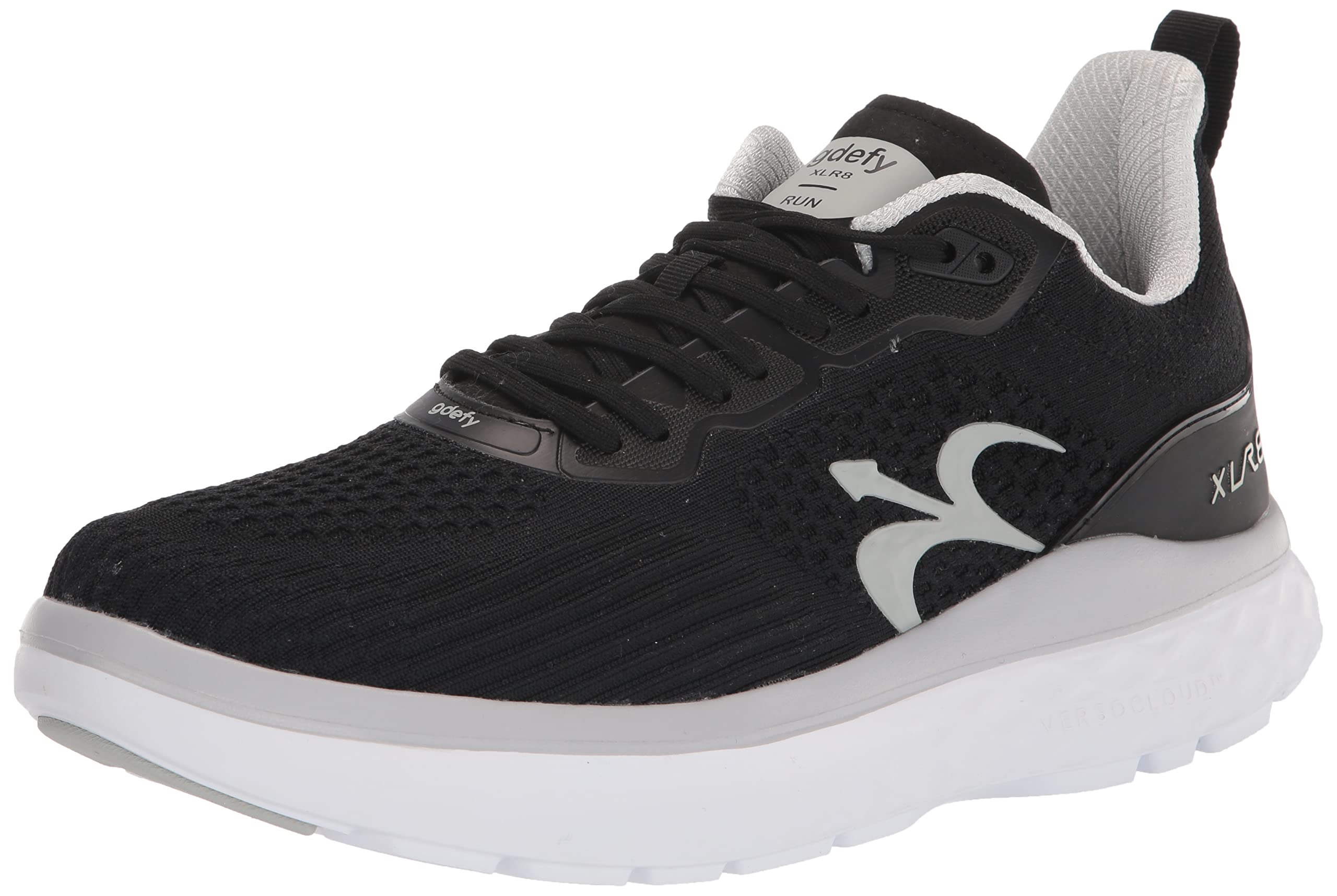
2. Gravity Defyer G-Defy XLR8 Men’s Running Shoe
Three widths, free orthotics in the box, and a cloud-cushion sole built for the long walk.
If your feet are wider than the average shoe mould, this is the one that fits before anything else matters. The XLR8 comes in Medium, Wide (about ¼” wider than standard), and Extra Wide (about ½” wider), and Gravity Defyer throws in free orthotic inserts with the pair. For a wide-footed buyer, that covers width range and included orthotics in one purchase.
Underneath sits VersoCloud cushioning, which the maker rates for energy return on walks, runs, and long active days. The construction is the thing buyers rate highest, with the support it gives your back and knees a close second. Owners describe it as a good-looking shoe that holds up its end on long days on your feet — and this is where it earns its place over the lighter Lauff models below.
The catch is sizing. Buyers are split: plenty find it immediately comfortable, while others report the shoe runs much larger than expected, and there are durability reports of faster-than-hoped wear. Order true to size and, if you are between sizes, the maker’s own advice is to go up half a size — but be ready to send a pair back if the fit surprises you. Comfort, fit, and longevity are the three things to weigh before you commit.
The trade-off in plain terms: this is the most versatile fitting shoe on the list, and also the one where fit feedback splits hardest. Try them on carpet first.
Reach for this if: you wear a true wide or extra-wide and want orthotics included.
Look elsewhere if: you want a shoe that is spot-on true to size from the start.
3. Gravity Defyer g-defy Lauff Running Shoes

A cross trainer that earns its keep on a long shift, with a free orthotic to start you off.
For women who clock hours on their feet, this is the model that shows up with the most support built in. VersoShock cushioning sits under a heel-support structure, and the maker also lists arch support and a free orthotic insert, so you can swap insoles to match your stride. It is a closed cross trainer rather than a slide, which means it takes you from the shift into the rest of your day.
Comfort is what buyers talk about, and the reports describe feet that stop aching after long walks and standing days. Weighing the overall picture, most people find it comfortable and worth the money — this is a shoe people keep wearing once the shift ends.
Here is the recurring gripe, and it is a fit issue, not a comfort one: buyers disagree sharply on width. Some women find it too narrow for wide feet, and sizing reports are inconsistent. Order carefully, and do not assume the free orthotic makes up for a width that is too tight — check your width first and treat sizing as a fit question you settle before you buy.
What Buyers Praise Most
- Comfort that holds up through a full standing shift
- Heel support, arch support, and a free orthotic insert included
- Cross-trainer coverage, unlike the open Hilnor slides up top
The Fit Question
- Width runs narrow for some — order Wide options carefully
- Sizing reports vary, so confirm before you unwrap
Made for: women working long shifts who want heel and arch support in a closed shoe.
Not your pair if: you have wide feet and want a guaranteed roomy fit.
4. G-DEFY Mehalef Men’s Cross Trainer Shoe
Cross-trainer support for men who want the shoe to look as good as it feels.
If the slide and the sneaker do not do it for you and you want a shoe that passes in public, this is the pick. The Mehalef pairs VersoShock rocker cushioning with heel and arch support and a free orthotic insert. The men who own it rate the appearance highest, with comfort close behind — a rare combination in a structured support shoe.
Support scores well too, and the reports mention it working for longer runs as well as standing days. That versatility is what earns it a slot: a cross trainer that covers work, errands, and a training walk without changing shoes.
Size up, though. Fit feedback is mixed and several men find it runs half a size smaller than expected. If you are between sizes, going up is the safer move. Everything else — look, comfort, and support — lands where buyers want it.
The one thing to know: it runs half a size small, so go up when ordering.
What you get: a sharp-looking cross trainer with VersoShock cushioning, heel and arch support, and a free orthotic.
Reach for it if: you want a support cross trainer you can wear anywhere without it looking like a medical shoe.
Size carefully if: you are between sizes — go up half a size.
5. Gravity Defyer Energiya Cross Training Shoes

The best-seller of the family — the shoe most men actually end up buying.
This is the most-owned model in the lineup, and there is a reason so much experience sits behind it. The Energiya combines VersoShock cushioning with a rocker sole built for walking, running, and long active days, and it comes in Medium, Wide, and Extra Wide. Buyers report relief from back pain and plantar fasciitis symptoms, and rate it highly for walking. Comfort is what owners praise most, with quality right behind it.
Compared with the newer, lighter Lauff men’s shoe above, the Energiya trades some lightness for a heavier cushioning feel and a deeper bench of owner experience — the Lauff wins on grams, the Energiya on tested reliability. For a man who wants to feel the support underfoot rather than forget he has it on, this is the heavier, more planted option.
Two honest notes. Some men find it runs too small, so check your size before you commit, and reports of soles wearing through within two years mean it is a shoe to rotate rather than wear every single day. Neither point is a reason to skip it — it is a reason to size carefully and treat it as part of a rotation.
What Earns the Following
- VersoShock rocker sole tuned for walking and active days
- Medium, Wide, and Extra Wide widths available
- Comfort and quality both draw steady praise
Where to Be Careful
- Runs small for some — check sizing before ordering
- Sole wear reported over time; rotate rather than wear daily
Best for: men who want a heavier, planted walking shoe with wide-width options and lots of owner experience behind it.
Only if your feet need: a rotation rather than one shoe worn every day — the sole will thank you.
Know the Specs
VersoShock and VersoCloud
VersoShock is Gravity Defyer’s cushioned rocker sole; VersoCloud is the softer-cushioned variant on the XLR8 running shoe. Both work the same way on your foot: the sole curves so your heel lands soft and your weight rolls forward instead of stopping dead. Think of it as a rolling ramp under your foot, not a flat pad.
Deep heel cup and contoured arch
A deep heel cup is a scooped-out pocket at the back that stops your heel sliding sideways; a contoured arch is a raised curve that follows the shape of your instep. Together they keep an open slide or a cross trainer from feeling flat after an hour. The support comes from the molded shape of the footbed, not from added foam.
Widths: M, W, and XW
Medium is standard width, Wide is about ¼” wider than standard, and Extra Wide is about ½” wider. Inside a shoe, that quarter-inch is the difference between toes that rest and toes that press. Order the width you already know your feet need, not the default width the size chart assumes.
Free orthotic inserts
An orthotic insert is a shaped insole that changes how your foot sits inside the shoe. Several models here include one free, and the AstroRun ships with two removable insoles. If you already have a prescription orthotic, pick a model with a removable insole so you can swap yours in without losing the rocker sole underneath.
Common Questions
What makes a shoe a zero gravity shoe?
How long does the rocker sole take to get used to?
Should I size up in Gravity Defyer shoes?
What is the difference between M, W, and XW widths?
Do these shoes come with an orthotic insert?
Can I wear my own prescription orthotic in these?
Are the Hilnor slides as supportive as the closed shoes?
How do the Lauff and Energiya compare for walking?
Are these suitable for wide feet?
How long do the soles last?
The Bottom Line
For most people, the zero gravity shoes winner is the GDEFY Hilnor Slides, because they put the VersoShock heel cup and contoured arch into a slip-on you actually want to wear around the house and out. If a selectable wide width is your priority, the G-Defy XLR8 gives you M, W, and XW with free orthotics in the box. And for standing through long shifts, the G-DEFY MATeeM is the one to reach for. Whatever you pick, try them on carpet for the first day or two — the first few walks on a rocker sole feel different, and a little patience goes a long way.
How we choose
We do not accept paid placement. Every pick is matched to a real buyer and a real use-case; we do not hands-on test units.
Sources
Specifications: manufacturer listings and product documentation. Review insights: verified customer reviews, as of November 2026. Pricing: not shown on this page (it changes often); check the current price via the retailer link.
As an Amazon Associate, Tactical Gear Guy earns from qualifying purchases. This does not affect which products we feature.