Specs are compiled from manufacturer listings and verified buyer reviews and can change over time — please confirm the key details on the product page before buying.
Buying trail shoes for a woman’s foot is mostly about one thing: whether the shoe stays put when the ground stops cooperating. The picks below are all women’s-specific models, and each one earns its place on a different job — the wide-toe-box cruiser, the wet-rock gripper, the plush long-runner, the entry-level bargain. If you want the short answer, the Columbia Konos TRS is the safest all-rounder here, and the Altra Lone Peak 8 is the one to take if your toes have been complaining for years.
This guide is built by comparing the manufacturers’ published specifications and the patterns across verified customer reviews, so you get each pick’s real strengths and trade-offs instead of marketing spin.
Trail running punishes the wrong shoe fast, so this breakdown covers lug depth, toe-box width, drop, and cushioning in plain language — everything you need before you commit. Below you will find the picks worth your money for zapatillas trail running mujer.
Top Picks
How To Choose The Best Zapatillas Trail Running Mujer
Most people buying their first trail shoe pick the prettiest upper and then discover the outsole slides on damp clay. The order should be reversed: start with the ground you actually run on, then work backwards to the shoe.
Start With The Ground, Not The Colour
If your local trail is packed dirt and gravel, a moderate lug pattern is plenty and you can spend your comfort budget on cushioning. If you run wet roots, slickrock, or loose scree, grip becomes the whole decision — look for a named rubber outsole and deeper lugs. The New Balance Fresh Foam X Hierro V9 lists deeper 6mm lugs and a Vibram Megagrip outsole, which tells you exactly what job it was built for.
Decide Your Drop Before You Decide Your Brand
Drop is the height difference between the heel and the toe, measured in millimetres. A 5mm drop (like the Topo Athletic Ultraventure 4) is a middle setting that suits most runners. A 0mm drop (like the Altra Lone Peak 8) sits your heel and forefoot level, which asks your calves to do more work. Neither is better — they are different tools, and switching between them suddenly is the classic way to get sore Achilles tendons.
Get The Toe Box Right And Everything Else Gets Easier
A narrow toe box is the single most common reason a trail shoe gets returned. If you have wide feet, bunions, or you have simply been squeezing into pointed shoes for years, prioritise a shoe whose listing actually states a roomy or anatomical toe box. Both the Altra Lone Peak 8 and the Topo Ultraventure 4 make that claim explicitly, and their reviews are dominated by people delighted about it.
Know That Women’s-Specific Means Something
A women’s trail shoe is built on a women’s last — the foot-shaped mould the shoe is wrapped around — and is generally narrower through the heel and midfoot than the men’s version of the same model. Every shoe on this list is listed under the women’s department, so you are comparing like with like.
Side-by-Side Comparison
| Model | Best For | Stated Weight | Drop / Platform | Outsole Note | Amazon |
|---|---|---|---|---|---|
| Columbia Women’s Konos TRS★ Best Overall | All-round trail comfort | — | — | Wet-or-dry traction system | Amazon |
| Saucony Women’s Peregrine 13Top Performer | Technical off-road speed | 2.43 pounds | PWRRUN foam | Tough grip underfoot | Amazon |
| ALTRA Lone Peak 8Widest Toe Box | Widest toe box, zero drop | 10.7 oz / 303 g | 0 mm drop, 25 mm stack | MaxTrac with TrailClaw lugs | Amazon |
| Saucony Aura TR | Budget trail entry | — | — | Grippy lugs | Amazon |
| Skechers Go Run Trail Altitude 2.0 | Long days on your feet | — | — | Slip-resistant traction | Amazon |
| Under Armour Charged Bandit Trail 3 | Lightweight everyday trail | — | — | — | Amazon |
| New Balance Dynasoft Tektrel V1 Suede | Aggressive lug grip | 2.1 pounds | Dynamic midsole | Aggressive lug design | Amazon |
| Topo Athletic Ultraventure 4 | Long runs, wide feet | — | 5mm drop, 35 x 30 mm platform | Vibram XS Trek EVO | Amazon |
| New Balance Fresh Foam X Hierro V9 | Wet and dry rugged terrain | 2.1 pounds | Dual-density Fresh Foam X | Vibram Megagrip, 6mm lugs | Amazon |
Detailed Reviews
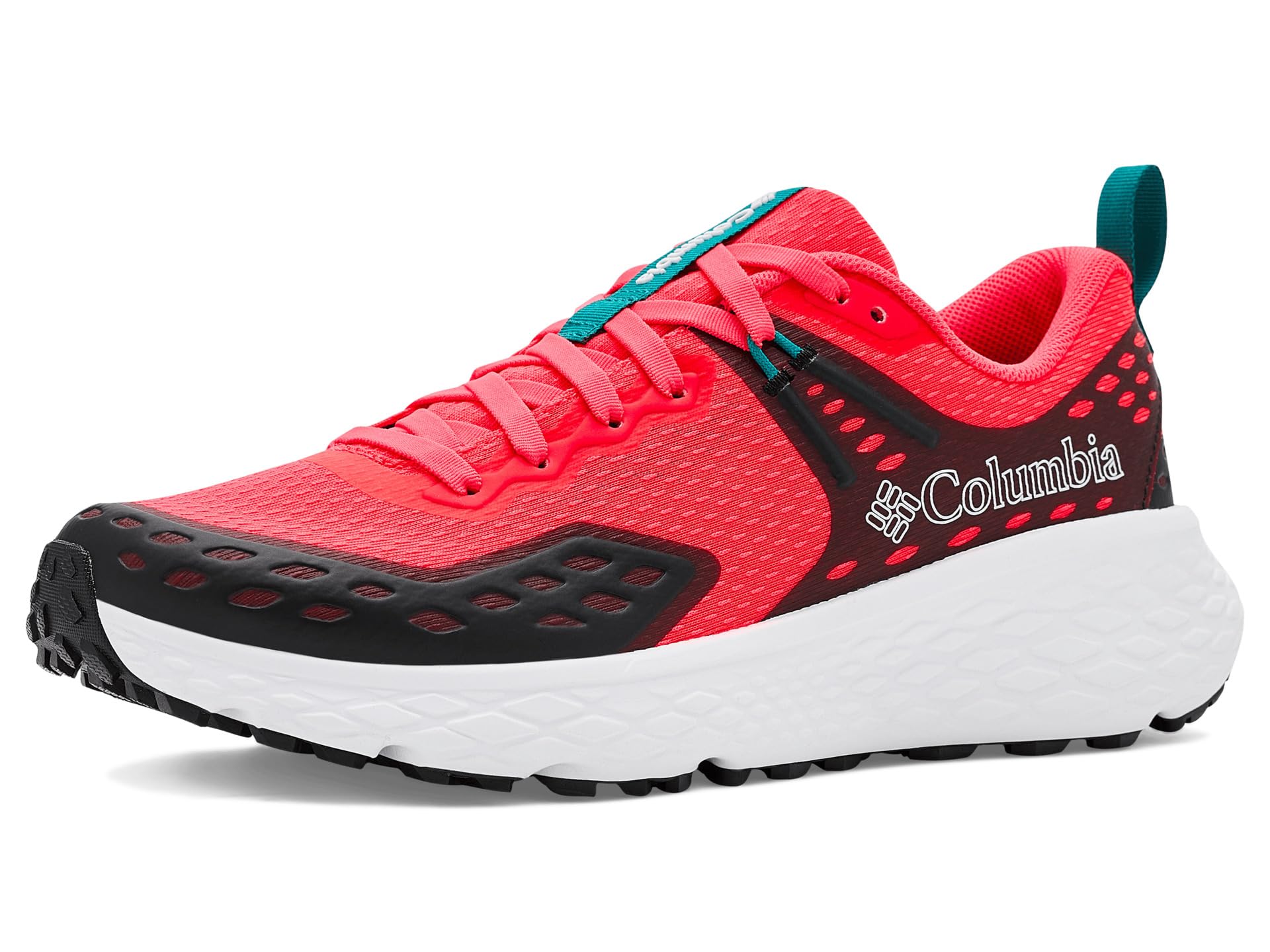
1. Columbia Women’s Konos TRS
Our pick — 4.5+★ from 500+ verified ratings; the strongest balance of quality and price.
The all-rounder that keeps feet quiet on long, mixed days out.
The Konos TRS is the pick when you do not know what the trail will throw at you. Its underfoot system is built to combine cushioning, stability, and grip that works whether the ground is wet or dry — which is the realistic condition of most weekend trails. The upper is a breathable mesh with no-sew overlays (bonded panels rather than stitched ones, so there are fewer seams to rub), which keeps the shoe light and reduces the chance of a hot spot.
What wins people over is plain comfort. Across 500+ ratings it holds a 4.5+, and the comfort thread runs through nearly everything written about it — long strenuous days with zero pain being the recurring story. Buyers also bring up arch support and cushioning in the same breath, which suggests the shoe is doing the job for people who stand and move on their feet for hours rather than sprinting downhill.
The catch is width. Fit is the one place opinions split, with some finding the shoe too narrow. If you already know you need a wide toe box, go straight to the Altra Lone Peak 8 or the Topo Ultraventure 4 below instead — this Columbia is built for a more standard foot shape. The traction is good, described as very grippy and not prone to slipping, but it is a general trail grip rather than a specialist wet-rock compound.
What buyers keep coming back to
- Comfort that holds up over long, hard days on foot — the single most-discussed strength.
- Grip described as very grippy and non-slipping on both wet and dry ground.
- Arch support and cushioning both singled out, so it suits hours of standing as well as running.
- Breathable mesh with no-sew overlays keeps it light without adding stitched seams.
Where it will not suit you
- Fit is the one contested point — some women find it too narrow through the shoe.
- General trail grip rather than a named technical outsole for slickrock.
Buy this one if: you want one pair of women’s trail shoes that handles mixed terrain and long days without fuss.
Look elsewhere if: narrow shoes have pinched you before — the fit is the only thing buyers argue about here.
2. Saucony Women’s Peregrine 13
The off-road specialist built for people who go looking for the rough stuff.
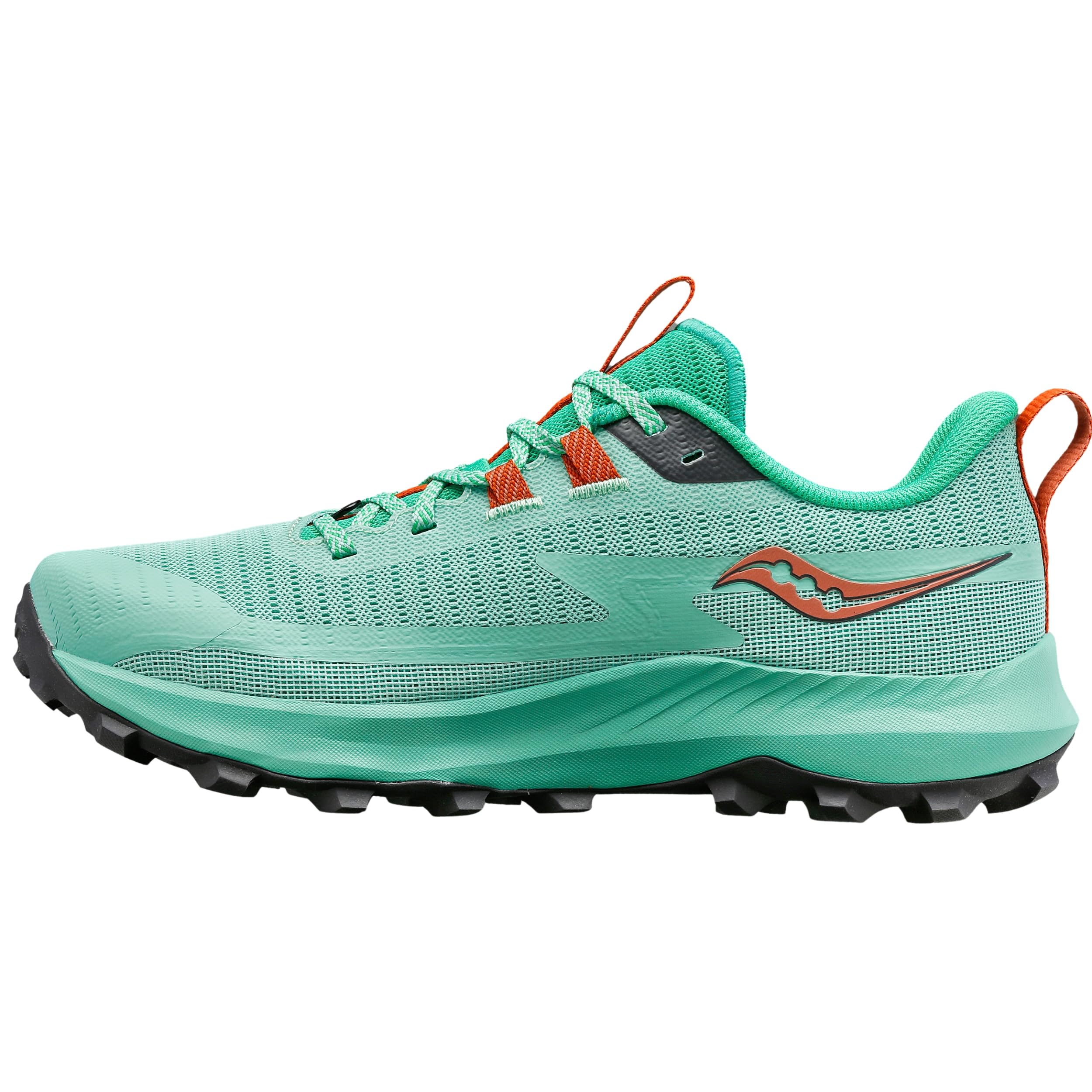
Saucony’s own description of the Peregrine 13 is refreshingly blunt: cushioned with PWRRUN foam (a springy midsole foam designed to absorb impact) and built with tough grip underfoot. It sits at 2.43 pounds, versus the New Balance Dynasoft Tektrel V1 Suede at 2.1 pounds.
Comfort is this shoe’s strongest suit, and buyers report so repeatedly. Among the things buyers discuss, comfort and fit both land as clear positives, and the fit commentary is unusually specific — a roomy toe box that people notice on the first run. Traction gets its own positive thread, including handling slippery muddy hills without drama. High arches get support, and there is a consistent note about the shoe helping keep ankles from twisting on uneven ground, which is exactly the reassurance you want from a technical trail model.
Durability is the honest wobble. It is discussed plenty and the verdict is mixed rather than glowing, so treat the Peregrine as a performance shoe you will replace on a normal cycle rather than a buy-it-once forever shoe. Cushioning is likewise a split opinion — some want more underfoot, others find the PWRRUN balance right.
The grip story: tough rubber underfoot plus a roomy toe box and high-arch support is a combination that suits rocky, twisting singletrack better than flat gravel paths.
The honest caveat: at 2.43 pounds it is a substantial shoe, and the durability conversation is genuinely split.
Reach for it when: your runs involve mud, roots, and side-slopes and you want grip plus toe room in the same shoe.
Think twice if: low weight matters to you — the Tektrel below is listed at 2.1 pounds versus 2.43 pounds here.
3. ALTRA Lone Peak 8 Trail Running Shoe
A zero-drop legend with a toe box wide enough to actually spread your toes.
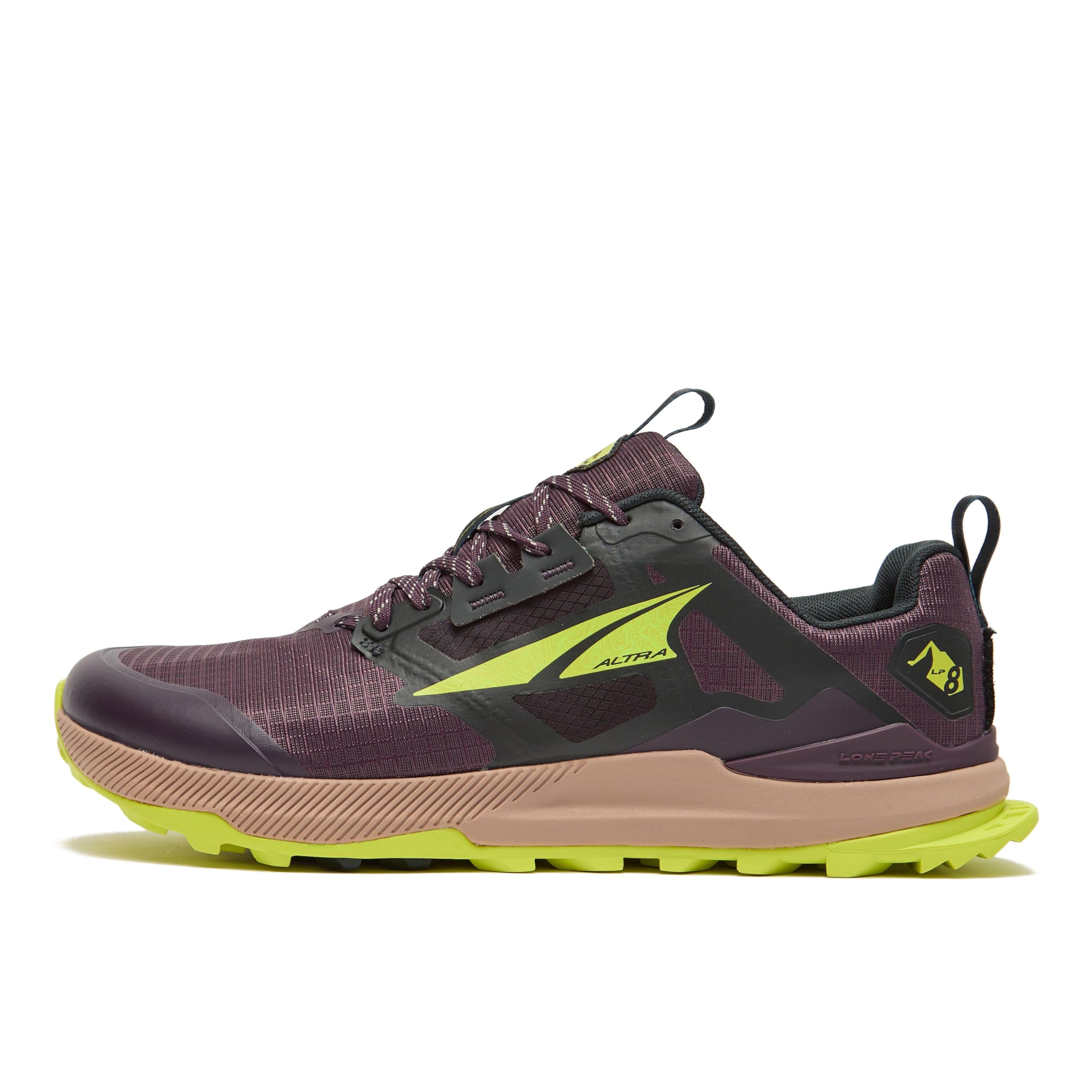
Two numbers tell the Lone Peak 8’s whole story: 0 mm drop and a 25 mm stack height. A 0 mm drop means your heel and forefoot sit at exactly the same distance from the ground, so the shoe asks your calves and Achilles to absorb landing forces rather than tilting you forward. The 25 mm stack is the cushioning platform, listed at 10.7 oz / 303 g on the women’s side. The outsole is MaxTrac rubber with TrailClaw canted lugs — larger angled lugs positioned under the metatarsals (the bones behind your toes) to bite when you push off.
What makes this shoe famous is the room. Altra calls it their roomiest toe box, with space through the midfoot as well, and the fit commentary backs that up — feet never hurting, no toe pinching, and wide-footed runners finding real accommodation. Arch support and stability also land as positives, with the zero-drop platform credited for feeling planted. Trail grip on varied surfaces reads as reliably good, and durability is a positive rather than a question mark, with no break-in period reported.
The trade is the drop itself. Zero drop is a tool, not a universal upgrade: if you have spent years in conventional 8mm-plus shoes, this will load your calves differently and the transition should be gradual. Cushioning is the other split opinion — some want more underfoot for long descents. And it is the more expensive of the wide options here, sitting above the Topo Ultraventure 4.
Why wide-footed runners love it
- Altra’s roomiest toe box with midfoot room — genuinely accommodates extra-wide feet.
- 0 mm drop with a 25 mm stack that keeps you level and aligned.
- MaxTrac outsole with TrailClaw lugs gives grip under the metatarsals for push-off.
- No break-in period reported, and durability reads as solid rather than hit-and-miss.
What to weigh up
- Zero drop demands a gradual transition if you are used to conventional shoes.
- Cushioning opinions split — some want a softer, deeper ride for long descents.
- Priced at the upper end of this lineup’s wide-fit options.
The standout spec: 0 mm drop with Altra’s widest toe box — the answer for feet that have never fit anything properly.
But note: give yourself a few weeks to adapt to zero drop, or your calves will let you know.
4. New Balance Fresh Foam X Hierro V9
Deep lugs and plush foam for the runner who wants protection over speed.
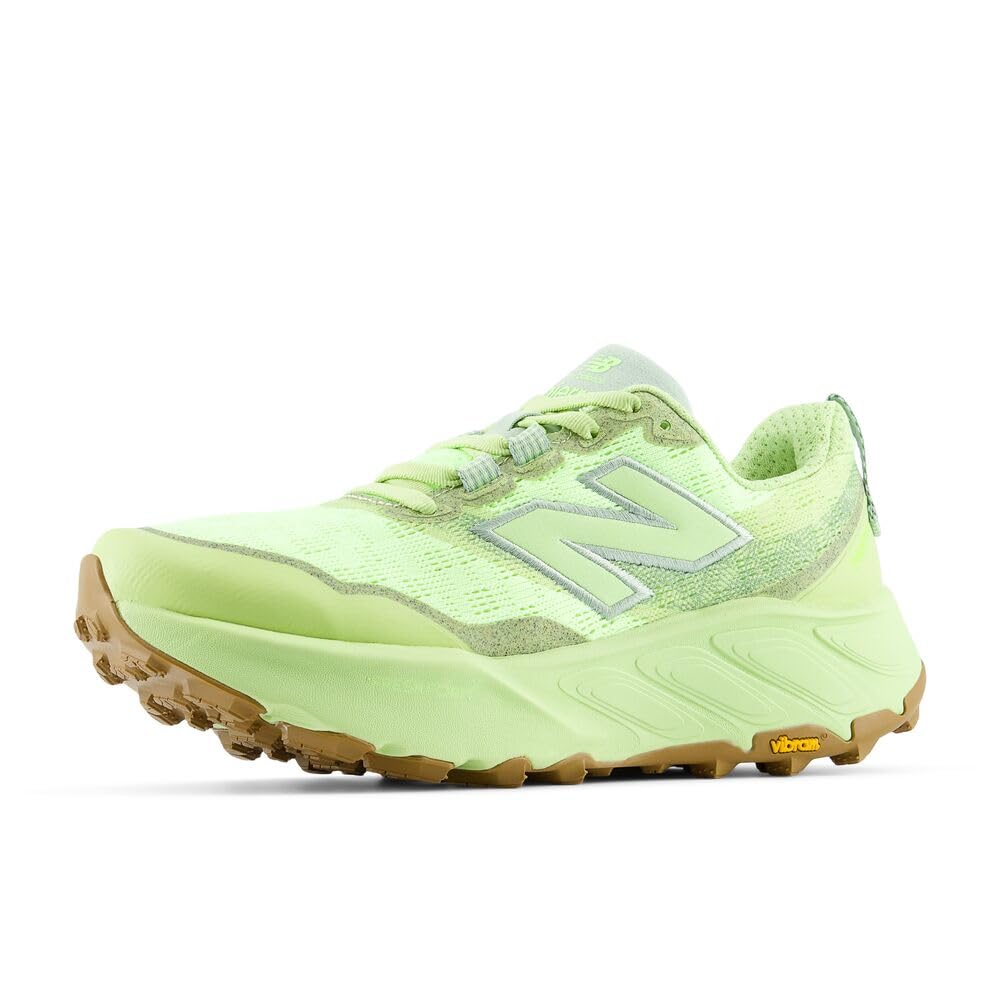
If your trails are wet rock, loose gravel, and hidden roots, read the Hierro V9’s spec sheet as a wish list. The outsole is Vibram Megagrip with Traction Lug technology and deeper 6mm lugs — 6mm is a genuinely deep, tall lug, the kind that digs into soft ground and grabs rather than skating. The midsole is dual-density Fresh Foam X, which pairs a soft layer for comfort with a firmer one underneath for stability. New Balance also lists Toe Protect shielding against rocks and roots, plus a breathable knit upper with a gusseted tongue (one attached on both sides) to keep grit from working its way inside.
Buyers keep praising two things: the arch support and the cushioning, which they compare to running on clouds. That makes this shoe a comfort-first all-day trail companion. It suits daily walks and occasional trail hikes best. Reviewers also note it holds up through repeated use.
This is the top of the range here, above the Lone Peak 8, so the cushioning and the Vibram outsole are what you are paying for. It is also the shoe for someone who wants protection and plushness rather than a stripped-back, ground-feel-focused ride — if you want to feel every pebble, this is not that shoe.
Read the outsole: Vibram Megagrip with 6mm lugs is the most aggressively specified grip on this list, and it is the reason to pick this shoe over the cheaper comfort options.
The catch: it is a plush, protective build, not a featherweight racer — and it sits at the premium end of this lineup.
The right buyer: someone whose trails get genuinely wet and rocky and who wants cushioning to match the grip.
Walk on by if: you want maximum ground feel or you are shopping at the entry-level end.
5. Topo Athletic Women’s Ultraventure 4
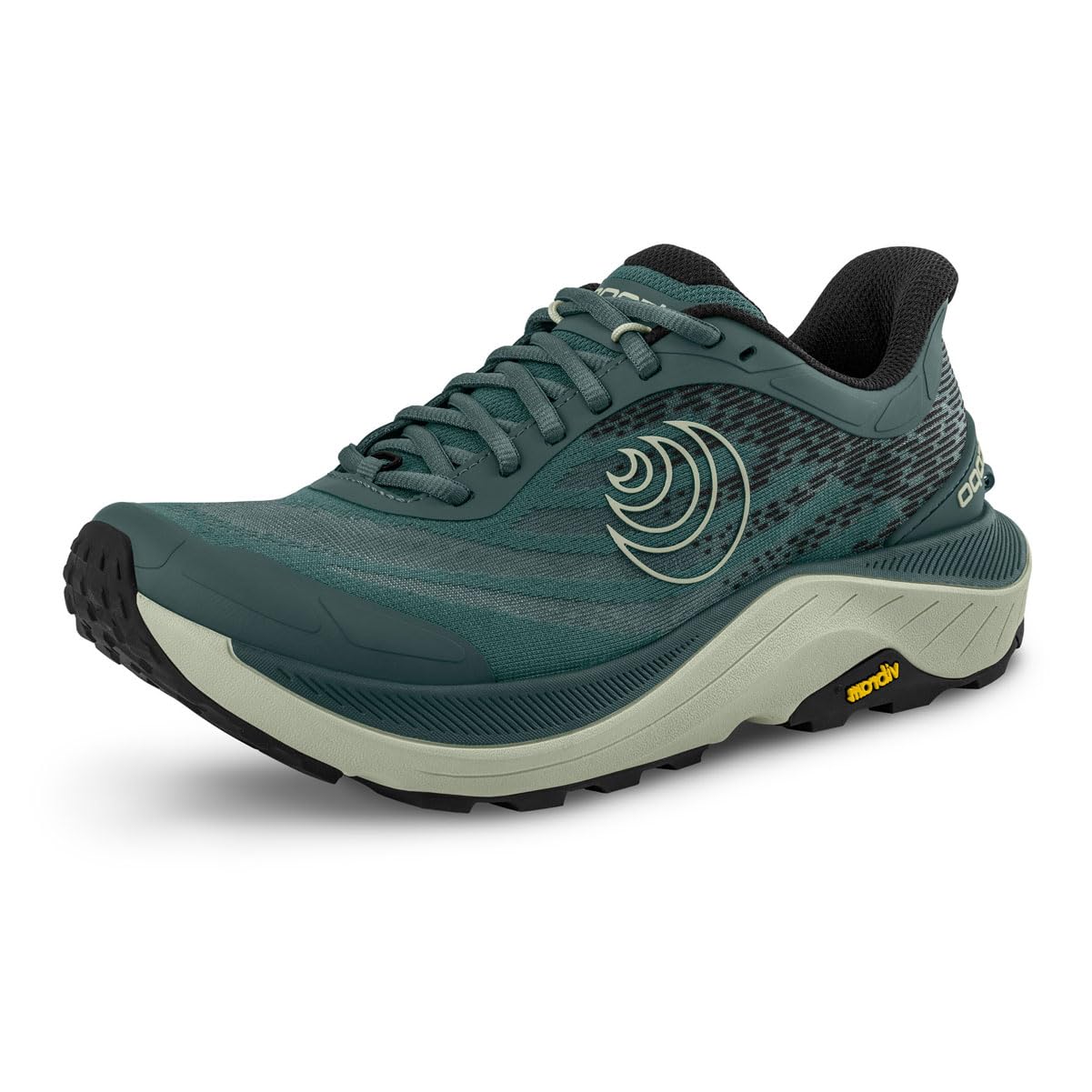
High cushioning and a naturally wide toe box, aimed squarely at the long haul.
Topo builds the Ultraventure 4 around two numbers you can actually use: a 5mm drop and a 35 x 30 mm platform. That is a tall, cushioned stack for long runs on mild to moderate terrain, with the 5mm drop sitting in the middle ground between a flat zero-drop shoe and a conventional trainer. The midsole is ZipFoam, which Topo describes as springier than EVA with more rebound over the life of the shoe. Underneath, the Vibram XS Trek EVO outsole is listed for multi-surface traction so the shoe can move from trail to road without complaint.
The toe box is the headline. Topo’s anatomical shape is designed to let toes spread naturally, and the fit commentary reflects it — plenty of room for toes alongside strong grip on rocky trails. Arch support gets its own positive thread, including a deep heel cup that holds the back of the foot in place. The recycled mesh upper now carries strategically placed PU print (a printed overlay) for structure in the high-abrasion zones.
Two honest cautions. Blisters on the backs of heels come up in some accounts, so give yourself a short breaking-in period on easy ground before a long day out. And durability at the outsole is the most-discussed concern, with reports of the bottoms wearing out quickly — this is a shoe for runners who accept replacing their trail shoes regularly.
What earns the praise
- Anatomical toe box with genuine room for toes to spread.
- ZipFoam midsole described as springier than EVA with more rebound over time.
- Vibram XS Trek EVO multi-surface outsole for trail-to-road transitions.
- Deep heel cup and strong arch support on rocky ground.
Bones to pick with it
- Heel blisters surface in some accounts — break them in gently.
- Outsole wear is the most-raised concern in the durability conversation.
Suits you if: you want a cushioned 5mm-drop shoe with a genuinely roomy toe box for long, mild-to-moderate trail days.
Skip the long haul if: you want a shoe that will still look fresh after a heavy season — this one expects replacing.
6. New Balance Women’s Dynasoft Tektrel V1 Suede

An aggressive lug pattern on a genuinely light shoe, for the trail less travelled.
The New Balance Tektrel is listed at 2.1 pounds versus the Saucony Peregrine 13 at 2.43 pounds. That matters over a long day, when every footstrike repeats thousands of times. New Balance built it around an aggressive lug design (deep tread that bites into dirt) and a dynamic midsole (the cushioning layer under your foot). The suede upper looks less technical and more everyday than mesh-only shoes, so it works as a walk-to-trail shoe.
Comfort is the big positive here, with feet never hurting, and appearance runs almost neck and neck with it in the feedback. Versatility shows up strongly too — buyers use it for gravel roads and energetic activities rather than pure singletrack hunting. Traction gets called out for slip resistance, which is the reassurance you want from a lugged outsole. So the picture is a shoe that handles a mixed day out: run a bit, walk a bit, cross some gravel.
Fit is where opinion divides, and the lean is unmistakable — some find the shoe too narrow. Arch support and cushioning also split rather than settle, so if you need deep underfoot comfort or a very wide platform, this is not the one. Durability is a similar story: a mixed read rather than a strong endorsement.
Best of both: aggressive lugs for grip plus a suede upper that lets it double as a walking shoe on gravel roads.
The honest limit: it runs narrow for some feet, and neither the arch support nor the cushioning is the reason to buy it.
Reach for it when: you want one pair that runs the trail and then walks the dog on the way home.
Look elsewhere if: you have wide feet or you want a plushly cushioned ride for long descents.
7. Skechers Women’s Go Run Trail Altitude 2.0

The trail shoe for the woman who is on her feet for twelve hours straight.
Most trail shoes are judged on a two-hour run. The Go Run Trail Altitude 2.0 gets judged on a full shift — buyers repeatedly report it works for standing through eight to twelve hours. If your week is a mix of trail and long days upright, that is the number that matters. Traction is described as good and non-slipping, and support and durability both land as positives rather than question marks.
Comfort and fit are the two things buyers raise most, and both come back positive. Appearance gets a small but specific mention — one reviewer noted the blue colourway with pink soles, which tells you the styling is doing some work too. Value for money is also called out as a strength, which is rare for a shoe that lists under the mid-range line here.
Where it gives ground to the premium picks: there is no named technical outsole rubber listed, and no stated drop, weight, or lug depth to compare against. So this is a shoe you buy on fit and comfort, not on specs. If you are genuinely running technical terrain, the Hierro V9’s Vibram Megagrip or the Peregrine’s tough grip underfoot are more purpose-built. If you are walking, hiking, standing, and jogging mixed trails, this does the job.
Where it earns its keep
- Owners mention it staying comfortable through eight to twelve hours on their feet.
- Comfort and fit both come back positive, and fit rarely does in this category.
- Traction described as good with no slipping.
- Value for money flagged as a genuine strength.
What it does not give you
- No named outsole rubber, stated drop, or lug depth to compare on paper.
- A comfort-first ride rather than a technical-terrain weapon.
Built for you if: your trail shoes share duty with long standing shifts and mixed-surface walks.
Not the tool if: you want documented lug depth and a branded grip compound for steep technical ground.
8. Under Armour Women’s Charged Bandit Trail 3
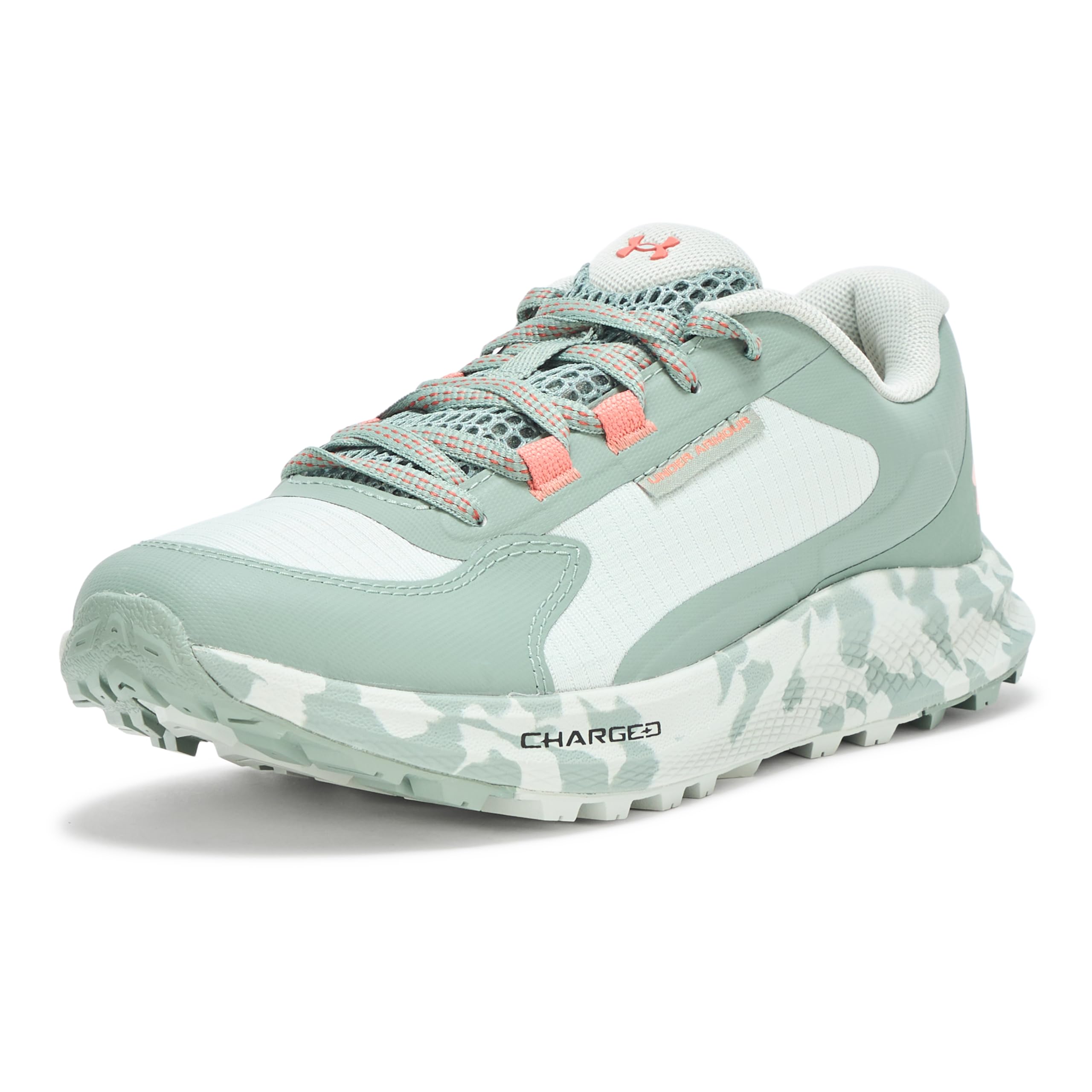
Light on the foot and easy to wear from morning to evening.
The Bandit Trail 3 plays a different game to the specialist trail shoes here: light weight and a fit that disappears on your foot. Customers note wearing them for eleven hours at a stretch, so they hold up on long days as well as on the trail. The colourway gets its own love, described as a midnight blue black, and appearance is the most-discussed positive by a wide margin.
Fit and weight both come back positive, so the light, well-shaped feel is not an accident of the marketing copy. That combination makes it a reasonable option for someone easing into trail running from a road or gym background — the shoe will not overwhelm a beginner’s calves the way a zero-drop or very aggressive lugged model can.
Two fair cautions. Value for money is genuinely split — some buyers see a great deal, others feel it is expensive for what it is, so it depends what you are comparing against. And durability is a mixed conversation, with some reporting the shoe did not hold up for them; it is not a shoe to buy expecting several hard seasons out of it. There is also no stated drop, lug depth, or outsole specification to judge on paper.
What it is good at: a light, comfortable women’s trail shoe buyers wear for eleven hours without complaint.
The fair warning: durability is a split conversation and there is no documented lug or outsole spec to lean on.
Pick it for: light trail days, gym-to-trail transitions, and anyone who wants comfort first and technical specs second.
Think twice if: you expect a trail shoe to survive multiple heavy seasons of muddy running.
9. Saucony Aura TR
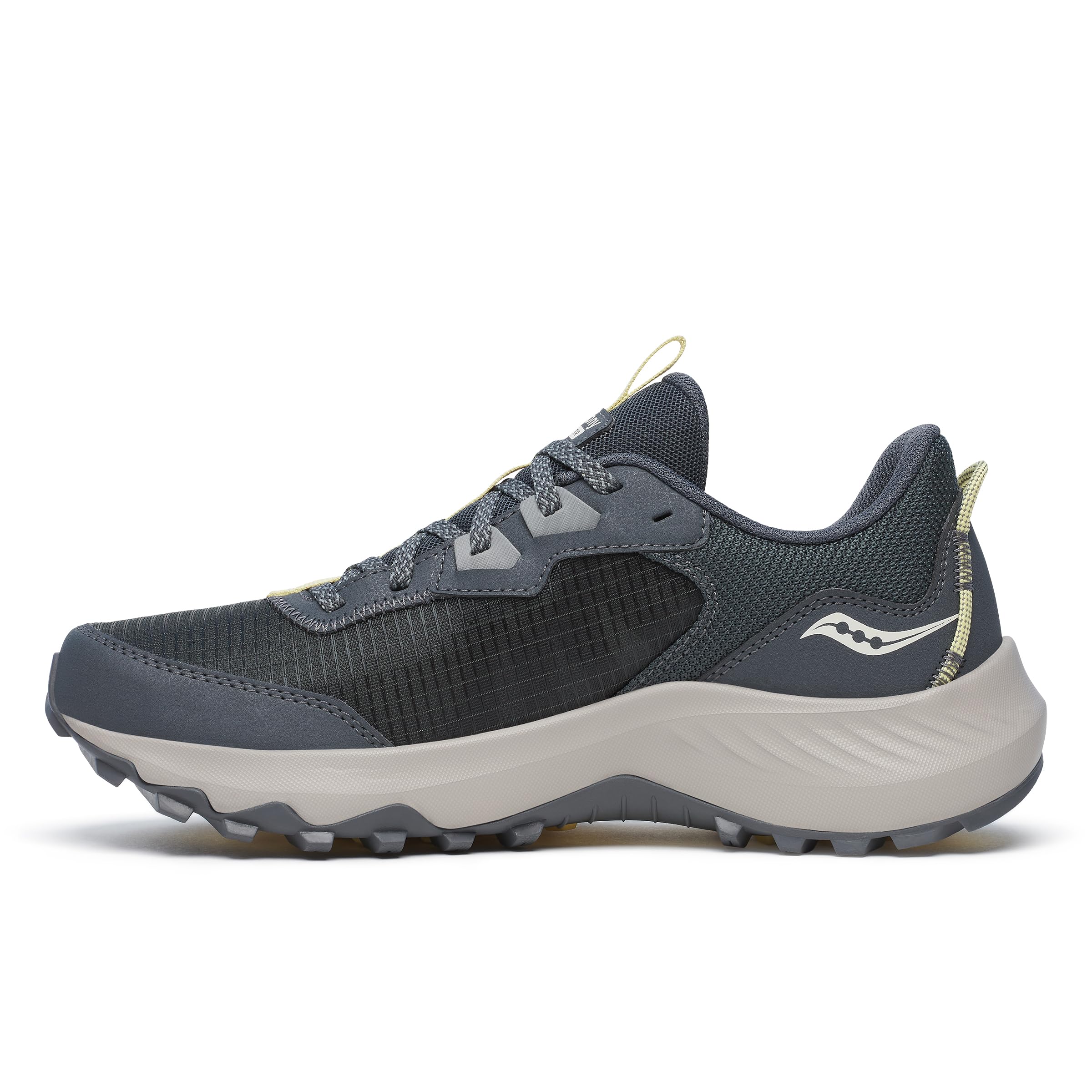
The entry-level trail shoe that gets the basics right without the premium tag.
This is the cheapest way onto the trail on this list, and the spec sheet is honest about it: VERSARUN cushioning for comfort and grippy lugs for traction, nothing exotic. What buyers actually praise is arch support and versatility — the shoe works for trails and general outdoor adventures rather than one narrow discipline. Cushioning and colour both come back positive too, and one buyer’s summary is simply that the shoes feel fantastic.
Quality is what carries the reputation here, and it is the most-discussed positive by a clear distance. That is a good sign for an entry-level shoe — it suggests the build holds together where it counts. If you are testing whether trail running is for you, or you want a second pair for the car and the occasional hike, this does the job without committing serious money.
The two things to go in with your eyes open about are fit and durability, both of which split opinion. Some find them snug, others find they run small — so try before you commit to a long run, and if you are between sizes, that is worth knowing. Durability is likewise mixed, with a minority reporting the shoes fell apart within three to four wears. The Aura TR is a low-cost entry, not a long-term investment.
Why it works as a first trail shoe
- Arch support is one of the things buyers praise most.
- Versatile enough for trails and general outdoor adventures.
- VERSARUN cushioning keeps the ride comfortable on mixed ground.
- The value-for-money trade-off reads well at the entry level.
Go in knowing this
- Sizing is inconsistent — some find them snug, others find they run small.
- Durability is a genuinely split conversation, with a few reporting early wear.
The case for it: arch support, grippy lugs, and VERSARUN cushioning at the entry-level end — the low-risk way to find out if trail running is your thing.
The honest caveat: check the sizing chart against your foot length and do not expect premium-shoe longevity.
Know the Specs
Heel-To-Toe Drop
Drop is the measured height gap between your heel and the ball of your foot inside the shoe. The Altra Lone Peak 8 lists a 0 mm drop, meaning you sit level; the Topo Ultraventure 4 lists 5mm, which nudges you slightly forward. A lower drop asks more of your calves and Achilles. If you are moving down from a conventional trainer, change gradually over several weeks rather than starting with a steep, long descent.
Lug Depth And Outsole Rubber
Lugs are the raised teeth on the bottom of the shoe. Deeper lugs bite into soft ground and mud; shallower lugs feel smoother on hardpack and road. The New Balance Fresh Foam X Hierro V9 lists deeper 6mm lugs with a Vibram Megagrip outsole, while the Altra Lone Peak 8 uses MaxTrac with TrailClaw canted lugs under the metatarsals. A named rubber compound is usually the sign a shoe is built for wet, slick surfaces.
Toe Box Width
The toe box is the front section of the shoe where your toes sit. Too narrow and your toes press together, which causes rubbing and hot spots on long descents. Altra and Topo both build anatomically shaped toe boxes that let toes spread naturally, which is why wide-footed runners gravitate to them. If you have ever had a toenail go black on a downhill, width is the spec to prioritise.
Stack Height And Cushioning
Stack height is how much material sits between your foot and the ground, measured in millimetres. The Altra Lone Peak 8 lists a 25 mm stack; the Topo Ultraventure 4 lists a 35 x 30 mm platform. More stack means more protection from rocks and roots but less feel for the terrain. Cushioning foam type matters too — PWRRUN, Fresh Foam X, ZipFoam and VERSARUN are all different compounds tuned for a different balance of softness and spring.
Common Questions
Do I need a women’s-specific trail shoe, or can I wear the men’s version?
How much drop should a trail running shoe have?
Will a wide toe box shoe still feel secure on descents?
How often should I replace trail running shoes?
Are lugs that deep going to feel terrible on paved paths?
Is zero drop better for your feet than a higher drop?
What is a rock plate and do I need one?
Can I wear trail running shoes for hiking and everyday walking?
Should I size up in trail running shoes?
Is a suede trail shoe a bad idea in wet weather?
The Bottom Line
Start with the Columbia Women’s Konos TRS if you want one shoe for everything. It grips on wet or dry ground and adds the cushioning and arch support people wear for long, hard days on their feet. If standard shoes have never fit your feet properly, take the Altra Lone Peak 8: a 0 mm drop (heel and toe sit level) and Altra’s roomiest toe box. The honest caveat is that your calves need a few weeks to adapt. For genuinely wet, rocky ground, the New Balance Fresh Foam X Hierro V9 brings the deepest lugs here at 6mm (the tread teeth that dig in) with a Vibram Megagrip outsole (a sticky rubber sole). And if you just want to find out whether trail running is your thing without spending serious money, the Saucony Aura TR starts you off with arch support and grippy lugs. Pick the one that matches the ground you actually run on, not the longest spec sheet.
How we choose
We do not accept paid placement. Every pick is matched to a real buyer and a real use-case; we do not hands-on test units.
Sources
Specifications: manufacturer listings and product documentation. Review insights: verified customer reviews, as of November 2026. Pricing: not shown on this page (it changes often); check the current price via the retailer link.
As an Amazon Associate, Tactical Gear Guy earns from qualifying purchases. This does not affect which products we feature.