Specs are compiled from manufacturer listings and verified buyer reviews and can change over time — please confirm the key details on the product page before buying.
If you are new to zero-drop running shoes, the thing worth knowing first is simple. Your heel and your toes sit at exactly the same height off the ground — 0 mm of offset in the makers’ own specs — so the shoe stops letting your heel ride high. That level platform shifts load onto your calves and arches from the first mile. Below, nine real options are sorted by what each one actually does best on roads, trails, and gym floors.
This guide is built by comparing the manufacturers’ published specifications and the patterns across verified customer reviews, so you get each pick’s real strengths and trade-offs instead of marketing spin.
You will see stack heights, lugged outsoles, and toe-box widths spelled out in plain numbers. That way you can match a shoe to your own stride instead of guessing. Here is how to read the specs and pick from the best zero drop running shoes without wasting money on a pair that fights your feet.
Top Picks

How To Choose The Best Zero Drop Running Shoes
Zero drop is a fit decision before it is a performance decision. Your heel and forefoot sit level, so the shoe asks more of your calves and less of your joints. Nail the 0 mm platform and the stack, toe box, and outsole choices fall into line behind it.
Start with the drop, then the stack
The drop is the height difference between heel and toe, measured in millimeters. A true zero drop running shoe lists 0 mm — anything higher means a raised heel, and that changes how you land. Stack height is the total foam under your foot, also in millimeters. A low stack like 22 mm keeps you close to the ground and quick on your feet, while a taller 30 mm stack softens the impact over long distances.
Toe box width is not a luxury
Barefoot-style shoes let your toes splay when you push off. A roomy toe box gives your toes space to spread, and that width is why these shoes feel different from a snug trainer. If you have wide feet or a bunion-prone forefoot, prioritize the toe box over everything else.
Road or trail changes the outsole
A road outsole is smooth rubber tuned for pavement, while a trail outsole uses lugged tread to grip dirt and rock. Match the outsole to where you actually run most. Buying a trail shoe for the treadmill wastes grip, and buying a road shoe for muddy singletrack leaves you sliding.
Side-by-Side Comparison
| Model | Best For | Drop | Stack Height | Weight | Amazon |
|---|---|---|---|---|---|
| ALTRA Women’s Lone Peak 8★ Best Overall | Trail running and hiking | 0 mm | 25 mm | 10.7 oz / 303 g | Amazon |
| Flux Footwear Adapt Graphene RRBest for Cross-Training | Cross-training and gym work | — | — | — | Amazon |
| Topo Athletic ST-5Best for Supportive Miles | Daily road runs and travel | 0 mm | 14 mm | — | Amazon |
| Xero Shoes Women’s HFS Original | Barefoot-style feel | — | — | — | Amazon |
| ALTRA Men’s Torin 7 | Everyday cushioning | 0 mm | 30 mm | 9.8 oz | Amazon |
| Topo Athletic Pursuit 2 | Trail durability and grip | 0 mm | — | — | Amazon |
| Women’s Orthopedic Wide Toe Box Barefoot Shoes | Budget casual walking | — | — | — | Amazon |
Detailed Reviews
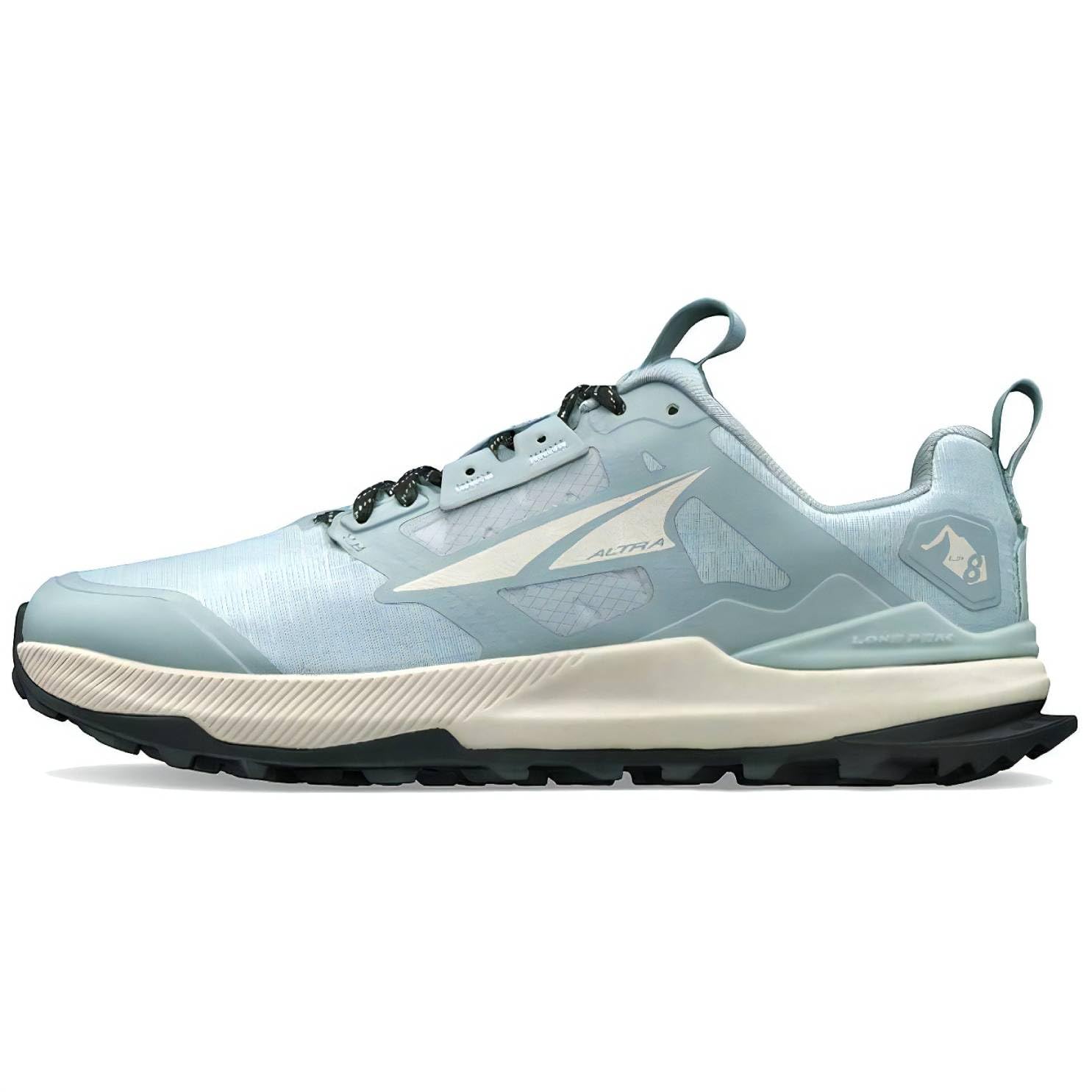
1. ALTRA Women’s Lone Peak 8 Trail Running Shoe
Our pick — 4.5+★ from 850+ verified ratings; the strongest balance of quality and price.
The trail shoe that keeps your toes free and your feet planted on loose ground.
For a woman who splits her week between dirt trails and long hikes, the Lone Peak 8 is the rare zero drop shoe built to take abuse. A 25 mm stack gives you a level platform (heel and toes at the same height), and the mild 25 mm cushion keeps you close enough to feel the ground. The MaxTrac outsole and its canted TrailClaw lugs sit under the metatarsals to bite into loose rock and gravel. That is why the traction earns its keep on the descents.
What wins people over is the build quality and the toe room — feet stay free of pinching, and the wide toe box swallows a broader forefoot without complaint. The ripstop mesh upper resists snags, and the zero drop keeps your landing low and quiet. For a trail shoe, it holds up: buyers report no break-in period dragging on for weeks and a tread that grips on varied terrain.
Here is the honest catch. The cushioning is the one point that splits buyers — a stiffer, more grounded feel underfoot. If you want a plush pillow for road miles, this is not it; it wants dirt. Also worth stating plainly: the Paradigm 8 sits higher at 30 mm on a trail-adjacent platform, while the Lone Peak 8 keeps you at 25 mm for a more direct connection underfoot.
What earns its place
- MaxTrac outsole with TrailClaw lugs for grip on loose ground
- Roomy toe box lets toes splay on climbs
- Zero drop keeps your landing low and even
Where it asks something of you
- Cushioning is grounded, not plush — rough on road-only miles
- Trail focus makes it overbuilt for treadmill duty
Grab it for: dirt, gravel, and long hiking days where grip and toe room matter.
Leave it if: you want a soft pillow underfoot for pavement.
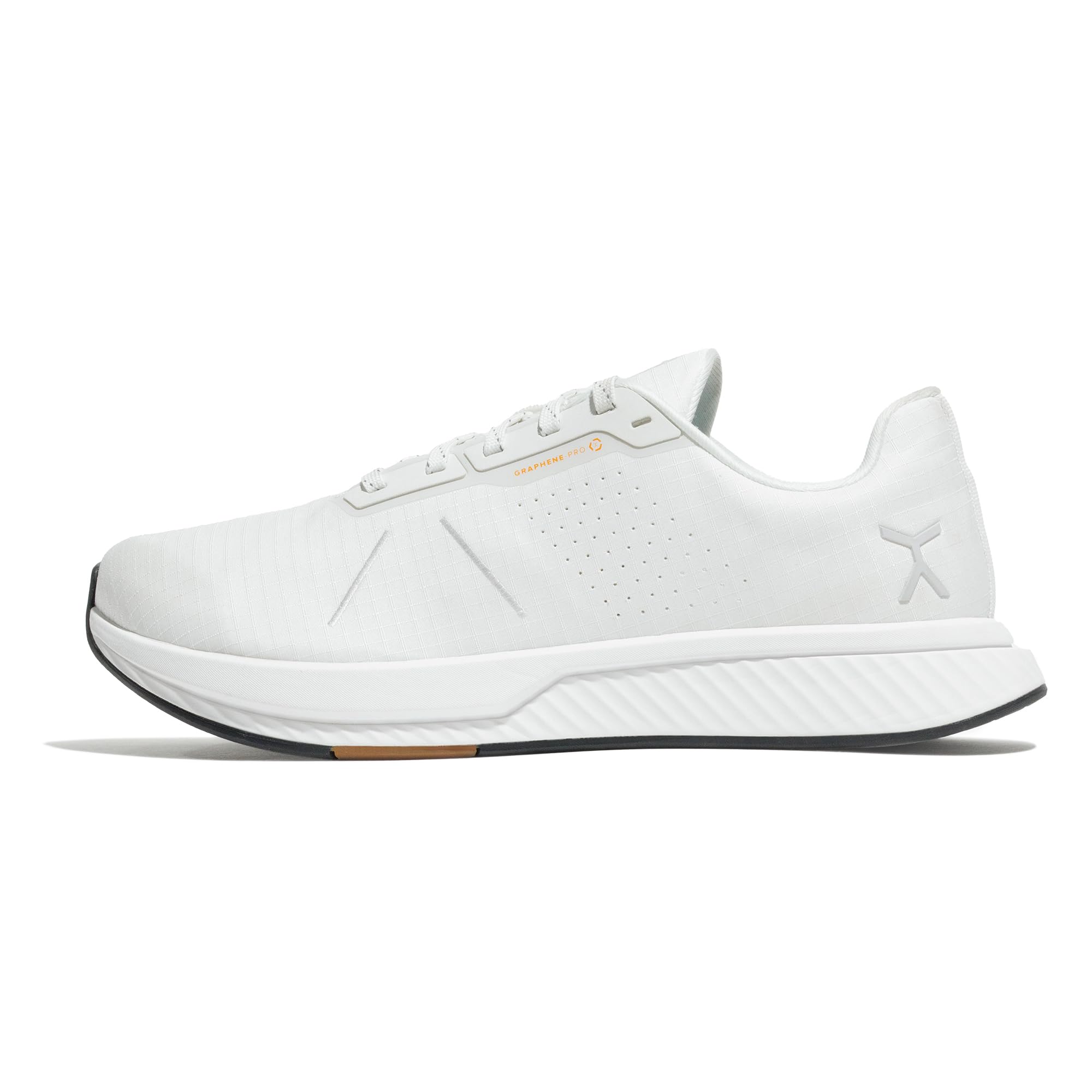
2. Flux Footwear Adapt Graphene RR
A zero drop trainer that doubles as a lifting shoe without slipping under load.
The Adapt Graphene RR is built for the athlete who runs and lifts in the same session. The ripstop upper resists tears and abrasion, so it survives rope work and burpees, and it stays cool enough for sockless wear. The wide toe box lets your foot splay at the bottom of a squat, and the level platform supports the same form you want under a barbell.
The AdaptSol insole is the detail that makes the shoe feel different — it prods your foot into more movement, which is the opposite of a locked-down gym shoe. That suits a lifter who wants feedback from the floor. It also suits a runner who wants to build foot strength rather than have the shoe do the work. If you prefer a stiff, stable feel, it will take some getting used to.
For a mid-range pick, it earns the label on versatility more than on pure mileage. It covers the road, the gym floor, and the cross-training circuit. Pair it with zero drop shoes that stay focused on one job, and you have a rotation.
The multi-sport play: one shoe for running and strength training, with a toe box that lets your foot act like a foot.
Worth knowing: the insole’s dynamic feel rewards an active foot — it is not a cushioned recovery shoe.
Choose it if: your week mixes road miles and heavy lifts and you want one zero drop shoe to cover both.
Pass if: you want a soft, plush ride for easy recovery days.
3. ALTRA Women’s Paradigm 8 Road Running Shoe
A gym-bag shoe that folds flat and still runs like a road trainer on low stack.
The ST-5 is the most natural-feeling shoe in the Topo line, and the build shows why. The platform is a low 14 mm with 0 drop — 2 mm less stack than the previous version — so you feel the road and turn your foot over quickly. The recycled mesh upper breathes, and the collapsible heel counter lets the whole shoe pack flat into a gym bag or a travel case.
Comfort is the split point. Some runners call it amazingly comfortable; others report knee pain on the low stack and a fit that runs short in length. So size with care, and give your legs a gradual ramp onto the low stack. It is a shoe for daily runs, up-tempo work, and gym sessions — not a max-cushion recovery pick.
Think of it as the travel-friendly road trainer you can throw in a carry-on without losing shoe shape.
Travel and tempo
- Low 14 mm stack keeps you fast and grounded
- Collapsible heel packs flat for a bag
- Breathable recycled mesh upper
Fit to watch
- Runs smaller in length — size up if between sizes
- Low stack asks a gradual ramp for new zero drop runners
The right call for: travelers and tempo runners who want a packable road shoe.
Not your fit if: you need max cushioning underfoot on recovery days.
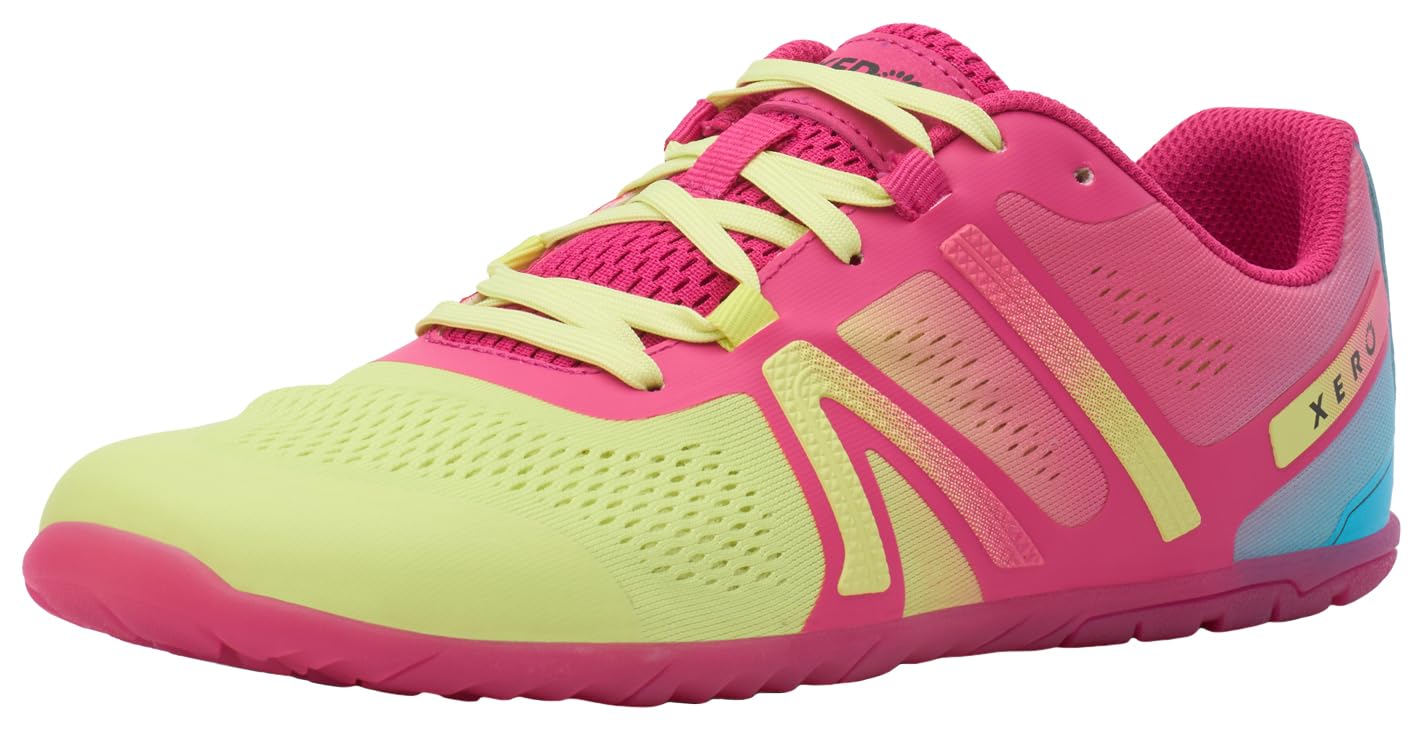
4. Xero Shoes Women’s HFS Original Barefoot Running Shoes
The closest thing to running barefoot while still wearing a shoe.
The HFS is a barefoot trainer first. The mesh fabric lets your foot bend the way it would on grass, and the sole flexes with every push-off instead of fighting your stride. The thing everyone raves about is how it looks — a clean silhouette that does not scream “running shoe.” It is also light enough to forget you have it on.
For a runner chasing a natural stride, the flexible sole lets your foot bend and push off as it would barefoot. The fit and durability draw mixed notes, so treat the sizing chart carefully and expect a thin sole that trades padding for ground feel. That thin sole is the barefoot design working as intended, not a flaw.
Pair it with the Torin 7 if you want a cushioned shoe for long days and a barefoot shoe for short, form-focused runs.
The barefoot purist: a flexible sole and breathable mesh tuned for ground feel and natural foot bend.
The trade-off: minimal padding means hard pavement feels hard — build up mileage slowly.
Pick it if: you want a true barefoot feel for form work and short runs.
Skip if: you want cushion underfoot for long pavement miles.
5. ALTRA Men’s Torin 7 Road Running Shoe

A plush road trainer that lets you stack miles without the drop fighting you.
The Torin 7 is the cushioned option for a runner who wants zero drop but not a thin, flexible sole. Altra added two extra millimeters of EGO MAX foam to the midsole, which gives a little more bounce underfoot. The redesigned tongue and molded heel collar lock the foot in, and the mesh upper breathes on warm runs. The stack sits at 30 mm, level heel to toe.
What works here is range. Runners report it handles many miles without discomfort, and the toe box width suits wide feet. The cushioning and responsiveness come close to balanced, so it works for speed work as well as easy days. The one caution is durability — a few note the shoe wearing sooner than they hoped, so watch the outsole if you log heavy weekly mileage.
One defining contrast: the Escalante Racer 2 sits lower at a 22 mm stack for quicker turnover, while the Torin 7 sits at 30 mm for more cushion under long, easy miles.
Best suited to: daily road runners who want cushioned comfort on a level platform.
The caveat: heavy-mileage runners should keep an eye on outsole wear.
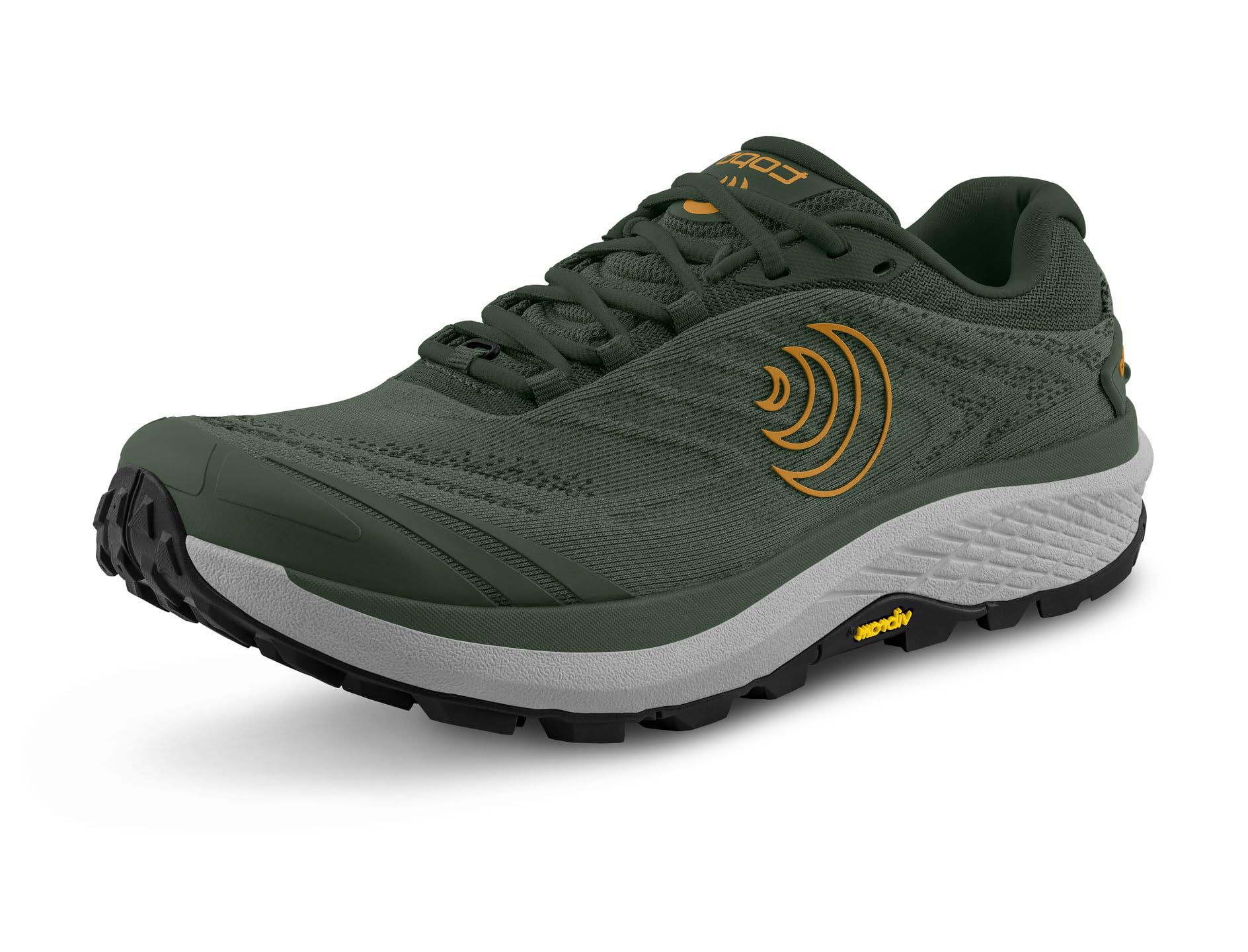
6. Topo Athletic Men’s Pursuit 2 Running Shoes
A trail runner with a sticky outsole that keeps you confident on wet rock.
The Pursuit 2 is the trail option for a man who runs hard and wants grip he can trust. The Vibram Megagrip outsole is the standout — a rubber compound tuned for traction on slick, varied ground. The ZipFoam midsole is softer and more responsive than the previous formula, so the ride is gentler over long dirt miles. The zero drop platform stays level, and the roomy toe box lets your toes spread on descents.
Comfort is what people keep talking about, and the FKT Insole drains quickly in wet conditions, which matters on creek crossings. The trade-off is durability on the upper — some find the shoe tearing before the sole wears out. The cushioning and toe-box width also draw mixed views, so if you want a stiff, locked-down trail shoe, look elsewhere.
For a runner logging wet, technical trail days, this is the grip-first pick.
Grip first: Vibram Megagrip and a drainage insole built for wet, technical trails.
Watch the upper: durability of the fabric, not the sole, is the weak point over time.
Choose it for: wet, rocky trails where outsole grip is the whole job.
Look elsewhere if: you want a stiff, locked-down feel up top.
7. Women’s Orthopedic Wide Toe Box Barefoot Shoes

A low-cost entry into wide-toe, zero drop walking for everyday comfort.
If you want a zero drop shoe for walking and casual wear without spending much, this is the entry point. It is built around a wide toe box and a non-slip outsole, and the breathable upper keeps your feet cool. It works best for a woman who wants toe room and a level platform for errands and daily strolls rather than fast running.
Buyers praise the cushioned footbed for easing aching feet on long walks. The toe box is the split point: some say it is wide, others find the shoe runs large. So check the size chart carefully before ordering. At this price it is a low-risk way to try a level platform for walking, not a shoe built for distance running.
Treat it as a walking shoe that introduces your feet to a level platform.
Budget entry: a wide toe box and non-slip outsole at the lowest tier here, built for casual wear.
The reality: runs large for some — order the smaller size if between two.
Right for: budget shoppers who want a wide-toe walking shoe to try zero drop.
Not right for: serious distance runners who need a performance trainer.
Know the Specs
Heel-to-Toe Drop
The drop is the height difference between the heel and the toe, measured in millimeters. Zero drop means both sit at the same height — 0 mm. That level platform is what makes a shoe feel “flat” without actually being flat on the inside. A lower drop can change how your calf loads with each step, so many runners ease into it on short runs first.
Stack Height
Stack height is the total foam between your foot and the ground, in millimeters. A low stack like 22 mm keeps you close and quick; a taller 30 mm stack softens the impact over long distances. Both can be zero drop — the stack sets the cushion, the drop sets the angle. Pick your stack by how much shock you want absorbed underfoot.
Common Questions
What does zero drop actually mean for a running shoe?
Are zero drop shoes good for wide feet?
How long should I take to adapt to zero drop shoes?
Can I run on roads in a trail zero drop shoe?
Is zero drop better for speedwork or easy runs?
Does a zero drop shoe have arch support?
Do zero drop shoes run true to size?
Can I lift weights in zero drop running shoes?
How do I know a shoe is truly zero drop?
The Bottom Line
For most runners, the strongest all-round pick from this zero drop running shoes list is the ALTRA Women’s Lone Peak 8 because it pairs a 0 mm drop (heel and toe sit level) with a gripping MaxTrac outsole (a sticky rubber sole for traction) and a toe box that keeps wide feet comfortable on trails and hikes. If you want one shoe that covers running and lifting, grab the Flux Footwear Adapt Graphene RR. And for cushioned everyday road miles, the ALTRA Men’s Torin 7 is the one to reach for.
How we choose
We do not accept paid placement. Every pick is matched to a real buyer and a real use-case; we do not hands-on test units.
Sources
Specifications: manufacturer listings and product documentation. Review insights: verified customer reviews, as of November 2026. Pricing: not shown on this page (it changes often); check the current price via the retailer link.
As an Amazon Associate, Tactical Gear Guy earns from qualifying purchases. This does not affect which products we feature.