Specs are compiled from manufacturer listings and verified buyer reviews and can change over time — please confirm the key details on the product page before buying.
Most “zero degree” bags quit working long before the thermometer does. The rating on the tag tells you the coldest air the bag survived in a lab, not the temperature you will actually sleep through. This guide sorts that out for you: which bags genuinely hold heat on a freezing night, which ones trade warmth for packability, and which are better left to car camping. If you want the short answer, the HiZYNICE XXL at the top of the list is the crowd favorite — 4.5+ stars across 1,600+ owners — because its 90 x 39 inch flannel-lined cut fits a 6 ft. 7 in. sleeper without sacrificing cold-weather warmth.
This guide is built by comparing the manufacturers’ published specifications and the patterns across verified customer reviews, so you get each pick’s real strengths and trade-offs instead of marketing spin.
A sleeping bag only works if its temperature rating matches the conditions you actually camp in. Below are eleven zero degree sleeping bags compared on fill type, packed weight, dimensions and what owners actually report after sleeping in them.
Top Picks

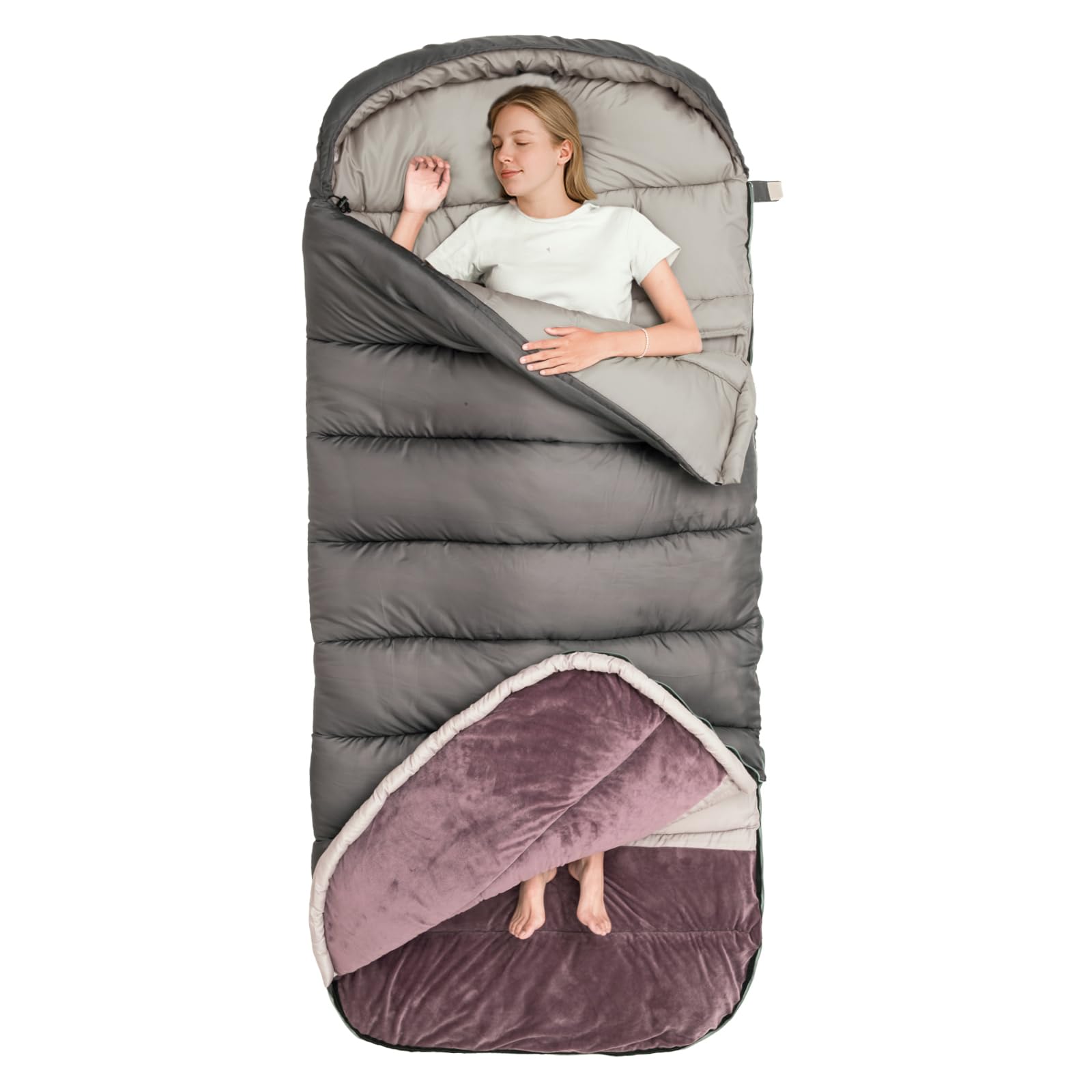

How To Choose The Best Zero Degree Sleeping Bags
Buying a cold-weather bag is mostly about matching three things to how you actually camp: the temperature rating, the insulation type, and the packed weight. Get those three right and the zippers, hoods and draft tubes become fine-tuning rather than fixes. Get them wrong and you either shiver through the night or haul a bag too heavy to ever leave the car.
Read the rating as three numbers, not one
A bag’s tag usually lists a comfort rating, a limit rating and an extreme rating. Comfort is the temperature an average sleeper stays warm in; limit is the coldest a warm sleeper can push; extreme is survival, not comfort. Plan your trip around the comfort number and treat the lower figures as headroom. The HiZYNICE, for example, lists 30°F comfort, 15°F limit and 0°F extreme — so it suits most three-season camping with margin for a cold snap, and is a stretch for a deep-winter summit.
Down versus synthetic insulation
Down packs smaller and lighter for the same warmth, which is why backpackers chase it. Its weakness is moisture: wet down clumps and loses loft. Synthetic fill — hollow fiber or recycled loft — holds warmth better when damp and costs less, but it is bulkier in the pack. If you are hiking miles to a cold, dry camp, down earns its keep. If you camp in wet coastal air or a canvas wall tent, synthetic is more forgiving.
Width, length and who fits inside
Rectangle bags give you room to roll over; mummy bags cut weight by hugging the body. If you are tall or broad-shouldered, check the stated length and width before anything else — an oversized rectangle around 90 inches long gives a 6 ft. 7 in. sleeper real room, while a snug mummy can feel pinched. Side sleepers and anyone who kicks in the night usually do better with a wider cut.
Packed weight and stuffed size
Weight matters most if the bag rides on your back. A 3.1-pound down bag and a 17.5-pound canvas bag both call themselves cold-weather gear, but only one is realistic for backpacking. Look at the stuffed size next to the weight: a compression sack that shrinks the bag to a modest bundle is what turns a warm bag into a packable one. Car campers can ignore this entirely — hunters and base-campers often prize durability over grams.
Zippers, draft tubes and hoods
Heat escapes through every gap, so the small parts matter on a freezing night. A draft tube behind the zipper blocks cold air from creeping along the teeth; a draft collar or shoulder baffle seals the neck. Anti-snag sliders keep you from fighting the zipper at 2 a.m. A hood that cinches down traps heat around your head, and dual sliders let you vent your feet without opening the whole bag.
Side-by-Side Comparison
| Model | Best For | Insulation | Weight | Dimensions / Fit | Amazon |
|---|---|---|---|---|---|
| Sleeping Bags for Adults XXL Cold Weather (HiZYNICE)★ Best Overall | Big-and-tall side sleepers | Cotton flannel lining, cotton fill | 7 lb | 90″L x 39″W, fits to 6 ft. 7 in. | Amazon |
| BISINNA 0 Degree XL Sleeping BagRoomiest Cut | Room to sprawl on a budget | Polyester fill | 3.5 kg | 90.55″L x 35.4″W, max height 78 in. | Amazon |
| Teton CelsiusAll-Season Value | All-season camping value | SuperLoft Elite Hollow Fiber | 5.5 lb | 80″L x 33″W | Amazon |
| Coleman North Rim 0°F | No-snag mummy on a budget | Coletherm hollow polyester | — | 82″L x 32″W, fits to 6 ft. 2 in. | Amazon |
| Browning McKinley 0° | Roomiest rectangle | TechLoft Silver polyester | 8.8 lb | 90″L x 36″W | Amazon |
| OMVMO Envelope Down 600FP | Backpacking on a down budget | Natural white down, 400T nylon shell | 3.1 lb | 88.6″L x 35.4″W, max height 6 ft. | Amazon |
| SYWSKW Large Down with Pillow | Backpacking couples’ trips | Down, 680 FP RDS | 2.6 lb | 86.6″L x 33.46″W | Amazon |
| QEZER Down Mummy 600 Fill | Mummy cut with foot room | 600+ Fill Power duck down | 3.64 lb | 84.65″L x 31.89″W | Amazon |
| Kelty Cosmic Synthetic 0F | Down-free cold backpacking | Recycled CirroLoft ECO synthetic | 4 lb 12 oz | 78.3″L, fits to 6 ft. | Amazon |
| TETON Sports Deer Hunter | Wall tent and hunting camp | SuperLoft Elite hollow fiber, canvas shell | 17.5 lb | — | Amazon |
| QEZER 0 Degree Down (650 Fill) | Deep-cold backpacking | 650 Fill Power down | 5.2 lb | 88.58″L x 32.28″W | Amazon |
Detailed Reviews
1. HiZYNICE Sleeping Bags for Adults XXL Cold Weather
Our pick — 4.5+★ from 1,500+ verified ratings; the strongest balance of quality and price.
The oversized flannel-lined rectangle that finally fits tall frames and restless sleepers.
Here is the number that sells this bag: 90 inches long by 39 inches wide, which is genuinely big enough for a sleeper up to 6 ft. 7 in. and wide enough to roll onto your side without the walls strangling you. For a big-and-tall camper, that extra width is the whole purchase. You get a 100% cotton flannel lining against your skin, and owners consistently describe it as soft and fluffy rather than slick and plasticky. It is one of the things people bring up most — the build quality lands first in their minds.
The cold-weather story is laid out in three numbers rather than one: 30°F comfort, 15°F limit, 0°F extreme. Read plainly, that means it keeps an average sleeper comfortable around 30°F, holds up to about 15°F for someone who runs warm, and survives a 0°F night rather than being cozy in it. A draft tube runs behind the zipper to stop heat leaking through the teeth, and the two-way zipper with dual pulls opens from inside or outside, top or bottom, so you can vent your feet without letting cold air dump in at your chest.
The zipper is the one piece to treat with care. It is a heavy two-way unit that most owners find sturdy, but the quality does draw mixed notes — a snagged or failing slider is the recurring complaint. Zip it slowly, keep the fabric clear of the teeth, and this bag should serve you for years. Machine washable in cold water on a gentle cycle with the flannel facing out, plus a compression sack in the box, rounds out the practical side.
Where It Wins You Over
- 90″ x 39″ footprint fits sleepers to 6 ft. 7 in. — real room to turn over
- 100% cotton flannel lining that owners describe as soft and warm to the touch
- Three clear ratings (30°F comfort / 15°F limit / 0°F extreme) so you know what you are getting
- Two-way zipper with dual pulls — joins a left- and right-zip bag into a double
- Machine washable with compression sack included
The Zipper Caveat
- The zipper is the weak point — heavy and sturdy for most, but it draws mixed notes and can snag if you rush it
- 7 lb of cotton fill is a car-camping weight, not a backpacking one
Reach for this if: you are tall, broad, a side sleeper, or simply refuse to sleep pinned in — and you want flannel warmth without paying down prices.
Think twice if: you are counting ounces on a long hike, since 7 pounds of cotton fill wants a truck, not a backpack.
2. BISINNA 0 Degree Sleeping Bag XL for Adults
A generous 90.55-inch rectangle that delivers cold-weather bulk without the cold-weather price.
Width is the first thing you notice here: 90.55 inches long by 35.4 inches wide, with a stated maximum height of 78 inches. That is noticeably longer and wider than the Teton Celsius at 80 x 33 inches, so if length is your worry, this bag answers it. The shell is 190T polyester with a water-repellent coating — 190T is a density rating for the fabric weave, and the water-repellent treatment is what shrugs off damp tent walls and light condensation so the inside stays dry.
Cold-proofing shows up in the details. The foot area is lined with soft baby flannel to keep toes from going numb, and the zipper and collar are shaped to block wind from creeping in at the neck. It tips the scale at 3.5 kg, roughly 7.7 pounds, which buys you that roomy shell and warmth at the cost of pack weight. Warmth is what buyers talk about most with this one, and the roominess gets frequent mention too — even a small dog has been reported sleeping comfortably inside.
A carry bag comes with it for storage and transport, and the whole thing is aimed at winter use on the label. Where it gives ground: with only a few dozen ratings behind it, this is a newer bag with a shorter track record than the established names on this list. The water-repellent shell handles light moisture, not a soaked-through night. Treat it as a solid cold-weather rectangle for car camping, cabin trips and casual winter overnights.
Best matched to: campers who want the widest, longest rectangle here and value a warm, wind-blocked neck over shaving pounds.
Know before you buy: at 3.5 kg it is a haul-in-the-car bag, and the water-repellent shell is for damp, not drenched.
3. Teton Celsius 0F Degree Sleeping Bag
The dependable all-rounder that keeps the heat in without emptying your wallet.
This is the bag with the deepest track record on the list, and what owners return to is simple: it keeps them warm, even when the mercury dives well below freezing. That consistency comes from a double-layer construction with fiber fill and draft tubes working together — the double layer means the stitching that holds the insulation does not line up straight through, so cold spots get sealed rather than sewn open. Comfort is the second thing people notice, and the soft cotton lining gets steady praise for feeling good against skin.
Half-circle mummy hood keeps your head and pillow tucked in, and the bag unzips at top or bottom for ventilation when you run warm. Teton’s stuff sack is a genuine convenience — you stuff the bag in from the bottom and cinch the heavy-duty straps rather than fighting to roll it perfectly square. A hang loop lets you store it uncompressed between trips so the fill keeps its loft. Hand wash only, which is the trade-off for that cotton lining.
Where it asks you to compromise: the fit is on the snug side for some, and it carries real weight at 5.5 pounds — noticeably lighter than the Browning McKinley’s 8.8 pounds, but heavier than the down options here. At 80 x 33 inches, the internal room draws mixed feelings; broad sleepers may feel it. For the camper who wants one bag that handles spring through late fall camping without fuss, though, it is hard to argue with the value here.
The warmth case: double-layer fiber fill with draft tubes holds heat down toward the rating, and the cotton lining makes it comfortable enough to sleep in a t-shirt.
What to plan for: 5.5 pounds and a hand-wash-only liner mean this bag wants a car or a short walk, not a long thru-hike.
Choose it when: you want a proven four-season bag for family camping and you would rather not hand-wash anything delicate.
Look past it when: you need a wide internal cut or you are packing for distance — 5.5 pounds adds up fast.
4. Coleman North Rim 0°F Sleeping Bag

An adjustable-hood mummy that lets you dial warmth up or let air in without unzipping.
The feature worth leading with is the adjustable hood — a cinchable opening at the head that lets you choose between a sealed-in cocoon and a vented night, without touching the main zip. That kind of fine control is what keeps a mummy bag from becoming a sauna at 4 a.m. The mummy shape itself trims bulk, and a Thermolock draft tube runs behind the zipper to stop body heat escaping through the teeth. Coletherm hollow polyester insulation is the fill; hollow fibers trap air and hold warmth with less weight than solid synthetic fill.
At 82 x 32 inches and rated for campers up to 6 ft. 2 in., it is a moderately sized mummy rather than a sprawling rectangle — the fit is snug by design. The no-snag zipper is a welcome touch, and machine washability plus a 5-year limited warranty make this a low-fuss bag to own. Quality and warmth are what the reviews center on, with owners describing the cold-night performance as snug and reliable.
Two honest notes before you commit. The size is called roomy by some and too tight by others, so if you are at the tall end, measure yourself against that 6 ft. 2 in. limit. The zipper draws mixed feedback on durability — treat it gently and it holds. And it is bulkier than you might expect for a mummy, so if pack volume is your constraint, plan around it. For a budget-conscious camper wanting hood control and a warranty with real length, this is a sensible buy.
Why It Earns a Spot
- Adjustable hood gives you sealed warmth or vented airflow without unzipping
- Thermolock draft tube behind the zipper cuts heat loss
- Coletherm hollow polyester holds warmth with less weight than solid fill
- Machine washable with a 5-year limited warranty
Fit Before You Commit
- 82 x 32 in. mummy cut is snug — the 6 ft. 2 in. rating is a real ceiling, not a suggestion
- Bulkier than its mummy shape suggests; zipper durability draws mixed reports
Your pick if: you want a compact mummy with an adjustable hood and a warranty that actually covers years of use.
Be honest with yourself: broad or tall sleepers should measure up first, because 32 inches of shoulder width is a snug room.
5. Browning McKinley 0° Sleeping Bag

A roomy ripstop rectangle tuned to keep you warm without feeling walled in.
Two design choices set this apart from the pack. First, a two-layer offset construction — the inner and outer quilting are stitched off-center from each other so there is no continuous seam running through the fill, which is exactly how cold spots form. Second, a 210T nylon diamond ripstop outer shell: ripstop means a grid reinforcing thread stops a small tear from running, and the dense 210T weave resists snags from tent floors and gear. Inside there is a brushed polyester liner and a full-length zipper baffle, plus an insulated chest baffle to seal the draft at your shoulders.
Space is where this really wins. At 90 x 36 inches it offers plenty of room to roll around, and owners repeatedly describe it as comfortable and not the least bit claustrophobic. Car campers in genuinely cold conditions are the audience here — the warmth is strong enough that one owner reports comfortably sleeping without socks. TechLoft Silver insulation does the thermal work. The dimensions are also where the honest math comes in: 90 x 36 inches is 3 inches longer and 3 inches wider than the Teton Celsius at 80 x 33 inches, and that extra room is exactly why it weighs what it does.
Which brings the trade-off: 8.8 pounds. This bag is built for the truck bed, the wall tent, the base camp. Packed down it stows to 18 x 12.5 inches in its compression sack, manageable for storage and vehicle travel but not a serious backpacker’s companion. If roominess and cold-night comfort come first, this is a beautifully made bag. If ounces matter, the down options below win.
The room-to-move payoff: 90 x 36 inches is the most sprawling rectangle in this tier, and owners love not feeling boxed in.
The pack thing: at 8.8 pounds, this is a drive-to-camp bag — brilliant warmth, but not one you will want strapped to a pack.
Made for: car campers and cabin sleepers who want maximum stretch-out room and real cold-weather warmth with a tough ripstop shell.
Skip past it if: you are planning a backpacking trip, because 8.8 pounds will be the first thing you regret.
6. OMVMO Envelope Down Sleeping Bag 600FP
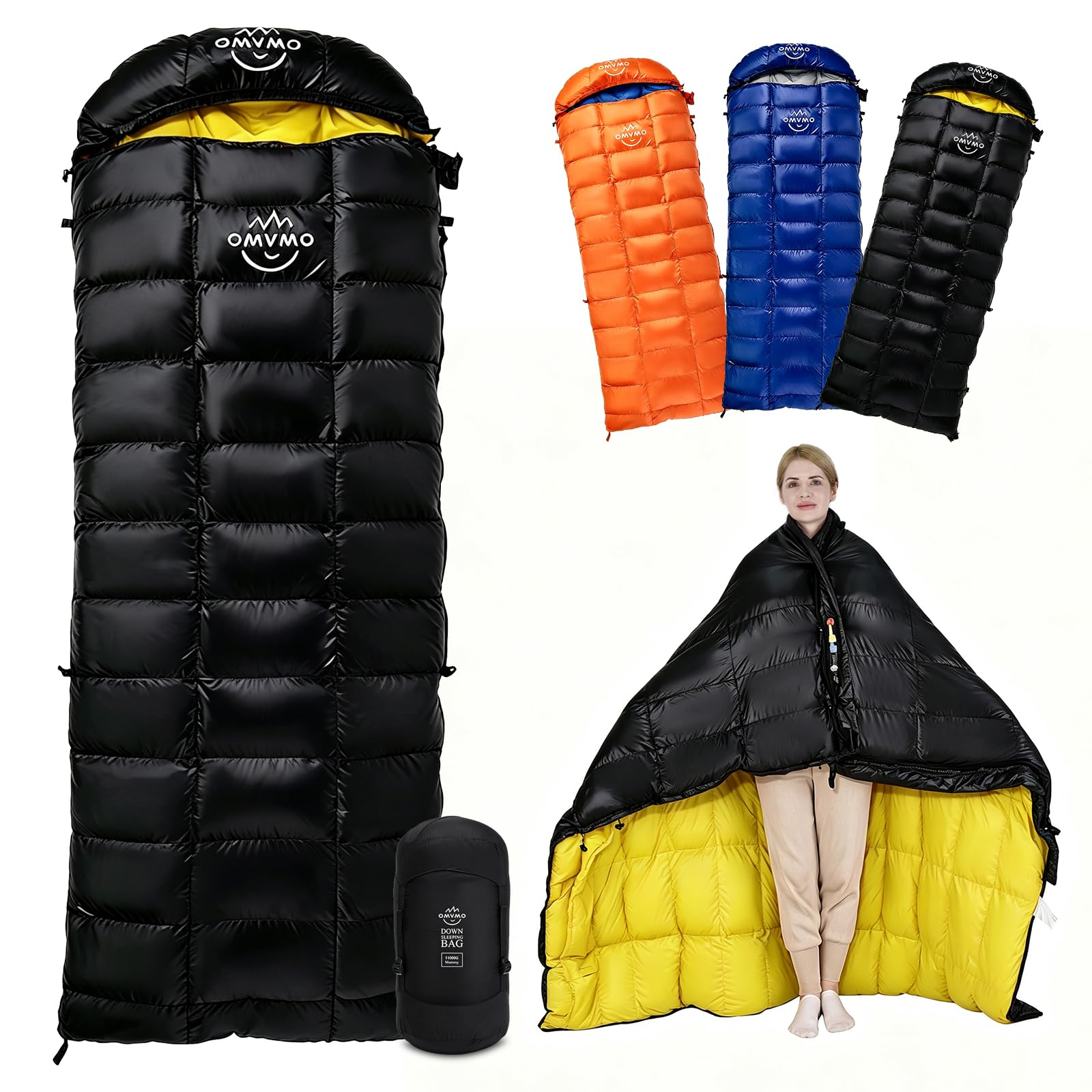
The lightest down bargain here, with a design that turns the bag into a cloak.
For 3.1 pounds, this one gets you into real down territory — the kind of fill that packs small and breathes well. The construction detail worth knowing is the 3D stereoscopic cutting: 80-plus independent rectangular loft chambers, roughly twice the loft count of typical down bags, each holding its down evenly so cold spots do not form. The shell is 400T 20D nylon treated with a DWR (durable water-repellent) coating, which keeps light moisture out and stops the down from leaking through the fabric. Genuine YKK zippers with anti-snag sliders round out the build.
The versatility is the fun part. Zip a left-zip and a right-zip bag together for a double, wear it over your shoulders as a cloak using the buttons, or completely unzip it into a down blanket. There is a buckle strap to lash the bag to a sleeping pad so you do not roll off at night. Draft tubes around the shoulder and along the zipper, plus neck and shoulder drawstrings and a detachable half-circle hood, all work to keep warm air in. Warmth is the standout in the reviews, and owners describe the insulation as performing well past the freezing point on cold nights.
Running at 88.6 x 35.4 inches with a stated max height of 6 feet, it is roomy for a down bag but not oversized. The honest note: at 3.1 pounds it sits in a real backpacking weight class, but it is a summer-to-shoulder-season bag being pushed toward winter by its construction. Expect it to shine in three-season cold and to be a stretch on a true 0°F night. That is the right expectation for this price level in down.
What the down buys you: 3.1 pounds of packable warmth with 80-plus loft chambers and a DWR-coated 400T nylon shell that keeps moisture out.
Set your expectations: it is a three-season down bag, not a true deep-winter 0°F mummy — pack a pad and layer up on the coldest nights.
Ideal for: hikers ready to carry down who want a versatile, convertible bag and do not mind it being a cold-weather compromise.
Not your match if: you are hunting for a genuine 0°F winter mummy — this one earns its warmth in shoulder season.
7. SYWSKW Large Down Sleeping Bag with Pillow
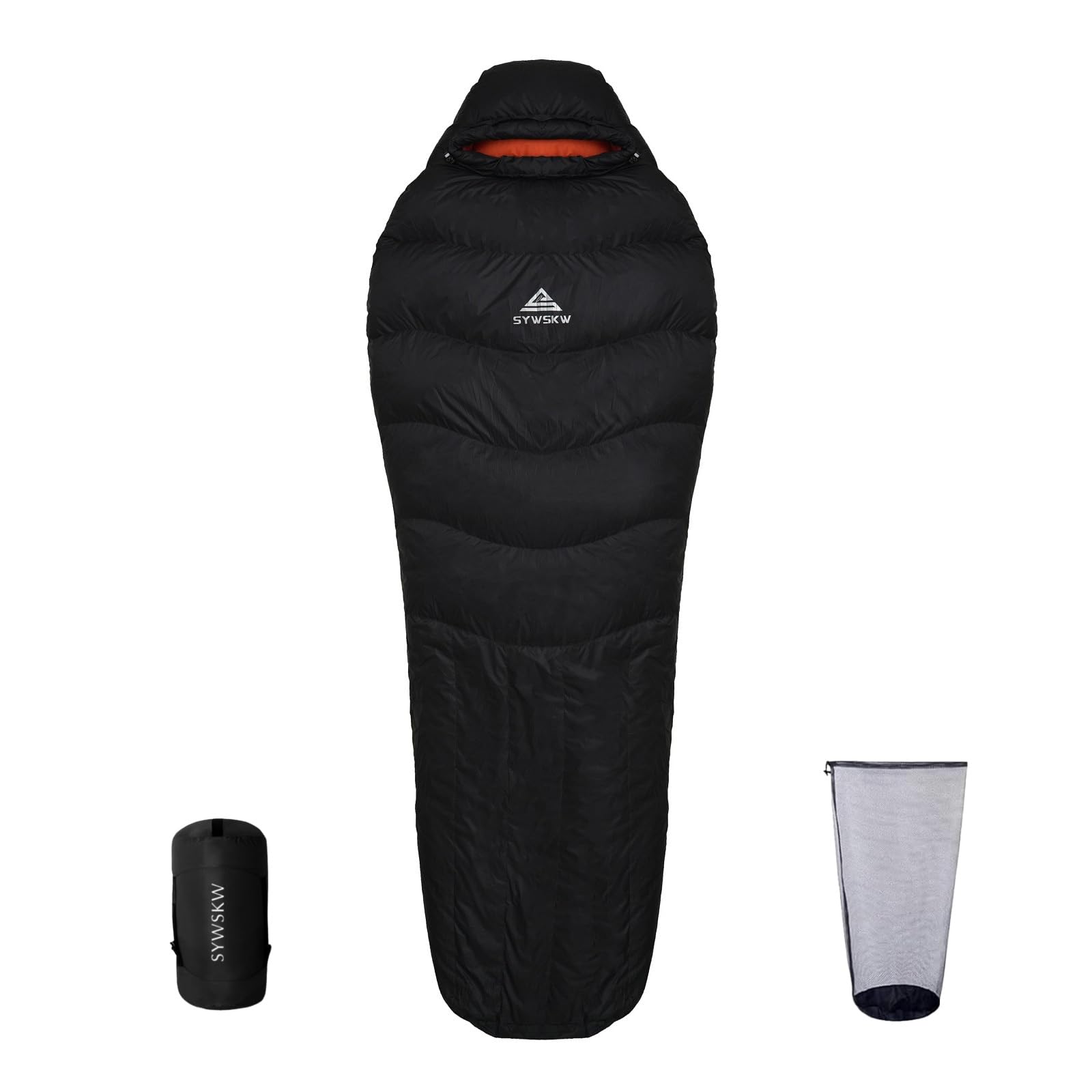
The lightest bag on this list, with a built-in pillow for quick overnight trips.
Start with the weight: 2.6 pounds, and a pack size that compresses down toward 7 x 12 inches. That is the lightest bag here, which is exactly why it earns the backpacking slot. The down is 680 fill power with RDS certification — fill power measures how much space one ounce of down lofts into, so higher numbers mean more warmth per ounce, and 680 puts this in real down territory. The shell is 100% nylon, and an 80g pillow detaches so you can leave it home on through-hikes.
The dimensions are backpacking-generous: 86.6 inches long by 33.46 inches wide. That is wider than the QEZER Down Mummy at 31.89 inches, so broad-shouldered sleepers get more shoulder room here. A YKK zipper keeps the entry reliable, and there is an internal security pocket for phone and keys. The bag zips to a second same-line bag to form a couple’s double, so two people on a family trip can share warmth. Reflective drawcords make you visible during dawn and dusk excursions, which is a small but thoughtful detail. Quality and size are the points that hold up in the reviews, with the bag holding its warmth well in cold camping conditions.
The honest footnotes: expect to let it loft for at least half an hour once out of the stuff sack so it reaches full fluffiness. The zipper gets mixed feedback — functional, but occasionally finicky. And the pillow, while handy for car-to-camp trips, is not the reason to buy this; the light weight is. If you want the smallest, lightest cold-weather bag here for actual carrying, this is it.
The reason to buy: 2.6 pounds of 680 fill-power down with a couple’s-zip option — genuinely carryable on a long trail.
Worth knowing: let it loft for at least half an hour before bed, and expect the zipper to need a careful hand.
The right buy for: backpackers and couples who want the lightest bag here and value a detachable pillow over absolute simplicity.
Consider the alternative if: you want a no-fuss zipper and a deeper winter rating — this one is about grams, not the coldest night.
8. QEZER Down Mummy Sleeping Bag, 600 Fill Power
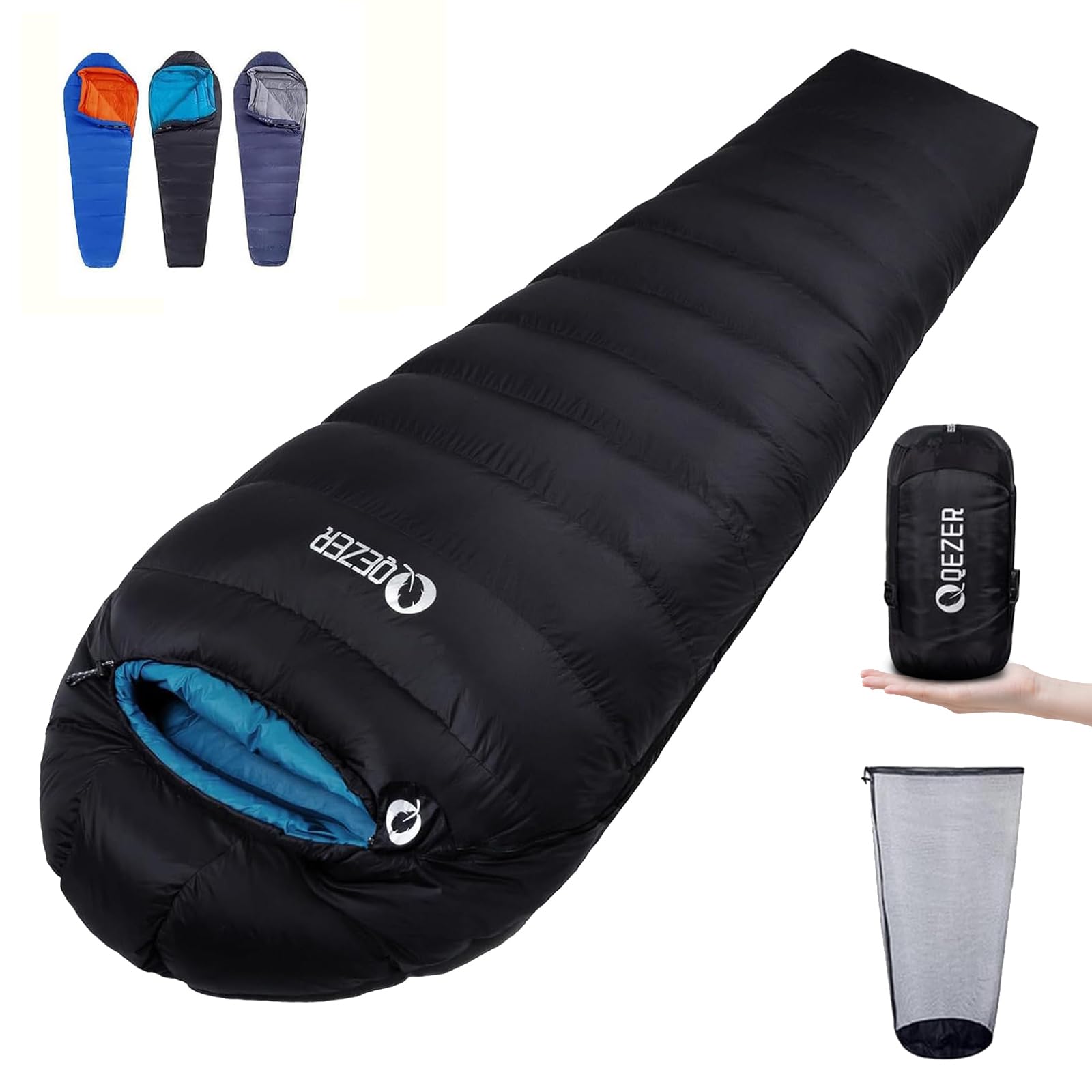
A snug mummy with a trapezoidal footbox that stops your toes feeling squashed.
The spec that answers the classic mummy complaint is the footbox: a wide trapezoidal shape at the bottom instead of a tapered point, so your feet have their own space rather than being pinched into a cone. That is a small design decision with a real payoff. The fill is 2.2 pounds of 600+ fill-power duck down, and the bag lists a comfort temperature of 18°F to 32°F with a 10°F limit — so it is a genuine cold-weather mummy, not a three-season pretender. Both the shell and the inner layer use 400T tear-resistant nylon, which keeps the down from leaking and resists abrasion inside a pack or tent.
At 84.65 by 31.89 inches and 3.64 pounds, it is a compact, packable bag — roughly half the weight and volume of a polyester cotton bag, per the maker. A durable inner drawstring helps seal heat in at the neck, and the zipper is built to be joined so two bags can become one for trips with a partner. There is an inner pocket for keys or a phone. Insulation is what owners focus on: the down does its job and the bag stays warm through the night. The zipper durability and zip-together function also earned steady positive mention.
One transparent trade-off: 31.89 inches of shoulder width is the narrowest here, and although room is called “good” by many, it draws mixed feedback, with some buyers finding it tight. The maker also advises ventilating the bag for 3 to 4 hours after opening it from its highly compressed shipping state so the down can loft. If the snug mummy cut fits you, this is a well-made cold-weather down bag with a good weight-to-warmth balance.
Why It Works
- Comfort rating of 18°F–32°F and a 10°F limit — genuinely cold-weather rated
- Trapezoidal footbox keeps your feet comfortable in a snug mummy
- 2.2 lb of 600+ fill-power duck down in 400T tear-resistant nylon
- Inner drawstring seals heat at the neck; bag can zip together with a partner’s
Sizing Reality
- 31.89 in. shoulder width is the narrowest here — some find it tight
- Needs 3–4 hours of lofting after unboxing before it sleeps at full warmth
Worth grabbing if: you want a true mummy cut with a proper footbox and real down warmth for backpacking.
Pass if: you need shoulder room or cannot handle the snug fit — this one is a closer hug than a rectangle.
9. Kelty Cosmic Synthetic 0F Degree Mummy Sleeping Bag
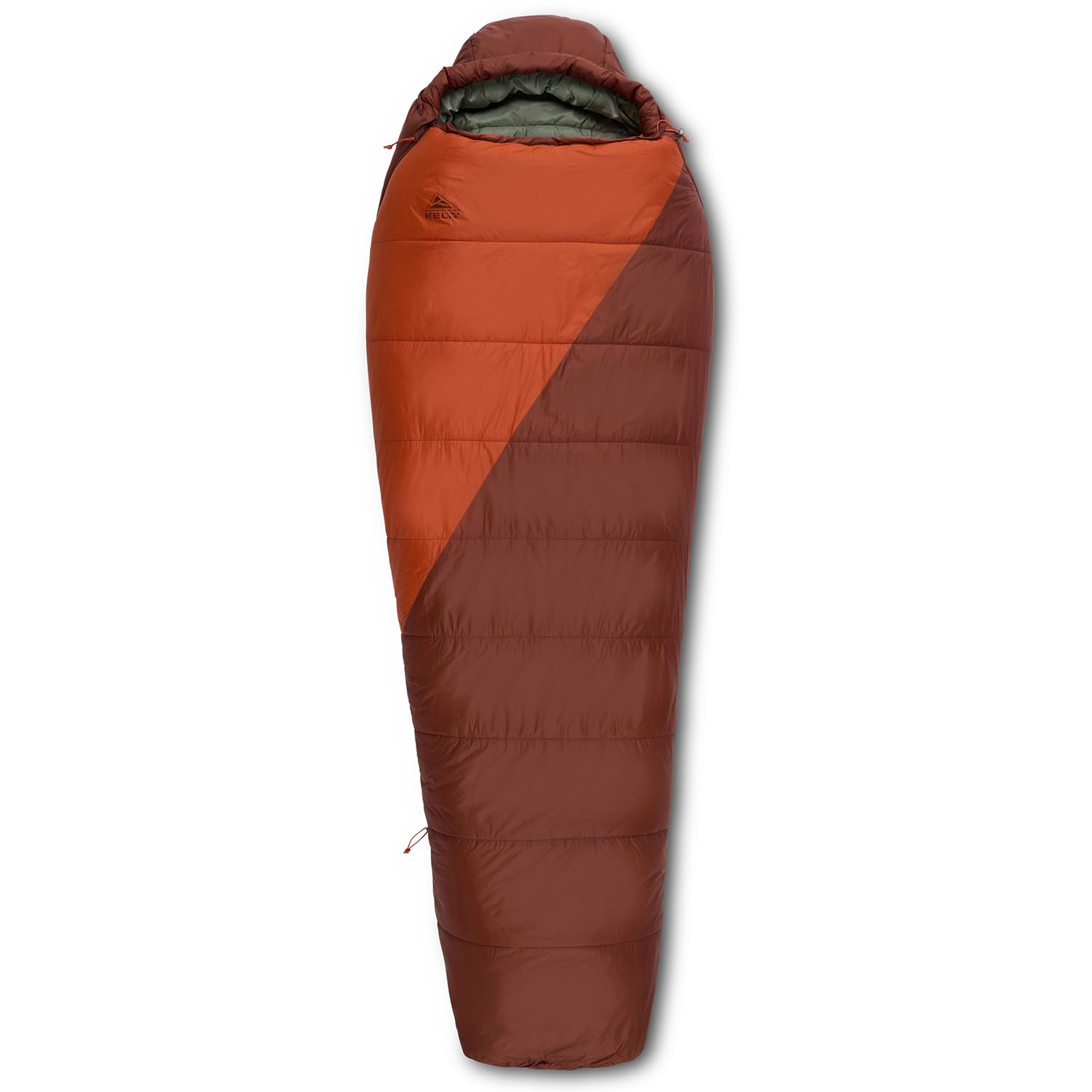
Synthetic 0°F warmth with a roomy footbox and dual sliders for cold nights without down.
For anyone who wants 0°F warmth without down, this is the cleanest answer. The fill is recycled CirroLoft ECO synthetic insulation, which delivers compressible cold-weather loft while sidestepping the moisture weakness of natural down. A synthetic bag does not collapse in the damp the way down can, which matters in wet tent air. The shell is 20D recycled nylon with a PFAS-free DWR finish — a durable water-repellent coating without the fluorinated compounds — that sheds light moisture and keeps the insulation dry.
The comfort engineering is dense: an expanded natural-fit footbox gives your feet room to move, a contoured hood seals around the head, and a full draft collar and full-length draft tube both block escaping heat. Offset quilting staggers the stitching so cold spots do not form. Dual locking sliders let you set the ventilation on each side without a fight, and the anti-snag treatment keeps the zipper moving at 2 a.m. There is a zippered internal stash pocket for a phone or headlamp. The included compression stuff sack with integrated straps shrinks the packed footprint when pack space gets tight.
Check the fit against the specs before you commit: the regular fits sleepers up to 6 ft., measures 78.3 inches long, weighs 4 lb. 12 oz., carries 61.2 oz. of insulation, and packs to 11.5 x 19 inches. That is the shortest length here, so tall sleepers need to look carefully. It also carries real weight next to a light down bag, though for 0°F synthetic it is a solid figure. Green credentials, a warranty, and a genuinely roomy footbox make it an easy pick for damp-weather campers who avoid down.
Why synthetic wins here: recycled CirroLoft ECO holds warmth in damp air where down can fade, with a PFAS-free DWR shell to keep moisture off.
Mind the numbers: 78.3 inches fits sleepers to 6 ft. — it is the shortest bag on this list, so tall campers should size up carefully.
Right for you when: you camp in wet or humid conditions and want genuine 0°F synthetic warmth without down’s moisture problem.
Keep looking if: you are over 6 feet — 78.3 inches of length leaves no margin.
10. TETON Sports Deer Hunter Sleeping Bag
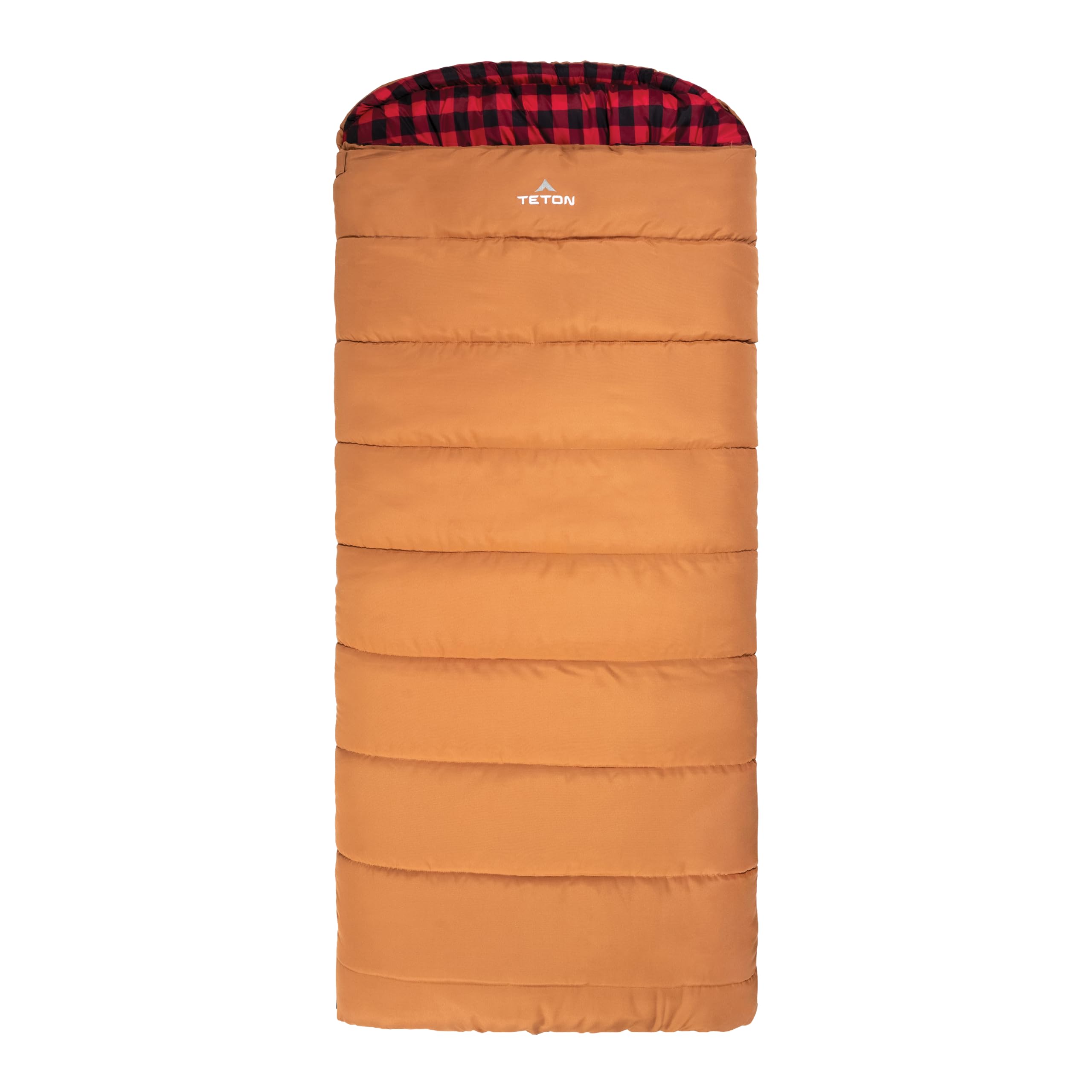
A canvas-shelled tank built for hunting camps where the tent gets hammered.
If you judge a bag by how long it lasts, the canvas shell on this one is the headline. It is built to take rough handling season after season, and in a hunting camp that matters more than shaving ounces. The fill is SuperLoft Elite single-channel hollow fiber, and a double-layer construction with zipper and shoulder draft tubes goes after cold spots. Inside there is a soft poly-flannel lining, and a half-circle mummy-style hood with zippers on each side so you can reach in and vent from either shoulder without flipping the bag around.
Cold performance is the thing owners hammer on — this bag handles subzero mountain nights and cold, rainy climates with confidence. Quality and warmth both draw heavy positive weight, and for the buyer who wants one bag to stand up to years of deer camp abuse, it delivers. The trade-off is on the scale: 17.5 pounds. That is more than double the Browning McKinley’s 8.8 and well beyond anything else here, and it does not pack down compactly. This is not a bag you sling on your back for miles; it is a bag you keep in the truck or the wall tent.
Some campers note the size runs larger than expected, and the packed size is chunky, so storage and transport take some planning. The zipper and portability both draw mixed notes — it is a heavy, sturdy system rather than a refined one. If you are a hunter, a base-camper, or someone who wants an indestructible canvas bag to come back to after a long day outdoors, this is precisely the gear. If you need to hike it in, look elsewhere.
Built Like a Tent
- Canvas shell is made to survive hard seasons of hunting-camp use
- Double-layer construction with zipper and shoulder draft tubes for cold mountain nights
- Poly-flannel lining and a mummy-style hood for all-night comfort
- Zippers on both sides for easy venting from either shoulder
Weight You Have to Reckon With
- 17.5 lb is by far the heaviest bag here — this one rides in the truck
- Packed size is bulky and does not compress compactly, so storage takes space
Choose it if: you want a canvas bag that shrugs off hunting camp and cold, wet weather and will be home in the truck anyway.
Rule it out if: you plan to carry your bag on your back — 17.5 pounds is a weight you will feel every step.
11. QEZER 0 Degree Down Sleeping Bag (650 Fill)
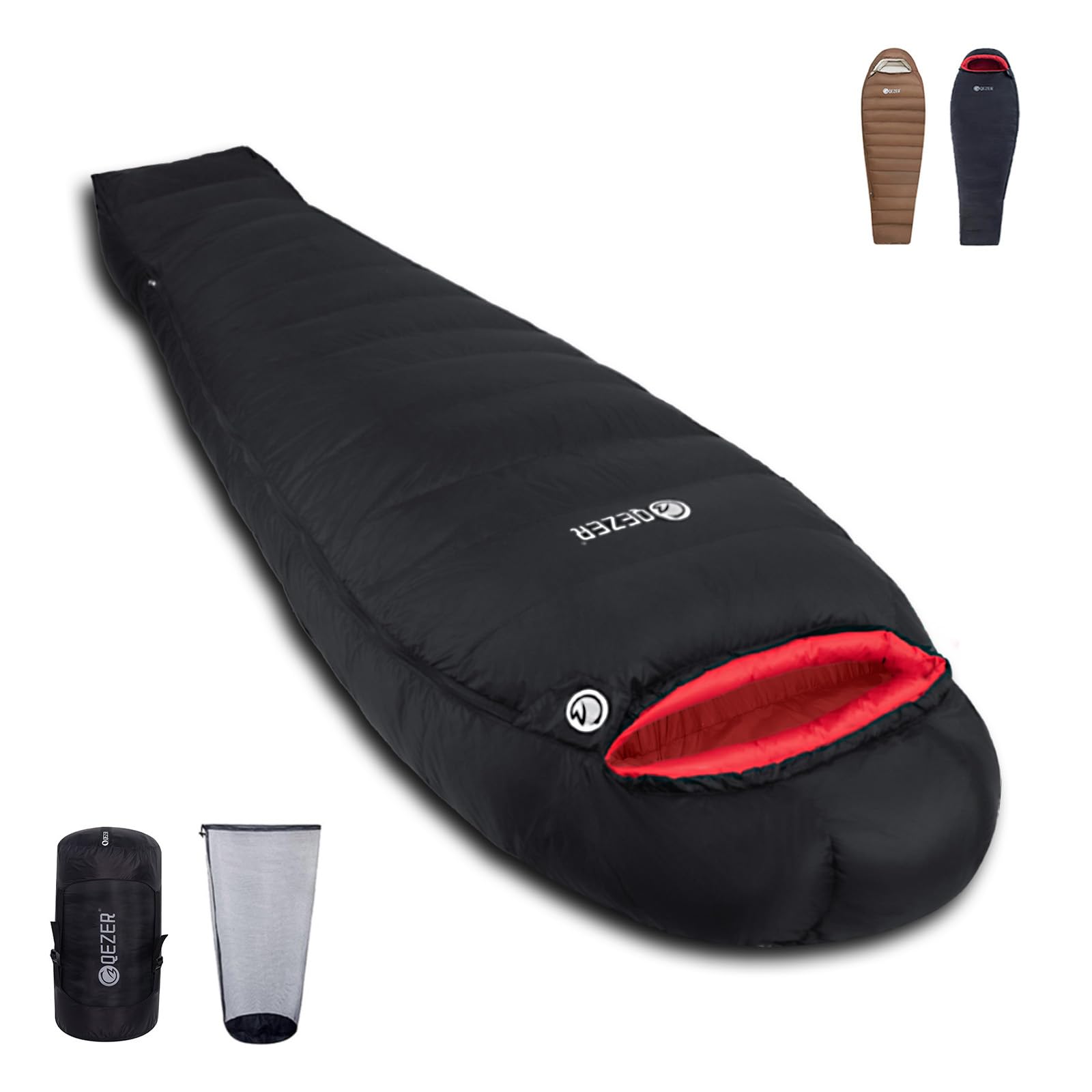
The cold-weather upgrade with a saddle neck built to keep heat from leaking out the top.
This is the warmer sibling of the QEZER mummy, and the design change worth naming is at the neck: a saddle-shaped collar that wraps closely to cut the heat loss that plagues the collar area on a freezing night. The foot end uses an ergonomic footbox to keep a reasonable, comfortable space for your feet. The fill is 650 fill-power down, and the dimensions run large at 88.58 by 32.28 inches. Warmth is the absolute centerpiece — owners describe it as wonderfully warm, staying toasty right through the night.
The size is also a selling point: it fits comfortably on a rucksack for backpacking and hiking, per the reviews. The package sizeis 18.11″ x 11.02″ with a package weight of 5.2 pounds, which keeps the packed footprint reasonable for a bag this warm. A separate mesh storage bag comes with it so you can store it uncompressed between trips, and the maker recommends hanging it or keeping it in the mesh bag to avoid long-term compression that degrades the down’s thermal performance.
Where it asks for something back: durability and the zipper both draw mixed notes, so treat the shell and sliders with a bit of care, and do not leave it crammed in its stuff sack for months on end. At 5.2 pounds it sits mid-pack for weight — heavier than the 2.6-pound SYWSKW and lighter than the canvas Deer Hunter, so it is a fair choice if warmth comes first and backpacking distance is moderate. If you want deep-cold down warmth with a neck that seals, this is the bag.
The warmth-first build: 650 fill-power down with a saddle-shaped neck and ergonomic footbox — owners consistently call it wonderfully warm through the night.
The care factor: durability and zipper draw mixed notes, so store it loose in the included mesh bag rather than compressed.
Made for: cold-weather backpackers and campers who want a down bag tuned to keep warmth locked at the neck and feet.
Weigh the alternative if: you are counting grams hard — at 5.2 pounds the featherweight SYWSKW above is the lighter carry.
Know the Specs
Temperature Rating: Comfort, Limit, Extreme
Cold-weather bags usually print three numbers. Comfort is the air temperature an average sleeper stays warm in; limit is the coldest a warm sleeper can push; extreme is survival, not comfort. Plan your trip around the comfort number and treat the others as headroom. A bag listing 30°F comfort and 0°F extreme, like the HiZYNICE, keeps you comfortable near the comfort figure and merely survives the extreme one. Read the middle and bottom numbers as a buffer, never as a promise of cozy sleep.
Fill Power and Down versus Synthetic
Fill power measures how much loft one ounce of down fluffs up into — higher numbers mean more warmth for the same weight. A 680 fill-power bag like the SYWSKW lofts more per ounce than a lower-fill option, which is why it can be so light. Down packs small and breathes well but loses loft when wet. Synthetic fill like recycled CirroLoft ECO or hollow polyester holds warmth better in damp air and costs less, but it is bulkier. Choose down for dry, weight-conscious trips and synthetic for wet, forgiving conditions.
Packed Weight and Stuffed Size
Weight only matters if the bag travels on your back, but when it does it is decisive. A 2.6-pound down bag and a 17.5-pound canvas bag are both cold-weather gear, yet only one belongs in a backpack. Check the stuffed size beside the weight: a compression sack that shrinks the bag to a modest bundle is what makes a warm bag packable. Car campers can ignore grams entirely; hunters and base-campers often choose durability over low weight.
Shell Fabric, DWR and Ripstop
The shell is what stands between you and the weather. DWR (durable water-repellent) coatings shed light moisture so damp tent walls and condensation do not soak the fill. Ripstop weaves add a reinforcing grid so a small tear cannot run. A higher thread-count number like 400T means a denser, tighter weave that also helps keep down inside the bag. Synthetic shells tend to be heavier and tougher; 20D nylon shells are lighter and pack smaller. Match the shell to how rough your camping is.
Draft Tubes, Collars and Hoods
Heat escapes through every gap, so the small parts decide a cold night. A draft tube behind the zipper blocks cold air from running along the teeth. A draft collar or shoulder baffle seals the neck, and a saddle-shaped neck like the QEZER 650-fill adds another layer of sealing at the top. A hood that cinches down traps heat around the head, and dual sliders let you vent your feet without opening the whole bag. On a 0°F night these details matter as much as the fill itself.
Dimensions and Who Fits
Length and width decide comfort as much as warmth does. Rectangle bags like the HiZYNICE at 90 x 39 inches give you room to roll over; mummy bags cut weight by hugging the body. Always check the stated length and shoulder width against your own body before buying. A bag that fits to 6 ft. 7 in. suits a tall sleeper, while a 78.3-inch mummy is a snug fit near 6 feet. Side sleepers and restless sleepers usually do better with a wider cut.
Common Questions
What does a 0°F sleeping bag rating actually mean for real camping?
Is down or synthetic better for a cold-weather sleeping bag?
Will a 0°F sleeping bag keep me warm below freezing?
How heavy is too heavy for a backpacking sleeping bag?
Can two zero degree sleeping bags be zipped together?
How do I wash a zero degree sleeping bag without ruining the fill?
Is a rectangle or mummy zero degree bag better for side sleepers?
What fill power do I need for winter camping?
How long will a zero degree sleeping bag last?
Does a sleeping pad matter with a zero degree sleeping bag?
The Bottom Line
For most car campers, the right buy in this lineup of zero degree sleeping bags is the HiZYNICE XXL, because 90 x 39 inches of flannel-lined space gives tall and restless sleepers genuine cold-weather comfort without a down price. If you are carrying your bag on your back, the lightest down pick is the SYWSKW Large Down at 2.6 pounds. And for a hunting camp that hammers its gear, the canvas TETON Deer Hunter is the one to reach for.
The honest nudge: the HiZYNICE is the strongest all-rounder here on both warmth and room, backed by 1,600+ owner reviews that most of the newer bags have not yet accumulated. Choose it for car camping and family trips, and pick a lightweight down bag only when every ounce in your pack counts.
How we choose
We do not accept paid placement. Every pick is matched to a real buyer and a real use-case; we do not hands-on test units.
Sources
Specifications: manufacturer listings and product documentation. Review insights: verified customer reviews, as of November 2026. Pricing: not shown on this page (it changes often); check the current price via the retailer link.
As an Amazon Associate, Tactical Gear Guy earns from qualifying purchases. This does not affect which products we feature.