Specs are compiled from manufacturer listings and verified buyer reviews and can change over time — please confirm the key details on the product page before buying.
Pick the wrong snow boot and you find out the hard way: a wet sock twenty minutes into a dog walk, a numb toe on the ski lift, a sole that slides on the first icy step. The picks below are the ones worth buying — sorted by what each boot actually does best, from cheap-and-surprisingly-good to full winter expedition gear.
This guide is built by comparing the manufacturers’ published specifications and the patterns across verified customer reviews, so you get each pick’s real strengths and trade-offs instead of marketing spin.
You want dry feet in January, not a boot that soaks through by the first thaw. Three things decide that: the waterproofing (how well the boot keeps snow and slush out), the grams of insulation (the fill weight that keeps warmth in), and the traction underfoot (the grip that stops you slipping on ice). Here is how to read all three before you buy the best Zapatos Para Nieve.
Top Picks
How To Choose Snow Boots
Snow boots are not one product — they are a small family of boots built for different kinds of cold. Get the type right and everything else falls into place. Get it wrong and you are either sweating in a boot made for the Arctic or freezing in a fashion boot that only looks ready for winter.
Match the insulation to your winter, not the marketing
Insulation is measured in grams, and higher grams mean a warmer boot. A 200g boot (the number refers to the weight of the insulation per square metre) sits well for everyday winter: a walk to the station, the school run, a bit of snow shovelling. A 400g boot is built for standing around in serious cold or hours outdoors. If you tend to run hot, the heavier boot can feel like a sauna on a milder day.
Read the waterproofing claim carefully
Waterproof is not a yes-or-no label on snow boots — it is a construction detail. Look for a waterproof membrane, taped seams, or a gusseted tongue (a tongue joined to the boot at the sides so snow can’t creep in). A boot with a water-resistant upper handles slush and light snow; a fully waterproof one keeps your sock dry when you step in a puddle up to the ankle.
Check the sole for deep lugs
Traction on packed ice is where cheap boots give themselves away. Deep rubber lugs (the raised blocks on the bottom of the sole) bite into snow and slush. A smooth or shallow sole is fine on dry pavement and risky on an icy driveway. For anyone walking on refrozen slush, the sole pattern is the spec worth checking first.
Decide how tall you need the shaft
The shaft is the part of the boot above the ankle. A taller shaft keeps deeper snow out but takes longer to pull on. A mid-height boot is easier for daily wear; a tall boot is the better call for deep drifts and snowmobiling. If you are between sizes, size up half a step — thick winter socks need room.
Side-by-Side Comparison
| Model | Best For | Insulation | Upper / Lining | Closure | Amazon |
|---|---|---|---|---|---|
| Mens Snow Boots Winter Warm Fur Lined★ Best Overall | Everyday value pick | — | Water-resistant upper, faux fur lining | Lace-up | Amazon |
| ANJOUFEMME Winter Snow BootsWomen’s Value Pick | Everyday women’s pick | — | Water-resistant, fur lined | Lace-up | Amazon |
| Kricely Men’s Snow BootsDeep-Cold Pick | Deep cold on a budget | 400g Thinsulate, -40℃ / -40℉ | Waterproof, fur lining | Hook-and-loop + zipper | Amazon |
| FREE SOLDIER Men’s Waterproof Fleece Snow Boots | Cold-weather hiking | Rated to -25°F | Waterproof faux suede, fleece lining | Quick lace-up | Amazon |
| Kelway Men’s Winter Boots | All-rounder | 200g 3M Thinsulate, rated to -40°F | Waterproof leather & suede, TPU shell | Lace-up | Amazon |
| Sorel Men’s Caribou Snow Boot | Deep snow and hard use | Removable felt liner | Waterproof with taped seams | Lace-up | Amazon |
| The North Face Chilkat V | Balanced winter wear | 200g | Waterproof, non-PFC DWR | Lace-up | Amazon |
| The North Face Chilkat V 400 | Serious cold | 400g | Waterproof, non-PFC DWR | Lace-up | Amazon |
| Merrell Coldpack 3 Thermo Mid | Ice traction | 200g | Waterproof, fleece lining | Lace-up | Amazon |
Detailed Reviews
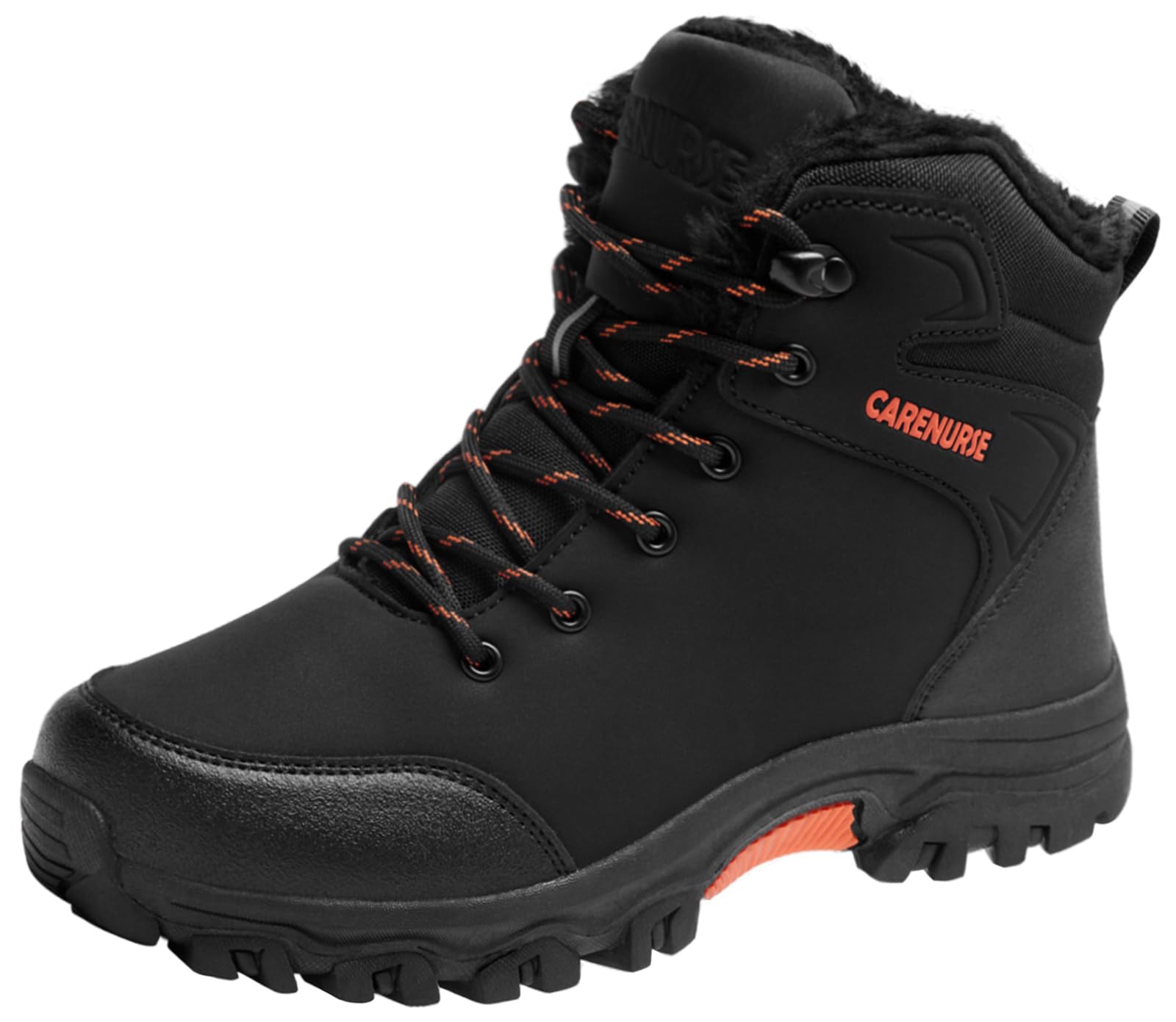
1. Mens Snow Boots
Our pick — 4.5+★ from 800+ verified ratings; the strongest balance of quality and price.
A budget faux-fur-lined boot for commutes, errands and shovelling.
The first thing that stands out here is a soft faux fur lining (a fluffy synthetic lining that holds warmth around your foot) that turns a cold boot into something you actually want to slide into. Around it sits a water-resistant upper with a rubber toe cap — the anti-collision cap is there so the front of the boot doesn’t split open when you kick through a snowbank or scuff a kerb. A lace-up front lets you cinch the fit tight, which is what keeps warmth in and slush out.
What wins people over is the build quality, which is far and away the most-praised thing about this boot. Comfort and fit come right behind it, and the buyers who bought a pair for value got what they wanted. The sole handles snow and ice well — a note about the soles gripping on both types of surface runs through the feedback, which is the exact thing that matters on a refrozen sidewalk. This is 4.5+ stars across 800+ owners, and for a boot at this price that is a strong signal.
The honest catch: durability and water resistance split opinion. Some owners have them going strong after a full season, while others found them giving out on longer hiking trips and not fully waterproof. If you are after a winter boot for the commute and the shovelling, that trade-off rarely bites. If you plan to wade through a half-frozen creek for hours, keep reading — there are heavier boots below.
What earns its keep
- Faux fur lining for warmth the moment you slide it on
- Anti-collision rubber toe cap protects against scuffs and kicks
- Lace-up closure locks the fit and keeps snow out
- Built quality is the single most-praised trait among owners
Where it holds back
- Durability feedback splits — some report early wear on long hikes
- Not truly waterproof for everyone; better for slush than a knee-deep soak
Grab this pair if: you want a warm, comfortable, budget-friendly winter boot for commutes, errands and shovelling.
Pass if: you need a boot that stays dry through hours of wet trekking.
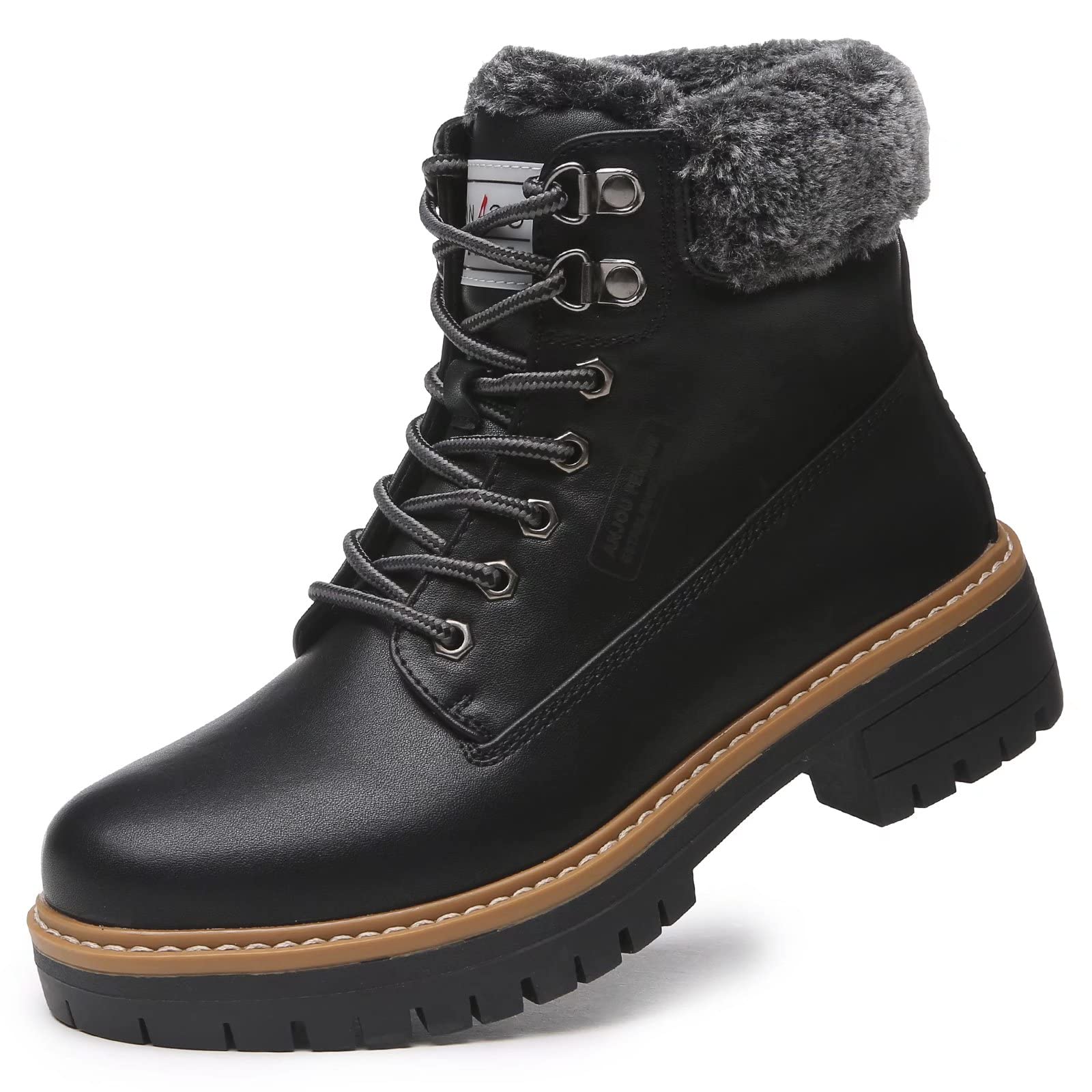
2. ANJOUFEMME Winter Snow Boots
A fur-lined women’s boot that keeps feet dry through rain and mud.
ANJOUFEMME wears three hats: it’s sold as a casual hiking boot, a warm snow boot, and a fashion winter boot all at once. The fur lining keeps feet warm on cold days, and the water resistance is the real headline — feet stay dry and warm while the boots stand up to rain and mud. Owners also single out the looks: they arrive matching the photos and draw compliments, which is unusual at this end of the price range.
Quality is the thing buyers rate highest, with the appearance close behind. Warmth, durability, water resistance and versatility all draw steady approval. It is a boot that earns its place on a wet winter walk, not just on a dry cold day — a muddy trail after a thaw is where the water resistance proves its worth.
Here is the thing to plan for: the fit is the one place opinion divides. Some women get the right size first try, while others find the sizing well off. The safest move is to measure your foot and check the size chart against your thickest winter socks rather than ordering your usual number. If the fit lands, the rest of the boot holds up.
The real reason to buy: feet that stay dry in rain and mud are the whole point of a winter boot, and this one delivers that at a budget-friendly price.
Reach for these if: you want a warm, good-looking women’s boot for wet winter walks and everyday wear.
Look elsewhere if: you can’t try them on and sizing is a gamble you’d rather not take.
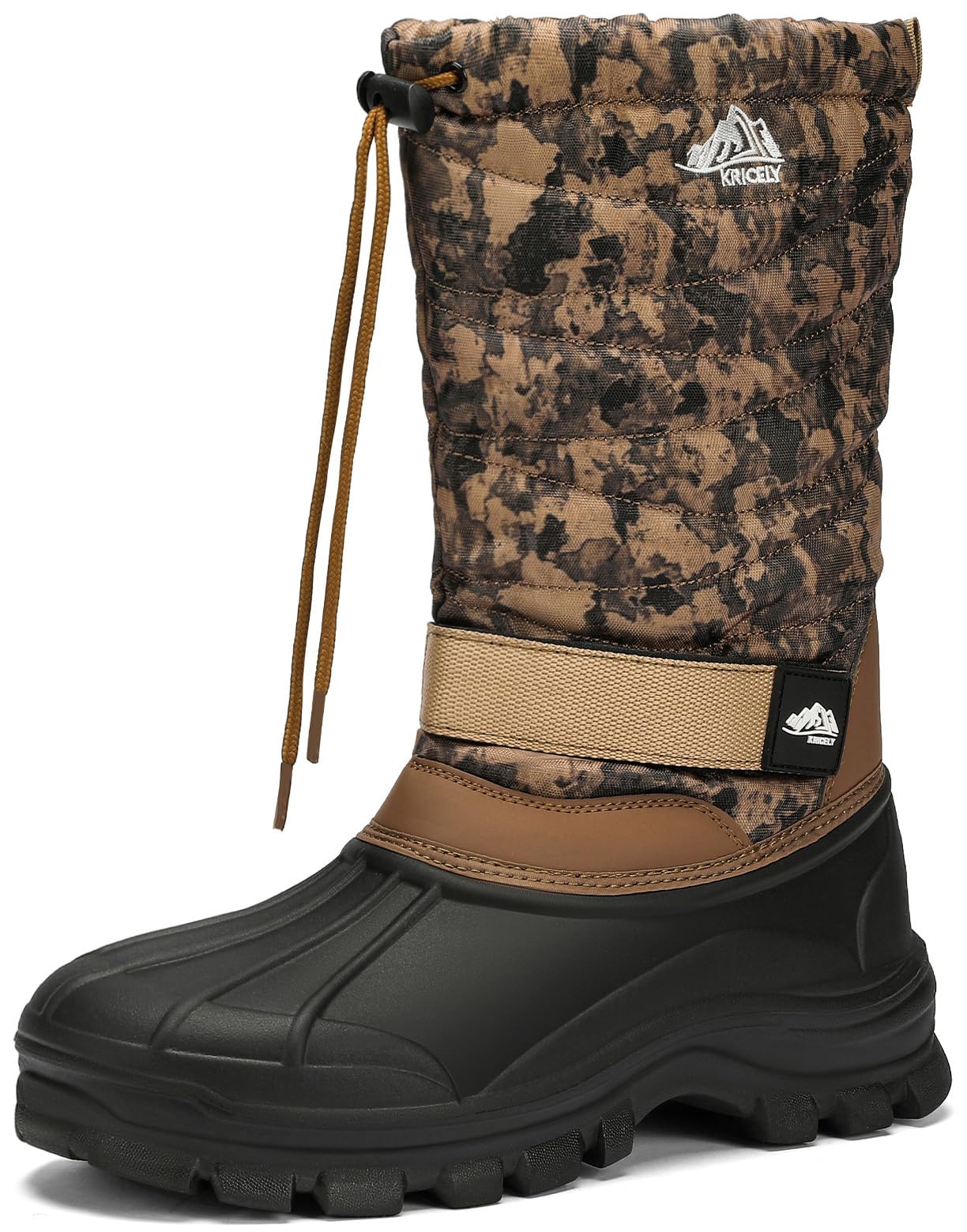
3. Kricely Men’s Snow Boots
400g Thinsulate and a -40℃ / -40℉ rating — the lowest on this list.
Kricely packs 400g Thinsulate (a synthetic insulation rated by weight — 400g is the heavier, warmer grade) and carries a temperature rating down to -40℃ / -40℉. That is the lowest temperature claim in this whole list, and the one to look at if your winters mean standing outside in a biting wind rather than a brisk walk. It also wears a fur lining and a waterproof upper, with a non-slip outsole for snow and cold-weather conditions.
Comparing insulation grams directly: the Kricely’s 400g versus the Kelway’s 200g is double the insulation weight, so if you run cold and want a boot that doesn’t flinch as the thermometer drops, this is the one. Two ways to get it on — a hook-and-loop strap (a velcro-style strap that lets you tighten without lacing) plus a zipper — make it the quickest boot here to pull on and kick off.
One honest note worth knowing before you buy: the zipper is the one place the feedback goes negative. A zipper that fights or sticks is the kind of thing that will annoy you every single time you put the boot on. Check the zipper’s action in the first few days and you’ll know quickly whether your pair is a good one. Quality and warmth are what buyers praise most, and the boot is well worth the price for the insulation on offer.
Standout spec: a -40℃ / -40℉ rating with 400g Thinsulate puts this among the warmest boots a budget-friendly wallet can reach.
The one caveat: the zipper has a rough reputation — a few seconds of testing at home tells you what you need to know.
Suits you if: you face real cold and want maximum insulation plus quick on-and-off.
Think twice if: you want a boot you never have to think about the zipper on.
4. FREE SOLDIER Men’s Waterproof Fleece Winter Snow Boots
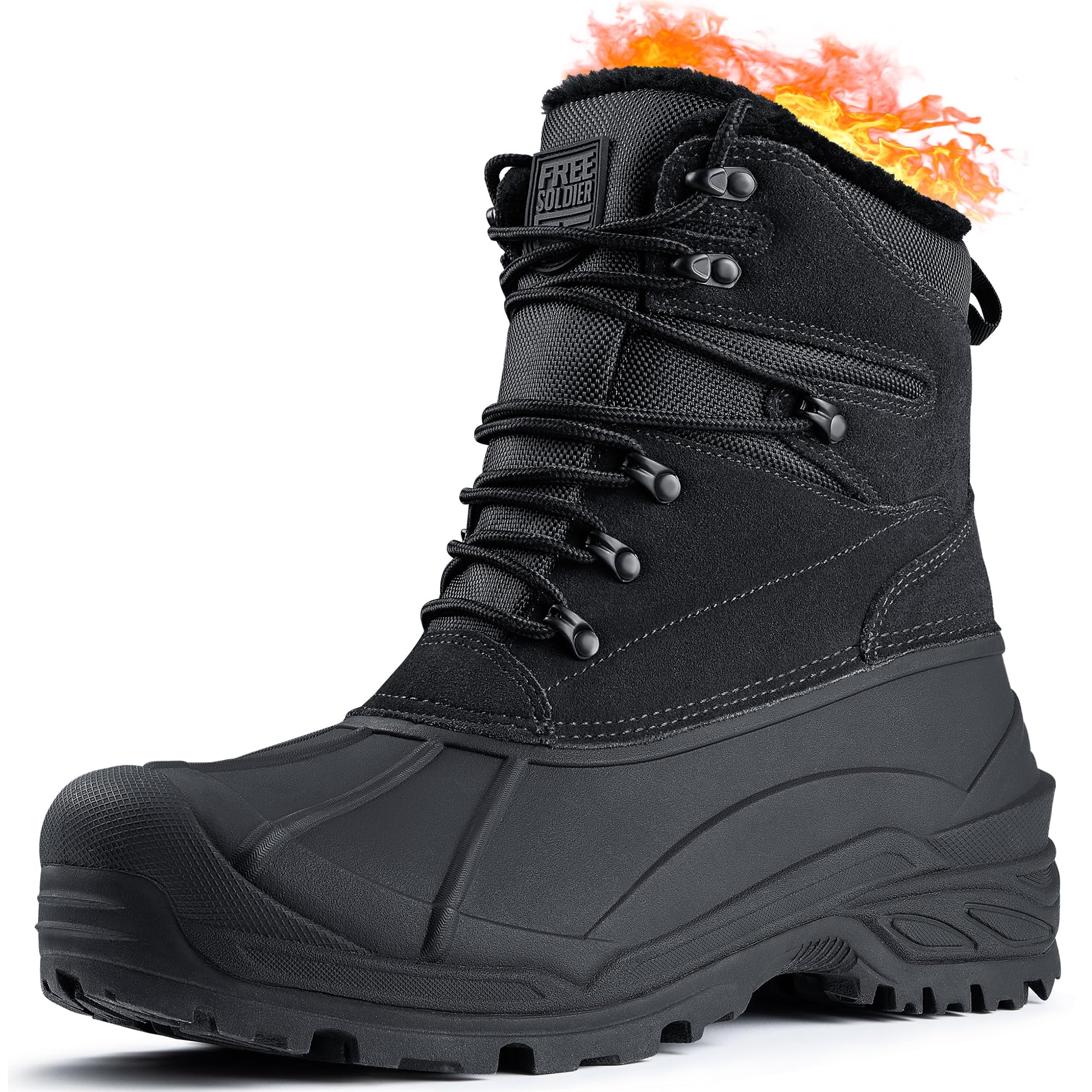
Built for the trail and the driveway alike, with a fleece lining rated down to -25°F.
FREE SOLDIER starts with fleece lining that traps warmth down to -25°F, then wraps a waterproof faux suede upper around it. A gusseted tongue (a tongue stitched to the boot so snow can’t sneak in at the sides) and a composite-reinforced toe cap add protection against bumps and abrasion. The 8.3-inch shaft gives real snow-depth coverage, and a quick-lacing hook system lets you tighten the fit in seconds. It’s built for skiing, hiking, ice fishing, shovelling and dog walking — or as a straight work boot.
What buyers value most is quality, and warmth sits right behind it. The fit runs true to size, which takes the guesswork out of ordering online. Functionality and value both do well in the feedback. If you want one boot that goes from a snowy trail to a wet driveway without changing footwear, this is the boot in the list that most plainly aims at that job.
The honest picture: durability and water resistance both divide owners. Plenty report them holding up well and keeping feet dry, but there are some who found them falling apart sooner than expected, and a few who saw rainwater seep in. A composite toe cap and a lugged outsole help on rough ground, so for most buyers this is a solid cold-weather hiking boot — just don’t expect a wading boot for standing in water.
The strong suit
- Fleece lining rated to -25°F for real cold
- 8.3-inch shaft keeps snow out above the ankle
- Waterproof faux suede with a gusseted tongue
- Quick-lacing hooks for fast on and off
The honest limits
- Durability feedback is mixed — some report early wear
- Water resistance isn’t universal; a few saw rain seep in
Good fit for: the hiker or shoveller who wants one warm, tall boot for cold-weather outdoor work.
Less ideal for: anyone who needs guaranteed dry feet in sustained wet conditions.
5. Kelway Men’s Winter Boots

A leather-and-suede boot with 200g Thinsulate and a waterproof membrane.
The Kelway’s case rests on doing a bit of everything well. Full leather construction with a molded TPU shell (a stiff plastic outer layer that shields the foot) and a waterproof membrane keep moisture out, while 3M Thinsulate inner insulation holds warmth even in extreme cold. The maker rates the 200g 3M Thinsulate build down to -40°F, and a thickly padded woollen-blend sole adds comfort underfoot for all-day wear.
Here is where the insulation math matters: at 200g versus the Kricely’s 400g, the Kelway runs lighter on insulation weight — so it’s the better pick if you want warmth without the bulk of a full expedition boot. What buyers like most is the material quality and the warmth, and it’s considered well worth the price. The waterproof shell and non-slip outsole make it a solid choice for cold, wet, slippery ground.
The one thing to weigh: feedback on the sole feel is mixed. Some find it comfortable, others less so. Since the sole also gives the boot its padded warmth against cold ground, that’s worth factoring in if you spend whole days on your feet. For most people it’s a versatile winter boot that handles a commute and a weekend trail without complaint.
Why it earns a spot: leather, suede and a waterproof membrane make this the most style-flexible boot here — it works with a coat as well as a pack.
Pick this if: you want one smart-looking boot that covers commuting, errands and light outdoor use.
Skip the gamble if: underfoot comfort is your top priority and you can’t test the sole first.
6. Sorel Men’s Caribou Snow Boot

A taped-seam deep-snow boot with a removable felt liner you can dry overnight.
The Caribou is the boot that has been copied more than any other on this list. Its waterproof construction with taped seams means the seams — the weakest point on any boot — are sealed to keep water out. Inside sits a removable felt liner: warm, comfortable, and pull-out-able so you can dry it overnight by the radiator. That liner is a genuine advantage in a boot you rely on every day through a wet winter.
It’s aimed squarely at hard winter use — snowmobiling, sledding, all-season hunting and fishing, or just getting to work through a proper storm. If your winters involve long stretches of standing out in the cold and the snow, this is the boot in the lineup built for that kind of exposure. Quality is the trait buyers prize most, with warmth right behind it.
The trade-off is weight: at 2.34 pounds it’s the heaviest boot here, and you’ll feel that on a long walk. It’s built for protection first and light-footed trekking second. If you want a burly boot that laughs at deep snow and heavy slush, the Caribou is the one; if you’re chasing an all-day-hiking feel, a lighter boot serves you better.
This boot’s home: deep snow, long cold spells, and anyone who wants a rugged, weatherproof workhorse with a liner they can pull out to dry.
Its downside: at 2.34 pounds it’s a heavy boot, so it’s not the one for fast, light hiking.
7. THE NORTH FACE Men’s Chilkat V Snow Boot

A lightweight 200g waterproof boot for mud, creeks and light snow.
The Chilkat V runs 200g of insulation (the middle-of-the-road grade — warm enough for a cold commute, not the deep-freeze grade) and a non-PFC DWR finish (a durable water-repellent coating that makes water bead off the surface). The build is fully waterproof, so snow, rain and wind bounce off rather than seep in. A fleece lining and lace-up front round out the winter spec.
What buyers appreciate most is the quality of the build, with comfort a close second. They work across winter conditions — dirt, mud, creeks and light snow all get mentioned — and buyers report them lasting past a year of use. The lightweight feel is a real point of praise, and it’s considered good value for what you get. If you want a boot that crosses over from the trail to the town without a change of shoes, this is one of the better-balanced options in the list.
The one caveat: the fit divides opinion. Some get the perfect size, others don’t — so checking the size chart against your own foot is worth the two minutes. Get the fit right and the rest of the boot feels built to last.
Where it shines
- 200g insulation for balanced warmth
- Fully waterproof with a non-PFC DWR finish
- Lightweight enough for all-day wear
- Comfort and build quality praised by owners
Where it’s uneven
- Fit feedback splits — check the size chart carefully
- 200g insulation isn’t deep-freeze territory
Well matched to: the buyer who wants a light, waterproof boot for mixed winter conditions from trail to town.
Not the fit for: extreme cold or anyone who won’t verify the size before ordering.
8. THE NORTH FACE Men’s Chilkat V 400 Snow Boot

The Chilkat V with double the insulation — 400g instead of 200g.
This is the Chilkat V’s heavier sibling: same waterproof build and non-PFC DWR finish, but with 400g of insulation instead of 200g. That’s double the insulation — the number that matters if you live somewhere the temperature sits well below freezing for weeks at a time. Same lace-up front and full waterproofing, so wind, rain and snow are kept at bay.
Buyers rank this among the best winter footwear they’ve owned, pointing to comfort, warmth and versatility. It’s described as right for genuinely cold conditions, and owners mention keeping feet both dry and warm. The step up to 400g makes it the better choice for anyone who feels the cold more and stands around outdoors rather than marching through it.
One note by comparison: the 400g version is the warmer of the two Chilkat boots, but for a mild winter you may find the extra insulation more than you need. If your winters are only mildly cold, the 200g Chilkat V above is the lighter bet. If they’re brutal, this is the boot to pick.
The reason to spend up: 400g of insulation with full waterproofing makes this the deep-winter choice for someone who feels the cold and wants a boot that holds warmth for hours.
Choose this if: your winters are severe and you want double the insulation of the standard Chilkat V.
Hold off if: your climate is only mildly cold and you’d rather have a lighter boot.
9. Merrell Men’s Coldpack 3 Thermo Mid Waterproof

A 200g waterproof boot with a Vibram Arctic Grip sole for bare ice.
Merrell’s standout is the sole: Vibram Arctic Grip underfoot (a rubber compound made to grip on cold, wet ice) gives the kind of traction that stops the slow slide on a frozen pavement. Around it sits a waterproof construction, 200g of insulation, and a fleece lining — enough warmth for the walk to work or a snowy trail in normal winter cold.
Traction is what buyers talk about most, and specifically on bare ice, which is the hardest surface to trust a boot on. Warmth and fit both do well, with owners noting plenty of room above the toes. The build and waterproofing draw steady approval, and it’s held to be worth the money — the kind of boot people come back and buy again each year.
The trade-off: at 200g it isn’t built for the deepest cold, so if you want maximum insulation the 400g boots above are the call. Durability feedback also has a mixed note or two, so wear and tear is worth keeping an eye on if you’re hard on your boots. For everything else — icy pavements, slushy steps, a winter commute — the grip here is the reason to choose it.
The ice-edge: Vibram Arctic Grip is the feature that earns this boot its spot — traction on bare ice is exactly where other winter boots struggle.
Worth knowing: at 200g it’s a mid-warmth boot, so deep-freeze territory is best left to the heavier picks.
Best for: anyone whose winter walk crosses ice, wet steps or slick pavement and who wants grip above all.
Look past it if: you need a boot built for extreme, all-day cold.
Know the Specs
Insulation weight in grams
Insulation is graded by weight — 200g is the usual everyday-winter grade, while 400g is the heavier, warmer one for standing around in serious cold. The Kelway’s 200g 3M Thinsulate versus the Kricely’s 400g is the clearest example here: pick the lighter grade for a milder winter and the heavier one for deep cold. More grams means more warmth, but also a bulkier boot.
Temperature ratings
A rating like -25°F or -40℉ tells you the lowest temperature the maker says the boot will keep you warm. Use it as a comparison tool, not a guarantee of comfort at that exact temperature. The lower the number, the more extreme the cold it’s designed for — the Kricely and the Kelway carry the lowest ratings on this list.
Waterproofing versus water resistance
Water-resistant means the upper sheds light snow and slush but can soak through over time. Waterproof means a membrane, taped seams or a gusseted tongue block water entirely. The Sorel’s taped seams and the Kelway’s full-leather membrane are fully waterproof builds; a water-resistant upper like the value Men’s Snow Boots is fine for a dry snow day but not a long soak.
Traction and sole construction
The sole is where safety lives. Deep rubber lugs bite into snow and slush; a specialist compound like Vibram Arctic Grip is designed to grip on bare ice. The Merrell’s Arctic Grip sole is the ice-traffic pick; the FREE SOLDIER’s deep traction lugs handle snow, ice, mud and wet pavement. A smooth sole is a hazard on refrozen slush.
Common Questions
Do 400g snow boots feel too warm for everyday use?
Will a water-resistant boot keep my feet dry in snow?
How do I pick the right size in snow boots?
Which boot is best for walking on ice?
Are fur-lined boots actually warm, or just cozy?
Should I get a removable liner?
How tall should a snow boot’s shaft be?
Can I wear snow boots for hiking in winter?
How do I keep my feet warm in deep cold?
The Bottom Line
For most buyers, the best Zapatos Para Nieve around is the Mens Snow Boots Winter Warm Fur Lined — a warm, well-built everyday boot at a budget-friendly price that handles snow, ice and the commute. If you face real deep cold and want maximum insulation, grab the Kricely Men’s Snow Boots with its 400g Thinsulate. And for anyone whose walk crosses bare ice, the Merrell Coldpack 3 is the one to reach for, because grip is the thing you can’t fake.
How we choose
We do not accept paid placement. Every pick is matched to a real buyer and a real use-case; we do not hands-on test units.
Sources
Specifications: manufacturer listings and product documentation. Review insights: verified customer reviews, as of November 2026. Pricing: not shown on this page (it changes often); check the current price via the retailer link.
As an Amazon Associate, Tactical Gear Guy earns from qualifying purchases. This does not affect which products we feature.