Specs are compiled from manufacturer listings and verified buyer reviews and can change over time — please confirm the key details on the product page before buying.
A tinted lens that only looks like safety eyewear offers no impact protection, so the Z87.1 stamp on the frame is what separates real eye protection from a fashion pair. What matters here is whether the lenses are genuinely polarized for glare control and genuinely impact-rated to the ANSI Z87.1 standard — a US benchmark for eye protection that gets stamped on the frame when a pair passes. This guide separates the pairs that actually do both from the ones that only talk about it, then explains lens tint, wrap coverage, and fit in plain terms so you can pick with confidence.
This guide is built by comparing the manufacturers’ published specifications and the patterns across verified customer reviews, so you get each pick’s real strengths and trade-offs instead of marketing spin.
Glare off water, snow, and asphalt is what tires your eyes out first, and a polarized lens is the fix. Below you will find our full rundown of the z87 polarized safety glasses worth your money for work, range days, and driving.
Top Picks


How To Choose The Best Z87 Polarized Safety Glasses
Two things make a pair of work sunglasses worth owning: the impact rating stamped on the frame, and a polarized lens that actually kills glare. Miss either one and you are paying for a look rather than protection.
Read the frame marking, not the label
A true pair carries an ANSI Z87.1 mark on the temple or lens. The “+” version, written Z87+, means the pair has passed a higher-velocity impact test than the base standard. When you see Z87+ on the frame, that is your proof the lenses and frame were actually tested together as a unit.
Polarized versus merely tinted
Tinted lenses dim the light; polarized lenses filter the horizontal glare that bounces off water, snow, glass, and asphalt. On a jobsite, that horizontal bounce is what makes you squint and miss detail. Polarization is what keeps a wet concrete floor or a windshield readable.
Match the lens tint to the light you work in
Every lens lets through a set percentage of visible light, called VLT — visual light transmission. A low VLT is a darker lens built for full sun and heavy glare. A higher VLT works in mixed or overcast conditions. Photochromic lenses go a step further and darken when UV light hits them, which helps when you move between indoors and bright sun in the same hour.
Coverage and grip for long shifts
A wraparound frame extends protection to the sides of your eyes, where debris and reflected glare also reach. Rubber nose pads and rubber temple tips are what keep the frame planted when you sweat or turn your head. Both matter more than most buyers expect on a long shift.
Side-by-Side Comparison
| Model | Best For | Impact Rating | Lens Type | UV Rating | Amazon |
|---|---|---|---|---|---|
| Crossfire Infinity★ Best Overall | All-day shop and site wear | ANSI Z87.1 | Polarized HD Brown | 99.9% UV | Amazon |
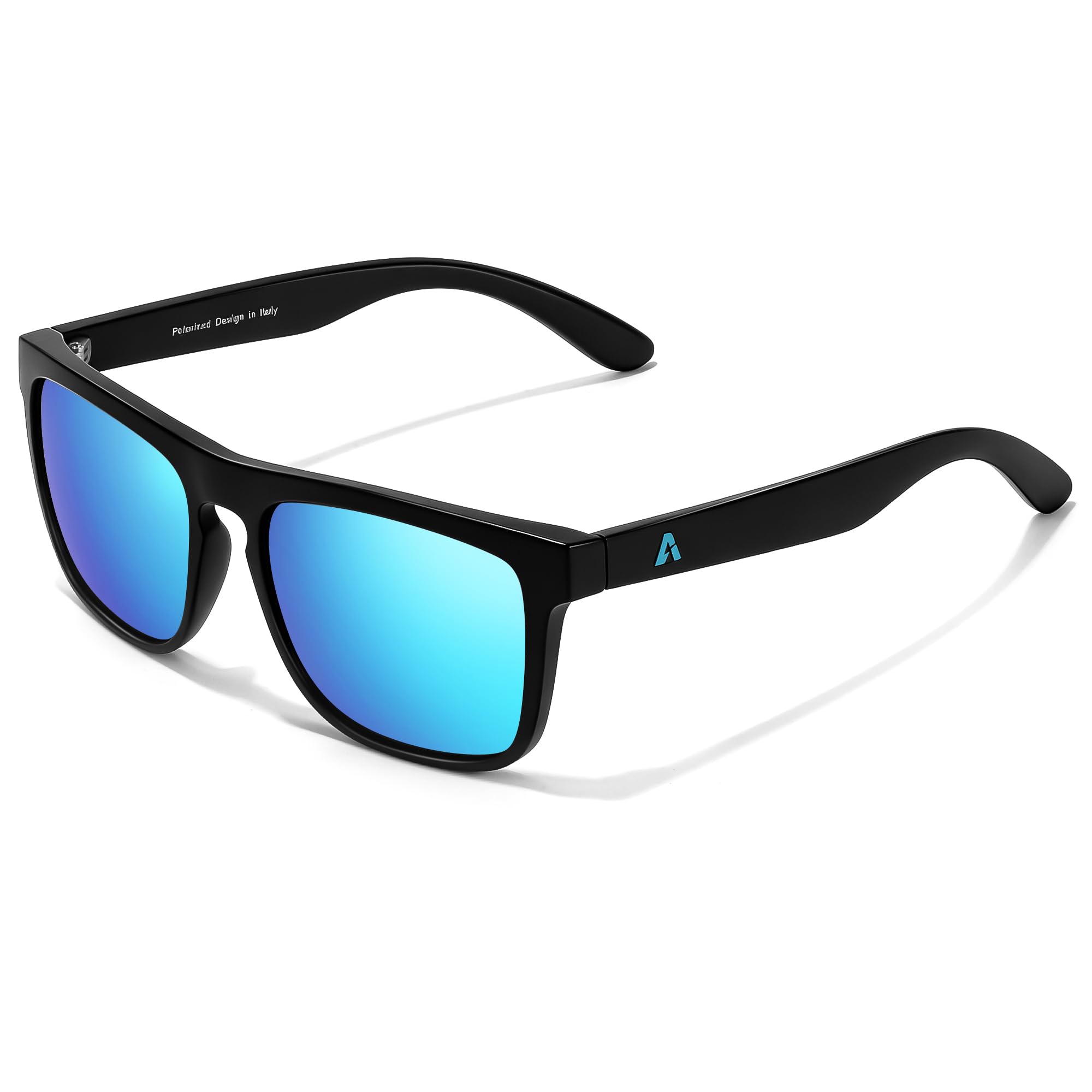
| TJUTR Polarized SquareBest Value | Everyday driving and light duty | ANSI Z87.1 | Polarized, UV400 | UV400 | Amazon |
| Ergodyne Skullerz OdinTop Performer | Ballistic-grade impact on a budget | ANSI/ISEA Z87.1-2020 (Z87.1+) | Polarized (12% VLT smoke) | 99.9% UVA/UVB/UVC | Amazon |
| Ansell KleenGuard V30 Nemesis | Wraparound peripheral coverage | ANSI/ISEA Z87.1+ | Polarized Smoke Grey | 99.9% UVA/UVB/UVC | Amazon |
| NoCry ImpactShield Pro | High-contrast glare cutting | Z87 | Polarized Red Revo mirrored | 100% UV | Amazon |
| SODQW Photochromic Z87.1 | Indoor-to-outdoor transitions | ANSI Z87.1 | Photochromic polarized | UV400 | Amazon |
| Bingking Side-Shield Polarized | Removable side shields | ANSI Z87+ | Photochromic TAC polarized | 100% UVA/UVB/UVC | Amazon |
| 3M Polarized Wraparound | Anti-fog in humid work | ANSI Z87.1 | Polarized | 99.9% UVA/UVB | Amazon |
| Edge Reclus | Stylish all-round protection | ANSI/ISEA Z87.1+2015 | Polarized Aqua Precision Blue Mirror | 99.9% UVA/UVB/UVC | Amazon |
Detailed Reviews
1. Crossfire 21126 Infinity Safety Glasses
Our pick — 4.5+★ from 250+ verified ratings; the strongest balance of quality and price.
Dual-mold rubber temples and a vented nosepiece hold the frame steady through a full shift of head turns and sweat.
If you wear safety glasses eight hours a day, the thing that ruins them is not the lens — it is the sliding. Crossfire solves that with dual-mold rubber temple grips and a vented rubber nosepiece, both built to hold the frame steady when you turn your head and to keep air moving so pressure points do not build up. The company pairs that with a hard-coat polycarbonate lens (a tough plastic lens with a scratch-resistant surface layer) so the optical surface survives daily wipe-downs. Fit is what this pair wins people over with — more buyers single it out than any other quality on the review pages.
Protection numbers are stated plainly: 99.9% UV protection and compliance with ANSI Z87.1, the baseline US standard for impact-rated eye protection. The HD Brown polarized lens is the other half of the appeal — brown tones lift contrast on natural light, so edges and textures on a jobsite read more sharply than through a neutral grey lens. The rose-tinted option gets noticed for cutting the glare thrown back off snow and granite, which is the exact reflected-light problem polarization is meant to solve.
The honest catch is durability. Wear and scratch reports land in mixed territory on this pair, so if your day involves a lot of grit, pocket carry, or wiping a dirty lens with a dirty sleeve, expect cosmetic wear over time. Store it in a case rather than a pocket and the lens will hold far longer. The frame is full-rim plastic in a regular fit, and the pair is assembled for both indoor and outdoor environments — one set of eyewear for the whole shift rather than two.
What holds up on the job
- Dual-mold rubber temple grips and a vented nosepiece keep the frame planted through movement.
- 99.9% UV protection with ANSI Z87.1 compliance stated on the spec sheet.
- HD Brown polarized lens boosts contrast in natural light.
- Hard-coat polycarbonate resists everyday scratching.
Where it asks for care
- Durability feedback is mixed — lens wear shows up over time with rough handling.
- No side shields or added coatings listed beyond the hard coat.
Made for: the tradesperson who wants one polarized pair that stays put from the morning meeting to the last cut.
Think twice if: you need added anti-fog or side-shield coverage for chemical splash work.
2. TJUTR ANSI Z87.1 Safety Sunglasses
A square frame with ANSI Z87.1 certification and UV400 polarized lenses that passes as ordinary sunglasses off the clock.
TJUTR takes the clean square route. The frame is designed to give balanced coverage and a secure fit while still passing as ordinary sunglasses, which is why the pair works as well on a drive as it does on a maintenance task. ANSI Z87.1 certification is the headline here — that is the impact standard that separates real safety eyewear from a fashion frame, and TJUTR states it clearly rather than hiding behind soft language.
The lens side is straightforward: polarized glass that cuts glare off roads and water, plus UV400 protection, which blocks UVA and UVB rays up to the 400-nanometer mark. Glare off a wet highway at dawn is the exact condition this lens is tuned for, and it is where a polarized lens earns its keep over a plain tinted one. You get a microfiber pouch, a cleaning cloth, a manual, and a box in the package — a complete kit rather than a bare frame.
The trade-off is that this is a light-duty build meant for everyday outdoor use and maintenance tasks, not heavy industrial abuse. It is the pair you keep in the truck for the drive and the walk-around, not the one you hand to a crew grinding metal all day. For the buyer who wants certified Z87.1 protection in a frame that looks normal off the clock, that is a fair bargain.
Why it earns the slot: certified Z87.1 impact protection and UV400 polarization in a square frame that passes in public — the package makes it a complete grab-and-go pair.
The scope to know: built for light-duty work, driving, and outdoor activity rather than industrial punishment.
Reach for this if: you want one pair that covers the drive, the yard, and the weekend without looking like you clocked in.
Look elsewhere if: your work throws heavy debris or chemical splash at your eyes daily.
3. Ergodyne Skullerz Odin Polarized Safety Sunglasses
MIL-PRF-32432 ballistic testing plus the Z87.1+ high-velocity mark, at a budget price.
Here is the number that separates Skullerz Odin from most of this list. Beyond passing ANSI/ISEA Z87.1-2020 High-Velocity Impact Protection — the Z87.1+ mark stamped on the frame — the Odin is also tested to MIL-PRF-32432 Ballistic Fragmentation, Class 1, the US military combat eye protection spec. To pass that, a lens must stop a steel projectile fired at 660 feet per second, described by Ergodyne as four times faster than the Z87+ standard, without puncturing, cracking, or shattering.
The full-frame design bends and flexes rather than breaking, and the polycarbonate lenses filter 99.9% of UVA, UVB, and UVC rays. A non-slip rubber nosepiece and rubber temples hold the frame in place and resist sweat. Integrated accessory receptors at each temple improve airflow when the glasses are not in use, and both an elastic retainer strap and a foam gasket insert can be attached there — both sold separately. The polarized lens cuts glare around water and snow, and it is offered in three VLT levels: a Copper lens at 14% visual light transmission, Smoke at 12%, and G15 at 11% for the brightest glare with the highest contrast.
Two caveats sit in the review pages, both worth sizing honestly. Durability feedback is mixed, so a hard-used pair will show wear. And some buyers report the lenses do not behave as they expect from a polarized lens, so if glare control is your single reason for buying, check the exact lens variant you order. What is not in question is the lens quality, which is the strongest point of agreement on this pair. For impact protection at a modest outlay, the Odin is very hard to argue with.
The ballistic case: MIL-PRF-32432 Class 1 testing plus ANSI/ISEA Z87.1-2020 compliance makes this the most heavily tested impact spec in the group, and the flexible full frame survives bends that would break a rigid one.
Where expectations split: lens polarization draws divided feedback, so confirm the lens color you select matches the glare conditions you work in.
The deciding factor: maximum certified impact protection for the work and hobby jobs that need it most — carpentry, landscaping, boating, range time.
The catch to weigh: polarization feedback is mixed, so pair it with the right VLT lens for your light.
4. Ansell KleenGuard V30 Nemesis Safety Sunglasses

An 8-base wraparound curve that extends coverage to the sides of your eyes, not just the center.
The V30 Nemesis is the peripheral-vision pick. Its wraparound frame runs a base curve of 8 — a frame curvature number that describes how far the lens wraps around your face — which extends protection to the sides of your eyes where debris and side-glare slip past flatter frames. The smoke-tinted lens is polarized and meets the EN 1836 4.1.4.2 standard for polarization quality, so the glare filtering is held to a stated benchmark rather than a marketing claim. Polycarbonate lenses carry 99.9% UVA, UVB, and UVC protection.
Fit and finish earn real praise: the pair is repeatedly described as great quality with effective glare reduction, and owners use it across a range of activities rather than just one. Soft-touch temples add comfort for long sessions, and every pair ships with a neck cord so the glasses are ready to pull on at a moment’s notice. Quality is the aspect that wins people over most here, with eye protection a clear second.
Sizing is the thing to check before you order. At 3.88 ounces it is the heavier build in this comparison — noticeably more heft than the 2.47-ounce TJUTR above — and its 8.98 x 5.12 x 2.87-inch package footprint reflects a larger overall frame. Some buyers find the temples too short for their head shape, and the lens scratches easily if it is not stored with care. Neither is a reason to rule it out; both are reasons to confirm the fit suits you and to keep the cord handy so the glasses never end up loose in a bag.
Standout strengths
- Base curve of 8 wraps the lens around the sides of the eyes for extended coverage.
- Polarization meets the EN 1836 4.1.4.2 standard.
- Factory Z87.1+ rating and 99.9% UVA/UVB/UVC protection.
- Neck cord included with every pair.
Fit and care notes
- At 3.88 ounces it is the heavier frame on this list.
- Some buyers find the temples short for their head size.
- The lens scratches easily without careful storage.
Suits you if: you work with side-blown debris or bright reflected light and want the coverage to reach your corners.
Rule it out if: you have a larger head and want long temples from the start.
5. NoCry Anti-Fog Safety Sunglasses

A Red Revo mirrored lens that lifts contrast so edges and surface changes stand out under harsh sun.
NoCry’s angle is contrast. The bold Red Revo mirrored lens is built to lift contrast and cut glare so edges, textures, and changes in a surface stand out — useful when you are scanning a floor, a roof line, or a weld seam and need detail to pop. Full 100% UV protection and a tough anti-scratch coating round out the lens side. Polycarbonate construction is described as shatterproof, and the pair carries a lifetime warranty, which tells you how confident NoCry is in the build.
Comfort engineering is where this pair puts its effort. A soft adjustable nose pad and grippy TPR-coated temples (TPR is a rubber-like plastic) are designed to hold the frame without squeezing, and the semi-rimless polycarbonate frame sits in the lightweight class. Quality is the overwhelming strength here — it is the most-praised trait by a wide margin, with sun protection next. The mirrored finish also draws plenty of approving comments on appearance, which matters if you want one pair that looks as good off the clock as it works on it.
Here is the honest part. Fit runs large for some faces, so measure before you commit. Anti-fog and scratch resistance both land in mixed territory, and smudge resistance is the recurring gripe — so carry the cloth and treat the mirrored surface gently. The value debate also splits, with some buyers feeling the pair is a fair buy and others less convinced. None of that undoes the fact that the lens quality and the look are the reasons people keep reaching for this pair.
The contrast payoff: a Red Revo mirrored lens, 100% UV protection, and an anti-scratch coating make this the pick for spotting surface detail under harsh sun.
Fit caveat: the frame runs large for some faces, and smudge resistance is the most-repeated frustration.
Pick it for: high-contrast visibility and a mirrored look you can wear on and off the job.
Size check first: this frame runs large, so gauge your face width before ordering.
6. SODQW Z87.1 Photochromic Polarized Sunglasses
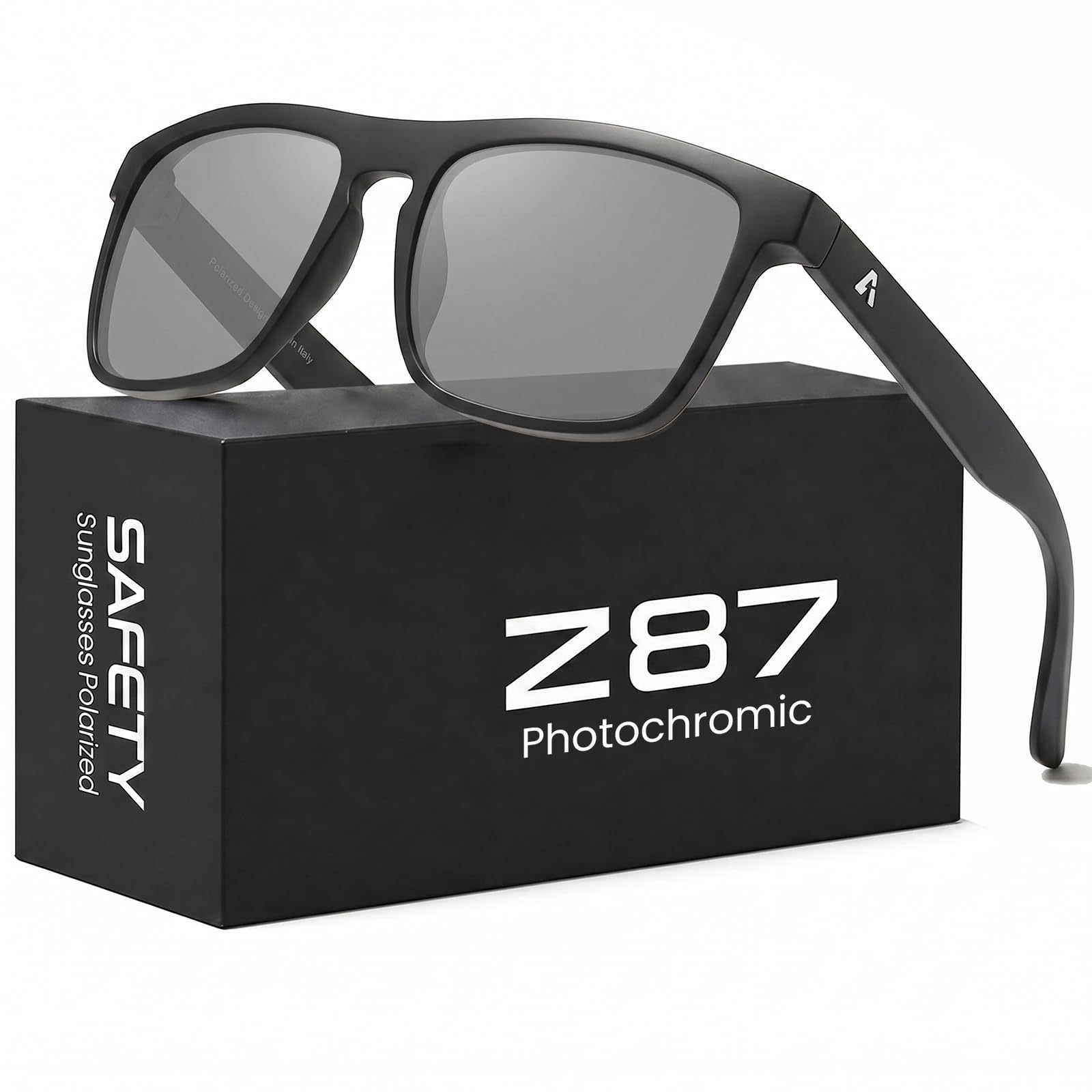
A photochromic lens that shifts from category 0 clear to category 3 dark with UV exposure, so you stop swapping glasses at the door.
SODQW builds for the worker who moves between a dim workshop and blinding sunlight. The photochromic lens automatically shifts from category 0 (clear) to category 3 (dark) as UV intensity changes, so you do not stop to swap eyewear when you step outside. On top of that, the lens is polarized to cut glare off water, snow, asphalt, and metal while boosting color contrast. ANSI Z87.1 certification covers the impact side, and UV400 protection backs up the sun exposure.
The frame is a wide rectangle sized for medium-to-large faces, with real measurements you can check: a 64.5 mm lens width, an 18 mm bridge, and a 140 mm temple. That is generous coverage for a wider head, and the shape extends peripheral protection. A scratch-resistant coating repels water, dust, and fingerprints so the surface stays easy to clean. Quality is the strongest point of praise on this pair, with functionality close behind — buyers find it does what it says and is well worth what it asks.
The catch is that photochromic activation depends on UV light, and SODQW states plainly that it works best with direct UV exposure and less well behind a car windshield. If you want a lens that darkens for driving, this is not the pair — a fixed-tint polarized lens does that job better. Tint depth and glare resistance also draw divided feedback, so if you want a dark lens at all times, look at a dedicated smoke or grey polarized pair instead.
Why it fits mixed-light work: category 0 to category 3 auto-tinting handles the indoor-to-outdoor shift without a second pair, and the wide rectangle frame covers medium-to-large faces.
The windshield limit: photochromic lenses activate less behind glass, so it is weaker as a driving pair than a fixed polarized lens.
Best fit for: the crew member who walks in and out of buildings all day and wants one lens that keeps up.
Not the one for: someone who wants a permanently dark lens for highway driving.
7. Safety Polarized Sunglasses Removable Side Shields

Side shields that clip on for dust and pop off when you want open peripheral vision.
This Bingking pair is the adaptable option in the group. The removable side shields block dust, debris, and impact hazards at the corners of the eye, then come off for a cleaner look and unobstructed vision when you are off the hazard-heavy part of the job. The frame is TR90, a flexible nylon-family plastic that stretches and adjusts to your head shape rather than fighting it, and the lens is TAC polarized (a layered film lens) with over 99% polarization efficiency and a stated 100% block of UVA and UVB rays.
ANSI Z87+ impact resistance holds the safety side, and the lens goes further: PC material that shown no cracking at 200 feet per second and none at 650 feet per second in the standards testing described, meeting military-grade impact requirements. The optical claim is that the lens meets ANSI Z87.1 resolving power, prism, and prism imbalance requirements for plano protectors — in plain terms, the lens is built to stay optically correct, with a stated aim of minimal rainbow effect. The photochromic version shifts from clear to dark with UV exposure, and the scratch-resistant surface coating is listed as meeting K-MARK hardness.
Two things keep this honest. Fit is mixed, with some buyers finding the frame too small, so check the dimensions against your face rather than assuming. Lens durability is the sturdier concern on this pair — lenses flake over time for some users — so treat them as consumable workwear rather than a permanent fixture. On the plus side, quality is the clearest point of agreement, and the look draws its own compliments for resembling name-brand eyewear.
What makes it flexible
- Removable side shields add coverage for dust and debris, then come off for open vision.
- TR90 frame stretches and adjusts to your head shape.
- TAC polarized lens with over 99% polarization efficiency.
- ANSI Z87+ impact rating plus military-level impact resistance testing.
What to watch
- Some buyers find the fit too small.
- Lens durability is the recurring weak point — flaking lens coating over time.
Good match for: the worker who wants one frame to cover dusty jobs and casual outdoor wear with a shield swap.
Skip the gamble if: you want a guaranteed fit and long-term lens life out of one fixed frame.
8. 3M Polarized Safety Glasses ANSI Z87.1 Certified
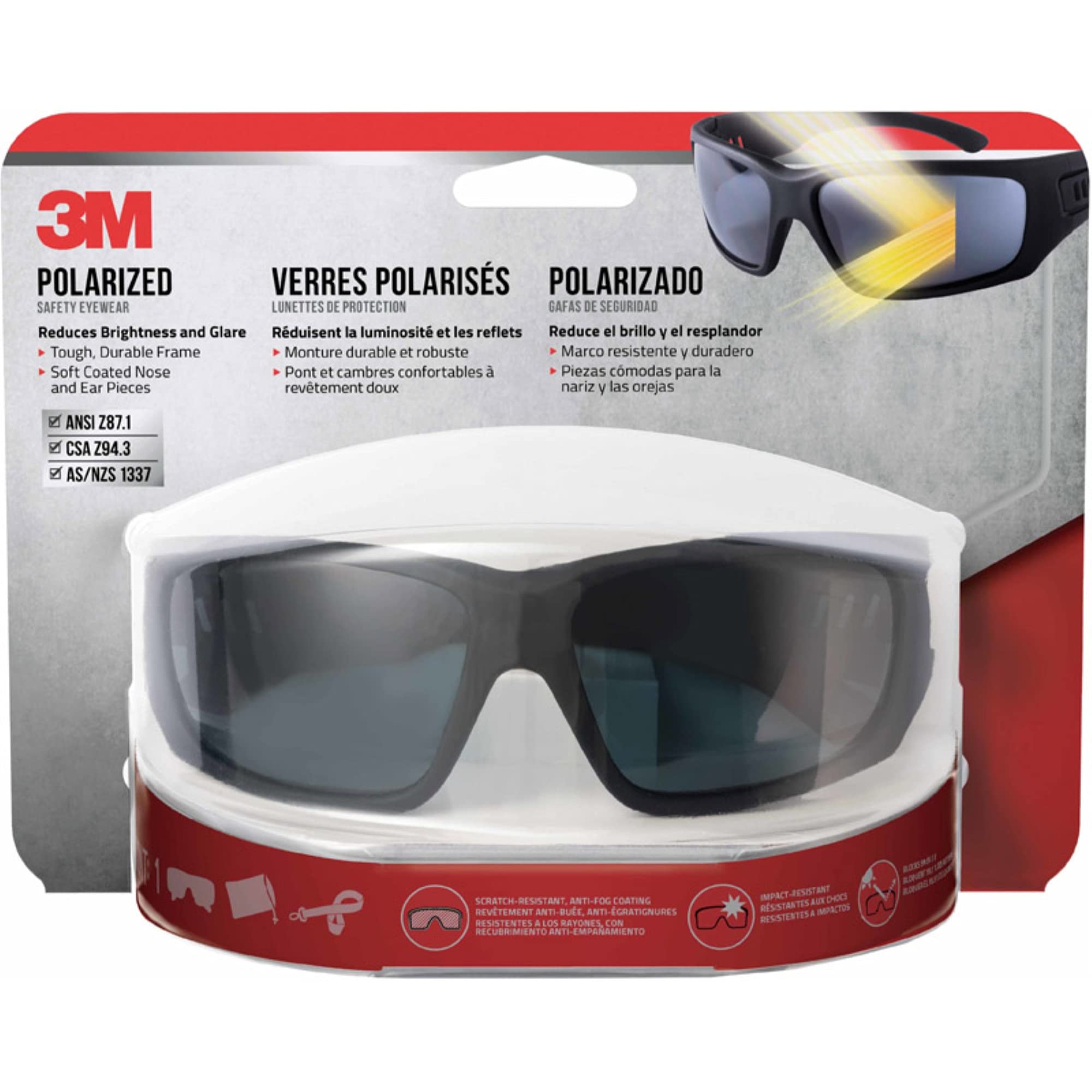
The humid-day answer, with a coating built to keep the lens clear when you sweat.
Fogging ruins a lens faster than scratches do, and 3M attacks it directly. Anti-fog and scratch-resistant coatings are both applied to the lens, which keeps your vision clear in humid or demanding environments where a bare lens would cloud over. The lens is polarized for glare control off water, metal, and glass, and blocks 99.9% of UVA and UVB rays. ANSI Z87.1 certification covers impact resistance from flying debris, dust, and small particles, the standard the professionals and DIY users in the reviews rely on.
Comfort gets real attention too. The lightweight wraparound frame uses rubber nose pads and rubber temples so the glasses stay put through a long shift, and a storage pouch plus a detachable lanyard ship in the package to keep a loose lens safe. Owners describe these as among the best they have worn, and the fit is the quality that earns the most approval. Durability holds up too — one reported use even has them surviving intense heat — and glare reduction rounds out a clean record.
There is very little to criticise here, which is the point of a 3M build. The main trade-off is that the wrap frame and rubber contact points give it a work-first look rather than a street pair you would wear out to dinner. That is a fair trade for the anti-fog coating and the fit that holds. As a full-rim plastic frame in the lightweight class, it is built for indoor and outdoor duty all day long.
What earns the spot: anti-fog plus scratch-resistant coatings, a 99.9% UVA/UVB filter, and ANSI Z87.1 certification in one wraparound frame.
The small trade-off: the work-first wrap styling is not a dressy look, so it lives on the job rather than the weekend.
Get this one if: your lens fogs on humid jobs or your breath catches the frame in the cold.
Not your pick if: you want a discrete everyday pair to wear socially.
9. EDGE Reclus Polarized Safety Glasses
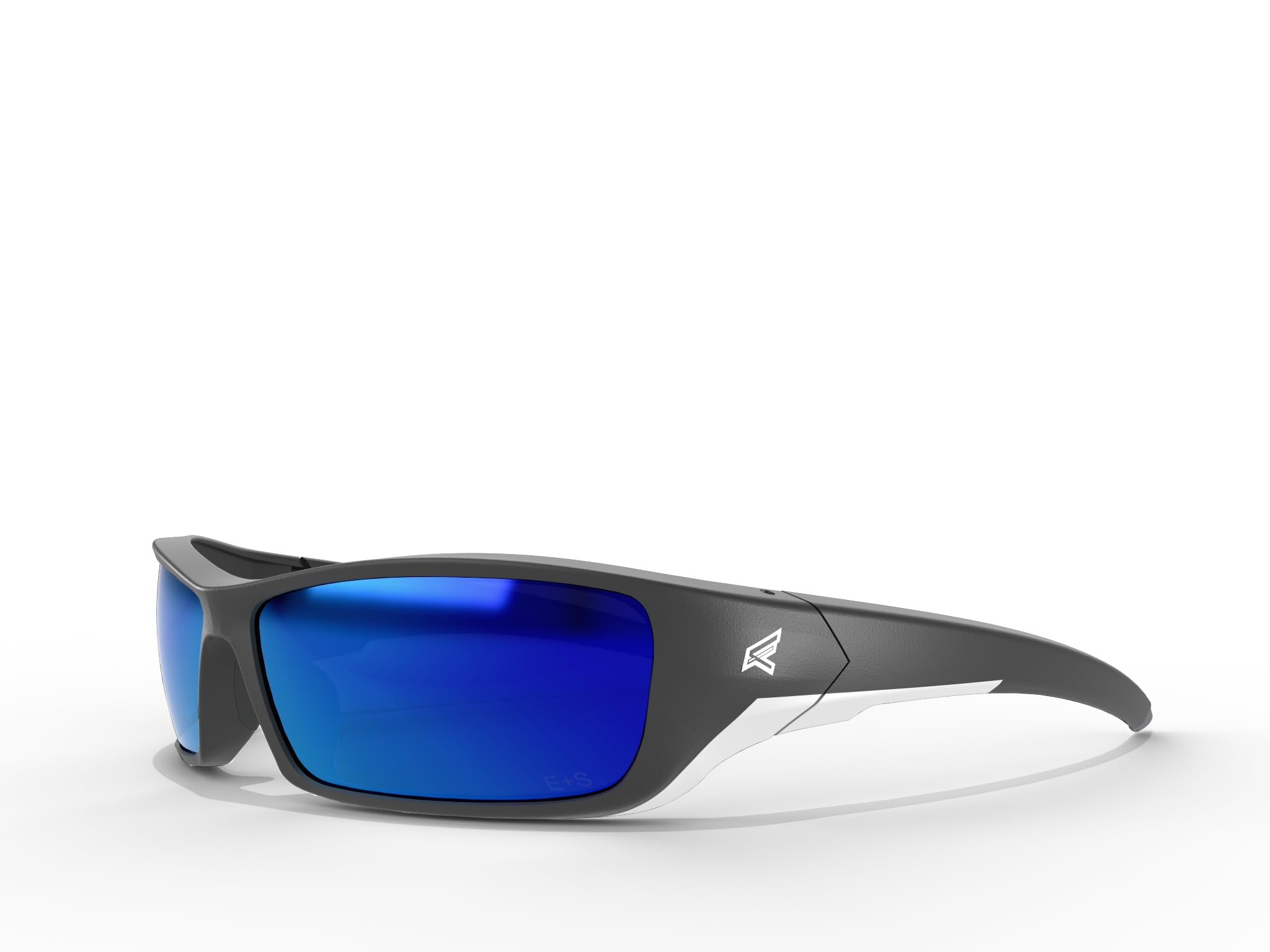
Designer-style protection with a lens built to cut refraction and reduce eye fatigue.
Edge takes the style question seriously. The Reclus carries a Polarized Aqua Precision Blue Mirror lens in a nylon full-rim frame, and the company works hard on the optical side — its Tapered Lens Technology (a lens curvature that eliminates refraction, which is the distortion that bends light and tires your eyes) is aimed at cutting eye fatigue over a long day. Compliance runs to ANSI/ISEA Z87.1+2015 for eye and head protection with the Z87+ high-impact level, and the lens blocks 99.9% of UVA, UVB, and UVC rays.
The blue mirror polarized lens filters excess glare, and Edge points that at driving and bright reflective surfaces specifically — the reflections off a hood or a wet road are exactly what polarized film is for. Wide, glare-blocking temples extend coverage to the side of the eye while keeping debris out, a design choice aimed at keeping you focused rather than squinting. As a widely worn pair, the broad picture here is good eye protection with wrap-around defense against wind and sun, and clear, functional vision to match.
What you are paying for is the combination of designer styling, the anti-refraction lens engineering, and the higher Z87+ impact level in one pair. If your priority is the lowest price for basic Z87.1 compliance, this is not where the value sits. But for anyone who wears safety glasses in front of clients, on a range, or out on the water and wants the protection without the shop-floor look, the Reclus is the upgrade.
Worth the step up for: anyone who wants Z87+ high-impact protection wrapped in a frame that looks like eyewear rather than work gear.
The money question: if certified basic Z87.1 compliance covers your task, a budget pair does that job for less.
Know the Specs
ANSI Z87.1 and the Z87+ Mark
ANSI Z87.1 is the US standard for eye and face protection, and a compliant frame carries the mark on the temple or lens. The “plus” form, Z87+, signals that the pair has passed a higher-velocity impact test. When you buy a pair, check for that stamp — it is the difference between a real protective lens and a tinted fashion frame. A pairing that meets Z87+ is what you want for dust, debris, and flying particles.
Polarization and VLT
A polarized lens filters the horizontal glare that bounces off water, snow, metal, and asphalt, while a plain tinted lens only dims overall light. Visual light transmission (VLT) is the percentage of visible light the lens lets through, so lower numbers mean a darker lens for brighter conditions. A lighter lens suits mixed or overcast work. Matching the VLT and tint to your light is what keeps your eyes comfortable through a full shift.
Common Questions
What does the Z87.1 marking actually mean on safety glasses?
Are polarized safety glasses really better for driving and outdoor work?
Can I wear polarized Z87 glasses for shooting and range time?
What is VLT and which level should I pick?
How do photochromic safety glasses differ from fixed polarized lenses?
Do the lenses on prescription glasses work with these masks or shields?
How should I clean and store polarized safety glasses so they last?
Do these glasses block enough UV for outdoor all-day work?
Can I wear these glasses under a hard hat or helmet?
Why do some polarized pairs still seem to let glare through?
The Bottom Line
For most people, the z87 polarized safety glasses winner is the Crossfire 21126 Infinity because it pairs genuine polarized HD Brown protection and 99.9% UV coverage with rubber grips that keep the frame planted through a full shift. If maximum impact protection is what you need, grab the Ergodyne Skullerz Odin for its MIL-PRF-32432 tested design. And for the buyer who works between sun and shadow all day, the SODQW Photochromic pair is the one to reach for. Whichever you choose, confirm the Z87.1 stamp on the frame and match the lens tint and VLT to the light you actually work in.
How we choose
We do not accept paid placement. Every pick is matched to a real buyer and a real use-case; we do not hands-on test units.
Sources
Specifications: manufacturer listings and product documentation. Review insights: verified customer reviews, as of November 2026. Pricing: not shown on this page (it changes often); check the current price via the retailer link.
As an Amazon Associate, Tactical Gear Guy earns from qualifying purchases. This does not affect which products we feature.