Specs are compiled from manufacturer listings and verified buyer reviews and can change over time — please confirm the key details on the product page before buying.
Most youth baseball cleats fail the same way — they fit fine in the store, then rub a raw spot by the third inning or come apart before the season ends. The fix is not spending more; it is checking the molded-rubber outsole and upper for wear points before a kid runs them out. This guide breaks down eight molded-rubber pairs, sorted by which foot shape and position each one suits.
This guide is built by comparing the manufacturers’ published specifications and the patterns across verified customer reviews, so you get each pick’s real strengths and trade-offs instead of marketing spin.
You will see which pairs run wide, which run narrow, and which cleat plates stay put through a full slate of games. By the end you can match a cleat’s width and cut to your player’s foot shape and position — the shortlist of youth boys baseball cleats below is ordered by real fit feedback, not by sticker order.
Top Picks

How To Choose The Best Youth Boys Baseball Cleats
A kid’s cleat has one job above all others: stay comfortable and stay together from the first practice to the last out of the season. Here is what actually moves the needle: outsole material, midsole foam, width, and cut.
Molded rubber versus metal spikes
Molded rubber outsoles are the standard for youth leagues because many parks and school fields ban metal. Every pair on this list uses a molded rubber bottom, so your player gets traction on turf, dirt, and grass without a rule problem. The trade is that molded rubber wears faster on concrete dugout floors — walk on the dirt, not the pavement.
Why the midsole matters more than the upper
The midsole is the foam layer under the foot, and it is the difference between a kid who is still running in the sixth inning and one who is complaining about sore feet. A full-length EVA midsole (a single foam sheet running heel to toe) or a REVlite midsole (New Balance’s lighter foam) both spread impact across the whole foot. A cheap flat slab does not.
Getting the width right the first time
Youth feet are wider than adult feet relative to length, and a cleat that pinches the toes will get kicked off mid-game. Several pairs here are singled out by buyers as friendly to wide feet. If your player is between sizes, size up rather than squeezing into a tight pair — a snug cleat causes blisters, and blisters cause a kid who stops wanting to play.
Ankle support and the mid-top cut
A mid-top collar rises above the ankle bone and adds a little lateral support for kids who slide and pivot hard. It is not a brace and it will not prevent a twisted ankle, but it does keep the shoe locked to the foot when a player cuts. Low-cut pairs feel lighter and freer; mid-tops feel more planted. Match it to how hard your player plays.
Side-by-Side Comparison
| Model | Best For | Outsole | Cushioning | Cut / Fit Note | Amazon |
|---|---|---|---|---|---|
| Under Armour Boys’ Leadoff Icon Mid RM JR★ Best Overall | All-around everyday cleat | Rubber molded | Full-length EVA midsole | Mid-top collar | Amazon |
| Unisex-Child Baseball Cleats Kids Softball ShoesBudget Champion | Budget multi-sport use | Non-slip outsole | — | Hook & loop closure | Amazon |
| Under Armour Kids Harper 10 Jr RMSizing Range Pick | Light break-in for young players | Rubber molded | Full-length EVA midsole | Toddler to big kid sizing | Amazon |
| New Balance Kid’s 4040 V6 Molded | Fast, light feel on turf | Rubber molded cleated bottom | REVlite midsole | Runs wider than normal | Amazon |
| adidas Kids’ adiZero Impact 2.0 | Bright, durable team shoe | Molded rubber | — | Suits wider feet | Amazon |
| New Balance Kids’ Romero Duo V2 | Fast-pitch players | Rubber molded | — | Runs small — size up | Amazon |
| New Balance Kids’ 4040 V8 | Wide-footed players | Rubber-molded | — | Wide fit, no toe pinch | Amazon |
| New Balance Kids’ Fresh Foam 3000 V7 | Coach-pitch and practice | Durable rubber | Fresh Foam + REVlite midsole | Wide-foot friendly | Amazon |
Detailed Reviews
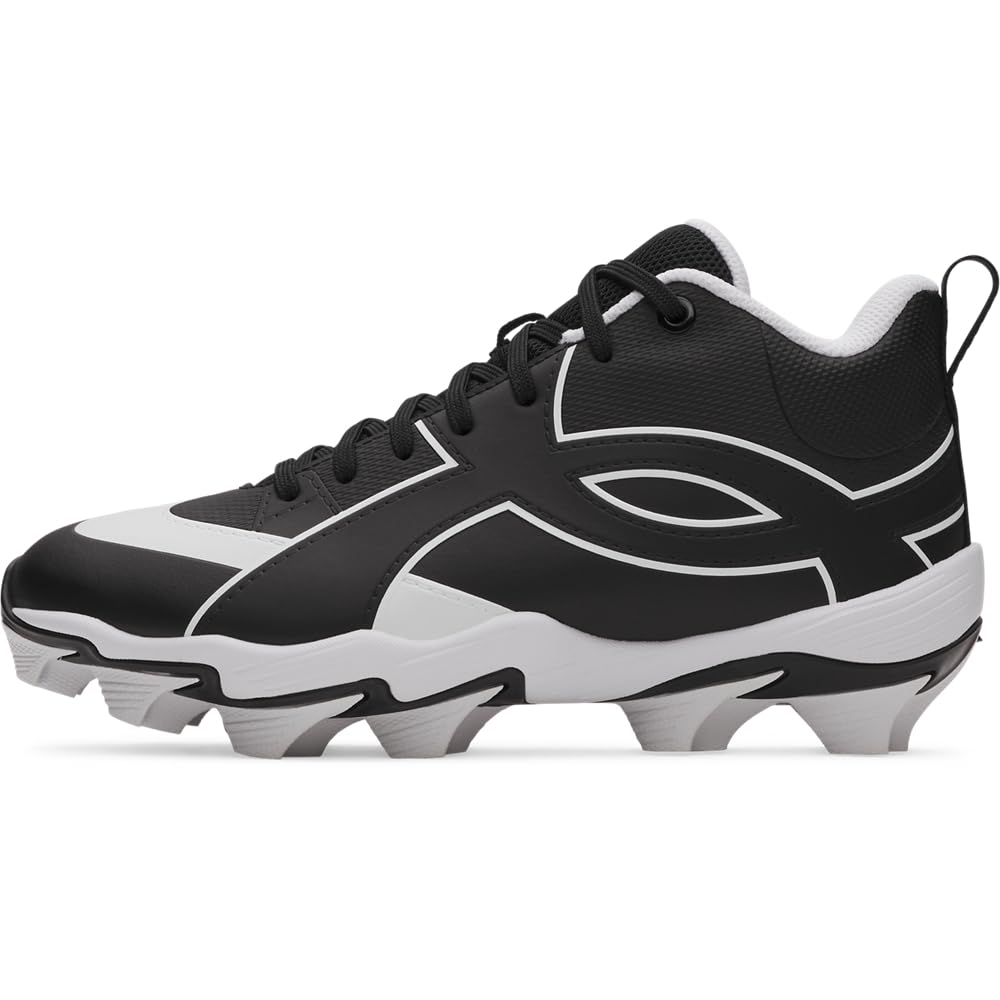
1. Under Armour Boys’ Leadoff Icon Mid RM JR Baseball Cleats
Our pick — 4.5+★ from 400+ verified ratings; the strongest balance of quality and price.
The pair that quietly solves the two things kids hate most: a hot collar and a dead, flat sole.
This is the crowd favorite of the group at 4.5+ stars across 400+ owners, and the reason is simple — Under Armour built it for comfort first. A full-length EVA midsole (one continuous foam sheet from heel to toe) puts cushioning under the whole foot instead of a thin pad at the heel. Your player feels that late in a doubleheader, when the legs are tired and every step lands harder.
The mid-top ankle collar is the second half of the story. It rises above the ankle bone for added support, which matters for a kid who slides and cuts hard on the basepaths. The upper is synthetic with molded details — light, breathable, and described as super durable. And the rubber molded outsole is built to give traction and durability on all field surfaces, so it works on the school’s dirt infield and the travel-team turf alike.
What wins people over is the cleat quality itself, singled out more than any other trait, with fit right behind it. The padded collar keeps a soft buffer between the shoe and the ankle — the classic blister spot on cheap cleats. Buyers also report it works well for chunkier feet, which is a real find in youth sizing, where most pairs run narrow. The one honest trade: molded rubber wears on hard surfaces, so keep the walk to the dugout on dirt or grass, not the parking lot.
What earns the top spot
- Full-length EVA midsole cushions heel to toe, not just the heel
- Mid-top collar adds ankle support for hard cuts and slides
- Padded collar heads off the blister rub at the ankle
- Rubber molded outsole grips dirt, turf, and grass
- Buyers report it suits chunky, wide feet
Where it gives ground
- Molded rubber will scuff fast on concrete or asphalt
- Mid-top cut feels heavier than a low-cut shoe to some kids
Reach for this if: your player wants one shoe that handles practice, games, and every field surface without complaints.
Think twice if: your kid insists on the lightest possible low-cut feel and hates anything around the ankle.
2. Unisex-Child Baseball Cleats
Hook-and-loop straps and a no-blister break-in make this the pair for a first-season player.
If your player is still learning to tie laces tight enough, the hook-and-loop closure is the feature that sells this shoe. Velcro-style straps cinch down in one pull, so the cleat goes on and off without a fight before practice. That ease of use shows up as a real strength in the feedback, and it is the reason this pair suits the youngest end of the youth range.
The comfort story is stronger than the low price suggests. Buyers describe no blisters and no “ouchie” spots, and the fit runs true to size — with several noting it works well for wider feet. A textured upper adds structure without stiffness, and the non-slip outsole handles the traction job on dirt and grass. Value is the most-praised trait here, which tracks: this is the budget-friendly pick that does not feel like a compromise.
Durability holds up across both baseball and football duty, so a multi-sport kid gets more miles out of one pair. The catch is that velcro straps lose their grip over time if they collect infield dirt — rinse and pick the fuzz out now and then and they will keep cinching. There is no mid-top collar here, so this is a low-cut, free-feeling shoe rather than an ankle-support pick.
Best for first cleats: a young player who needs to get dressed without help and wants a comfortable, true-to-size fit from the start.
The honest limit: no ankle collar and straps that need occasional cleaning to keep their hold.
Pick this when: budget and easy on-off matter more than an ankle collar.
Look elsewhere if: your player wants mid-top support around the ankle bone.
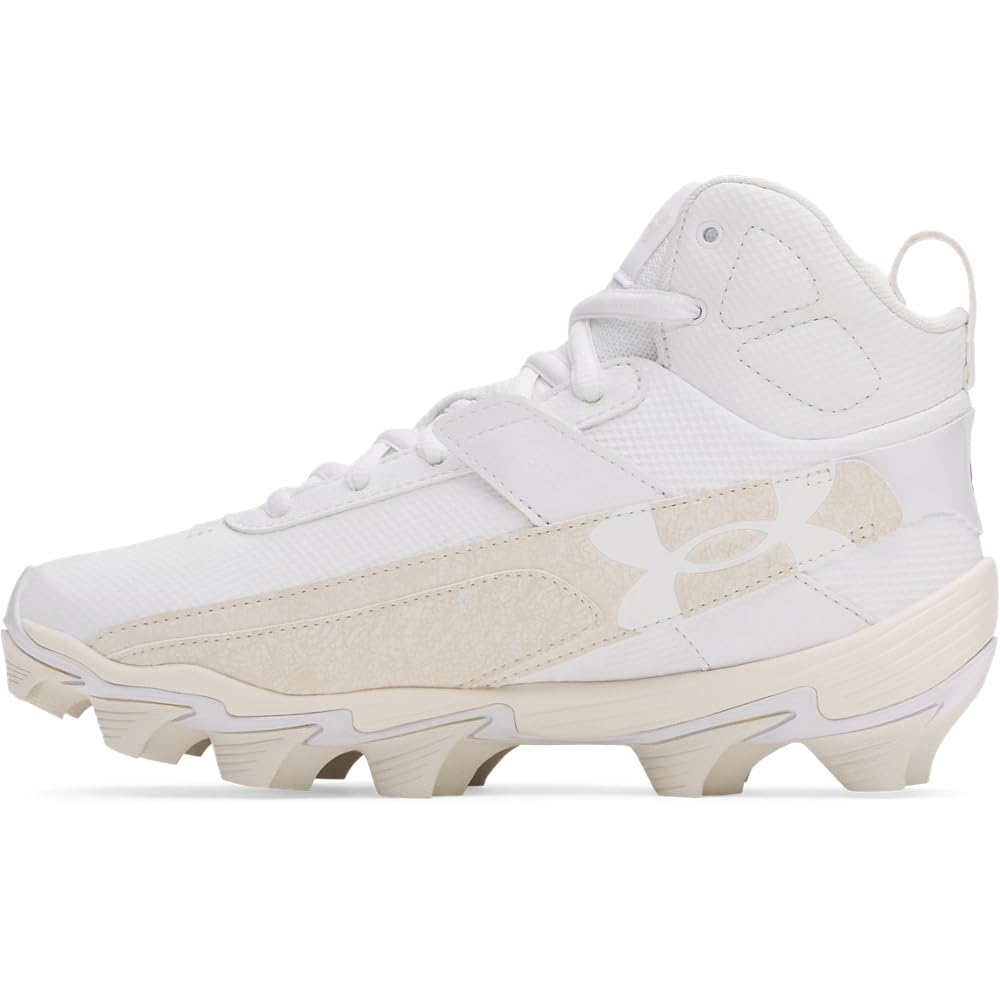
3. Under Armour Harper 10 Jr RM Baseball Cleats
One model that spans toddler through big kid, so a growing player can stay in the same shoe.
The useful thing here is the size span — this pair runs from toddler all the way to big kid sizing. That means the same cleat you trust for a six-year-old can be reordered as he grows, without switching models and relearning the fit. The synthetic upper is light, breathable, and described as super-durable, and a full-length EVA midsole spreads cushioning under the whole foot for long innings.
This pair is easier to toss in a gear bag than the adidas adiZero Impact 2.0. Its box measures 12 x 6 x 5 inches versus 14 x 9 x 5 inches, and the shoe weighs 2.4 pounds versus 2.43 pounds — a hair lighter. Neither gap is dramatic, but the tighter package packs away faster. The new rubber molded outsole (a one-piece rubber sole molded for grip) is built for traction and durability on all field surfaces, so your player keeps footing on dirt and grass.
Fit lands true to size for most players, and the quality is what buyers single out most, with fit close behind. Comfort, value, and even ankle support all draw positive nods, which is a lot of praise for a mid-priced cleat. The mixed signal is durability: some pairs stand up fine, while a few report breakdown within a year, typically for hard-playing kids who never take them off. Treat that as a fit note — if your player is on the field five days a week, rotate in a second pair.
Go here for: a growing player who needs one reliable model from toddler sizing up through big kid.
Be aware: a few hard-use pairs have worn out inside a year — a second pair spreads the wear.
4. New Balance Kid’s 4040 V6 Molded Baseball Shoe
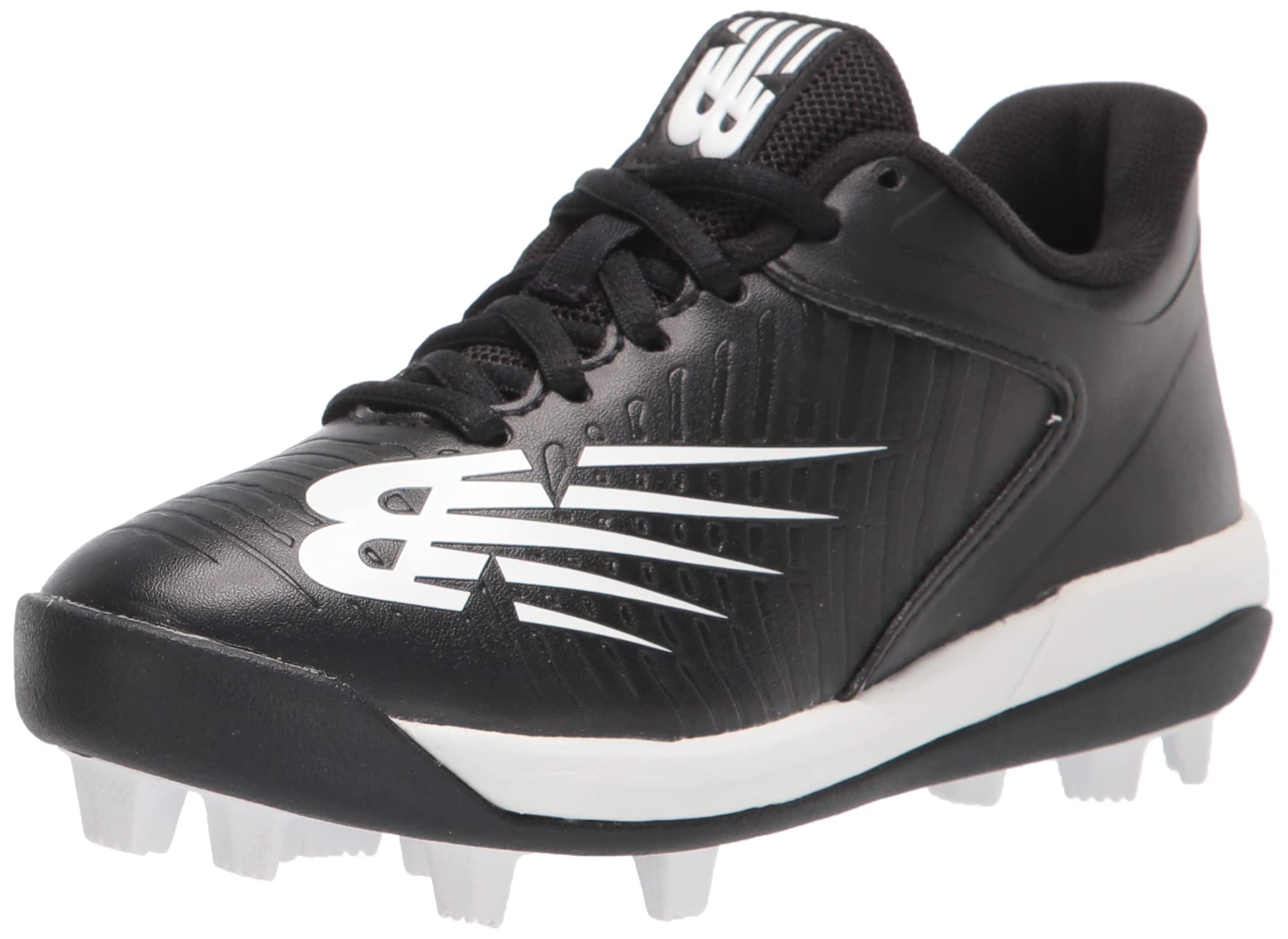
A light, springy shoe that runs wider than normal — the answer for a broad-footed player.
New Balance built the 4040 V6 around a REVlite midsole — a lightweight foam that gives responsive cushioning for a fast, springy feel underfoot. A kid who is chasing down a fly ball or sprinting to first notices that lightness; the shoe does not drag. The rubber molded cleated bottom grabs on turf, dirt, and grass, so the traction works wherever the game is played.
The synthetic upper adds durability against wear and tear, and the fit is the standout for wide-footed players — buyers describe it as wider than normal. Quality is the most-praised trait, with fit behind it, and the value lands well too. For a player who has been squeezing into narrow cleats and complaining, this is a genuine fix rather than a workaround.
One thing to keep an eye on: the plastic cleats have been reported breaking off on some pairs, so this suits a player on dirt and turf more than one grinding through a rock-hard field all season. Check the studs now and then and retire the shoe when a cleat goes. If your player’s feet run wide and light, though, this is the pair that stops the toe-squeeze.
Why wide feet pick it: a broader-than-normal fit plus a light REVlite midsole that keeps a fast player moving without a pinch.
The caveat to watch: plastic cleat studs have been known to snap on hard ground — inspect them through the season.
Best fit for: a wide-footed player who wants a light, responsive ride on turf and dirt.
Not the pick if: your player grinds through rocky, hard-packed fields where studs take a beating.
5. adidas Kids’ adiZero Impact 2.0 Molded Rubber Baseball Shoe
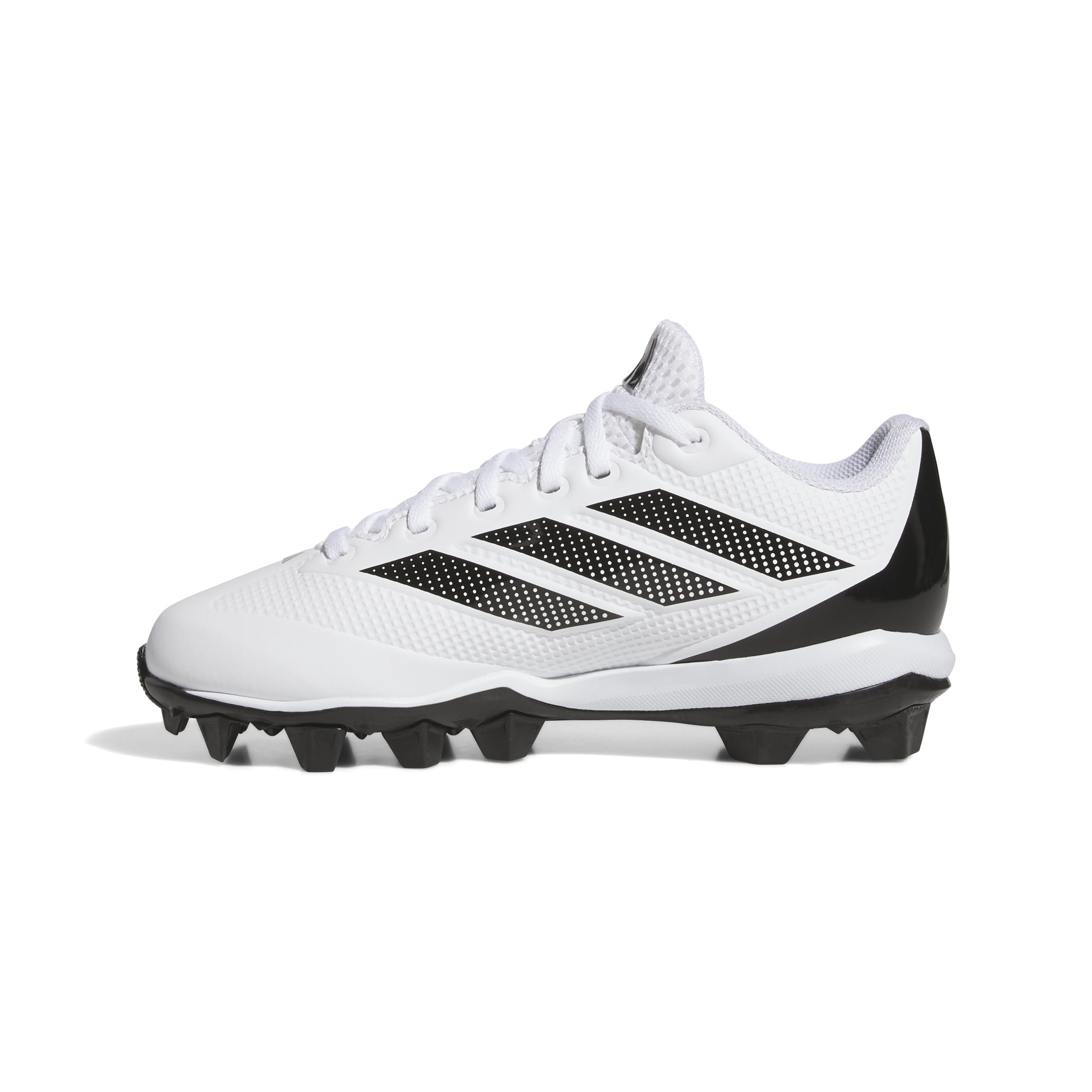
Built for the kid who wants to be seen on the field — bright colors and a stout plate.
The adiZero Impact 2.0 leans into looks, and buyers reward it. The bright colors pop, and the appearance draws compliments, which for a youth player often matters as much as any spec. Under the flash, this is a molded rubber cleat that holds up to base running — durability is called out as a strength, and it stands up well to hard turns around the bags.
A broad-footed player gets room here without going up a size, because the fit suits wider feet. Owners mention quality as the most-praised trait, with fit behind it, and the value reads well for a branded cleat. Compared with the Under Armour Harper 10, the adidas run bigger in the box — 14 x 9 x 5 inches versus 12 x 6 x 5 inches — and the shoe weighs 2.43 pounds versus 2.4 pounds, so it is the heavier, roomier package of the two.
What you give up is cushioning detail: there is no named foam midsole here, so a player who wants plush underfoot comfort should look at the EVA-cushioned pairs instead. This one is about traction, color, and a fit that does not squeeze. For a player who picks his cleat by how it looks in the dugout, that is a fair trade.
Choose this for: the player who wants bold color and a durable molded plate that handles base running.
Only skip it if: you specifically want a cushioned, named-foam midsole for long days on your feet.
6. New Balance Kids’ Romero Duo V2 Rubber Molded Baseball Shoes

Named after the Romero sisters, this one is tuned for a young fast-pitch player.
New Balance positions the Romero Duo V2 as entry-level fast-pitch footwear built for young athletes who want to play with the same passion as Sierra and Sydney Romero. That framing matters: the shoe’s shape and feel are aimed at the softball and fast-pitch crowd, not just the baseball diamond. Cleat quality is the thing buyers praise most, and it is the trait that justifies the premium spot in the lineup.
Appearance runs a close second, and the style details are part of the draw — the glitter laces get noticed. Comfort and durability both land well, with pairs lasting through a full season. Wide feet get room here too, with enough space for thicker socks on cold-weather games. The rubber molded outsole keeps traction dependable through the season.
Sizing is the one mixed signal: some buyers find it runs small, so plan to size up rather than trusting the label. Try the fit with the socks your player actually wears, because a thicker sock eats into the toe box. Once the size is right, this is a comfortable, good-looking cleat that holds up — just order a half size up if your player is between sizes.
what separates it: fast-pitch tuning (a build aimed at the fast-pitch game) plus standout styling and room for thicker socks — rare in a cleat this finished.
Sizing heads-up: it tends to run small, so sizing up is the safer move.
Made for: a fast-pitch player who wants a good-looking, comfortable cleat that lasts a full season.
Order carefully if: your player sits between sizes — go up, not down.
7. New Balance Kids’ 4040 V8 Rubber-Molded
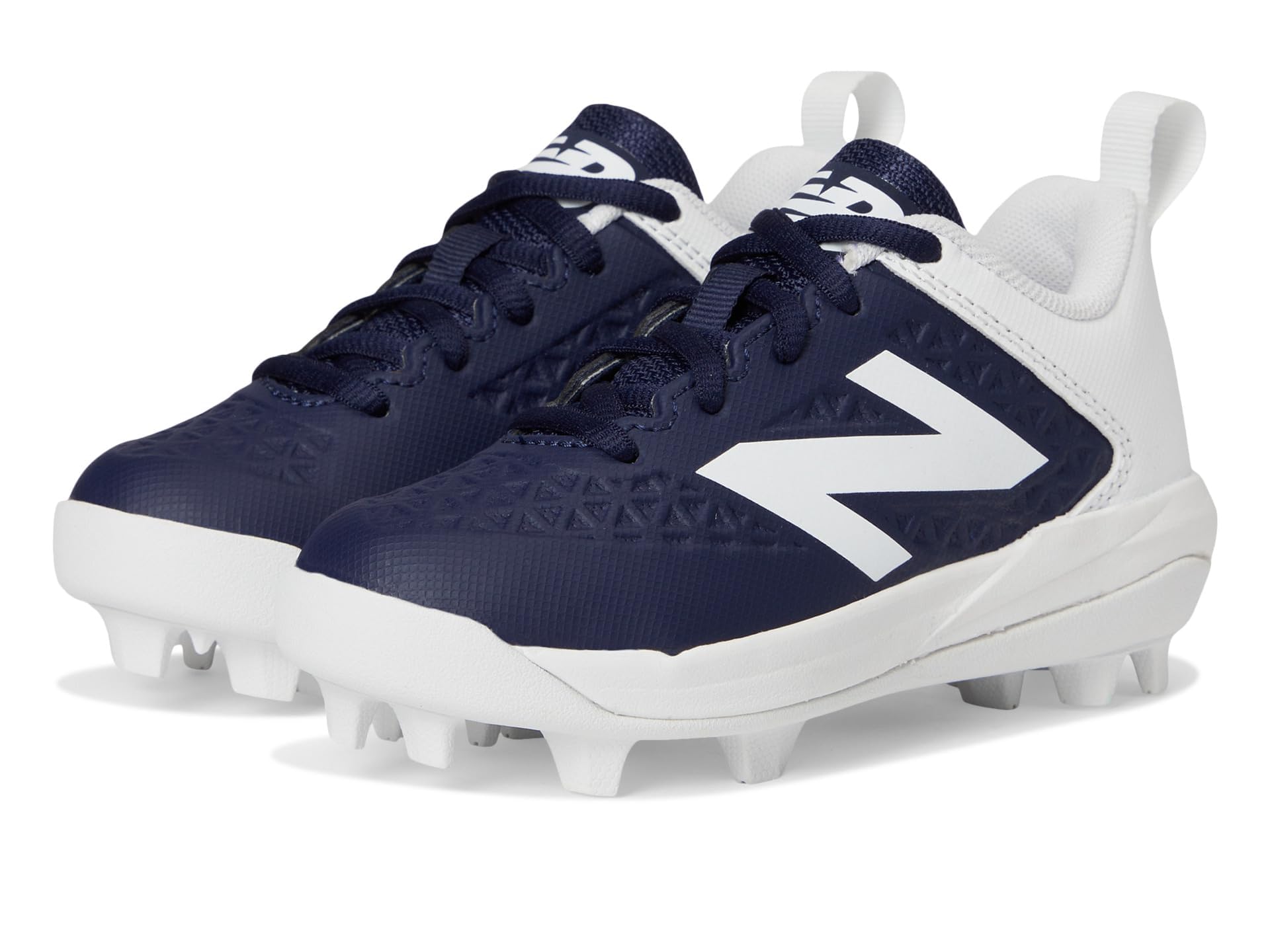
The roomiest pair on the list — a wide fit that stops pinching a broad foot at the toe.
New Balance’s 4040 V8 is a rubber-molded cleat built for players who need width, and the fit is the headline. The wide cut accommodates broad feet, and the toe box does not pinch toes — a small detail that makes a big difference to a kid who has been kicking off tight shoes all season. It draws 4.5+ stars, matching the top pick on score, and the wide-foot crowd is the reason.
Quality is the most-praised trait, with fit right behind it, and the value reads well for a premium cleat. Comfort follows the wide shape — a wider shoe simply has more room to spread a foot out. The rubber-molded outsole gives dependable traction, so a broad-footed player is not trading grip for room.
Style is a quieter strength here, with the shoe barely looking used after time on the field — a good sign for durability. The trade is that this is a fit-first shoe: if your player has a narrow foot, the extra width may feel sloppy, and a snugger pair suits them better. For a broad-footed player, though, wide fit plus molded grip is the combination that keeps them comfortable through a full slate of games.
Right pick for: a wide-footed player who wants room, no toe pinch, and reliable molded traction.
Not for: a narrow-footed player who will find the extra width too loose.
8. New Balance Kids’ Fresh Foam 3000 V7 Rubber Molded
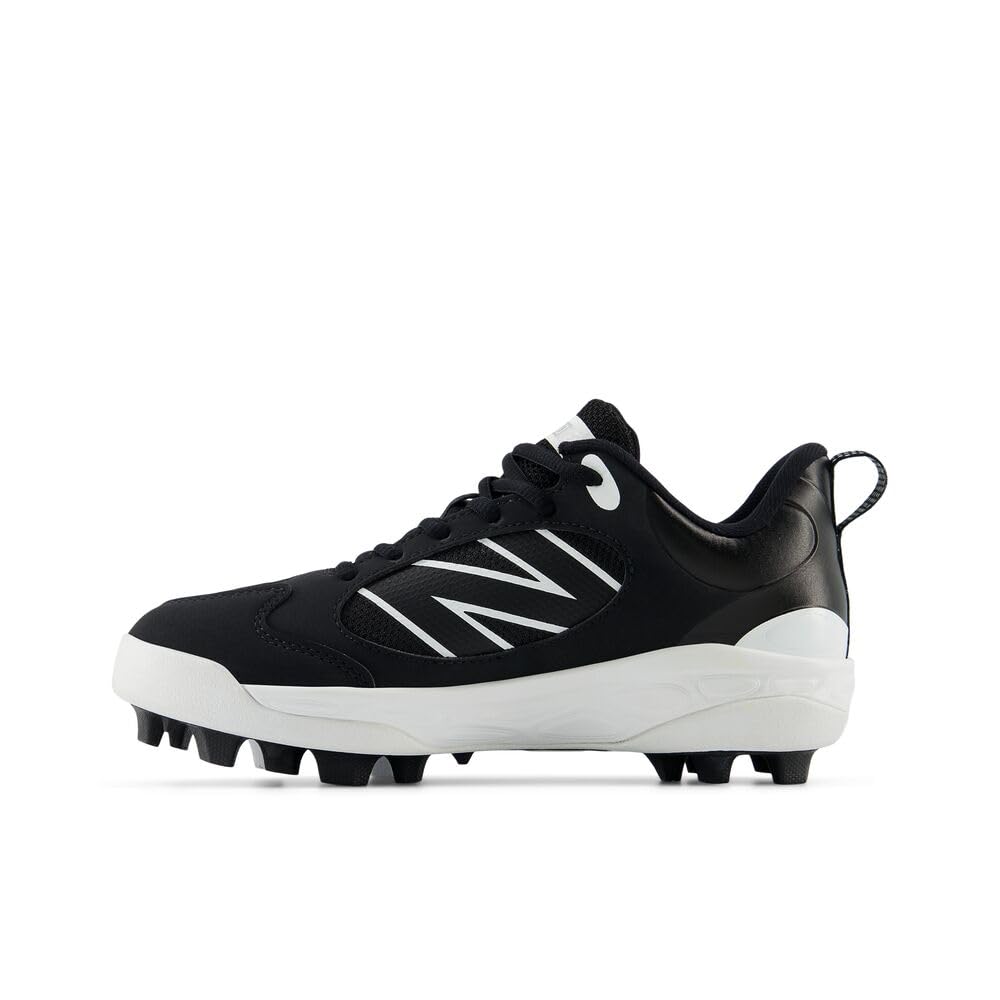
Fresh Foam and REVlite together — the softest combination on this list for practice-heavy weeks.
The 3000 V7 doubles up on cushioning: Fresh Foam midsole technology for all-day comfort during games and practice, plus a lightweight REVlite midsole underneath for a fast, free-moving feel. For a kid who is on the field at practice four days a week and plays a game on the weekend, that stacked comfort is the feature that matters most. The durable rubber outsole holds traction on turf and dirt.
New Balance calls it a versatile pick suited to boys or girls baseball, from a first season in little league up through advancing skills. The fit suits wide feet, and the durability holds up well through the season. Quality and appearance both draw positive notes, and it is specifically called out as working well for coach pitch — the stage where a young player is still building confidence at the plate.
The honest trade is that there is no mid-top collar here, so ankle support is minimal — this is a low-cut comfort shoe. And while cushioning is the selling point, a player who wants a stiffer, more planted feel underfoot might prefer a firm plate. For comfort and wide-fit through a long practice schedule, though, this pair is the softest ride in the lineup.
The comfort case: Fresh Foam plus REVlite gives the most cushioning on this list, ideal for a player who lives at practice.
Where it stays simple: low-cut with no ankle collar, so it is a comfort shoe rather than a support build.
Made for: a practice-heavy young player who wants maximum cushioning and a wide-friendly fit.
Pass on it if: you want a mid-top ankle collar for hard cutting and sliding.
Know the Specs
Molded Rubber Outsole
A molded rubber outsole is a single rubber plate with cleats formed into it, not screwed-in metal spikes. It is the standard for youth leagues because many fields ban metal, and it grips turf, dirt, and grass alike. The trade-off is wear on hard surfaces — molded rubber lasts longest when a player stays on the field rather than the parking lot.
EVA and REVlite Midsole Cushioning
The midsole is the foam layer under the foot. A full-length EVA midsole runs foam heel to toe, spreading impact across the whole foot. REVlite is New Balance’s lighter foam that gives responsive cushioning without bulk. Fresh Foam is a softer cushioning foam. A named midsole usually means more comfort over a long game than a flat slab.
Mid-Top Versus Low-Cut
A mid-top collar rises above the ankle bone and adds lateral support for cutting and sliding. It is not a brace, but it keeps the shoe locked to the foot when a player pivots. Low-cut shoes feel lighter and freer. Choose mid-top for hard-playing kids and low-cut for players who want the lightest feel.
Hook-and-Loop Versus Laces
A young player can put these on without help, because the hook-and-loop closure (Velcro-style straps) cinches in one pull. Traditional laces tie like any sneaker and suit older kids who can tighten them. Both keep the shoe on; the choice depends on how much independence your player wants getting dressed.
Common Questions
Are molded rubber cleats allowed in youth baseball leagues?
How do I know if a youth cleat runs wide or narrow?
Should a youth baseball cleat fit snug or with room to grow?
How long should youth baseball cleats last?
Is a mid-top cleat better than a low-cut cleat for a young player?
Can these cleats be used for softball as well as baseball?
Do hook-and-loop cleats stay on during a game?
What is the difference between EVA and Fresh Foam midsoles?
How should I clean youth baseball cleats?
The Bottom Line
Your best all-around buy in this shortlist of youth boys baseball cleats is the Under Armour Leadoff Icon Mid RM JR. It pairs a full-length EVA midsole (a foam layer that cushions the whole foot) with a padded mid-top collar and a rubber molded outsole that grips every field surface. If you want the widest, roomiest fit for a broad foot, reach for the New Balance 4040 V8. And for the softest cushioning on a practice-heavy schedule, the New Balance Fresh Foam 3000 V7 is the one to grab. One last nudge: with hundreds of ratings behind it and a 4.5+ score, the Leadoff Icon has earned its place at the top of this list.
How we choose
We do not accept paid placement. Every pick is matched to a real buyer and a real use-case; we do not hands-on test units.
Sources
Specifications: manufacturer listings and product documentation. Review insights: verified customer reviews, as of November 2026. Pricing: not shown on this page (it changes often); check the current price via the retailer link.
As an Amazon Associate, Tactical Gear Guy earns from qualifying purchases. This does not affect which products we feature.