Specs are compiled from manufacturer listings and verified buyer reviews and can change over time — please confirm the key details on the product page before buying.
You want one device that quietly watches your pulse, your sleep and your blood pressure without a chest strap or a tangle of cables. Start with the Smart Bracelet from PJIVE. It reads heart rate, blood pressure and blood oxygen continuously and runs up to 40–60 days per charge. The longer answer depends on what you need most. Do you want a cuff that gives you a real blood-pressure number? Or a band that nudges you toward better habits every day? Those are two very different jobs. This guide separates the two so you buy the right device once.
This guide is built by comparing the manufacturers’ published specifications and the patterns across verified customer reviews, so you get each pick’s real strengths and trade-offs instead of marketing spin.
Below you will find wrist units that inflate a cuff for a true pressure reading and band-style trackers that read your pulse all day, sorted by what each one actually does well. Every pick here is a wrist-worn device, so nothing on this list needs a finger clip or an arm cuff strapped to a table. best wrist health monitor shopping starts with one question: do you need a measurement, or a habit coach?
Top Picks

How To Choose The Best Wrist Health Monitor
The first fork in the road is the one most buyers skip: a wrist blood-pressure monitor and a fitness band are not the same purchase. A blood-pressure cuff inflates around your wrist to squeeze an artery and read the pressure inside it. A fitness band shines light through your skin to detect pulse and movement. Buying the wrong type is the most common mistake here, and it costs you a return.
Decide if you need a measurement or a habit coach
If you need a number you can write down and take to an appointment, you want an inflating cuff unit. These give you systolic and diastolic pressure plus pulse rate on a display. If you want to know how you slept, how many steps you covered and whether your resting pulse is drifting upward, a band does that better. Some trackers claim blood-pressure monitoring, but they estimate it from pulse data rather than inflating a cuff. Know which kind you are holding before you trust the figure.
Cuff fit decides your numbers more than the brand does
A cuff that is too loose reads low, and one that is too tight reads high. Look for a stated wrist range in inches or centimeters and measure your wrist with a soft tape before you order. Most cuffs on this list are built around a range that starts near 5.3 inches and tops out around 8.5 inches. If your wrist sits outside that window, the reading is not something you should act on.
Heart level is not a suggestion
A wrist cuff has to sit level with your heart while it inflates, or gravity shifts the reading. That is why the better units include a resting or heart-level indicator that lights up when you are positioned correctly. It sounds fussy until you realize it is the difference between a number you can trust and a number you cannot.
Then look at battery, memory and app support
Memory spaces matter more than most shoppers expect, because a single reading tells you almost nothing — a trend over weeks does. Two-user memory is worth having if a partner will use the same device. On the band side, battery life ranges widely: the longest-lived pick here runs up to 60 days on a charge, while the most feature-heavy run about a week. An app is only useful if it actually stays connected to your phone, so treat pairing quality as a real spec, not an afterthought.
Side-by-Side Comparison
| Model | Best For | Type | Battery | Memory / Tracking | Amazon |
|---|---|---|---|---|---|
| PJIVE Smart Bracelet★ Best Overall | All-day tracking with weeks of battery | Fitness band | Up to 60 days | 170+ sport modes | Amazon |
| Beurer BC57 Bluetooth WristBest for App Sync | Syncing readings to your phone | Inflating cuff | 2 AAA batteries | 60 readings, 2 users | Amazon |
| A&D Medical UB-525Simplest To Use | Simple one-button readings | Inflating cuff | 2 AAA batteries | 60 readings | Amazon |
| OMRON 7 Series Wrist | Averaging out wonky single readings | Inflating cuff | 2 AAA batteries | 90 readings | Amazon |
| OMRON Gold Wrist | Two-person households tracking long term | Inflating cuff | 2 AAA batteries | 200 readings each, 2 users | Amazon |
| Fitbit Inspire 3 | Sleep and stress insight on a budget band | Fitness band | 10 days | 40+ exercise modes | Amazon |
| Fitbit Charge 6 | Built-in GPS and contactless pay | Fitness band | 7 days | 40+ exercise modes, GPS, ECG | Amazon |
| WHOOP 5.0 | Recovery and strain coaching | Screenless band | 14+ days | 140+ metrics, AI coach | Amazon |
| Garmin CIRQA Smart Band | No subscription, distraction-free wear | Screenless band | 10 days | 80+ activities | Amazon |
Detailed Reviews
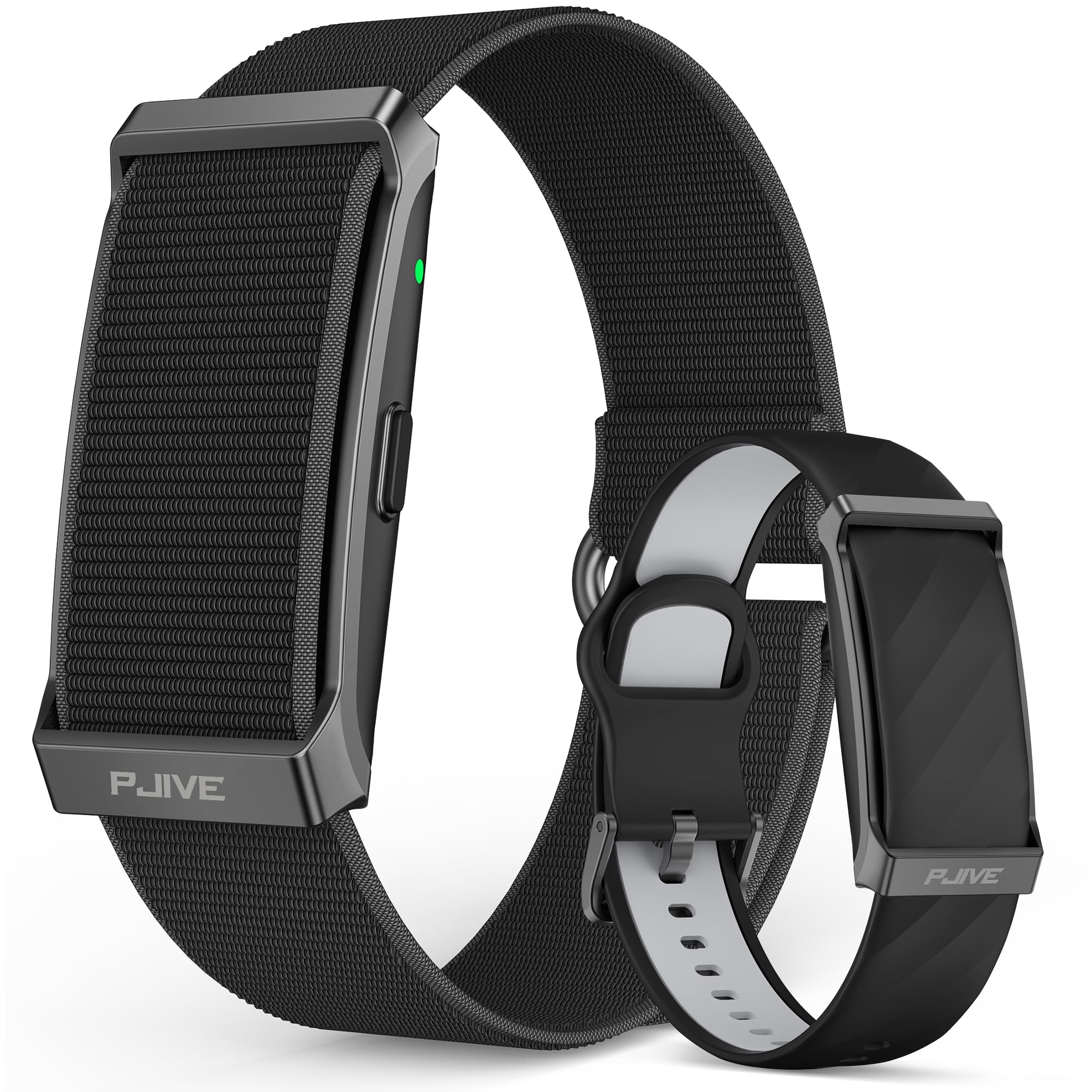
1. PJIVE Smart Bracelet Health & Activity Tracker
Our pick — 4.5+★ from 250+ verified ratings; the strongest balance of quality and price.
The band you charge a couple of times a season, not every night.
Most wrist wearables die in the charger drawer because a nightly top-up becomes a chore. This one is built around the opposite idea: a rechargeable battery rated for up to 40–60 days on a single charge, with a full top-up taking about 2 hours. If you want a tracker that stays on your wrist instead of in the charger drawer, that runtime is the selling point.
It reads heart rate, blood pressure and blood oxygen continuously and splits your night into light, deep and REM sleep stages. You also get 170+ sport modes, from walking to yoga to strength training, with steps, distance, calories and duration recorded each session. Everything lands in the free QWatch Pro app, which pairs with both Android and iOS.
The physical side is sorted too. At 18.4g the band disappears on your wrist, and the IP68 rating means sweat, rain, splashes and even a swim are fine. The box includes two interchangeable straps — nylon and silicone — so you can swap from gym to desk without thinking about it. Calls, messages and notifications arrive as a gentle vibration rather than a screen you have to look at. The crowd is convinced: 4.5+ stars across 260+ ratings makes it the strongest-scoring pick on this list.
What earns it first place
- Up to 40–60 days between charges at roughly 2 hours to refill
- Continuous heart rate, blood pressure and blood oxygen tracking
- IP68 rating covers sweat, rain and swimming
- Two straps in the box — nylon and silicone
Where it asks for patience
- The blood-pressure figure is an estimate from pulse data, not a cuff reading
- Everything runs through the QWatch Pro app, so a pairing hiccup stops the data flow
Made for: anyone who wants round-the-clock pulse, oxygen and sleep data without a charging ritual.
Go elsewhere if: you need an inflating cuff for a clinical blood-pressure number.
2. Beurer BC57 Bluetooth Wrist Blood Pressure Monitor
A genuine inflating cuff that also fires your numbers straight to your phone.
This is the pick if you hate the idea of a paper log. The BC57 inflates around your wrist, reads systolic and diastolic pressure plus pulse rate, then pushes the result to the HealthCoach app over Bluetooth so nothing has to be copied down by hand. The large LCD screen uses a colour-coded risk indicator, which turns a bare number into something you can interpret at a glance.
On-board memory stores 60 readings for two users, split across 120 total spaces on the device. A resting indicator lights up when you are in a settled position, and the cuff itself adjusts across wrists from 5.3 to 7.7 inches. If an irregular heartbeat is detected during the reading, an alarm sounds. Beurer also includes a plastic storage case and two AAA batteries, so the box is complete on arrival.
Read this before you buy: Bluetooth reliability is the weak link here. The pairing-and-connecting experience is the most-discussed frustration in the reviews, and accuracy feedback is split down the middle between people who trust their numbers and people who do not. Treat the app as a convenience, not a guarantee — the on-device memory still holds your readings if the phone refuses to cooperate.
Reach for this if: a paper logbook is the thing stopping you from monitoring regularly.
Think twice if: you want a device that just works without a phone in the loop.
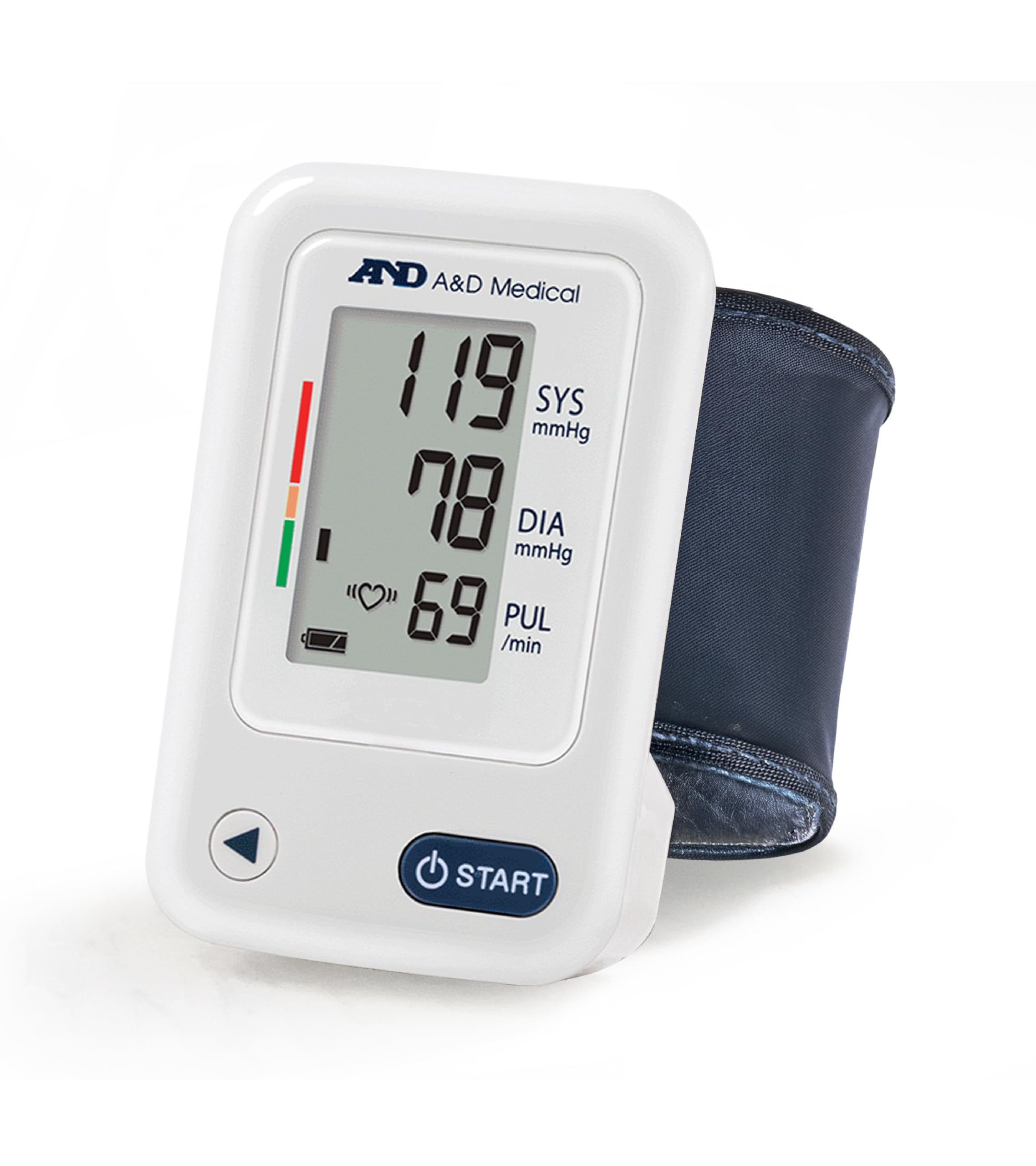
3. A&D Medical UB-525 Wrist Blood Pressure Monitor
One button, one cuff, oversized digits — the least fussy way to take a reading.
Some people want an app, a trend graph and a share button. Others want to press one button, see big numbers and get on with the morning. The UB-525 is squarely in the second camp. Single-button operation fires off a measurement, and the large digital LCD shows pulse rate plus systolic and diastolic pressure in oversized digits you can read without hunting for your glasses.
The adjustable cuff spans wrists from 5.3 to 8.5 inches (13.5 to 21.5 cm), and inflation is gentle rather than a hard squeeze. Memory holds up to 60 readings so you can compare pressure and pulse over time. The A&D Heart Track app is there if you want it, requiring iOS 12.0 or later or Android 5.0 and above — but it is a manual logging tool, not an automatic sync. Two AAA batteries come in the box.
What buyers talk about most: build and finish, by a clear margin — this is the aspect that carries the product’s reputation. Fit with the numbers: accuracy and long-term reliability both split the field, with satisfied users on one side and readings-too-high reports on the other. That pattern is common to wrist cuffs generally, and it is why the heart-level habit matters so much here.
Best fit: a first home monitor for someone who wants zero learning curve.
The trade-off: no automatic phone sync — you log readings yourself in the A&D Heart Track app.
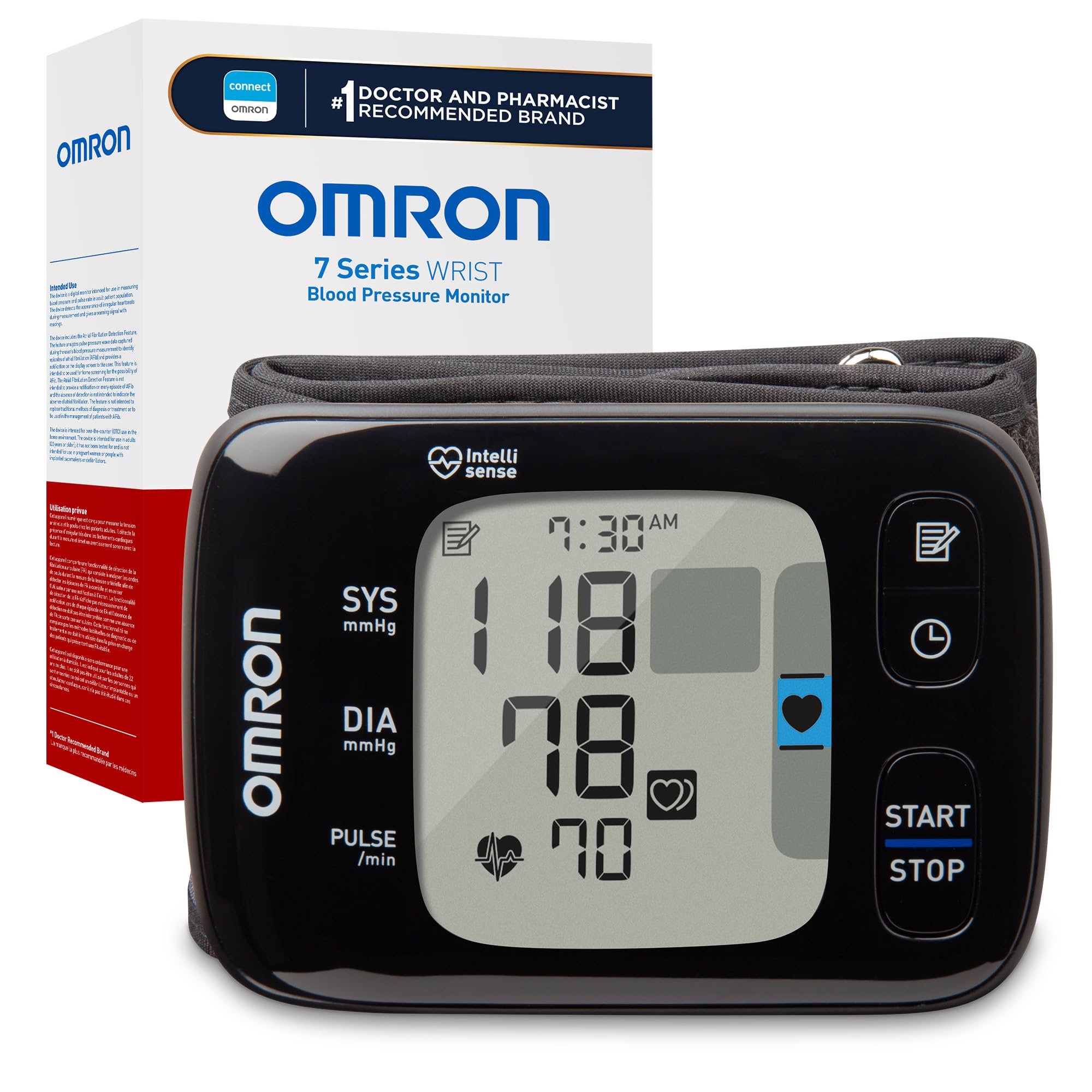
4. OMRON 7 Series Wireless Wrist Blood Pressure Monitor
Takes three readings, averages them, and hands you one steadier number.
A single cuff reading bounces around. OMRON’s answer is Advanced Averaging, which automatically computes the average of up to 3 readings taken within a 10-minute window. That one feature fixes the most common reason people distrust home monitors: one odd result that sends them re-measuring all morning.
Ninety readings fit in on-board memory, and the free OMRON connect app stores unlimited results over Bluetooth, tracks trends and lets you share reports with a doctor. It works with Apple Health and Google Fit. A Hypertension Indicator flags when your reading is improve, and the attached cuff fits wrists from 5.3 to 8.5 inches. A storage case, quick start guide and two AAA batteries are all in the box.
At 3.17 ounces it is a touch lighter than the Beurer BC57 at 3.39 ounces, which matters when you are holding your arm still at heart level. This is also the most-reviewed cuff on the list by a wide margin, and the feedback centres on how simple it is to operate plus the heart-level indicator doing its job. If you want the brand with the deepest track record in home blood pressure, this is the unit.
Pick this one if: inconsistent readings are what put you off home monitoring in the first place.
One caveat: the averaging is only as good as your arm position — hold still and level or the extra readings buy you nothing.
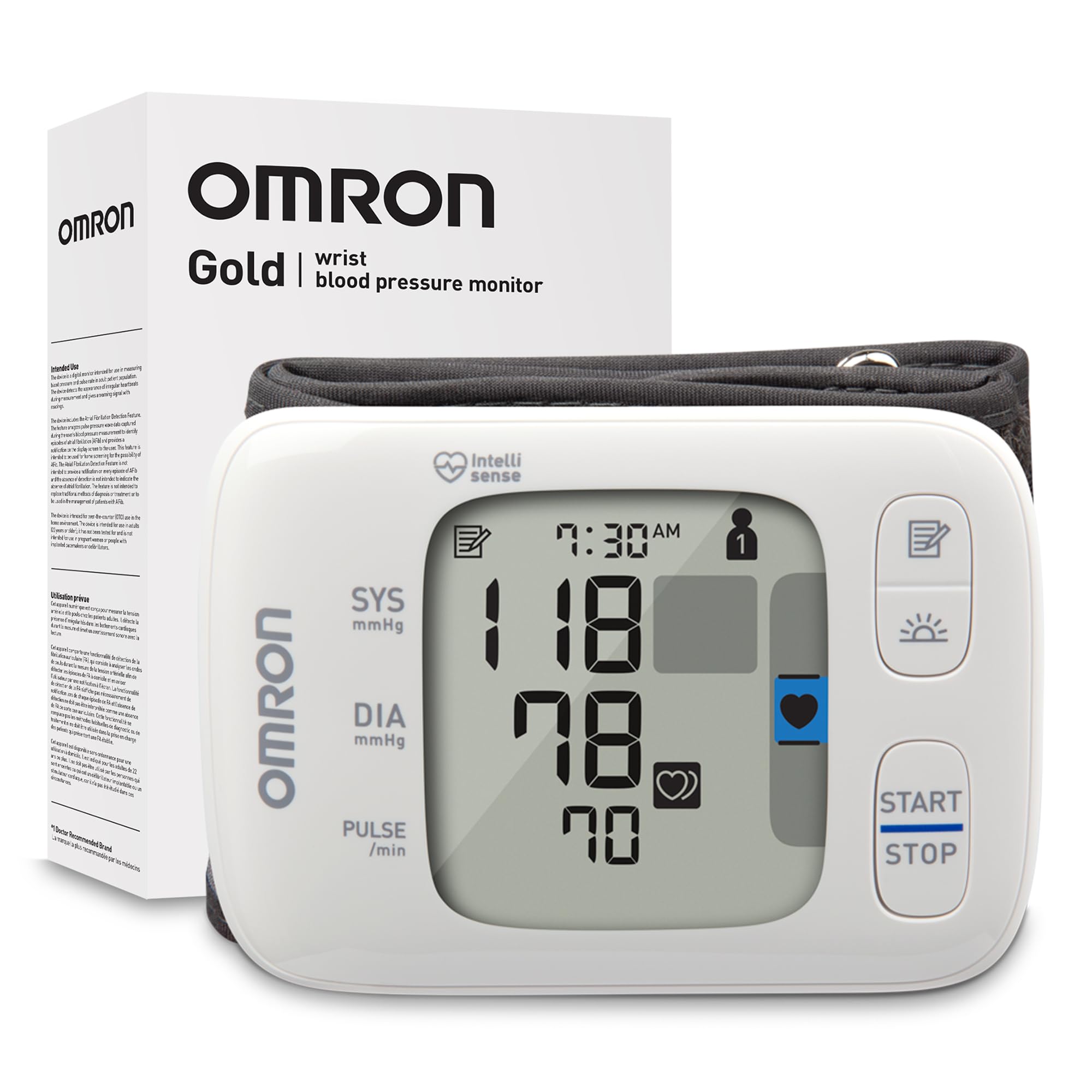
5. OMRON Gold Wireless Wrist Blood Pressure Monitor
Two people, four hundred readings, and a flag for morning spikes.
If a partner shares your monitor, most cuffs force you into a muddle of mixed records. The Gold splits it cleanly: 200 readings stored for you and 200 for a second user, tracked separately. Compare that to the Beurer BC57’s 60 readings — this holds well over three times the per-device capacity, and both numbers are printed on the specs.
Two features go beyond the basics. The Irregular Heart Beat Indicator flags rhythm irregularities during a routine measurement, and the High Morning Average Indicator checks for morning pressure spikes. Everything syncs to the free OMRON connect app over Bluetooth for unlimited storage and trend tracking, with Apple Health and Google Fit support. The attached cuff covers 5.3 to 8.5 inches, and the box includes a storage case, guides and two AAA batteries.
The honest split: ease of use and general functionality draw steady praise, but accuracy feedback divides sharply — some users call it extremely accurate while others hit repeated errors. On a wrist unit, that spread usually traces back to cuff position and heart level rather than the electronics. Size note: the body measures 3.58 × 0.52 × 2.49 inches at 3.17 ounces, so it slips into a bag or drawer without a fight.
Who it suits: couples who both monitor and want separate, long-running records from one device.
Worth knowing: the morning-spike indicator is only useful if you take that reading soon after waking, at heart level.
6. Fitbit Inspire 3 Fitness Tracker
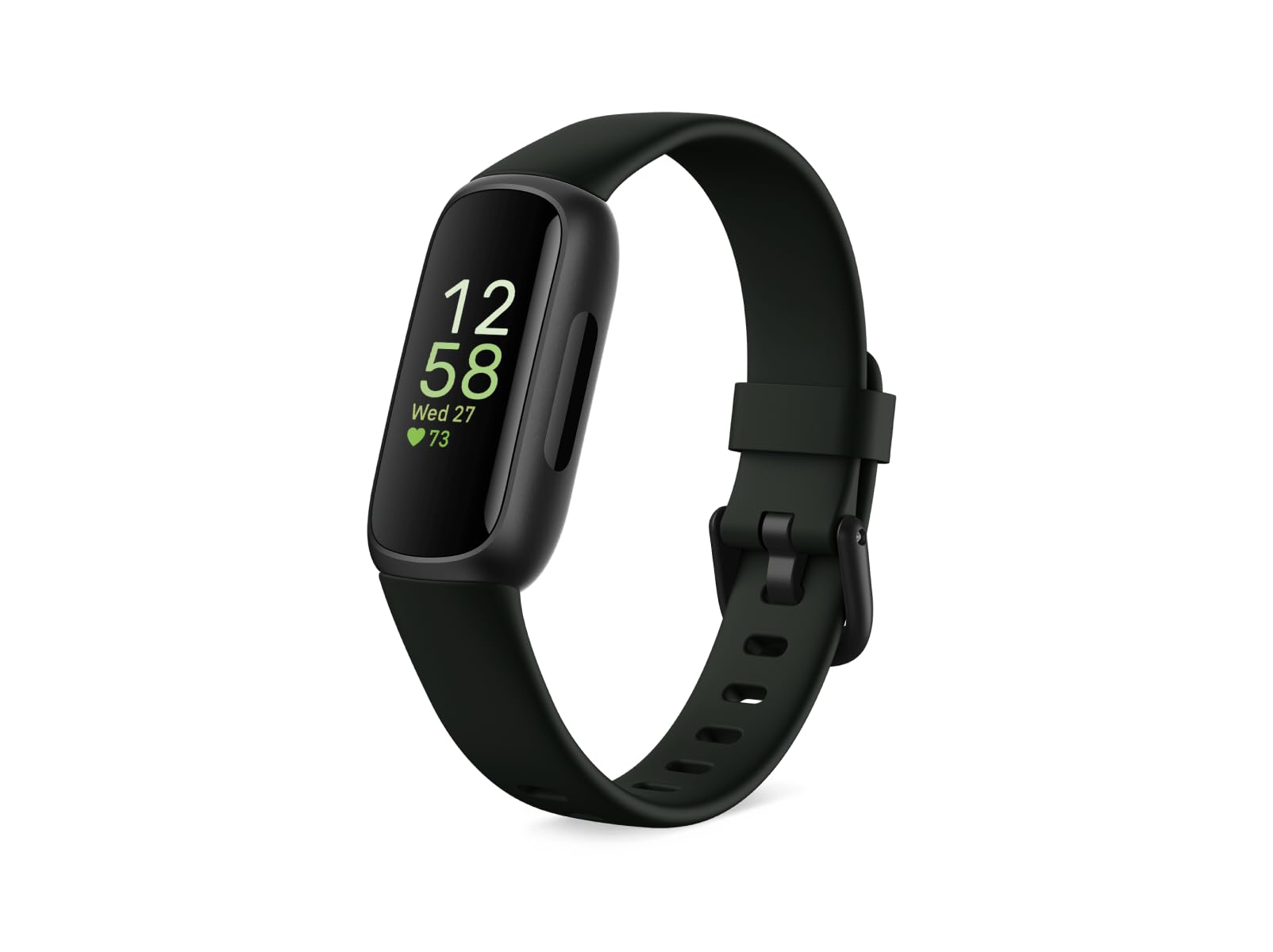
Ten days of battery and a sleep score that actually tells you something.
For someone whose main worry is rest rather than blood pressure, the Inspire 3 is the sensible starting point. It tracks your sleep automatically and turns the night into a detailed Sleep Score, wakes you with a vibrating alarm, and runs a daily Stress Management Score alongside breathing and mindfulness sessions. SpO2, resting heart rate and menstrual health tracking round out the picture.
On the move side you get all-day activity tracking, 24/7 heart rate, a Daily Readiness Score, Active Zone Minutes and 40+ exercise modes with automatic exercise detection. Battery life is rated at 10 days with a charge time of about 2 hours. It pairs with Apple iOS 16.4 or higher and Android OS 11.0 or higher, and ships with small and large bands so you can size it on arrival.
The setup story: buyers consistently describe it as quick and simple to get running, with step counting that behaves the way you would expect. The recurring gripe: charging problems that surface after a couple of months are the most-discussed downside, and it is worth knowing the risk before you commit to wearing it nightly.
Fits best: sleep-and-stress focus, with a 10-day battery and two band sizes in the box.
The other side: this is a lifestyle tracker, not a blood-pressure device — it will not give you a pressure reading.
7. Fitbit Charge 6 Fitness Tracker

The band that talks to your treadmill and pays for your coffee.
Charge 6 is the one to look at if you want your wrist device to do more than count steps. It links to compatible exercise machines — treadmills, ellipticals and similar — to show your heart rate on the machine’s own display. A built-in GPS handles route tracking, Google Maps gives turn-by-turn directions on the band, and Google Wallet lets you tap to pay.
Day to day it covers 40+ exercise modes, all-day activity tracking, 24/7 heart rate, Active Zone Minutes, Daily Readiness, a nightly Sleep Score and a stress management score. Battery life is rated at 7 days with about 2 hours to charge. The band runs 22 centimetres and the case is stainless steel or metal. Note that the richer coaching sits behind Google Health Premium, sold separately, though a 3-month trial is included.
Here is the honest tension. Build quality and ease of use draw the strongest approval of any aspect, and fast charging gets called out favourably. But durability complaints are the most common negative thread, with a cluster of units reportedly dying after about two months. That is a real consideration for a device you plan to wear every day — and it is the reason this band sits at 4.0+ stars rather than higher.
Best for: runners and gym-goers who want GPS, machine linking and tap-to-pay in one band.
Weigh this: durability feedback is the most-discussed negative, so consider how hard you are on a tracker before committing.
8. WHOOP 5.0 Screenless Fitness & Sleep Wearable
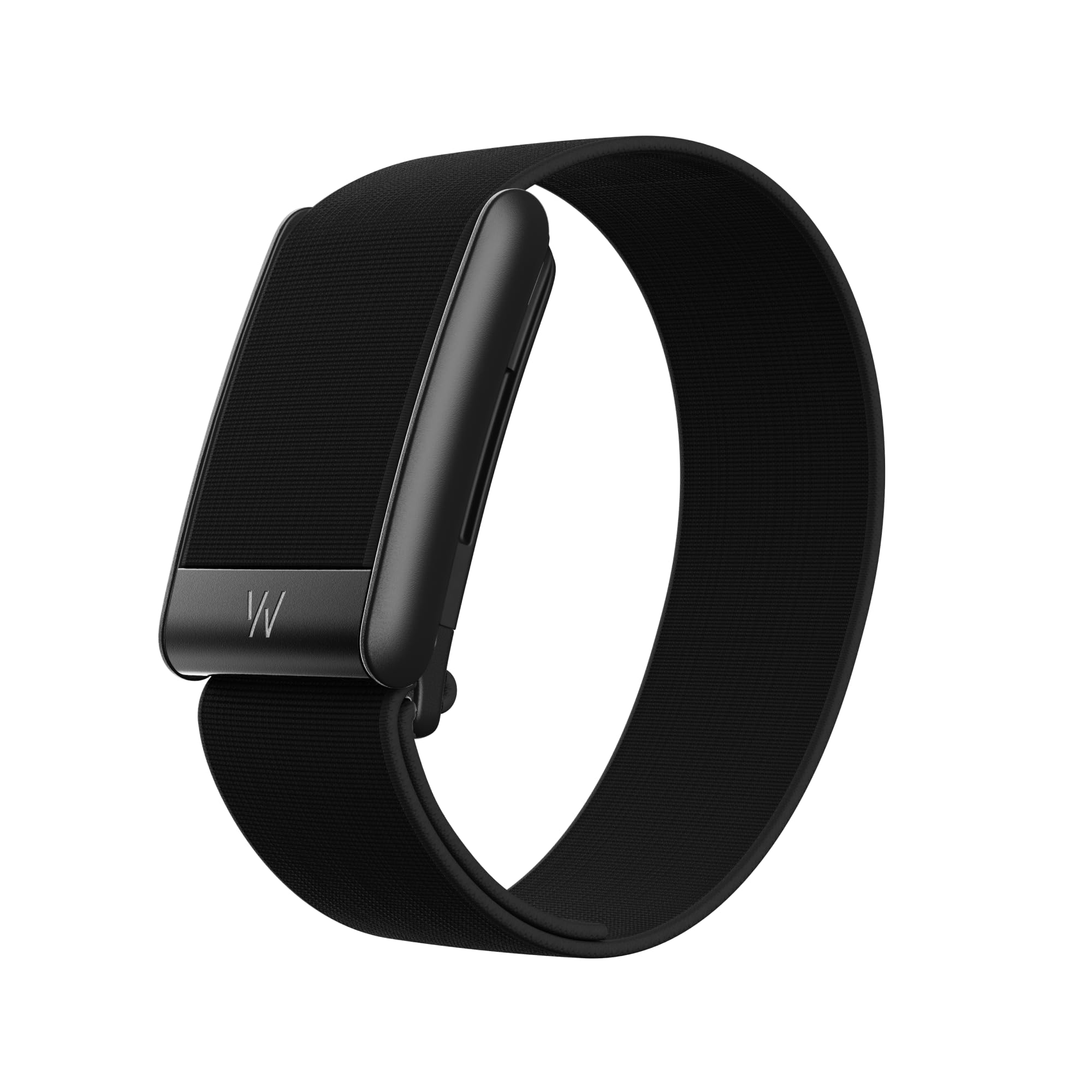
No screen, no glanceable stats — just a recovery score telling you how hard to go.
WHOOP takes a philosophy most trackers avoid: it removes the display entirely and pushes everything into the app. What you get is continuous monitoring of heart rate, heart rate variability, respiratory rate, VO2 Max, resting heart rate, steps, calories, sleep, strain and recovery. Battery life is rated at 14+ days, and the band weighs 3.84 ounces in nylon.
Sleep tracking is unusually detailed — REM, deep, light, awake time, sleep need, sleep debt, consistency and efficiency all appear, alongside insight into how training, alcohol and travel affect your rest. WHOOP AI turns 140+ metrics into coaching, and the Journal tracks 160+ daily behaviours. Women’s health and hormonal insights cover cycle phases, symptoms and pregnancy. It connects with Apple Health, Google Health Connect, Strava, Peloton and more.
Where it delivers: build quality is the standout strength — it is the strongest-performing aspect by a distance, with effectiveness and how informative the app is right behind. The membership model is included as a 12-month term, and it is HSA and FSA eligible, which matters if you are buying from a health account.
Where to be careful: reliability and accuracy both split opinion, and value for money draws the sharpest criticism of any aspect. If you want a screen to glance at, this is the wrong device entirely.
Choose it if: you train to a plan and want recovery and strain coaching driving your week.
Look past it if: you want to read your pulse off your wrist without reaching for a phone.
9. Garmin CIRQA Smart Band
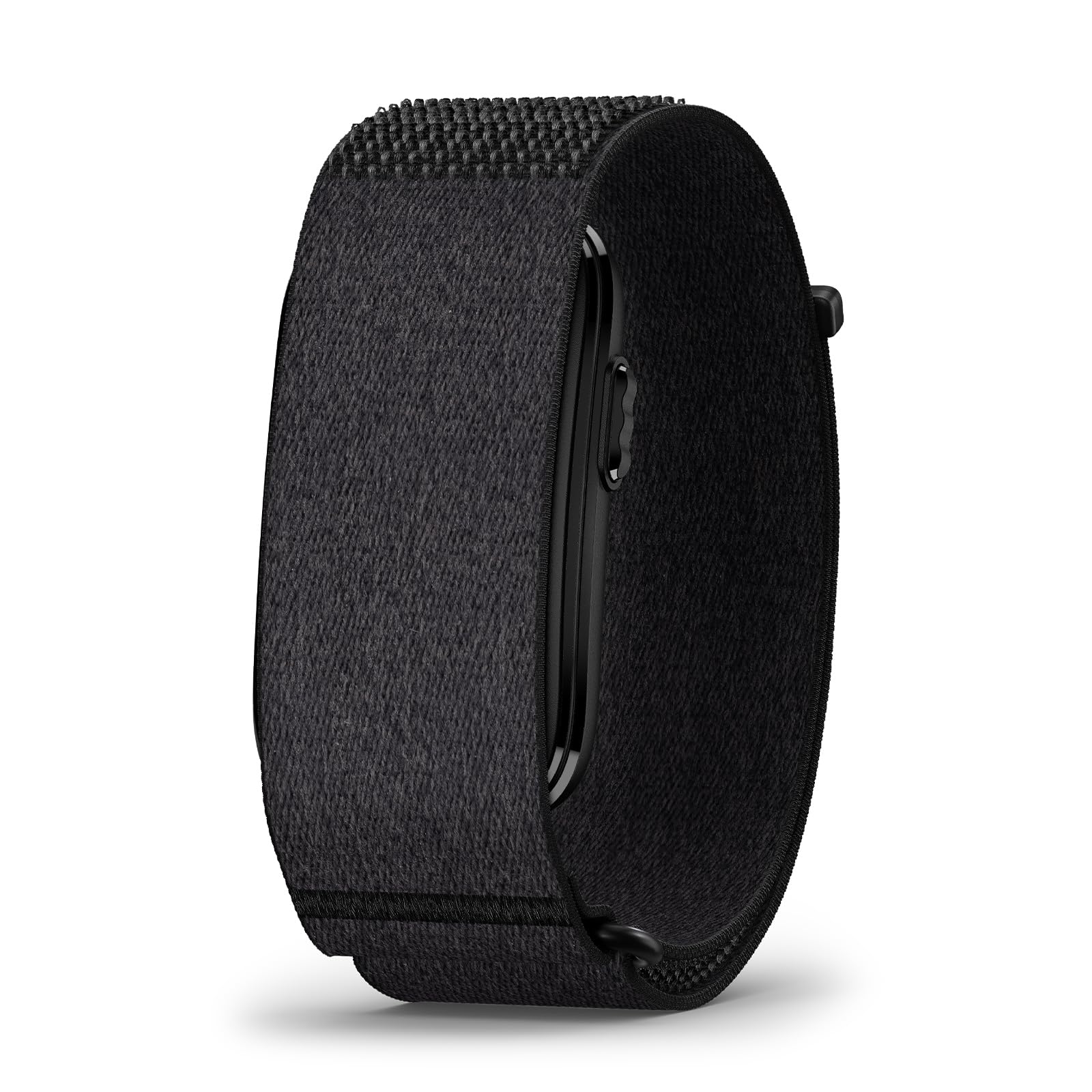
A screenless band that never asks you for a monthly fee.
Garmin’s pitch here is straightforward: everything works without a subscription. Heart rate, health status, Body Battery energy monitoring, stress and women’s health tracking all sit inside the Garmin Connect app at no recurring cost. The screenless design uses a soft fabric band in nylon, built for all-day and all-night wear, and it runs up to 10 days on a charge.
You can track 80+ activities such as running, yoga and cycling through the app, or pick a favourite and start it from the on-device button. Pair it to your phone’s GPS for outdoor route tracking, and the band will learn to auto-detect activity types as you confirm or edit them. Sleep gets a score plus personalised coaching that uses circadian rhythm, and the breathing variations feature draws on Pulse Ox to show shifts in breathing while you sleep.
Training tools go further than most bands: workout benefit shows how a session affected your body, and training readiness plus training status help you decide whether to push or ease off. Paired with the 10-day battery, that makes it the calmest of the screenless options. What holds it back is fit — the band is sized L-XL black, and the fit feedback is genuinely split, with some finding it comfortable and others finding it too big. Measure your wrist before ordering.
Good match for: anyone allergic to subscriptions who still wants readiness and training-status guidance.
Check first: it ships in L-XL sizing only — a smaller wrist may not get a secure fit.
Know the Specs
Cuff range and why it decides accuracy
The cuff range is the wrist circumference a monitor can fit, usually listed in inches and centimetres. A cuff that is too loose reads low and one that is too tight reads high, so a device sized for 5.3 to 8.5 inches works for most adult wrists but not all. Measure with a soft tape before you buy. If your wrist falls outside the stated range, the number on screen is worth less than you think — it may not be measuring properly at all.
Memory spaces and multi-user support
Memory spaces are how many readings the device stores on board. Sixty readings is a reasonable single-user history; two-user support with more space keeps two people’s records from mixing. On the cuff units here the range runs from 60 readings up to 200 readings each for two users. More memory means you can hand the device to a doctor with weeks of comparison instead of a single morning’s snapshot.
Heart rate, SpO2 and blood oxygen readings
SpO2 is the estimated oxygen saturation of your blood, read by shining light through your skin. Bands use the same optical method for heart rate. These are trend tools, not diagnostic instruments — the same goes for estimated blood pressure on fitness bands, which is calculated from pulse data rather than measured by an inflating cuff. Use them to spot direction of travel, and use a cuff unit when you need a pressure figure.
Battery life, charge time and screenless design
You get between charges anywhere from about 7 days up to 40–60 days, depending on the device. Where a rating is given, a full charge typically takes about 2 hours. Some cuff units run on two AAA batteries instead of a rechargeable cell. Dropping the screen is the most effective way to stretch runtime and stay comfortable overnight. A screenless band has nothing lighting up your bedroom at 3 a.m. That is why the longest-lived and quietest options here are all display-free.
Common Questions
Will a wrist blood pressure monitor give the same reading as the cuff at my doctor’s office?
Can a fitness band really measure my blood pressure?
My wrist is smaller than the stated cuff range — can I still use it?
How many readings can these monitors store?
Do I need the companion app to use these devices?
What does heart rate variability actually tell me?
Are screenless bands more comfortable to sleep in?
Why does my wrist monitor read high compared to an arm cuff?
Do these bands require a paid subscription?
How long should I wait between two blood pressure readings?
The Bottom Line
For most people, the best pick here is the PJIVE Smart Bracelet. It tracks heart rate, blood pressure and blood oxygen continuously, with sleep staging and 170+ sport modes. It still runs up to 40–60 days between charges. No other device on this list combines that breadth with that little charging admin. It holds the highest score of the nine at 4.5+ stars across 260+ ratings, so buyer consensus backs the spec sheet.
If a real, measured blood-pressure number is what you are after, switch tracks to the OMRON 7 Series. Its Advanced Averaging takes up to 3 readings within 10 minutes and hands you a single steadier figure — the cleanest fix for the bouncing numbers that make people give up on home monitoring. And for a two-person household, the OMRON Gold stores 200 readings each across two users and adds a morning-spike indicator.
One last thing, said plainly: if you want a screenless band with training readiness and no monthly fee, the Garmin CIRQA is the quiet achiever. Just confirm the L-XL fit suits your wrist before you order.
How we choose
We do not accept paid placement. Every pick is matched to a real buyer and a real use-case; we do not hands-on test units.
Sources
Specifications: manufacturer listings and product documentation. Review insights: verified customer reviews, as of November 2026. Pricing: not shown on this page (it changes often); check the current price via the retailer link.
As an Amazon Associate, Tactical Gear Guy earns from qualifying purchases. This does not affect which products we feature.