Specs are compiled from manufacturer listings and verified buyer reviews and can change over time — please confirm the key details on the product page before buying.
Most workplace injuries do not come from a single dramatic accident. They come from a loud tool you used without ear protection, a hard hat that never fit right, or a jacket you left in the truck because it was too bulky. Every pick below is chosen to close one of those gaps. Each pick below earns its place on a real specs-versus-comfort trade-off, not on a promise.
This guide is built by comparing the manufacturers’ published specifications and the patterns across verified customer reviews, so you get each pick’s real strengths and trade-offs instead of marketing spin.
A hard hat, ear muff, or goggle only protects you while it stays on, so fit and comfort count as much as the ANSI or NRR rating on the label. Every pick below gets judged on both. That is the thinking behind this work safety gear breakdown, which ranks head, ear, eye, rain and fall protection on specs that hold up on a real shift.
Top Picks


How To Choose The Best Work Safety Gear
The wrong safety gear is gear you leave in the truck. A hard hat with a suspension that digs into your scalp, goggles that fog on the second breath, or a raincoat that turns into a sauna gets taken off within an hour — and then it protects nothing at all. Pick gear you will keep on from clock-in to whistle.
Start With the Hazard, Not the Brand
Ask what is actually going to hurt you on this job. Falling objects mean you need a hard hat that meets ANSI Z89.1. Constant tool noise means you need a real noise reduction rating, printed as NRR in decibels (dB) — the higher the number, the more sound the muff blocks. Splashes and grinding sparks mean ANSI Z87.1 eye protection. Working at height means a fall-arrest system rated for a human body, not a rope you found in the shed.
A higher NRR is not automatically better for every task. A passive muff with a big number blocks almost everything, which is great at a gun range and frustrating on a site where you need to hear a spotter. Electronic muffs trade some raw blocking for the ability to hear speech and warning shouts — that is the real choice.
Fit Beats Almost Everything Else
Hard hats list an adjustable head range in centimetres, and a ratchet closure lets you fine-tune that fit with one hand. Ear muffs only work when the cup seals flat against your skull, so a snug fit is intentional — not a defect. Safety goggles usually do not fit over prescription glasses, so check that before you buy. Most of these picks are well made; the ones that fail do so because the fit is wrong for the person wearing them.
Match Visibility Class to Your Site Rules
Hi-vis clothing carries an ANSI class number. Class 3, worn on jackets and trench coats, gives you the most reflective coverage and is what highway, port, and airport work usually calls for. Reflective tape that wraps 360 degrees keeps you visible from behind as well as ahead. If your site mandates a class, buy to that class first and style second.
Side-by-Side Comparison
| Model | Best For | Type | Key Rating | Notable Spec | Amazon |
|---|---|---|---|---|---|
| Walker’s Razor Slim Electronic Muff★ Best Overall | Hearing protection with conversation | Electronic ear muff | 23 dB NRR | 2 Hi-Gain omnidirectional mics | Amazon |
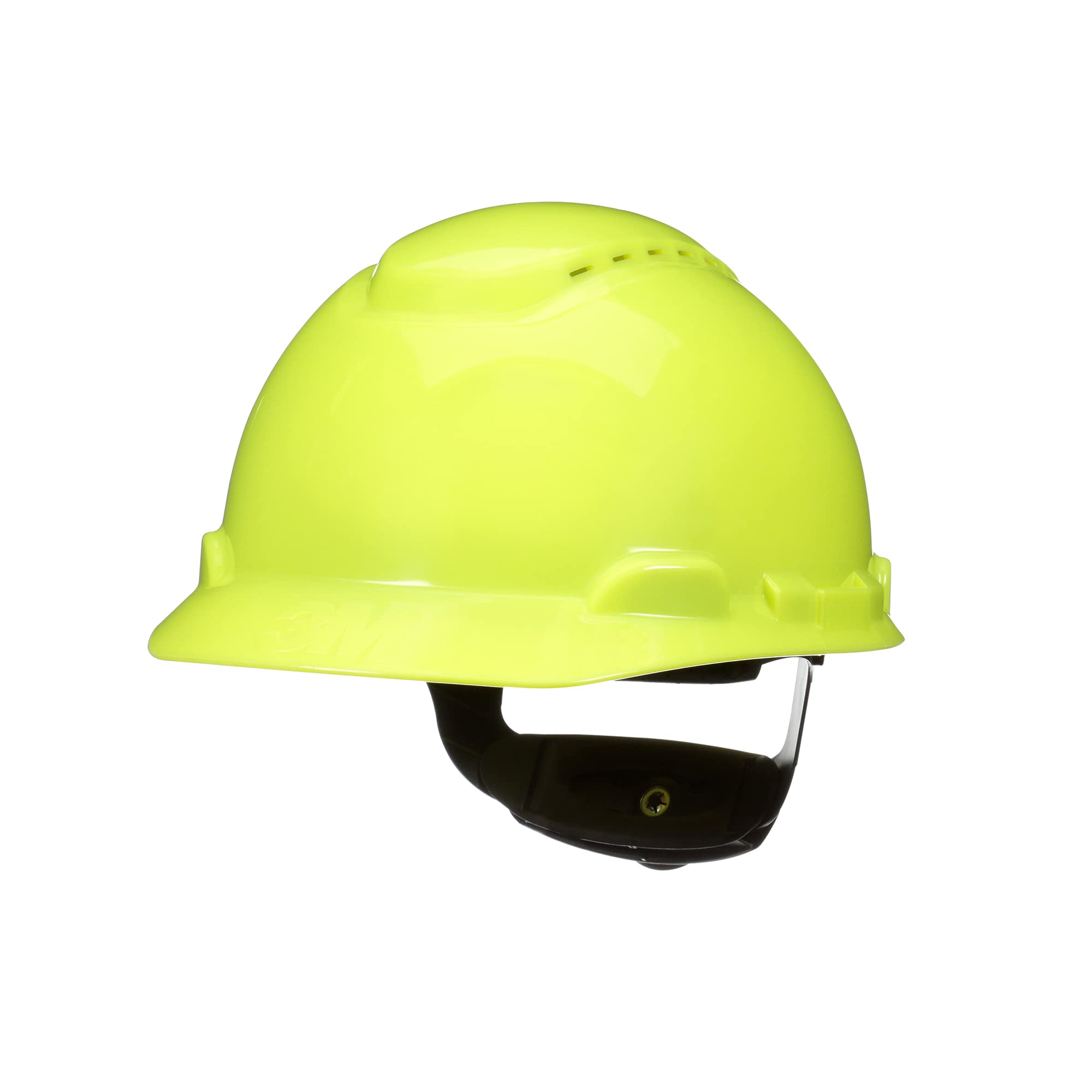
| 3M SecureFit H-700 Series Hard HatSmartest Hard Hat | All-day head protection with UV tracking | Cap-style hard hat | ANSI Z89.1 Type 1, Class G and E | 4-point pressure diffusion ratchet | Amazon |
| SAFEBUILDER Vented Hard HatBest Value Hat | Hot-weather head protection on a budget | Vented hard hat | ANSI Z89.1 Type 1 Class C | 6-point suspension | Amazon |
| NoCry Z87.1 Anti Fog Safety Goggles | Eye protection that converts to glasses | Goggles or glasses | ANSI Z87.1 | Vanguard Plus anti-fog coating | Amazon |
| DECIBEL DEFENSE 37 dB NRR Ear Muffs | Maximum noise blocking, no batteries | Passive ear muff | 37 dB NRR | ANSI S3.19 and CE EN 352-1 certified | Amazon |
| TICONN Reflective Rain Coat | Wet-weather hi-vis trench coverage | Class 3 rain coat | ANSI Class 3 | 360-degree reflective tape | Amazon |
| TICONN Hi Vis Safety Bomber Jacket | Cold, wet hi-vis workwear | Class 3 bomber jacket | ANSI Class 3 | Fleece lining, waterproof shell | Amazon |
| AOLAMEGS 3-in-1 Hard Hat Kit | Above-the-neck protection in one box | Hard hat with visor | ANSI Z89.1 Type I Class C | Flip-up clear visor plus reflective stickers | Amazon |
| TRSMIMA Rope Harness Safety Lanyard | Roof and height fall protection | Vertical rope assembly | ANSI Z359.1 | 50 ft rope, alloy steel rope grab | Amazon |
Detailed Reviews
1. Walker’s Razor Slim Electronic Muff
Our pick — 4.5+★ from 85,500+ verified ratings; the strongest balance of quality and price.
The muff that shuts out the bang but keeps the conversation.
If you work around loud equipment but still need to hear a coworker shout your name, this is the one to grab. It blocks noise while its digital circuitry amplifies the sounds you actually want — voices, footsteps, a spotter’s call. The 23 dB NRR (Noise Reduction Rating, a measure of how much sound the muff blocks) sits well below the loudest passive muffs out there. The trade is deliberate: you give up some raw blocking to keep your ears connected to the people around you.
The two Hi-Gain omnidirectional microphones (mics that pick up sound from every direction, not just straight ahead) are what make that possible. A 3.5mm audio input jack lets you plug in a radio or music source. Two AAA batteries power it, and they come in the box, so you can use it the day it lands. The composite sound-dampening housing and low-profile compact shape keep it out of the way while you move.
What wins people over is simply that it works — this is the crowd favorite here at 4.5+ stars across 85,000+ ratings. Gunshots drop to a comfortable level, and the clamp does not press hard on your head through a long session. The honest catch is that at 23 dB it cannot match a big passive muff for pure blocking. On a range day or in genuinely deafening rooms, the DECIBEL DEFENSE below is the beefier choice; for a mixed shift where you need to keep hearing, this is the smarter one.
Where it earns its keep
- Electronic amplification keeps voices and warnings audible while noise is suppressed
- Two Hi-Gain omnidirectional mics and a 3.5mm input jack for radios or music
- Batteries included, so it works the moment you open it
- Compact low-profile housing slides under a hard hat without fighting it
What to weigh first
- 23 dB NRR blocks less than a high-NRR passive muff, so the loudest rooms will feel it
- Relies on batteries, so keep a spare pair in your bag
- Slim cups seal differently on wider heads than deep passive cups do
Reach for this if: you split your day between loud tools and needing to hear the crew around you.
Look elsewhere if: your only goal is the biggest possible block on a static noise source.
2. 3M SecureFit H-700 Hard Hat
The hard hat that tells you when the sun has quietly worn it out.
HDPE (high density polyethylene, a stiff molded plastic) shells go brittle after enough months in the sun, and most workers never know when to swap one out. This 3M solves that with its Uvicator sensor — a small visual cue built into the shell that shows when UV exposure has taken enough life out of the hat that it should be replaced.
The SecureFit suspension flexes and self-adjusts across head sizes from 6-1/4 to 8 (50-64 cm), so the same hat covers a big-headed foreman and a smaller new hire without a full rebuild. A 4-point pressure diffusion ratchet spreads the load around the skull instead of pressing on one spot, and there are two levels of height adjustment. The sweatband is washable and replaceable and uses a moisture-wicking material to keep you cooler through a summer shift.
Owners consistently report it does the core job well — good protection and generous adjustability. The one place it trips people up is assembly: the headband and suspension take some figuring out, and that step separates the easy experiences from the frustrated ones. Put aside five minutes to read the diagram rather than winging it, and you will not fight it again.
What holds up: the non-vented version meets ANSI/ISEA Z89.1 Type 1, Class G and E — the Class E rating matters most on electrical work — plus CSA Z94.1 Type 1 Class G and E, and it takes cap-attached 3M hearing protection and faceshields.
First-day tip: fit the ratchet and height adjustment before you ever clip an accessory on, because the suspension has to settle on your head to feel right.
Built for: anyone who wants a helmet that tracks its own age in the sun and bills itself to electrical-class standards.
The consideration: that Uvicator cue only works its magic if you actually look at it — treat the first setup with patience.
3. SAFEBUILDER Vented Safety Helmet
A vented ABS hat that keeps your head dry in the heat and light at 1.1 pounds.
Roofers and summer crews know the drill: a sealed bucket on your head turns into a sweatbox by 10 a.m. The SAFEBUILDER answers with hand-adjustable vents you open to move air through and close again when rain or dust is the bigger problem. The shell is ABS (a tough molded plastic), and the whole helmet weighs in at 1.1 pounds. Six suspension points spread impact force around the head, and a Y-type chinstrap holds the hat steady while you look up or lean out.
The fit is what buyers cheer about first — the ratchet adjusts across 53-63 cm (20.87-24.80 inch), and the shell’s depth and contour can be dialled in, not just its girth. It meets ANSI Z89.1-2014 Type 1 Class C and CE EN397-2012, and Class C (that letter means this hat is NOT for electrical work, because the vents let current through) is fine for construction, decoration, outdoor, and general industrial use. It also plays nice with add-ons: SAFEBUILDER makes ear muffs and clear or tinted visors that mount to it.
For a budget-tier hat, the ownership story is clean — the fit, the value, and the comfort are the leading things people point to, and the lightweight feel and adjustability keep coming up too. Glass-half-empty note: a vented Class C lid is a poor match for live electrical work, and no helmet shell is magic against a heavy dropped load if you have skipped clipping the chinstrap. Wear it snug.
Real-world read: the 6-point suspension and depth-adjustable shell turn a low-cost hat into one that many crews keep on all day, and the vent control is genuinely useful.
Who should pass: an electrician, because Class C venting is the wrong tool for that job.
Right earner for: construction, heat, and a tight budget where a vented, comfortable hat gets worn instead of pushed back.
Honest line: it will not do electrical duty, and accessories are best kept within the SAFEBUILDER line.
4. NoCry Z87.1 Safety Goggles

One pair of eye protection that flips between goggles and glasses when your task changes.
The clever bit here is a swap you make yourself: run it with the elastic headband for a sealed goggle, or trade the band for arms and wear it as a pair of safety glasses. That means one set covers splash work where you want a closed seal and light grinding where you want quick on-off. The frame is a full-rim TPE (a soft, rubbery plastic) that molds to your face, and the elastic band lets you dial in the fit.
NoCry says its Vanguard Plus lens coating is designed to exceed the EN166 standard for fog and scratch resistance. Angled indirect vents let air move while keeping droplets, dust, and splashes on the outside. The wrap-around polycarbonate lenses are impact-resistant and cut down on optical distortion, and they guard against harmful UV. Construction, metal grinding, mowing, and cutting trees all fall inside its wheelhouse.
Two things to know before you spend. First, these do not fit over prescription glasses — if you wear specs at work, plan on a dedicated over-glasses option instead. Second, fog and scratch resistance split opinions: some users find they stay clear and hold up, while others run into fogging or easily marked lenses. Keeping the included safety case on hand and cleaning with a soft cloth goes a long way. The overall verdict from the field leans positive — the quality and the eye protection are the strongest recurring themes.
Why buyers keep them
- Converts between goggle and glasses form with one headband swap
- ANSI Z87.1 certified against the standard most sites accept
- Soft TPE frame and adjustable band make long sessions bearable
- Indirect vents keep splash and dust out while cutting fog
Fair caveats
- Will not fit over prescription glasses
- Anti-fog and scratch performance is the mixed part — treat the coating gently
- Wearing it as glasses means giving up the sealed splash barrier
Great match for: workers who switch between splash protection and light-duty eye cover without wanting two pairs in the bag.
skip it if: your eyesight routine depends on wearing your own prescription frames at all times.
5. DECIBEL DEFENSE Ear Protection, 37 dB NRR Ear Muffs

A passive muff that out-blocks the Walker’s by a wide margin — 37 dB against 23 dB.
When the noise is relentless and there is no spotter to hear, the raw number wins. This muff carries a 37 dB NRR versus the 23 dB Walker’s listed above. Nothing about it is electronic, so there is no battery to die mid-shift, no circuitry to fail, and no switch to remember. It meets ANSI S3.19 and CE EN 352-1. For a gun range, a roaring mower, or a construction site where you are the one running the tool, it does the heavy lifting.
Comfort gets real attention too. A padded headband and soft dBTech foam cups carry you through hours of use, and the 11.7-ounce build keeps pressure low. It comes in Regular, which fits most adults and teens ages 10 and up, and an XL (black only) that adds extra extension for larger heads. You adjust by sliding the cups up and down on metal sliders — the cup moves, not the band. The snug seal is intentional; that press is what makes the blocking work. If it feels tight at first, stretch it gently over the box overnight.
The bulk of owner sentiment lands on quality, comfort, and serious noise cancellation — you stop hearing the ringing in your ears after a day on the tools. Fit is the one split subject: snug by design works for most, but a smaller group finds it too tight. That is a fit note, not a defect, which is why the XL exists. Foldable, it stores flat in a bag, so the protection actually travels with you.
The headline: 37 dB NRR, constant and battery-free — the biggest block on this list, and it holds it hour after hour.
The one adjustment: expect a firm seal. Give it the overnight stretch and it settles into place.
Made for: anyone whose priority is the maximum legal block on a loud, steady machine or range.
If conversation matters more than blocking, the electronic Walker’s is the better call.
6. TICONN Reflective Rain Coat

The long hi-vis coat that keeps the rain off and the traffic aware of you.
This trench-length coat is built from 100% polyester 150D Oxford fabric (a dense, tightly woven cloth) with a PU coating, which together make it waterproof, breathable, and tear-resistant. It also resists pilling, so it keeps its look through repeated shifts. The reflective tape is hand-stitched and wraps 360 degrees, so you are lit up from the back and sides, not just the front — the feature that makes it a good fit for ports, airports, highways, and truck or traffic work.
The practical details are why it earns its spot on a real crew. There are two large pockets, a sturdy zipper backed by a rain flap, a transparent ID pocket, a D-ring for hanging tools, adjustable cuffs, underarm vents to dump heat, a windproof neckline, and a drawstring hem you can cinch for a tighter fit. It clocks in around one pound, so it folds small in a truck or kit bag. In a hard downpour, the water resistance holds — owners rate that squarely among the best things about it.
Sizing is the one place to think it through. The length and true-to-size fit please most people, but the sleeves run long on some frames, so check the sleeve pull against your arm span before committing. For a lot of buyers that extra sleeve is a small trade for full-pocket, full-cover rain protection.
What does the work
- ANSI Class 3 with 360-degree reflective tape for dark or rainy site visibility
- PU-coated polyester shrugs off heavy downpours and resists pilling
- Two pockets, ID window, D-ring, and rain-flapped zipper for a real workday
- Underarm vents and a drawstring hem tune comfort to the weather
Where to look twice
- Sleeves run long on shorter or slighter frames
- Trench length adds bulk when you are crouching or climbing
- The one-pound weight is light for the coverage, but it is still a full coat
Pick it for: wet-road, wet-dock, and traffic work where Class 3 visibility and dry shoulders both matter.
Size carefully if: you have shorter arms or want a trimmer silhouette.
7. TICONN Hi Vis Safety Bomber Jacket

A fleece-lined hi-vis bomber for the cold, wet shifts where a trench coat is too much.
When the temperature drops and the sky stays open, this is the layer between your shirt and the weather. It is a waterproof, fleece-lined ANSI Class 3 bomber jacket built for the kind of work where you are outside for hours in the cold and need to stay both dry and visible. Shorter than the TICONN trench coat above, the bomber cut moves better when you are crouching, shoveling, or climbing a ladder rather than standing a guard post.
The feature list is built for real conditions: a windproof zipper and snaps, a stowable hood you tuck away when the rain stops, a retractable hem, and a mic strap. The high-visibility shell keeps you seen in rain and gloom, and the fleece lining takes the edge off a cold morning. It has earned a strong following for exactly that combination — comfort, fit, value, and visibility all land as the leading themes. One crew member found it perfect for shoveling snow out on the street, which is as honest a test as any.
Sizing is the single thing to nail down. The size feedback splits down the middle — some find it runs huge, others say it runs small — so measure against a jacket you already know rather than guessing. Get the size right and the practical, warm, highly visible jacket does the rest.
What earns the pick: fleece lining plus a waterproof Class 3 shell plus a stowable hood is a lot of cold-weather working cover in one piece.
Spend the time on the size chart: the split feedback on sizing makes a pre-measure worth the two minutes.
Best suited to: cold, wet outdoor work and winter job-site or street duty where you want warmth and Class 3 visibility together.
Order with care if: you are between sizes — this is the one pick where eyeballing the label is a bad idea.
8. AOLAMEGS 3-in-1 Construction Hard Hat Kit with Flip-Up Visor

Hard hat plus integrated flip-up visor plus reflective stickers, all in one box.
Buying head protection piece by piece is how gear gets skipped. This kit bundles a white ABS hard hat, a clear flip-up visor for eye cover against sun and debris, and a pack of hi-vis reflective stickers for the front, rear, and sides. The shell meets ANSI Z89.1-2014 Type I Class C, and the visor is held to ANSI Z87.1-2015 — two separate standards, both covered. The clear visor means you are not hunting for a second pair of glasses every time the sun comes out or a bit of debris flies.
Fitting is one-handed: a rapid-dial ratchet lets you tighten or loosen without taking the helmet off, across a 53-63 cm range (20.86-24.80 inch). Six suspension points spread impact and add comfort, and the soft-cup chinstrap comes off when you do not need it. Sliding vents open and close with the weather, and universal slots on the helmet accept add-on attachments. The clear visor handles sunlight and debris; the reflective stickers add night and low-light visibility.
The helmet gets strong marks for build quality, comfort, and the light weight — and owners single out the integrated eye protection for letting them wear their glasses underneath without a fight. Because the shell is Class C (vented, so not for electrical work), keep it to construction, tree work, woodworking, forestry, and general above-the-neck protection. Straightforward kit, sensible limits.
Why the kit works
- Hard hat and flip-up clear visor cover head and eyes in one purchase
- One-handed rapid-dial ratchet adjusts without removing the helmet
- Sliding vents and reflective stickers adapt it to daylight, dark, and weather
- Integrated visor lets many wearers keep their glasses on underneath
Set expectations
- Class C venting rules it out for live electrical work
- The clear visor is not a stand-in for certified welding or face-impact protection
- Reflective stickers are add-on visibility, not a built-in Class rating
Good starting point for: a new hire or a crew buying above-the-neck cover in one tidy package.
Hold if: your trade involves energized electrical work or welding, where the visor and vent class do not qualify.
9. TRSMIMA Rope Harness Safety Lanyard

A 50-foot vertical lifeline that catches you the moment you slip on the roof.
Everything else on this list keeps objects and noise away from you. This one keeps you off the ground. It is a 50 ft vertical rope assembly, 0.55 in in diameter, built from 100% polyester with multi-layer sewn terminations for strength. The max weight capacity is 310 lbs, so it is rated for a real human body plus the loads of a climb. Before you click, confirm that 50 ft covers the height you are working — length is the first thing to get right.
The heart of it is the alloy steel rope grab. A double lock-locking screw mechanism and locking clip add two safeguards, and the minimum breaking strength is 3,600 lbs, meeting ANSI Z359.1. The anti-panic locking feature is what makes it a genuine fall-arrest tool: it locks onto the lifeline in the event of a fall even if the user is holding the device open. Two steel snap hooks give you a solid connection to your harness and anchors, with a spring switch and a strength lock switch on each side. The gate rating is also 3,600 lbs.
It ends with one hardened thimble eye termination and one knot at the other end, plus anti-abrasive tubes protecting the rope ends. Climbing, gutter cleaning, steep roofs, inspection, rescue, and window washing all fit its purpose. Owners chiefly praise the quality and the sense of security — installing shingles on a slope feels a lot safer with a grab that slides and locks with you. Material quality is the one point of mixed feedback, so inspect the rope and grab after your first few climbs and keep the one-year warranty in mind.
The numbers that count: 3,600 lbs minimum breaking strength, a 310 lbs capacity, and an anti-panic lock that engages even with the lever held open.
Check before you climb: rope length against roof height, and rope condition after each hard use.
Essential for: roofers, gutter crews, window washers, and any work at height where a fall would otherwise be serious.
Only buy if: you have a rated harness to connect it to and the height falls within the 50 ft length.
Know the Specs
NRR in Decibels (dB)
NRR stands for Noise Reduction Rating — the number of decibels a muff blocks, in theory. A 37 dB muff blocks a lot more sound than a 23 dB muff, which is the whole difference between the DECIBEL DEFENSE and the Walker’s. A passive muff with a high NRR is best when you are the one making the noise. A lower-NRR electronic muff is better when you still need to hear people around you. Neither is “correct” — match the number to the task.
Hard Hat Class Letters (G, E, C)
The class letter on an ANSI Z89.1 hard hat tells you what electrical protection it offers. Class G and E shells are non-vented, so current cannot pass through — Class E is the higher electrical rating. Class C means the helmet is vented for airflow and therefore offers no electrical protection at all. Vented Class C hats are great for heat and general construction; they are the wrong tool near live wires. Look at the letters before the styling.
ANSI Z87.1 for Eye Protection
Z87.1 is the standard a pair of safety glasses or goggles must pass to be sold as legal eye protection in most US workplaces. It covers impact resistance, lens and frame strength, and the level of dust or splash sealing. When a lens claims anti-fog or scratch performance, that is a coating on top of the base standard, and coatings vary in how long they last. Treat the Z87.1 stamp as the baseline and anti-fog claims as a bonus that needs gentle care.
ANSI Z359.1 and Fall Arrest Numbers
Z359.1 governs fall-protection hardware such as rope grabs and lanyards. The figure that matters most is the breaking strength — the load the component can take before it fails, rated in pounds. A grab rated to 3,600 lbs is rated well past a person’s weight. Always check a system’s rated capacity against your own weight and kit, and never mix components from unrelated systems without confirming they work together.
Common Questions
Is a higher NRR always better for ear protection at work?
What is the difference between a Class C and a Class E hard hat?
Do the NoCry safety goggles fit over prescription glasses?
How do I know when to replace a hard hat?
Are electronic ear muffs better than passive ones?
Will the TICONN rain coat sleeves be too long?
What length of fall-protection rope do I need for roofing?
Can I attach ear muffs or a visor to a SAFEBUILDER hard hat?
Are hi-vis jacket classes the same everywhere?
Does a vented hard hat still protect me in the rain?
The Bottom Line
For most people the work safety gear winner is the Walker’s Razor Slim Electronic Muff, because it does the one thing pure blockers cannot: it cuts the dangerous noise while keeping you connected to the voices around you, and a hugefield of owners has already put it through its paces at 4.5+ stars across 85,000+ ratings. If sheer noise blocking is the job, grab the DECIBEL DEFENSE Ear Muffs, whose 37 dB NRR beats the Walker’s 23 dB outright. And if your work takes you onto a roof, the TRSMIMA Rope Harness Safety Lanyard is the piece you should not climb without.
Between those three, the head, ears, and a fall line are covered. Round out the kit with a hi-vis layer for wet shifts and a Class C hard hat for the heat. Size each piece against the manufacturer’s chart, wear it snug, and inspect the shell, cups, and rope before every shift.
How we choose
We do not accept paid placement. Every pick is matched to a real buyer and a real use-case; we do not hands-on test units.
Sources
Specifications: manufacturer listings and product documentation. Review insights: verified customer reviews, as of July 2026. Pricing: not shown on this page (it changes often); check the current price via the retailer link.
As an Amazon Associate, Tactical Gear Guy earns from qualifying purchases. This does not affect which products we feature.