Specs are compiled from manufacturer listings and verified buyer reviews and can change over time — please confirm the key details on the product page before buying.
Cold legs ruin a whole day outdoors, and the wrong thermal layer makes it worse by trapping sweat against your skin. Wool fixes that, because merino fibers pull moisture away from your body while holding heat even when damp. The picks below range from a lightweight everyday pair to a heavyweight expedition layer, and each one is a real wool or wool-blend bottom rather than a cotton or synthetic substitute. Start with the Minus33 Merino Wool Bottoms if you want the all-rounder, and read down for the specific cold-weather job each pair handles best.
This guide is built by comparing the manufacturers’ published specifications and the patterns across verified customer reviews, so you get each pick’s real strengths and trade-offs instead of marketing spin.
Fit and fabric weight decide most of the satisfaction here, so both get a close look on every pick. What follows is a plain-spoken rundown of the wool thermal pants that actually deliver warmth without the itch.
Top Picks


How To Choose The Best Wool Thermal Pants
A wool thermal bottom is a thin second skin you wear under your regular pants, so the first question is not brand — it is how cold and how active you will be.
Match the fabric weight to the cold
Lighter merino (in the 150–200 g/m2 range) suits brisk fall days, active skiing, and wearing under slim jeans. Heavier knits like a 400 g/m2 interlock add real bulk warmth for standing around in deep cold. If you run hot while moving, go lighter; if you sit still in the cold, go heavier.
100% merino versus a blend
Pure merino gives you softness, odor resistance, and warmth that holds up when damp. A blend with polypropylene or cotton can add stretch and durability and often costs less. Both are legitimate — a blend is not a downgrade, it is a different set of trade-offs.
Fit and seams under your pants
A slim fit sits flat under outer layers and moves with you; a regular or generous fit leaves room for lounging and layering. Flatlock seams (stitched flat so they lie against the skin) cut chafing, which matters on long days. Check the size chart against your waist, not your street-pant size.
Washing without wrecking the wool
Merino dislikes hot water and a hot dryer. Cool machine wash and line dry keeps the fibers intact; skip the fabric softener, which coats the wool and dulls its wicking. Airing a pair between wears is usually all merino needs.
Side-by-Side Comparison
| Model | Best For | Fabric | Weight Class | Fit | Amazon |
|---|---|---|---|---|---|
| Minus33 Merino Wool Bottoms★ Best Overall | All-round everyday warmth | 100% Merino Wool | Lightweight (Saratoga) | Regular | Amazon |
| ColdPruf Authentic Dual LayerBest Value | Budget cold-weather layering | Wool blend | Dual layer | Generous | Amazon |
| LAPASA 100% Merino WoolTop Performer | Lightweight active wear | 100% Merino Wool | Lightweight | Slim, tight-like feel | Amazon |
| MERIWOOL Lightweight Bottoms | Travel and indoor-to-outdoor | Merino Wool | 190 g/m2 | Regular | Amazon |
| Minus33 Women’s Expedition Bottoms | Frigid-weather women’s layer | 100% Merino Wool | 400 g/m2 interlock | Regular | Amazon |
| MERIWOOL Heavyweight 400g | Deep-cold heavyweight men’s | 100% Merino Wool | 400 g/m2 | Regular, large fit | Amazon |
| icebreaker 175 Everyday Leggings | Extended wear, early season | 100% Merino Wool rib knit | 175 g/m2 | Slim | Amazon |
| Helly Hansen LIFA Merino Midweight | Trail-to-town two-layer warmth | 57% Merino / 43% polypropylene | Midweight | Pull-on | Amazon |
| Smartwool Classic Thermal Bottoms | Cold-weather ski base layer | 100% Merino Wool | 250 g/m2 | Slim | Amazon |
Detailed Reviews
1. Minus33 100% Merino Wool Bottoms
Our pick — 4.5+★ from 950+ verified ratings; the strongest balance of quality and price.
The all-rounder that keeps legs warm without the bulk or the itch
This is the pair to start with if you want one wool bottom that covers fall hikes, a cold commute, and a below-freezing morning without feeling wrapped in padding. It is the Saratoga lightweight model in 100% merino wool, made by a Maine wool house in the trade since 1916. That pedigree shows up in how the fabric handles damp — wool absorbs up to 30% of its weight in moisture without feeling wet or clammy, so a sweaty climb does not turn into a chill.
Fit lands in the regular range, which sits flat under jeans without bunching at the knee. The construction details are the quiet wins: flatlock seams lie against the skin to cut chafing, and the tagless build means nothing scratches your waistband line. What wins people over most clearly is the overall quality of the build, closely followed by how warm it stays on mild-to-cold days. The itch-free merino is the reason it gets worn day after day rather than saved for a trip.
The one knock worth knowing is that value opinion splits. Some find it worth the spend and others call it pricey — fair for a 100% merino layer, since it is not the cheapest wool pant on this list. If you are chasing maximum warmth for standing around in deep cold, the heavyweight MERIWOOL below pushes harder. But for a do-everything lightweight layer, this one is the crowd favorite, holding the top appointment here.
What earns the crown
- 100% merino wool with a lightweight Saratoga knit that layers without bulk
- Merino absorbs up to 30% of its weight in moisture while still holding warmth
- Flatlock seams and a tagless build cut chafing under outer pants
- Itch-free merino you can wear right against the skin all day
Where it gives ground
- Not the bargain pick — the value question splits down the middle
- Lightweight knit is built for milder cold, not deep-winter standing around
Grab this if: you want one dependable merino bottom for commuting, hiking, and everyday cold.
Look past it if: you need maximum bulk warmth for long stretches in freezing temperatures.
2. ColdPruf Authentic Dual Layer Wool Plus Blend
The entry-level wool blend that stretches a cold-weather budget furthest
Budget shoppers get a genuine wool bottom here without paying merino prices. ColdPruf builds it as a dual-layer knit from a wool plus cotton blend, and the design goal is straightforward: trap heat close to the body while letting moisture escape so sweat does not build up. For a low-cost layer, that pairing of warmth and breathability is the whole pitch.
Fit is where this one shines for a lot of buyers — it runs generous, which means room to move for cold-weather sports and no pinched waistband. Softness is the other recurring theme; the wool-cotton blend feels gentle against skin rather than scratchy. It also runs extra warm, so you get real cold protection for an entry-level outlay. If you need a base layer on a strict budget for shoveling, sledding, or a cold-weather job, this delivers the core job.
The honest caveat is that it is a blend, not pure merino — so expect a little less of that fine-fiber softness and odor resistance than a 100% wool pair offers. Value opinion is also split: plenty find it good value, others feel it underdelivers. And the wool-plus-cotton blend will hold moisture longer than pure merino, so it is better for moderate activity than a hard sweaty slog. For the price, it is a dependable workhorse for shoveling, sledding, and cold-weather jobs.
Budget play: a dual-layer wool blend that runs generous and warm for basic cold-weather layering.
Know the trade-off: wool-plus-cotton holds moisture longer than pure merino, so it suits moderate activity over hard sweat sessions.
Solid for: budget-conscious cold-weather layering and roomy, comfortable fit.
Think twice if: you want pure merino’s fine softness and faster-drying wicking.
3. LAPASA Men’s 100% Merino Wool Base Layer Pants
Merino that hugs like a running tight and disappears under slim pants
If you ski, run, or cycle and want a base layer that moves with you rather than bagging around the knee, this 100% merino pair is built for exactly that. It is a lightweight knit meant for cool and brisk weather, and it doubles as pajama-soft loungewear at home. The tight-like feel is the defining trait — it sits close to the skin and stays put under outer pants.
What people rave about is the quality of the merino itself, with a comfortable, snug fit that works well under other clothing. The soft wool also earns steady praise, and it is a clear step up from polyester thermals for breathability and odor control. Layering under ski pants, cycling tights, or everyday trousers is its happy place.
The recurring gripe is thinness — this is a lightweight weave, and a few buyers find it thinner and less durable than heavier knits over a long season of hard use. Treat it as a next-to-skin active layer rather than an expedition-weight insulator. Wash it cool and line dry and it will hold up; abuse the dryer and any lightweight merino will suffer.
Active-layer champion: 100% merino with a snug, tight-like fit that stays put under ski and cycling pants.
Thin by design: the lightweight weave trades some durability at the seams for a layer that never feels bulky, so lighter use suits it best.
Reach for this if: you want a snug, soft merino layer for ski days, runs, and cycling.
Look elsewhere if: you need heavyweight insulation or a bottom that shrugs off rugged day-in, day-out abuse.
4. MERIWOOL Men’s Lightweight Merino Wool Base Layer Bottoms

The pack-light travel layer that keeps its freshness across days of wear
This 190 g/m2 merino bottom is built for the traveler who wants one pair that packs small, wears under anything, and does not need a wash every night. Merino’s natural wicking and odor resistance mean you can re-wear it on a multi-day trip and stay presentable. From a cold-morning walk to lounging at home, it handles the full day without feeling like long johns.
Warmth and softness are the strengths buyers keep coming back to — the fabric insulates against cold and wind while staying soft against the skin. The fit works well under everyday wear, so nothing bunches under jeans. It is lightweight and breathable enough to move from indoor to outdoor without overheating, which is the whole reason merino beats heavier cotton here.
The real limit is durability. A few long-term wearers report the merino thinning or wearing through sooner than they hoped with heavy, repeated use, so this favors the traveler and casual wearer over the daily hard-work pant. Value also splits — some see it as worth the spend, others find it on the expensive side. Wash it cool and line dry to keep the lightweight merino from thinning.
Why travelers like it
- 190 g/m2 merino packs light and layers easily under everyday pants
- Natural wicking and odor resistance stretch wear between washes
- Insulates against cold and wind while staying soft on the skin
What to weigh
- Not built for rugged, repeated heavy-duty use over many seasons
- Value opinion is split — it sits in the pricier merino tier
Suits the traveler: one light merino bottom that packs small and stays fresh across days of wear.
Not the workhorse: heavy daily abuse will wear the lightweight merino faster than a rugged knit.
5. Minus33 Women’s Expedition 400g Merino Bottoms

A heavyweight women’s layer for people who genuinely feel the cold
For the woman who is cold the moment the temperature drops, this is the serious answer. It is a 400 g/m2 interlock knit in 18.5 micron 100% merino, with a UPF rating of 50+, and it is built for activities like hiking, snow sports, and hunting in spring, fall, and winter. The 18.5 micron figure is a fine-fiber measure — smaller microns mean softer wool that does not prickle.
The fabric is the whole story. It is designed to keep the ever-present cold from seeping in, and it is meant to work as a base, mid, or outer layer depending on how you dress it. The smooth, silk-like hand of the merino is what buyers notice first. It also takes cold commutes in stride, sitting under work clothes and holding warmth on the walk in.
The trade-off is warmth-first bulk: at 400 g/m2 this is a thick knit, so it is best under roomier pants rather than slim jeans, and worn as a heavy insulator rather than a featherweight. It is a different animal from the lightweight Saratoga cut above — same maker, far more insulation. For frigid commutes and snow-sport days, that 400 g/m2 bulk is the point.
Built for the deep cold: 400 g/m2 interlock in 18.5 micron merino, rated UPF 50+, with a smooth silk-like feel.
Size it right: this is a thick knit, so it wears best under roomier outer pants, not slim denim.
Choose it when: you want maximum merino warmth for frigid commutes and snow-sport days.
Skip the bulk if: you need a featherweight layer for mild weather or slim-cut pants.
6. MERIWOOL Men’s Heavyweight 400g Merino Pants
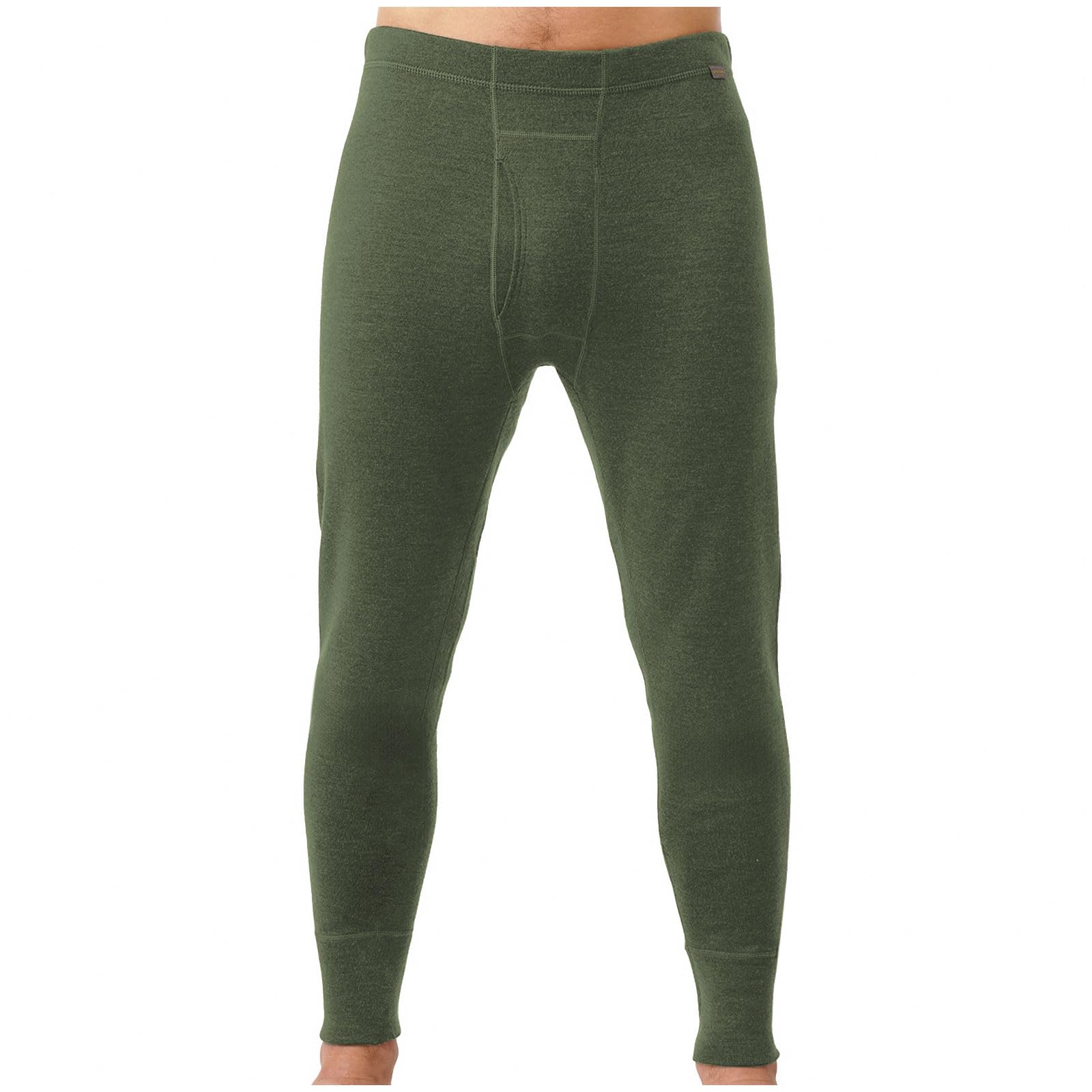
The heavyweight men’s layer that makes a ski day feel like a warm room
When the plan is skiing, hunting, or standing around in real cold, this 400 g/m2 100% merino bottom is the heavyweight base layer you have been looking for. It is crafted to layer under other pants for warmth without restricting your range of motion, and it transitions from the slopes to the couch without a wardrobe change. The 400 g figure is the density of the knit — higher numbers mean a thicker, warmer fabric.
Comfort and quality are the headline. The merino is soft against the skin, and the large size gives a roomy, comfortable fit that feels great to wear. Odor resistance is a real perk here — merino naturally keeps moisture at bay, so you can wear it repeatedly between washes during a hard outdoor stretch. For cold-weather activity in genuine chill, this is a warm, wicking layer that earns its keep.
The catch is weight and bulk. A few buyers report the heavy 400 g knit feels thick under close-fitting pants, and thickness and durability opinion is mixed. Sizing also runs large, so check the chart before you commit. It will not slip under slim jeans the way a lightweight layer does — it wants room. Treat this as a cold-weather powerhouse, not an everyday under-skinny-legs option.
Where it delivers
- 400 g/m2 100% merino for genuine heavyweight warmth
- Wicks moisture and resists odor across repeated wears
- Soft against the skin and roomy in the large size
The honest catch
- Thick knit wants roomier outer pants, not slim denim
- Sizing runs large — check the chart before ordering
Made for this: skiing, hunting, and deep-cold days when warmth beats every other factor.
skip it if: you want a thin layer to slide under tailored or slim-fit pants.
7. icebreaker 175 Everyday Wool Base Layer Leggings

The featherweight everyday knit built for long hours of comfortable wear
This is a classic all-purpose base layer in a 100% merino rib knit, and it is the lightest full-weight option on the list at 175 g/m2. That light knit is exactly what you want when you are moving — hiking, working up a sweat, or layering under everyday clothes in early-season cold. The 175 g/m2 rib knit breathes and moves without the bulk of a heavy layer.
You stay comfortable through long hours in the cold, not just a quick dash outside, because this layer balances temperature management with comfort. Softness and lightweight breathability come standard. The slim rib knit (a close-fitting ribbed fabric) sits close and stays flat, so it disappears under your other clothing. It is the pick for the person who hates a bulky long john.
Two honest notes. Value splits — some find the quality worth it, others call it overpriced. And a few long-season wearers report durability as a weak spot on a very light knit. That is the trade for the featherweight feel. If you want a rugged, throw-it-around pant, go heavier; if you want a light daily driver for active cold days, this is a smart fit.
Best for movement: a 175 g/m2 merino rib knit that breathes and stays flat under clothing.
Lightweight trade: the very light knit gives up some ruggedness, so hard, repetitive abuse wears it faster than a heavyweight option.
Ideal for: active cold-weather days and anyone who wants a featherweight everyday layer.
Not for: rugged repeated hard use where a heavier, tougher knit earns its place.
8. Helly Hansen LIFA Merino Midweight Pants

A two-layer merino blend that keeps you dry as hard as it keeps you warm
This one takes a different route to warmth. Instead of a pure merino knit, Helly Hansen pairs an inner moisture-wicking Lifa layer with a soft merino outer layer, in a 57% merino, 43% polypropylene blend. The idea is that the inner layer moves sweat off your skin while the merino side traps heat, so you get both dryness and warmth in one pull-on pant. It is machine washable, which is a real convenience for a cold-weather layer.
The wool is ZQ-certified merino, and it brings natural softness and temperature regulation to the mix. Flatlock seams lie flat to prevent irritation, and the non-itch fabric is comfortable enough to wear all day. The pull-on design makes layering quick, so it transitions from trail to town without fuss. Midweight puts it between the featherweight everyday knits and the heavy expedition layers — a good middle ground for cool-to-cold days.
The honest note is that this is a blend, not 100% merino — the polypropylene (a synthetic fiber that pulls sweat away) is there for wicking and durability. It trades a little of the pure-wool feel and odor resistance you get from an all-merino knit. If you sweat hard and hate a clammy layer, that trade is often worth making. Full review data is thin on this newer model, so size against the chart.
The dry-and-warm angle: a two-layer build in 57% merino, 43% polypropylene with Lifa wicking and machine-washable care.
Blend caveat: the polypropylene adds wicking and toughness but moves it away from the pure-merino feel and odor resistance.
Good match for: sweaty, active cold days where staying dry matters as much as staying warm.
Weigh the blend: if you insist on 100% merino’s feel and odor resistance, a pure-wool pick suits you better.
9. Smartwool Classic Thermal Merino Base Layer Bottom
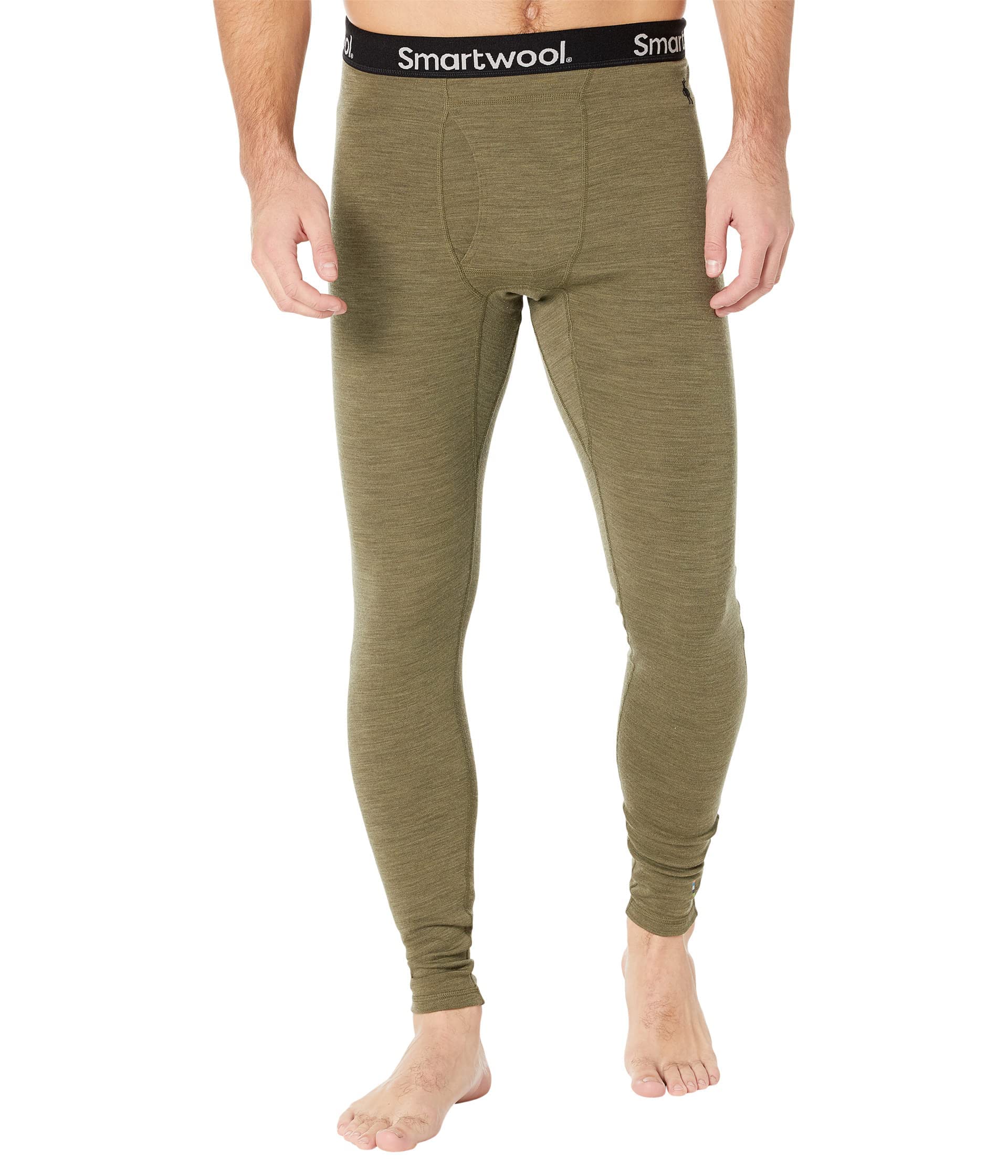
The premium merino 250 that skiers reach for when the temperature drops hard
This is the highest-tier pair here, and it is a genuine ski and snow-day layer built on a medium-weight 250 g/m2 100% merino knit. The Merino 250 designation is the weight class — a midweight fabric that balances warmth with mobility. It is designed to help keep body temperature regulated while wrapping you in merino softness, and the 100% wool build means it takes naturally to cold and damp.
You get a premium pick because of quality and warmth — this is a high-quality baselayer built for cold-weather duty. The flatlock seams (stitches that lie flat against your skin) are designed to minimize chafing, so you can wear it all day on the mountain. The slim fit sits close under ski pants and shell layers, and the wool is soft enough for direct skin contact. For winter sports and athletic use, this is the kind of layer that just does its job.
The trade-off is consistency of expectations. Fit and thickness opinion is mixed — some find the thickness just right, others find it thinner than expected, and some find it disappointing on value. It is a genuine no-stretch, slim-cut layer, so if you are between sizes or prefer roomy comfort, size up. For a dedicated cold-weather ski base layer, the build justifies the premium tier.
Premium everyday skier: 250 g/m2 100% merino, slim fit, flatlock seams that minimize chafing under ski layers.
What to know: the slim, no-stretch cut and thinner-than-expected feel mean you should size up if you like room.
Right for: skiers and winter athletes who want a premium 250 g/m2 merino layer.
Think again if: you prefer a roomy, forgiving fit or a thicker, warmer knit.
Know the Specs
Fabric Weight (g/m2)
Fabric weight, measured in grams per square meter, tells you how warm and how thick a knit is. Lower numbers like 175 g/m2 give you a light, active layer that breathes and slides under clothes; numbers around 400 g/m2 give you a heavyweight insulator for deep cold. Match the weight to your activity — light for moving, heavy for standing around.
Merino Micron Count
The micron count measures the diameter of a single wool fiber. Smaller micron numbers mean finer, softer fibers that sit gently against skin instead of itching. This is why merino is worn as a next-to-skin layer while coarser wool is not — the finer fiber bends softly rather than pricking.
Moisture Wicking & Insulating When Wet
Wicking is wool’s ability to pull sweat off your skin and let it evaporate. Wool can absorb a meaningful amount of moisture before it feels wet or clammy, and it keeps insulating even when damp — the reason it beats cotton in cold, sweaty conditions.
Fit, Seams, and Stretch
Base layer fit ranges from slim and tight-like to regular and roomy. Slim fits sit flat under outer pants and move with you; regular fits leave room for layering and lounging. Flatlock seams lie flat to cut chafing, and a wool knit with little or no stretch behaves differently under sizing — check the chart rather than assuming your street size.
Common Questions
What is the difference between merino wool and regular wool thermals?
Will wool thermal pants itch against my skin?
How do I choose between lightweight and 400 g/m2 wool pants?
Can I wear wool thermal pants under jeans or slim pants?
How should I wash and dry wool thermal pants so they last?
Do wool thermal pants keep you warm even if they get damp?
Is a 100% merino pair better than a wool blend?
Can I wear merino wool thermal pants as everyday pants around the house?
How long do merino wool thermal pants usually last?
Should I size up in wool base layer pants?
The Bottom Line
For most buyers, the wool thermal pants winner is the Minus33 Merino Wool Bottoms because it balances that itch-free, damp-insulating merino warmth with a lightweight knit that layers under anything. If you want a snug, tight-like merino layer for ski and cycling days, grab the LAPASA 100% Merino Wool Base Layer Pants. And for genuine deep-cold duty, the MERIWOOL Heavyweight 400g Pants is the one to reach for when warmth is the only thing that matters. Whichever you pick, match the knit weight to your cold — light for moving, 400 g/m2 for standing around.
How we choose
We do not accept paid placement. Every pick is matched to a real buyer and a real use-case; we do not hands-on test units.
Sources
Specifications: manufacturer listings and product documentation. Review insights: verified customer reviews, as of November 2026. Pricing: not shown on this page (it changes often); check the current price via the retailer link.
As an Amazon Associate, Tactical Gear Guy earns from qualifying purchases. This does not affect which products we feature.