Specs are compiled from manufacturer listings and verified buyer reviews and can change over time — please confirm the key details on the product page before buying.
If you want one wool hoodie that does the most jobs, buy a mid-weight merino quarter zip and layer under it — that single move covers cold mornings, sweaty hikes and office days. The real split in this category is fabric weight, not brand. Lightweight merino breathes hard and packs small; expedition-weight merino is a jacket substitute. Get the weight wrong and you will either shiver or overheat, no matter what you spend.
This guide is built by comparing the manufacturers’ published specifications and the patterns across verified customer reviews, so you get each pick’s real strengths and trade-offs instead of marketing spin.
Below you will find the fabric weight, fiber quality and fit quirks that actually decide whether a hoodie earns its place in your pack. Every pick here contains real wool, and each one is matched to a specific kind of wear — so you can stop guessing and start layering with the right wool hoodies for men.
Top Picks


How To Choose The Best Wool Hoodies for Men
Wool hoodies fail buyers in two directions: too thin to keep you warm, or so heavy you sweat through it on the walk to the car. The fix is to shop by fabric weight first and fit second. Everything else — zipper style, thumbholes, pocket count — is a comfort detail you can trade around.
Start with the fabric weight, not the brand
Weight tells you what season the hoodie is built for. A micro-weight layer is thin enough to wear under a shell and dries fast when you sweat. An expedition-weight knit is dense, brushed and warm enough to replace a light jacket in genuine cold. Mid-weight sits between the two and handles the widest range of conditions. Pick the weight that matches the coldest weather you will actually wear it in, then add a layer beneath for the rest.
Fiber diameter is what decides itch
Merino is measured in microns — the width of a single fiber. The finer the fiber, the softer it sits against your skin. Superfine merino at 17.5 microns is finer than a human hair, so it sits against your neck without the prickle of standard wool. Coarser expedition knits at 20.5 microns still feel good, but they are built for durability and warmth rather than next-to-skin softness.
Check the blend for stretch and shape
A small amount of nylon or spandex changes how the hoodie moves and how long it keeps its cut. An inner nylon core adds strength and elasticity, which lets a hoodie hug the body without bagging out at the elbows. Pure merino is softer but stretches more over time. Neither is wrong — just know that a blend usually survives harder use and a pure wool piece usually feels better against bare skin.
Fit runs small more often than you expect
Wool base layers are cut close to the body by design, so they can slide under another layer without bunching. That means the size on the tag is often tighter than the same size in a cotton hoodie. If you want room to wear it on its own, size up. If you plan to layer it under a jacket, buy your normal size and trust the stretch.
Side-by-Side Comparison
| Model | Best For | Wool Content | Fabric Weight | Zip Style | Amazon |
|---|---|---|---|---|---|
| Merino.tech 100% Merino Wool Hoodie★ Best Overall | Everyday wear and travel | 100% merino, 17.5 micron | — | Quarter zip | Amazon |
| MERIWOOL Men’s Base Layer HoodieBest Base Layer | Cold-morning base layer | Merino wool | Lightweight | Quarter zip | Amazon |
| Woolverino Micro Weight ¼ Zip Sun Hoodie | Sun-exposed trail days | 84% merino, 12% nylon, 4% spandex | Micro weight, UPF 25 | Quarter zip | Amazon |
| Minus33 Merino Wool Full Zip Hoodie | All-day layering | Merino wool blend | — | Full zip | Amazon |
| SITKA Gear Core Merino 330 Hoody | Cold-weather hunting | Merino wool | 330-weight | Pullover hoody | Amazon |
| Minus33 Kodiak Expedition Heavyweight Hoodie | Deep winter and bitter cold | 95% merino, 5% spandex, 20.5 micron | 400 g/m2, UPF 50+ | Full zip | Amazon |
Detailed Reviews
1. Merino.tech Merino Wool Hoodie
Our pick — 4.0+★ from 550+ verified ratings; the strongest balance of quality and price.
Pure merino at 17.5 microns — soft enough to skip the itch entirely.
Seventeen and a half microns is the number to fix on here. That measures the width of each merino fiber, and at 17.5 it is finer than a human hair, which is why this one sits against your neck without the prickle you remember from ordinary wool. The rest of the fabric is 100% merino with no synthetic filler, so it insulates wet or dry and shrugs off odor between washes. The maker rates it for 3 to 5 days of wear between washes, which merino’s natural odor resistance makes realistic.
What wins people over is the fabric itself — the quality of the merino is the thing that gets singled out most in the feedback, with warmth and weight close behind. It runs light enough to stuff in a daypack and warm enough for a cool morning run, and the thumb holes keep the sleeves from riding up when you move. The quarter zip gives you a vent you can open on a climb and close on the descent without pulling the hoodie off.
Durability is the trade-off. Buyers report it tearing after just one use, which fits how thin a 4.8-ounce garment has to be — this is a fine wool layer, not a workhorse outer shell, so watch snags and pack straps. Sizing also splits: the cut is genuinely slim, so order your regular size for a close fit or size up if you want room to wear it alone. It carries a 4.0+ star score across 500+ buyers, and most of that praise lands on the wool, not the trim.
Where It Earns Its Keep
- 17.5 micron merino that does not itch on sensitive skin, even at the neck
- 100% merino — warms when damp and resists odor for multiple wears
- Runs at 4.8 ounces, light enough to live in a pack
- Thumb holes hold the sleeves in place under a shell
What To Watch
- Thin fabric snags — it can tear under hard use
- Slim cut runs small; size up for a relaxed fit
- Lay flat to dry, since tumble drying damages merino fibers
Buy it if: you want one soft, packable merino layer for travel, cool-weather runs and everyday wear.
Think twice if: you need a hoodie that survives rough brush and heavy pack straps — the thin knit asks for gentle handling.
2. MERIWOOL Base Layer Hoodie
Built to disappear under a shell and still warm the minute you stop moving.
Pull this on before the jacket, not instead of it. MERIWOOL cut it as a lightweight merino base layer, and that job explains the whole design — a close fit that slides under a climbing helmet and a shell without bunching, plus merino’s habit of staying warm when your sweat turns cold on a long climb. Morning and evening chill is exactly the window it was made for.
What people notice first is how soft the merino feels for a layer this thin. It works as a stand-alone top on mild days and as the warm foundation under everything else when the temperature drops, which makes it the most flexible piece on this list for anyone who layers daily. The quarter zip lets you dump heat fast when you start working hard.
Fit is the honest sticking point. The large runs very tight according to the feedback, and the cut is deliberately snug because that is what a base layer needs to do. If you are between sizes or want to wear it on its own, go up. If you want a second skin under a shell, order true. It holds a 4.0+ star score across 400+ buyers, and the warmth on chilly mornings is what keeps that number up.
The layering logic: a thin merino layer close to the skin traps warmth and moves sweat outward, so a lightweight hoodie like this can outperform a thicker cotton one once you start moving.
The sizing reality: treat the listed size as a base-layer size, not a hoodie size — the tight cut is a feature under a shell and a nuisance on its own.
Reach for this if: you ski, climb or hunt in layers and want merino against your skin.
Look elsewhere if: you want a loose hoodie to wear alone on the couch — this cut is snug by design.
3. Woolverino ¼ Zip Sun Hoodie
Above the treeline you need shade, not bulk — this hoodie delivers both.
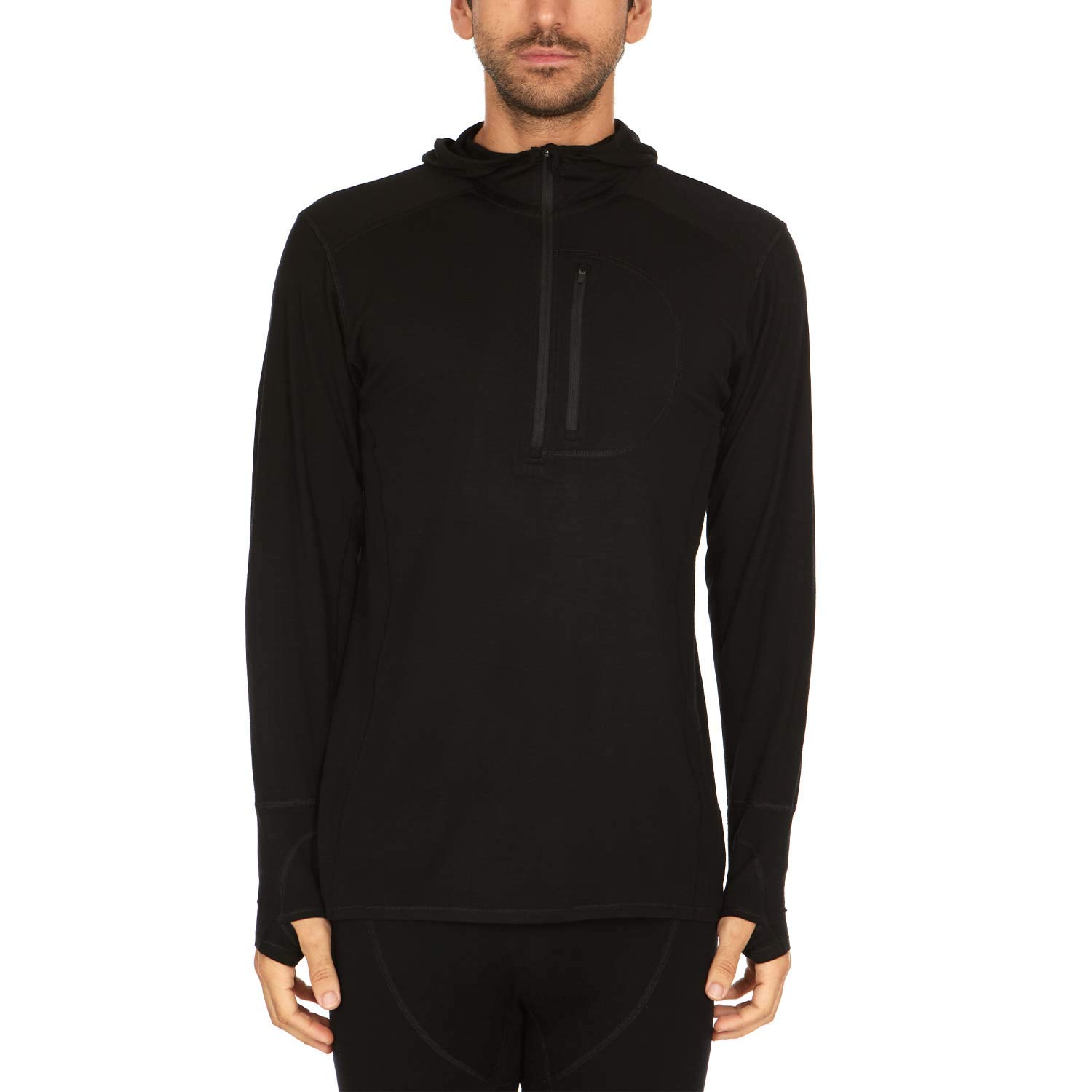
Once you break out of tree cover, sun on your shoulders and neck becomes the real problem, and that is the gap this piece fills. It carries a UPF rating of 25 (a sun-protection score that blocks a meaningful share of UV rays) while you hike or run exposed. The fabric is 84% merino, 12% nylon and 4% spandex — the nylon forms an inner core that adds strength and elasticity, and the spandex lets the hoodie hold a tight, athletic cut that does not flap in wind.
Quality and fit are the two things that stand out most in the feedback here. The knit keeps merino’s moisture-wicking and insulation properties against your skin, so it handles hot, cool, wet and dry conditions without turning clammy. Low-profile thumbholes make it easy to pull a shell over the top on a cold start, and the chest pocket takes a key, a snack or a little cash. The quarter zip has a soft stop when fully zipped, so the pull stays put at your chin instead of sliding down.
Two things to know before you commit. The hem falls well below the waist on some builds, which reads as longer coverage in the sun but can feel long if you are short-torsoed. And this is micro weight — it is a warm-weather and high-output layer, not something to rely on in a hard freeze. On the plus side, wool absorbs up to 30% of its weight in moisture without feeling wet, so it stays comfortable through a hard, sweaty climb.
Why the blend matters: a nylon core wrapped in merino gives you the durability of a synthetic with wool’s warmth, wicking and UV protection sitting next to your skin.
The honest limit: at micro weight with a UPF 25 rating, this is a sun and sweat layer — pair it with a shell when the temperature really drops.
Go for it when: your wool hoodie needs to work on exposed trails, long runs and hot-weather backpacking trips.
Pass if: you want one hoodie for deep winter — the micro-weight knit is not built for that cold.
4. Merino Wool Men’s Full Zip Hoodie – No Itch Renewable Fabric

A full zip that opens all the way — the layer you keep on all day.
Full zip versus quarter zip is the whole story with this one. Where a pullover traps heat until you drag it over your head, this Minus33 opens completely, so you can dump warmth on a climb and close it back up without breaking stride. The fabric is merino with a no-itch finish, and it uses the same nylon inner core construction as the brand’s other layers — strength and elasticity inside, merino insulation and moisture wicking on the outside.
The fabric is what buyers talk about, with the fit and the warmth running close behind. People describe the merino as genuinely comfortable rather than merely tolerable, and the no-itch claim holds up in real wear rather than just the copy. It handles thermal regulation across a spread of temperatures, which is exactly what you want from a layer you never take off. There is also a side panel design that gives it a bit more shape than a plain tube of fleece.
This is a mid-layer or outer layer depending on the day, so think of it as the flexible middle of a three-part system. Merino insulates even when damp, which matters on a day when sweat or drizzle would flatten a cotton hoodie. A 4.0+ star score across 80+ buyers points to steady satisfaction rather than polarised opinion. If you want one wool hoodie you can regulate with one hand, this is the shape to buy.
Reasons It Stays On Your Back
- Full zip you can open without pulling the hoodie off
- No-itch merino that wears comfortably against bare skin
- Nylon inner core adds strength and stretch to the merino
- Regulates temperature across changing conditions
Before You Bite
- Premium-tier pricing puts it well above the entry-level merino options
- Not a heavyweight — treat it as a mid layer, not a winter coat
Suits you if: you want an on-off layer for hiking, camp and cool-weather daily wear.
Skip if: you are chasing maximum warmth — the heavier expedition weights below do that better.
5. SITKA Gear Mens Core Merino 330 Hoody

The 330 designation is a warmth rating, and this hoody delivers it quietly.
SITKA built this as a hunting layer, and the design shows it. The 330 in the name refers to the fabric weight (a measure of how heavy the knit is), which puts it well above the micro-weight layers above in warmth — this is the piece you wear sitting still in a cold stand, not the one you wear running. The Optifade Waterfowl pattern is a camouflage finish aimed squarely at hunters, so it reads as a working garment rather than a street hoodie.
The material is what owners single out most, with warmth and comfort following close behind. Its warmth-to-weight ratio is the standout — the kind of thing that matters when you are carrying everything on your back and counting ounces. It pulls on as a pullover hoody, so there is no zip to fiddle with in cold weather and fewer seams to catch. For a piece that sits still in the cold, that simplicity is the point.
Here is the trade-off to be straight about. If you hunt or sit in blinds in cold weather, none of that matters. If you want a hoodie for town, one of the plain merino options up top will serve you better for less.
Built for the stand: a heavier merino knit plus a pullover design means less hardware to snag and more heat held when you are not moving.
Know what you are buying: this is hunting gear first — the camo finish and field cut are deliberate, not a styling afterthought.
Made for you: cold-weather hunters and anyone who sits still outdoors and needs warm merino without extra bulk.
Not for you: everyday town wear — the camouflage finish marks it as field gear.
6. Merino Wool Hoodie Expedition

Four hundred grams of brushed merino — this is a jacket replacement, full stop.
Weight is the deciding fact here: this is a 400 g/m2 interlock knit, which makes it the heaviest hoodie on the list by a clear margin, and that is the point. The fabric is 95% merino at 20.5 microns with 5% spandex for stretch, fleece-brushed inside for warmth, and the knit carries a UPF 50+ rating. Sizing aside, this is the hoodie for genuine cold — the maker scopes it to high-activity temperatures from 0°F to 30°F and low-activity wear from 30°F down to 0°F.
Quality of construction is what gets praised most, with the warmth right behind it. The build is solid, the fabric does the natural temperature control merino is known for, and one buyer reports it holds 80% of its insulative value when damp — the number that matters for a wet layer. The brushed inner face is what makes it feel like a fleece against the skin rather than a base layer. Thumbholes and a drawstring let you batten down the hood when the wind picks up.
Two honest notes. Fit splits — some find it fits great while others find the hood size too big, so check the hood against what you expect. And value is genuinely divided, with strong opinions on both sides, so buy this because you want a 400 g/m2 merino outer layer, not because it is the cheapest way to stay warm. It holds a 4.0+ star score across 170+ buyers, and the construction quality is what keeps that number honest.
Why It Handles Real Cold
- 400 g/m2 brushed merino — the warmest knit in this lineup
- 95% merino with 5% spandex for stretch and shape
- UPF 50+ rating for high-altitude and snow glare
- Thumbholes and drawstring lock the hood down in wind
The Fine Print
- Hood runs large for some wearers
- Premium-tier cost draws divided opinions on value
- Overkill for mild weather — this is a cold-weather layer
Worth it if: you work or play outdoors in serious cold and want merino warmth without a jacket.
Overkill if: your winters are mild — the lighter lays above will breathe better for you.
Know the Specs
Micron Rating
Microns measure the width of a single wool fiber. Finer fibers — 17.5 micron, for example — are softer and less likely to prickle your neck, which is why a superfine merino layer feels good against bare skin. Coarser fibers around 20.5 micron are still comfortable but are usually chosen for durability and warmth in heavier knits. If itch is your main worry, look for the lower micron number.
Fabric Weight (g/m2)
The grams-per-square-meter figure tells you how warm the hoodie is and what season it suits. Micro-weight knits are thin and breathable for hot weather and high output. Heavyweight knits around 400 g/m2 are dense and brushed for genuine cold. Match the weight to the coldest weather you will actually wear it in — a heavier knit in mild weather just makes you sweat.
UPF Rating
UPF works like SPF for fabric — it rates how much of the sun’s UV radiation the cloth blocks. A UPF 25 layer is a reasonable sun shield for trail days, while UPF 50+ is the higher protection level reserved for the heavier expedition knits. Both are useful when you are exposed above the treeline.
Wool Blends
Adding nylon or spandex changes how the hoodie moves and lasts. A nylon inner core adds strength and elasticity so the merino holds a close fit without bagging. Spandex adds stretch for active use. A pure merino piece feels softer next to skin but stretches more over time, so choose your blend based on if you want maximum softness or maximum shape retention.
Common Questions
Will a merino wool hoodie actually stop itching?
How often should I wash a wool hoodie?
What does 400 g/m2 mean for warmth?
Can I wear a wool hoodie in summer?
Should I size up in a merino base layer hoodie?
Does merino wool still keep you warm when it gets wet?
What is the difference between a quarter zip and a full zip hoodie?
Is a wool hoodie worth owning over a cotton or fleece sweatshirt?
Will a merino hoodie lose its shape over time?
The Bottom Line
For most men, the wool hoodies for men winner is the Merino.tech 100% Merino Wool Hoodie because 17.5 micron merino (a fine fiber that feels soft, not itchy) gives you warmth without itch, the quarter zip vents on the move, and it packs down to almost nothing. If you plan to layer under a shell, grab the MERIWOOL Base Layer Hoodie for its close, base-layer cut. And for genuine deep cold, the Minus33 Kodiak Expedition Hoodie is the one to reach for, with its 400 g/m2 knit (a heavier fabric for more warmth) and UPF 50+ rating (a high sun-protection score).
One honest nudge: the Best Overall carries 4.0+ stars across 500+ buyers, and the fabric quality is what keeps that score high — so if softness against the skin is your main worry, that is the safe place to start.
How we choose
We do not accept paid placement. Every pick is matched to a real buyer and a real use-case; we do not hands-on test units.
Sources
Specifications: manufacturer listings and product documentation. Review insights: verified customer reviews, as of November 2026. Pricing: not shown on this page (it changes often); check the current price via the retailer link.
As an Amazon Associate, Tactical Gear Guy earns from qualifying purchases. This does not affect which products we feature.