Specs are compiled from manufacturer listings and verified buyer reviews and can change over time — please confirm the key details on the product page before buying.
Here is the short answer most stove owners want first: buy a pipe that matches your stove’s flue collar size, then buy one that telescopes so you never have to trim a joint. A wood heater pipe that is one inch off means a smoky room, and a pipe with thin walls means a draft that cools your flue before the smoke ever leaves the house. The picks below solve both problems, and each one is a real product with real owner history behind it.
This guide is built by comparing the manufacturers’ published specifications and the patterns across verified customer reviews, so you get each pick’s real strengths and trade-offs instead of marketing spin.
You will see how diameter, wall thickness, and clearance rules decide which pipe belongs in your home. The short version is that the wood heater pipe you pick should match your collar exactly and leave room for expansion.
Top Picks


How To Choose The Best Wood Heater Pipe
Buying stove pipe is not like buying a hose. Length is easy to fix; diameter and wall thickness are not. If the interior diameter does not match your stove collar and your chimney fitting, the whole run leaks smoke at every joint. So start with the diameter, then work backwards through length, wall thickness, and clearance.
Start with the 6-inch interior diameter
Nearly every residential wood stove in this group is built around a 6-inch interior diameter. If you measure your stove collar and read 6 inches, you are in the right family of products. If you read 8, stop and shop again. The diameter is stamped into the product listing for a reason — a 6-inch pipe on a collar that is not 6 inches will not seal no matter how tight you cinch the screws.
Decide if you need single wall or double wall
Single-wall pipe is one layer of steel, and heat passes through that layer into the room. That is why a single-wall run adds warmth — and that is also why it needs a wide clearance buffer from anything flammable. Double-wall pipe puts an insulating blanket between two steel walls. It holds heat inside the flue for a steadier draft and lets you run the pipe closer to walls. Neither is “better” in a vacuum; the deciding question is how much room you actually have behind the stove.
Look at wall thickness, not just the finish
Wall thickness is the number that decides how long the pipe survives heat cycling. A 24-gauge steel wall is thinner than a 21-gauge steel wall, and the jump between those two gauges is measurable. Thin walls can warp and distort, especially on the hottest section of the run. When two pipes cost about the same, the thicker wall is the smarter buy.
Check clearance and where the pipe can go
Common single-wall pipe in this group calls for 18-inch clearance to combustibles. That means walls, ceilings, wood mantles, and anything else that can catch. Some pipes cannot be run through a wall or ceiling at all, and some should not be used outdoors where they meet the weather. Read that line before you buy, because it decides your entire installation layout.
Think about how you will actually install it
A crimped end slides into a fitting cleanly. A die-formed end does the same thing without you cutting or crimping anything yourself. Telescoping pipe slides inside itself to cover a range of lengths. If your measurement falls between two standard pipe sizes, telescoping section saves you a trip to the hardware store and a metal-cutting headache.
Side-by-Side Comparison
| Model | Best For | Diameter | Length | Material | Amazon |
|---|---|---|---|---|---|
| DuraVent DuraBlack 6DBK-TL Telescoping Pipe★ Best Overall | Stove runs that need an adjustable length | 6 in | 44 to 68 in | Alloy steel | Amazon |
| DuraVent DuraBlack 6DBK-E90 90 Degree ElbowInstallation Hero | Turning the corner on tight installs | 6 in | 6 in | Steel, 24-gauge | Amazon |
| LEIFIDE Matte Stove Pipe 6 x 48 InchBudget Champion | Straight runs on a budget-friendly budget | 6 in | 48 in | 304 stainless steel | Amazon |
| Selkirk Metalbestos 266036 Double Wall Smoke Pipe | Close quarters where clearance is tight | 6 in inner / 6.5 in outer | 36 in | Stainless steel liner | Amazon |
| AllFuel HST 38 to 70 Inch Telescoping Pipe | Long vertical runs on single wall | 6 in | 38 to 70 in | 21-gauge carbon steel | Amazon |
| AllFuel HST 6 x 36 Inch Insulated Chimney Pipe | Draft-hungry stoves that need insulated flue | 6 in | 36 in | 304 stainless steel | Amazon |
| DuraVent DuraPlus 9017SSCF Straight Length | DuraPlus Class-A chimney runs | 6 in | 36 in | Stainless steel | Amazon |
| Selkirk SureTemp 48 Inch Insulated Vent | Full chimney builds with locking band | 6 in | 48 in | Stainless steel | Amazon |
| DuraVent DuraPlus Through-The-Wall Chimney Kit | Building a chimney from scratch | 6 in | Kit (9 in horizontal + tee) | Alloy steel | Amazon |
Detailed Reviews
1. DuraVent DuraBlack 6DBK-TL Single Wall Telescoping Pipe
Our pick — 4.5+★ from 450+ verified ratings; the strongest balance of quality and price.
The adjustable-length pipe that spares you from cutting steel on a cold Saturday.
The one number that decides whether this pipe fits your stove is the 44-to-68-inch adjustment range. That slide means one section of pipe covers a window of lengths most single pipes do not touch. You measure once, extend the pipe until it meets the collar, and skip the crimping pliers entirely. The 6-inch interior diameter matches the standard wood stove output, so this is designed for the common case rather than an oddball one.
The wall thickness here is 0.02 inches of alloy steel, and the joints are lock-seamed with die-formed fittings. In plain terms, the pipe arrives with the metal already shaped so the ends slip together without you forcing them. That is why installation is the thing owners bring up most — the two sections slide past each other instead of fighting. It also holds a Limited Lifetime warranty from DuraVent, which puts it in the company of products built to be replaced rarely rather than every few winters.
One honest caveat before you order: this is single-wall pipe, and single-wall pipe needs 18-inch clearance to combustibles. If your stove sits tight against a back wall, measure that gap first. Direct comparison — the 38-to-70-inch AllFuel section below reaches longer at 70 inches and weighs 15 pounds against this pipe’s 7 pounds. For most people, that heavier build is not needed. This one covers the routine install, and the slide does the rest.
Where it earns its keep
- 44 to 68 inches of adjustable coverage from one section
- 0.02-inch alloy steel with lock-seamed, die-formed fittings
- 6-inch interior diameter fits standard stove collars
- Limited Lifetime warranty backs the build
- Slides without cutting or crimping
What to weigh first
- Single-wall design means you must respect 18-inch clearance
- A few owners note a smell during the first burns as the finish cures
- Fit is a mixed experience across different stove makes
Reach for this if: your run falls somewhere between 44 and 68 inches and you want it done without a cutting torch.
Think twice if: your stove sits inside that 18-inch clearance line — you will need a double-wall pipe instead.
2. DuraVent DuraBlack Stovepipe 6″ Diameter 90 Degree Elbow
The small bend that saves a whole run when your stove and chimney do not line up.
Two pipes rarely sit on the same axis. A 90-degree elbow solves that by changing direction inside a short 6-inch body. The 6-inch inside diameter matches the rest of a standard single-wall run, so this drops into the same system as the telescoping section above. This is the piece that turns a two-piece straight run into a route that actually fits your room.
The build is where it earns trust. It is 24-gauge steel with a wall that measures 0.023 inches. Compare that to the 0.02-inch wall on the DuraVent telescoping pipe in position one — this elbow is the thicker of the two. It also has lock-seamed, drip-free joints, which means the seam does not open and leak creosote water onto your stove top. Die-formed end fittings mean no crimping to get started.
One thing to understand: an elbow handles a bend, not a length, so 6 inches of run is all you get. If you need reach, this is the wrong part. But if your stove collar and chimney entry sit at different heights, this is the honest fix, and the price reflects that it does one job well. Owners get no complaints from this one because there is no finish to peel and no long seam to fail.
Why this beat most options: the 0.023-inch wall on a 24-gauge steel elbow is thicker steel than the telescoping pipe above — a rare case where the small fitting out-builds the main run.
The piece you should know: this is a 90-degree fitting, so plan your layout around it, not the other way round.
The eager buyer: anyone whose stove needs one clean turn to meet the chimney.
Hold off if: you are shopping for straight length — an elbow cannot substitute for a run.
3. LEIFIDE 1 Pcs Black Matte Stove Pipe
A half-length straight run in 304 stainless for the stove that needs one clean section.
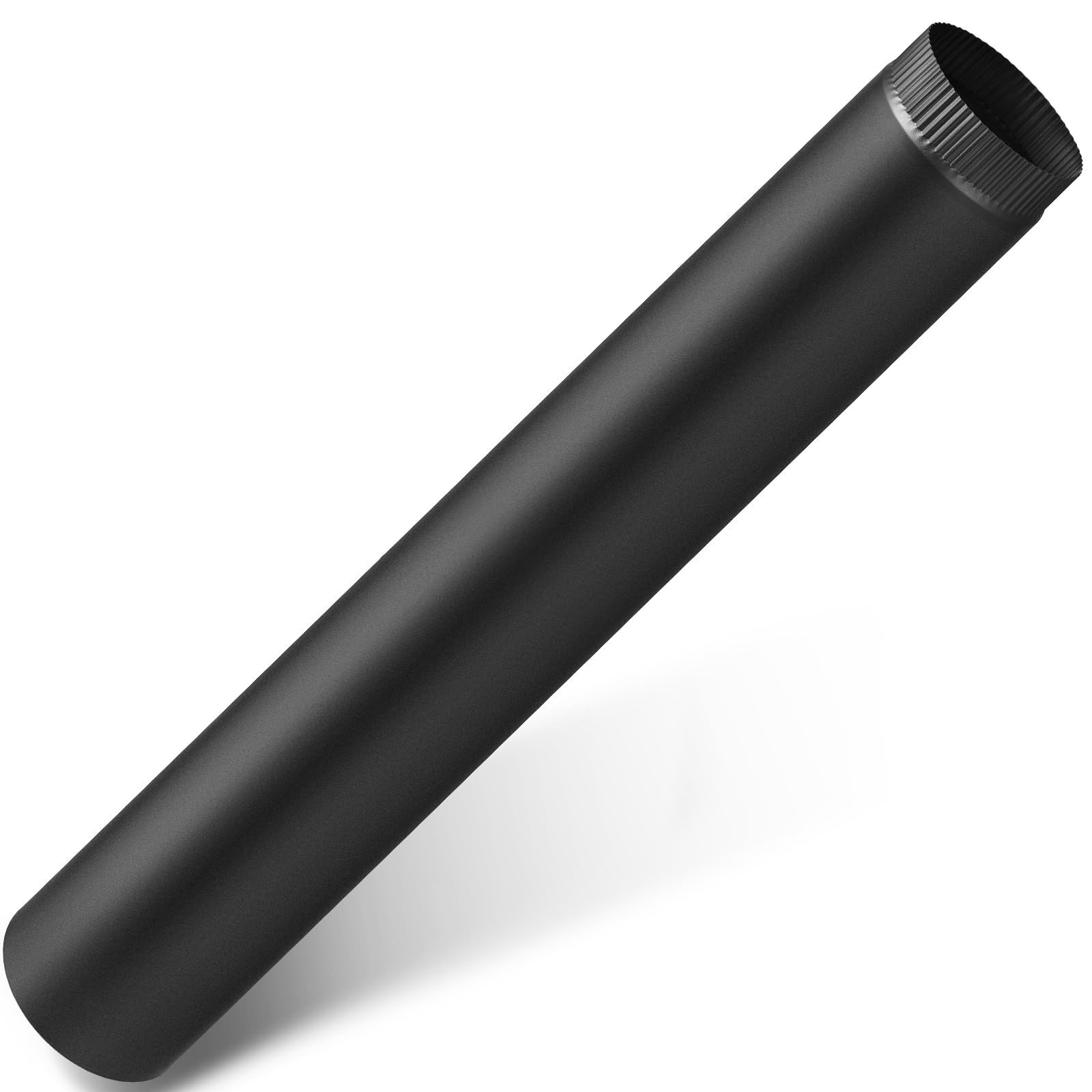
If you want a straightforward 48-inch section and nothing more, this one delivers. The 6-inch diameter and 48-inch length cover the most common straight-run measurement on the market. The body is 0.02 inches of 304 stainless steel, a grade known for standing up to moisture and soot better than plain carbon steel. The paint is a black matte coating, which DuraVent does not offer on every single-wall pipe, so the finish alone is a small upgrade.
The design is simple by intent. One end is crimped so it slips straight into a fitting of the same diameter, and you fix each joint with at least three metal plate screws (not sold here). There is nothing to adjust and nothing to align beyond the slide. Quality is what buyers talk about most, and functionality follows right behind it.
The trade-off is honest. Some buyers report the paint flaking away over time, particularly around the hottest section. Since this pipe is not adjustable, your measurement had better be right before you order — there is no telescoping range to cover a wrong reading. The 304 stainless underneath still holds if the finish dulls.
The reasons it sells
- 304 stainless steel resists rust and heat
- 0.02-inch wall matches the bigger-name telescoping pipe
- Black matte coating suits most stove aesthetics
- Simple crimped-end install
Where it asks you to be careful
- Fixed 48-inch length leaves no room for measurement error
- Paint can flake over time in hot use
- Mounting screws are not included
Go here when: 48 inches is exactly your measurement and you want stainless at an entry-level price.
Skip over this one if: you have not measured twice — a fixed section forgives nothing.
4. Selkirk Metalbestos 266036 Smoke Pipe

The two-wall pipe for a stove that sits closer to the wall than you would like.
Here is the number that changes an install: 6 inches inner, 6.5 inches outer. That extra outer layer means the hot flue is wrapped inside a black aluminized steel casing with a stainless steel inner liner doing the real work. Double wall holds heat inside the flue for a steadier draft and lets you run the pipe closer to combustibles than single-wall pipe allows. If the wall behind your stove makes you nervous, this is why you want this design.
The pipe measures 36 inches, which covers the short to medium run. Three metal screws come in the box, so you are not walking to the drawer mid-install. The matte black finish on both wall and casing keeps it looking like a deliberate part of the hearth rather than an afterthought. There is a Limited Lifetime warranty as well, and owners consistently report that it does its job and gets in without trouble.
Where it splits opinion is value. Selkirk prices this at a premium over plain single-wall, and that gap is visible on the shelf. Whether the gap is worth it depends entirely on how close your stove sits to a wall — for a roomy install, single wall does the same job. For a tight one, this pipe is the difference between a compliant install and one that gives you no margin. Judged on function, the thing works; judged on price, only you know your clearance situation.
The argument for two walls: that 6-inch stainless liner inside a 6.5-inch black casing means heat that stays in the flue instead of bleeding into the clearance zone.
Where it costs you: a double-wall build puts this above plain single-wall pipe, so it rewards buyers who actually need the tighter clearance.
Your pipe if: your stove sits in a snug alcove and clearance is the deciding number.
Not your pipe if: you have open space behind the stove — a single-wall section handles that room just fine.
5. AllFuel HST Telescoping Pipe

The long telescoping section that reaches 70 inches when the measurement is unclear.
This pipe reaches where most sections stop. It telescopes from 38 inches to 70 inches, a range that swallows measurement mistakes instead of punishing them. The body is 21-gauge carbon steel, which is the thicker side of what single-wall pipe uses. The maker states that 21 gauge is 9% thicker than 22 gauge and 27% thicker than 24 gauge.
Owners describe it as heavy-duty, and quality is what comes up on the review pages more than anything else. Easy installation lands right behind it because the telescoping slide covers so much ground. The finish is a high-temperature black paint meant to resist chipping, and the design connects to any brand of Class-A insulated chimney pipe, so it does not lock you into one system. The pipe cannot be cut down, which is why the long telescoping range is the whole point of the product.
The honest catch is weight and clearance. The 15 pounds is a real load when you are fitting it overhead — compare that to the 1.5-pound elbow in position two, and you feel why some jobs want a second pair of hands. Like the DuraVent telescoping pipe, it needs 18-inch clearance, and it cannot be run through a wall or ceiling or used outdoors in the weather. This is indoor straight-run pipe, and it wants to stay there.
The reasons it stands out
- 38 to 70 inches of telescoping range covers rough measurements
- 21-gauge carbon steel is 9% thicker than 22-gauge and 27% thicker than 24-gauge
- High-temperature black paint resists chipping
- Connects to any brand of Class-A insulated chimney
The costs of going long
- 15 pounds is heavy for overhead work
- Not adjustable downward by cutting
- Indoor only, with 18-inch clearance required
Pick it when: your run is long, your measurement is uncertain, and you want thicker steel.
Look elsewhere when: you need an outdoor section or a through-wall route — this pipe is indoor single wall only.
6. AllFuel HST Chimney Pipe, 6″ x 36″, 304 Stainless Steel

An insulated 36-inch section that holds flue heat so your stove drafts without coaxing.
This is the section that lives above the stove and keeps the flue temperature up. Double-wall construction with a ceramic fiber blanket between the walls holds heat inside, and that heat is what gives a wood stove a steady draft. It also means a 2-inch clearance to combustibles instead of the wider single-wall gap. Both the inner and outer walls are 304 stainless, so corrosion resistance is not an afterthought.
Laser-welded seams are the build detail worth knowing, and the maker points out that 304 stainless resists corrosion better than galvanized steel or 430 stainless. Twist-lock connections click together without tools, and the included locking band tightens the joint so the chimney stays sealed. UL103HT certification covers wood stoves, fireplaces, fireboxes, furnaces, boilers, and coal or oil appliances. Compatibility has one hard limit: it connects to AllFuel HST Class-A double-wall chimney pipe and does not connect to other brands.
Quality is the thing owners bring up most, and fit follows right behind it, which is what you want from pipe you intend to leave up for years. The catch is brand lock-in — buy this one, and your future chimney sections need to be AllFuel HST too. If you already have a different Class-A system, stop and check your brand before ordering, because this pipe will not bridge to it.
What the insulation buys you: a 2-inch clearance to combustibles while holding high internal flue temperatures for a proper draft — two things single-wall pipe cannot give you at once.
The one line to read twice: this connects to AllFuel HST Class-A pipe only, so your existing chimney brand decides whether this works.
Built for: the owner building a full AllFuel HST chimney who wants insulated stainless through the run.
Wrong turn if: you already own another brand of Class-A pipe — check compatibility before you buy.
7. DuraVent 9017SSCF Straight Pipe
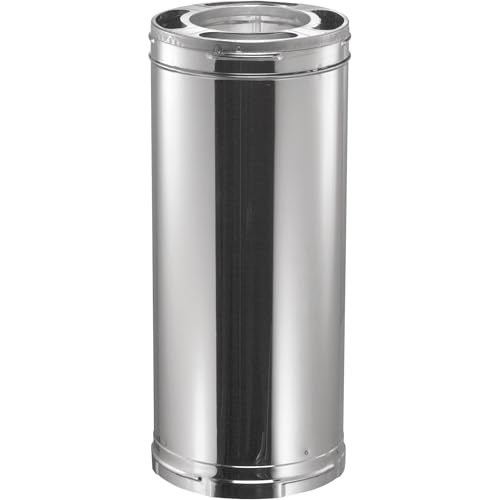
The plain 36-inch Class-A section that completes a DuraPlus chimney stack.
This pipe exists to do a narrow job: add 36 inches to a DuraPlus chimney run. The diameter is 6 inches, the length is 36 inches, and the fit is designed as an easy in-and-out slide. There is nothing exotic here and nothing that pretends to be. What matters is whether you are already running DuraPlus — if you are, this is the correct piece, and if you are not, it will not adapt to your system.
You get a Class-A component (a pipe rated for use with wood stoves) that fits only within one manufacturer’s chimney system. So the real question is whether the rest of your chimney matches this brand. Buy this pipe after you have chosen the system, not before. That makes it a simple purchase: you are buying a standard length from a known brand, and the price reflects that it is one part, not a whole chimney assembly.
The realistic caveat is that with only this pipe and no cross-brand compatibility listed, you are buying inside an ecosystem. Measure your existing stack before ordering, and confirm you need the 36-inch length specifically. Get that right, and the install is a straight slide with no finish to peel and no joint to improvise.
Where it fits: a DuraPlus chimney that needs one more 36-inch Class-A section to reach the right height.
What to confirm first: that your existing stack is DuraPlus — this section is built to match that system, not swap into another.
Straightforward yes if: you already run DuraPlus Class-A and need the 36-inch length.
Not the one for you if: you are mixing brands — this is a single-system component.
8. Selkirk SureTemp Chimney Pipe

A 48-inch insulated stainless section rated for extremes, with a locking band in the box.
The number that stands out here is the heat rating. This pipe is UL-listed and tested to withstand surges up to 2,100 degrees Fahrenheit, headroom that matters when creosote ignites in the flue. The wall runs approximately 0.05 inches thick, and the inner liner is stainless with a rugged outer casing around it. For a 48-inch insulated section, that is a serious build.
Functionality is what owners praise most, and fit follows. The locking band comes included, so the joint stays tight without you hunting for hardware. It runs wood, coal, oil, or gas appliances, and the double-wall insulation supports a safe venting path. Selkirk has been building HVAC products for nearly a century, and the warranty covers the pipe for its intended service life.
Two honest notes. The value question cuts both ways: this pipe sits toward the premium end. It is the right pipe if you want the heat rating and the locking band (a metal strap that holds the joint tight). It is overkill if your chimney run is short and your budget is tight. Neither point makes it a bad pipe; they just narrow who it suits.
What justifies the rating: tested to 2,100 degrees Fahrenheit with a 0.05-inch wall and stainless liner — the highest heat tolerance in this group.
The catch worth knowing: a few pipes show up dented in transit, so open the carton before the installer packs up.
Worth it for: the owner who wants a high-heat-rated insulated run with the locking band already sorted.
Probably overkill if: your chimney is short and simple — a plainer Class-A section handles that.
9. DuraVent DuraPlus Through-The-Wall Chimney Kit

The one box that carries the whole through-wall install instead of one section of it.
Everything you need to punch through a wall and run the chimney up is in this kit. The box holds a wall thimble, one 9-inch by 6-inch horizontal chimney pipe, a tee with a clean-out cap, a tee support, two wall straps, and a chimney cap. Triple-wall construction keeps the heat path contained, and the twist-lock design clicks the pieces together. It supports up to 40 feet of chimney pipe, enough for a full two-story run.
The 6-inch compatibility matches the rest of the pipes on this list, and the kit is built for wood-burning stoves. What owners bring up most is quality — the pieces feel like they belong together, because they were designed as one assembly. That is the real advantage of a kit: no guessing at part numbers, no mismatched fittings, and a single install plan instead of five separate ones. Total weight lands at 38.4 pounds, so plan for two people on the lift.
The honest catch is installation. The instructions get mixed reviews for clarity, and mounting the tee support outside is a two-person job. That is not a defect in the kit; it is the reality of through-the-wall work, where you are cutting through a wall and reaching up a chase. Get past the setup and the hardware is solid. Buy this if you are starting from nothing; skip it if you already have a DuraPlus stack and just need a length.
What makes it a starter kit
- Wall thimble, tee, cap, straps, and support all included
- Triple-wall construction with twist-lock joints
- Supports up to 40 feet of chimney pipe
- Quality is what owners discuss most
What the job asks of you
- Instructions are not clear to everyone
- Outside tee support wants a second person
- 38.4 pounds makes it a two-person lift
Start here when: the whole through-wall chimney does not exist yet and you want one box to cover it.
Already nearly done if: you own DuraPlus pipe and just need one more 6-inch section — this kit is a bigger job than that.
Know the Specs
Interior Diameter and Fit
The interior diameter is the size of the hole the smoke travels through. Every pipe on this list is built around a 6-inch diameter, the common size for home wood stoves and chimney collars. If you buy outside that size, the joints will not seal. Measure your stove collar and chimney entry before you order. Also check whether the pipe lists an inner and outer diameter. A double-wall pipe like the Selkirk Metalbestos shows a 6-inch inner and a 6.5-inch outer. That outer number is what matters for clearance (the safe gap to nearby materials).
Wall Thickness and Gauge
Wall thickness tells you how much steel stands between the fire and the room. Thicker walls hold up better through heat cycling. The numbers in this group range from a 0.02-inch wall up to a 0.05-inch wall on the Selkirk SureTemp. Gauge works the same way in reverse: a lower gauge number means thicker steel, so 21-gauge is thicker than 24-gauge. The AllFuel HST telescoping pipe uses 21-gauge and is described as 9% thicker than 22-gauge and 27% thicker than 24-gauge. When two pipes are close in price, the thicker wall is usually the smarter buy.
Single Wall Versus Double Wall
Single-wall pipe is one layer of steel. Heat radiates through that layer into the room, which can be a bonus in a cold space. Double-wall pipe adds a liner and a casing with an insulating layer in between. It holds flue heat for a steadier draft and lets you run the pipe closer to combustible materials. The price gap between the two styles is real, and the deciding factor is your clearance situation, not the label. If your stove has room behind it, single wall does the job. If it does not, double wall earns its cost.
Clearance to Combustibles
Clearance is the distance between the outside of the pipe and anything that can burn — walls, ceilings, wood mantles, and trim. The single-wall pipes here commonly require 18-inch clearance. Double-wall sections can cut that distance because the insulation keeps the outer casing cooler. Some pipes cannot be run through walls or ceilings at all, and some are not for outdoor exposure. Read the installation notes before you buy, because clearance decides your layout and, in some cases, whether a stove can go in that corner at all.
Common Questions
Will a 6-inch wood heater pipe fit my stove?
How much clearance does a single wall stove pipe need?
Is double wall pipe better than single wall pipe for a wood stove?
What does telescoping mean on a stove pipe?
Can I cut a stove pipe to make it shorter?
Can I run stove pipe through a wall or ceiling?
Will brand A chimney pipe connect to brand B stove pipe?
Why does new stove pipe smell on the first burns?
Does a thicker wall stove pipe actually last longer?
Do I need a full chimney kit or just a section of pipe?
The Bottom Line
For most people, the wood heater pipe winner is the DuraVent DuraBlack 6DBK-TL Telescoping Pipe, because it covers 44 to 68 inches from one section and slides into place without cutting. If you need to turn a corner on a snug layout, the DuraVent 90 Degree Elbow is the small fitting that saves the run. And for a through-wall build from scratch, the DuraVent DuraPlus Through-The-Wall Kit carries the whole job in one box.
Before you check out, walk back to the stove with a tape measure. Confirm the 6-inch opening at the collar and the clearance behind the stove. That two-minute check decides whether single wall or double wall belongs in your room, and it is the difference between a clean install and a second order.
How we choose
We do not accept paid placement. Every pick is matched to a real buyer and a real use-case; we do not hands-on test units.
Sources
Specifications: manufacturer listings and product documentation. Review insights: verified customer reviews, as of November 2026. Pricing: not shown on this page (it changes often); check the current price via the retailer link.
As an Amazon Associate, Tactical Gear Guy earns from qualifying purchases. This does not affect which products we feature.