Specs are compiled from manufacturer listings and verified buyer reviews and can change over time — please confirm the key details on the product page before buying.
If your stove puffs smoke back into the room when you open the door, the flue is almost always the reason. A wood heater flue is the pipe that carries smoke and exhaust from your stove up and out of the house, and when the diameter, wall type, or length is wrong, the draft weakens and the smoke comes back. The fix is matching the pipe to your appliance and your clearance limits, not buying the longest or widest piece on the shelf. This guide walks through nine real flue and stovepipe options, sorted by what each one actually does well.
This guide is built by comparing the manufacturers’ published specifications and the patterns across verified customer reviews, so you get each pick’s real strengths and trade-offs instead of marketing spin.
Draft, clearance, and wall thickness decide whether a flue works in your home, so the picks below are grouped by those real limits rather than by looks alone. Every option here has been checked against the specs that matter for a wood heater flue.
Top Picks


How To Choose The Best Wood Heater Flue
Most flue mistakes come from buying the wrong type of pipe, not from buying a bad pipe. Before you look at brands, work out three things: the diameter your stove collar takes, how much clearance you have to the nearest wall or ceiling, and whether the pipe will sit inside the room or run up as a chimney. Those three answers narrow nine options down to two or three fast.
Match the diameter to your stove collar first
A flue’s inner diameter is the width of the opening smoke travels through, and 6 inches is the size most wood stoves and fireplace inserts are built for. A 6-inch pipe should slide onto a 6-inch collar without adapters. If your appliance has an 8-inch collar, a 6-inch pipe will not fit and you need the matching size. Measure the collar opening across the inside, not the outside, and write the number down before you shop.
Single-wall connector versus double-wall chimney pipe
Single-wall stovepipe is one layer of steel that connects your stove to the chimney, usually inside the room where you can see it. Double-wall pipe adds a second steel layer with insulation between, so the outside stays cooler and the flue gases inside stay hot. Hot interior gases mean a stronger, steadier draft and less creosote buildup. Double-wall pipe also cuts the clearance you need to nearby wallboard or wood framing.
Read the clearance number, not the length
Clearance to combustibles is how far the pipe must sit from anything that can burn, like drywall, studs, or wood mantels. Single-wall connector pipe can demand 18 inches of clearance, which eats up room in a small cabin. Insulated double-wall pipe can bring that number down to 2 inches, which is one reason it costs more. Check your clearance before you buy a long pipe and discover it will not fit the space.
Side-by-Side Comparison
| Model | Best For | Diameter | Length | Wall Type | Amazon |
|---|---|---|---|---|---|
| Basic FireSafe Flexible Chimney Liner Kit★ Best Overall | Full chimney reline | 6 in | 15 ft | Flexible liner | Amazon |
| DuraVent DuraPlus 6″ x 24″All-Fuel Chimney Pick | All-fuel chimney run | 6 in | 24 in | Triple-wall insulated | Amazon |
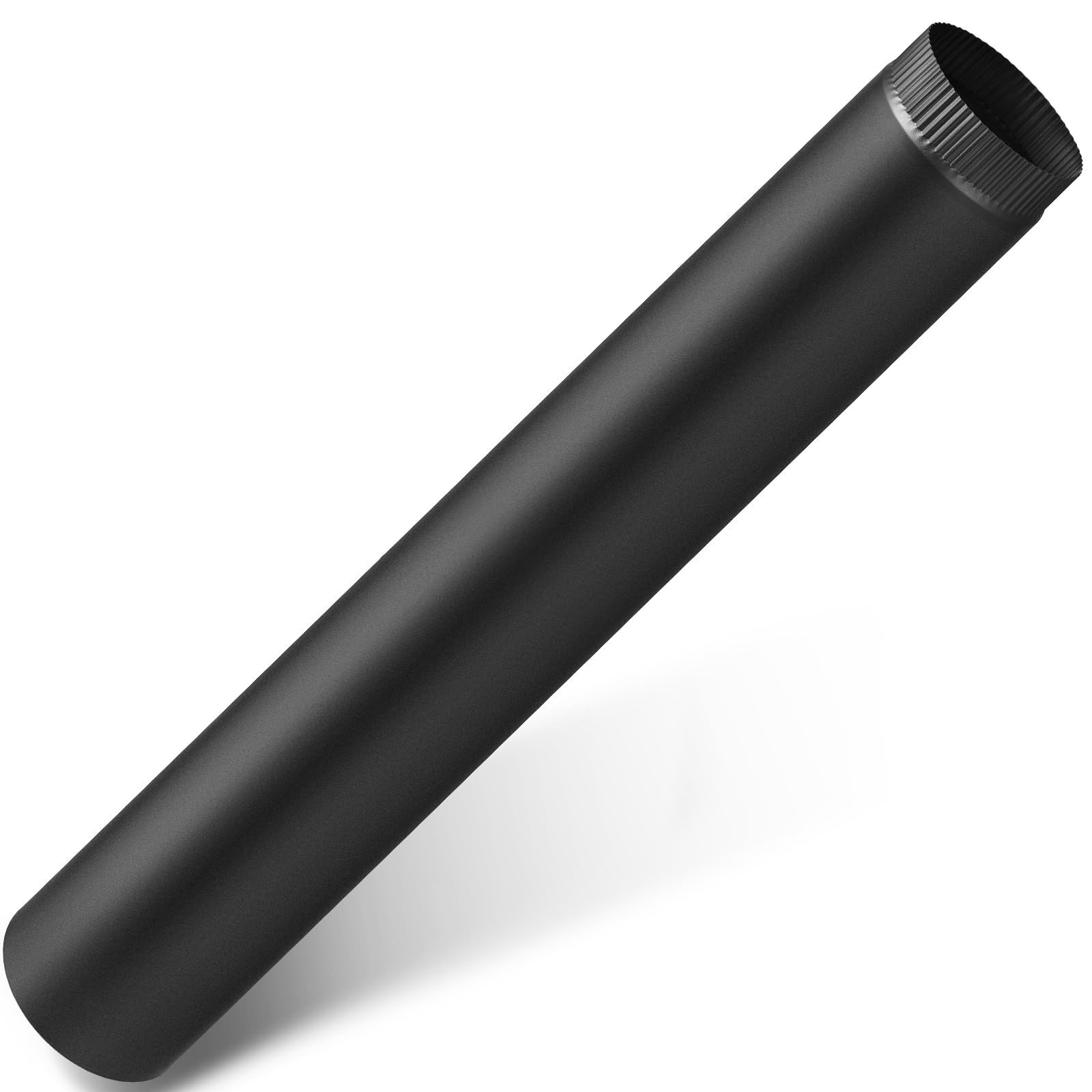
| 1 Pcs Black Matte Stove PipeBest Long Interior Run | Visible interior runs | 6 in | 48 in | Single-wall | Amazon |
| AllFuel HST 6″ x 24″ Class-A Insulated | Long-term chimney assembly | 6 in | 24 in | Double-wall insulated | Amazon |
| AllFuel HST 6″ x 36″ Chimney Pipe | Year-round outdoor use | 6 in | 36 in | Double-wall insulated | Amazon |
| Selkirk 6″ SureTemp 48″ | Insulated long runs | 6 in | 48 in | Double-wall insulated | Amazon |
| Duravent DuraBlack 8″ x 48″ | Large 8-inch collar stoves | 8 in | 48 in | Single-wall | Amazon |
| 6″ x 36″ Black Single Wall Stove Pipe | Budget interior connector | 6 in | 36 in | Single-wall | Amazon |
Detailed Reviews
1. Basic FireSafe Flexible Chimney Liner Insert Kit 6″ x 15 ft
Our pick — 4.5+★ from 300+ verified ratings; the strongest balance of quality and price.
The one box that relines the whole chimney instead of adding another joint.
If your chimney is unlined, cracked, or just letting smoke drift back into the room, this is the pick that fixes the whole problem in one purchase. The Basic FireSafe kit is a 6-inch diameter flexible stainless liner in a 15-foot length, and it comes with a 13″ x 13″ top plate with a rain cap and an appliance connector for vertical hookups. You are not buying a pipe here; you are buying a complete reline kit, which is why it lands at the top of this list. It holds 4.5+ stars across 300+ owner reviews, the strongest feedback record on this list.
What wins people over is the material — the liner is built from 316 stainless steel, the marine-grade alloy that resists corrosion far better than standard grades where moisture and flue acids collect. Its 7-ply seams and 10 corrugations create a gas- and watertight barrier, and the whole liner is made in the USA from mill-certified steel. At 23 pounds, the kit is light enough for two people to carry up a ladder. The install is straightforward: the liner feeds down the flue, the top plate seals the crown, and the appliance connector hooks up to your stove.
The catch is that this is a flexible liner, not a rigid pipe, and the corrugations give it a little more give than some installers want when feeding a tight, offset chimney. The other honest note: the kit includes the liner, top plate, rain cap, and connector, but you may still need to source gaskets or hardware for your specific flue setup. On a straight, sound chimney, this kit covers the entire reline. If you have a complex multi-bend flue, plan the routing before you open the box.
What earns the top spot
- 316 stainless steel construction resists the moisture and acid that eat weaker liners
- 15-foot liner plus a 13″ x 13″ top plate, rain cap, and appliance connector — a full kit
- 7-ply seams and 10 corrugations create a gas- and watertight barrier
- Made in the USA from mill-certified steel
- Works with wood, gas, oil, and pellet appliances
Where it asks for care
- Flexible corrugated liner is less stiff than rigid pipe, so tight offset flues need planning
- Some owners find the flexible material less easy to work with than expected
- You may still need extra gaskets or hardware for your specific flue
Made for: anyone relining a straight, sound chimney who wants the liner, cap, and connector in one box.
Think twice if: your flue has tight offsets — the corrugated liner needs patience feeding through bends.
2. DuraVent DuraPlus 6″ Diameter 24″ Length
Three walls, one certified claim, and a twist-lock that makes assembly a one-person job.
This is the pipe you reach for when the flue run sits close to something that can burn. The DuraPlus 6″ x 24″ uses a triple-wall design — a stainless inner liner, a ceramic blanket, and an air space — and that stack is what lets it hold a hot internal draft while the outside stays cool to the touch. It is rated to UL 103HT, engineered for continuous 1,000°F flue temperatures and tested against 2,100°F chimney fire surges. In plain terms: it is built for the part of the system where things can go badly wrong.
Assembly is the part most people notice. Die-formed end fittings and a precision twist-lock connection let you join pipe lengths without sealant, which matters when you are up a ladder holding a section in each hand. The installed length runs about 1.5 inches shorter than the 24-inch nominal length because the joints overlap, so plan your run with that overlap in mind. It also carries a limited lifetime warranty from DuraVent. Set it beside the Basic FireSafe kit above: the liner weighs 23 pounds to handle inside the flue, while this pipe weighs 11.5 pounds to lift into place — different jobs, different tools.
One buying note worth knowing up front: the exterior is galvanized steel. That is exactly what the spec calls for here, but some shoppers expect a stainless outer shell and are surprised when a galvanized finish turns up. Treat the finish as what it is — a weather-ready outer layer — and this pipe earns its place as the backbone of an all-fuel chimney run.
The real selling point: triple-wall construction with a ceramic blanket and air space keeps the flue gas hot for a strong, steady draft while the outer wall stays cooler. That is the combination that keeps a fire burning clean and the room free of smoke.
Just confirm the finish you receive is the one you expected.
Solid choice for: wood, oil, coal, and gas appliances that need a certified insulated chimney section with tight clearance.
Not your piece if: you were shopping for a stainless outer shell — this one wears a galvanized finish.
3. Black Matte Stove Pipe 6 x 48 Inch
Four feet of stainless in one section, so you climb the ladder less.
One long section beats three short ones when you are building a visible interior run. This LEIFIDE pipe measures 48 inches long with a 6-inch diameter, made from 304 stainless steel at 0.02-inch wall thickness. The single length means fewer joints, fewer screws, and fewer places for smoke to sneak out. It weighs 6.7 pounds, heavy enough to feel like real steel but light enough to raise into place without a second set of hands.
The material choice is the quiet win here. 304 stainless resists rust, breakage, and deformation, and it is rated waterproof and heat resistant. The black matte paint coating resists shatter and helps cut the soot that shows up while the paint cures on a new pipe. Quality is the thing that stands out most in the feedback, with functionality close behind. The crimped end loads into fittings of the same diameter, so you can join sections quickly.
Long single-wall runs are not for every home. A single-wall pipe like this needs generous clearance to anything that can burn, so measure your wall and ceiling gaps before committing to a 48-inch section. It also works best on a flue where you can see the pipe, since the black finish is meant to look good in the room. Fasten each joint with at least three metal plate screws, which are not included, and this becomes a clean, sturdy connector run.
Where it shines: a 48-inch length in one 304 stainless section cuts the joint count on a visible run. Fewer seams mean less chance of a leak and a cleaner look along the wall.
Set the clearance first: single-wall pipe demands a wide gap to combustibles. Measure your layout before you buy the long section, not after.
Best for: interior runs that need length without a pile of joints, especially where the pipe will be seen.
Skip if: your clearance to nearby walls or ceiling is tight — long single-wall sections need breathing room.
4. AllFuel HST 6″ x 24″ Chimney Pipe

Laser-welded seams and a ceramic blanket that hold draft through a full season.
If you are assembling a real chimney run, the seams are where cheap pipe fails. This AllFuel HST section puts 304 stainless steel on both the inner and outer walls, with laser-welded seams instead of folded ones. That construction resists corrosion better than galvanized steel or 430 stainless, which is the grade many budget pipes use. It is a 6-inch diameter, 24-inch length section, certified to UL103HT for wood stoves, fireplaces, fireboxes, furnaces, boilers, water heaters, and outdoor wood furnaces.
That UL103HT certification matters because it puts the pipe in a specific safety class, and it covers wood, gas, coal, and oil fuels in one section. The ceramic fiber blanket inside provides 2 inches of clearance to combustibles while holding the internal temperature high enough for a proper draft. Twist-lock connections plus an included locking band keep each joint fast to assemble and tight once set. Quality and fit both get strong marks here, and the value reads as fair for a double-wall section that will live on the side of a house for years.
Now the compatibility rule, and it is a firm one: this pipe joins AllFuel HST Class-A double wall chimney pipe and will not connect to other brands. If you already own a different brand of chimney, this section will not cross over to it. Buy it when you are building or extending an HST system; the 304 stainless walls and laser-welded seams are built for years of exterior service.
Strengths worth the money
- 304 stainless inner and outer walls with laser-welded seams resist corrosion
- Certified to UL103HT for wood, gas, coal, and oil appliances
- Ceramic fiber blanket holds draft and delivers 2-inch clearance to combustibles
- Twist-lock connections plus an included locking band seal each joint
Know before you order
- Joins AllFuel HST Class-A pipe only — no cross-brand connection
- Only a 24-inch section, so a tall run needs several lengths
Buy it when: you are building an AllFuel HST chimney and want a laser-welded 304 stainless section.
Look on if: your existing chimney is another brand — this one will not mate to it.
5. AllFuel HST 6″ x 36″ 304 Stainless Steel Chimney Pipe
Three feet instead of two — the quiet advantage when you are buying by the section.
Twelve more inches per piece sounds minor until you are pricing out a full chimney run. This AllFuel HST section measures 36 inches long at 6 inches diameter, where the 24-inch HST section above gives you half that per piece. Same 304 stainless steel inner and outer walls, same laser-welded seams, same ceramic fiber blanket insulation. The 2-inch clearance to combustibles holds, and the UL103HT certification covers wood, gas, coal, and oil appliances. If you count sections, the 36-inch length simply cuts the number of joints on a tall run.
The twist-lock system and included locking band work the same way as the rest of the HST line, so assembly stays fast and the joints stay sealed. This section is rated for both indoor and outdoor installation, which gives you flexibility on how you route the run. Quality is what buyers notice first, with fit a close second and value reading as solid for the length you get. The 36-inch size, measured against the 24-inch option, is the better buy for a long vertical run.
The same brand limit applies here: it connects to AllFuel HST Class-A double wall chimney pipe and not to other brands. If you are starting fresh, this is a sensible section size for a tall exterior stack. If your chimney is already built from another maker’s pipe, this one stays on the shelf.
The math that matters: at 36 inches per section, a given chimney height needs fewer pieces and fewer joints than with 24-inch sections. Fewer joints mean less assembly time and fewer seams to keep tight.
The line you cannot cross: it mates only with AllFuel HST Class-A pipe, so it is a poor fit for a chimney built from another brand.
Good match for: tall AllFuel HST runs where longer sections reduce the joint count and installation time.
Wrong turn if: you are adding to an existing non-HST chimney — it will not connect.
6. Selkirk 6″ SureTemp 48″ Double Wall Chimney Pipe

A full four feet of insulated pipe in a single section, with a stainless liner inside.
When the run is long and the sections are short, you end up with a ladder full of joints. This Selkirk SureTemp section covers 48 inches at 6 inches diameter, so one piece does the work of two shorter sections. It carries a stainless steel inner liner with a tough outer casing, and it is UL-listed and tested to withstand up to 2,100°F during surges. The nominal wall thickness runs about 0.05 inches. For wood, coal, oil, or gas appliances, that combination gives you a section built for the long vertical stretch.
The 48-inch length is the whole argument here. It cuts the joint count on a tall run, and fewer joints mean less assembly time and fewer places for a seal to work loose. Functionality and fit are the two things that land best, with appearance and construction close behind. It also comes with a locking band to keep each joint tight. Set it against the 24-inch DuraPlus section above and the trade is clear: the DuraPlus gives you a 24-inch certified section, while this one delivers 48 inches per piece.
Two honest notes before you buy. The first is handling — these sections are heavy, and a 48-inch piece on a ladder wants a second person. The second is that some units arrive with dents or bends from shipping, and the value reads as mixed depending on what you paid. Inspect the section before you climb, and return a dented piece rather than installing it. Bought clean and handled with care, this is a strong choice for a long insulated run.
What it does well
- 48 inches per section cuts the joint count on a tall run
- Stainless steel inner liner with a tough outer casing
- UL-listed and tested to withstand up to 2,100°F surges
- Locking band keeps each joint tight
- Works with wood, coal, oil, or gas appliances
The honest trade-offs
- Heavy 48-inch sections need two people on a ladder
- Some units arrive dented or bent from shipping — inspect before installing
- Value feels stronger on some purchases than others
The right call for: long insulated runs where 48-inch sections save assembly time and joint count.
Check on arrival: inspect for dents before you install — a bent section should go back, not up the chimney.
7. DuraBlack 8″ Diameter 48″ Length Stovepipe

The 8-inch option for stoves that need a wider throat than the usual six.
Almost every pipe on this list is 6 inches because that is the common collar size — but not every stove is. This DuraBlack section runs an 8-inch inner diameter with a total length of 48 inches, and it exists for appliances with a wider collar. The 8.4-inch outside diameter is the number to check against your flue opening if you are unsure. It weighs 6.5 pounds, light enough to manage alone. Stainless steel construction gives it the corrosion resistance that keeps a visible connector looking good through the seasons.
The design keeps the practical details simple. Die-formed end fittings produce an economical, drip-free connection, so condensate runs where it should instead of staining your finish. Subtract 1.25 inches from the length to get the actual installed length, since the joints overlap when assembled. Quality is the strongest trait in the feedback, with functionality and appearance close behind. One owner runs it on a Hardy H2 outdoor wood furnace, which shows it will take on real workload rather than only living room duty.
Single-wall pipe has a clearance rule you must respect. It requires a strict 18-inch clearance to combustibles, so the pipe must sit at least 18 inches from any flammable material, furniture, or wall. It is also for interior, visible connector use only — never as a chimney, and never passed through a wall, ceiling, or roof without the proper pass-through kit. A few units have had seams loosen over time, so check joints after the first few burns. Clearance is the whole game with this pipe: plenty of room and it works well, tight quarters and it is not the right piece.
What it gives you: an 8-inch single-wall section in a full 48-inch length, built with die-formed end fittings that resist drips. It is the choice for wide-collar stoves that cannot take a standard 6-inch pipe.
Clearance is non-negotiable: single-wall pipe needs 18 inches of space from anything that can burn. Measure first, because no finish or fitting fixes a clearance shortfall.
Built for: stoves with an 8-inch collar that need a full 48-inch visible connector section.
Not for: tight installations — the 18-inch clearance rule rules it out of snug spaces.
8. 6″ x 36″ Black Single Wall Stove Pipe

The no-fuss connector: thick steel, a black finish that holds, and a straight 36-inch run.
For a simple stove-to-chimney hookup, this AllFuel HST section does the job without a premium price. It is 6 inches in diameter and 36 inches long, made of 21-gauge carbon steel — which the maker notes is thicker than lighter-gauge pipe, giving it more substance against heat and handling. The high-temperature black paint is meant to hold its finish through burns without chipping or peeling, so the pipe keeps looking tidy on a visible run. It connects to any brand of Class-A insulated chimney pipe, which makes it a flexible piece to slot into an existing setup.
Clearance is the rule to learn before you buy. This pipe requires 18 inches of clearance to combustible materials, including walls, ceilings, and wood mantels. It also cannot run through walls or ceilings and should not be used outdoors where the elements hit it. That limits it to an interior connector role, which is exactly what it is built for. At 36 inches per section, it fills a standard run in a single piece with far fewer joints than a stack of short sections would need.
This is the entry point on the list, and it is honest about that. It has fewer owners reporting in than the picks above, so the feedback pool is smaller, but nothing in the specs points to a compromise — 21-gauge steel, high-temp paint, and universal Class-A compatibility are all solid for a connector pipe. If you want a premium double-wall connector with stronger draft retention, the DVL section higher up is the better fit. If you need a 21-gauge, 36-inch interior connector and have 18 inches of clearance, this is the budget pick.
Straight value: 21-gauge carbon steel at a 36-inch length, finished with high-temp black paint, and built to connect to any brand of Class-A insulated chimney. It is the simple piece that gets a basic hookup done.
The clearance caveat: 18 inches from anything combustible, indoors only. That is a lot of space in a small room, so measure before committing.
Pick this if: you need a thick-walled 36-inch interior connector at the entry tier and have the clearance to install it.
Pay more instead if: you want double-wall draft retention — the DVL section covers that job.
Know the Specs
Inner Diameter
Inner diameter is the width of the opening the smoke actually travels through, and it must match your stove collar or the pipe simply will not seat. A 6-inch pipe fits a 6-inch collar; an 8-inch pipe needs an 8-inch collar. Getting this wrong is the most common reason a flue does not fit on delivery day, so measure the collar opening across the inside before you order. The whole list above runs on either 6-inch or 8-inch diameters, and the 8-inch DuraBlack is the one for wider collars.
Single Wall vs Double Wall
Single-wall pipe is one layer of steel and needs a wide gap to anything that can burn — often around 18 inches. Double-wall pipe adds a second layer with insulation between, which keeps the internal gas hot for a stronger draft and cuts the outside temperature. The insulated double-wall sections here can bring clearance down to as little as 2 inches, which is the difference between fitting a small cabin and not. Choose single-wall for a visible interior connector with room to spare; choose double-wall for chimneys, long runs, and tight clearance.
Clearance to Combustibles
Clearance to combustibles is the minimum distance the pipe must keep from anything that can catch fire — drywall, studs, wood mantels, furniture. It is a safety limit, not a suggestion, and it changes with the pipe type. Single-wall connectors often demand 18 inches, while insulated double-wall sections can need as little as 2 inches. Check this number before you pick a pipe, because a beautiful long section is useless if it cannot keep its distance from the wall behind it.
UL 103HT Certification
UL 103HT is a safety standard for chimney pipe rated to handle high flue temperatures and chimney fire surges. A pipe carrying this certification has been tested to a recognized benchmark, which is why it belongs on a chimney run rather than a connector. Some pipes here are engineered for continuous 1,000°F flue temperatures and tested against 2,100°F surges. When you are choosing the vertical chimney section, look for the UL 103HT mark and the temperature rating that goes with it.
Common Questions
Will a 6-inch flue pipe fit my wood stove?
What is the difference between single-wall and double-wall stovepipe?
How much clearance does a wood heater flue need from a wall?
Can I run a single-wall stovepipe through a wall or ceiling?
What does UL 103HT mean on a chimney pipe?
Is a flexible chimney liner kit better than rigid pipe?
Why does my wood stove smoke back into the room?
Can I connect different brands of chimney pipe together?
How do I know what length of flue pipe to buy?
Should I inspect a chimney pipe when it arrives?
The Bottom Line
For most homes, the wood heater flue winner is the Basic FireSafe Flexible Chimney Liner Kit because it solves the whole reline job in one box — a 15-foot 316 stainless liner, a 13″ x 13″ top plate, a rain cap, and an appliance connector. If you are building or extending an exposed chimney run, grab the DuraVent DuraPlus 6″ x 24″ for its triple-wall, UL 103HT-rated construction and 2-inch clearance. And for a stubborn cold-morning draft on an interior connector, the Duravent Double-Wall Stovepipe DVL is the section to reach for — it holds flue gas heat so the smoke goes up instead of out the door.
One last nudge before you order: match the diameter to your collar, confirm the clearance your pipe demands, and decide whether your run is a visible connector or a full chimney. Get those three right and any of these nine pipes will draft properly for years. For a full reline, start with the FireSafe kit.
How we choose
We do not accept paid placement. Every pick is matched to a real buyer and a real use-case; we do not hands-on test units.
Sources
Specifications: manufacturer listings and product documentation. Review insights: verified customer reviews, as of November 2026. Pricing: not shown on this page (it changes often); check the current price via the retailer link.
As an Amazon Associate, Tactical Gear Guy earns from qualifying purchases. This does not affect which products we feature.