Specs are compiled from manufacturer listings and verified buyer reviews and can change over time — please confirm the key details on the product page before buying.
Finding a women’s snow boot that is genuinely wide enough for a size 12 foot is the whole battle here. Most “wide” labels still pinch across the ball of your foot, and the boots that look roomy online often turn out to run narrow. This shortlist covers the five pairs that real wide-footed buyers keep coming back to, with the fit notes and trade-offs spelled out in plain English.
This guide is built by comparing the manufacturers’ published specifications and the patterns across verified customer reviews, so you get each pick’s real strengths and trade-offs instead of marketing spin.
You’ll see which pairs are built for slush and mud, which ones are light enough to pack, and which ones have a zipper worth trusting. Every pick below has a specific job, so the right answer depends on where you actually walk. Here is the honest breakdown of the women’s snow boots in size 12w worth your money.
Top Picks
How To Choose The Best Women’s Snow Boots in Size 12W
A wide width is not just a longer boot. It adds room across the ball and the instep, which is exactly where a size 12 foot gets crushed in a standard-width snow boot. If you order a 12 and it feels tight, sizing up to a 13 usually makes the boot too long and lets your heel slide. The fix is a true wide fit in your real size.
Start with the width, not the length
Know your width measurement before you shop, and treat a listing that only says “women’s” as a warning sign. A boot labeled wide (W or EE) is cut roomier through the middle of the foot. That middle room is what lets you wear a thick wool sock without your toes going numb on a cold walk.
Waterproofing and warmth are two different jobs
A waterproof leather upper with a rubber shell keeps wet slush from soaking through, so your sock stays dry. Warmth comes from the lining instead — fleece or faux fur traps heat close to your foot. A boot can be fully waterproof and still not warm, so check both before you commit.
Weight changes how far you’ll walk
Snow boots range widely in weight, and that number matters more than most shoppers expect. A heavy pair drags on a long commute and tires your legs by the end of the day. A lighter pair is easier to pack and easier to keep on for hours of errands.
Side-by-Side Comparison
| Model | Best For | Weight | Style | Lining | Amazon |
|---|---|---|---|---|---|
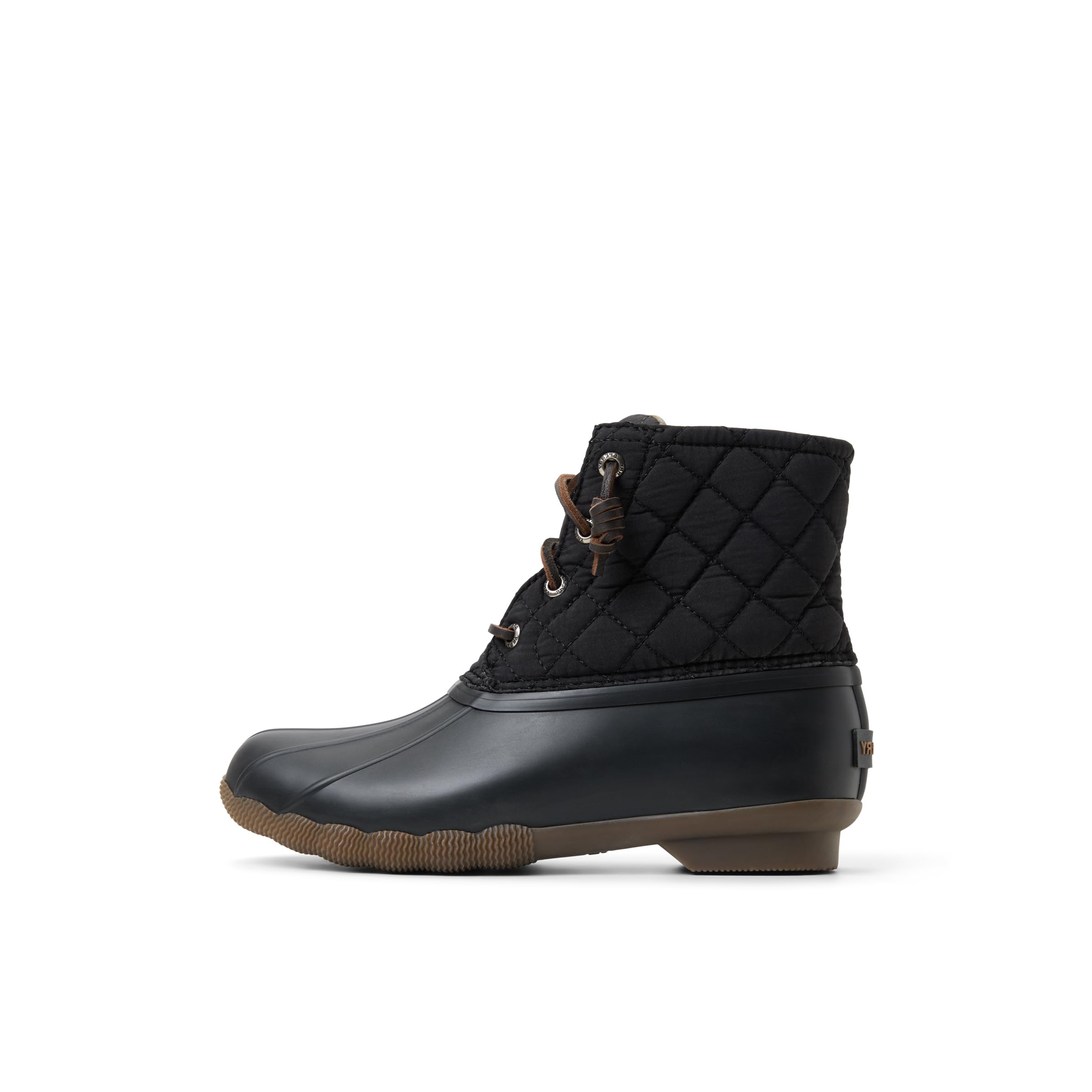
| Sperry Women’s Saltwater Waterproof Duck Boot★ Best Overall | Wet slush and everyday wear | 4 pounds | Duck boot with rubber shell | Thermal lining | Amazon |
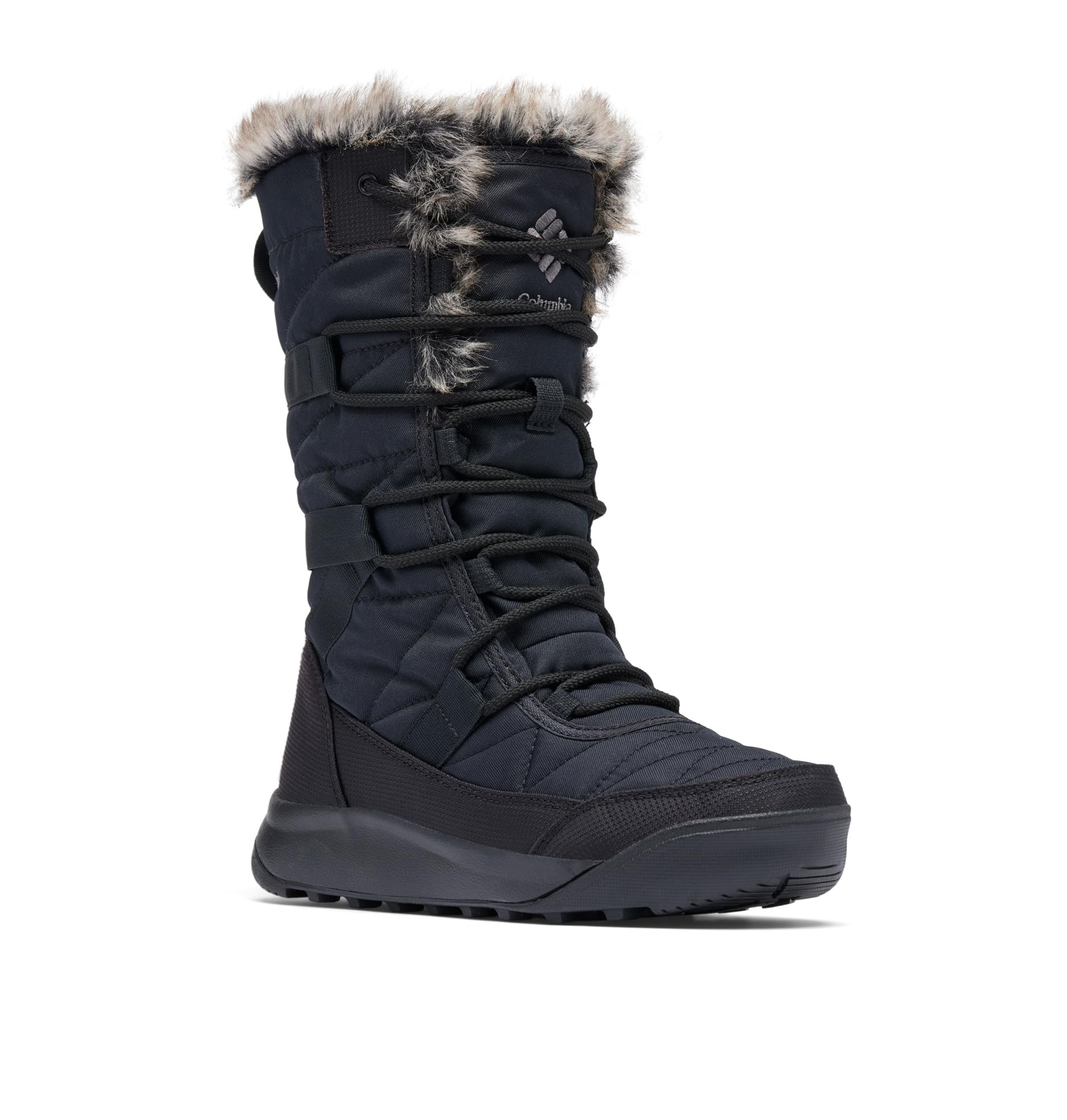
| Columbia Women’s Minx IVMost Packable | All-day comfort and warmth | — | Classic snow boot | — | Amazon |
| Columbia Women’s Snowtrot Shorty Snow Boots | Everyday cold-weather style | — | Shorty with Sherpa collar | Sherpa fleece | Amazon |
Detailed Reviews
1. Sperry Women’s Saltwater Waterproof Duck Boot
Our pick — 4.5+★ from 16,500+ verified ratings; the strongest balance of quality and price.
The duck boot that shrugs off slush and still looks sharp enough for a coffee run.
This is the pair to pick when your winter is more wet than frozen. A rubber shell wraps the bottom of the boot in one continuous piece, so puddles and muddy paths never reach your sock. Above that, the upper is built from waterproof leather. Together they handle the wet, gray days that wreck ordinary boots.
The thermal lining is the reason it works on genuinely cold mornings, not just rainy ones. The mold says 4 pounds, which is the heaviest boot on this list. Picture a full day of errands and you will feel it. Compared with the Columbia Snowtrot Mid at 2.47 pounds, the Sperry gives you a stouter, sturdier-feeling boot in exchange for that extra weight on your feet.
What wins people over is the overall build — the quality of the materials is the thing buyers call out more than anything else. The fit is the second big theme: there is enough room to slide in a thick wool sock, which is exactly what a size 12W foot needs on a deep-cold day. The molded Wave-Siping outsole grips wet pavement and dry alike, so a slick parking lot does not turn into a skating rink.
One honest catch worth knowing: durability is the aspect with the most mixed feedback. A few owners find the boots wear faster than they hoped with heavy daily use. For occasional winter wear they hold up fine — just do not treat them like a work boot.
Why It Wins The Crowd
- Waterproof leather upper plus a rubber shell keeps slush out
- Thermal lining adds real warmth on cold, dry days
- Room for thick socks inside the wide fit
- Wave-Siping outsole holds on wet and dry ground
Where It Costs You
- 4 pounds — the heaviest pick here
- Durability draws some mixed feedback under hard daily use
Grab this one if: your winters mean rain, mud, and slush, and you want a boot that keeps your feet bone dry.
Think twice if: you plan to walk miles every day and want the lightest thing on your feet.
2. Columbia Women’s Snowtrot Mid Snow Boots
hk-product-body”>
The one that feels like a sneaker while it keeps your feet dry and warm all day.
This is the pair to buy when you are on your feet from morning to evening. Owners describe the feel as close to a sneaker, and the cushioning holds up through hours of standing and walking. That combination of warmth and comfort is rare in a snow boot, and it is why this one is a favorite.
Quality is the trait buyers praise most, with warmth running a close second, so the construction and the heat retention are the two things most worth your attention. It keeps feet dry and warm even in genuinely cold conditions. It is also water-resistant and light on its feet, which is why it moves easily from a commute to a full day out.
The general fit gets mixed feedback, so treat it as a shoe to size deliberately rather than guess. The wide width helps, but a 12W foot should still check the specific width before ordering. If the width works, you will reach for it far more often than a heavy snow boot.
Why it earns its spot: you get warmth, cushioning, and water resistance in a boot that feels light on your foot. Warmth, cushioning, and water resistance in a sneaker-light boot is a rare combination for daily winter wear.
The caveat to know: fit is the one area where feedback splits, so order with a little care and check the width before you commit.
Best for: anyone who stands or walks all day and wants a boot that feels like a sneaker.
Not ideal for: buyers who want a guaranteed fit without checking the width first.
3. Columbia Women’s Snowtrot Shorty Snow Boots
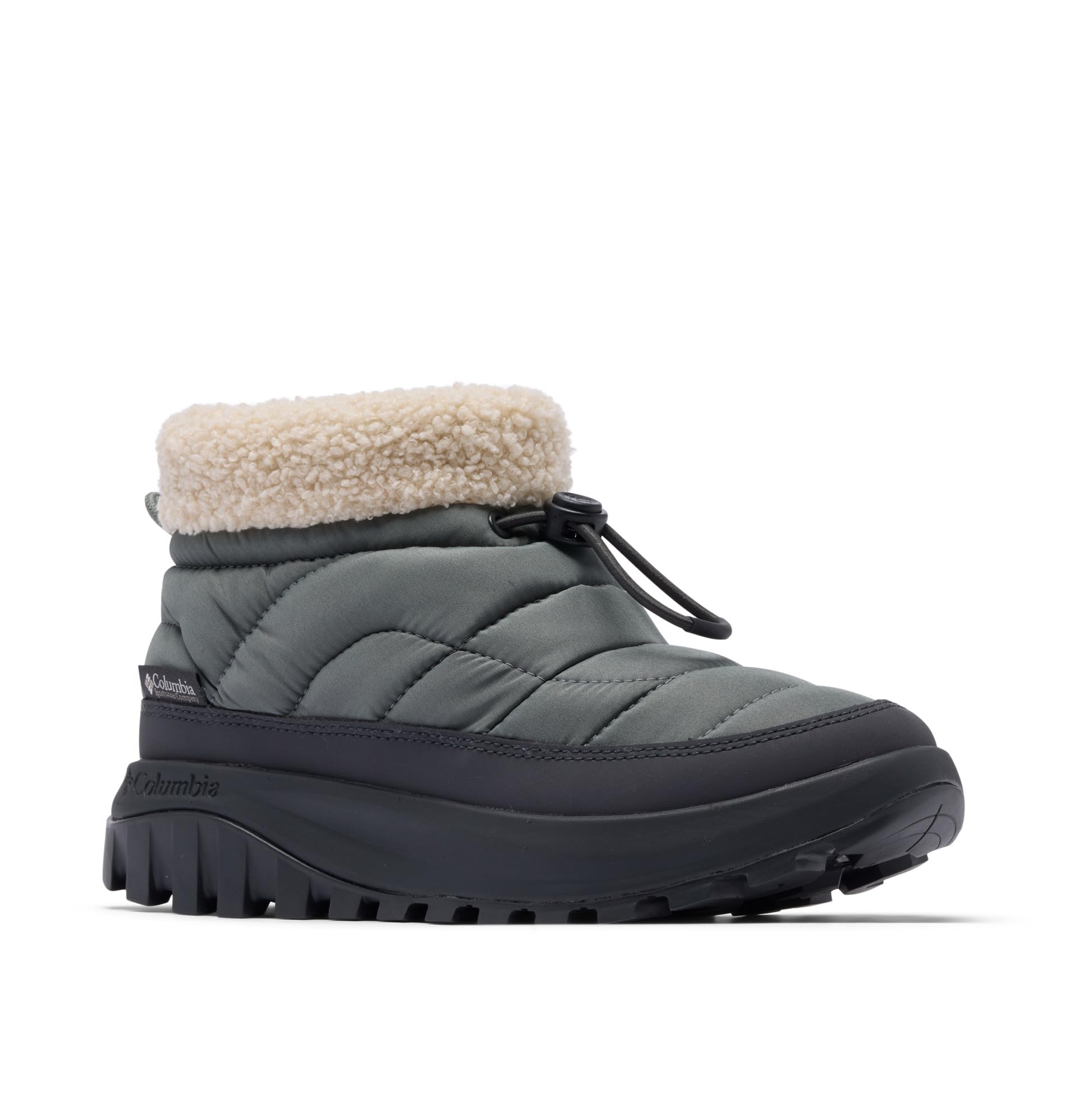
The shorty with a Sherpa collar, built to look as good as it feels in cold weather.
If your priority is a boot you are happy to be seen in, this is the one. The plush Sherpa fleece collar gives it a soft, wintery look that stands out from a plain rubber boot. Appearance is the single thing buyers like most, and comfort is a close second, so it looks the part and feels good on a cold day.
The cinchable bungee at the ankle lets you draw the boot snug, which helps keep the warmth in and the cold out. It also keeps the fit adjustable rather than fixed. For a wide foot, that adjustable cinch lets you loosen the ankle instead of sizing up.
Two things sit in the gray zone. Some owners say the mid section runs narrow, and the sizing runs small on a few feet. Traction also splits — some find it grips well, others find it slippery on icy ground. For errands and everyday cold days, a shorty like this is the right call. For serious ice, it is not the pick.
Where it shines: the Sherpa collar and bungee cinch give it both style and an adjustable fit. Warmth and comfort round it out as a daily cold-weather boot.
Where to be careful: the mid section can run narrow and the sole splits reviewers on icy ground, so match it to milder winter days.
Suit this if: you want a stylish shorty snow boot with an adjustable cinch ankle.
Hold off if: you need rock-solid traction on ice and a guaranteed wide fit.
Know the Specs
Waterproof shell vs water-resistant upper
A rubber shell is a solid piece that keeps water out completely, so standing in slush will not soak your sock. A water-resistant upper repels some moisture but is not fully sealed, so it handles light snow and damp ground better than a deep puddle. For wet, muddy winters, look for the rubber shell. For cold dry days, a water-resistant boot does the job.
Weight in pounds and what it means on your feet
A boot listed at 4 pounds is a sturdy, substantial build that can tire your legs over a long walk. A boot at 2.47 pounds is easy to carry and comfortable for hours on your feet. Heavier boots give more structure underfoot; lighter ones are easier to keep on for hours. Match the number to how far you actually walk.
Common Questions
Will a wide-width size 12W fit a foot that is normally a 12 medium?
Should I size up in a snow boot or order my real size in wide?
What is the difference between a waterproof duck boot and a water-resistant snow boot?
How much does boot weight matter for a size 12W winter boot?
Do fleece and faux fur linings really keep feet warm in snow?
What causes a zipper on a snow boot to stick or break?
How do I keep a snow boot from slipping on ice?
Can I wear a thick wool sock with a wide-width snow boot?
How long should a pair of winter snow boots last?
The Bottom Line
For most people hunting the women’s snow boots in size 12w, the Sperry Saltwater Duck Boot is the safest bet — a waterproof leather upper and rubber shell that keep slush out, plus room for a thick sock. If you want a travel-friendly boot that packs small, the Columbia Snowtrot Mid at 2.47 pounds is the one to grab. And for all-day comfort that feels like a sneaker, the Columbia Minx IV earns the spot. All five are solid picks — just confirm the width fits your own foot before ordering.
How we choose
We do not accept paid placement. Every pick is matched to a real buyer and a real use-case; we do not hands-on test units.
Sources
Specifications: manufacturer listings and product documentation. Review insights: verified customer reviews, as of November 2026. Pricing: not shown on this page (it changes often); check the current price via the retailer link.
As an Amazon Associate, Tactical Gear Guy earns from qualifying purchases. This does not affect which products we feature.