Specs are compiled from manufacturer listings and verified buyer reviews and can change over time — please confirm the key details on the product page before buying.
Leather hiking boots for women either break in beautifully or destroy your heels on the second mile, and the difference is almost always the leather grade and the last shape, not the brand name. This guide sorts ten genuinely leather women’s hiking boots by who they actually suit — the wide-foot hiker, the winter trail walker, the weekend rambler — so you can pick the pair that fits your foot and your trail instead of guessing from a photo.
This guide is built by comparing the manufacturers’ published specifications and the patterns across verified customer reviews, so you get each pick’s real strengths and trade-offs instead of marketing spin.
You will see exactly where each boot’s leather, waterproofing, and weight land, plus the honest fit quirks that decide whether a pair works for you. Every pick below is a real women’s-fit leather boot, and this breakdown of the women’s leather hiking boots covers fit, waterproofing, break-in, and weight so you can choose with confidence.
Top Picks


How To Choose The Best Women’s Leather Hiking Boots
Most women buying a leather hiking boot get the size right and the last wrong. A last is the foot-shaped form the boot is built around, and a women’s-specific last curves differently through the arch and narrows at the heel. A unisex or men’s boot will often feel loose in the heel and tight across the toes at the same time, which is why two hikers wearing the same size can have opposite experiences.
Match the leather type to your break-in patience
Full-grain leather is the thickest, most durable cut and tends to mold to your foot over weeks. Nubuck is a lightly sanded full-grain with a softer surface feel. Suede is the softest and lightest but wants more care in wet weather. If you hike weekly and want years of wear, full-grain earns its keep; if you want comfort on day one, a suede or nubuck upper usually gets you there faster.
Waterproof membrane versus water-resistant leather
A waterproof boot uses a membrane inside the upper — something like KEEN.Dry, Danner Dry, TimberDry, or Oboz B-DRY — that blocks water while letting sweat vapor escape. Water-resistant leather alone sheds light rain but soaks through in standing water. If you cross streams or hike in shoulder-season slop, look for a named membrane, not just the word “waterproof” in the listing title.
Weight and heel drop decide your pace
A boot around two pounds per pair feels nearly like a trail runner, while a four-pound boot plants you with more underfoot mass. Neither is better — it depends on whether you are covering fast day-hike miles or carrying a pack on rough ground. Heel drop, the height difference between heel and toe, also matters: a larger drop like 12 mm pitches you slightly forward, which some hikers find supportive and others find tiring.
Side-by-Side Comparison
| Model | Best For | Waterproofing | Upper | Weight | Amazon |
|---|---|---|---|---|---|
| Columbia Women’s Transverse Suede★ Best Overall | Everyday trail comfort | Waterproof | Suede | — | Amazon |
| Danner Women’s Inquire Chukka 4″Retro Classic | Recraftable retro hiker | Danner Dry | Full-grain leather and suede | 26 oz per pair | Amazon |
| Merrell Women’s Siren Traveller 3 MidFeatherweight Pick | Fast lightweight miles | Waterproof | Leather | 2.09 lb | Amazon |
| KEEN Women’s Terradora 2 Mid | Narrow-foot day hikes | KEEN.Dry | Leather and mesh | — | Amazon |
| Timberland Women’s Ledge Mid | Mud and winter trails | TimberDry | Leather | 4 lb | Amazon |
| KEEN Women’s Steens Mid | Wet-weather trail hiking | KEEN.Dry | Waterproof leather | — | Amazon |
| Danner Mountain 600 | All-day comfort no break-in | Danner Dry | Suede or full-grain leather | — | Amazon |
| The North Face Women’s Sierra Mid | Cold-weather warmth | Waterproof | Leather and rubber | — | Amazon |
| Oboz Women’s Bridger Mid B-DRY | Long-haul durability | Oboz B-DRY | Waterproof nubuck leather | 19.0 oz | Amazon |
Detailed Reviews
1. Columbia Women’s Transverse Suede
Our pick — 4.5+★ from 800+ verified ratings; the strongest balance of quality and price.
The suede boot you can lace up and hike in on day one, no break-in miles required.
For a hiker who wants to lace up and leave without a training period, this is the boot to reach for first. The suede upper is a leather cut with a softened, brushed surface, which means less of the stiff molding that full-grain leather demands. The result is a boot that feels broken in on the first walk rather than the fifth.
What wins people over is the padding around the heel and collar. The cushioning underfoot is described by Columbia as lightweight and responsive, and the sole is built to adapt across a range of surfaces rather than grip one type of ground. In practice that means gravel, hardened trail, and paved approach paths all feel manageable rather than jarring.
Reviewers report walking through puddles and shallow streams without leaks. Fit runs true to size with room for thicker socks and toes that do not jam on descents. At 4.5+ stars across 800+ ratings, it is the most-reviewed boot here, and its suede upper and true-to-size fit suit a wider range of foot shapes than the narrow-lasted picks.
What earns it the top spot
- Suede leather upper softens fast, so the break-in window is short
- True-to-size fit with toe room for thicker hiking socks
- Waterproof build that handles puddles and shallow stream crossings
- Responsive cushioning that suits mixed terrain instead of one surface
Where it stops short
- Suede wants a brush and re-proofing to keep its water-shedding finish
- Not the boot for a heavy pack on exposed rock — the sole leans toward comfort
Reach for this if: you want a leather hiking boot that feels right on day one and covers mixed ground without a long break-in.
Look elsewhere if: you need maximum stiffness under a loaded pack on technical rock.
2. Danner Women’s Inquire Chukka 4″ Hiking Boots
A four-inch leather chukka you can resole instead of replace.
Danner built this one around a premise most hiking boots ignore: that the sole wears out long before the leather does. The recraftable design means the boot can go back for a new sole rather than the landfill, which is why it appeals to hikers who keep footwear for a decade. At 26 oz per pair it is genuinely light on the foot, and the four-inch collar sits below the ankle for freedom of movement on flatter trails.
The outsole is the standout engineering here. Vibram’s Megagrip compound is a rubber blend formulated to hold on wet rock, and the multidirectional lugs plus a split heel let the boot bite in both directions. The Trailguard TPU shank — a stiff insert under the arch — adds support without making the sole feel plank-stiff. Danner Dry keeps water out while the removable OrthoLite footbed lets you swap in your own insole.
Reviewers rave about out-of-the-box comfort, and it holds up across seasons. The honest caveat is fit: some hikers find the Precision Fit DW-1BH last runs narrow, and traction gets mixed reactions depending on what surface they walk. If you have a wider forefoot, the available wide width is the version to order rather than hoping the standard width stretches.
The case in one line: a light 26-oz-per-pair leather chukka with Vibram Megagrip underfoot and a build you can resole — the closest thing here to a buy-once boot.
Best suited to: hikers who want a low-cut leather boot with real grip and a long service life.
Worth knowing: the last runs narrow, so wide feet should order the wide width.
3. Merrell Women’s Siren Traveller 3 Mid Waterproof
Two pounds of leather and Vibram that disappears on the climb.
Here is the number that reshapes this whole list: this boot weighs 2.09 lb, while the Timberland Ledge further down the page weighs 4 lb. That is a 1.9x gap between the lightest and heaviest leather boots here, and it is the single biggest daily difference between them. If you cover long miles and feel every extra ounce by mile eight, the Siren Traveller 3 is the one that keeps your legs fresher.
Merrell shapes this boot around a women’s-specific foot form rather than shrinking a men’s last, and the Vibram outsole is formulated to stay sticky on wet ground. Reviewers consistently praise the arch support and report walking miles without foot pain. The leather upper and waterproof build mean weather is not the reason to turn back early.
Be honest with yourself about width before you order. Fit is the most-discussed point on this boot and it splits both ways — many find it ideal, while others find it runs narrow across the forefoot. Some long-term wearers also report seams loosening over time, so treat the Siren as a lightweight distance boot rather than a decade-long bruiser. Size up half if you plan to wear thick wool socks.
Who it rewards: mile-hungry hikers who want leather protection at 2.09 lb and a grippy Vibram sole underfoot.
The honest catch: the forefoot runs narrow for some, and seam durability is less certain than the heavier boots here.
Pick this one when: low weight and sticky traction matter more to you than a decades-long build.
Think twice when: you have a broad forefoot or want the toughest seams on the list.
4. KEEN Women’s Terradora 2 Mid Height Leather Waterproof

Built on a women’s-specific narrow form, with an ankle pad that cradles.
If most hiking boots feel sloppy around your heel, this is the pair to try. KEEN builds the Terradora 2 off a women’s-specific foot form described as a narrower fit, which tightens up the volume that leaves a lot of hikers swimming in a standard boot. The ankle pad and dual-density footbed add cushioning exactly where a mid-height collar presses, and a shank under the arch supplies stability on uneven ground.
KEEN.Dry is the waterproof membrane doing the weather work — it lets sweat vapor out while blocking water from coming in. The rubber outsole is there for grip on rough ground, and the upper uses leather alongside lightweight mesh for airflow on warm climbs. KEEN also builds in Eco Anti-Odor, a probiotic-based treatment that breaks down odor in sweat, plus leather from Leather Working Group-certified tanneries.
Sizing is the sticking point and it runs both directions. Some hikers find the fit spot on, while others say they need at least a size bigger. Water resistance also splits — many find it quite water-resistant, a few find it shy of fully waterproof in sustained wet. Try your normal size first, and only go up if your toes touch on downhills.
Why narrow feet like it: a women’s-specific last, an ankle pad for the collar, and a shank for stability — a boot that holds a slim foot instead of letting it slide.
Fits you best if: you have a narrower foot and want a boot that locks the heel down.
Hesitate if: you have a wide forefoot or hike in sustained heavy rain.
5. Timberland Women’s Ledge Mid Lace-Up Waterproof

The heavy-weather boot that keeps mud and cold rain outside.
This is the boot you put on when the trail is a mess. TimberDry is Timberland’s waterproof membrane, and the leather upper shrugs off the winter slop that soaks lighter boots. The D-ring lacing system makes tightening up quick with cold hands, and the ReBOTL fabric lining contains at least 50 percent recycled plastic — a rare sustainability detail in a boot this rugged.
At 4 lb it is the heaviest boot on this list, and it is worth understanding the trade-off. Compared to the Merrell Siren at 2.09 lb, the Ledge carries nearly double the weight, which is the 1.9x gap noted earlier. That extra mass plants you solidly on wet roots and rock, but it will feel like work on a fast, flat fire-road hike. Think of it as a weather boot first, a speed boot second.
The fit is a genuine strength. Owners describe a perfect medium width with excellent fit, plus durability that holds up season after season without a lengthy breaking-in period. Comfort comes from the Ortholite footbed, and traction keeps feet steady on slick ground. It also keeps feet warm on cold outings, which makes it a reasonable shoulder-season and light-winter pick.
The strengths that matter here
- TimberDry membrane and leather upper handle mud and cold rain
- Medium width that fits a wide range of feet from the start
- ReBOTL lining made with at least 50 percent recycled plastic
- D-ring lacing for fast tightening with cold hands
The trade-offs to accept
- 4 lb per pair is the heaviest boot on this list
- That weight shows up as fatigue on long flat miles
Choose it for: wet, muddy, cold-weather trails where weather protection beats low weight.
Pass on it if: you cover long fast miles and want the lightest boot possible.
6. KEEN Women’s Steens Mid Height Leather Waterproof

A no-break-in waterproof leather hiker for wet, muddy trails.
Comfort with zero blister phase is the reputation this boot has built, and it is the reason it sits near the top of this list. KEEN.Dry membrane keeps water out while letting sweat vapor escape, and the waterproof leather upper takes on wet hikes and muddy ground without weeping through. The EVA midsole — a lightweight foam layer — cushions underfoot without the bulk of a heavier boot.
The KEEN.ALL-TERRAIN rubber outsole is the traction story here: a rubber compound built for higher-traction grip, which earns its keep on slick roots and wet rock. A leather boot that holds its grip in the wet and stays comfortable enough to pull on without breaking in is a rare combination, and it is why hikers reach for this one on genuinely wet trails.
There are trade-offs to weigh. Fit and durability both split — most find the fit right, some find it off, and a share report wear sooner than expected. KEEN’s PFC-free construction trades the traditional fluorochemical coating for nontoxic alternatives, which is better for the environment but can mean you need to re-proof the leather more often to hold its water-shedding edge.
Why wet-trail hikers like it
- KEEN.Dry waterproofing and waterproof leather handle wet, muddy hikes
- Comfortable enough to wear without a break-in period
- KEEN.ALL-TERRAIN rubber outsole for higher-traction grip
- EVA midsole for lightweight cushioning
What to keep in mind
- PFC-free coating may need re-proofing more often
- Fit runs mixed and a few find wear showing sooner
My call: if your home trails are wet and muddy, this is the low-fuss boot to pull on and go.
Second thought if: you want the most durable leather here for the long haul.
7. Danner Mountain 600 Waterproof Hiking Boots for Women
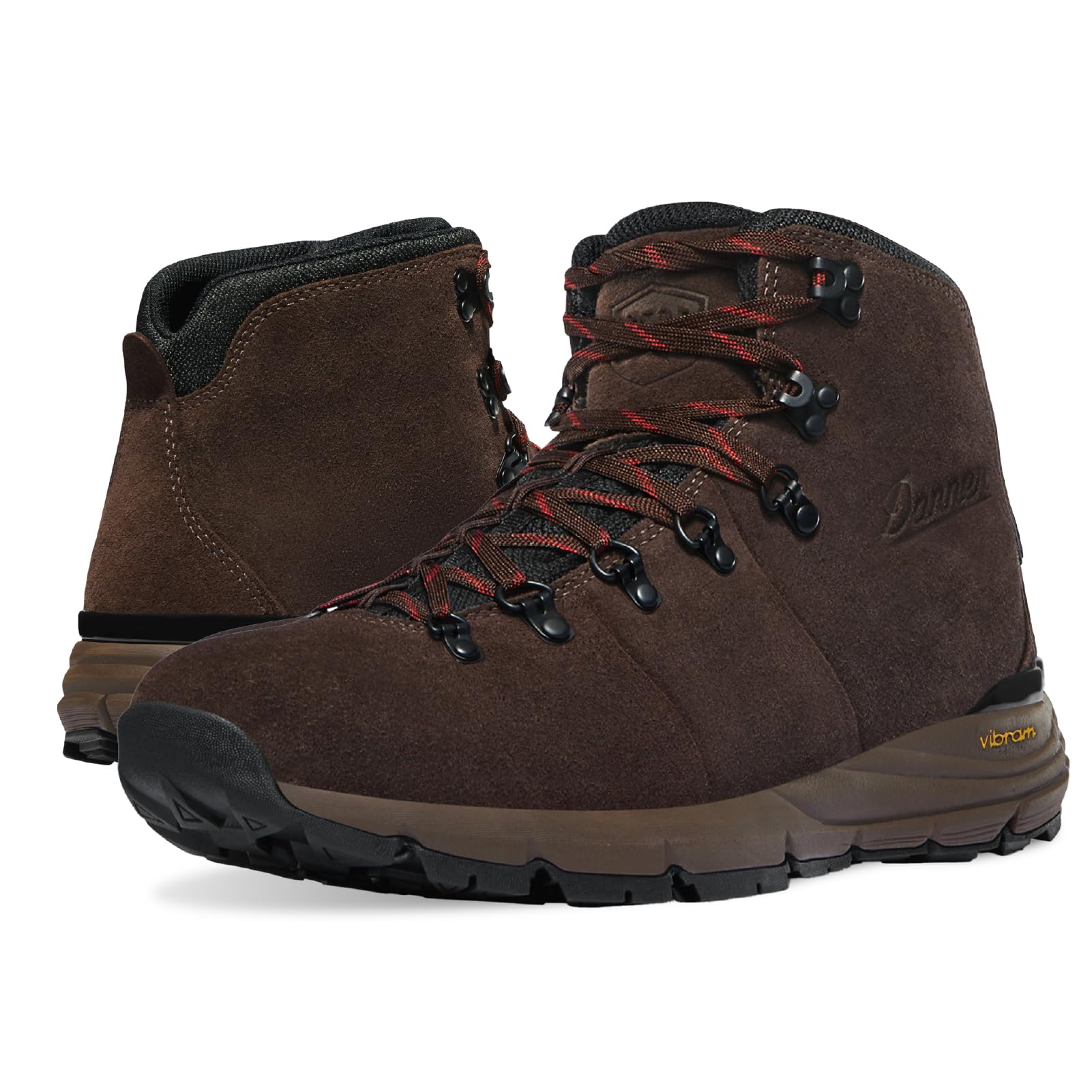
A leather boot hikers report wearing straight from the start with no sore heels the next morning.
Fit is the headline here, and it outranks every other aspect of this boot by a wide margin. Hikers report the Mountain 600 fits right from the start with no soreness the following day and no break-in period, which for a leather hiking boot is the whole ballgame. Danner Dry keeps water out, and the leather upper — smooth suede or full grain depending on colorway — carries the classic heritage look that draws compliments.
The underfoot engineering is what supports that comfort. A Vibram SPE midsole and Fuga outsole combination is built for grip on both wet and dry surfaces with superior cushioning, and the Fuga outsole handles the kind of Pacific Northwest terrain the boot was designed around. Ankle support is firm without being restrictive, and durability carries across seasons of regular wear.
The catch worth flagging is weather confidence in long downpours. Water resistance is solid for typical wet days, but on a full-day soaker of a hike, a few find water eventually finds a way in through a seam rather than the leather itself. For most shoulder-season hikes that will not bite you, but if you routinely hike in sustained rain, check the seams before you commit.
One standout line: a fit so dialed that hikers skip the break-in entirely — rare for leather — backed by a Vibram SPE midsole and Fuga outsole built for wet and dry grip.
This is the one if: you want a heritage leather boot that is comfortable the first time you put it on.
Reconsider if: you hike long days in heavy, sustained rain and need the most sealed waterproofing.
8. The North Face Women’s Sierra Mid Lace Insulated Waterproof
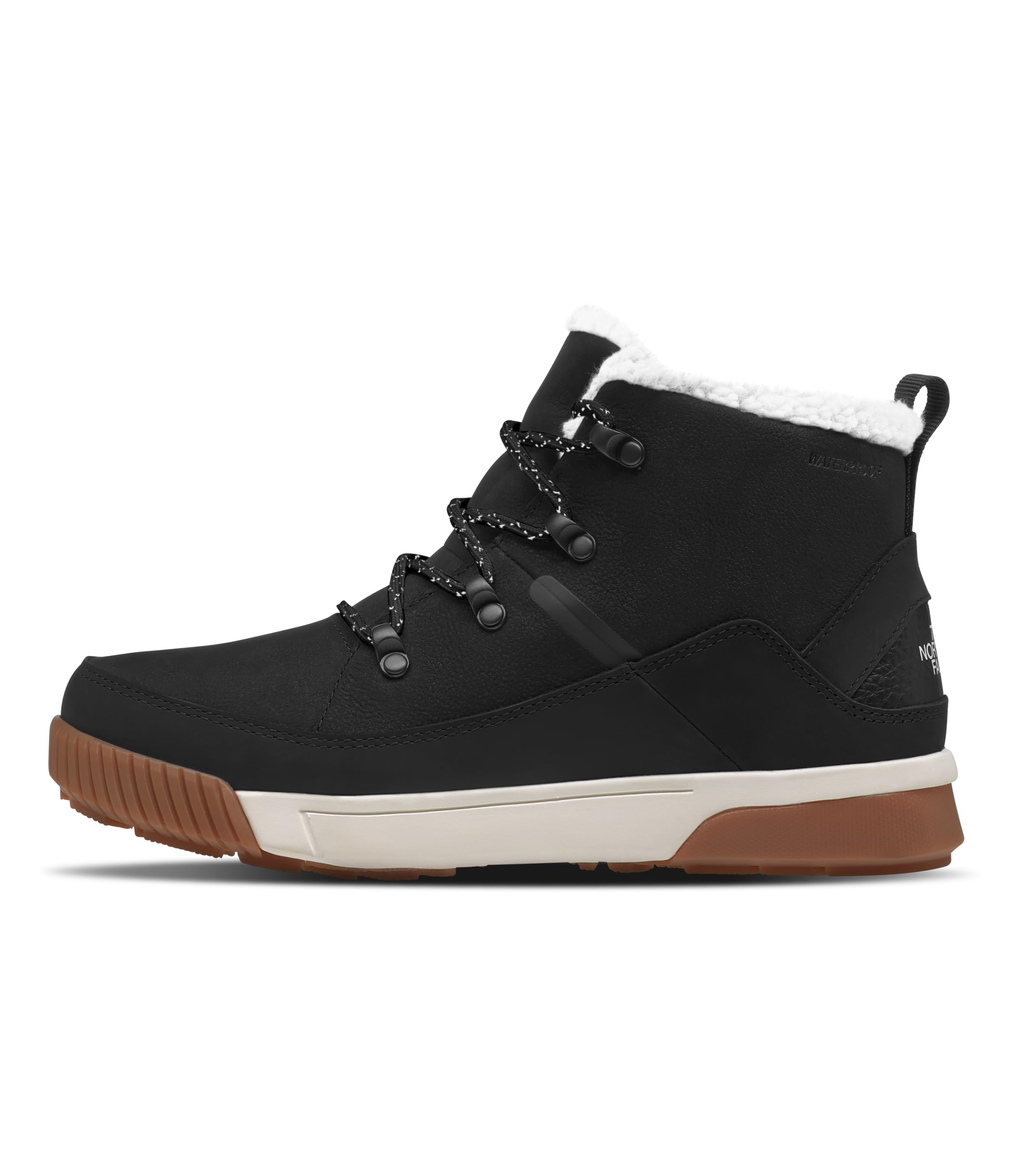
Insulation that turns a cold, muddy trail into a comfortable walk.
Warm feet on a cold hike are not a small thing, and this boot is built to deliver them. The insulation is what earns its spot on this list, keeping feet warm on cold-weather walks and snowy approaches where an uninsulated leather boot leaves your toes aching. The leather upper and rubber outsole give it the durability to handle mixed winter ground.
Comfort and style add to the case. Reviewers report no foot pain while wearing them, and the classic North Face trail styling works in town as well as on the path. Quality holds up as you would expect from a boot at this tier, and the overall package is a solid winter-leaning addition to a hiking lineup.
Sizing is the honest watch-out. Some find the fit perfect, while others say it runs a bit snug — so if you are between sizes or wear thick winter socks, lean toward the larger option. This is not the boot for summer heat or fast warm-weather miles; the insulation makes it a cold-day specialist rather than an all-year hiker.
The reason to buy it: real insulation for cold-weather hikes, with a leather upper and rubber outsole that handle mixed winter ground.
The sizing note: fit runs snug for some, so size up if you wear thick socks.
Built for you if: cold-weather hikes, snowy approaches, and warm toes are the priority.
Not your boot if: you hike in heat or want an all-season trail boot.
9. Oboz Women’s Bridger Mid B-DRY Hiking Boot
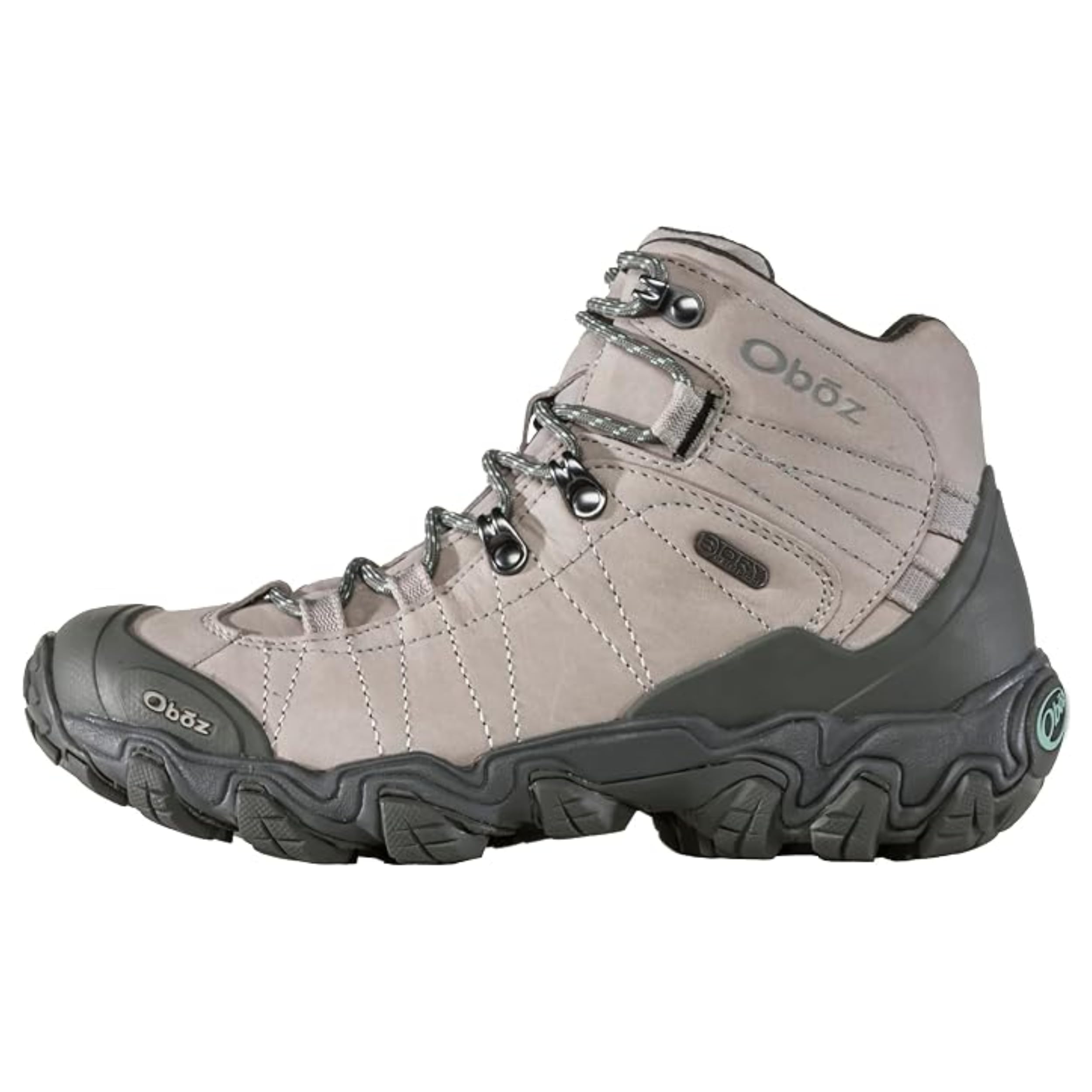
The waterproof nubuck boot hikers keep for years, then resole.
Durability is the reason the Bridger Mid keeps showing up in serious hikers’ rotations. With waterproof nubuck leather, a B-DRY waterproof and breathable membrane, and a molded rubber toe cap and heel counter, this boot is built to survive roots, rocks, and repeated seasons on the same trail. The heel drop is 12 mm, which pitches you slightly forward for grip on climbs, and it weighs 19.0 oz — light for a boot this tough.
The O-FIT insole is Oboz’s proprietary footbed, molded to each shoe for a fit and feel that the brand is known for. B-DRY is designed to let sweat escape while blocking moisture, so your feet stay dry and comfortable on a long day rather than clammy. The Granite Peak midsole uses a TPU chassis for stability and stone protection with EVA cushioning for all-day comfort, and the Trail Tread outsole handles varied trail conditions.
Arch support and long-term durability are the two things hikers come back to, with some keeping their Bridger for years of regular use. A short break-in period gets you comfortable fast. These are also standard-width with a wide-volume build, so a narrow foot may swim; the standard width is the version to choose unless you know you need more room.
The case for it: waterproof nubuck leather, a B-DRY breathable membrane, and a Granite Peak midsole that lasts — the tough, durable boot in this lineup.
Fit note: standard-width with a roomy volume, so narrow feet should look at a slimmer-lasted boot.
Worth it for: hikers who want one boot to last multiple seasons and do not mind a roomy, standard-width fit.
skip it if: you have a narrow foot and want a locked-down, close-fitting boot.
Know the Specs
Waterproofing vs Water Resistance
A waterproof boot uses a membrane — a thin inner film like KEEN.Dry, Danner Dry, TimberDry, or B-DRY — that blocks water from outside while letting sweat vapor pass out. Water-resistant leather alone handles light rain but soaks through when you stand in water or cross a stream. If your trails get genuinely wet, look for a named membrane in the listing, not just the word waterproof in the title. Membranes need airflow to work best, so a soaked boot should dry at room temperature, not on a radiator.
Leather Type and Break-In
Full-grain leather is the top of the hide, the most durable cut, and takes several weeks to mold to your foot. Nubuck is lightly sanded full-grain with a softer surface and a shorter break-in. Suede is the softest and lightest, comfortable fast but needing more brushing and re-proofing to keep water beading up. Choosing the leather type is really choosing how much break-in patience you have — a boot that feels stiff in the shop will loosen, while a suede upper may feel perfect on day one.
Weight, Heel Drop, and Shank
Boot weight drives how tired your legs feel at the end of the day. A boot around two pounds per pair moves fast and light; a four-pound boot plants you with more mass underfoot. Heel drop measures how much higher the heel sits than the toe — a larger drop like 12 mm tips you forward slightly. A shank is a stiff insert under the arch (like a TPU shank) that adds support and protects your sole from sharp stones. Together these three decide whether a boot feels fast or planted on the trail.
Common Questions
Will these women’s leather hiking boots fit my wide feet?
Do I need a waterproof membrane or is water-resistant leather enough?
How long does the break-in period take on full-grain leather boots?
Are leather hiking boots heavy for long day hikes?
What does heel drop mean and does it matter for hiking?
Can I resole these leather hiking boots instead of replacing them?
What is the difference between KEEN.Dry and Oboz B-DRY waterproofing?
Do these boots work for cold weather hiking?
Should I size up in women’s leather hiking boots for thick socks?
How do I keep the leather on my hiking boots from cracking?
The Bottom Line
For most hikers, the women’s leather hiking boots winner is the Columbia Women’s Transverse Suede because it feels comfortable on day one, runs true to size, and keeps water out on puddle and stream crossings. If low weight and sticky Vibram grip are your priorities, the Merrell Women’s Siren Traveller 3 drops to 2.09 lb — nearly half the weight of the Timberland Ledge. And if you want a leather boot that needs no break-in and a fit hikers rave about, reach for the Danner Mountain 600. The Columbia also carries the most reviews here at 4.5+ stars across 800+ ratings, a fair signal if you want a low-risk pick for a range of foot shapes.
How we choose
We do not accept paid placement. Every pick is matched to a real buyer and a real use-case; we do not hands-on test units.
Sources
Specifications: manufacturer listings and product documentation. Review insights: verified customer reviews, as of November 2026. Pricing: not shown on this page (it changes often); check the current price via the retailer link.
As an Amazon Associate, Tactical Gear Guy earns from qualifying purchases. This does not affect which products we feature.