Specs are compiled from manufacturer listings and verified buyer reviews and can change over time — please confirm the key details on the product page before buying.
If you want one answer before you read anything else: match the shoe to your foot shape, not to the prettiest colour. A women’s hiking tennis shoe sits in a strange middle ground — tough enough for gravel and rock, light enough for a town walk, and shaped to a woman’s narrower heel and forefoot. Get that shape wrong and every mile reminds you.
This guide is built by comparing the manufacturers’ published specifications and the patterns across verified customer reviews, so you get each pick’s real strengths and trade-offs instead of marketing spin.
Below you will find the fit traps that trip up most buyers, the lugs and cushioning that actually matter on loose ground, and a full run-through of the women’s hiking tennis shoes worth your attention right now.
Top Picks

How To Choose The Best Women’s Hiking Tennis Shoes
Most people buy this category wrong for one reason: they size it like a road sneaker. A hiking tennis shoe has stiffer rubber underneath you and a reinforced upper around the ankle, and both of those change how much room your foot actually gets. Buy for the foot you have at the end of a long day, not the foot you have at 9 a.m. in a shop.
Start with the toe box, not the colourway
The toe box is the front compartment your toes sit in. It is the single most-talked-about fit issue in this category, and it is the reason two women wearing the same shoe size report completely different experiences. A roomy toe box lets your toes spread on a downhill, which is what stops the black-toenail problem after a long descent. A narrow one pinches on the way down and rubs on the way up. If you have wide feet or bunions, look for shoes that name their wide or roomy shape openly rather than hoping a size up will fix it.
Lugs, rubber, and what grip really means
Lugs are the raised rubber blocks on the bottom of the shoe. Deeper, more aggressive lugs bite into mud and loose gravel; shallower ones roll smoothly on pavement and packed dirt. Multidirectional lugs point in several directions at once so you get hold when you turn, not just when you walk straight. Pay attention to the rubber compound too — a sticky outsole is what keeps you upright on wet rock and slick boardwalks, where a hard rubber sole will simply skate.
Cushioning, drop, and how the shoe changes your stride
Drop is the height difference between your heel and your toes inside the shoe. A zero-drop shoe puts both at the same level, which encourages your foot to land more flatly. A higher-drop shoe raises the heel, which some walkers find more familiar and forgiving. Neither is better in the abstract — it is about what your calves and achilles are used to. Cushioning works the same way: a soft foam midsole absorbs impact over long distance, but too much softness can make a rocky trail feel unstable underfoot.
Weight and how you will actually use them
These shoes range from around a pound and a half per shoe to just over two pounds. On a two-mile town walk that difference disappears. On a ten-mile day with a pack, it does not. Be honest about which one you are buying. If your hiking is mostly gravel paths, park trails, and errands, a lighter shoe will feel better and you will wear it more often. If you are carrying weight over rough ground, a slightly heavier shoe with a firmer platform tends to feel more planted.
Water resistance versus breathability
A water-resistant upper keeps splashes and shallow puddles out. It also traps heat, which means your feet get warmer on a summer hike. A breathable textile upper does the reverse — cool and quick-drying, but it soaks through in a downpour. There is no shoe that does both perfectly. Decide which one your local weather punishes you for more.
Side-by-Side Comparison
| Model | Best For | Reported Weight | Upper Type | Standout Trait | Amazon |
|---|---|---|---|---|---|
| Columbia Women’s Vertisol Trail★ Best Overall | All-round trail and town wear | — | — | Engineered underfoot system for stability and rebound | Amazon |
| adidas Women’s Terrex AnylanderBudget Champion | Warm-weather hiking on a tight budget | — | Breathable textile | Multidirectional lugs plus EVA midsole | Amazon |
| Saucony Women’s Excursion Tr17Featherweight Pick | Road-to-trail transitions | 1.5 pounds | — | Lightest listed build | Amazon |
| Columbia Novo Trail | Women’s-specific fit with water resistance | — | Water-and-stain resistant | Foam heel that hugs the foot | Amazon |
| New Balance Dynasoft Tektrel V1 Suede | Gravel roads and energetic walking | 2.1 pounds | Suede and stylized upper | Aggressive lug design with dynamic midsole | Amazon |
| NORTIV 8 Women’s Waterproof Hiking Shoes | Wet weather and all-day wear | — | Waterproof | 4-in-1 Rebound Tech cushioning | Amazon |
| Skechers Go Run Trail Altitude 2.0 | Long standing shifts and light trails | — | — | Comfort-first build with good traction | Amazon |
| Merrell Women’s Speed Strike 2 | Hikers who want an athletic feel | 1.5 pounds | Recycled mesh lining | Merrell sticky rubber outsole | Amazon |
| ALTRA Women’s Lone Peak 8 | Wide feet and zero-drop converts | 10.7 oz | Ripstop mesh | Roomiest toe box with 0 mm drop | Amazon |
Detailed Reviews
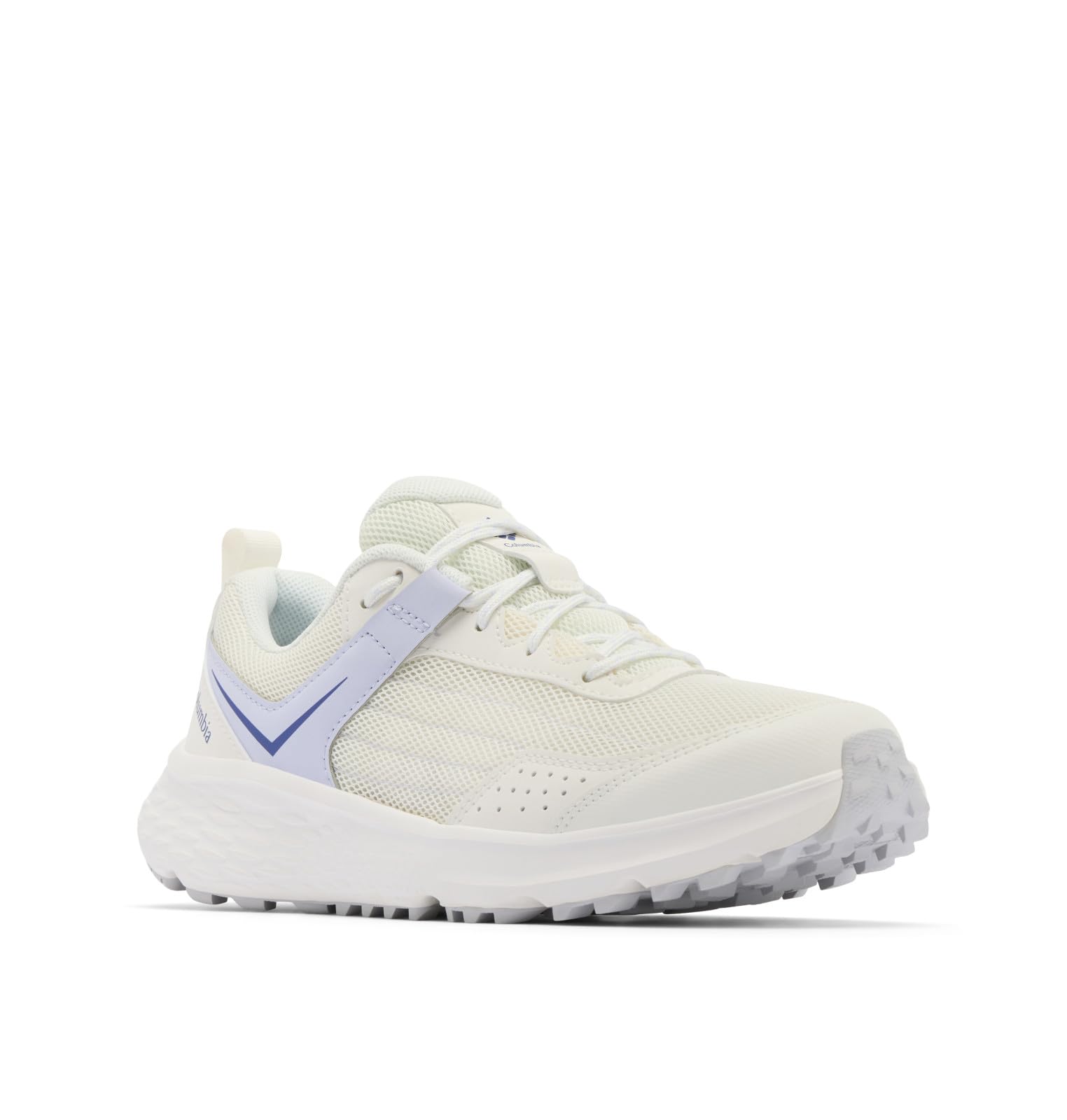
1. Columbia Women’s Vertisol Trail
Our pick — 4.5+★ from 900+ verified ratings; the strongest balance of quality and price.
A trail shoe that behaves like a town shoe until the ground gets ugly.
The Vertisol Trail is the pick that causes the least amount of thinking. It is built around what Columbia calls an engineered underfoot system — a layered platform designed to give you stability when the ground shifts and spring back when you push off. In plain terms, the shoe holds its shape under you rather than squashing flat, which is exactly what you want when you are picking your way across loose rock with a daypack on. The traction rubber sole underneath keeps you sure-footed, and Columbia sells it in multiple colours and sizes so you are not stuck with one shade.
What wins people over here is the width. This is the shoe buyers describe as generous through the midfoot and the toe box — the kind of room that lets you stay in them for hours without that hot, pinched feeling across the front of your foot. It also dodges the classic trail-shoe problem of looking like a medical device. Owners wear them around town, into the shops, and on hiking trips through places like Utah without feeling like they have committed to a piece of outdoor equipment. That versatility is a genuine selling point rather than a line on a box.
The honest catch is that this is a balanced shoe, not a specialist. Its 4.5+ star rating rests on the longest review track record in this group, and the recurring feedback is about quality and fit rather than any dramatic weakness. If you need a waterproof membrane for constant wet weather, or you specifically want a zero-drop platform, this is not that shoe. For everything from a gravel path to a national park trailhead, it is the safest pair of hands on this list.
What earns it the top spot
- Room through the width and toe box that lets you wear them for hours
- Supportive platform that stays stable on rough, shifting ground
- Traction rubber sole keeps you planted on the move
- Looks like a normal sneaker, not an outdoor boot
Where it stops short
- No waterproof upper for sustained wet weather
- Balanced platform only — not built for zero-drop purists
Buy this one if: you want one pair that handles park trails, gravel paths, and a coffee run afterwards without compromise.
Keep looking if: you need a shoe that shrugs off rain or a true zero-drop midsole.
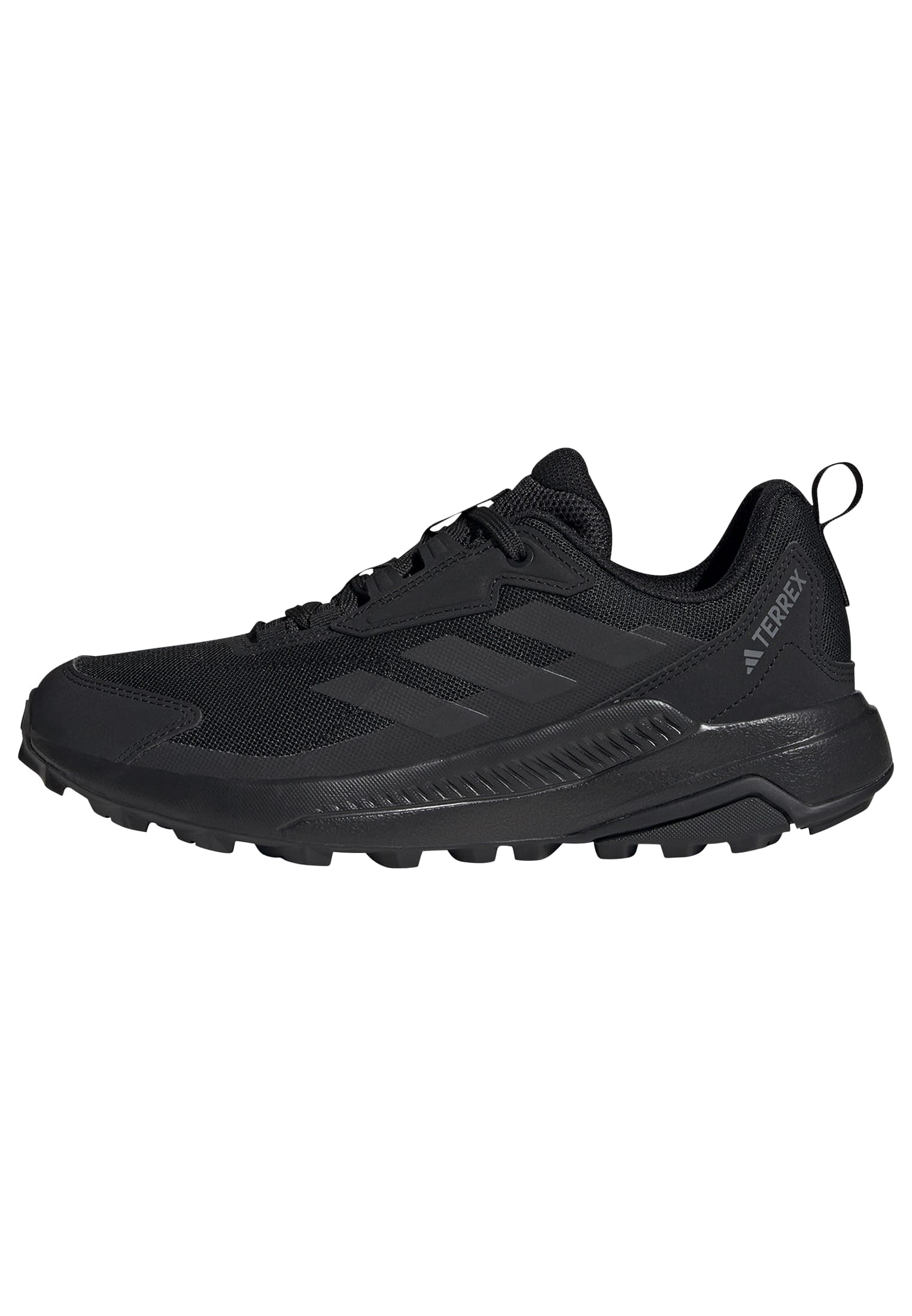
2. adidas Women’s Terrex Anylander Hiking Shoes
The entry-level trail shoe that spends its money on cushioning instead of badges.
Adidas put the budget into the part your foot actually feels. The EVA midsole — a foam layer that compresses under your weight and springs back — is described as delivering soft support mile after mile, and it is the reason this shoe is comfortable straight from the start rather than after a fortnight of breaking in. The textile upper keeps air moving on warm-weather hikes, so your feet stay cooler than they would in a sealed water-resistant shoe. Multidirectional lugs underneath point in several directions, which means the shoe holds when you turn and traverse, not just when you walk straight up a hill.
The personalised lace system is worth calling out because it is what stops your foot sliding forward inside the shoe on a descent. Comfort is the thing buyers talk about far more than anything else, and durability and value run close behind. For a shoe at the entry-level end of this category, that is the right set of priorities.
Here is the trade-off you need to know before you commit. The fit is genuinely split — plenty of buyers find them true to size, while others describe them as running big and bulky. If you have a narrow foot, order with care and be ready to exchange. It also has the lowest rating in this group, which is worth weighing if you want maximum certainty rather than maximum cushioning for the money.
Where the cash went: foam underfoot and a grippy lug pattern, which are the two things that decide whether a cheap trail shoe is worth owning.
Order with a plan: the sizing reports pull in both directions, so buy from a seller with a painless return before you commit to a long hike.
Reach for these if: you hike in warm weather, want cushioning from day one, and are comfortable exchanging a size.
Think twice if: your foot runs narrow — the bulky fit reports are the one recurring friction point.
3. Saucony Women’s Excursion Tr17 Hiking Shoes
One and a half pounds of shoe for people who hate the feel of a boot.
Weight is the whole argument here. At 1.5 pounds this is the lightest shoe on the list, and it is 0.6 pounds lighter than the New Balance Tektrel — a gap you notice on the second mile, not the first. Saucony built it to cross from pavement to dirt and back without complaining, which is why it suits the walker who does two miles of sidewalk before the trail even starts.
The comfort story is unusually clean. Buyers describe no blisters and no aches, and the shoe earns particular praise from people with high arches who need support that does not collapse halfway through a walk. Stability holds up in poor conditions too — buyers report it staying planted in ice and snow, which is more than most lightweight trail shoes manage. It is also, by several accounts, a shoe you can simply keep walking in for miles.
What you give up for that lightness is structure. A sub-two-pound shoe has less material between you and the ground, so on genuinely rocky, uneven terrain it will feel more sensitive underfoot than a sturdier build. If your hiking is mostly flat paths, park loops, and town miles, that is a fair trade rather than a flaw.
The weight math: 1.5 pounds against the Tektrel’s 2.1 pounds is a real difference in how fresh your legs feel at the end of a long day.
The high-arch note: the support is the standout for anyone who has been let down by flatter, softer trail shoes.
The right buy for: high-arched walkers who want a light, supportive shoe for mixed pavement and path.
Not the right buy for: loaded pack days over sharp, broken rock, where more shoe underfoot pays off.
4. Columbia Novo Trail
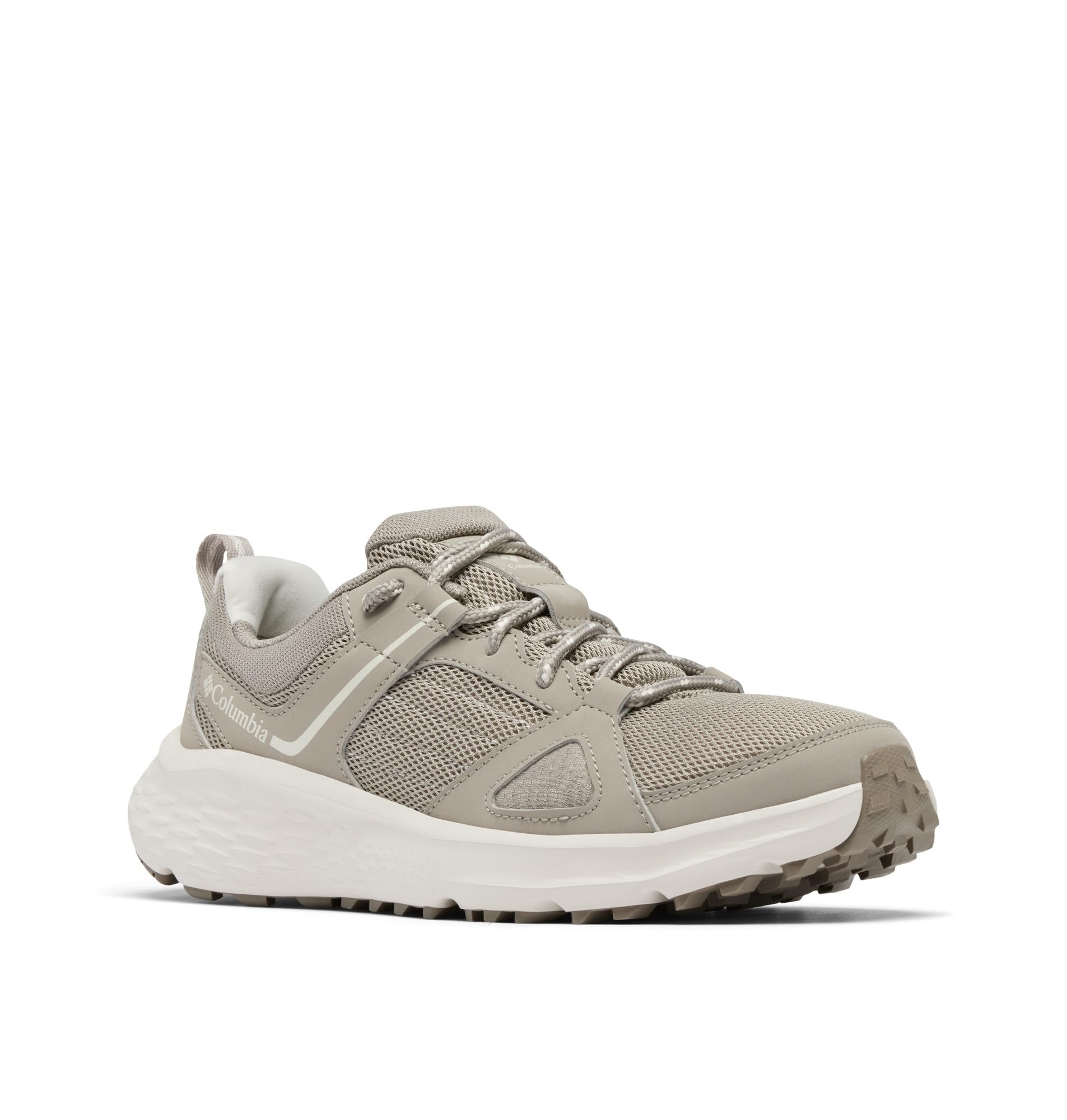
Built on a last shaped for women’s feet, then sealed against the weather.
Most trail shoes are built on a male last and simply shrunk down, and that is where heel slip and midfoot pinching come from. The upper here is water-and-stain resistant, so a puddle splash or a muddy puddle flick beads off instead of soaking in. There is also foam engineering in the heel that hugs your foot, plus a cushioning system built for impact absorption and deflection — meaning the shoe spreads the jolt of a hard step rather than passing it straight up your leg.
Comfort is the headline, and it arrives immediately. Buyers describe no break-in period at all, and the fit reports circle around a regular 7.5 giving plenty of room in the toe box. Support for daily walks is reliable, and the shoe is light enough that it does not drag on a longer outing. Value comes up often too, which is unusual for a shoe with a water-resistant upper.
Durability is where opinions divide. Some owners mention the shoe holding up well over time, others find it wearing faster than they expected. Nothing about that makes it a bad buy — it makes it a shoe to rotate rather than wear every single day. The other point to weigh: “water-and-stain resistant” is not the same as waterproof, so standing in a stream is out of scope.
What it gets right
- Shaped on a women’s-specific last rather than a shrunken men’s one
- Water-and-stain resistant upper handles splash and mud
- No break-in period reported by buyers
- Heel foam hugs the foot and reduces slip
What to keep in mind
- Long-term durability is a genuine split — rotation helps
- Resistant, not waterproof, so no stream crossings
The fit-first choice: a women’s-specific shape with weather protection, ideal if standard unisex trail shoes have never quite sat right on your heel.
Bear in mind: if you plan to wear one pair every day of the week, expect to replace them sooner.
5. New Balance Women’s Dynasoft Tektrel V1 Suede
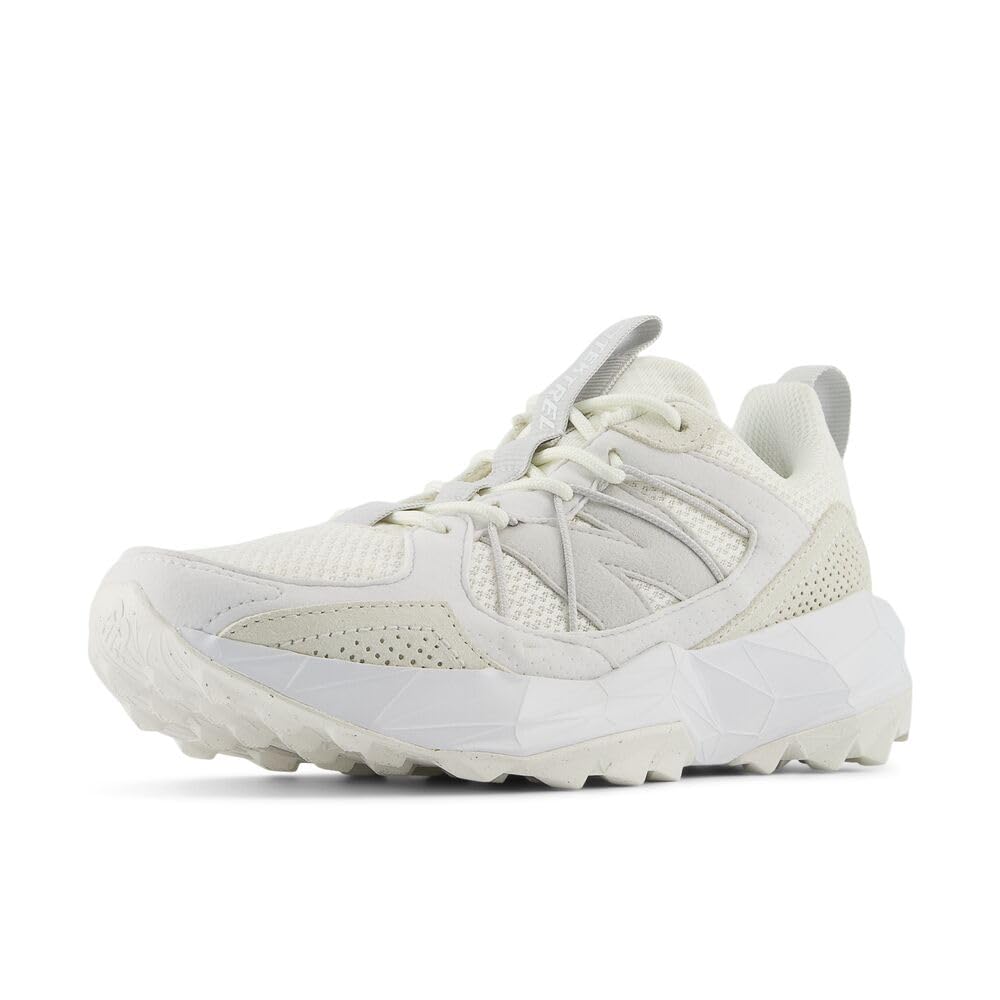
An aggressive lug pattern and a suede upper for the trail less travelled.
The Tektrel is the most serious-looking shoe in this lineup, and the spec sheet backs up the look. Aggressive lugs bite into loose ground, a dynamic midsole soaks up the pounding, and the stylized suede upper gives it a character the technical mesh shoes here do not have. At 2.1 pounds it is also 0.6 pounds heavier than the Saucony Excursion above, and that weight sits exactly where you would expect — more material underfoot and around the ankle.
Comfort is the part buyers keep returning to. Feet do not hurt in these, and they get used for far more than hiking — gravel road walks and energetic daily activity both come up. The traction earns specific praise for slip resistance, which is the test that actually matters on a wet descent. Where opinions diverge is fit. Some owners find them too narrow, and both the arch support and the cushioning draw mixed reactions. If you have a wide forefoot, this is not the shape for you.
The suede upper deserves a mention as a real consideration rather than a footnote. It looks good and holds its structure, but it needs more care than a wipe-clean synthetic — brush it, do not machine wash it. Treat that as the cost of the appearance, because the appearance is a large part of why people pick this shoe in the first place.
For you if: you want trail grip and a suede upper that looks good off the trail as well as on gravel roads.
Pass if: your forefoot runs wide — the narrow fit is the recurring complaint, and the cushioning is softer than some prefer.
6. NORTIV 8 Women’s Waterproof Hiking Shoes Lightweight
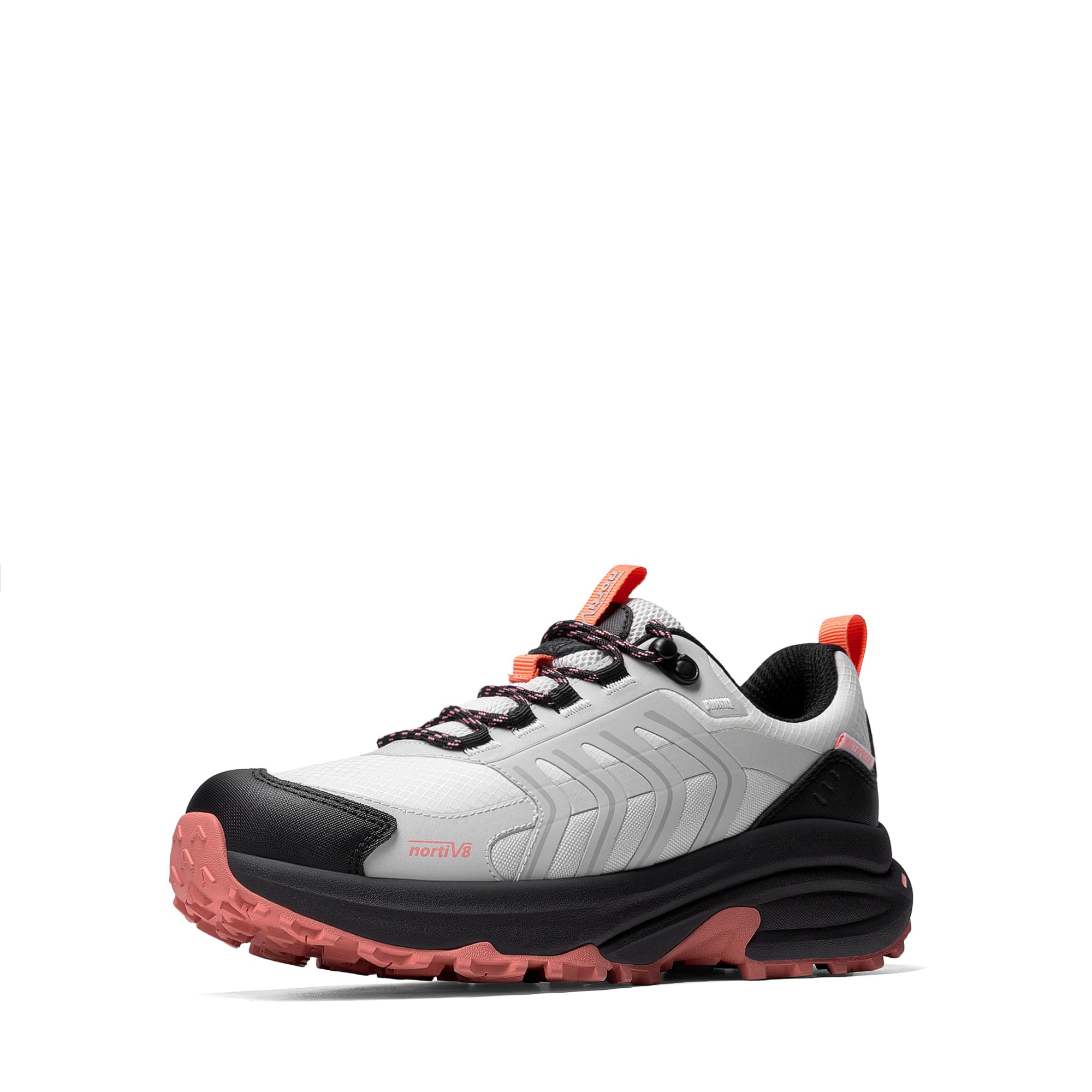
The one pair here with a genuine waterproof membrane, not just a splash guard.
Waterproof matters when it matters. Owners describe walking through puddles without getting wet, which is a claim the other shoes in this lineup cannot make — the Columbia Novo Trail above is water-and-stain resistant, which is a different thing entirely. The 4-in-1 Rebound Tech underfoot is the cushioning system, designed to keep you comfortable from morning to evening in the way that a soft-but-stable midsole does on concrete and packed trail alike. Good arch support and slip resistance both come through clearly in how people use them.
Quality is what people talk about most, and appearance and water resistance follow close behind. Versatility gets named too — these get worn for long days rather than saved for occasional hikes. That is the profile of a shoe doing real work rather than sitting in a cupboard.
The fit is the caveat, and it splits sharply. Some owners find the toe box roomy and comfortable; others report the shoes running narrow. Arch support is also the kind of thing you either notice helping or nothing at all — nobody is neutral about it. Order these with an honest sense of your own foot width, and be prepared to swap if you land on the wrong side of that split.
The water question: if you hike where the forecast is unreliable, the waterproof upper is the single reason to pick this shoe over the lighter, breathable choices above.
Pick this one when: wet ground, damp mornings, and puddles are a normal part of your route and you want to stay dry without a boot.
Choose differently if: you need a wide toe box you can rely on, because the fit reports do not line up.
7. Skechers Women’s Go Run Trail Altitude 2.0 – Ravine
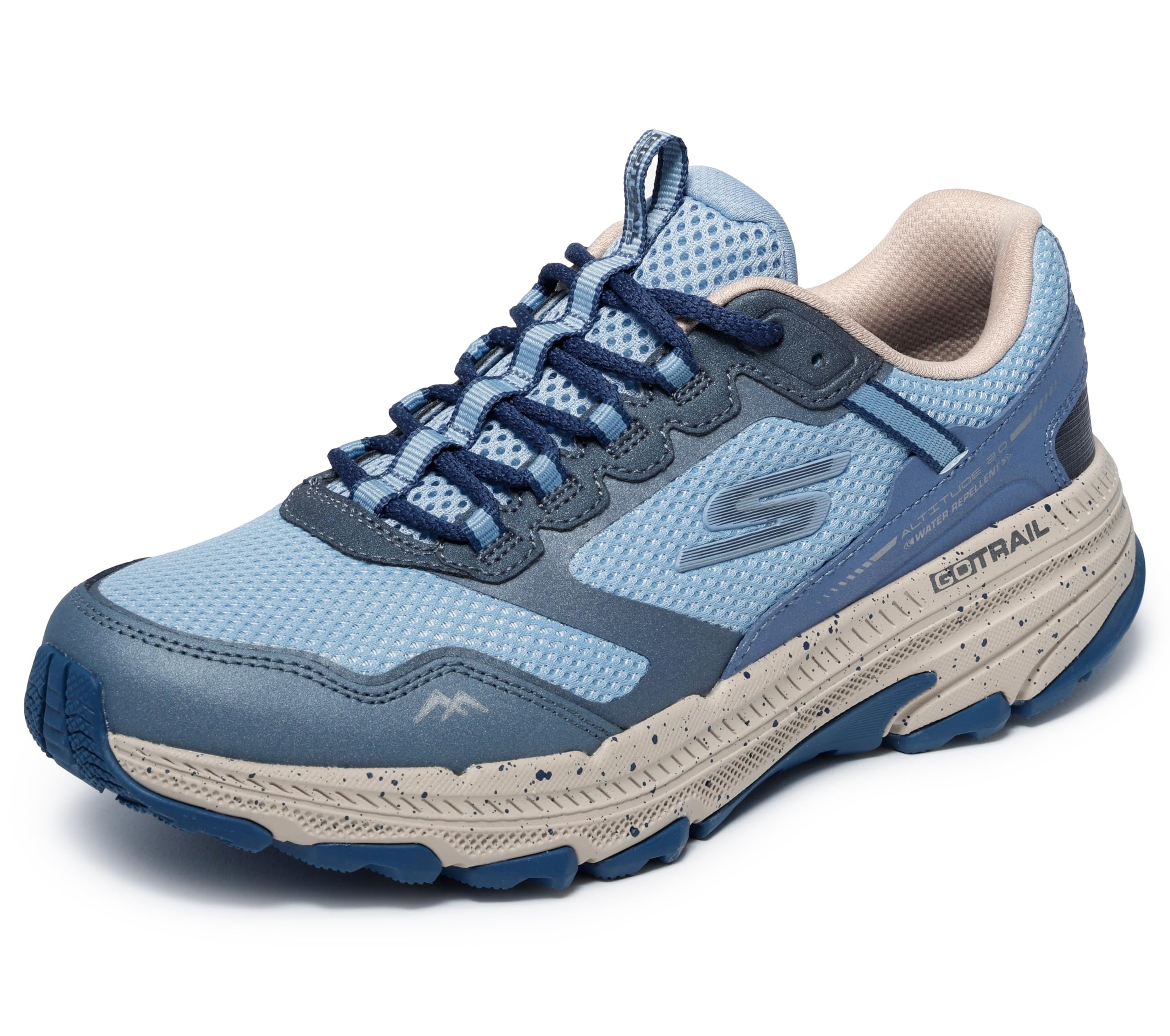
A trail runner that quietly doubles as a shoe for people on their feet all day.
Most trail shoes are judged on the descent. This one gets judged on the shift. Customers note that the support and durability make them a serious option for 8-12 hour standing shifts — a use case no other shoe in this lineup gets pointed at. Traction that prevents slipping backs that up, and the fit is described as well-fitting rather than needing workarounds. For a nurse, a warehouse worker, or anyone whose job is a long day upright, that combination is worth more than any lug count.
Comfort is the trait that carries it, with fit and value following. Hiking suitability does get named, so these are not a one-trick work shoe — they will handle a dirt path on the weekend. The appearance gets noticed too, right down to the specific blue-and-pink-soled colourway people single out.
The catch is that this is a trail running shoe, not a hiking boot. It has the softness and flexibility of a runner, which is exactly why it survives a long shift — but on genuinely rough, rocky terrain it will feel less planted than the sturdier builds in this group. It also sits at the premium end of this list, so you are paying for the comfort-first build rather than raw materials.
The shift test: very few trail shoes get recommended for a full working day upright, and this is the one that does.
The right pair for: anyone who spends eight or more hours on their feet and wants a shoe that works on a weekend trail too.
Look elsewhere if: you need a firm, planted platform for rough, rocky ground rather than a flexible runner’s feel.
8. Merrell Women’s Speed Strike 2
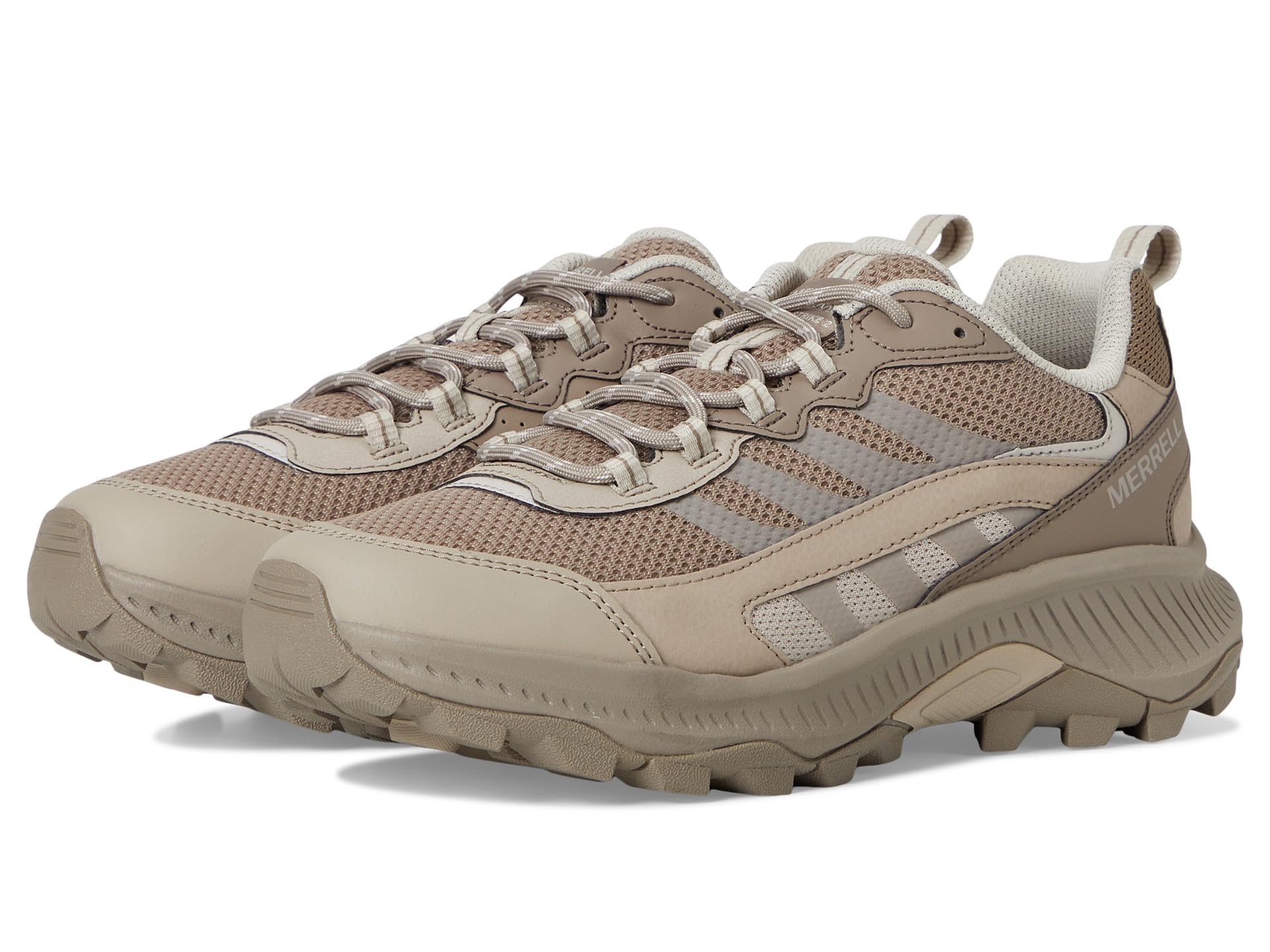
Hiking protection with a runner’s posture, built from recycled material throughout.
Merrell took the protection of a hiking shoe and cut it into a faster, more athletic shape. The construction is unusually transparent about materials: 100% recycled content from the laces and webbing through to the mesh lining and footbed cover, plus a removable EVA foam footbed that is 50% recycled. Underneath sits a Merrell sticky rubber outsole designed to grip when and where you need it — sticky rubber is the compound that holds on wet rock where harder rubber skates.
At 1.5 pounds it matches the Saucony Excursion for the lightest build here, and it feels like it. The toe box is roomy enough to accommodate thick socks, arch support is solid, and the shoes work equally well for hiking and everyday walking. Feet do not hurt in them over a long day, which is the outcome that matters more than any single spec.
Two things pull the other way. The durability reports split — some shoes hold up well, while others show fabric wear around the ankle faster than expected, so this is a pair worth inspecting at the seams rather than assuming. The comfort and grip scores are also genuinely mixed rather than unanimous. Neither is a reason to walk away; it is a reason to buy from a seller who will take them back if the ankle collar rubs you the wrong way.
What stands out
- 100% recycled laces, webbing, mesh lining, and footbed cover
- Sticky rubber outsole for grip on slick ground
- Roomy toe box that fits thick socks
- Works for hiking and daily walking without a break-in
What to watch
- Ankle-area fabric durability is a genuine split in reports
- Comfort and grip draw mixed reactions rather than a consensus
The fit for you if: you want an athletic-shaped hiker, care about recycled construction, and wear thick socks on the trail.
Consider the alternative if: you want a shoe with a long, uniform durability record rather than a divided one.
9. ALTRA Women’s Lone Peak 8 Trail Running Shoe

The widest toe box here, paired with a flat platform that changes how you walk.
Altra builds shoes around a different idea, and it starts with the shape. The Lone Peak 8 uses Altra’s FootShape design — their roomiest toe box, with space through the midfoot — so your toes can spread and sit naturally instead of being squeezed into a taper. It is built on a ripstop mesh upper for durability against scuffs, with a MaxTrac outsole for sticky underfoot grip and TrailClaw canted lugs placed beneath the metatarsals for extra bite where you push off.
The zero-drop platform is the big swing. Balanced Cushioning puts your heel and forefoot at an equal 0 mm distance from the ground, and a 25 mm stack height keeps you low and connected rather than perched on foam. If you have never worn zero drop, expect your calves to notice for the first week — this is a shoe that asks your foot to work in a more natural way rather than cushioning it into passivity. For people with extra-wide feet, though, the payoff is real: no toe pinching, feet that feel stable, and good grip on any surface.
At 10.7 oz it lands lighter than the heavier New Balance Tektrel, and it needs no break-in period at all. The one honest note is cushioning, which draws mixed reactions — riders who want a plush, soft platform will find this firmer and more ground-connected than they expect. That is the design working as intended, not a fault, but it is worth knowing before you switch.
Who this changes things for: if every trail shoe you have tried pinches your toes, this is the shape that fixes it.
What it asks in return: a flat platform means your calves and achilles do more of the work, so ease into longer distances rather than starting with a full day.
Worth it for: wide-footed walkers and anyone already comfortable in zero-drop shoes who wants maximum toe room on the trail.
Hold off if: you have never worn a 0 mm drop shoe and want a soft, cushioned feel from day one.
Know the Specs
Drop (Heel-To-Toe Offset)
Drop is the height difference between your heel and your forefoot inside the shoe, measured in millimetres. A 0 mm drop — like the Altra Lone Peak 8 — puts both at the same level, which encourages a flatter landing and lets your foot work more naturally. A higher drop raises the heel, which many walkers find more familiar and gentler on the achilles. Neither is superior; the right number depends on what your legs are already used to. Switching to zero drop abruptly is the usual reason people blame the shoe for calf soreness.
Lugs and Outsole Rubber
Lugs are the raised rubber blocks on the bottom of the shoe. Deep, aggressive lugs bite into mud, gravel, and loose dirt; shallower patterns roll more smoothly on pavement. Multidirectional lugs — like those on the adidas Terrex Anylander — point in several directions so the shoe holds when you turn, not only when you walk straight. Rubber compound matters just as much as lug shape: a sticky outsole grips wet rock, while a harder compound wears longer but skates on slick surfaces.
Toe Box Volume
The toe box is the front compartment your toes sit in, and its volume decides whether a descent shreds your toenails or leaves them alone. A roomy toe box lets toes spread and reduces pinching on long downhills. A tapered one can rub on the sides, especially for wide feet or anyone with bunions. This is why two women in the same size report opposite experiences in the same shoe — it is not the length that differs, it is the width and the height of that front compartment.
Water Resistance Versus Breathability
A waterproof membrane keeps water out, as on the NORTIV 8, but it also holds warmth and moisture in. A breathable textile upper, like the adidas Terrex Anylander, keeps feet cooler and dries faster but soaks through in sustained rain. Note the difference between “waterproof” and “water-and-stain resistant” — the first is designed for standing water, the second shrugs off splashes and mud. Buying for your actual weather beats buying for the worst weather you can imagine.
Common Questions
Can I wear women’s hiking tennis shoes for normal road running?
How should a women’s trail shoe fit compared with my normal sneaker size?
Is zero drop better for hiking?
What is the difference between waterproof and water-resistant on a hiking shoe?
How long should a pair of trail hiking shoes last?
Do I need ankle support or a high-top for hiking?
Can I machine wash women’s hiking tennis shoes?
Are wide toe box shoes actually better for bunions or wide feet?
What does a sticky rubber outsole actually mean for grip?
Should I size up for thick socks on the trail?
The Bottom Line
If you want to stop reading and just buy, the Columbia Women’s Vertisol Trail is the pair to get. It holds the highest rating in this group at 4.5+ stars across 900+ reviews, and it handles town pavement and park trail without asking you to choose between them.
But the right pair depends entirely on your foot. If your toes have been pinched by every trail shoe you have tried, the ALTRA Lone Peak 8 gives you the roomiest toe box here on a flat 0 mm platform. If you spend long shifts on your feet, the Skechers Go Run Trail Altitude 2.0 is the one built for that kind of endurance. And if wet ground is your everyday reality, the waterproof NORTIV 8 keeps your feet dry in a way none of the others can.
One last bit of advice: order from a seller with an easy return, walk around the house in them first, and check the heel and the toe box before you cut the tags. In this category, fit decides everything, and the shoe that fits your foot beats the one that wins the spec sheet.
How we choose
We do not accept paid placement. Every pick is matched to a real buyer and a real use-case; we do not hands-on test units.
Sources
Specifications: manufacturer listings and product documentation. Review insights: verified customer reviews, as of November 2026. Pricing: not shown on this page (it changes often); check the current price via the retailer link.
As an Amazon Associate, Tactical Gear Guy earns from qualifying purchases. This does not affect which products we feature.