Specs are compiled from manufacturer listings and verified buyer reviews and can change over time — please confirm the key details on the product page before buying.
If you want one coat that keeps you warm through a real winter without turning you into a shuffling bundle, the answer is a goose down coat with a high fill power and a shell that can take weather. The four picks below cover that ground, from a stretchy hiking layer to a full-length waterproof city coat. Each one uses genuine goose down as insulation, so you are comparing real warmth rather than marketing language.
This guide is built by comparing the manufacturers’ published specifications and the patterns across verified customer reviews, so you get each pick’s real strengths and trade-offs instead of marketing spin.
Down traps body heat in clusters of feathers, and fill power — how much space one ounce of down lofts into — is the number that separates a coat that stays warm from one that flattens. Below you will find the trade-offs that actually matter when you buy women’s goose down coats.
Top Picks
How To Choose The Best Women’s Goose Down Coats
A down coat is a warmth system, not a single garment. Three parts decide whether it works for you: the down itself, the shell wrapped around it, and the cut you have to live in all season. Get those three right and the coat stops being something you think about.
Start With Fill Power, Not Fill Weight
Fill power measures how much space one ounce of down lofts into, so a higher number means more warmth from less weight. A 700 fill power coat and an 800+ fill power coat can both be warm, but the higher number usually packs smaller and weighs less for the same heat. This is why a thin-looking jacket can beat a bulky one on a cold morning.
The Shell Decides Where You Can Wear It
Goose down loses its loft when it gets soaked, so the fabric around it matters as much as the fill. A waterproof membrane keeps wet snow and rain off the down, while a plain nylon ripstop shell is lighter and more packable but expects you to add a rain layer on top. Match the shell to the weather you actually walk in, not the worst storm you can imagine.
Fit And Sizing Vary Wildly Between Brands
Down coats are cut differently from brand to brand, and reviewers notice. Some run true to size, others run bigger than you expect, and long coats can feel tight across the shoulders. Read the fit language in each review below before you pick a size, because a coat that binds at the shoulder is a coat you stop wearing.
Side-by-Side Comparison
| Model | Best For | Down Fill | Shell & Weather | Reported Weight | Amazon |
|---|---|---|---|---|---|
| Mountain Hardwear StretchDown Hoody★ Best Overall | Moving fast in cold | Goose down, stretch construction | Durable stretch fabric blend | 1 lb | Amazon |
| ANYIELIEMO Long Goose Down Winter Coat | Long-coverage everyday warmth | 90% Goose Down | Thermal lining, hooded | 3 lb | Amazon |
| Outdoor Research Helium Down Hoodie | Packable alpine layering | 800+ fill, 90% Goose Down / 10% Feathers | Waterproof hood, shoulders, upper sleeves | — | Amazon |
| Marmot Chelsea Waterproof Down Coat | Wet winter city wear | 700 fill power goose down | MemBrain waterproof shell | — | Amazon |
Detailed Reviews
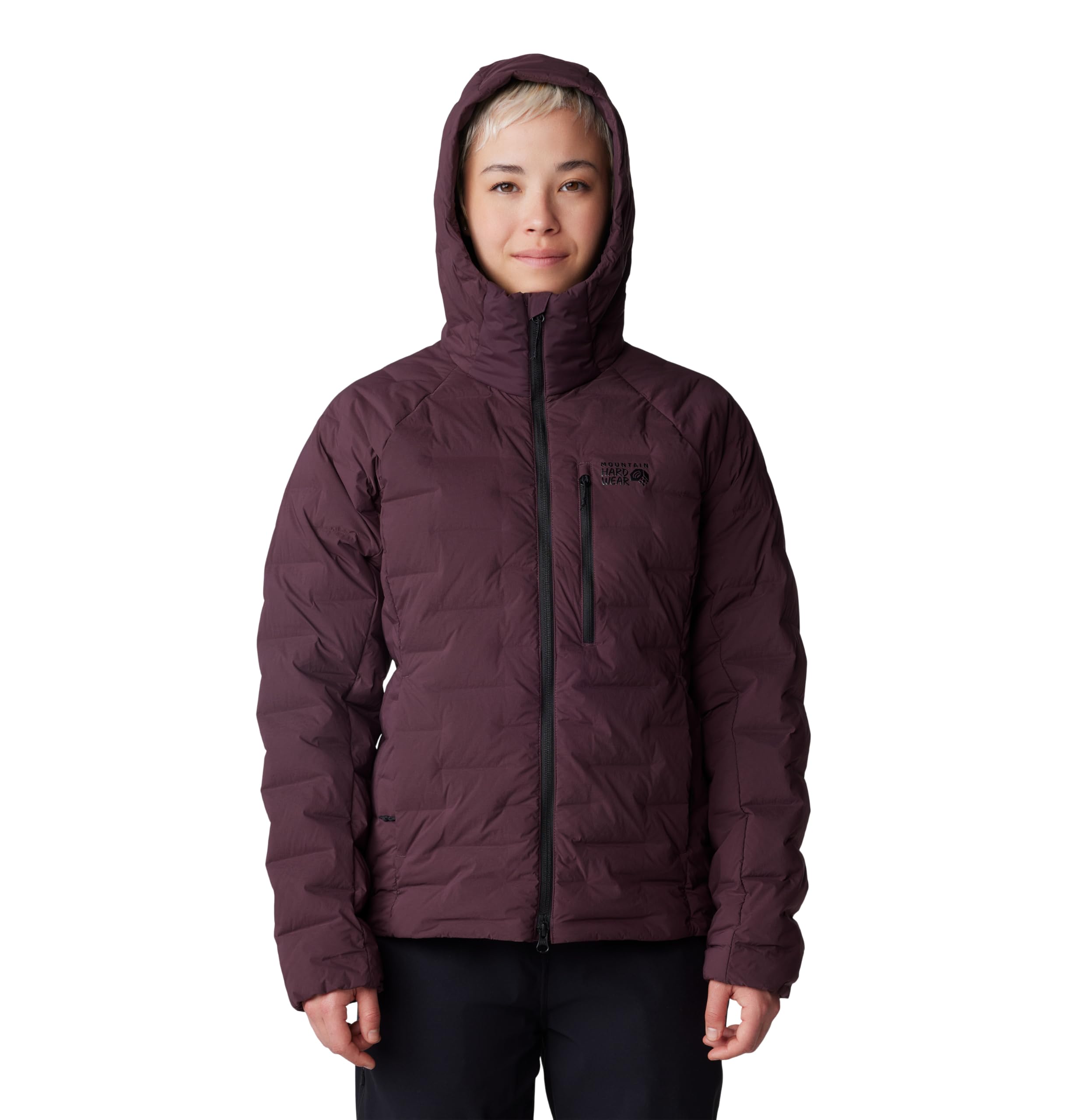
1. Mountain Hardwear Women’s StretchDown Hoody
Our pick — 4.0+★ from 50+ verified ratings; the strongest balance of quality and price.
The one-pound down layer that climbs, scrambles, and bends with you instead of fighting back.
This is the coat for the woman who is moving, not standing still. Mountain Hardwear builds the down insulation into pockets woven from a single stretch fabric, so the jacket flexes across your shoulders when you reach for a hold or swing a pack on. It weighs 1 pound — light enough that you forget it is in the bag until the wind picks up at the summit.
That weight gap is the story when you line it up against the ANYIELIEMO long coat below: 1 pound versus 3 pounds, a 3.0x gap on paper, and you feel every bit of it on a climb. The down itself is described by the maker as the highest quality goose down in an ultra-engineered construction, and the durable fabric blend is meant to survive brush and rock without shredding. The hood and full-zip front make it a standalone winter layer from trailhead to summit, or a mid-layer under a waterproof shell when the weather turns.
What wins people over is the build quality, and the second thing they talk about is warmth — as buyers report, it managed 20° temperatures with no problem. The honest catch is sizing. Some find it true to size while others say it runs bigger than other brands, so the fit conversation is genuinely split. If you are between sizes or used to a snug cut from a different brand, this is the one pick where you should double-check the size chart instead of assuming your usual number.
Where it earns its keep
- Weighs 1 pound, so it packs into a daypack without a second thought
- Stretch down construction bends with your shoulders on the move
- Holds warmth on genuinely cold days — owners mention handling 20° with no problem
- Works as a standalone winter layer or under a shell
What to weigh first
- Sizing runs differently than other brands — some say true to size, others say bigger
- No fill power number published, so you cannot compare loft directly against the 700 and 800+ picks
Made for the mover: the woman who hikes, camps, or walks a cold commute and wants warmth that does not restrict her shoulders.
Check the size chart: the fit is the split opinion here, so confirm your measurement before ordering rather than trusting habit.
2. ANYIELIEMO Women’s Long Goose Down Winter Coat

Knee-length coverage at 3 pounds, built for standing at a cold bus stop rather than sprinting a trail.
Some winters are spent waiting — for the bus, for the school gate to open, for the car to warm up. That is the scenario this coat answers. It is a full knee-length hooded puffer lined with thermal lining, filled with 90% goose down, and it weighs 3 pounds. The longer body covers the part of you that a hip-length jacket leaves exposed when you stand still in wind.
That 3-pound weight is exactly where it separates from the Mountain Hardwear layer above, which comes in at 1 pound — a 3.0x gap that tells you these two coats are built for different jobs. You are trading packability for coverage, and if your winter is mostly flat pavement and outdoor queues, that is a fair trade. The zeppelin-shaped bulk also means it takes real space in a closet or a suitcase, so this is a coat you own rather than a coat you carry.
Fit is the one thing to think through. The long body and regular cut give room for a sweater underneath, which is useful in deep cold, but a knee-length puffer moves differently than a hip-length one when you sit or drive. Treat the sizing with the same care you would give any long down coat from a smaller brand. The 90% goose down fill is real, and that is the number that matters most on this tag.
The reasoning: the 90% goose down fill plus knee-length coverage covers the most exposed part of a still, cold day, and the 3-pound weight is the honest cost of that length.
Buy it for the wait: this is the commuter and errand coat, not the packable hiking layer — pick the Mountain Hardwear above if you need to move fast.
Reach for this if: your cold hours are spent standing, walking pavement, or waiting outside, and you want a long body around your legs.
Look elsewhere if: you need a coat that folds into a daypack or you plan to drive in it often.
3. Outdoor Research Women’s Helium Down Hoodie
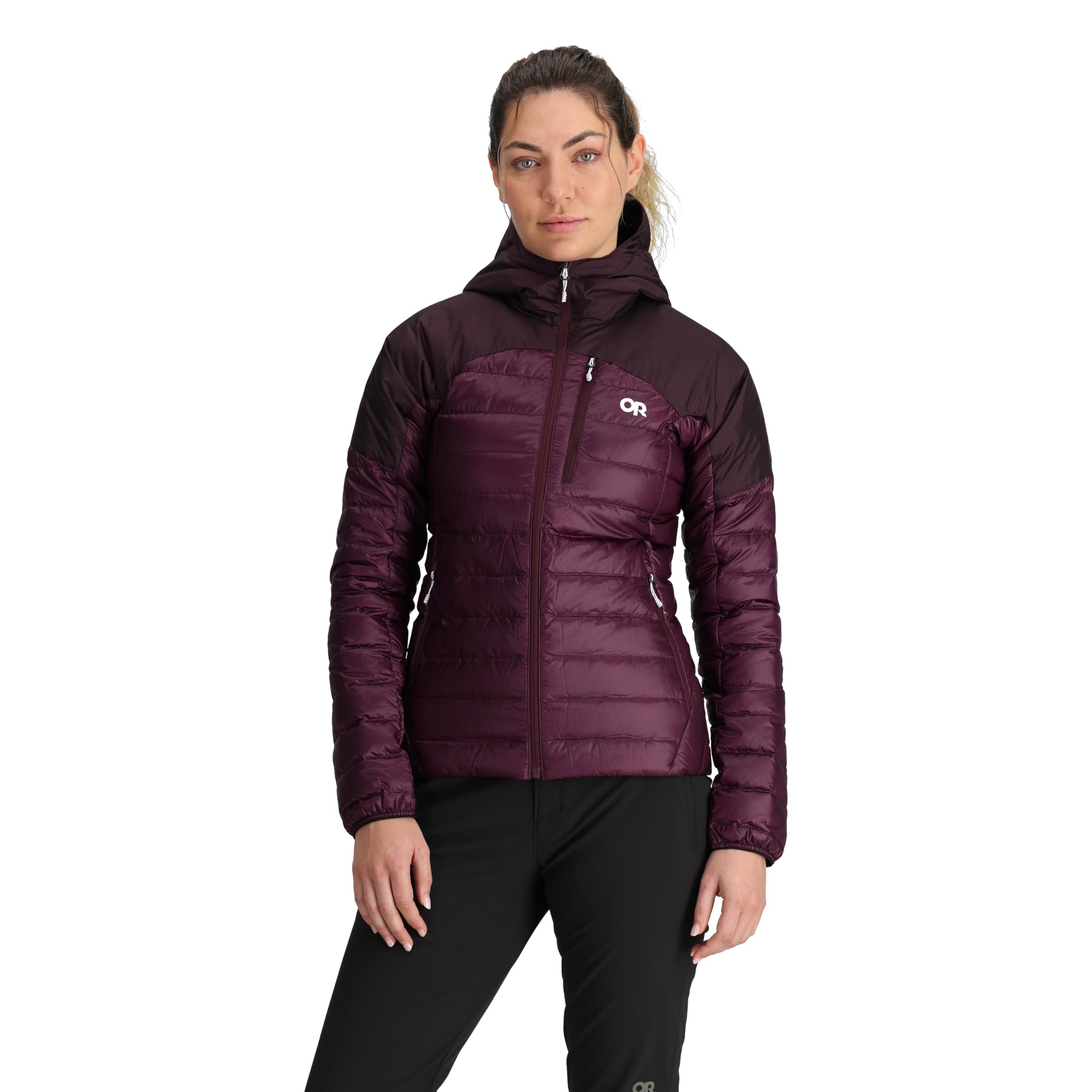
An 800+ fill hoodie that stuffs into its own pocket and shrugs off weather at the hood and shoulders.
Here is the number that sets this jacket apart from everything else on the list: 800+ fill down. That is the loft rating, meaning the down traps more air per ounce, so you get serious warmth from a jacket that packs down small. The insulation is 90% goose down and 10% feathers, wrapped in a 59% nylon, 41% recycled nylon Pertex Quantum shell that the maker describes as lightweight and durable.
Weather protection is targeted rather than total. The hood, shoulders, and upper sleeves come waterproof, which covers the spots that catch falling snow and rain first. The rest of the shell relies on Diamond Fuse Technology, which protects the down with an abrasion-resistant fabric without adding weight. The left-hand pocket doubles as a stuff sack, so the whole jacket compresses into something you can clip to a pack and forget about until the temperature drops.
Fit is the dividing line here, plainly. Some love the cut and others find it odd, so if you are used to a trim silhouette this loose fit may surprise you. The build quality itself is the praise point. Compare the 800+ fill on this jacket against the 700 fill power of the Marmot Chelsea below and the loft advantage sits with Outdoor Research; the Marmot wins on length and full waterproofing instead. Two coats, two different jobs.
Loft advantage: 800+ fill with a 90% goose down blend packs warmer per ounce than the 700 fill Marmot below, and the pocket stuff sack makes it a genuine packable layer.
Where the protection stops: waterproofing is limited to the hood, shoulders, and upper sleeves, so a soaking rain still wants a shell over the top. The loose fit also splits opinion — read the sizing note rather than assuming your usual size.
Pick it for the pack: backpackers and winter sports wearers who want maximum loft in the smallest bundle.
The trade-off to accept: partial waterproofing and a loose cut — this is a layer, not a full-length shield.
4. Marmot Women’s Chelsea Waterproof Down Rain Coat

A full-length coat that treats wet snow like a mild inconvenience and still looks sharp downtown.
Wet snow is the weather that ruins most down coats — the flakes hit, melt, soak the shell, and the down collapses. This coat is built to refuse that. Marmot wraps 700-fill-power goose down inside its MemBrain waterproof shell, so the insulation stays dry and keeps its loft while you walk through slush. It is sized specifically for women, full length, with a zip-off hood that carries a removable fur ruff.
Detail work is where the Chelsea earns its reputation. Zippered handwarmer pockets keep your hands out of the wind, and the double zipper makes a long coat practical to walk in rather than something you have to climb into. The urban-chic lines hide the technical side well — the logo does not shout, which is a small thing that owners actively notice. Quality is what people talk about most here, with warmth a close second: this is a coat whose reputation is built on doing wet cold properly.
Sizing is the real caveat, and it is worth taking seriously. Some wearers find the coat roomy while others feel it tight across the shoulders, and the general consensus is that it runs small. If you are between two sizes, lean up rather than down. Compare the 700 fill power here with the 800+ fill of the Helium hoodie above: Outdoor Research wins on loft per ounce, but it cannot match this coat for length, waterproofing, or a hood you can zip off on a dry day.
Why it holds up: a waterproof MemBrain shell over 700-fill goose down is the combination that keeps wet snow from killing the warmth, and the full length covers more of you than a hip-length puffer.
Size up, honestly: the shoulders run tight on some wearers and the overall fit tends to run small, so the size chart deserves a second look before you order.
For the wet-winter city: commuters and anyone whose winter involves slush, sleet, and a walk to the train rather than a sprint up a mountain.
Budget your size: go up a size if you are near the line, because the shoulder fit is the one thing that catches people out.
Know the Specs
Fill Power
Fill power measures how much space one ounce of down lofts into — a springiness score for the fill. A 700 fill power coat and an 800+ fill power coat can both keep you warm, but the higher number traps more air per ounce, so it usually packs smaller and weighs less for the same heat. That is why the Helium hoodie at 800+ fill can feel warmer than a thicker coat with a lower number.
Goose Down vs. Feathers
Down is the fluffy undercoating; feathers are the flat outer ones. A tag reading 90% goose down and 10% feathers means the insulation is mostly the fluffy stuff, which is what traps heat. Pure down lofts better, but a small feather percentage adds a little structure. Anything labeled goose down is a real down coat — synthetic fill is a different product entirely.
Waterproof Shells and Membranes
Down loses its loft when it gets wet, so the shell fabric is what decides whether a coat survives a wet snowstorm or goes flat. A membrane like Marmot MemBrain blocks water from reaching the down. Partial waterproofing, like the Helium’s hood and shoulders, covers the spots that catch weather first but leaves the rest of the shell breathable and light.
Weight and Packability
A 1-pound down layer folds into a daypack; a 3-pound long coat takes real closet space. Neither is better — they answer different days. If you carry your coat more than you wear it, weight and a stuff-sack pocket matter most. If you stand still in cold for long stretches, coverage and a longer body matter more than a few pounds.
Common Questions
Is goose down warmer than duck down in a winter coat?
What fill power should I look for in a women’s down coat?
Can a down coat get wet in snow?
Do women’s down coats run true to size?
How do I wash a goose down coat without ruining the loft?
Is a long down coat or a short hoodie better for winter?
What is the difference between 700 and 800 fill power down?
Will a down coat work for hiking and backpacking?
Does goose down lose warmth over time?
The Bottom Line
For most women, the winner among these women’s goose down coats is the Mountain Hardwear StretchDown Hoody, because it pairs genuine goose down with a stretch construction that moves with you at just 1 pound. If your winter is wet and urban, grab the Marmot Chelsea for its MemBrain waterproof shell over 700-fill goose down. And for a knee-length everyday coat that covers your legs on a cold wait, the ANYIELIEMO Long Goose Down Coat is the one to reach for.
Whichever you pick, decide by how you spend your cold hours: moving, standing, or walking through slush. Answering it narrows the list faster than any spec sheet.
How we choose
We do not accept paid placement. Every pick is matched to a real buyer and a real use-case; we do not hands-on test units.
Sources
Specifications: manufacturer listings and product documentation. Review insights: verified customer reviews, as of November 2026. Pricing: not shown on this page (it changes often); check the current price via the retailer link.
As an Amazon Associate, Tactical Gear Guy earns from qualifying purchases. This does not affect which products we feature.