Specs are compiled from manufacturer listings and verified buyer reviews and can change over time — please confirm the key details on the product page before buying.
You already know the problem: your phone video looks fine and sounds like it was shot inside a tin can. Wind noise, traffic rumble, and a voice that fades the moment you step back from the lens ruin otherwise good footage. This guide covers the wireless clip-on mics that actually fix that for phone shooters, along with each pick’s real trade-offs.
This guide is built by comparing the manufacturers’ published specifications and the patterns across verified customer reviews, so you get each pick’s real strengths and trade-offs instead of marketing spin.
One honest note before you read: this list uses flexible matching for phone connectivity, so not every pick is the exact model you searched — the nearest same-type wireless lavalier serves the same purpose. Below, every pick is judged on the specs that matter for a phone vlogger: connection type, range, battery, and how clean your voice comes out. wireless microphone for vlogging with phone picks below are grouped so you can match one to your shooting style fast.
Top Picks
How To Choose The Best Wireless Microphone for Vlogging with Phone
The first decision isn’t brand or budget — it’s the plug. A mic that won’t seat in your phone’s port is useless no matter how good its audio chip is. Get the connector right, then sort the rest by range, battery, and how much control you want over your voice.
Match the connector to your phone before anything else
A USB-C receiver plugs straight into newer iPhones and most Android phones, with no adapter to lose. If you shoot on an older iPhone with a Lightning port, you either need a mic built for Lightning or an included adapter — the TXTUNE kit bundles a Lightning adapter, while the BOYA and DJI systems run USB-C natively. Check one detail: whether the receiver also lets you charge your phone while it’s plugged in, because a dead phone mid-shoot is the classic vlogger failure.
Range is about freedom to move, not bragging rights
Transmission range in feet decides how far you can step back from your phone and still stay clean. A 70-foot mic covers a talking-head shot and a short walking segment. A 300-foot-plus system lets you set the phone on a tripod and roam across a room or a street corner. Real-world range shrinks with walls and bodies in the way, so leave headroom.
Battery hours decide how long your shoot day runs
Count two numbers: how long one transmitter runs on a single charge, and how much total runtime the charging case adds. A 9-hour transmitter with a case that tops it back up gets you through a full day of clips. If you film long interviews, a case that recharges the mic repeatedly matters more than a big single-charge figure.
Side-by-Side Comparison
| Model | Best For | Connector | Max Range | Battery / Single Charge | Amazon |
|---|---|---|---|---|---|
| DJI Mic Mini★ Best Overall | All-round phone vlogging | USB-C | 300m | 11.5 hours | Amazon |
| BOYA V3036-Hour Runtime | Long shoots on a budget | USB-C | 328 ft | 36 hours total / 9 hours single | Amazon |
| TXTUNE USB-C Mini Clip-On | Entry-level street interviews | USB-C + Lightning adapter | 70 ft | 24 hours total / 6 hours single | Amazon |
| FIFINE M9 | Multi-device shooters | USB-C / 3.5mm | 164 ft | 30 hours | Amazon |
| Insta360 Mic Air | Compact travel vlogging | USB-C | 300m | 10 hours | Amazon |
| Hollyland Lark M2 | Studio-grade audio on the move | USB-C | 1,000 ft | 30 hours total / 10 hours single | Amazon |
| MAONO T5 | Voice-preset control | USB-C + 3.5mm | 300m | 40 hours total / 9 hours single | Amazon |
Detailed Reviews
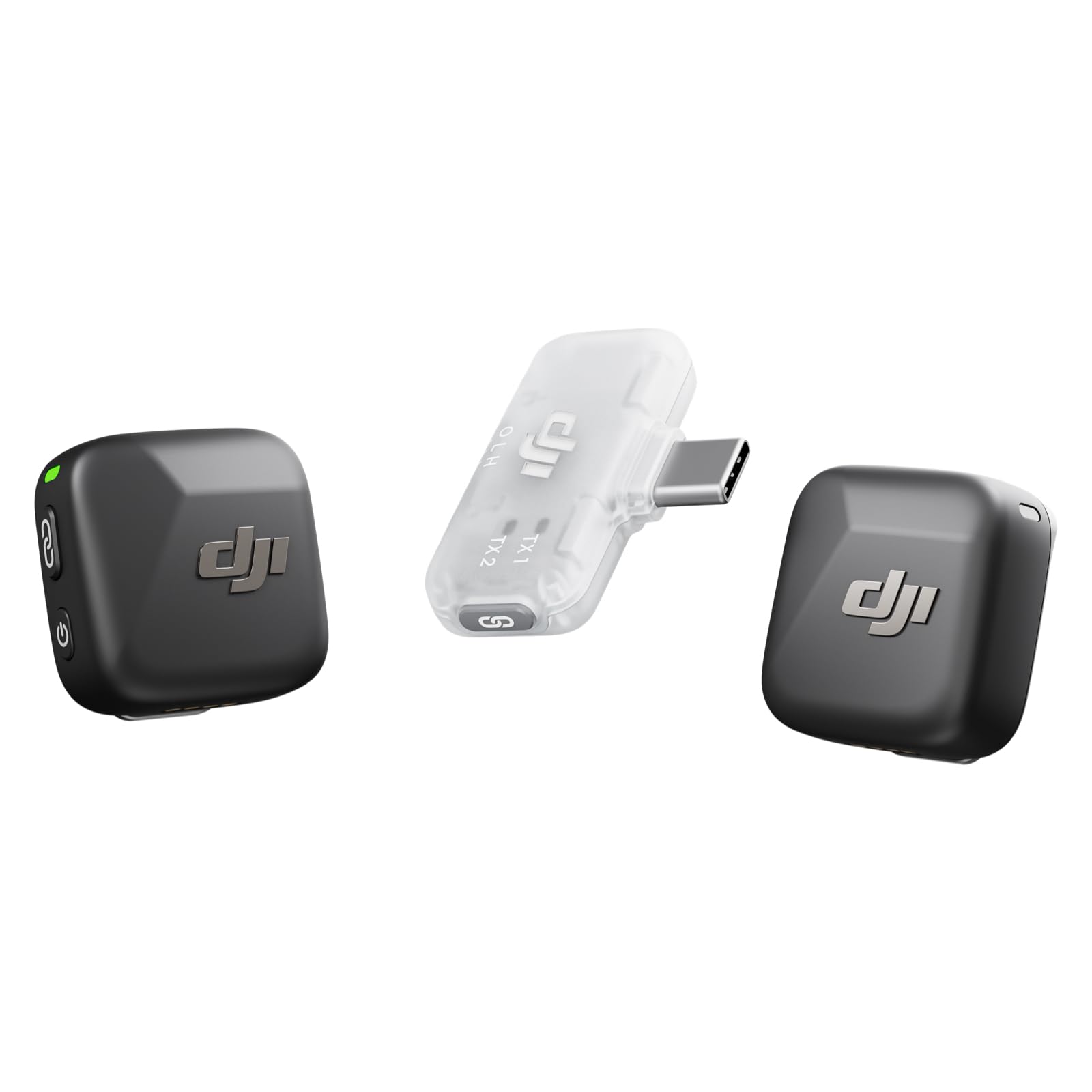
1. DJI Mic Mini 2 TX + 1 Mobile RX
Our pick — 4.5+★ from 27,000+ verified ratings; the strongest balance of quality and price.
Two mics, one pocket receiver, and audio that stays clean from across a busy street.
What earns this the top spot is the combination you rarely get at once: two transmitters for two-person shoots, a 300m (roughly 984-foot) maximum transmission range for wide roaming, and 11.5 hours of operating time from the pair. That range is why you can prop your phone on a tripod and walk the whole length of a market without a dropout. The pair of transmitters means a second person or a B-roll guest gets a mic too, instead of passing one back and forth.
Each transmitter weighs 10 g, so it disappears on a collar and won’t drag a light shirt. Two noise cancellation levels sit on the mic — Basic for a quiet room, Strong for a noisy street — so you flip one switch instead of fiddling in an app. Automatic limiting turns the volume down if your voice spikes, which keeps a shout from clipping into distortion. The USB-C receiver pairs with iPhone 17/16/15 series, Android, PC, and tablets, so the same kit follows you from phone vlogs to a laptop stream.
The honest catch is weight: at 26 g for the kit, it’s heavier in hand than the featherweight single-mic options here — the BOYA transmitter is 10.5 g. That bulk is the price of two transmitters and a bigger battery, and it’s negligible once the mic is clipped on. If you only ever film solo and want the smallest possible pouch load, a single-transmitter system is leaner.
What earns the top slot
- Two transmitters cover a two-person shoot without buying extra gear
- 300m max range lets you roam far from the tripod
- 11.5 hours of operating time for the transmitter pair
- Basic and Strong noise cancellation levels switch on the mic itself
Where it gives ground
- At 26 g the kit is heavier than a single featherweight mic
- Automatic limiting helps but doesn’t replace careful mic placement
Reach for this if: you shoot two-person vlogs or walk far from your phone and want one kit to cover both.
Look elsewhere if: you film solo only and want the absolute lightest clip-on in your bag.
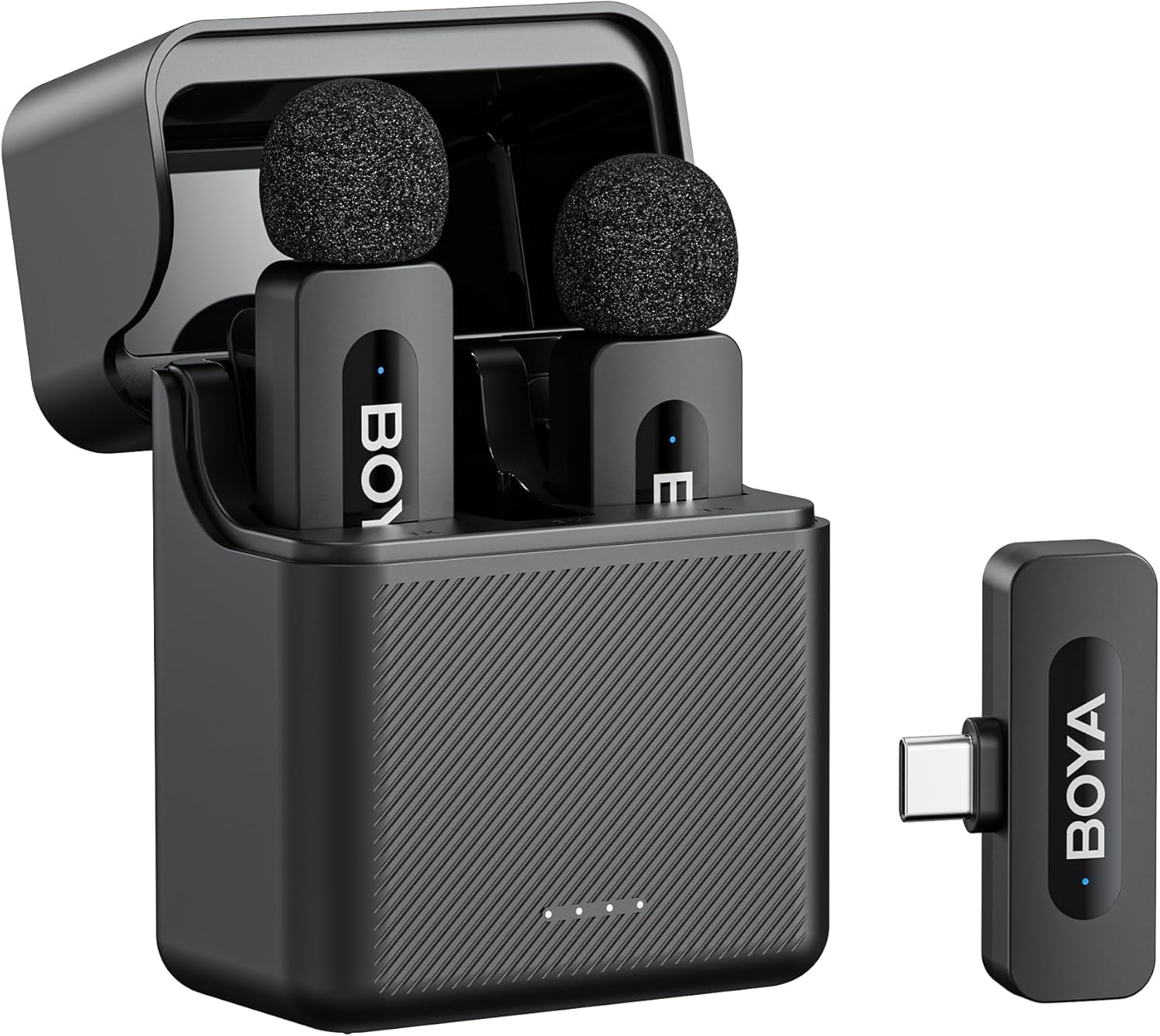
2. BOYA V30 Wireless Lavalier Microphone
36 hours of shoot time from a mic that weighs barely more than a pen cap.
If your shoot days run long, the number that matters here is 36 hours of total battery from the charging case, with 9 hours on a single charge of the 95mAh transmitter. That single-charge figure is far ahead of the TXTUNE mic’s 6 hours. The transmitter itself weighs 10.5 g, so comfort holds up through an all-day shoot. Range reaches 328 feet over 2.4GHz wireless, which means you can set the phone down and move freely.
The audio side is built for clean voice capture: 48kHz/16bit recording, an 80dB signal-to-noise ratio (a measure of how little background hiss creeps in), and one-click noise cancellation under a dense foam windscreen. A 360° rotatable clip grabs onto a collar from any angle. Playback is a nice touch — you can listen back through your phone’s speaker without unplugging the receiver, so checking a take is quick.
Owners consistently report reliable, dropout-free takes and clear voice capture. The trade-off is that this is a 2.4GHz wireless mic with USB-C, so older Lightning iPhones need an adapter in the chain. That’s a small extra piece to pack, not a reason to pass.
Why it earns a look: the 36-hour total runtime and 328-foot range put it ahead of shorter-range, shorter-battery options for long outdoor shoots, and the 10.5 g clip-on stays comfortable.
The real limit: Lightning-port iPhones need their own adapter, since this receiver is USB-C.
Best fit: creators who film all day and want a charge that outlasts them.
Think twice if: you shoot on an older iPhone and don’t own a USB-C adapter.
3. USB C Mini Clip on Mic
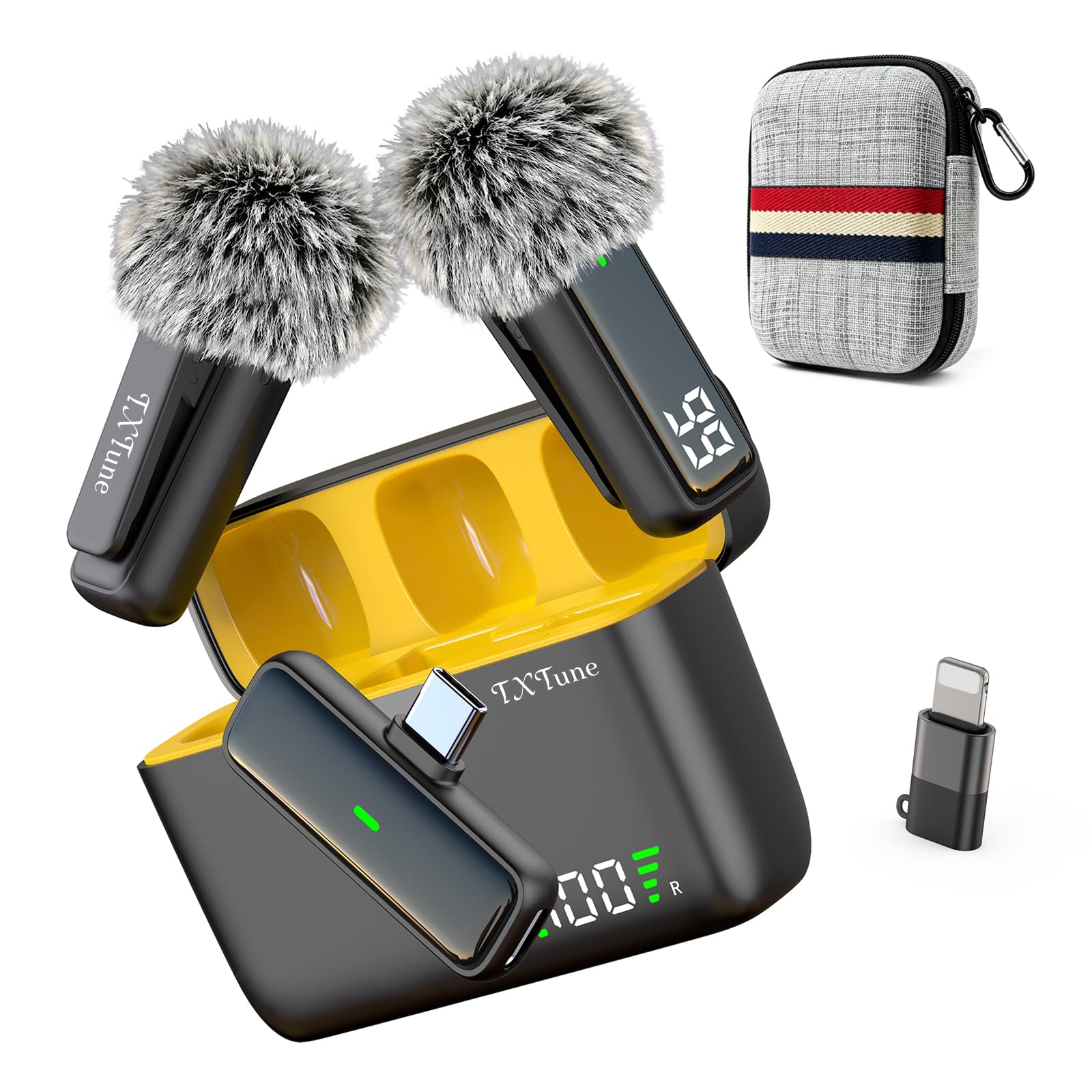
The cheapest way in, and the only pick here that ships with a Lightning adapter.
Start with what makes this the easy entry point: a Lightning adapter comes in the box, so it works with iPhone 14/13/12 as well as iPhone 15/16/17 and USB-C Android phones. That adapter solves the compatibility headache the USB-C-only picks leave you to sort out. Each transmitter weighs just 9 g, so it truly vanishes on a shirt. A digital power indicator lets you check battery at a glance, and each mic runs 6 hours on a charge with 24 hours total from the case.
The audio approach is a built-in DSP (digital signal processing) chip for noise reduction, backed by furry windshields for outdoor shots and street interviews. Range is a solid 70 feet, enough for a talking-head and a short walk-away. Smart touch: the receiver can charge your phone while you record, so a long street session won’t drain your battery. Buyers consistently rate its sound clarity above what the price suggests.
The catch is range. At 70 feet it’s the shortest on this list — the BOYA reaches 328 feet — so if you need to roam a big space, this will hit its edge sooner. For face-to-camera vlogs and close interviews, that’s plenty.
Where the value sits: an included Lightning adapter plus a 9 g clip-on makes this the simplest cross-device starter mic for phone creators.
What to plan around: the 70-foot range limits how far you can stray from the phone.
Worth grabbing if: you want a first vlogging mic that works across old and new iPhones without hunting for adapters.
Pass if: your setups involve roaming a large stage or field.
4. FIFINE M9 2 Pack Wireless Lavalier Microphone

One set that jumps from phone to camera to laptop when your shoots span devices.
This is the pick for creators who don’t stay on one platform. It works with USB-C phones, Android, iPhone 15/16 series, iPads, laptops, and DSLR cameras, so a single kit follows you from a phone vlog to a camera documentary. The two-transmitter bundle plus a charging case that recharges the mics nearly 3 times gives you up to 30 hours of use. Range runs 164 feet, so a scenic wide shot with the camera set back is easy.
The audio spec is genuinely useful for outdoor work: a -38dB sensitivity, up to 90dB SPL (sound pressure level, i.e. how loud a signal it handles before distorting), and a 20Hz–20kHz frequency response that keeps natural detail in your voice. A receiver display shows which mic is connected and lets you adjust among 3 volume settings. Onboard keys mute, adjust volume, and flip on noise cancellation without opening an app — handy mid-take.
Be realistic about the sound. Owners split on audio quality here — some call it surprisingly good, others find it thinner — so this is a value kit that works well for talking-head content, not a studio replacement. Connectivity also takes some setup headroom on iPhones, and older Lightning phones need the included cable plus an adapter. If crystal-clean audio is the priority, a pricier option delivers more polish.
Why cross-device shooters like it
- Works with phones, cameras, and laptops from one kit
- Two transmitters plus a case giving up to 30 hours
- 164-foot range covers scenic wide shots
- Onboard volume, mute, and noise-cancel keys
What to weigh first
- Sound quality opinions vary — good for talking-head, not studio-grade
- iPhone setup needs extra cable attention
The right call for: a creator who records on both a phone and a DSLR and wants one kit for both.
Reconsider if: pristine audio matters more than flexible connection options.
5. Insta360 Mic Air (1 TX + 1 RX), Noise Cancelling, 300m Range

A coin-sized transmitter with a remote control on top of it.
At 7.9 g, this transmitter is the kind of small you forget you’re wearing. It’s lighter than the heavier two-mic kits and designed to stay out of the frame entirely. You can wear it three ways — magnet, clip-on, or pendant — so it adapts to a t-shirt, a jacket, or a lanyard. Audio records at 48kHz sampling, and a windshield plus noise cancellation keep your voice clean outside. Battery runs 10 hours, and the wireless range reaches 300m.
The standout feature is the remote control built into the transmitter: start and stop a video, toggle noise cancellation, or mute your mic right from the clip. For a solo creator, that means starting and stopping takes without walking back to the tripod. The compact size is the headliner, though: this is the pick to slip in a pocket for travel and daily vlogs.
Compatibility is the one thing to check. This version pairs with USB-C iPhone, Android, PC, and Mac, and it’s not built for the X3/X2 action cameras. It also runs in Mono mode only, so if you need two separate audio channels, look to a two-transmitter system. For solo USB-C phone vlogging, it’s a tidy fit.
The mic-drop spec: a 7.9 g transmitter with on-mic record and mute control, so you never touch your phone mid-take.
The catch: Mono mode only and no X3/X2 support means two-channel or action-cam shooters should look at a different pick.
Made for: solo phone vloggers who want the smallest possible mic and hands-free control.
Not for: anyone needing separate channels or older Insta360 action-cam integration.
6. Hollyland Lark M2 Wireless Microphone

The longest-reaching mic here, with studio-grade audio specs to match.
Range is where this pulls away: up to 1,000 feet line-of-sight, which leaves the 70-foot entry mic and even the 164-foot FIFINE far behind. That reach lets you set your phone way back and shoot sweeping outdoor sequences. The audio side is equally serious — 48kHz/24bit recording, a 70dB signal-to-noise ratio for minimal background hiss, and a maximum 115dB SPL so loud, high-pitched environments don’t distort your voice. The transmitter weighs just 9 g.
Battery is thoughtfully handled: 10 hours of continuous use with noise cancellation off, and a charging case that tops the mics up for 30 hours total across 2 full recharges at under 1.5 hours each. A one-click yellow button toggles noise cancellation, while the HollyAudio app lets you set it to Strong or Low. Pressing the button twice on the transmitter remotely starts or stops your phone’s video recording — a genuine solo-shooter convenience.
Despite the spec sheet, it pairs from the start with no app, and owners call the sound clear and the setup simple. Audio quality this precise comes with a reminder: at 48kHz/24bit the mic reveals room echo honestly, so a treated corner still beats a bare bathroom.
What the specs buy you: 1,000-foot range and 48kHz/24bit audio put it in a different class than the shorter-range, lower-resolution picks.
What it won’t fix: high-fidelity capture exposes echo, so room treatment still matters.
Pick it when: you want pro-grade audio and the freedom to shoot from far across a space.
Skip it when: you record in tight, echoey rooms where any good mic will pick up the bounce.
7. MAONO T5 Wireless Lavalier Microphone
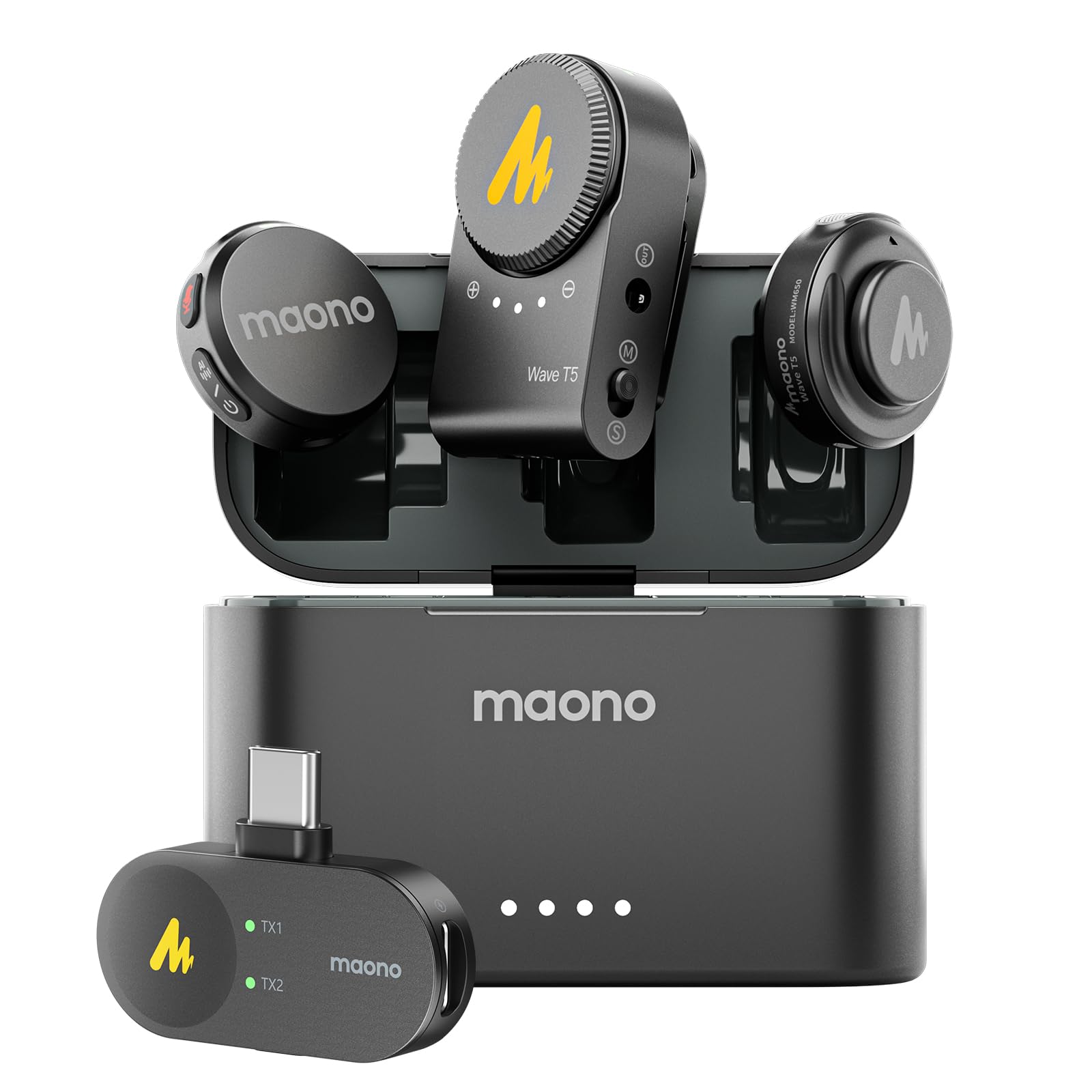
Four one-tap voice presets so you can skip the EQ work and shoot.
Most mics leave you to fix tone in editing. This one gives you four presets on the mic itself: Vocal Enhancer for everyday clarity, Brightness for punchy vlogs, Warmth for a soft storytelling tone, and Magnetic Radio for that deep broadcaster sound. A dedicated ENC chip (environmental noise cancellation) does the separating of voice from background, adjustable across 3 modes and 14 levels through the Maono Link app. The transmitter weighs just 9 g.
Range is serious: up to 300m in the open, and 100m even when the transmitter is behind your back or in a pocket, thanks to frequency-hopping tech. That means you can turn away from the receiver or pocket the transmitter without the signal cutting out. Battery runs 9 hours per transmitter and 40 hours total with the charging case. The receiver adds a Type-C port that charges your phone while you record, and playback works without unplugging.
Here’s the honest part. The sound quality and value win people over, but the recurring issue is receiver reliability — a few units malfunction and connectivity takes some care to nail down. Pairing needs the slow-flash-to-rapid-flash ritual done right on both units. Once paired, daily use is smooth — just budget a few minutes for the pairing sequence the first time.
What makes it distinct
- 4 one-tap voice presets replace manual EQ
- 3 modes and 14 noise-cancellation levels via the app
- 300m range, and 100m even behind your back
- 40-hour total battery with phone-charging receiver
What to keep in mind
- Receiver reliability draws mixed feedback
- Pairing takes the correct button sequence to succeed
Good for: creators who want built-in voice shaping and long-range freedom without post-production EQ.
Caveat for: buyers who want zero-setup simplicity — pairing here rewards patience.
Know the Specs
Transmission Range (feet and meters)
This is how far the mic can sit from the receiver before audio drops. A 70-foot system is fine for a talking head; a 300m system lets you roam a stage or a street. Bodies and walls cut range, so treat the listed figure as a best case. Line-of-sight distances like 1,000 feet assume a clear path with nothing between.
Sampling Rate and Bit Depth (kHz / bit)
These describe how much audio detail the mic captures. A 48kHz/16bit or 48kHz/24bit recording keeps more of the natural texture of your voice than a lower-rate mic. Higher bit depth leaves more room to fix levels in editing without noise creeping in. For phone vlogging, 48kHz is the number to look for.
Common Questions
Will a USB-C wireless mic work with my iPhone?
How far can I walk from my phone with a wireless lavalier?
Do I need a charging case for a phone vlogging microphone?
Is noise cancellation on these mics worth having?
Can I use one of these mics with a camera instead of a phone?
What does plug-and-play mean on these wireless mics?
Will these mics let me charge my phone while recording?
How long does the transmitter battery last per charge?
Can I record two people at once with these kits?
The Bottom Line
For most phone vloggers, the wireless microphone for vlogging with phone winner is the DJI Mic Mini because it pairs a 300m range and 11.5 hours of operating time with two transmitters, so it covers solo and two-person shoots in one kit. If battery life is your priority, the BOYA V30 runs 36 hours total in a case. And for the strongest audio and the longest reach on the list, the Hollyland Lark M2 with its 1,000-foot range and 48kHz/24bit recording is the one to reach for. Whichever you land on, check the connector against your phone’s port first — a USB-C receiver won’t seat in a Lightning iPhone without an adapter.
How we choose
We do not accept paid placement. Every pick is matched to a real buyer and a real use-case; we do not hands-on test units.
Sources
Specifications: manufacturer listings and product documentation. Review insights: verified customer reviews, as of November 2026. Pricing: not shown on this page (it changes often); check the current price via the retailer link.
As an Amazon Associate, Tactical Gear Guy earns from qualifying purchases. This does not affect which products we feature.