Specs are compiled from manufacturer listings and verified buyer reviews and can change over time — please confirm the key details on the product page before buying.
You want a set of wired cans that plugs straight into your Android phone, tablet or laptop, keeps working without a charge, and does not sound thin. The short answer: the Sony MDR7506 is the safest pick for most people, but the Moondrop Old Fashioned and the OneOdio pair are close behind for lighter wallets. Everything below is chosen for one thing — a real 3.5mm cable that works on Android hardware without dongles or battery anxiety.
This guide is built by comparing the manufacturers’ published specifications and the patterns across verified customer reviews, so you get each pick’s real strengths and trade-offs instead of marketing spin.
You are about to see nine corded headphones, ranked by what actually matters on an Android phone: the jack, the cable, the fit and the tuning. Each one is a real corded model you can plug in today, and every entry tells you which buyer it fits and which one it does not. Read on for the best wired android headphones for your ear and your pocket.
Top Picks


How To Choose The Best Wired Android Headphones
Three things trip up most people buying a corded pair for an Android phone: does it plug in cleanly, will it stay comfortable for a full commute, and will it sound good without a bass boost cranked up. Get those three right and you are done. Here is how to read the specs that matter.
The plug and the cable are the first decision
Android phones vary — some still have a 3.5mm socket, others only a USB-C port. A 3.5mm headphone needs an adapter on a USB-C-only phone, while a USB-C model plugs straight in with no dongle. Check your phone’s port before anything else. Cable length also matters: a 9.8 foot cord gives you room to move at a desk but tangles in a bag, while a 2.2m (7.2ft) cable is a middle ground.
Driver size and tuning, in plain words
The driver is the small speaker inside each cup, measured in millimeters. A 40mm driver is the common size here, and a 50mm driver moves more air, which tends to mean more bass weight. Bigger is not automatically better — tuning matters more. A closed-back design (cups that seal around your ear) blocks outside noise and keeps your music private. An open-back design (vents in the cup) lets air and sound escape, which gives a wider soundstage but leaks audio to the people next to you.
Comfort, pads and the long game
Over-ear cups that fully surround the ear spread weight better than on-ear pads that press on it. Look for replaceable ear pads and a detachable cable — those two parts wear out first, and swapping them is the difference between a five-year headphone and a two-year one. An inline mic and remote are worth checking if you take calls; some corded models skip them entirely.
Side-by-Side Comparison
| Model | Best For | Driver Size | Cable | Design | Amazon |
|---|---|---|---|---|---|
| Sony MDR7506★ Best Overall | Reference sound on a budget | 40mm | 9.8ft, fixed | Closed-back | Amazon |
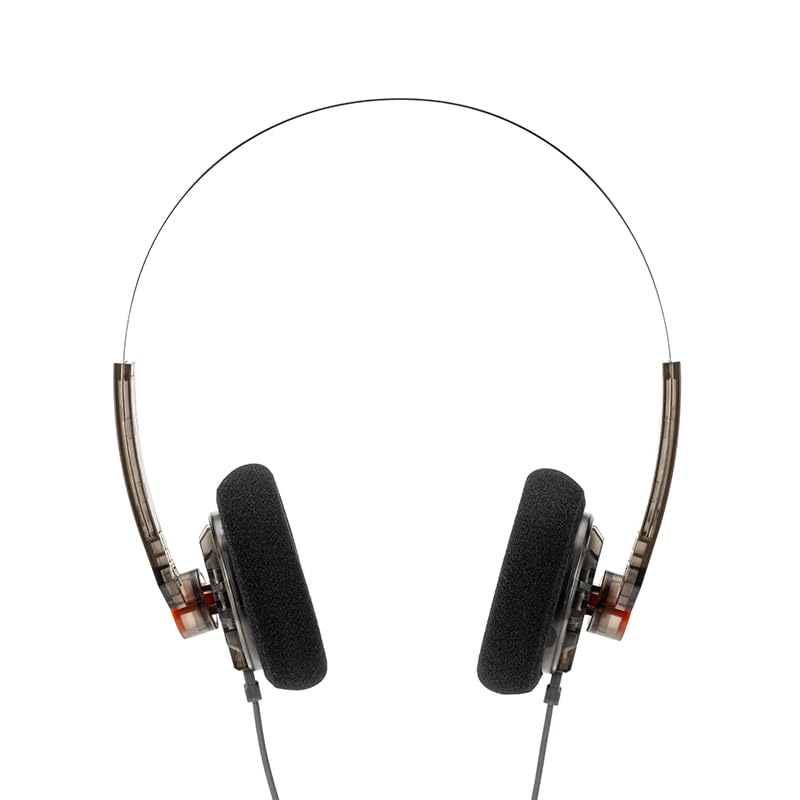
| Moondrop Old FashionedBest Retro Pick | Retro open-back on-ear | 40mm | 0.78mm 2pin, detachable | Open-back | Amazon |
| OneOdio A71DBest for DJs | DJ and studio monitoring | 40mm | 2.2m (7.2ft), fixed | Closed-back | Amazon |
| OneOdio Pro-10 | Big bass and shared listening | 50mm | Detachable | Closed-back | Amazon |
| ARTIX CL750 | School and work calls | 40mm | Tangle-free, fixed | Closed-back | Amazon |
| MEE audio Halo | USB-C phones, no dongle | 40mm | Fabric-wrapped, fixed | Closed-back | Amazon |
| Audio-Technica ATH-M20x | Studio tracking sessions | 40mm | 6ft, single-side exit | Closed-back | Amazon |
| Sennheiser HD 569 | Long listening at home | 38mm | 3m and 1.2m, detachable | Closed-back | Amazon |
| Sennheiser HD 599 | Wide soundstage listening | — | 3m and 1.2m, detachable | Open-back | Amazon |
Detailed Reviews
1. Sony MDR7506 Professional Large Diaphragm Headphone
Our pick — 4.5+★ from 28,500+ verified ratings; the strongest balance of quality and price.
The studio workhorse that plugs into your phone and just plays, without a battery or a dongle.
One corded pair that handles podcast editing and a train ride is the Sony MDR7506, and it earns its spot on flat, honest tuning rather than a bass boost. It runs 40mm neodymium drivers (the magnets inside a 40mm speaker that push air and create the sound). Its frequency response covers 10Hz to 20kHz, the full audible range your ears can pick up, so you hear what was recorded. That flat tuning suits editing and long listening sessions, but if you want thumping bass on the move, this is not the pair for you.
The 9.8 foot cord is the big practical detail. At a desk it lets you lean back or walk to the kitchen without unplugging. In a bag it coils up and can be a nuisance, which is the most common gripe, and the cord is not detachable. The fold-up design stores in the included soft case, and the closed ear cups keep your music out of other people’s ears.
The build is the split personality here. The ear pads are the wear item — some units arrive with pads that flake and split sooner than you’d hope — but the frame itself takes a beating. Reviewers report dropped, sat-on and spilled-on units that still work. If you want a headphone you can re-pad and keep, this frame is built for it.
What holds up
- Flat, detailed tuning that suits mixing and casual listening alike.
- 9.8 foot cord gives real freedom at a desk.
- Folds up with a soft case for easy travel.
- Closed-back cups keep the sound in.
Where it bites
- Ear pads are the first part to wear out.
- Non-detachable cord limits repair options.
- Long cord tangles in a bag.
Pick this if: You want the most balanced sound and the most real-world endurance for the money.
Think twice if: You need a short, pocket-friendly cord.
2. Moondrop Old Fashioned 40mm On-Ear Headphone
A retro 80s-looking on-ear with a cable you can swap yourself.
This is the pick for anyone who grew up on foam-pad on-ear headphones and wants that vibe without the cable dying on them. The Moondrop Old Fashioned uses a 40mm dynamic driver — a common size in this bracket — with a high-damping diaphragm built for an open-back soundstage. That means the music feels like it’s in the room with you, not sealed inside the cups.
What wins people over is the modular design. The cable is a 0.78mm 2-pin detachable unit, so when it wears through you replace the cable instead of the whole headphone. The earcups and headband also detach, and the headband is telescopic with multi-axis swivel hinges, so it adapts rather than clamps. It’s light enough to forget you’re wearing it, and the soft pads mean long sessions don’t turn into a vice grip on your skull.
The honest trade-off is bass depth and isolation. Open-back means the sound leaks and outside noise gets in, so this is not a commute or cubicle headphone. The bass is described as punchy and tight rather than heavy, which suits pop, acoustic and spoken word but not bass-heavy genres. If you want rumble, go elsewhere — if you want air and detail in a cheap, repairable shell, this is the one.
What buyers tell you: Reviewers call the build sturdier than other retro-styled on-ears at this price, and the sound a lot of headphone for the money.
The honest catch: Open-back leaks sound both ways, so quiet offices and buses will fight it.
Get this one when: You want a repairable, light, retro on-ear for desktop listening.
Leave it for: Anyone who needs noise blocked out on a commute.
3. OneOdio A71D Wired Over-Ear Headphones
Earcups that rotate 90 degrees so you can hear the mix and the room at once.
Mix, DJ or record and the A71D earns its slot on one practical trick: the ear cups swivel 90 degrees, so you can slide one off and monitor with a single ear while the other still plays the track. That is the most useful feature in a studio or DJ context, and it is why this pair holds a place even against sturdier picks. The 40mm dynamic drivers cover 40kHz, and a 2.2m (7.2ft) audio cable gives enough slack to reach a mixer or a laptop across the desk. Casual listeners who never need one-ear monitoring can save the money and skip it.
The comfort story is real: soft padded ear muffs, an adjustable headband and a foldable body. It folds down into the included pouch, which makes it easy to toss in a gig bag. The sound is described as reproducing music, effects and spoken word cleanly, and it does all this without asking for a big budget. That combination makes it a solid first serious pair for DJ and studio work.
Two things to know. The cable is a permanent fixture, not detachable, so a cable failure means a replacement pair. And the fit is comfortable at first but can tire the ears over a long session — the headband and pads are not as plush as the premium picks. If you record in short bursts it is fine; if you wear headphones all day, go premium.
The selling points
- 90-degree swivel cups allow single-ear monitoring.
- Foldable body with carrying pouch.
- 2.2m (7.2ft) cable reaches mixers and amps.
- Clean, clear output for the money.
Know before you buy
- Cord is fixed, so it is not repairable at home.
- Long sessions can tire the ears.
- Not tuned for deep bass fans.
Best match: DJs, bedroom producers and anyone who monitors with one ear.
Not your pick if: You want a detachable cable for easy replacement.
4. OneOdio Wired DJ Hi-Res Over-Ear Headphones

The one with the biggest drivers here and a second jack to share the music.
Here is the head-to-head that matters: this OneOdio uses 50mm speaker drivers, while the Sony MDR7506 uses 40mm drivers — a 25% gap in diameter that translates into more air moved and a fuller low end. Neodymium magnets drive them, and the tuning is described as powerful bass with clear vocals and crisp highs. If your playlists lean on hip-hop, EDM or action games, this is the pick that delivers the thump.
The 90-degree swiveling cups allow single-ear monitoring, and the soft padded ear cushions with the adjustable headband make long sessions bearable. The self-adjusting headband is the detail that sells it for desk work — it finds the fit itself rather than you fiddling. There is also a shared audio port, so you can run a second pair from the same source without a splitter. That is a handy trick for gaming sessions or watching something together.
The real caveat is durability and fit. The ear pads wear out first, and the headband is not the most plush — some users find it too tight over long stretches. Expect to replace it every few years rather than pass it on. But for this price, the bass and the shared port are hard to argue with.
What the crowd likes: The bass-heavy tuning and clear vocals are the standout, and the shared audio port is a practical bonus.
What to weigh up: The pads and headband are the weak points over long wear.
Reach for this if: Bass, gaming and shared listening are your priorities.
Look past it if: You want a neutral studio reference or years of pad life.
5. ARTIX CL750 Wired Headphones with Mic
A plug-in pair with a mic on the cord for meetings, classes and calls.
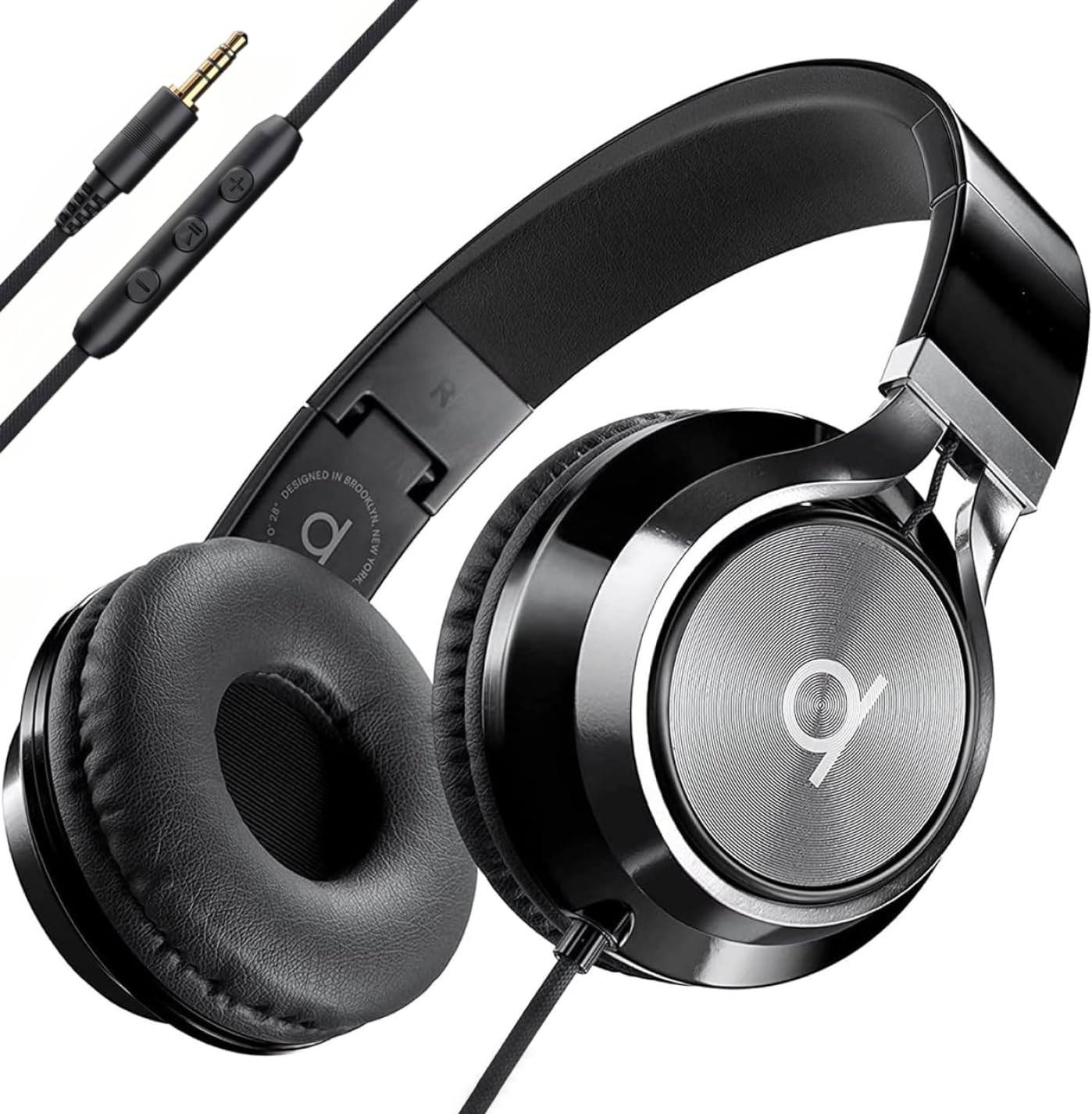
The ARTIX CL750 is the one to grab when the job is talking, not just listening. It has an in-line mic and a volume control (the volume works on mobile devices), so you can take a video call or sit through a lesson without reaching for the phone. The 3.5mm jack plugs into PC, Mac, PS4 and PS5 and Xbox, and the foldable over-ear body blocks out background noise for focus. A 40mm dynamic driver handles the sound duty.
For students and office workers this covers the whole day: a long cord, a tangle-free wrap and soft cushioned ear cups on an adjustable headband. It’s also light on the head, which helps when the day runs long. The inline mic is clear enough for calls, podcasts and casual gaming chat, and the price is gentle enough to buy without a second thought.
Be honest about the sound: it’s tuned for calls and casual listening, not critical music. The noise isolation is passive, so loud cafeterias still leak in, and the volume tops out lower than some want. Durability is the one to watch — the plastic joints are the stress point, and it is not a headphone you should expect to survive a teenager’s backpack for years. Treat it as a workhorse for calls, not a hand-me-down.
Why it earns a place
- Built-in inline mic for calls and classes.
- Plugs into PC, Mac and consoles with a 3.5mm jack.
- Foldable and light for a backpack.
- Volume control on the cord.
The limits
- Sound is tuned for speech, not bass.
- Passive isolation only.
- Plastic joints are the weak point.
Made for: Students, remote workers and anyone whose main job is talking into a mic.
Step up if: You want serious sound quality and a metal frame.
6. MEE audio Halo Over-Ear USB-C Headphones
No 3.5mm jack? This one plugs straight into a USB-C port and lights up.
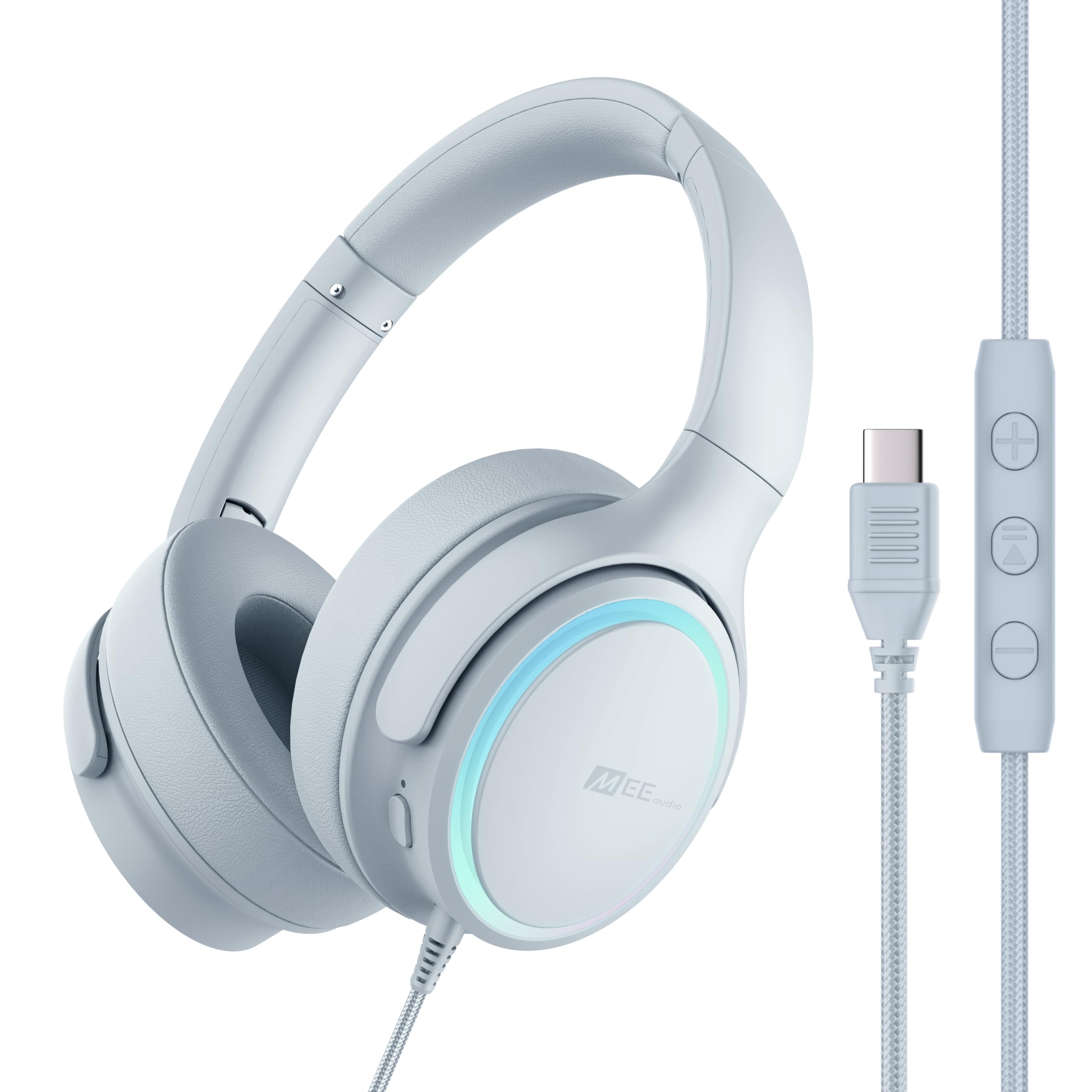
Modern Android phones and iPhones have dropped the 3.5mm socket, which is where the MEE audio Halo earns its place. It terminates in a USB-C plug, so it works natively with devices that take USB-C audio — no dongle, no Bluetooth pairing, no charging. That also means it fits iPhone 15, 16 and 17, iPad, Samsung Galaxy, Google Pixel, Chromebooks, MacBooks and USB-C laptops. If your phone is all-screen and port-only, this is the one that just works.
The 40mm dynamic drivers are tuned for a crisp, clear stereo image, and the plush over-ear cups seal around your ears to block ambient noise. A fabric-wrapped cable keeps tangles down, the body folds flat for storage, and memory-foam ear pads keep things comfortable over a long call or movie. There is also a 3-button inline remote and built-in mic for taking calls and adjusting playback without reaching for the device.
Then there is the LED ring around each earcup, which has 10 selectable colors and patterns to match your mood or your outfit. It’s a fun extra, and you can leave it off entirely if you want a plain look. The catch is that this is a newer model with a smaller review base, so long-term data is still building. Buy it for the USB-C plug, not the LED ring.
Why it stands out: USB-C plug-and-play removes the dongle and the charging question in one move.
One thing to flag: A new release means less long-term feedback than the established picks.
Choose this when: Your phone has no headphone jack and you want no adapter.
Not ideal if: You want a plain, no-LED look or a proven long track record.
7. Audio-Technica ATH-M20x Headphones

The budget studio monitor that keeps a neutral ear and a long, tough cord.
Audio-Technica built the ATH-M20x for tracking and mixing, and the tuning shows it: 40mm drivers with rare earth magnets and copper-clad aluminum voice coils (the wire coils that drive the speaker), tuned for enhanced low-frequency performance. In plain terms, the bass is present but controlled, so you hear the mix rather than a party. The circumaural design (cups that sit around the ear rather than on it) creates a seal that helps in loud rooms. Sound pressure level is rated at 96dB/mW, so it goes loud without needing much power from your phone.
The build is the reason it holds up better than its price suggests. A single-side cable exit keeps the cord out of the way, and the 6ft cord is a sensible length for desk work — long enough to move, short enough to stay tidy. That cable length is the most argued-about point: some love it, others find it too long at a computer desk. It’s a fit issue, not a fault.
What you should expect is a neutral, slightly warm signature rather than a bass cannon. The padding is firm rather than cloud-soft, which keeps the seal but takes a week of breaking in. For mixing, gaming and general computer use at the price, though, it’s a serious, reliable tool.
What reviewers keep saying: Reviewers keep returning to the long, tough 6ft cord and years of reliable performance.
The honest catch: The 6ft cable is longer than some desk setups want.
Suits: Home producers, students and gamers who want an honest monitor sound.
Skip if: You want ultra-plush pads and a short cable.
8. Sennheiser HD 569 Closed-Black Wired Audiophile Headphones
The closed-back Sennheiser that hides the world and doubles as a headset.
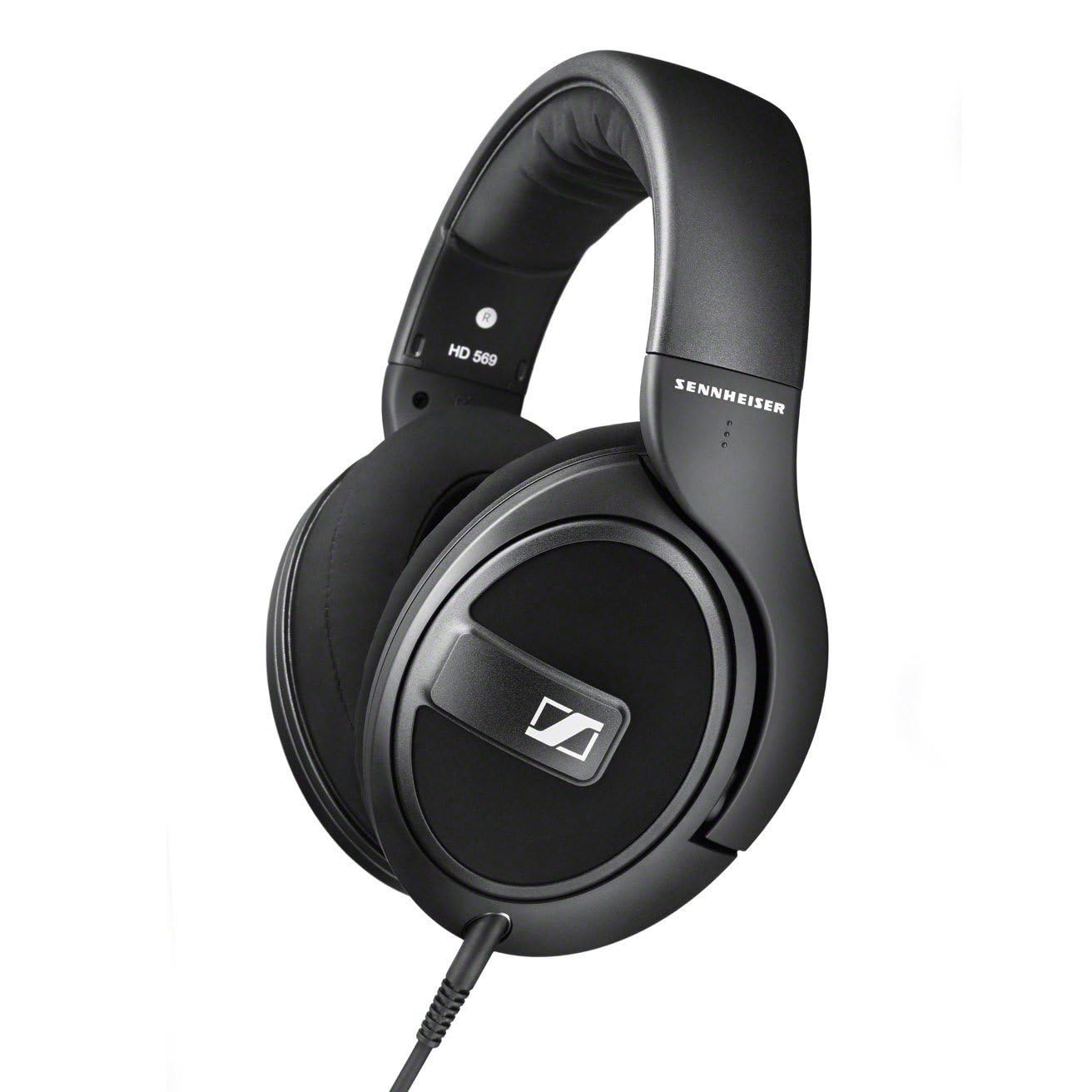
The HD 569 is the pick for long, quiet listening at home. It uses proprietary Sennheiser 38mm, 23-ohm transducers — the 23-ohm rating means it’s easy to drive from a phone, so you don’t need a headphone amp to get volume. The closed-back, around-ear design seals you in, and the sound is described as clean and full without needing a big power source.
The big practical advantage is the two-cable setup. You get a 3 meter detachable cable with a 6.3mm jack for home hi-fi gear, and a 1.2 meter detachable cable with a 3.5mm jack and an inline microphone and remote for phone calls and music control. That second cable is what makes it a true Android companion. The ear pads are soft and replaceable, which means you can refresh the headphone instead of replacing it.
Two honest notes. The pads and headband material are quick to flake over time, especially if you have a beard that rubs them. And the clamp is on the firm side for some head shapes: it seals well but is not the light floating feel of the open-back pick above. If you want isolation and a headset in one, though, this package is tough to top.
Strong suits
- Closed-back isolation for home and office.
- Two detachable cables — home and phone covered.
- Easy-to-drive 23-ohm design works from a phone.
- Replaceable ear pads.
Trade-offs to accept
- Pad and headband material flakes over time.
- Firmer clamp than open-back models.
Best for: Home listeners who want isolation plus a phone-ready cable and mic.
Consider another pick if: You need a feather-light clamp for marathon sessions.
9. Sennheiser HD 599 Open-Back Headphones
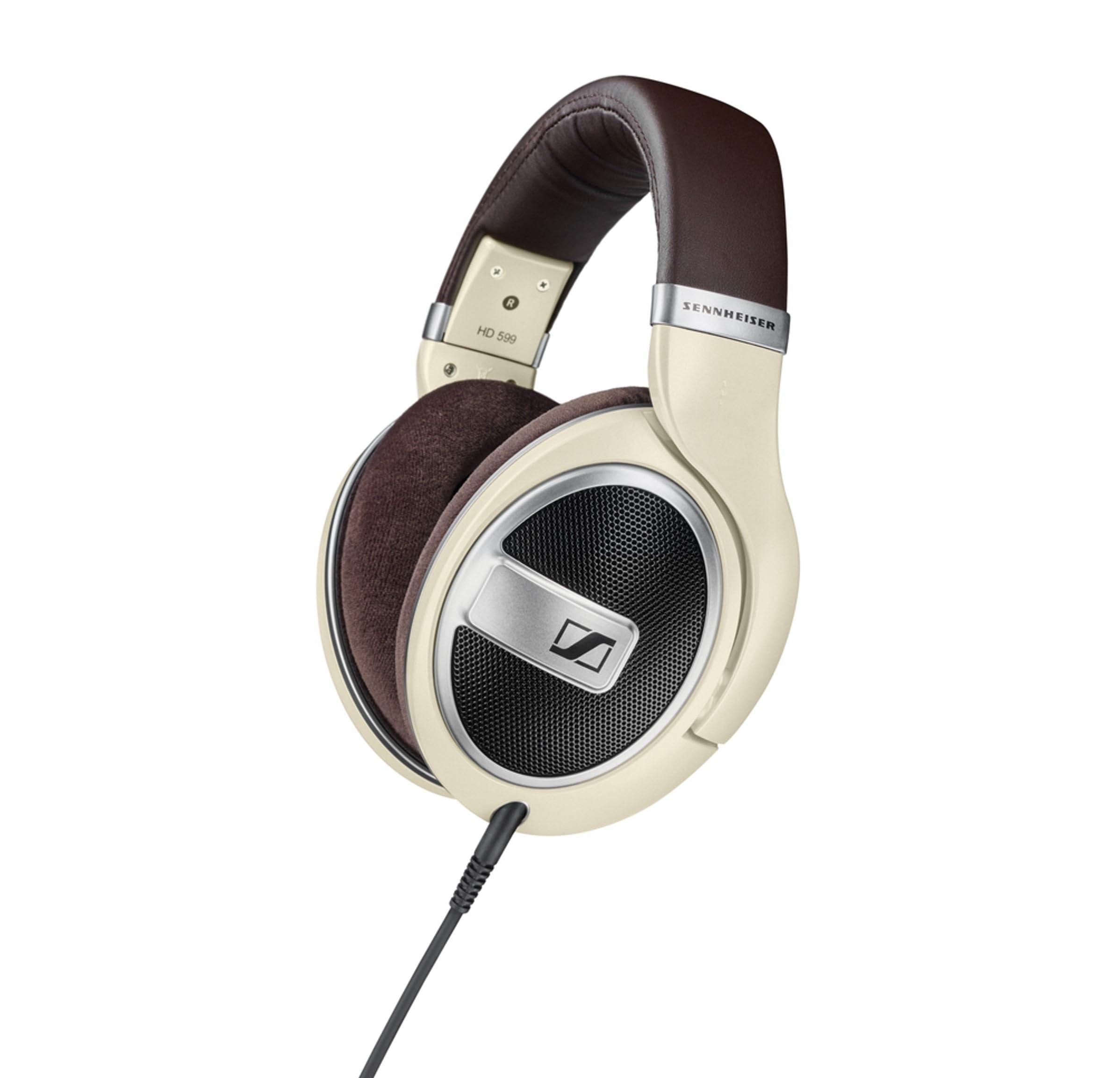
Open-back velour luxury for the long, quiet at-home listen.
The HD 599 is the pair you buy when your listening happens in one quiet room and you want the music to breathe. It’s an open-back, around-ear design, which means the cups are vented so air and sound can move — the trade-off is that it leaks audio outward and lets in room noise. What you gain is a wide, airy soundstage that makes acoustic music and games feel spacious, with aluminum voice coils in the transducers for high efficiency and low distortion.
Comfort is the headline. Padded headband and velour-covered ear pads are built for hours of wear, and the light body keeps pressure off the ears. The cables are detachable too — a 3 meter cable with a 6.3mm jack and a 1.2 meter cable with a 3.5mm jack, so it works with a phone and with home audio gear. The ivory finish and matte brown headband stitching give it a look that’s more furniture than gadget.
Two things will send some buyers to the HD 569 instead. The open-back design offers no real isolation, so a shared room or a commute is a mismatch. And the bass is present but not heavy — it’s a detail-first tuning, not a thump-first one. If you want the airiest, most comfortable listen in a quiet room, this is the end of the line.
The draw: Velour pads and a light body make it a comfort-first pick for long sets.
What to think about: Open-back means no isolation and the music leaks to the room.
The right owner: Quiet-room listeners who value airy detail over bass weight.
Wrong fit for: Commuters or anyone sharing a workspace.
Know the Specs
Driver size and impedance
The driver is the little speaker inside each cup, measured in millimeters — 40mm is standard here, while 50mm moves more air and tends toward stronger bass. Impedance (measured in ohms) tells you how easily a phone can drive the headphone: a lower number like 23 ohms is easy to power, while a higher one may need a headphone amp. For Android use, easy-to-drive is the safer choice.
Jack, cable and replaceability
A 3.5mm plug is the classic Android connection, while a USB-C plug skips the dongle on newer phones. A detachable cable and replaceable ear pads are the two features that stretch a headphone’s life, because those are the parts that wear out first. Fixed cables are simpler but mean a cable failure ends the whole pair. Check cable length against your desk or commute before you commit.
Common Questions
Will these wired headphones work with my Android phone?
What is the difference between open-back and closed-back headphones?
Do I need an amplifier to drive these headphones?
Can I replace the cable or the ear pads on these headphones?
Which of these is best for DJing and mixing?
Do these headphones have a microphone for calls?
How long will a wired headphone last?
Is a bigger driver always better?
The Bottom Line
For most people shopping for wired android headphones, the winner is the Sony MDR7506 because its 40mm drivers, flat tuning and 9.8 foot cord give you a serious reference sound at a sensible level. If you want the bass-first option with a shared audio port, reach for the OneOdio Pro-10. And if your phone has no 3.5mm jack, the MEE audio Halo plugs straight into USB-C with no dongle. Any of these three will get you listening today without a battery in sight.
How we choose
We do not accept paid placement. Every pick is matched to a real buyer and a real use-case; we do not hands-on test units.
Sources
Specifications: manufacturer listings and product documentation. Review insights: verified customer reviews, as of November 2026. Pricing: not shown on this page (it changes often); check the current price via the retailer link.
As an Amazon Associate, Tactical Gear Guy earns from qualifying purchases. This does not affect which products we feature.