Specs are compiled from manufacturer listings and verified buyer reviews and can change over time — please confirm the key details on the product page before buying.
Cold feet end more winter hikes than steep climbs do. You need a boot that traps heat, shuts out slush, and still lets you walk a real trail. The picks below cover that whole spread, from a 200 g insulated all-rounder to a boot with 400 g of premium insulation for deep-cold days.
This guide is built by comparing the manufacturers’ published specifications and the patterns across verified customer reviews, so you get each pick’s real strengths and trade-offs instead of marketing spin.
You will see how insulation weight, waterproof membranes, and outsole rubber change what a boot does on packed snow versus wet rock. Here is the honest shortlist of winter insulated hiking boots that actually earns its place.
Top Picks


How To Choose Winter Insulated Hiking Boots
Most people buy a winter boot for the wrong reason. They pick the tallest, chunkiest thing on the shelf, then find out on the trail that it weighs a lot and runs narrow. The better move is to match three things to where you actually walk: insulation weight, the waterproof layer, and the outsole.
Start with how cold you really get
Insulation is listed in grams, and that number tells you how much fill sits around your foot. A boot with 100 g of insulation (like the Oboz Shedhorn Mid) suits active winter hiking where you generate your own heat. A boot with 200 g (like the Columbia Bugaboot III or the Oboz Bridger) handles steadier cold and slower walking. The Chilkat V 400 goes further with 400 g of premium insulation, which is a 4.0x gap over the 100 g Oboz — that is the boot you pick for standing around in serious cold, not for sprinting uphill.
Waterproofing is not the same as warmth
A waterproof membrane keeps slush and creek water out, but it does nothing for heat. That is why boots pair a membrane with insulation. Look for a named waterproof layer — B-DRY, KEEN.Dry, or a seam-sealed construction — because a vague “water resistant” upper will soak through on a wet walk. A breathable membrane also lets sweat escape, which matters more than most buyers expect on a long climb.
Grip comes from the rubber, not the tread pattern
Winter grip is mostly about the rubber compound and how the sole is shaped. Boots with purpose-built winter outsoles hold better on packed snow and ice. Look for a dual-compound or winter-rated rubber, plus a heel kick that gives you a brake on descents. Deep lugs alone will not save you on ice.
Side-by-Side Comparison
| Model | Best For | Insulation | Waterproof Layer | Weight | Amazon |
|---|---|---|---|---|---|
| The North Face Chilkat V (200 g)★ Best Overall | Everyday winter hikes and town wear | 200 g | Waterproof construction with non-PFC DWR | — | Amazon |
| Columbia Bugaboot IIIBest Value | Three-season cold-weather walking | 200 g | Waterproof, seam-sealed | 1.44 lb | Amazon |
| Oboz Shedhorn Mid InsulatedTrail Performer | Active winter hiking | 100 g Freeze Guard | B-DRY membrane | 18.2 oz / 516 g | Amazon |
| KEEN Revel IV High Polar | Deep powder and ice | Rated to -40°F | Waterproof leather and performance mesh | — | Amazon |
| The North Face Chilkat V 400 | Serious cold and standing around | 400 g | Waterproof construction with non-PFC DWR | — | Amazon |
| Merrell Coldpack 3 Thermo Mid | Ice and packed snow | 200 g with fleece lining | Waterproof construction | — | Amazon |
| Oboz Women’s Bridger 7″ Insulated | Snowshoeing and winter trekking | 200 g Freeze Guard | B-DRY membrane | 20.5 oz | Amazon |
| KEEN Women’s Revel III | All-weather hiking and snowshoeing | KEEN.Warm plus tri-layer heat trapolator | KEEN.Dry membrane | 1 lb | Amazon |
| Baffin HIKE Mid | Trekking and camping in deep cold | Tundra rated | Waterproof soft shell upper | 1.12 lb | Amazon |
Detailed Reviews
1. The North Face Chilkat V Snow Boot
Our pick — 4.5+★ from 400+ verified ratings; the strongest balance of quality and price.
The balanced all-rounder that covers a snowy commute and a trail walk in one boot.
The number to start with is 200 g of premium insulation. That is the middle setting on the winter dial — enough fill to keep your feet comfortable on a cold day, but not so much that your feet cook on a climb. For most people reading this, that balance is the whole point. If you walk from your door to a trailhead and back in normal winter weather, this is the pair that fits both halves of the day.
Underneath, you get a fully waterproof construction with a non-PFC Durable Water Repellent treatment. In plain terms, DWR is a coating that makes water bead and roll off the outer fabric instead of soaking in. Non-PFC means the coating is made without a class of chemicals called PFCs. So a wet slushy sidewalk sheds off the boot rather than seeping in around the toe.
What wins people over is the combination of comfort and versatility, and the crowd backs it up — it holds 4.5+ stars across 400+ Amazon ratings. The recurring note is durability you can lean on: boots that survive dirt, mud, creeks, and light snow without falling apart. The honest catch is that 200 g is not deep-cold insulation. On a genuinely bitter day standing still, your toes will feel it — that is what the 400 g version below is for.
Where it earns its keep
- 200 g of premium insulation — warm on cold days without overheating on the climb
- Fully waterproof build with a non-PFC DWR treatment that sheds slush
- Lightweight for a winter boot, so long walks do not drag on your legs
- Holds up across dirt, mud, creeks, and light snow
Where it tops out
- 200 g is not enough for standing around in deep cold
- Best for everyday winter weather rather than serious polar conditions
Made for: hikers and commuters who want one boot for cold, wet, normal winter days — the strongest all-round pick on this list.
Think twice if: you need a boot for sub-zero standing time, where the 400 g Chilkat below is the better tool.
2. Columbia Bugaboot III
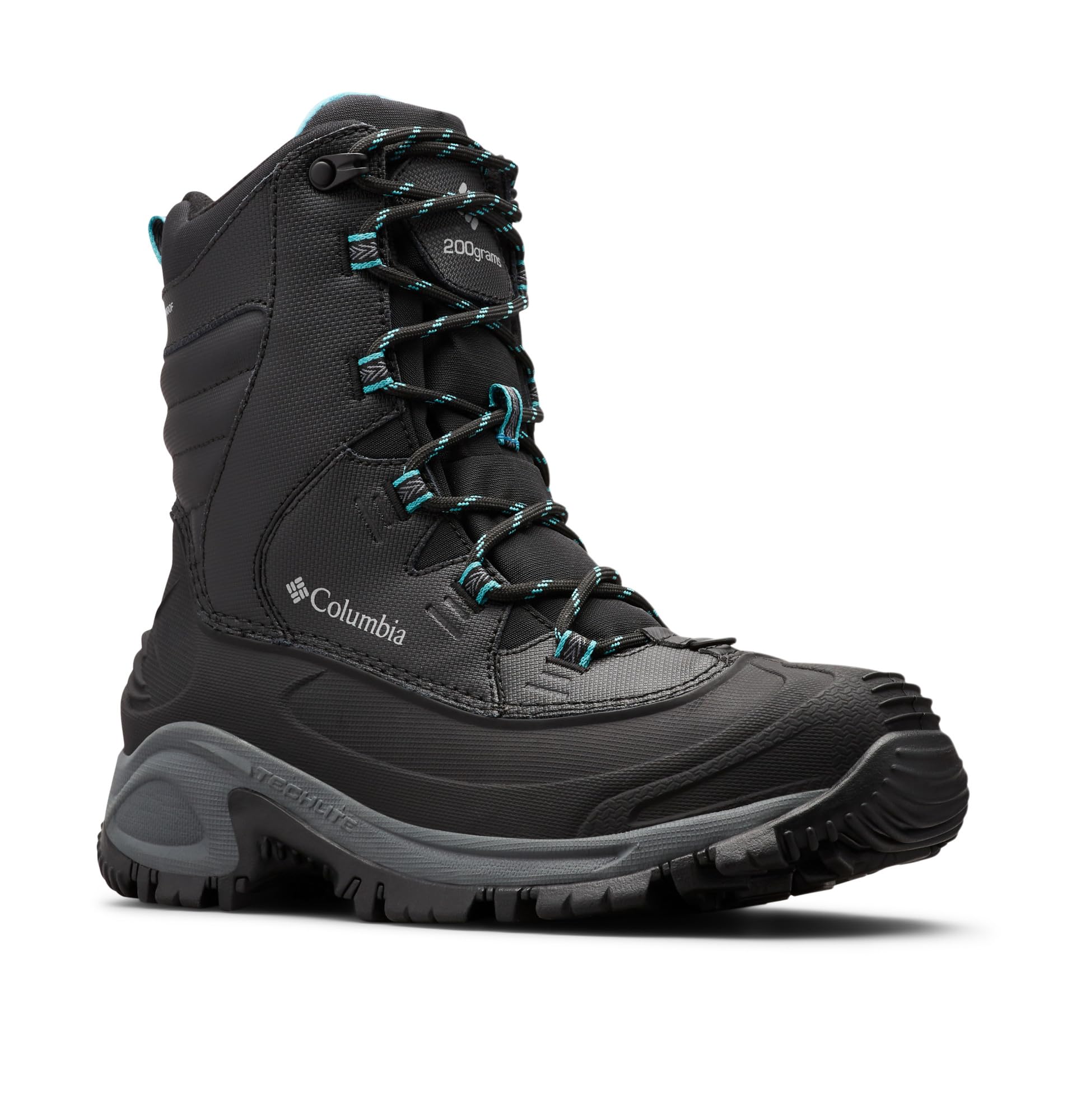
A women’s winter boot built to handle a cold commute, a muddy path, and a snowy trail in the same week.
This is the women’s pick for anyone who wants warmth without overpaying for it. It carries 200 g of insulation plus Columbia’s patented thermal-reflective lining, which is a thin layer that bounces your own body heat back at your feet. The upper is PU-coated leather and textile over an injection-molded rubber shell, and the whole thing is waterproof with seam-sealed construction. Seam-sealing matters — it means the stitching is taped so water cannot sneak through the needle holes.
The fit is the thing buyers talk about most, and it lands as a positive here. Sizing runs true, so you can order your normal number rather than guessing up or down. Comfort and support follow closely behind, with owners describing long walks without leg pain and steady footing on packed snow. At 1.44 pounds it stays light enough to wear all day without dragging.
The trade-off is that this is a three-season cold-weather boot, not a deep-winter mountaineering shell. For icy multi-hour expeditions in serious cold, a heavier insulated boot will hold heat longer. For everything else — school runs, dog walks, weekend trails — it quietly overdelivers.
What you get for the money: 200 g of insulation, a thermal-reflective lining, and a seam-sealed waterproof build in one boot — a lot of cold-weather capability for an entry-level price tier.
Who it fits best: women who want a true-to-size, comfortable winter boot for everyday cold and moderate trails.
Buy this one if you are outfitting for a normal winter of commutes and weekend walks without spending premium money.
Leave it on the shelf if you plan to stand in freezing weather for hours at a time.
3. Oboz Shedhorn Mid Hiking Boot
For the hiker who runs hot and wants warmth without a bulky, sweat-trapping boot.
At 100 g of Freeze Guard insulation, this is the lightest insulation setting on the list. Compare it to the Chilkat V 400 further down with its 400 g — that is a 4.0x gap in fill weight. The Shedhorn trades some warmth for a boot you can move in. If you hike hard enough to heat yourself up, that is exactly the right trade.
The upper is LWG Gold Rated nubuck leather over a B-DRY waterproof, breathable membrane. B-DRY keeps wet out while letting sweat vapor escape, which is the difference between dry-and-happy feet and a swamp after a climb. The Trail Tread outsole is shaped for mixed cold surfaces, and the O FIT insole is molded to each pair. Heel drop sits at 8 mm, which is a modest offset that suits trail walking.
What buyers rave about is comfort, with quality close behind — owners repeatedly call it the best winter footwear they have owned. The catch is sizing depth: 100 g of insulation will not carry you through hours of standing in a hard freeze. This is a moving boot, not a camp boot.
The leather argument: LWG Gold Rated nubuck is a premium leather grade, and it gives the Shedhorn a durable, soft feel that holds up through rugged trail conditions.
The honest limit: 100 g insulation suits active hiking, but a cold, stationary day will find it out.
Matched to: men who hike at a pace that keeps them warm and want a light, breathable insulated boot that will not overheat.
Wrong tool for: slow, cold-weather walking where insulation does the work instead of your legs.
4. KEEN Revel IV High Polar
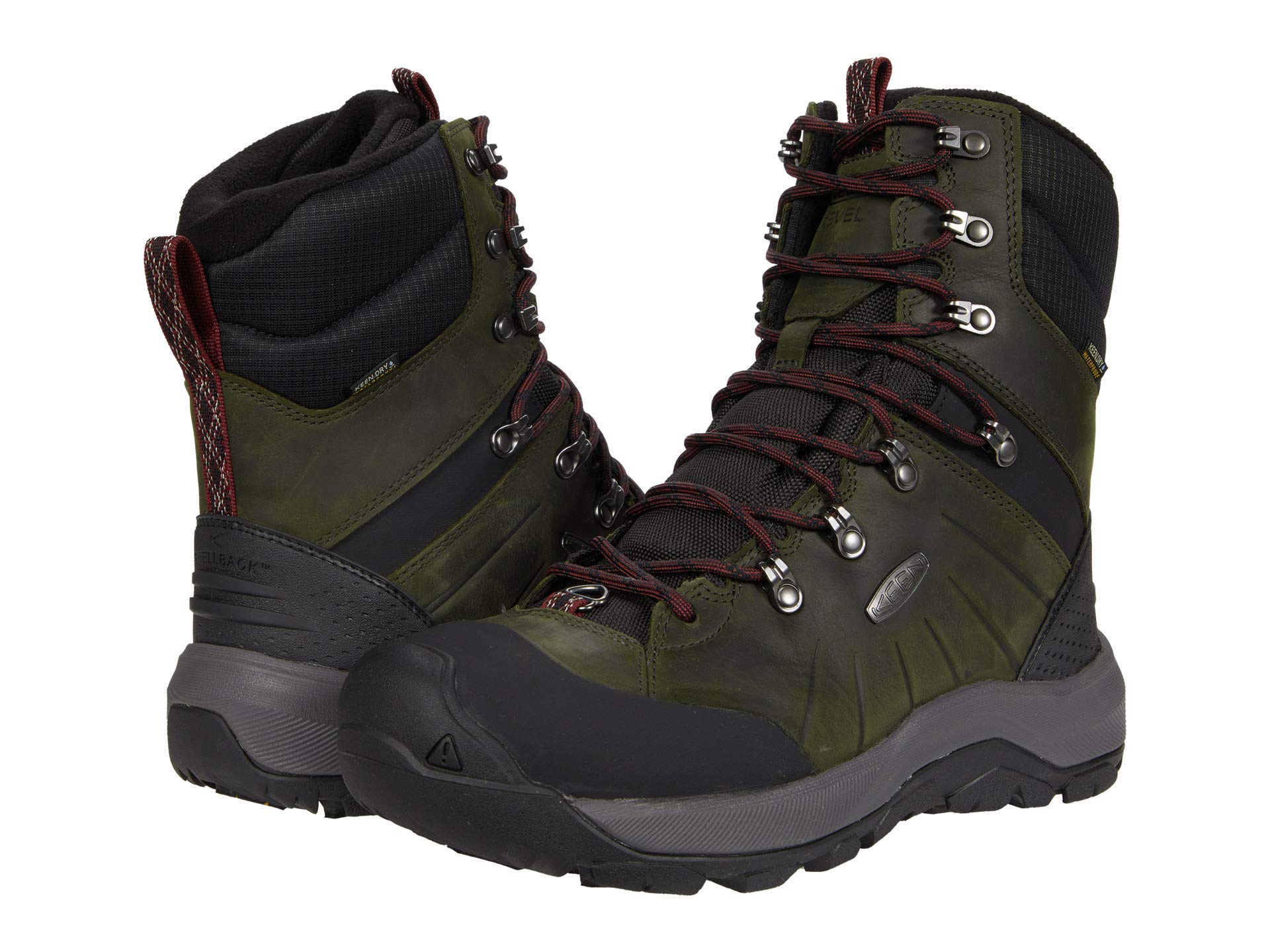
A taller boot with deeper powder clearance and insulation rated to -40°F.
The headline here is the cold rating: this boot is built for temperatures down to -40°F. That is not a number most people will ever need, but it tells you the insulation is generous. The higher profile is deliberate too — a taller boot keeps snow from spilling in over the top when you step through deep powder, which is a real problem on a winter trail with no packed path.
Warmth is what this boot is known for, and comfort sits right behind it. Owners who get the size right describe a custom-made fit. The upper is waterproof leather and performance mesh, and KEEN’s Eco Anti-Odor technology uses a probiotic-based treatment to break down odor in sweat — useful when a boot gets worn day after day. Traction on snow and ice is strong, which is exactly what the taller chassis is designed for.
Here is the honest fit note: sizing is mixed, with some people finding it perfect and others finding it runs small. KEEN builds on a wider last, so if you have narrow feet this may feel roomy. Order with room to spare and give them a try indoors before you take them onto a trail.
What makes it a cold-weather specialist
- Insulation rated to -40°F for genuine deep cold
- Higher profile keeps deep powder out of the boot
- Waterproof leather and performance mesh upper
- Eco Anti-Odor probiotic treatment fights sweat odor
What to expect before you order
- Sizing feedback is mixed — some find it runs small
- Built on a wider form, so narrow feet may feel loose
For the deep-cold walker: anyone who faces real sub-zero temperatures and deep snow, and wants the warmth rating to prove it.
Try before you commit if: you are between sizes or have narrow feet, since the fit feedback splits both ways.
5. The North Face Men’s Chilkat V 400 Waterproof Snow Boot

Twice the fill of its own sibling — the boot for the coldest days on this list.
The number that defines this pick is 400 g of premium insulation, double the 200 g of the Chilkat V above. Against the 100 g Oboz Shedhorn, that is a 4.0x gap in insulation weight, and it is the difference between a boot you wear on a cold walk and a boot you wear when the cold is the main event. If you stand around in the snow, ice fish, or walk slowly in serious cold, this is the one.
Everything else about the build is the same philosophy as its sibling: a fully waterproof construction with a non-PFC DWR finish, so wet weather beads off rather than soaking in. The result is a boot that keeps feet dry and warm across a wide range of winter conditions — the kind of all-round winter tool you reach for without thinking about it.
The honest catch is weight and bulk. All that insulation adds up, and on a fast, sweaty uphill climb, 400 g can feel like overkill. That is why the 200 g version exists — and why this one is best reserved for colder, slower days where the warmth is doing the heavy lifting.
The insulation story: 400 g of premium fill makes this the warmest option here by a clear margin, and it is the boot to grab when the forecast is genuinely brutal.
The cost of warmth: more bulk and heat than a fast hiker needs on an active climb.
Point this at: cold-weather users who spend real time outdoors in the snow and would rather be too warm than too cold.
Skip it for: fast uphill hikes in mild cold, where 400 g becomes extra weight on your foot.
6. Merrell Men’s Coldpack 3 Thermo Mid Waterproof

Built around a winter-specific rubber sole that bites into bare ice.
Most winter boots give you a tread pattern and hope for the best. This one gives you Vibram Arctic Grip underfoot, a rubber compound blended specifically to grip on cold, wet ice rather than hardening up and skidding. If your winter walking involves driveways, slick sidewalks, and iced-over trail sections, that sole is the reason to look here.
Warmth comes from 200 grams of insulation plus a fleece lining, so your feet feel warm from the moment you slide them in rather than waiting ten minutes for the boot to heat up. The construction is waterproof throughout. Quality and warmth are the two things owners rate highest on this boot, with comfort close behind — owners repeatedly call them their go-to cold weather boots.
The fit skews roomy, with plenty of space above the toes. For most people that is a plus in a winter boot, because a little air space is what insulation is meant to trap. If you like a snug, close-fitting hiker, though, size carefully — this one gives your toes room to wiggle whether you ask for it or not.
Why the sole matters: Vibram Arctic Grip is formulated to hold on bare ice, and traction on ice is the single thing this boot is praised for most.
The roominess note: a generous fit above the toes suits thick socks, but fans of a tight fit should size with care.
The fit for you: anyone whose winter routes cross ice and packed snow, and who wants the sole to do the work.
Maybe not: if you want a close-fitting boot with no extra toe room.
7. Oboz Women’s Bridger 7″ Insulated B-DRY
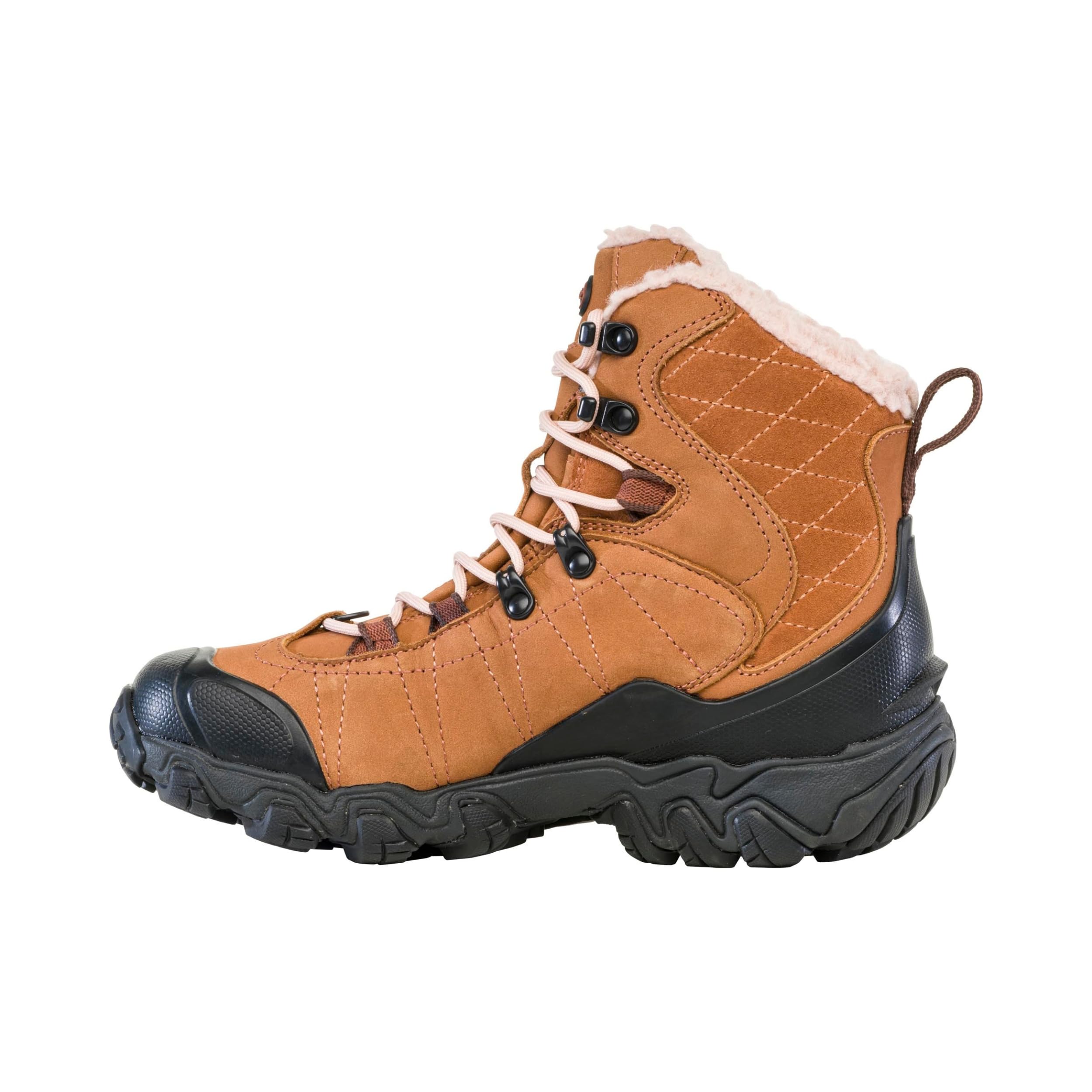
A women’s winter boot tuned so high-effort snowshoeing does not turn into a sweat bath.
The 200 g of Freeze Guard insulation is chosen on purpose. Oboz builds this for snowshoeing and other high-intensity winter activities, where too much fill makes your feet overheat. The thermal O FIT insole adds layers that trap and reflect heat from below, so warm feet do not depend on the insulation alone. The 7″ height falls a touch shorter than the brand’s 9″ winter boot, which gives your ankle a little more freedom to flex on a climb.
A waterproof nubuck leather upper sits over a B-DRY waterproof membrane, and a molded rubber toe cap and heel kick take the scrapes that winter trails deal out. A gaiter D-ring lets you clip on gaiters when the snow gets deep. The Granite Peak midsole pairs a TPU chassis for stability and stone protection with EVA cushioning, and the weight comes in at 20.5 oz. Heel drop is 12 mm, a higher offset than the 8 mm on the men’s Shedhorn.
Buyers praise quality and fit most, citing a roomy toe box and strong support. The one thing to weigh is the medium-to-high volume. If you have low-volume, narrow feet, the boot may feel like more room than you want.
The winter-trail toolkit
- 200 g Freeze Guard insulation resists overheating on hard effort
- Thermal O FIT insole reflects heat back up from the sole
- B-DRY membrane keeps wet out and lets sweat escape
- Gaiter D-ring and rubber toe cap for deep-snow trails
What to measure against
- Medium-to-high volume build may feel roomy on low-volume feet
- Shorter 7″ height than the brand’s 9″ winter boot
Reach for this if you are a woman who snowshoes or trekks through winter and wants a boot that regulates heat instead of trapping it.
Look elsewhere if you want a tall, deep-snow boot that swallows the ankle whole.
8. KEEN Women’s Revel III Cold Weather Hiking Boot
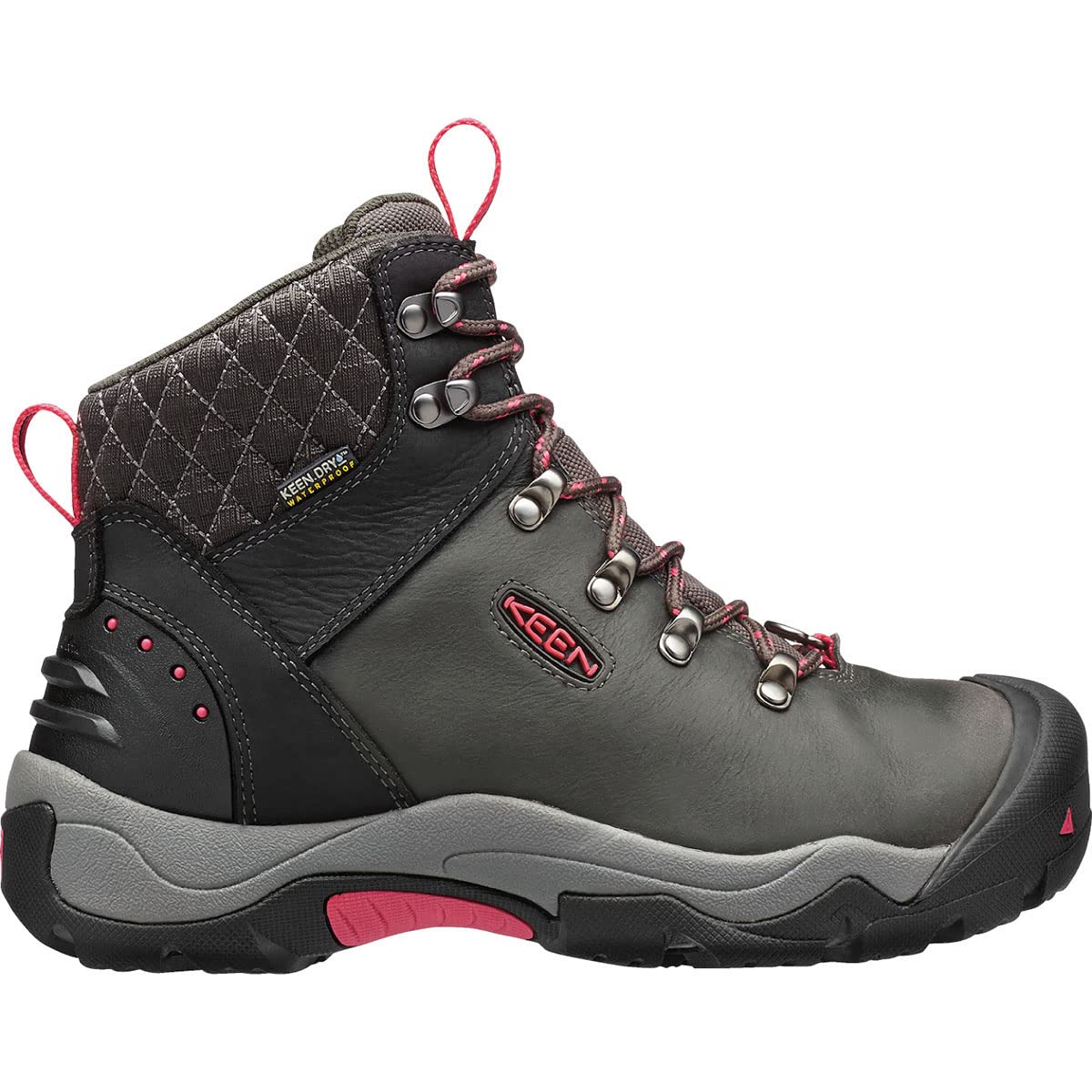
The women’s boot that covers snowshoeing, winter hiking, and wet-weather walks in one pair.
Two insulation systems do the work here. KEEN.Warm up top handles the upper, and a tri-layer heat trapolator system sits underfoot to cut the chill coming up from the ground. That two-direction approach is the reason this boot works across so many conditions. The upper is all-terrain nubuck leather lined with the KEEN.Dry waterproof, breathable membrane, so rain and snow stay out while sweat vapor can leave.
Fit is the top-rated trait, with comfort a distant second. Buyers report no break-in period and no blisters on the first long walk. Ankle and arch support are solid, and the dual-compound snow-and-ice outsole keeps its footing on mixed terrain. At 1 pound, they are easy to wear for hours without tiring your feet.
What you give up is a singular specialty. These are true all-rounders, so on a deeply buried powder day a taller, heavier boot will do more. For everything short of that — snowshoeing, winter hiking, wet-weather trail work — they cover it comfortably.
The two-layer warmth idea: KEEN.Warm above and a tri-layer heat trapolator below means the cold has to beat you from two directions at once, which is why this boot works in so many winter setups.
Where it flexes: an all-rounder rather than a deep-powder specialist.
Pick this for: women who want one boot for snowshoeing, winter hiking, and everyday wet weather without buying three pairs.
Not the one for: knee-deep powder days that call for a taller, heavier boot.
9. Baffin HIKE Mid Cold Weather Boot

A tundra-rated women’s boot with a soft shell upper and comfort-first construction.
Baffin rates this boot for tundra conditions, which is a cold-weather classification the brand uses to signal warmth for hard winters. The upper is a breathable soft shell rather than a stiff leather, and a speed-lace front fastening gets it on and off fast. Underfoot sits a GelFlex anti-fatigue midsole over a Polar Rubber base, a combination aimed at keeping your feet comfortable through a long day rather than just warm.
Comfort is the top-rated trait, with appearance a close second. The GelFlex midsole is the reason the comfort holds up on longer walks. If you are trekking or camping in cold weather and want a boot that feels friendly from the first step, this is the one to try.
The catch is fit. Several buyers find the boot runs too small, especially in the toe box. Treat that as a sizing warning rather than a deal-breaker — order up if you are between sizes, and be ready to swap. Get the size right and the comfort story is a good one.
The comfort case: a GelFlex anti-fatigue midsole over a Polar Rubber base is built for long days on your feet, and it is what buyers like most about this boot.
The sizing caveat: the toe box runs tight for many, so plan your order around that.
Best matched to: women heading out trekking or camping in cold weather who value comfort over pure insulation bulk.
Order carefully if: you have wider feet or a strong preference for a roomy toe box.
Know the Specs
Insulation weight in grams
Insulation is measured in grams per square meter of fill, and the number tells you how much warmth the boot packs in. A 100 g boot like the Oboz Shedhorn is for active hiking where your legs make heat. A 200 g boot covers normal cold-weather walking. A 400 g boot like the Chilkat V 400 is for serious cold and standing around. Match the grams to how cold you get and how much you move — that is the single biggest decision in a winter hiking boot.
Waterproof membranes and DWR
A waterproof membrane is a thin layer that blocks liquid water but lets vapor pass, so slush stays out while sweat escapes. Names to look for are B-DRY, KEEN.Dry, and seam-sealed construction. A DWR finish is a separate outer coating that makes water bead on the fabric surface. Together they decide whether your feet stay dry on a wet trail — but neither one adds warmth, so they always pair with insulation.
Outsole rubber and grip
Traction on ice and packed snow depends on the rubber, not the tread depth. A purpose-built winter compound — like Vibram Arctic Grip — is designed to stay soft and grippy when temperatures drop, rather than hardening into a skate. Heel kick geometry helps too, by giving you a brake on descents. Deep lugs alone will not save you on ice.
Heel drop and foot volume
Heel drop is the height difference between heel and toe, and it changes how the boot feels on a slope. The Oboz Shedhorn runs an 8 mm drop; the Oboz Bridger sits at 12 mm. Volume describes how much room the boot gives your foot — a medium-high volume boot like the Bridger suits a wider foot, while low-volume feet may swim. Read both before you buy.
Common Questions
How much insulation do I need for winter hiking boots?
Are insulated hiking boots too warm for mild winter days?
What is the difference between waterproof and water resistant in a winter boot?
Do winter hiking boots run small compared to summer hikers?
Can I wear insulated hiking boots with snowshoes?
How do I keep my feet from sweating in insulated winter boots?
Is a taller winter boot better than a mid-height boot?
Do insulated hiking boots need special care?
Can winter hiking boots handle ice as well as snow?
Should I size up for thick winter socks?
The Bottom Line
For most people, the winter insulated hiking boot winner is the The North Face Chilkat V (200 g) because 200 g of premium insulation covers cold commutes and winter trails without turning into a sweat bath. If you want the sharpest ice grip on the list, grab the Merrell Coldpack 3 with its Vibram Arctic Grip sole. And for the coldest, slowest days when insulation does the heavy lifting, the The North Face Chilkat V 400 at 400 g of premium fill is the one to reach for.
How we choose
We do not accept paid placement. Every pick is matched to a real buyer and a real use-case; we do not hands-on test units.
Sources
Specifications: manufacturer listings and product documentation. Review insights: verified customer reviews, as of November 2026. Pricing: not shown on this page (it changes often); check the current price via the retailer link.
As an Amazon Associate, Tactical Gear Guy earns from qualifying purchases. This does not affect which products we feature.