Specs are compiled from manufacturer listings and verified buyer reviews and can change over time — please confirm the key details on the product page before buying.
Your feet are the first thing that gets soaked and the first thing that slips. A good pair of water boots for fishing keeps the water out, grabs wet fiberglass and mossy rock, and stays on your feet through a long day on the boat. The nine picks below cover every angler — deck boots for boat work, wading boots for river current, and tall rubber boots for the nastiest conditions.
This guide is built by comparing the manufacturers’ published specifications and the patterns across verified customer reviews, so you get each pick’s real strengths and trade-offs instead of marketing spin.
You will see exactly which boot suits which kind of fishing, where each one gives up ground, and what the specs actually mean in boots-on-the-deck terms. Here is the honest shortlist of the best water boots for fishing you can put on your feet this season.
Top Picks

How To Choose The Best Water Boots for Fishing
Fishing footwear splits into three jobs, and picking the wrong job is the most common mistake. Deck boots are short, slip-on ankle boots built for standing on a boat. Wading boots are lace-up boots that pair with waders and grip river bottoms. Tall rubber boots are the full-height classics for mud, docks, and foul weather. Decide which job you are shopping for before you look at any spec.
Match the boot height to where you stand
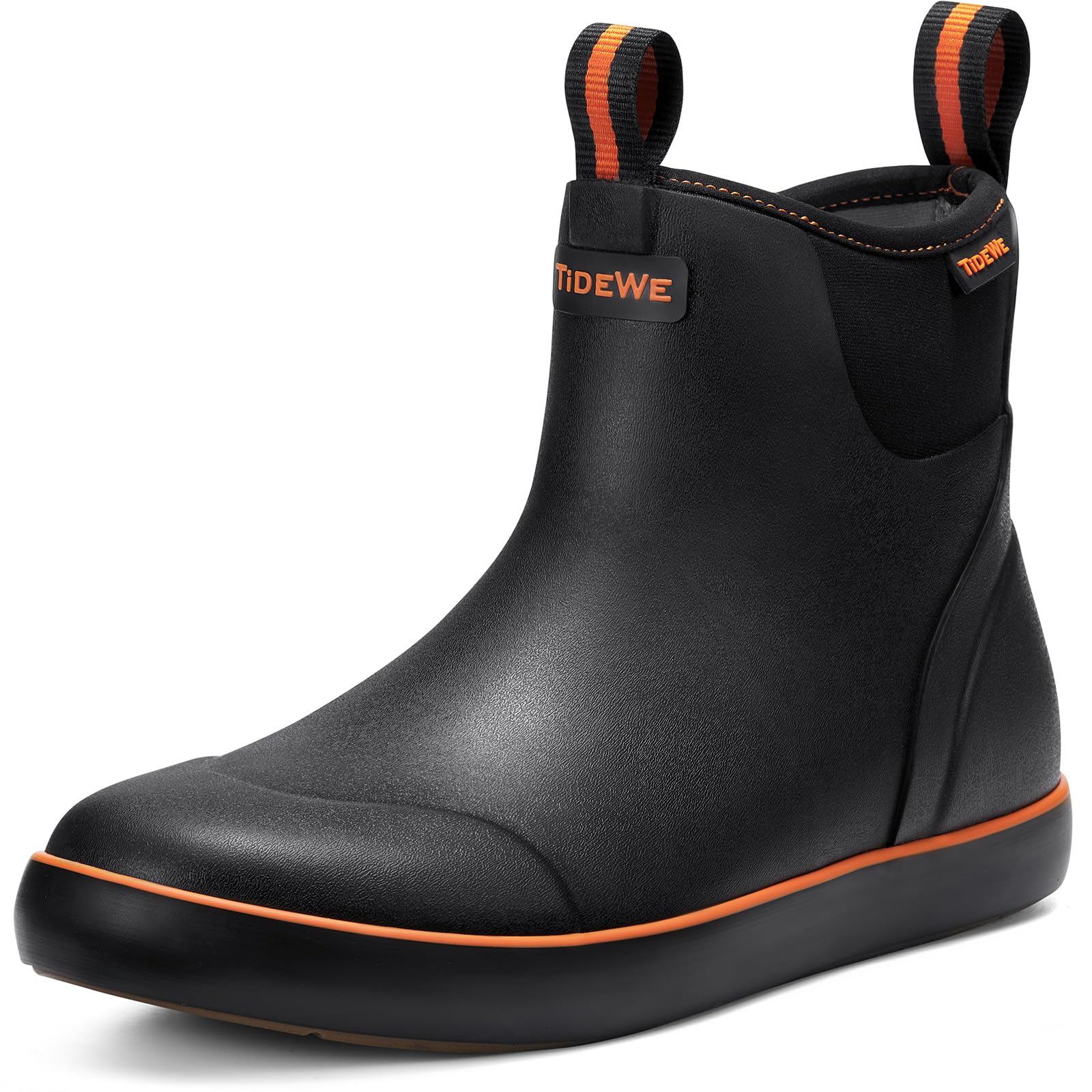
A deck boot like the TIDEWE sits at 8.15 inches of shaft height, which covers the ankle and nothing more. That is exactly right on a boat where you need to move fast and step over gunwales. A 12-inch boot like the XTRATUF Legacy reaches up the calf, so it handles splashing, flooded decks, and chemical spray. If you wade in current, you want a lace-up boot that locks to your foot instead of a slip-on that can pull free in mud.
Neoprene thickness is a temperature decision
Neoprene is the synthetic rubber foam that gives these boots their stretch and warmth. Thicker foam means warmer feet and less flexibility. A 3.5mm deck boot is a warm-weather choice for most anglers. A 6mm boot is built for cold water and long static hours. Pick the thickness for the water temperature you actually fish, not the coldest day you can imagine.
Soles and drainage separate a good day from a fall
Wet decks and algae-covered rock are where cheap boots fail. Look for a sole described as slip-resistant or non-marking, and check whether the boot drains water. Korkers builds internal channels that push water out through midsole ports, which keeps the boot from gaining weight as you wade. On a boat, a non-marking sole also protects the deck finish, so you are not leaving black scuff marks behind.
Side-by-Side Comparison
| Model | Best For | Boot Type | Closure | Weight | Amazon |
|---|---|---|---|---|---|
| Korkers Darkhorse Fishing / Wading Boot★ Best Overall | Serious wading in changing conditions | Wading boot | BOA M2 lace system | 4 pounds | Amazon |
| TIDEWE Deck Boots for MenBest Value | All-day boat and dock work | Deck boot | Slip-on | 1.7 kg | Amazon |
| Trudave Deck BootsSneaker Look | Budget deck boot that looks like a sneaker | Deck boot | Pull tabs | — | Amazon |
| SUREWAY Men’s Deck Boots | Oily, stormy, commercial-grade conditions | Deck boot | Slip-on | — | Amazon |
| Trudave Rubber Boots 6mm Neoprene | Cold-weather mud and farm fishing | Mid-calf rubber boot | Pull-on | — | Amazon |
| Men’s Waterproof Rubber Boots, 6mm Neoprene | Hot-weather work and heavy mud | Mud boot | Pull-on | 4.65 pounds | Amazon |
| Korkers Greenback Wading Boots | Traveling waders on a budget | Wading boot | Lace-up | 4.3 pounds | Amazon |
| Grundéns Men’s Deviation 6 Inch Ankle Boot | On-deck and off-deck versatility | Ankle boot | Slip-on | — | Amazon |
| XTRATUF Men’s 12″ Legacy Boot | Foul weather and commercial decks | 12-inch neoprene boot | Pull-on | 4.5 pounds | Amazon |
Detailed Reviews
1. Korkers Darkhorse Wading Boot
Our pick — 4.5+★ from 350+ verified ratings; the strongest balance of quality and price.
One boot, two sole sets, and a lace dial that ends cold-handed fumbling on the riverbank.
If you wade rivers where the rules change from one stretch to the next, this is the boot that stops you buying two pairs. The OmniTrax sole system lets you swap traction to match the fishing condition, so a felt-only stretch and a sticky-rock stretch both get the right sole from the same boot. It ships with interchangeable felt and Kling-On soles, so you start with both options in the box.
Lacing is handled by the BOA M2 system, a dial-and-wire closure that tightens evenly and releases with a pull. That means a custom fit in seconds with wet hands, no loops to clog with grit. The hydrophobic upper, a water-repelling material with ultra abrasion resistance, resists soaking. Internal channels move water through and out midsole ports, so the boot sheds weight instead of turning into a wet brick. At 4 pounds it is 0.65 pounds heavier than the Grundéns Deviation below, a gap you feel on a long hike in but trade for a stiffer wading platform.
What wins anglers over is the traction flexibility plus the fit, and the ankle support holds up on uneven riverbed. The 3PFS Achilles stabilization cradles the back of the heel for a locked-in feel when you push against current. It holds 4.5+ stars across 300+ ratings. The catch is simple: this is a wading boot, not a deck boot, so it is more boot than you need if you never step off the boat.
interchangeable sole system
- Two sole sets included, so one boot covers felt-only and sticky-rock water
- BOA M2 dial lacing tightens evenly with wet, cold hands
- Midsole ports drain water out, keeping the boot from loading up
- 3PFS Achilles stabilization supports the heel against current
heavier than plain boots
- At 4 pounds it is heavier than a slip-on deck boot
- Built for wading, so casual boat anglers pay for traction they will not use
rocky bank pick: you wade rivers with mixed bottom and want one boot that adapts at the water’s edge.
pavement only: you fish from a deck and never need interchangeable soles.
2. TIDEWE Deck Boots
The deck boot that slips on in a second and grips a wet boat floor without leaving scuff marks.
For boat anglers who are in and out of the cabin all day, the TIDEWE deck boot gets the daily routine right. It is built from 3.5mm neoprene and soft rubber, a waterproof combination with enough stretch to slide over your foot and stay put. The 8.15-inch shaft covers the ankle without climbing the calf, so it stays easy to move in.
The sole does the real work. The patented outsole has tiny drainage channels that push water away and grab slippery surfaces, and the material is upgraded so it will not mark the deck. That non-marking detail matters if you value the finish on your boat. A moisture-wicking lining, the inner fabric that pulls sweat away, helps regulate foot temperature in both cool and warm conditions. The removable EVA insole adds cushioning you can replace when it flattens.
Owners consistently point to how easily these slide on and off and how well they keep feet dry, and the versatility shows up again and again. The reinforced rubber shell at the toe and heel protects against bumps, and the kick tab and heel loop make pulling them off fast. One honest note: the sizing runs on insole length, so measure your foot and size up for half sizes rather than guessing. Reach for this if your fishing is mostly deck work.
boat day starter: you want one affordable deck boot for boat days, dock walks, and quick launches.
long hike no: the fit depends on insole length, so check the size chart before ordering.
3. Trudave Deck Boots
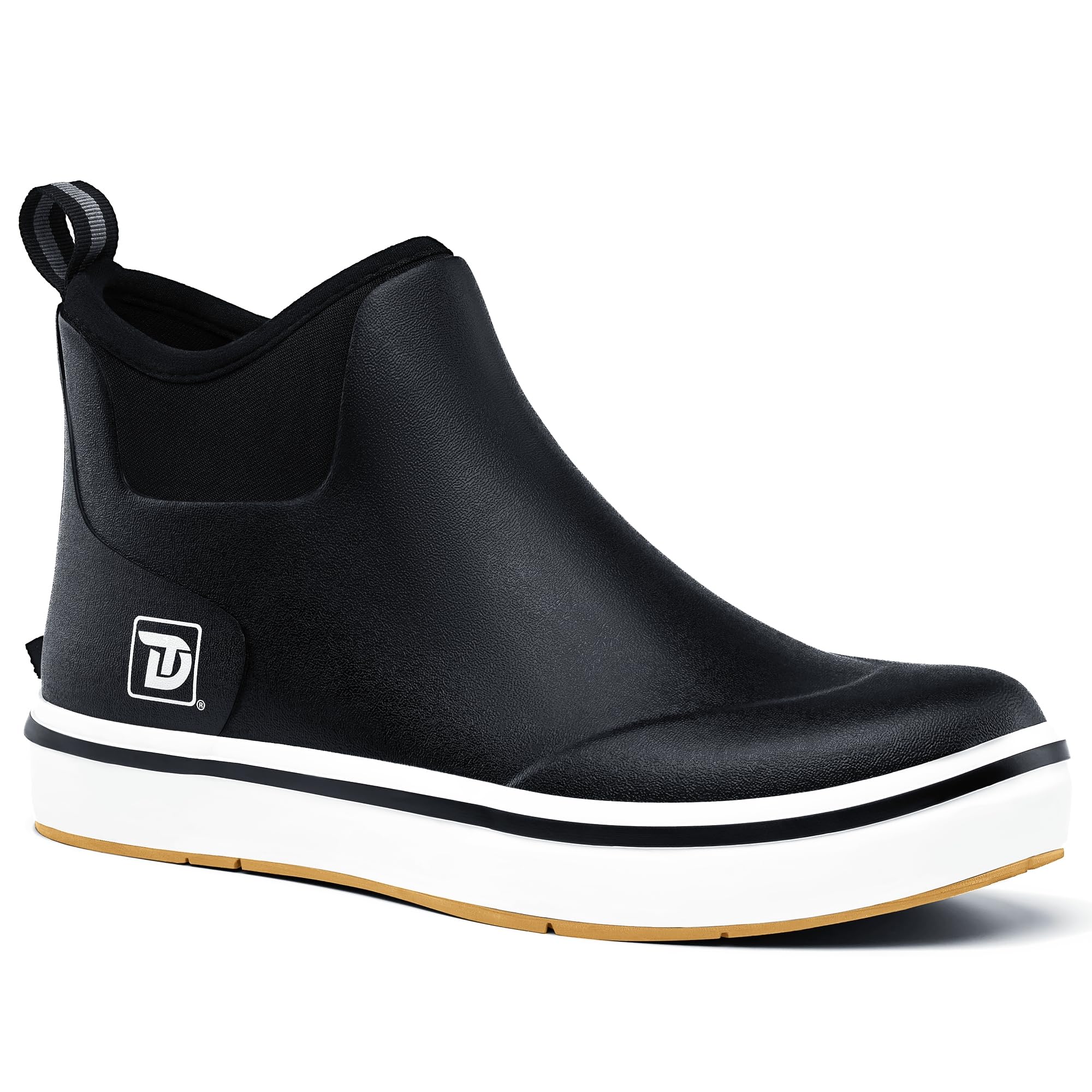
A waterproof deck boot shaped like a sneaker, so you can walk off the dock and into town.
The Trudave deck boot is aimed at anglers who want one pair for the boat and normal life. The look reads like a low sneaker rather than a rubber boot, and the design is built to be worn in water, on rocks, and out and about. Neoprene and rubber form the 100% waterproof shell, and pull tabs at the top make the boot faster to put on or kick off.
The thickened rubber shell resists water, oil, and corrosion, which is the spec that matters if you fish around fuel, bait, and engine grime. An anti-slip outsole is designed to keep you steady across different surfaces. A moisture-wicking interior keeps feet dry through a long day, and owners also report the boots feel warm.
Quality is the thing that carries these boots — far and away the most-praised trait in the feedback, with fit right behind it. Buyers find them true to size and comfortable for all-day wear. Traction is the one split opinion, so treat the sole as a fair-weather grip and take extra care on slick, algae-covered surfaces. At this price, they carry features buyers expect from pricier deck boots.
grippy wet deck sole: an angler who wants a waterproof boot that doubles as an everyday shoe and does not mind backing off on the greasiest surfaces.
daily dock wear: sneaker-level comfort on wet docks plus a look you can wear after the trip.
cold water no: the traction gets mixed reviews, so slow down on mossy rock.
4. SUREWAY Men’s Deck Boots
Built for the days when the deck is slick with oil and the weather is doing its worst.
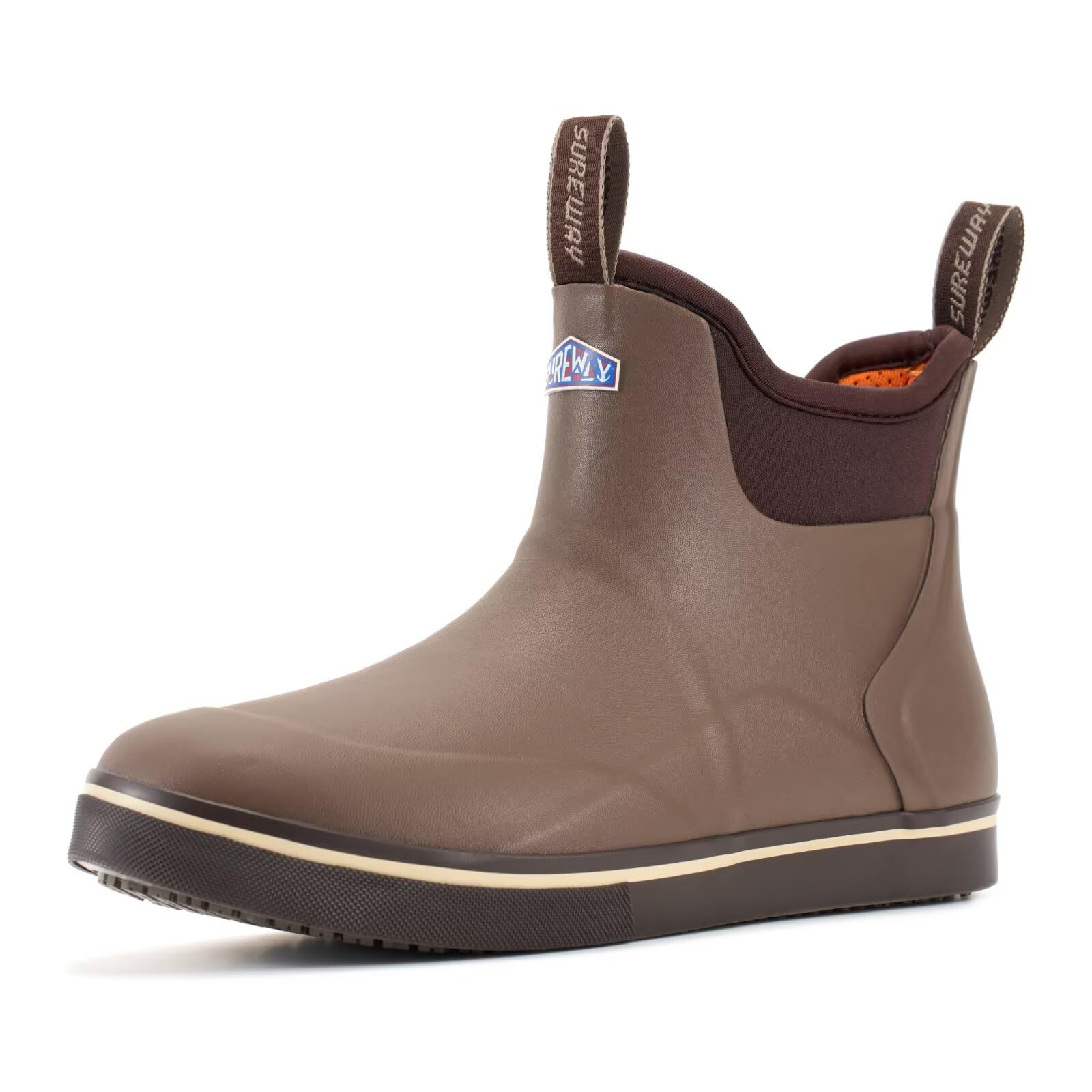
Most deck boots handle water. The SUREWAY is built for the messier stuff. Its SRC-rated outsole is a slip-resistance benchmark for footwear on wet and oily floors, and it is designed to be non-marking and oil-resistant on top of that. That combination is the reason this boot earns a spot for commercial decks, fuel spills, and storm-day fishing.
The upper is 100% waterproof commercial-grade neoprene rubber, and the fit runs slightly wider than a standard deck boot. A comfort insole with built-in channels moves air and moisture so feet stay cooler through a full shift. Reinforced panels at the toe, heel, and pull-on tabs add durability at the spots that wear first.
Quality leads the praise here by a wide margin, with comfort a close second — owners talk about keeping them on all day without complaint. Stormy weather and puddles are exactly what these are made for, and the boots have held up over multi-season use. Size is the one thing to watch, with feedback split, so check the width guidance if you normally wear a narrow boot.
boa dial fit
- SRC-rated outsole engineered for wet and oily surfaces
- Oil-resistant, non-marking sole protects the deck finish
- Channelled insole keeps feet cooler through long shifts
- Reinforced toe, heel, and pull tabs take daily abuse
dial snags on nets
- The fit runs a little wider than a standard deck boot
- Size opinions are split, so confirm your fit before ordering
quick on off: anyone working wet, oily, or stormy decks where grip is a safety issue.
mud suction risk: the wider fit suits some feet and not others, so check sizing guidance first.
5. Trudave 6mm Neoprene Mud Boots
Thick 6mm neoprene and a steel shank for cold, muddy banks where you stand a long time.
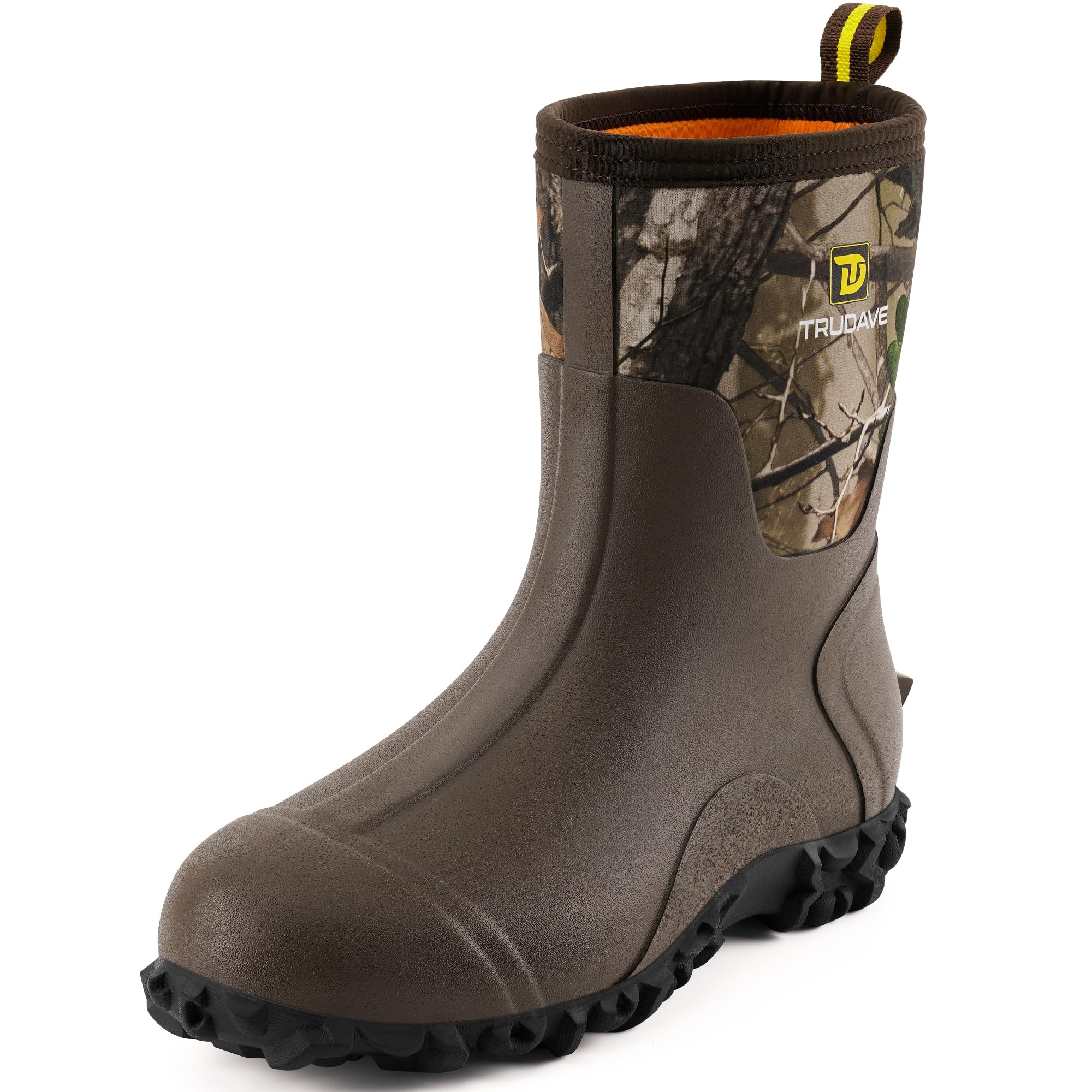
This is a mid-calf rubber boot built for the cold end of fishing season. The 6mm neoprene shell is thick insulation, the kind that holds warmth when the water is frigid and you are standing still. A steel shank runs through the midsole to stiffen the boot, which supports your arch on uneven mud and gravel instead of letting the sole flex under load.
The boot includes a protective toe, a sturdy handle for pulling it on, a non-slip outsole, and a soft SBR lining. SBR is a synthetic rubber that stays flexible and comfortable against the leg. The toe box has enough room that wide-footed anglers find it comfortable. It works across fishing, farming, and gardening, which is the point of a boot this tall.
Quality is the trait people praise most, and comfort lands close behind. It keeps feet reasonably warm through northern winters and handles wet conditions well. Two honest caveats: some buyers find it runs about two sizes larger than normal, and the traction gets mixed feedback, with a few saying it is not slip resistant on certain surfaces. Order carefully and treat steep, slick banks with respect.
thick neoprene warmth: 6mm neoprene plus a steel shank means warm feet and a stable platform on frozen mud.
runs a size large: with reports of it running two sizes large, measure your foot and consider sizing down rather than trusting your usual number.
winter marsh pick: you fish cold water, stand in mud, and want a stiff boot that warms your feet.
summer too hot: the reports of a two-size run are right for your foot.
6. 6mm Neoprene Insulated Mud Boots
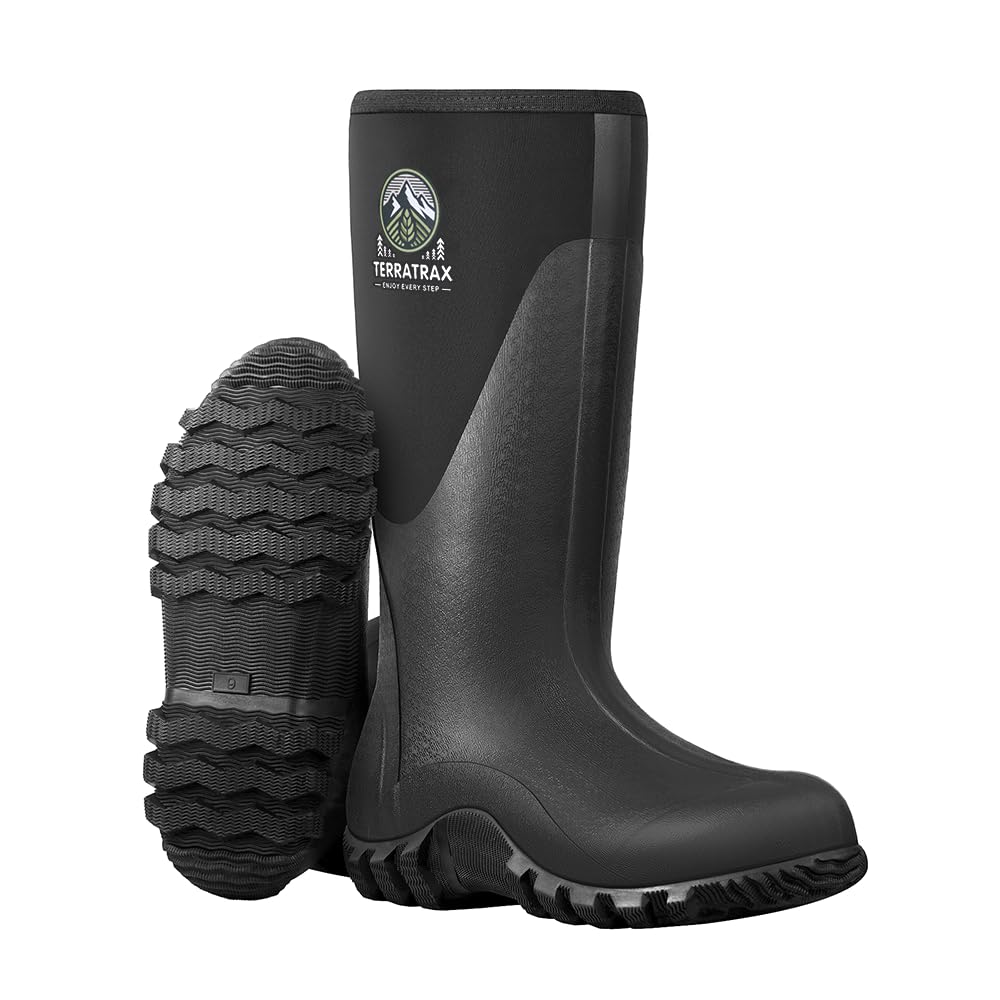
Thick insulation that still breathes, with a heel spur so you can kick them off hands-free.
The usual problem with a 6mm neoprene boot is that it cooks your feet in summer. This boot attacks that with a breathable air-mesh lining that circulates air and wicks sweat, so the insulation warms without trapping heat. That makes it a rare option for both flooded spring pastures and hot-weather yard work around the water.
It also fixes a common failure point. The pull tab is heavily reinforced with double stitching, built to survive daily yanking. A 10mm kick-off heel spur lets you step on the back of the opposite boot and slip out without bending over. A shock-absorbing EVA midsole gives arch support for long hours on hard ground, and an aggressive rubber outsole bites into deep mud and wet grass, then rinses clean with a hose.
Fit is what earns the most praise here, with value right behind it, and buyers report dry, warm feet through real work. The honest caveat is durability, which draws mixed feedback, so treat the boot well and inspect the seams over time.
cold slough choice: you need a 6mm insulated boot that will not roast your feet in warm weather.
tight calf fit: at 4.65 pounds it is the heaviest here, and seam durability is the one mixed point.
7. Korkers Greenback Wading Boots

The lighter Korkers wading boot that still swaps soles to suit any river you fish.
If the Darkhorse is more boot than you need, the Greenback trims the weight without losing the interchangeable sole trick. It uses the OmniTrax 3.0 sole system, compatible with other Korkers 3.0 accessory outsoles, and includes plain felt and Kling-On sticky rubber soles. The Kling-On gives you grip on hard, mossy rock; the felt handles the slick riverbed stretches where felt is allowed.
Hydrophobic materials shed water fast, which shortens dry time between trips and lessens the chance of moving invasive species from one river to the next. Internal channels move water through and out of midsole ports, so a wet crossing does not leave you carrying a bucket. At 4.3 pounds it is lighter than the Darkhorse, a small but real edge on the hike in.
Comfort is the trait owners praise most, with fit right behind it, and there is plenty of room for neoprene wader stockings. Anglers describe them as feeling as light as walking in the woods, and the easy-to-change soles work well, with traction holding on moss-covered rocks. Durability draws mixed feedback, so treat the uppers as performance gear rather than work boots. This is a strong choice for the traveling wader.
studded wading traction
- Includes felt and Kling-On rubber soles in the box
- OmniTrax 3.0 swaps with other Korkers 3.0 outsoles
- Fast-drying hydrophobic materials shorten the turnaround
- Roomy fit for neoprene wader stockings
stiff out of box
- Durability is the mixed point on these uppers
- Lace-up takes longer than a slip-on when you are rushing to the water
fast river pick: the angler who wades several rivers and wants lighter boots with swapped traction.
boat deck no: these are performance wading boots, so avoid treating them like farm boots.
8. Grundéns Men’s Deviation 6 Inch Ankle Boot

The six-inch ankle boot that punches above its height on deck and off the water.
The Deviation Ankle Boot is pitched at anglers who want a comfortable, performance-driven shoe that holds up on and off the water. At 6 inches of height it sits at the ankle, so it moves with your foot rather than locking the calf. That short cut suits boat work where you are crouching, netting, and moving around.
The Grundéns family includes a Sherpa version with high-pile fleece insulation, but this is the plain ankle boot — the daily-driver build rather than the cold-weather one. It slides on and off easily, which is what makes a deck boot practical when your hands are full of tackle and fish.
Quality is the strongest signal in the feedback, with comfort next, and owners consistently describe the cushioning and the easy on-off. Water resistance and durability both get real support too. The honest caveat: soles can split or separate over time, and the fit gets mixed reports, with some saying it runs big and others finding it a little tight. Sort that with the size chart rather than skipping a well-loved boot.
wet launch duty: an angler who wants cushioning and easy slip-on for on-deck and everyday wear.
deep puddle no: fit reports split between big and snug, so measure carefully.
9. XTRATUF Men’s 12″ Legacy Boot
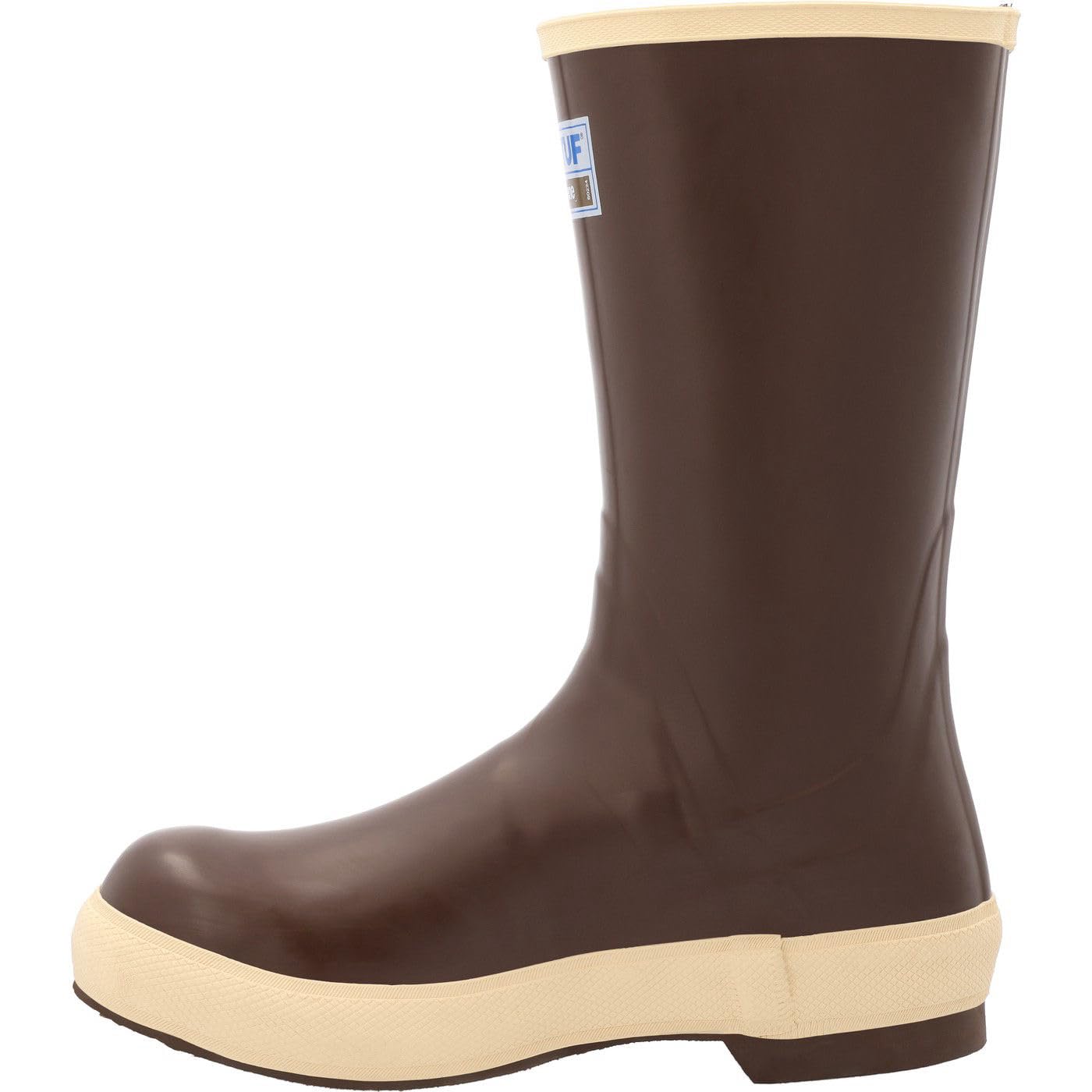
The tall neoprene boot that keeps ankles and calves dry through chemical splashes and flooded decks.
When the weather turns genuinely bad, the Legacy is the boot you reach for. Its 12-inch height shields your ankle and calf from splash, so spray stays out when you wade deep. The triple-dipped latex neoprene build (neoprene dipped three times in latex) forms a completely smooth, 100% waterproof shell. That neoprene is softer, lighter, and more pliable than ordinary rubber, so the tall boot still flexes when you move.
Grip comes from XTRATUF’s signature Chevron outsole, a slip-resistant, non-marking sole designed to grab slippery rocks and flooded decks. A Breathe-O-Prene insole uses an open-cell structure to move moisture and dry faster between uses, and toe and heel guards shrug off bumps and scrapes. The neoprene is also ozone-resistant to resist cracking, and acid and chemical-resistant to handle cleaners, fish waste, and diesel. At 4.5 pounds it is 0.5 pounds heavier than the Grundéns Deviation ankle boot, the trade for full calf coverage.
Owners rate them on durability and dry feet, with traction holding on slippery decks and comfort through foul weather. Anglers call them genuinely useful on wet, slippery decks, and they take serious abuse without giving up. For cold, wet, messy fishing, this is the boot that ends soaked socks.
classic deck boot: foul-weather fishing where you need full calf protection and chemical resistance.
short trips no: at 12 inches and 4.5 pounds, it is more boot to move in than a short ankle slip-on.
Know the Specs
Neoprene thickness (3.5mm vs 6mm)
Neoprene is the synthetic rubber foam that gives these boots stretch and warmth. A 3.5mm boot is a warm-weather choice for moving around a deck. A 6mm boot holds heat when you stand in cold water, but it is stiffer and heavier. Pick the thickness for the water temperature you actually fish.
Sole type and slip rating
The sole decides whether you stay upright on a wet deck or mossy rock. An SRC-rated outsole labels a boot built for wet and oily floors. A non-marking sole protects the deck finish. On a wading boot, an interchangeable system lets you swap felt for sticky rubber to match the river and the local rules.
Drainage and weight
A wading boot that traps water gets heavy fast. Internal channels and midsole ports push the water back out, so the boot sheds weight as you wade. Boot weight runs from under 3 pounds per pair on the lightest wader to around 4.65 pounds on the heaviest mud boot. Lighter boots are easier on the hike; heavier ones support and warm more.
Closure systems
Slip-on boots with pull tabs are the fastest on and off, which suits deck work and muddy hands. Lace-up boots lock the foot in for current and wading. A dial system like the BOA M2 gives an even, adjustable fit with one hand. Match the closure to how much you need your foot anchored versus how fast you need the boot off.
Common Questions
Are deck boots waterproof enough for fishing in the rain?
Should I choose 3.5mm or 6mm neoprene for fishing boots?
What are interchangeable soles and do I need them?
Do rubber fishing boots run true to size?
How do I stop my wading boots from getting heavy in the water?
Can I wear deck boots on a boat with a finished deck?
Are these boots warm enough for cold-water fishing?
What is an SRC-rated outsole on a fishing boot?
How long should a pair of fishing boots last?
The Bottom Line
If you want one pair that handles the most kinds of water, the water boots for fishing winner is the Korkers Darkhorse. Its interchangeable OmniTrax soles (swap-on outsoles for different ground) and BOA lacing (a dial-and-wire lace system you tighten with one hand) cover more water than any single boot here. It also carries the highest rating on this list at 4.5+ stars across 300+ ratings. If your fishing happens mostly on a boat deck and you want the best grip, grab the SUREWAY Deck Boots with their SRC-rated outsole (a slip-resistance rating for wet floors). And for cold-water wading with thick insulation, the Trudave 6mm Neoprene is the one to pull on.
How we choose
We do not accept paid placement. Every pick is matched to a real buyer and a real use-case; we do not hands-on test units.
Sources
Specifications: manufacturer listings and product documentation. Review insights: verified customer reviews, as of November 2026. Pricing: not shown on this page (it changes often); check the current price via the retailer link.
As an Amazon Associate, Tactical Gear Guy earns from qualifying purchases. This does not affect which products we feature.