Specs are compiled from manufacturer listings and verified buyer reviews and can change over time — please confirm the key details on the product page before buying.
Cold feet ruin a whole day outdoors, and most winter boots fail at exactly one of three jobs: keeping water out, holding heat in, or letting you walk without sliding. Match the insulation weight and the sole to how you actually spend your winter, not to the biggest number on the box. Below are nine insulated men’s winter boots sorted by what each one genuinely does best — trail walks, wet slush, deep snow, ice, or a full day in a treestand.
This guide is built by comparing the manufacturers’ published specifications and the patterns across verified customer reviews, so you get each pick’s real strengths and trade-offs instead of marketing spin.
Insulation is measured in grams, and that single number tells you more about where a boot belongs than any logo does. This breakdown of the warm winter boots for men covers what each gram count really means once you are standing in it.
Top Picks


How To Choose The Best Warm Winter Boots for Men
Three things decide whether a winter boot works for you: how much insulation it carries, how it keeps water out, and what the sole is made of. Get those three right and color, lacing, and collar height become preference.
Match the insulation grams to your coldest day
Insulation is rated in grams, and a higher number means a thicker thermal layer wrapped around your foot. A 200 g boot is a city-and-trail boot that handles a cold commute and light snow. A 400 g to 800 g boot covers real winter work and wet slush. Anything at 1000 g or above is built for standing still in serious cold, like hunting or ice fishing. Going too high is a real mistake — an over-insulated boot on a mild day traps sweat, and wet feet get cold fast.
Waterproof is a construction, not a spray
A rubber shell is the simplest barrier: water simply cannot pass through it. Leather uppers need a waterproof membrane or treatment behind them. Seam-sealed construction means the stitching lines are taped so water cannot sneak in at the joins. That distinction matters most in slush, where you are standing in a wet mess rather than walking on dry powder.
Look at the sole compound before the lug pattern
Deep lugs push snow and mud out of the way, which helps on trails and in mud. Bare ice is a different problem, and it needs a sole compound formulated to grip it rather than just a chunkier tread. If your winter includes a sloped driveway or a frozen sidewalk, weight the sole compound heavily in your decision.
Side-by-Side Comparison
| Model | Best For | Insulation | Waterproofing | Build / Upper | Amazon |
|---|---|---|---|---|---|
| Columbia Men’s Firecamp Boots★ Best Overall | Everyday cold-weather wear | Low-bulk insulation | Waterproof construction | Cushioned multi-sport build | Amazon |
| Guide Gear Men’s Side Zip Insulated Leather Duck BootsBest for Slush | Wet slush and quick on-off | 400 g Thinsulate | 100% waterproof rubber shell | Leather upper with side zip | Amazon |
| HOBIBEAR Men’s Snow BootsBudget Snow Pick | Budget deep-snow walks | Faux fur lined | Waterproof shell | Mid-calf, non-slip TPR sole | Amazon |
| ROCKY Blizzard Stalker 1200G | Standing in deep cold | 1200 g Thinsulate Ultra | Rocky Waterproof construction | Split suede with 900 denier textile | Amazon |
| TIDEWE Rubber Hunting Boots | Wet, muddy hunts | 800 g insulation | Rubber and neoprene | 7 mm neoprene with rubber | Amazon |
| THE NORTH FACE Chilkat V | Light, packable winter travel | 200 g insulation | Waterproof with non-PFC DWR | Lace-up snow boot | Amazon |
| SOREL Men’s 1964 Pac Nylon | Snowy town days in style | — | Seam-sealed waterproof | Vulcanized rubber shell, Sherpa cuff | Amazon |
| Merrell Coldpack 3 Thermo Mid | Ice and mixed winter terrain | 200 g insulation | Waterproof construction | Vibram Arctic Grip, fleece lining | Amazon |
| Irish Setter Elk Tracker 12″ | All-day cold-weather hunting | 1000 g 3M Thinsulate Ultra | GORE-TEX waterproof | Full grain waterproof leather | Amazon |
Detailed Reviews
1. Columbia Men’s Firecamp Boots
Our pick — 4.5+★ from 950+ verified ratings; the strongest balance of quality and price.
One boot for the commute, the trail, and the walk home.
Most guys only own one pair of winter boots, and this is the pair that survives that job. The Firecamp is a multi-sport build — a waterproof upper plus low-bulk insulation, which means warmth without the puffy, locked-in feel of a hunting boot. Cushioning underfoot is plush enough for a long day on pavement or a mountain path, and Columbia sells it in multiple colors and sizes so you are not stuck with one look.
What wins people over here is the warmth-to-bulk ratio. Buyers report warm feet at 15 degrees, and the low-bulk insulation keeps the boot feeling like a shoe rather than a ski boot. Water resistance holds up in wet snow and shallow puddles. Comfort is the second thing that keeps coming up — the fit is right for most guys straight from the start, which is why this one sits at 4.5+ stars across 900+ ratings and takes the top spot.
The honest catch is sizing. This boot runs small, and it is not offered in a wide width, so anyone with a broad forefoot should go up a half size or walk away. That is a fit mismatch, not a defect — but it is the one thing that trips people up. If a wide toe box is non-negotiable for you, the Merrell Coldpack 3 further down gives your toes far more room above and around them.
Where It Wins
- Waterproof upper with low-bulk insulation — warm without the bulk of a 1000 g boot
- Cushioned footbed handles both pavement and trail in the same week
- Multiple color and size options, so it doubles as a daily-wear boot
- Highest rating in this lineup at 4.5+ stars across 900+ ratings
Where It Pinches
- Runs small — size up if you wear thick socks
- No wide width available, so broad feet need a different pick
Buy it if: you want one boot for the commute, the dog walk, and the weekend trail without owning three pairs.
Measure first if: you normally wear a wide — this last is cut narrow and there is no wide option.
2. Guide Gear Men’s Side Zip Insulated Leather Duck Boots
A rubber shell and a side zipper: the boot you kick off at the door without bending down.
Parking lots in February are wet, and this is the boot built for that specific misery. The 100% waterproof rubber shell covers the lower half, so slush has nowhere to get in, while the leather upper carries 400 grams of Thinsulate insulation — a middle weight that keeps you warm on genuinely cold days without cooking your feet on a mild one. A steel shank runs under the arch for support, and the Ortholite open-cell foam insole is rated 95% to 100% breathable, which is the reason it does not turn into a swamp after a long walk.
The side zipper is the feature buyers talk about most after quality — no lacing up in a cold hallway, and no wrestling a wet boot off at the door. Quality carries the most weight in how buyers rate it, and the twin stretch gore panels let the boot flex as you walk. Owners mention the leather still looks close to new after six months of steady wear.
Two things to know before you commit. The fit splits buyers hard — some find it spot-on, others find it runs too large, so try your normal size with the socks you plan to wear. And durability opinions are mixed on the rubber bottoms, with some reports of cracking, so treat the shell with reasonable care rather than kicking ice off it. For the price tier this sits in, it is still a smart wet-weather boot.
The zipper payoff: A side zip and twin gore panels mean this boot goes on over a thick sock in seconds and comes off just as fast — the difference between wearing it and leaving it by the door.
Sizing gamble: The size you order is the one variable you cannot control here, and the reviews split on it — order with a returns plan in mind.
Reach for this if: your winter is wet more than it is deep — driveways, sidewalks, rain turning to snow.
Look elsewhere if: you need a boot you can beat against rocks and ice without worrying about the rubber.
3. HOBIBEAR Men’s Snow Boots
Deep plush lining and a mid-calf cut — entry-level warmth for shoveling and sledding.
If the snow in your life means a driveway rather than a mountain, this is where entry-level money goes furthest. The interior is filled with soft plush faux fur through the inner interlayer, which holds warmth against your foot rather than just padding it. The shell is waterproof, designed to keep the inside dry while also guarding your toes against bumps, and the mid-calf height means snow has to climb before it finds skin.
The rubber outsole is a non-slip TPR compound built to handle rugged, muddy ground, so you get sure footing on a shoveled path or a slushy yard. Looks are what buyers respond to first here — the boot photographs well and wears its shape — and warmth is the next thing that lands, with owners reporting solid performance in negative temperatures. Comfortable and fairly priced, it does the basic job of a snow boot without pretending to be a mountaineering boot.
Be realistic about the limits. Fit is divided — some find it perfect, others find it too narrow — so a wide foot should look elsewhere. Durability also splits, with a few boots giving out early under hard use. Treat this as a seasonal boot for moderate wear, not a ten-year investment, and it delivers.
What it does well: A fur-lined interior and waterproof shell at the bottom of the price range — warmth where you need it for errands and yard work.
Set expectations: Narrow-leaning fit and uneven durability under heavy use; this is a snow-day boot, not a daily workhorse.
Pick this up if: your winter is mostly plowed streets, school runs, and the occasional snow day.
Hold off if: you have a wide forefoot or you plan to wear one pair hard all season long.
4. ROCKY Blizzard Stalker Waterproof 1200G Insulated Boot
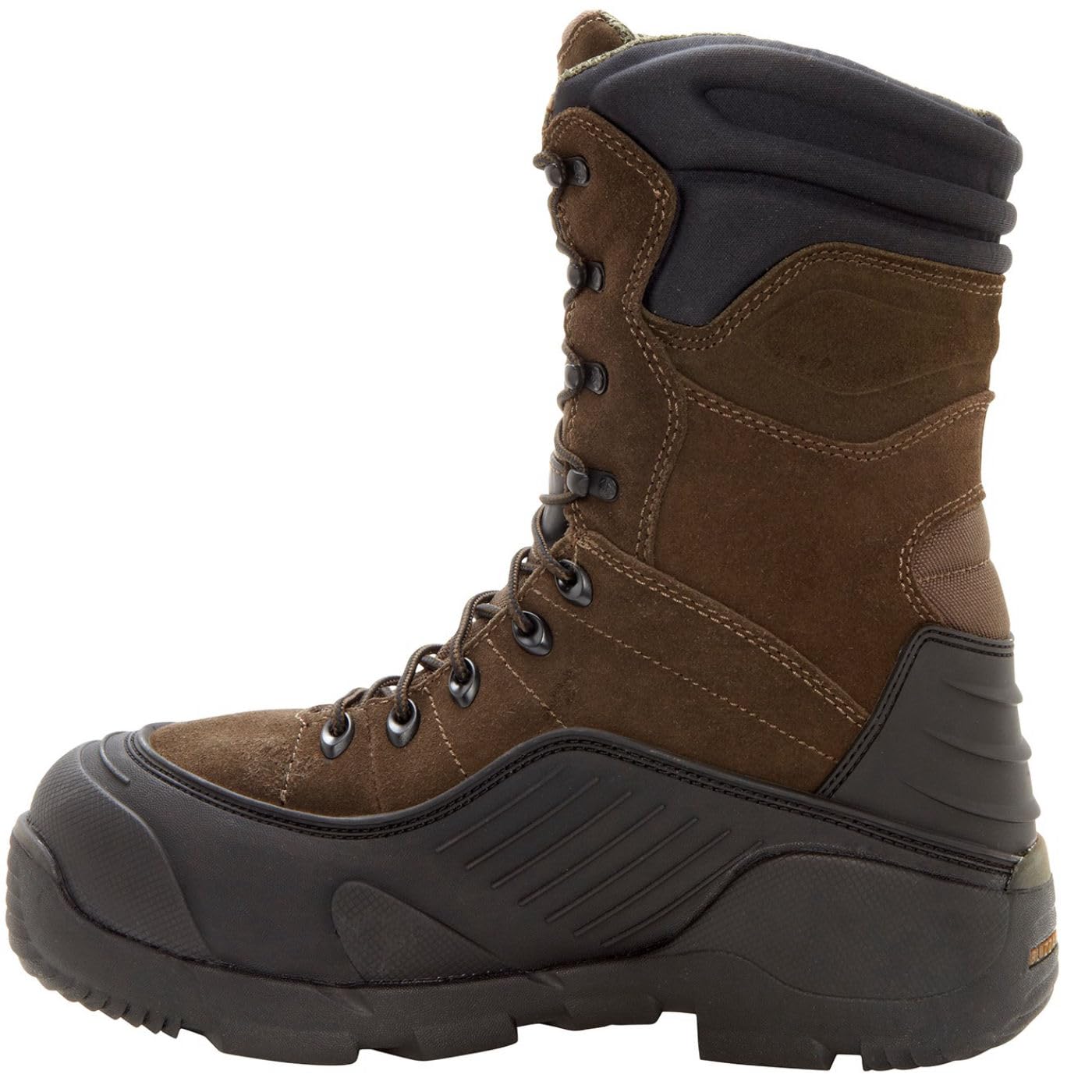
1200 grams of insulation versus the 200 grams in the Chilkat V, for the guy who sits still in the cold.
Here is the number that decides this boot: 1200 grams of Thinsulate Ultra insulation, against the 200 grams in The North Face Chilkat V. That difference is the whole reason this boot exists. If you are sitting in a treestand or standing on ice for hours, that difference is the line between a hunt and a shivering countdown. Warmth is what buyers praise most about it, and it also carries Rocky Waterproof construction plus a split suede upper reinforced with 900 denier high-abrasion textile.
The Blizzard outsole runs multi-directional lugs for grip on snow-covered and icy ground, and the 8-inch height covers your ankle against deep drifts. A molded foam padded collar and removable mesh PU footbed with a TPU heel stabilizer keep the boot supportive when you are moving, and the pair weighs 5.4 pounds for a size 10. It is a substantial boot, which is exactly what you want when warmth is the priority.
The trade-offs are real but predictable for a boot this insulated. It runs large for a lot of guys, and durability splits — the upper holds up, but stitching failures get reported. This is not the boot you wear into an office; it is the boot you wear when the temperature is the enemy.
The warmth math: 1200 g of Thinsulate Ultra versus 200 g on lighter winter boots — the fill here is aimed at stationary cold, not a brisk walk to the train.
Know the weight: 5.4 pounds per pair in a size 10, which you feel on a long hike but welcome when you are standing still in single digits.
This is your boot if: you hunt, ice fish, or work outdoors and spend more time standing than walking.
Not for you if: you want a low-profile boot for city wear — the bulk and the 8-inch shaft will feel excessive.
5. TIDEWE Rubber Hunting Boots, Waterproof Insulated

Rubber that flexes with you instead of fighting you, in camo and 800 g of fill.
A rubber boot usually means a stiff, clunky thing you clomp around in. This one is built from 7 mm neoprene and rubber, a combination that stays sturdy but flexes as you walk — so your feet and legs move naturally instead of marching. Inside sits 800 grams of insulation, a serious fill level for wet cold, and the thick cushioned footbed with generous toe room stops the boot from feeling tight after a few hours. It comes in Next Camo G2 across sizes 5 to 14.
Quality is the thing that earns the most goodwill here, and the durability reports back it up — customers note these boots surviving a full hunting season of mud, brush, and water crossings. Warmth and fit both land well, with dry, toasty feet in colder weather and a true-to-size run that most guys can order confidently. It is a purpose-built hunting boot that also happens to be a fine choice for anyone working in wet ground.
Weight is where opinions split. Some find them perfectly manageable, others find them bulky on long walks — a fair point for a rubber boot with this much insulation. If you cover serious distance rather than sitting in a blind, keep that in mind.
What Earns Its Place
- 7 mm neoprene and rubber flexes as you walk rather than restricting your stride
- 800 g insulation keeps feet dry and warm in wet, cold conditions
- Cushioned footbed with roomy toe box for long days
- Proven through a full hunting season of mud and brush
What to Weigh
- Bulky underfoot on long hikes, per some buyers
- Rubber boots run warm, so mild days will feel stuffy
Made for: muddy fields, flooded timber, and anyone who spends the day in wet ground rather than on pavement.
Think twice if: you plan to hike miles in them — the rubber build carries weight with it.
6. THE NORTH FACE Men’s Chilkat V Lace-up Waterproof Snow Boot

A packable 200 g snow boot for the guy who travels light and still wants dry feet.
Not every winter boot needs to be a tank. This one uses 200 grams of what The North Face calls premium insulation, and the point of that lighter fill is a boot you can actually walk in and pack without it eating half a duffel bag. A non-PFC Durable Water-Repellent (DWR) treatment — a water-shedding finish applied to the outer fabric — sits on top of a fully waterproof design, so snow, rain, and wind stay outside where they belong.
Versatility is what this boot is bought for. Owners use it in dirt, mud, creeks, and light snow, which is a wider range than most snow boots handle, and quality is what they praise most. Weight is genuinely part of the appeal here — nobody describes these as heavy. Paid time on the trail gets consistent praise for comfort, and the boot holds up over a year of regular wear.
The limitation is the fill level. At 200 g this is a light-winter boot, so compare it honestly against the ROCKY Blizzard Stalker at 1200 g — the Chilkat V is the better walker and the far worse choice for standing still in deep cold. Sizing also divides buyers, so try your usual size before committing to a long trip.
Why it travels well: 200 g of insulation and a lightweight lace-up build make this the boot you pack rather than the boot you wear onto the plane.
The honest limit: This is a light-winter boot — great for wet city snow and winter trails, not for hours of standing in single-digit cold.
It fits you if: you want one light boot for trail walks, wet streets, and travel where bag space counts.
Skip the idea if: your winter means deep, dry, bitter cold — you want far more fill than 200 g.
7. SOREL Men’s 1964 Pac Nylon Waterproof Boot
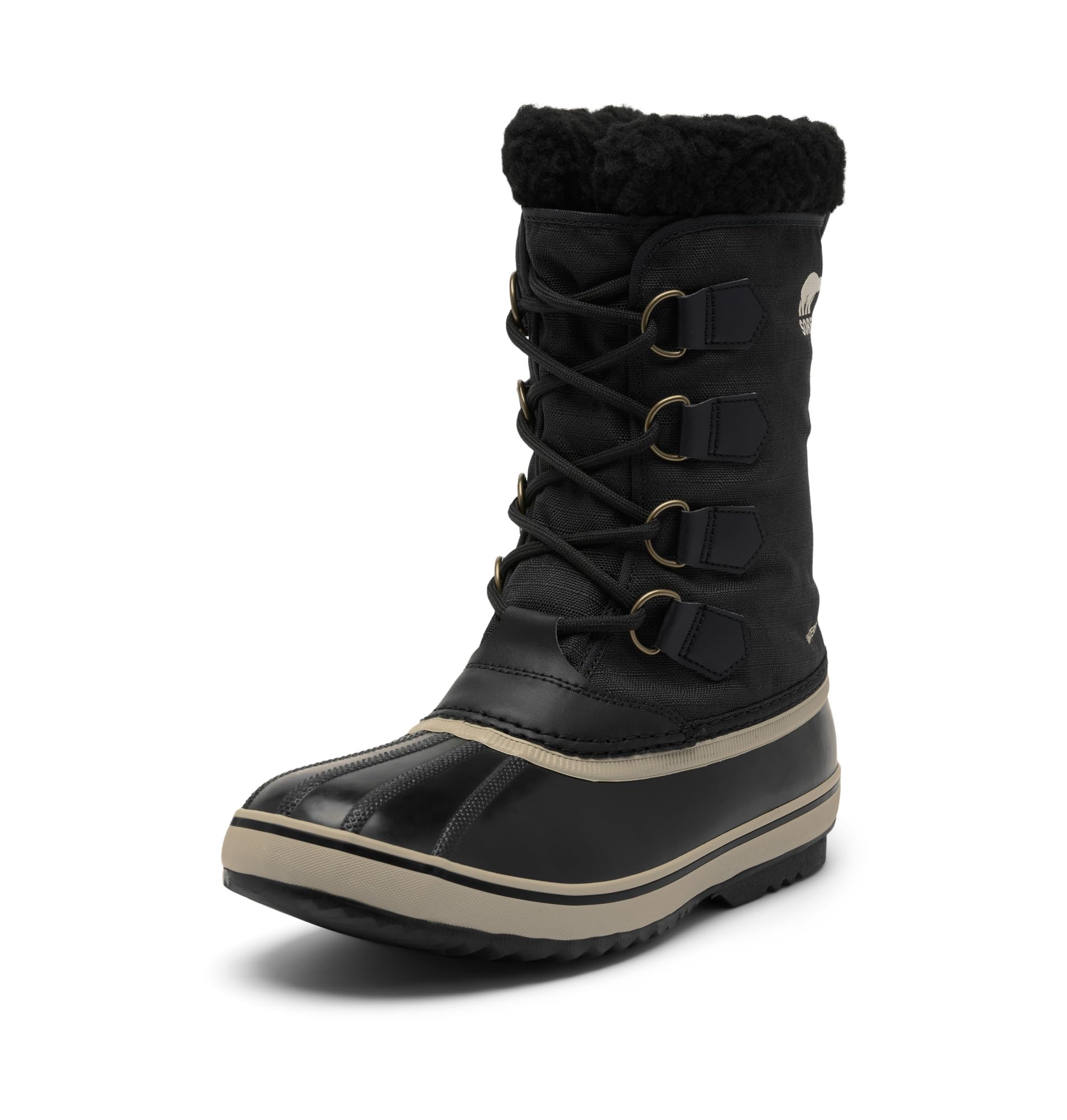
The heritage shape that treats a snowstorm as a chance to look good.
Some winter boots are tools and some are the boot you put on because you are walking into town. This sits firmly in the second camp. Seam-sealed construction means the stitching lines are taped so water cannot work in at the joins, and a Sherpa cuff sits at the top to seal out snow and trap warmth around the ankle. Underneath, a vulcanized rubber shell — rubber shaped and hardened by heat rather than glued — with an extra-grip sole holds traction on slick, packed surfaces.
Fit is the standout strength, which is unusual for a boot this chunky and is the main reason it works as a daily shoe replacement in winter. Warmth in cold weather lands well, and comfort is right there with it. The nylon upper and rubber shell keep the whole thing manageable to walk in, so a snowy errand run does not feel like hauling gear.
Build quality is where assessments split: most praise the construction, but some find it less substantial than expected for the price tier. That is a case of setting expectations — this is a lifestyle winter boot with waterproofing that works, not a work boot.
Fit first: For a rubber-shelled snow boot, the fit is the reason to choose this pair — it wears closer to a daily shoe than a clomper.
Set the bar right: Build quality is judged both ways, so treat this as a lifestyle boot with real waterproofing rather than a heavy-duty work boot.
The right call for: city winters, snowy commutes, and anyone who wants a winter boot that looks intentional.
Wrong call for: job-site abuse or long backcountry hours where a heavier build is the point.
8. Merrell Men’s Coldpack 3 Thermo Mid Waterproof

A frozen driveway is where this boot leaves everything else in the lineup behind.
Vibram Arctic Grip is the whole reason to buy this pair. It is a sole compound engineered to hold on bare ice, and it is what owners single out when they talk about traction — a very different thing from a deep lug pattern that works in mud and snow but slides on a glaze. The rest of the build is winter-ready too: 200 grams of insulation, a fleece lining against the foot, and waterproof construction to keep slush out of the seams.
Quality and warmth share top billing in how this boot is received, and the fit gets its own praise, with room above the toes for anyone who likes to wiggle. It is a mid-height boot, so it moves more like a shoe than a tall snow boot, which makes it easy to wear all day in town. Owners reorder a fresh pair each year instead of shopping around.
One honest note: durability gets a mixed read, so watch the seams and the sole join over a couple of seasons. And 200 g of fill means this is a moderate-cold boot — great for icy sidewalks, not for standing outside in a deep freeze for hours.
The ice advantage: Vibram Arctic Grip underfoot is a compound designed for bare ice — the exact surface where a chunky mud lug gives you nothing.
Moderate fill: 200 g of insulation plus a fleece lining handles a cold commute comfortably; it is not a deep-freeze boot.
Buy this one for: icy driveways, frozen sidewalks, and a winter commute that scares you every January.
Skip past it for: long standing sessions in serious cold — the fill tops out at moderate.
9. Irish Setter Elk Tracker 12″ Men’s Hunting Boot

Full-grain leather, GORE-TEX, and 1000 g of fill — the last word in cold-weather boots.
This is the boot for the guy who spends the whole season in the cold and refuses to be the one who quits early. The Elk Tracker 12″ pairs 1000 grams of 3M Thinsulate Ultra insulation with GORE-TEX waterproofing — a membrane that blocks water from outside while letting vapor escape — inside a full-grain waterproof leather upper stitched with a Goodyear leather welt. That welt construction is the part that lasts, because the sole is sewn to the upper rather than just glued. A removable comfort cork EVA/memory foam footbed sits underneath, and a Bulls-Eye Air Bob Aggressive outsole handles the grip.
Owners take it into sub-zero conditions without complaint, and it works for both hunting and hiking. The look lands well too, and buyers consider it money well spent for a boot built this heavily. There is also ScentBan technology built in, which is a detail hunters specifically look for.
The honest part: sizing is the biggest friction point, and a notable share of buyers find the fit off, so measure your foot rather than assuming. Some also find them stiff from the start while breaking in. Nothing here is a defect — a heavy leather boot takes time to mold to your foot, and the 12-inch shaft is a deliberate choice for deep snow and brush.
Why It Costs More
- 1000 g 3M Thinsulate Ultra plus GORE-TEX waterproofing for genuine sub-zero use
- Goodyear leather welt construction sews the sole to the upper for long-term wear
- Full-grain waterproof leather upper with ScentBan built in
- Bulls-Eye Air Bob Aggressive outsole for grip in snow, mud, and brush
Before You Order
- Fit is the most contested point — measure your foot instead of assuming a size
- Heavy leather takes a break-in period; it is stiff for the first few outings
- The 12-inch shaft is bulky for town wear
Worth it if: you hunt or work outside in serious cold and want a boot built to last seasons, not one winter.
Overkill if: your winter is a wet city commute — this boot is a lot of leather for a sidewalk.
Know the Specs
Insulation Weight in Grams
The gram number is the thickness of the thermal fill wrapped around your foot. A 200 g boot suits an active winter day where you are moving; a 400 g boot covers wet cold and long walks; 800 g to 1200 g is for standing still in serious cold. Over-insulating is a real problem — a 1200 g boot on a mild day traps sweat, and a damp foot loses heat fast. Match the fill to your coldest regular activity, not the coldest day you have ever seen.
Waterproofing Methods
A rubber shell is a physical barrier, so water cannot pass through it. Leather uppers rely on a waterproof treatment or a membrane behind the leather. Seam-sealed construction tapes the stitching so water cannot enter at the joins. GORE-TEX is a membrane that keeps water out while letting vapor escape, which is why it feels less clammy over a long day. If your winter means slush rather than dry powder, put waterproofing ahead of every other feature.
Common Questions
How do I know if a winter boot is warm enough for my climate?
Is a rubber boot or a leather boot better for wet snow?
Why do my winter boots feel cold even though they are insulated?
What does GORE-TEX actually do in a winter boot?
Should I size up for thick winter socks?
What is the difference between Vibram Arctic Grip and a normal lug sole?
How tall should a winter boot be for deep snow?
Can I wear insulated hunting boots as everyday winter boots?
Do winter boots need any break-in or maintenance?
What is a Goodyear leather welt and why does it matter?
The Bottom Line
The strongest all-round pick among these warm winter boots for men is the Columbia Firecamp, because it puts waterproofing and low-bulk insulation in one versatile boot that handles a commute and a trail in the same week. If you stand still in deep cold, go straight to the ROCKY Blizzard Stalker and its 1200 g of Thinsulate Ultra. For ice specifically, the Merrell Coldpack 3 and its Vibram Arctic Grip sole are the pair that keeps you upright. Any of the three is a sound buy — just match the fill to how much of your winter is spent moving versus standing.
How we choose
We do not accept paid placement. Every pick is matched to a real buyer and a real use-case; we do not hands-on test units.
Sources
Specifications: manufacturer listings and product documentation. Review insights: verified customer reviews, as of November 2026. Pricing: not shown on this page (it changes often); check the current price via the retailer link.
As an Amazon Associate, Tactical Gear Guy earns from qualifying purchases. This does not affect which products we feature.