Specs are compiled from manufacturer listings and verified buyer reviews and can change over time — please confirm the key details on the product page before buying.
Most voice recorders only ever fail at one thing: the card inside them. A card that drops a write at the wrong moment means an interview, a lecture, or a meeting that simply never happened. That is why the short answer for most people is the SanDisk 32GB Extreme PRO — it is rated for 4K UHD and holds 4.5+ stars across 71,000+ owners. This page sorts nine real SD and microSD cards by what actually matters for audio capture: sustained write speed, capacity, and how well each one survives being shoved in a bag.
This guide is built by comparing the manufacturers’ published specifications and the patterns across verified customer reviews, so you get each pick’s real strengths and trade-offs instead of marketing spin.
A voice recorder writes small files constantly, so it is far gentler on a card than a 4K camera. That means you can spend on capacity and reliability instead of chasing the biggest speed number. Here is how to pick the right card in a few minutes with this guide to the best voice recorder SD card.
Top Picks
How To Choose The Best Voice Recorder SD Card
A voice recorder is a light load compared with a camera filming 4K. Audio files are small and written in short bursts, so you do not need the fastest card on the shelf. What you do need is a card that will not stall, will not corrupt, and holds enough hours that you are not swapping it mid-interview. Most recorders also cap out at audio formats far below the speed ceiling of even a basic Class 10 card.
Speed class is the first thing to check
The speed class is the minimum sustained write speed the maker guarantees — the key word being sustained, not peak. A Class 10 card guarantees at least 10MB/s of steady writing, which is plenty for even uncompressed audio. U1 and U3 sit above that, with U3 designed for 4K UHD video recording. For a recorder, a Class 10 or U1 card is genuinely enough; U3 and V30 simply leave more headroom.
Capacity and how many hours you actually get
Audio files are tiny, so a modest card goes a long way. As a real reference point in the data, a 32GB card is rated for up to 1.8 hours of 4K video recording, or 6 hours at 1080P — and an audio-only file is far lighter than either. In practice, 32GB is a comfortable week of interviews, while 4GB only makes sense for a device that cannot read anything larger.
Full-size SD versus microSD, and the adapter question
Recorders come with either a standard SD slot or a microSD slot. A full-size SD card like the SanDisk Extreme PRO slots straight into a standard recorder without an adapter. A microSD card is the tiny finger-nail-sized format, and it usually ships with a full-size adapter so the same card can pop into a laptop card reader afterwards. If you are unsure which your device takes, check the slot before you buy — that single step prevents most returns.
Side-by-Side Comparison
| Model | Best For | Capacity | Speed Rating | Format | Amazon |
|---|---|---|---|---|---|
| SanDisk 32GB Extreme PRO★ Best Overall | Everyday recording and 4K | 32GB | U3 / V30, up to 100MB/s read | SDHC | Amazon |
| Lufasnd 32GB Micro SD with AdapterBudget Pick | Budget microSD for recorders | 32GB | U3 / V30, up to 100MB/s | microSDXC | Amazon |
| gzpddu 64GB Memory CardStorage Heavy | Long-session storage | 64GB | Class 10, 20MB/s read | SDXC / microSDXC | Amazon |
| ZMDCAM 2 Pack 32GB TF Card | Two-card backup kit | 32GB × 2 | U1 / Class 10, 90MB/s read | microSDHC | Amazon |
| Bliksem 2 Pack 64GB TF Card | Multi-device households | 64GB × 2 | C10 / A1, up to 80MB/s | microSDHC | Amazon |
| SanDisk 64GB High Endurance | Continuous loop recording | 64GB | U3 / V30, 30MB/s | microSDXC | Amazon |
| Amazon Basics 128GB microSDXC | Huge capacity, tight budget | 128GB | U3 / V30 / A2, up to 100MB/s | microSDXC | Amazon |
| GIGASTONE 32GB SD 5-Pack | Fleet of field recorders | 32GB × 5 | U1 / Class 10 / V10, up to 80MB/s | SDHC | Amazon |
| Lufasnd 5-Pack 4GB microSD | Older and low-capacity recorders | 4GB × 5 | Class 6, 20x | microSDHC | Amazon |
Detailed Reviews
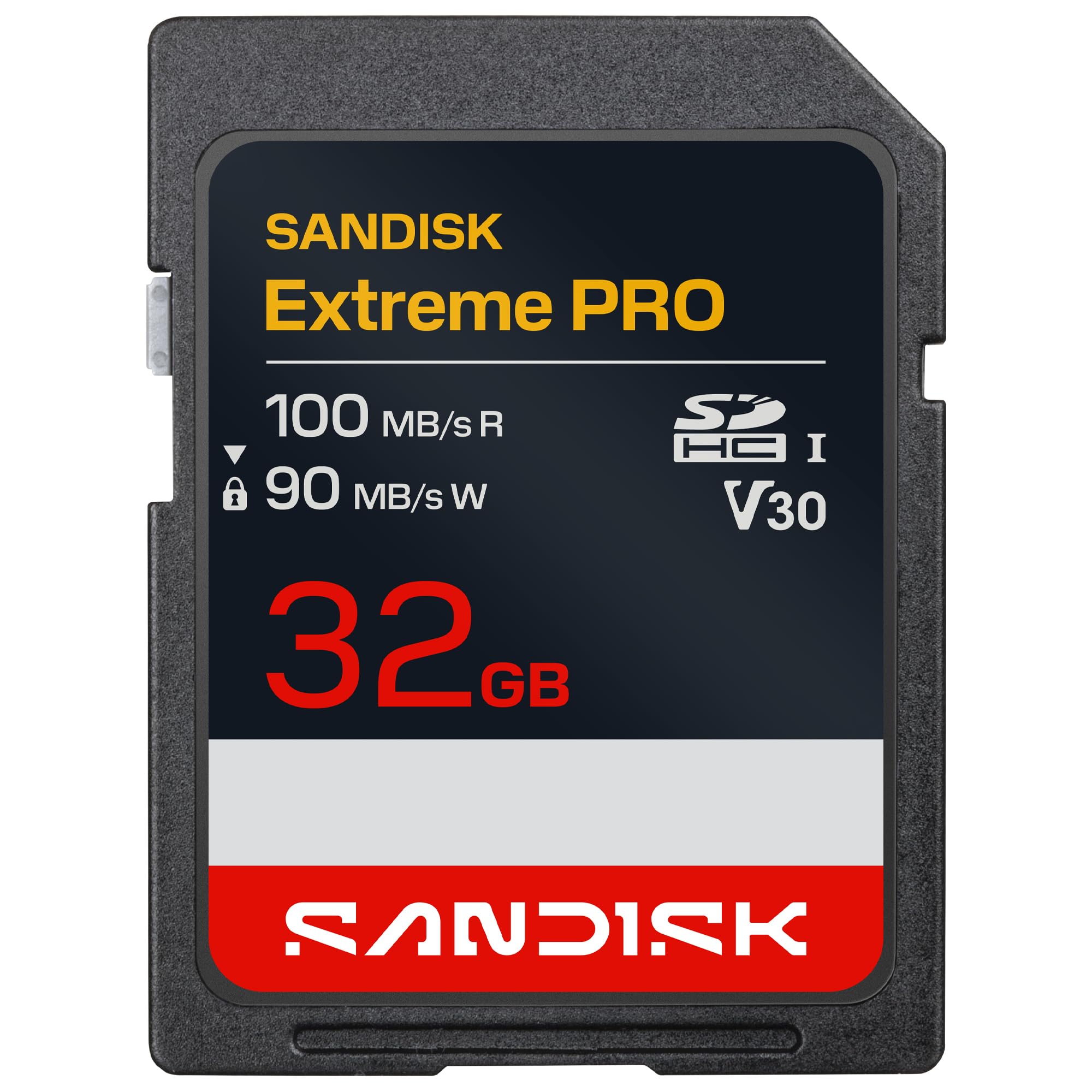
1. SANDISK 32GB Extreme PRO SD Memory Card
Our pick — 4.5+★ from 71,000+ verified ratings; the strongest balance of quality and price.
The full-size card that treats a recorder as gently as it treats a cinema camera.
If your device has a standard SD slot, this is the card to beat. It writes at up to 90MB/s and reads at up to 100MB/s — figures that mean an hour-long session copies to your laptop in a fraction of the time a slow card needs. The U3 and V30 ratings are the labels that promise sustained video capture of 30MB/s, which is several times what an audio file ever asks for. That headroom is what keeps a continuous recording from stalling mid-session.
What wins people over here is sheer dependability. Reliability is the aspect buyers single out more than any other, and wedding photographers describe these as their go-to cards for a full day of events — the kind of work where a lost file is a lost client. The same reasoning applies to a deposition, a board meeting, or a two-hour field interview. It is also built for harsh handling: temperature-proof, waterproof, shockproof, and X-ray-proof, so an airport scanner on the way to a job is not a worry.
The catch worth knowing: this is a full-size SDHC card, not the tiny microSD format. That is perfect for a standard recorder slot, but it will not fit a device that only takes microSD without an adapter. Compatibility is the one area where buyer opinion splits, which is almost always a slot-format mismatch rather than a bad card — check your recorder’s slot first and you sidestep it entirely.
What earns it the top spot
- Up to 90MB/s write speed means files land without buffering or dropped takes.
- U3 and V30 ratings guarantee sustained capture of 30MB/s — far past any audio need.
- Temperature, water, shock, and X-ray proofing survives a bag, a field kit, and an airport.
- 32GB of SDHC storage holds multiple long sessions before you ever offload.
Where it asks you to check first
- Full-size SD only — a microSD-only recorder needs the other format.
- Some buyers feel it is priced above the plain-Jane cards, though the speed and warranty support that gap.
- You are buying speed a recorder cannot fully use — good insurance, not a necessity.
Reach for this if: your recorder takes a standard SD card and you want the least drama possible on the day of a recording.
Pass it by if: your device only accepts microSD and you would rather not carry an adapter.
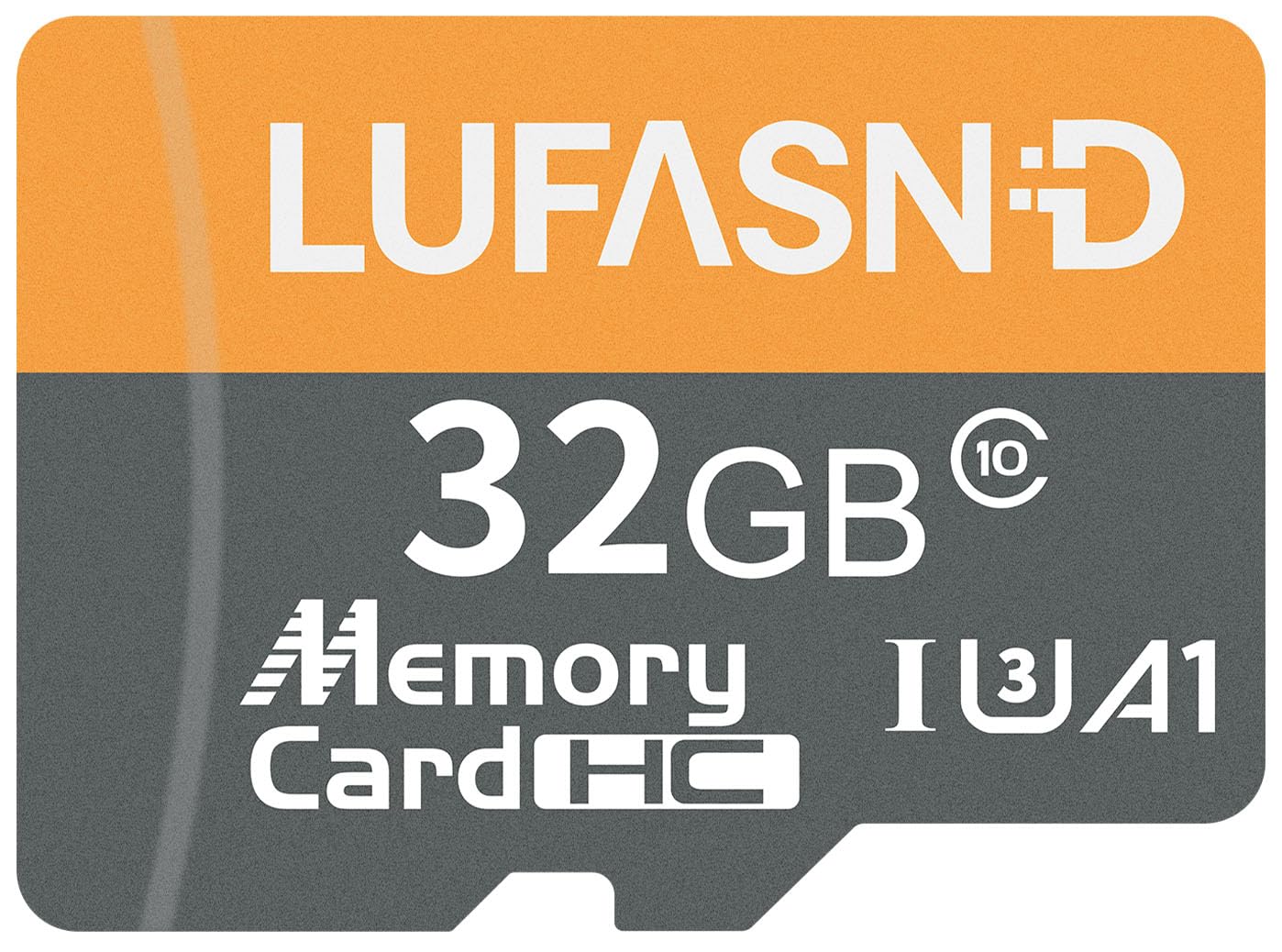
2. Lufasnd 32GB Micro SD Card with Adapter
The tiny card that punches well above its size for anyone on a lean budget.
This is the microSD option for people whose recorder takes the little card, and it arrives with a full-size adapter so the same card slides straight into a laptop reader. It reads at up to 100MB/s and carries the U3 and V30 ratings, which is the same class of speed the top pick advertises — genuinely surprising at this price point. For a voice recorder that writes small files, that headroom means zero stutter, and for a dash cam or trail cam it means stutter-free 4K UHD capture.
That speed is overkill for audio, but it makes the card equally suited to 4K dash cams and trail cams. But what you actually get here is a card rated to work across smartphones, tablets, dash cams, security cameras, drones, and gaming consoles — one card you can move between gadgets without thinking. At 32GB it holds a lot of sessions, and owners who run it in cell trail cameras for a full deer season come back with it still working.
Honest note: this is a newer listing with a smaller review history behind it, and it tops out at 32GB with no larger-capacity version in the data. If you routinely record weeks of audio without offloading, a 64GB microSD makes more sense. If you offload after each session, 32GB is plenty.
Where it wins: the combination of up to 100MB/s read speed, U3/V30 ratings, and a bundled adapter at a bargain-tier price is a hard value to argue with in a microSD-only recorder.
Where it stays modest: capacity caps at 32GB and the listing is young, so buyers who want a long track record should look at the bigger-name cards.
Best fit: a microSD recorder that needs fast, cheap, reliable storage for regular sessions.
Look elsewhere: if you want a proven track record or a capacity bigger than 32GB.
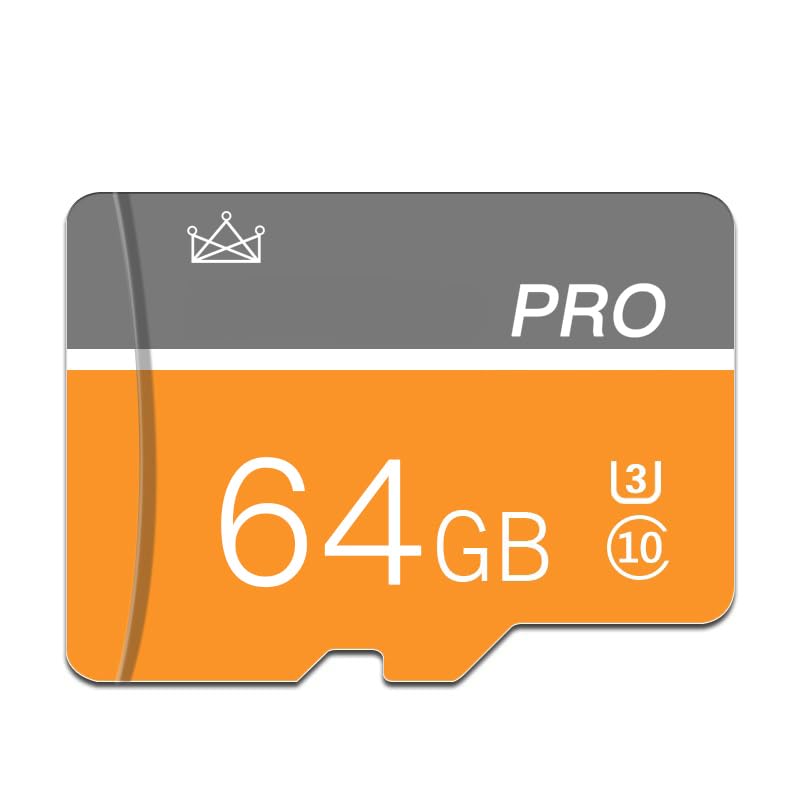
3. gzpddu 64GB Memory Card with Adapter
Double the room of the 32GB crowd, for people who would rather not offload mid-week.
Here is the capacity argument in one line: the two dominant 32GB cards in this list hold 32GB apiece, and this one holds 64GB — the same make-or-break jump as its count comparison against the 5-Pack 4GB microSD cards, which collectively hold 20GB. If your recorder writes long, continuous sessions and you would rather offload once a week than once a day, that doubling matters. It carries a Class 10 rating, meaning a guaranteed 10MB/s sustained write, which is comfortably above anything audio needs.
Functionality is the aspect owners call out most, and the recurring theme is a card that keeps working where others have quit — one buyer runs it through the extreme conditions of a ZUMIMALL security camera without trouble. The 20MB/s read speed is modest compared with the 90MB/s readers here, but for audio files that difference is a few seconds during offload, not an issue during recording. It is also built for rough handling: water resistance, temperature resistance, X-ray proofing, plus drop and magnetic proofing.
The one quirk in the data: the listing’s compatibility notes wander between phone, camera, dash cam, and tablet, but it does not name a standard SD recorder slot outright. Check your device takes microSD (it ships with an adapter) before you commit. Buyers who match it to a microSD slot report no recurring problems in the feedback.
The real draw: 64GB of microSD storage under a Class 10 rating, inside a shell proofed against water, temperature, X-rays, drops, and magnets.
The check to make: read speed is 20MB/s, fine for audio and slower than the 90MB/s cards for large offloads.
Worth grabbing if: your recorder takes microSD and long, unbroken sessions matter more than fast offload.
Think twice if: you do massive file transfers to a workstation and want maximum read speed.
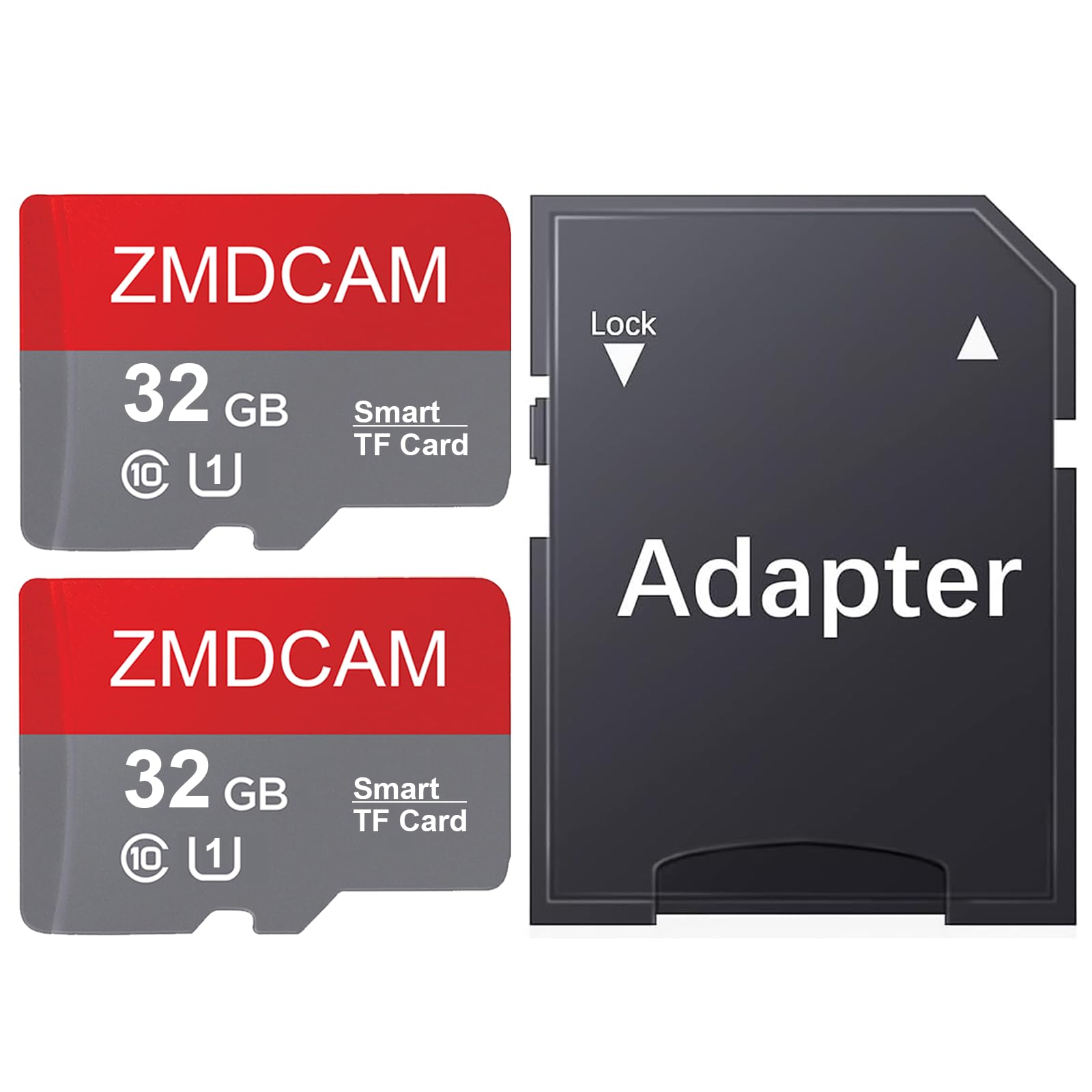
4. ZMDCAM 2 Pack 32GB TF Card with Adapter
One card stays in the recorder, one lives in the bag — the simplest backup plan there is.
The idea here is a spare. You get two 32GB cards and one SD adapter, which is the classic field strategy: run one card until it is full, swap to the second, and offload the first back at base. It reads at up to 90MB/s — a clear step past the 20MB/s read speed of the gzpddu 64GB card above — and a step short of the 100MB/s readers at the top of this list. The U1 and Class 10 ratings guarantee a steady 10MB/s write, which is exactly the spec an audio recorder cares about.
ZMDCAM publishes real guidance on what 32GB buys you: up to 1.8 hours of 4K video, 6 hours of 1080P, around 10,000 high-resolution photos, or 6,000 songs. Since audio files are far lighter than video, a single card here covers many sessions, and you have a second one waiting. The A1 rating (1500 read IOPS, 500 write IOPS — a measure of how fast small files open) is icing for anyone who also uses these in a phone or tablet. The card is shockproof, temperature-resistant, waterproof, and X-ray-proof, and it backs that with a 3 year warranty.
There is a small honesty flag in the reviews — formatting and durability each draw a handful of gripes, and one adapter arrived that would not accept its chip. Sized against the bulk of the feedback, that is a rare hiccup, not a pattern. The card remains a sensible, well-priced pair for anyone who wants a backup on hand rather than a single expensive card.
Why the pair makes sense
- Two cards plus an adapter means you always have a spare in the field.
- Up to 90MB/s read speed and 10MB/s sustained write — a clean fit for audio recorders.
- A1 performance (1500 read IOPS, 500 write IOPS) keeps small files snappy on phones and tablets.
- 3 year warranty and proofing against shock, temperature, water, and X-rays.
What to keep in mind
- A formatting snag or a dead card shows up in a minority of feedback — the warranty is your backstop.
- Each card holds 32GB, so very long runs still mean a swap.
Go for it if: you record away from a laptop and sleep better with a second card in the bag.
Look elsewhere if: you want a single huge card and never want to think about swapping.
5. Bliksem 2 Pack 64GB TF Card with Adapter

Two 64GB cards that cover a recorder and a dash cam without a second shopping trip.
Two 64GB microSD cards and an adapter each — this is the kit for a multi-device household. The cards carry C10 and A1 ratings (C10 guarantees a 10MB/s steady write; A1 keeps small-file access quick) and transfer at up to 80Mb/s. That speed sits between the 90MB/s ZMDCAM cards and the 20MB/s gzpddu card, so it is no slouch, though for audio recording you will never notice the difference between 80 and 100.
Where this one earns its place is breadth. Owners run these in baby monitors, outdoor home cameras, dash cams, and Canon Rebel cameras, and storage capacity is the aspect praised most — there is plenty of room for video and long recordings. The twin-pack structure means one card can live in the recorder and one in whatever else needs expanding, which is the practical reality of most people’s drawer of gadgets.
The honest caveat is durability over the long haul. The card’s reliability and quality get a mixed reception, and the recurring complaint is a card that quits months down the line and can no longer be formatted. That is the trade-off for buying two cards at a budget-tier outlay — keep the second as your spare and offload often, and you are covered either way.
What it delivers: two 64GB C10 / A1 microSD cards with adapters, up to 80Mb/s transfer, and enough room for a full weekend of recordings on each.
The trade-off: long-term reliability draws mixed feedback, so treat these as cards to rotate rather than archive on.
Made for: buyers who want to expand storage across several devices at once without spending much.
Not for: anyone who needs one card to hold irreplaceable audio for years without backup.
6. SANDISK 64GB High Endurance Video microSDXC Card
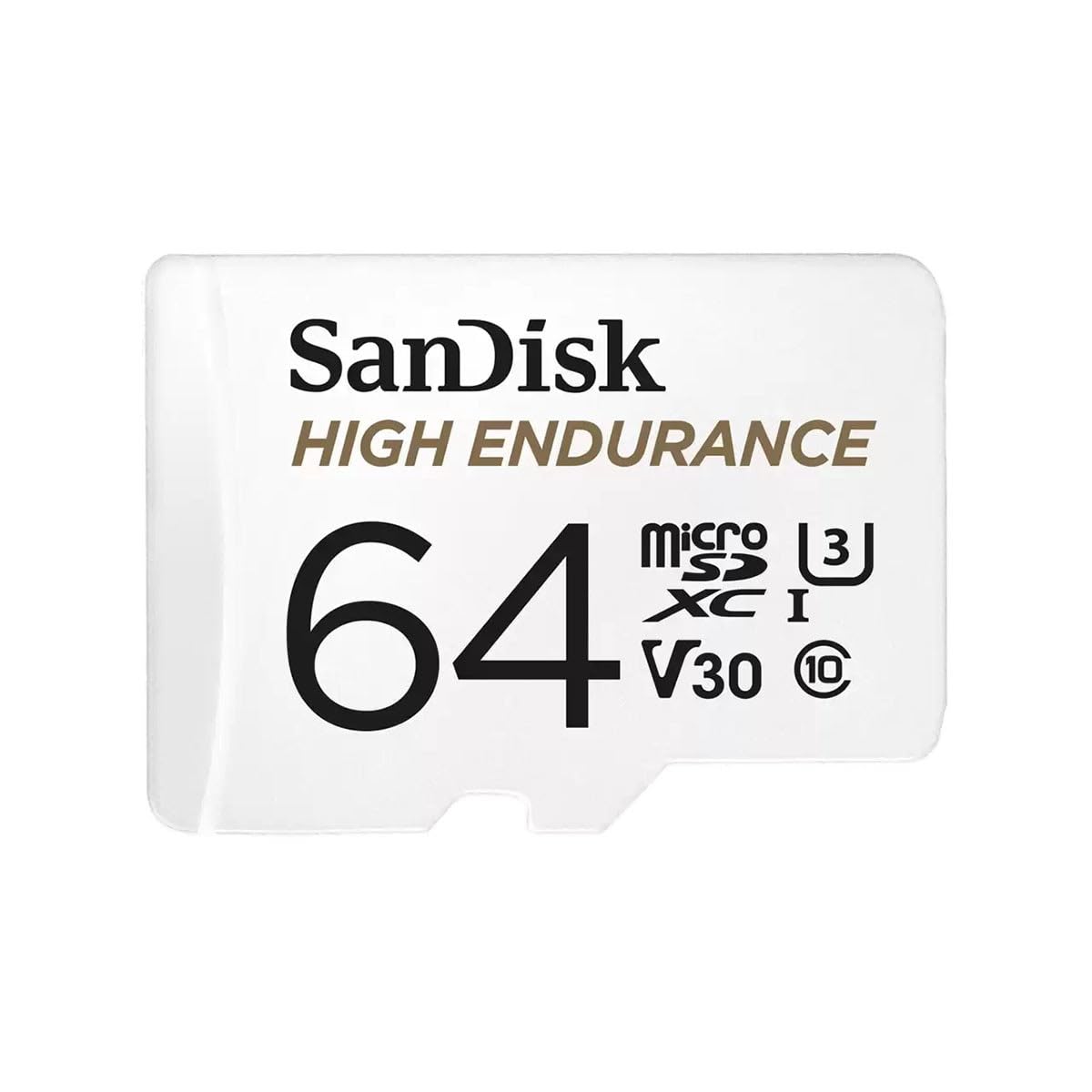
Built for the kind of recording that never stops — the endurance card for looped, long-shift work.
If your recorder runs for full workdays, or you also keep a dash cam or home monitor rolling, endurance is the number that matters. SanDisk rates this card for up to 5,000 hours of recording — the figure that separates a card designed for constant write cycles from one built for the occasional snapshot. It carries C10, U3, and V30 ratings with a 30MB/s media speed, and it holds 64GB of microSDXC storage. For a field recorder that means weeks of audio, and for a security camera it means hours of footage per card.
Owners lean on it exactly where you would expect: dash cams, home security systems, and Raspberry Pi builds that boot from card and run day and night. Suitability for dashcams is an aspect buyers single out as a strength, and there is a running-24/7-for-a-year story in the reviews. The same proofing as the top pick applies — temperature, water, shock, humidity, and magnet proof — so leaving it mounted in a hot car between recordings is far less risky than with a plain card.
Honest caveat: endurance cards wear, and the data does show mixed durability feedback over very long horizons. That is the nature of any card written to constantly; the 5,000-hour rating is the lifespan guidance you are working from. For a recorder that runs a few hours a day, you are nowhere near that ceiling. For a security camera that never sleeps, it is the right tool even so.
The endurance case
- Rated for up to 5,000 hours of recording — built for constant write cycles, not occasional use.
- 64GB of microSDXC storage with C10, U3, and V30 ratings at 30MB/s media speed.
- Temperature, water, shock, humidity, and magnet proof for mounted, always-on duty.
The fair warning
- Even endurance cards wear out over very long constant use — plan to replace eventually.
- microSD only, so a full-size SD recorder needs the adapter route or a different card.
Pick this when: your recorder runs long shifts or shares duty with a dash cam that writes all day.
Skip the upgrade if: you record a couple of hours a week — the endurance premium buys you nothing there.
7. Amazon Basics 128GB microSDXC Memory Card
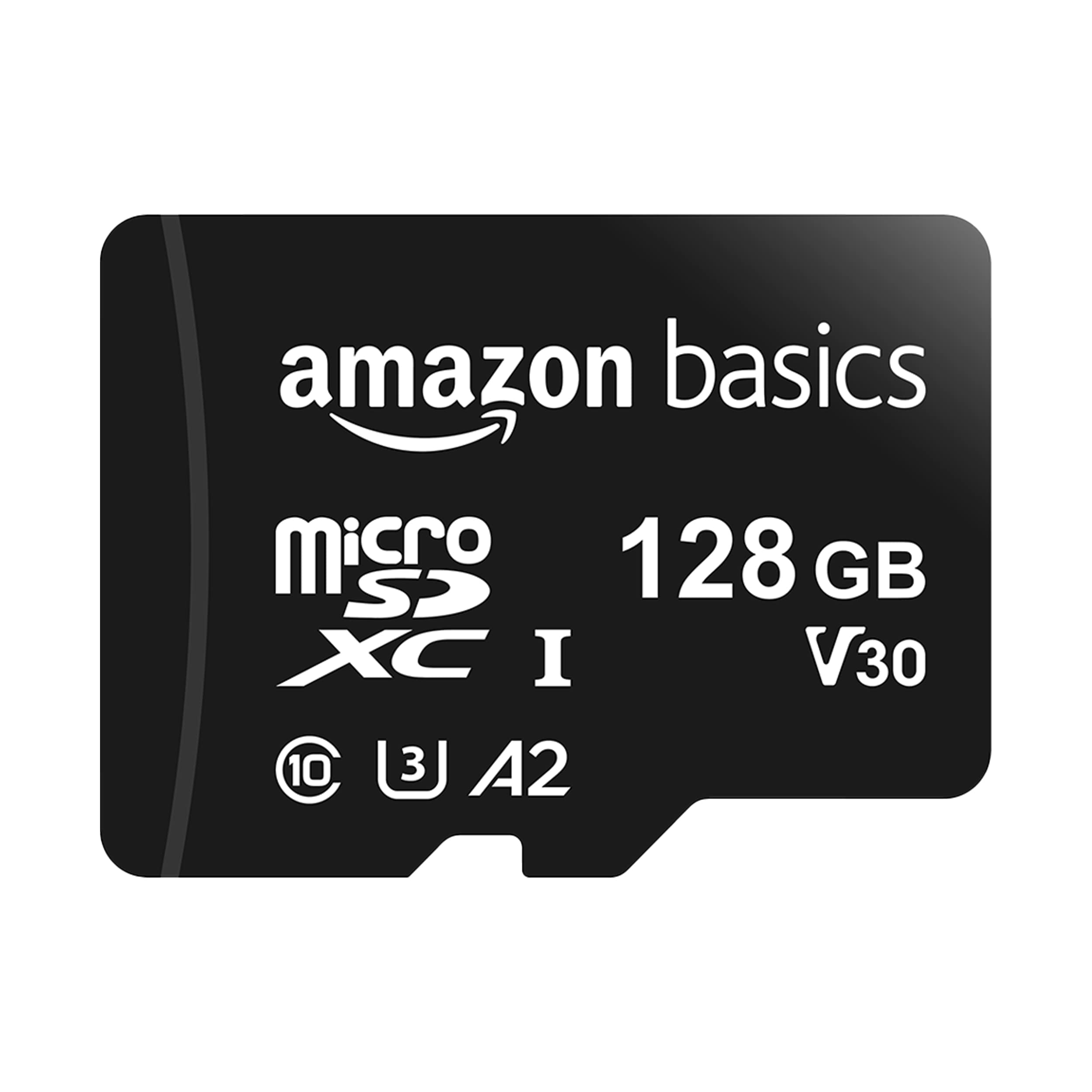
The biggest card here — room for months of audio, at a price that undercuts the small-name crowd.
The headline is the number: 128GB of microSDXC storage. Against the 32GB cards in this list, that is four times the room, and it is the reason this card is the easiest way to stop offloading. For audio, 128GB is genuinely enormous; for anyone who also shoots video, the card reads at up to 100MB/s with UHS-I U3 and V30 ratings and handles RAW files, time-lapse, and 4K UHD playback without lag. Amazon’s own A2 application rating also keeps app loading quick on Android devices.
Owners run these in Nintendo Switch consoles (note: not Switch 2), Nikon cameras, tablets, and security cameras. Functionality is the aspect praised most, with compatibility close behind — many buyers mention swapping it into a phone short on storage and having the OS pick it up instantly. There is also real-world capacity honesty in the listing: labeled 128GB corresponds to at least 116GB usable, because the OS and binary-vs-decimal counting eat into the headline number. That is normal, not a defect.
For recorder duty the honest framing is that this is far more capacity and speed than an audio device requires, so you are buying room to breathe. Reliability does draw mixed feedback, with isolated reports of a card failing early. As with any high-capacity card, keep your originals backed up and this is an easy recommendation for anyone who would rather buy once.
Standout spec: 128GB of storage (at least 116GB usable) with U3, V30, and A2 ratings and up to 100MB/s read — capacity and speed in one card.
Know before you buy: it is overkill for pure audio, and a minority of cards fail early, so back up important sessions.
The right call if: you want to record for weeks without touching the card and value capacity over everything.
Overkill for: a simple voice recorder where 32GB already holds more than you offload.
8. GIGASTONE 32GB SD Card 5-Pack

Five full-size cards in one box — the pragmatic answer for a drawer full of field recorders.
Here is the multi-device math: the standard SD cards in this list mostly come one to a pack, and the GIGASTONE gives you five 32GB SDHC cards in a single box, each with a mini case. That is 160GB of full-size storage spread across a fleet. Each card transfers at up to 80MB/s, carries Class 10 and U1 ratings for Full HD recording, and slots straight into a standard SD recorder without an adapter in sight.
What owners praise most is build quality, and these fit trail cameras, Halloween and Christmas video decorations, and point-and-shoot cameras without complaint. One buyer notes they are “32gb which is just what we needed” for a set of trail cams — the same fixed-capacity logic that suits a voice recorder. Each card is waterproof, temperature-proof, X-ray-proof, shock-proof, and magnetic proof, and Gigastone covers them with a 5 year limited warranty.
The trade-off to weigh: 80MB/s transfer speed and a Class 10 rating are perfect for audio, but this is not a high-speed 4K card. If your recorder also has to feed a 4K video workflow, look to the Extreme PRO at the top. For anyone juggling several older recorders or classroom devices, five cards in one shot is far easier than five separate purchases.
The case for the box
- Five 32GB full-size SDHC cards and five mini cases in one purchase.
- Class 10 / U1 rating at up to 80MB/s — ideal for Full HD and audio alike.
- 5 year limited warranty, with waterproof, temperature, X-ray, shock, and magnetic proofing.
What it will not do
- Not a high-speed 4K card — fine for audio, tight for serious video work.
- Fixed at 32GB per card, so a long continuous session means rotating to the next.
Best for: anyone stocking several recorders, classrooms, or trail cams at once.
Wrong pick if: you need just one card for a 4K-capable setup and want maximum speed.
9. Lufasnd 5-Pack 4GB Micro SD Cards
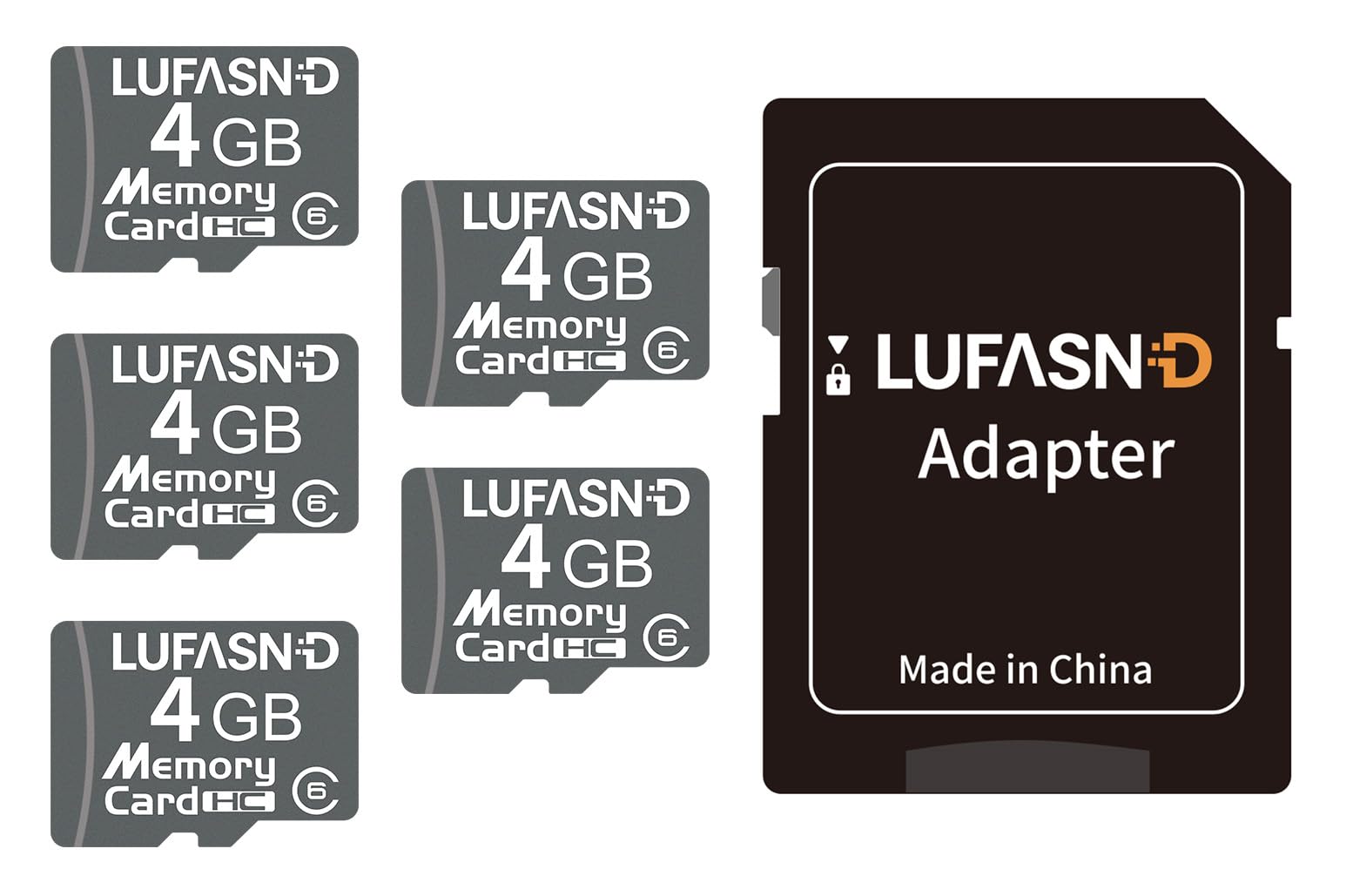
For the old voice recorder that simply refuses to accept a modern high-capacity card.
Not every recorder is modern, and that is exactly who this pack is for. Some older devices only read microSDHC up to a fixed size, so a 32GB or 64GB card will not mount at all. These cards are 4GB each and carry a Class 6 rating, meaning a guaranteed 6MB/s sustained write — still plenty for compressed audio. The listing even names voice recorders, Garmin GPS units, MP3 players, and retro DS consoles as intended devices.
The 5-pack format is the real sell. You get five 4GB microSDHC cards and one adapter, which suits schools, businesses, and multi-device drawers where a card lives permanently in each gadget. They are waterproof, shockproof, temperature-resistant, and X-ray proof, and at 2.86 g apiece they weigh nothing in a field kit. There is also a genuine industrial angle — for firmware updates and IoT devices that cannot handle larger cards, a small stable card is the correct answer.
Be honest about the ceiling: 4GB is a fraction of what a modern card holds, so this is a compatibility tool, not a daily driver. The listing is also newer with a thin review history. But for the person whose recorder is bricked by a modern card, five of these solve the problem outright.
Why it exists: 4GB microSDHC and Class 6 speed are exactly what older recorders and firmware-update devices accept when bigger cards fail.
The honest limit: 4GB per card is small for modern use, and the listing is new with little buyer history yet.
Right for: older recorders, GPS units, MP3 players, and devices that choke on high-capacity cards.
Wrong for: a modern recorder that can read 32GB or more without a fuss.
Know the Specs
Speed class and write speed
Speed class is the minimum sustained write speed the card maker guarantees, so it tells you the floor, not the peak. Class 10 means at least 10MB/s of steady writing, U1 sits at the same floor, and U3 goes higher for 4K video. For a voice recorder, a Class 10 or U1 card writes audio without ever breaking a sweat. U3 and V30 simply add headroom you may never use for pure audio.
SDHC versus SDXC versus microSD
These three labels describe the card’s physical size and capacity family, and “micro” refers to the finger-nail-sized format. SDHC and SDXC are full-size cards that slot into a standard 32mm by 24mm SD slot. microSDHC and microSDXC are the tiny versions, and they usually ship with an adapter to fit full-size slots. Matching the card to your recorder’s slot is the single most common compatibility issue — check it before buying.
Endurance rating
Endurance is how long a card keeps writing before it wears out, usually stated in hours of recording. It matters for devices that write continuously, like dash cams and security cameras, and it is far less pressing for a recorder you use a few hours a week. The data’s endurance example is a card rated for up to 5,000 hours of recording — the lifespan guidance that matters for always-on duty.
Capacity and real usable space
Capacity is the headline number, but usable space is always a little smaller. The operating system and the difference between binary and decimal counting eat into it — a labeled 128GB card, for example, reads as at least 116GB once it is formatted. Plan around the usable figure, not the label, and remember audio files are far lighter than video, so a card goes a lot further in a recorder.
Common Questions
What size SD card do I need for a voice recorder?
Do I need a fast card for audio recording?
Will a microSD card work in a standard SD recorder slot?
What is the difference between Class 10, U1, U3, and V30?
How long will my recordings last on a card?
Can I use a card from my camera in my voice recorder?
Why does my 4GB card still work when a 32GB card will not?
Should I format a new card before recording?
Is a full-size SD card better than microSD for a recorder?
How do I keep recordings safe if a card fails?
The Bottom Line
For most recorders, the voice recorder sd card to buy is the SanDisk 32GB Extreme PRO. Owners praise its reliability above all, and its U3/V30 ratings, up to 90MB/s write speed, and temperature, water, shock, and X-ray proofing leave a wide safety margin for field recording. It holds fewer ratings than some of the bulkier cards here, but its 4.5+ star score is the highest in this list.
If you run a microSD-only recorder, the Lufasnd 32GB Micro SD Card delivers up to 100MB/s read speed and the same U3/V30 ratings for a budget-tier outlay, making it the smart value companion. And if your recorder runs long shifts or doubles as a dash cam, the SanDisk 64GB High Endurance card is rated for up to 5,000 hours of recording — the endurance pick that keeps writing when other cards wear down. Whichever you choose, match the card to your recorder’s slot, offload after each session, and keep a spare card in your bag.
How we choose
We do not accept paid placement. Every pick is matched to a real buyer and a real use-case; we do not hands-on test units.
Sources
Specifications: manufacturer listings and product documentation. Review insights: verified customer reviews, as of November 2026. Pricing: not shown on this page (it changes often); check the current price via the retailer link.
As an Amazon Associate, Tactical Gear Guy earns from qualifying purchases. This does not affect which products we feature.