Specs are compiled from manufacturer listings and verified buyer reviews and can change over time — please confirm the key details on the product page before buying.
Buying a video recording camera is not about chasing the highest resolution number on the box. It is about matching three things to how you actually film: how big the sensor is (a bigger sensor gathers more light, so night footage stays clean), how steady the picture stays when you move, and how long the battery lasts before you have to stop. Get those three right and your footage looks professional even in the rain, at a concert, or on a dim street at night. Get them wrong and you carry a heavy rig that produces grainy clips you cannot fix later.
This guide is built by comparing the manufacturers’ published specifications and the patterns across verified customer reviews, so you get each pick’s real strengths and trade-offs instead of marketing spin.
The picks below run from a pocket action cam to a full cinema body, and each one earns its place on a different job. Here is the honest breakdown to help you land on the right video recording camera.
Top Picks


How To Choose The Best Video Recording Camera
First, sort out what you are filming and where. A vlogger who talks to a lens in a bright room has different needs than a wedding shooter running through a dim reception hall or a rider strapping a camera to a helmet. That single question decides if you want a pocket device, an action cam, or a full-frame body with interchangeable lenses.
Sensor size comes before megapixels
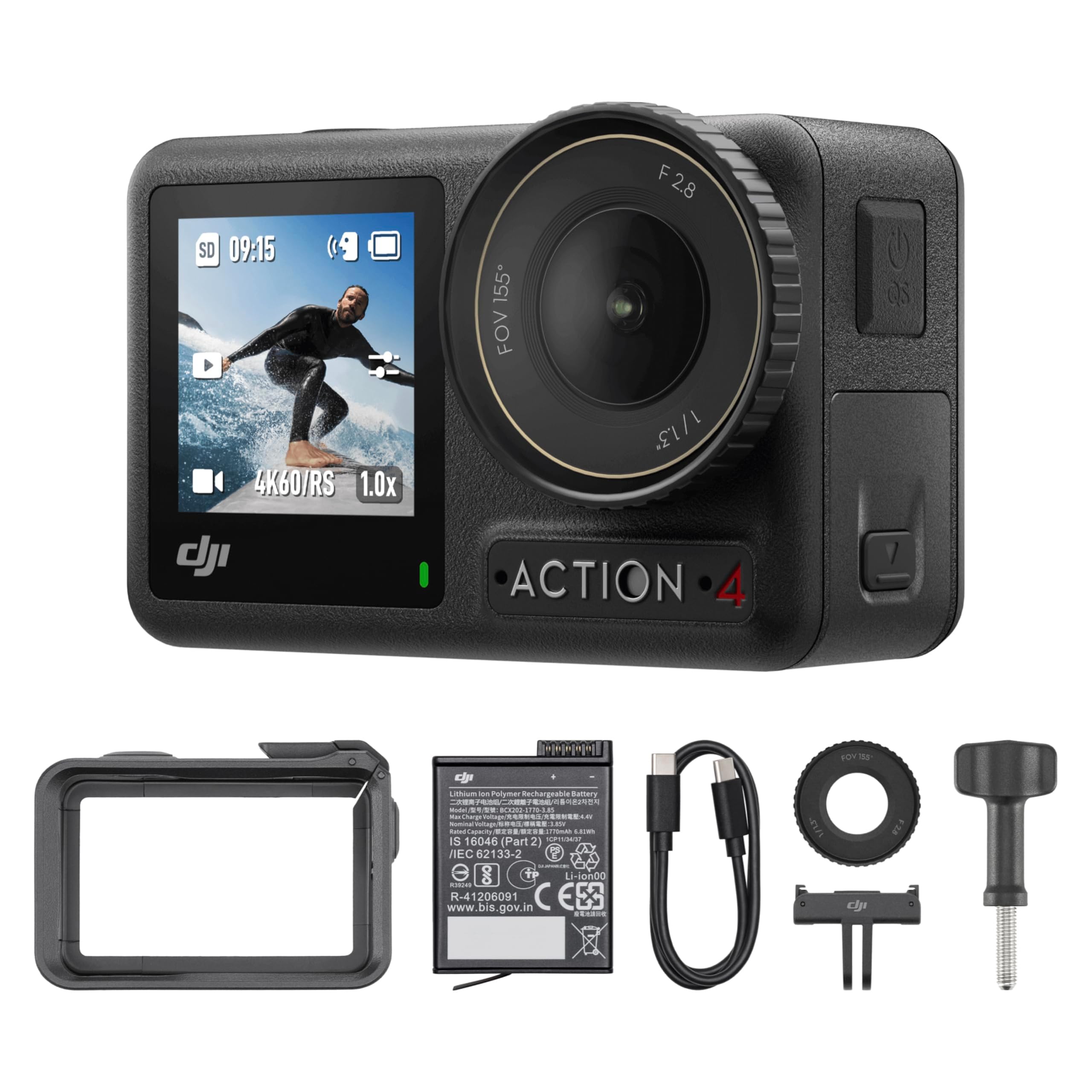
A one-inch sensor is physically larger than the tiny sensor inside a phone, so each pixel collects more light. That is why cameras with a 1-inch or larger sensor hold detail in shadow and keep skin tones clean when the sun drops. The DJI Osmo Action 4 uses a 1/1.3-inch sensor with a 2.4μm pixel size, which is a plain way of saying its light-gathering pixels are bigger than most action cams. If you film indoors or after dark, prioritise sensor size over a higher megapixel figure.
Stabilization: electronic or mechanical
Shaky footage is the fastest way to make a good camera look amateur. Electronic stabilization smooths the image in software, while a mechanical gimbal (a motorized mount that physically holds the camera level) does it in hardware. The Xtra Muse builds a 3-axis gimbal right into the body, so running and hiking shots stay level without extra gear. Action cams like the Osmo Action 4 rely on stabilization modes instead, which is lighter but crops the frame slightly.
Frame rate and bit depth for editing
Frame rate is how many pictures the camera records each second — 30fps looks natural, while 120fps lets you slow the clip down in editing for a smooth slow-motion effect. Bit depth is how many shades of colour each pixel keeps; 10-bit captures far more subtle gradations than 8-bit, which helps when you colour-grade sunsets or skin. The Insta360 Luna Ultra and the Xtra Muse both shoot 10-bit, giving you editing headroom a basic 8-bit clip cannot match.
Battery and card compatibility
Check the rated battery minutes and the memory card type before you commit. Long documentary shoots want a camcorder body that runs for close to three hours, while a pocket vlogger can live with a shorter run and a spare. Also confirm the card slot: some cameras take Micro SD, others take full-size SD or CFexpress, and buying the wrong card means a camera that will not record.
Side-by-Side Comparison
| Model | Best For | Video Resolution | Sensor / Format | Battery Life | Amazon |
|---|---|---|---|---|---|
| DJI Osmo Action 4 Essential Combo★ Best Overall | Action and travel | 3840 pixels (4K) | 1/1.3-inch | 160 minutes | Amazon |
| Canon PowerShot V10Best for Vlogging | Pocket vlogging | 4K at 30fps | 1-inch CMOS | 2 hours | Amazon |
| Xtra MuseSmoothest Handheld | Run-and-gun smoothness | 3840 pixels (4K/120fps) | 1-inch CMOS | 161 minutes | Amazon |
| Insta360 Luna Ultra | High-resolution vlogging | 8000 pixels (8K) | Dual Leica lenses | 4 hours | Amazon |
| Canon VIXIA HF G70 | Events and long shoots | 2160 pixels (4K UHD) | 1/2.3-inch CMOS | 170 minutes | Amazon |
| Nikon Z5 II | Hybrid stills and video | 4K/60p | Full-frame FX | — | Amazon |
| Sony FX30 | Cinema on a budget | 4K (Super 35) | APS-C Super 35 | — | Amazon |
| Blackmagic Pocket Cinema 6K | Raw 6K filmmaking | 6144 x 3456 (6K) | Super 35 | — | Amazon |
| Sony Alpha FX3 | Pro full-frame cinema | 4K/120p | Full-frame | — | Amazon |
Detailed Reviews
1. DJI Osmo Action 4 Essential Combo
Our pick — 4.5+★ from 2,500+ verified ratings; the strongest balance of quality and price.
The pocket-sized action cam that keeps night footage clean instead of grainy.
The number that earns this the top slot is the sensor: a 1/1.3-inch chip with a 2.4μm pixel size, which is a plain way of saying each light-gathering pixel is bigger than most action cams. Bigger pixels drink in more light, so indoor and evening footage keeps its colour instead of breaking into noise. It records at 3840 pixels across, and the 155° ultra-wide field of view captures more of the scene with minimal cropping — useful when you film a motorcycle run or a reef dive and cannot frame precisely.
You can shoot 4K at 120fps (frames per second), which means smooth slow-motion when you slow the clip down later. Colour depth reaches 10-bit and the D-Log M profile holds extra detail so you can grade the footage on your computer afterwards. The 1770mAh battery is rated to 160 minutes and keeps working in temperatures as low as -20°C (-4°F). Waterproofing reaches 18m, so you can drop it in the sea without a case. Three stabilization modes keep handheld runs level, and the magnetic quick-release mount flips the camera from horizontal to vertical in seconds.
The honest trade-off is audio and mounting flexibility: it pairs cleanly only with DJI’s own Mic 2 or Mic Mini transmitters, and this Essential Combo skips the curved adhesive base the fuller kits include. It connects directly to a DJI Mic 2 or Mic Mini transmitter for clean wireless sound, but if you own a different brand of mic you will need to work around that. This Essential Combo also skips the curved adhesive base that the fuller kits include, so budget for a mount if you plan to stick it on a helmet. A 4.5+ star average across 2,600+ ratings backs up its reputation for picture quality in this class.
Where it shines
- 1/1.3-inch sensor with 2.4μm pixels for clean low-light clips
- 160-minute battery that shrugs off -20°C cold
- 18m waterproofing with no extra housing needed
- Magnetic mount flips to vertical in seconds
Where it asks more of you
- Best wireless audio only with DJI’s own mic transmitters
- Essential Combo leaves out the curved adhesive base
- Frame gets slightly cropped when stabilization kicks in
Grab it for: riders, divers, and vloggers who want a small camera that survives weather and dark scenes.
Pass on it if: you already own another brand of wireless mic and want clean audio with no adapters.
2. Canon PowerShot V10 Compact Vlogging Camera
A pocket vlogger that folds out its own stand and films you hands-free.
Here is a camera built around one job: pointing at you. The 15.2-megapixel 1-inch back-illuminated CMOS sensor is a bigger chip than you would expect in a body this small, and it helps the V10 hold detail when light gets thin. That stills figure towers over the DJI Osmo Action 4’s 10 mp, which matters if you want sharp thumbnails pulled from your clips. The fixed 19mm wide-angle lens (35mm equivalent) fits a whole room or a tight interior without you backing into a wall.
What makes it feel purpose-built is the stand. It folds forward or backward so you can set the camera on a desk and talk into the retractable front-facing screen without a tripod. Two stereo microphones catch your voice, with a third centre mic working to pull down background rumble. Video capture runs 8-bit 4K at up to 30fps, or Full HD at up to 60fps, and there are 14 movie colour filters to set a mood without editing. Three image stabilization modes (available in version 1.2.0 or later) handle handheld drift.
The recurring gripe is battery life — two hours rated is enough for a short session but tight for an all-day shoot, and durability is a fair concern for a camera that lives in a bag. A fanny-pack carry works because of the compact frame, but treat it gently. It is the right pick if you film talking-head content and want one small device that stands itself up; think twice if your shoots run for hours.
Shape and purpose: retractable screen, folding stand, and stereo mics make hands-free solo filming simple — no arm craning or grip rig required.
The honest catch: two hours of rated runtime and a pocket-sized build mean it rewards careful handling and a spare charge.
Reach for it when: your channel is you talking to camera and you want a one-piece setup that stands on its own.
Look elsewhere if: you need a full day of continuous recording or a camera that takes rough handling.
3. Xtra Muse Vlogging Camera with 1” CMOS & 4K/120fps
The pocket camera that holds the frame dead level even when you run.
A gimbal normally means a separate rig you have to balance and carry. The Xtra Muse builds a 3-axis gimbal stabilizer into a body you can drop in a bag, so you can run, dance, or hike and the horizon stays flat. The 1-inch CMOS sensor records 4K at 120fps, which is the same high-frame-rate trick as the Osmo Action 4 above but paired with a mechanical stabilizer instead of software smoothing. Frame your shot on the 2-inch touch screen, and switch between horizontal and vertical composition without re-rigging.
For grade-heads, the 10-bit X-Log colour mode is the standout. It captures up to one billion colours, so sunrises and sunsets keep their subtle transitions when you push them in editing. Master Follow keeps a moving subject locked at the centre of the frame while you stay hands-off on a tripod. The 161-minute battery rating edges past the Osmo Action 4’s 160, and the standard bundle includes a carrying bag, wrist strap, and a 1/4″ threaded handle. It records to Micro SD, and the slot wants a V60 or U3 speed card to keep up.
That gimbal is also the part to shelter — a mechanically stabilized camera rewards a padded bag. Think of it as the smoothest self-filming tool here for people who move a lot, provided you accept the newer, less-proven badge.
What sells it: a built-in 3-axis gimbal plus 4K/120fps and 10-bit X-Log in one hand-held body — a rare combination at any tier.
What to weigh: a near-new listing without a review history, and a stabilizer that deserves gentle handling.
Pick this if: you film yourself moving — hiking, dancing, chasing kids — and want hardware-smooth footage without a separate rig.
skip it if: you want a long proven review history before you buy.
4. Insta360 Luna Ultra 8K Vlogging Camera
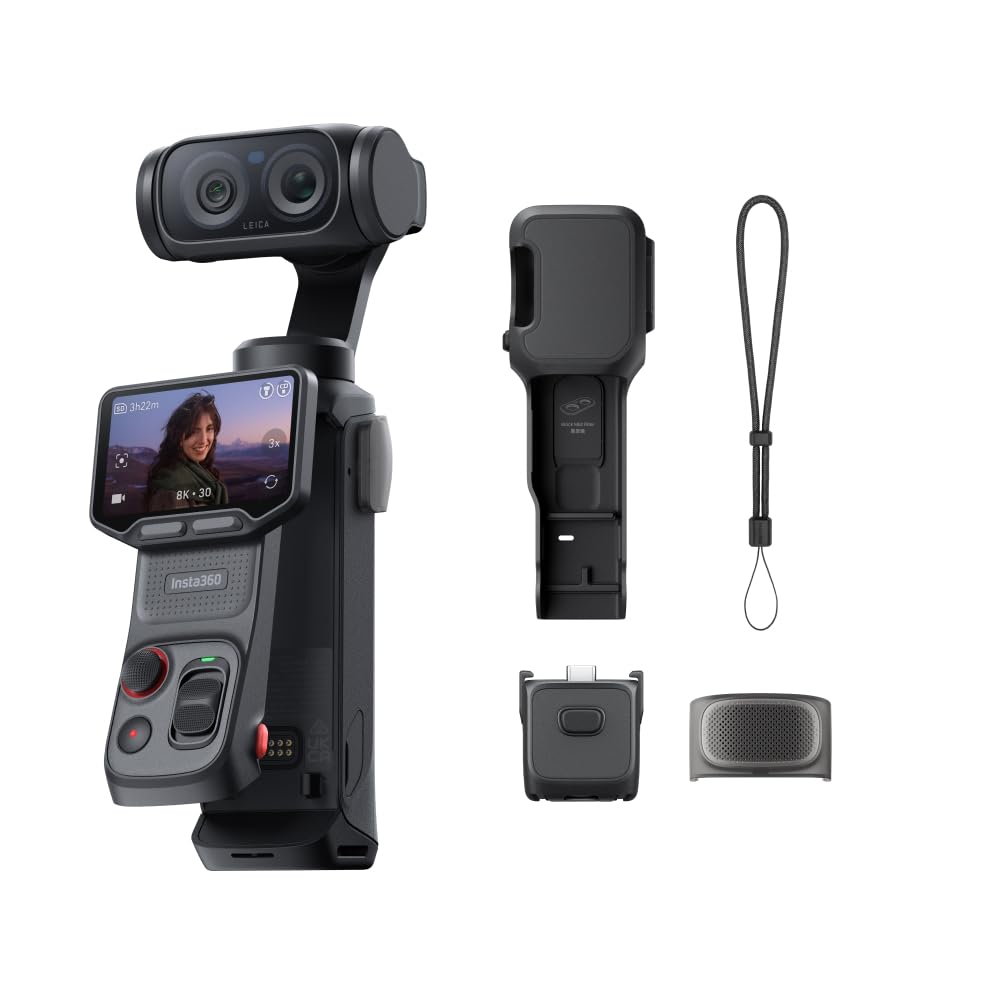
Dual Leica glass that pushes resolution far past anything else in this lineup.
If detail is your obsession, this is the one. The Luna Ultra captures at 8000 pixels effective video resolution, against the DJI Osmo Action 4’s 3840 pixels — which is the difference between reading a distant sign and guessing at it. Two Leica lenses do the work, and buyers describe the footage as stunning and the portraits as natural. The detachable screen and AI tracking draw consistent praise, and the hands-free setup makes solo filming easier than juggling a tripod.
The battery story is just as strong. A single charge is rated for up to 4 hours, with fast charging to 80% in just 23 minutes, so a coffee break gets you back on your feet. For editors, 10-bit I-Log smooths tonal transitions and adds nuance to colour, and it works inside professional pipelines including ACES and DaVinci Resolve. The handheld form factor and zoom lens make it a walk-around vlogging tool rather than a tripod-only rig.
The trade-off sits in file weight and card demand. 8K footage takes up serious space and asks for a capable Micro SD card, so plan your storage before you fill a card mid-shoot. It also centres on vlogging rather than extreme-sport abuse, so treat it as a creator’s camera, not a crash cam. If you want the highest resolution here and shoot in controlled light, nothing in this list matches it.
Why creators lean toward it
- 8000-pixel 8K capture versus the DJI Osmo Action 4’s 3840
- 4-hour rated battery with 80% in 23 minutes
- 10-bit I-Log graded inside DaVinci Resolve workflows
- Dual Leica lenses and AI tracking for hands-free filming
What to plan around
- 8K clips eat through Micro SD storage fast
- Built for vlogging, not rugged action use
Made for: creators who want the highest resolution on this page and work in good light.
Not the tool for: underwater or crash-prone shooting, where a sealed action cam wins.
5. Canon VIXIA HF G70 Camcorder 4K UHD

The long-zoom camcorder that lives on a tripod and never misses the action.
Weddings and events are where this body earns its keep. A 20x optical zoom and advanced image stabilization let you pull a tight shot from the back of a hall without moving your feet — a reach no pocket camera can touch. The 1/2.3-inch 4K UHD CMOS sensor pairs with a DIGIC DV6 image processor for crisp images, and an 8-blade aperture creates soft out-of-focus highlights that look like cinema rather than a home video. Build quality draws the strongest praise from owners, with picture and audio quality close behind.
There is one in-camera feature that event shooters will love: an on-screen “Time Stamp” mode embeds the date, time, and timecode directly into the original files. For evidence, legal, or archival work that is invaluable. You can also stream HD video straight to a PC or Mac via UVC, so the camera doubles as a livestreaming source with no capture card. The 170-minute battery rating is the longest among the wearable picks here, beating the Osmo Action 4’s 160 minutes, and an adjustable focus speed plus a Hybrid AF system with face detection keeps a moving subject sharp.
The honest catch is price and bulk: some owners feel the body is priced high for what it is, and it is a camcorder you carry in a bag rather than slip in a pocket. Some owners feel the body is priced high for what it is, and it is a camcorder you carry in a bag rather than slip in a pocket. If you film events on a tripod and need the zoom, that reach justifies the trade. If you just want casual clips, a smaller device fits better.
Where it wins: 20x optical zoom, 8-blade aperture, and a 170-minute battery make long event days on a tripod painless.
Fair caution: a larger camcorder body with a value picture some find steep, so it pays off only if you genuinely need the zoom.
Choose it for: weddings, school plays, and livestream setups that demand reach and all-day runtime.
Think again if: you shoot casually and want a camera that fits in your jacket.
6. Nikon Z5 II Full-Frame Stills/Video Camera
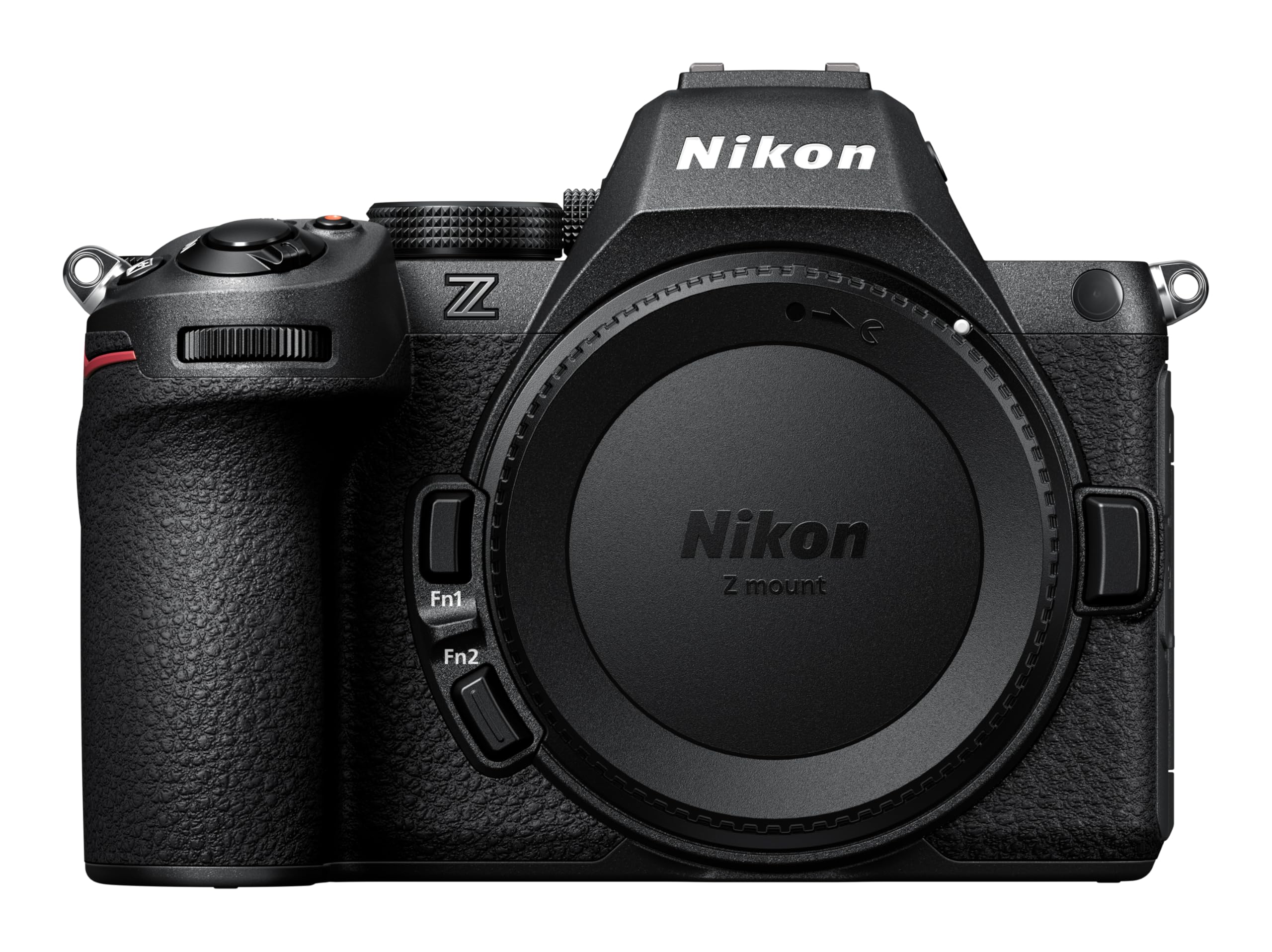
A full-frame body that shoots 4K video and stills without picking a side.
The 24.5MP BSI-CMOS full-frame sensor is the reason to pay attention here. A full-frame chip is physically the largest sensor type in this lineup, and paired with the EXPEED 7 engine it captures high-resolution, high-speed shots up to 30fps. For video it handles 4K/60p capture and 12-bit N-RAW recording in-camera, which is a big step up in grading latitude from the 8-bit footage you get on pocket vloggers. Low-light autofocus reaches detection down to -10EV — a measure of how little light the camera needs to lock focus — and 7.5 stops of built-in stabilization keeps handheld shots steady.
Autofocus tracks 9 subject types, from people and pets to cars, trains, and airplanes. The electronic viewfinder peaks at 3000 nits, which is bright enough to frame in daylight. Nikon Imaging Cloud sends files to storage automatically and updates the firmware, and SnapBridge moves clips to your phone for quick sharing. With 299 autofocus points across a Nikon Z mount, you get a full lens ecosystem to grow into.
Two things to weigh. It is a body-only listing, so a lens is not included and you will need one to shoot. It is also a hybrid stills/video camera rather than a dedicated cinema tool, so if you only film and never take photos, a cine body will suit you better. Think of this as the do-everything hybrid: one body for stills and 4K/60p video.
The draw: a full-frame 24.5MP sensor, 4K/60p, 12-bit N-RAW, and -10EV autofocus make it a genuine hybrid workhorse.
Buy-in: body-only, no lens in the box, so budget for Nikon Z glass plus this level of camera.
Best when: you shoot both photos and video and want one body that does both at a high level.
Not ideal if: you never take stills or want a lens bundled in.
7. SONY Cinema Line FX30 Super 35 Camera

The gateway cinema camera that gets you pro-looking footage without a full-frame price.
Cinema cameras usually mean five figures of spend. The FX30 breaks that with a 20.1MP Exmor R APS-C (Super 35mm format) sensor that covers a wide dynamic range, so highlights and shadows both hold up in the same shot. S-Cinetone gives you a cinematic look straight out of camera with no grading, which saves hours for anyone delivering quickly. The flexible ISO modes, Cine EI Quick, and Cine EI Log shooting let you push the chip for cleaner images in controlled light.
The 14+ stop range and Dual Base ISO give you wide latitude, so a scene shot in dim conditions keeps low-noise detail instead of falling apart. User LUTs (look-up tables — colour presets you load into the camera) can be applied to the LCD and HDMI output and baked into clips, so what you see on set is what you get. The E/FE mount opens Sony’s huge lens range, and it accepts SD, SDHC, and SDXC cards. Owners describe it as delivering professional-looking cinema results at roughly half the price of similar models.
Note that it is an APS-C Super 35 sensor, not full-frame, so for the absolute widest low-light shots the FX3 sits above it. That is a deliberate trade for the price and size. If your goal is a real cinema body with fast autofocus and 495 autofocus points without the flagship bill, this is the value play in the premium tier.
The filmmakers’ case
- 14+ stop range with Dual Base ISO for clean shadow detail
- S-Cinetone look baked in — no grading needed
- User LUTs applied to LCD, HDMI, and clips
- 495 autofocus points on the Sony E/FE mount
The fine print
- Super 35 sensor, not full-frame
- Body-only — needs a lens and cards to shoot
Ideal for: creators ready to step into cinema bodies without flagship cost.
Hold off if: full-frame low-light reach is a hard requirement for your work.
8. Blackmagic Design Pocket Cinema Camera 6K with EF Mount
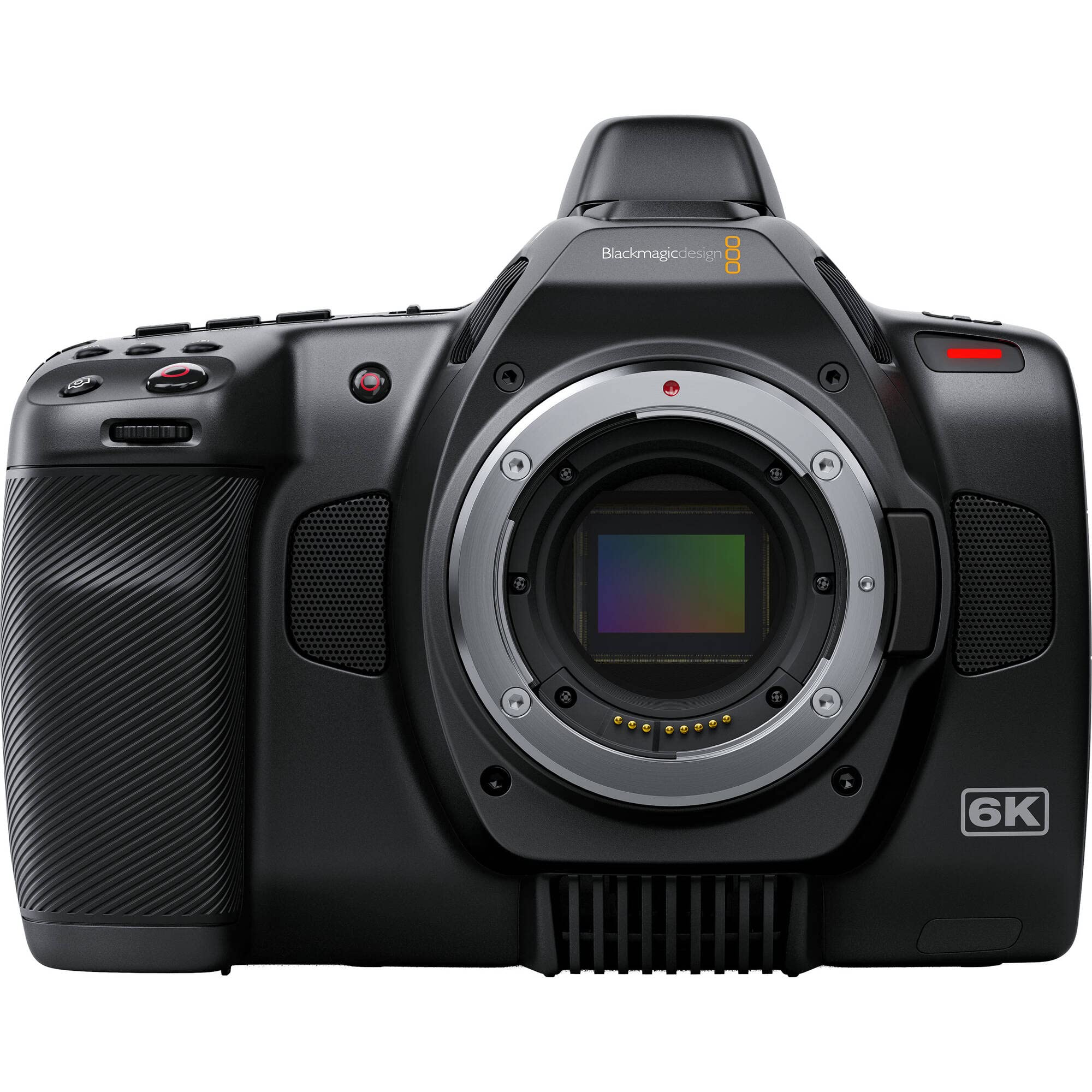
A compact body that records 6K raw — cinematic resolution with editing muscle.
Resolution here goes well past everything else on this list. This camera shoots 6144 x 3456 (6K) at up to 50fps, drops to a 6K 2.4:1 widescreen mode up to 60fps, and reaches 120fps in 2.8K and HD. The Super 35 sensor measures 23.10 x 12.99 millimetres, a format film shooters know well for its gentle depth of field. Owners describe picture quality as sensational and the 6K raw resolution as a huge creative advantage for reframing and grading.
It takes Canon EF lenses, which means a vast secondhand lens market opens up for you. Outputs run through a single HDMI Type A port, and it works with Mac and Windows 10 editing setups. Project frame rates of 23.98, 24, 25, 29.97, 30, 50, 59.94, and 60 FPS are supported, so it fits broadcast and film workflows. The body is small for what it does, though owners are split on exactly how compact it feels in the hand.
Two honest notes. Reliability draws mixed feedback, with a firmware update flagged as an issue for at least one buyer, so keep the camera current and test before a paid shoot. It also carries no flash and a contrast-detection autofocus only, so manual focus shooters will feel more at home. For raw-format filmmakers who want 6K without a flagship price, that resolution is the whole argument.
Why it earns a slot: 6K raw at up to 50fps and a Canon EF mount deliver cinema-grade files in a compact body.
What to plan for: contrast-detect autofocus and mixed reports on reliability mean manual focus and firmware care are part of the workflow.
Suits you if: you edit raw footage and want maximum resolution for the money.
Consider an alternative if: you rely on fast autofocus or want a simple point-and-shoot flow.
9. Sony Alpha FX3 Full-Frame Cinema Line Camera

The top-tier full-frame body built to shoot all day without overheating.
This is the flagship of the group, and the specs back it. A 4K full-frame sensor delivers 15+ stops of dynamic range and high sensitivity, so dark scenes keep detail that smaller sensors lose. S-Cinetone brings a cinematic look inspired by Sony’s VENICE colour science straight out of the body. It records up to 4K 120p in 10-bit 4:2:2 with full pixel readout in every mode, and an in-body cooling fan makes uninterrupted 4K 60p recording possible — the overheating shortcut other compact bodies suffer is handled here.
The 627 autofocus points cover a wide area, and the hybrid phase-and-contrast system locks onto a moving subject quickly. A compact cage-free design includes ¼”-20 mounting points and an XLR top handle, so you can mount a mic and accessories without a full cage. Card slots accept CFexpress Type A plus SD/SDHC/SDXC, and connectivity runs over USB, Wi-Fi 5 (802.11ac), and Bluetooth. It takes the Sony E/FE lens range, so your existing glass likely carries over.
The obvious catch is that this is the priciest body here, sold as a pro tool that assumes you already own E-mount lenses and accessories. If you are building your first kit, the FX30 below covers a lot of the same ground for a fraction. If you earn from filming and need full-frame low light plus hours of uninterrupted recording, the FX3 is the finish line.
The flagship case: 15+ stop range, 4K 120p 10-bit 4:2:2, and an in-body fan for uninterrupted long takes.
The buy-in: flagship pricing and a body-only box that expects existing Sony E-mount glass.
For the working shooter: full-frame cinema quality with the cooling to record long sessions.
For everyone else: the FX30 covers most of the same ground for far less, so start there.
Know the Specs
Sensor size and low light
The sensor is the chip that turns light into pixels, and its physical size sets how much light it can gather. A 1-inch sensor beats a 1/2.3-inch one; a full-frame chip beats both. Bigger sensors keep footage clean when the light drops, which is why the Insta360 Luna Ultra with its dual Leica lenses and the full-frame Nikon Z5 II look different from a pocket cam in a dark room. Megapixels matter far less than this for video.
Frame rate in fps
Fps (frames per second) is how many pictures the camera grabs each second. Recording at 120fps — seen on the DJI Osmo Action 4, the Xtra Muse, and the Sony FX3 — lets you slow a clip down later for smooth slow motion. Standard 30fps looks natural for talking-head content. Higher frame rates also help when you film fast action like sport or wildlife.
Bit depth and log profiles
Bit depth is the number of colour shades the camera records per pixel. 10-bit captures richer colour than 8-bit, giving you more to push in editing. Log profiles like Canon’s or Sony’s S-Cinetone, or Xtra Muse’s X-Log, store extra detail by flattening contrast in camera so you can restore it later. If you grade footage, insist on 10-bit and a log option.
Stabilization types
Electronic stabilization smooths footage in software, which is light and convenient but crops the frame a little. A mechanical 3-axis gimbal — like the one inside the Xtra Muse — physically holds the lens level, so you can move without shakiness. Action cams often combine both. For handheld run-and-gun shots, mechanical wins; for a small camera on a bike, electronic is easier to carry.
Common Questions
Do I need a 10-bit camera to get good video?
What frame rate should I record video at for slow motion?
Can an action camera replace a regular camcorder for events?
Do these cameras include a lens or do I need to buy one?
What kind of memory card does a video recording camera need?
How long will the battery last on a shoot?
Is full-frame better than Super 35 for video?
Do I need a stabilizer gimbal if the camera has stabilization?
Can these cameras livestream directly to a computer?
Which camera is best for low light?
The Bottom Line
For most people, the video recording camera winner is the DJI Osmo Action 4 Essential Combo, because its 1/1.3-inch sensor, 18m waterproofing, and 160-minute battery cover action, travel, and dim-light clips in one small body. If your priority is the highest resolution and the longest runtime, the Insta360 Luna Ultra and its 8K capture and 4-hour battery are the pick. And for events that need reach and all-day shooting, the Canon VIXIA HF G70 with its 20x optical zoom is the one to reach for. The smartest buy depends on where you film — but the Osmo Action 4’s balance of sensor size, waterproofing, and runtime is the most reliable starting point for most shooters.
How we choose
We do not accept paid placement. Every pick is matched to a real buyer and a real use-case; we do not hands-on test units.
Sources
Specifications: manufacturer listings and product documentation. Review insights: verified customer reviews, as of November 2026. Pricing: not shown on this page (it changes often); check the current price via the retailer link.
As an Amazon Associate, Tactical Gear Guy earns from qualifying purchases. This does not affect which products we feature.