Specs are compiled from manufacturer listings and verified buyer reviews and can change over time — please confirm the key details on the product page before buying.
The hose is the part of a vacuum job that quietly ruins everything: a soft wall pinches shut mid-pull, a loose fitting leaks air, and the gauge sits still while you hunt for a fault that was never in the pump. If you want the short answer, the EVIL ENERGY 1/4″ Silicone Vacuum Tubing Hose Line is the safest all-round pick for most people. Its 3mm wall keeps the tube from collapsing under suction, and the food-grade silicone holds up from -40°F to 428°F. The rest of this list splits into three jobs: general silicone line for cars, a full assortment kit for messy garage work, and thick 3/8″ HVAC hose for pulling a real vacuum on a refrigerant system.
This guide is built by comparing the manufacturers’ published specifications and the patterns across verified customer reviews, so you get each pick’s real strengths and trade-offs instead of marketing spin.
Some hoses are built for a car’s vacuum lines, others for the big 3/8″ fittings on an HVAC pump, and mixing them up wastes a service call. Below you’ll see which size, wall thickness and pressure rating actually matters, so the vacuum pump hose you buy fits your pump the first time.
Top Picks


How To Choose The Best Vacuum Pump Hose
Two things decide whether a hose works: whether it stays round while the pump pulls, and whether its ends match what you’re screwing it onto. Get those wrong and the strongest pump in the world reads zero on the gauge.
Match the inside diameter to your fittings first
The inside diameter is the hole the air travels through. A 1/4″ line (6mm) suits most automotive vacuum and boost lines. Professional HVAC evacuation runs on a 3/8″ inside diameter, because a bigger hole moves more air faster. Buy the hose whose inside diameter matches your pump’s intake and your manifold’s port before you look at anything else.
Wall thickness is what stops a collapse
Under vacuum, atmospheric pressure squeezes the tube from the outside in. A 3mm wall resists that squeeze and keeps the bore fully open. Thin-wall tubing can flatten at a tight bend, and the moment it does, your pull stalls. If a listing does not tell you the wall thickness, that is worth noticing.
Silicone, rubber or PVC — they age differently
Pure silicone stays soft and resists heat well, which is why so many engine-bay lines use it. Rubber and PVC can harden over time. A hard hose eventually cracks at the fitting. For a hose that lives coiled in a toolbox or under a hood, silicone is usually the friendlier material.
Side-by-Side Comparison
| Model | Best For | Inside Diameter | Length | Max Pressure | Amazon |
|---|---|---|---|---|---|
| EVIL ENERGY 1/4″ Silicone Vacuum Tubing Hose★ Best Overall | Everyday automotive vacuum lines | 6mm (1/4″) | 10 feet | 130 psi | Amazon |
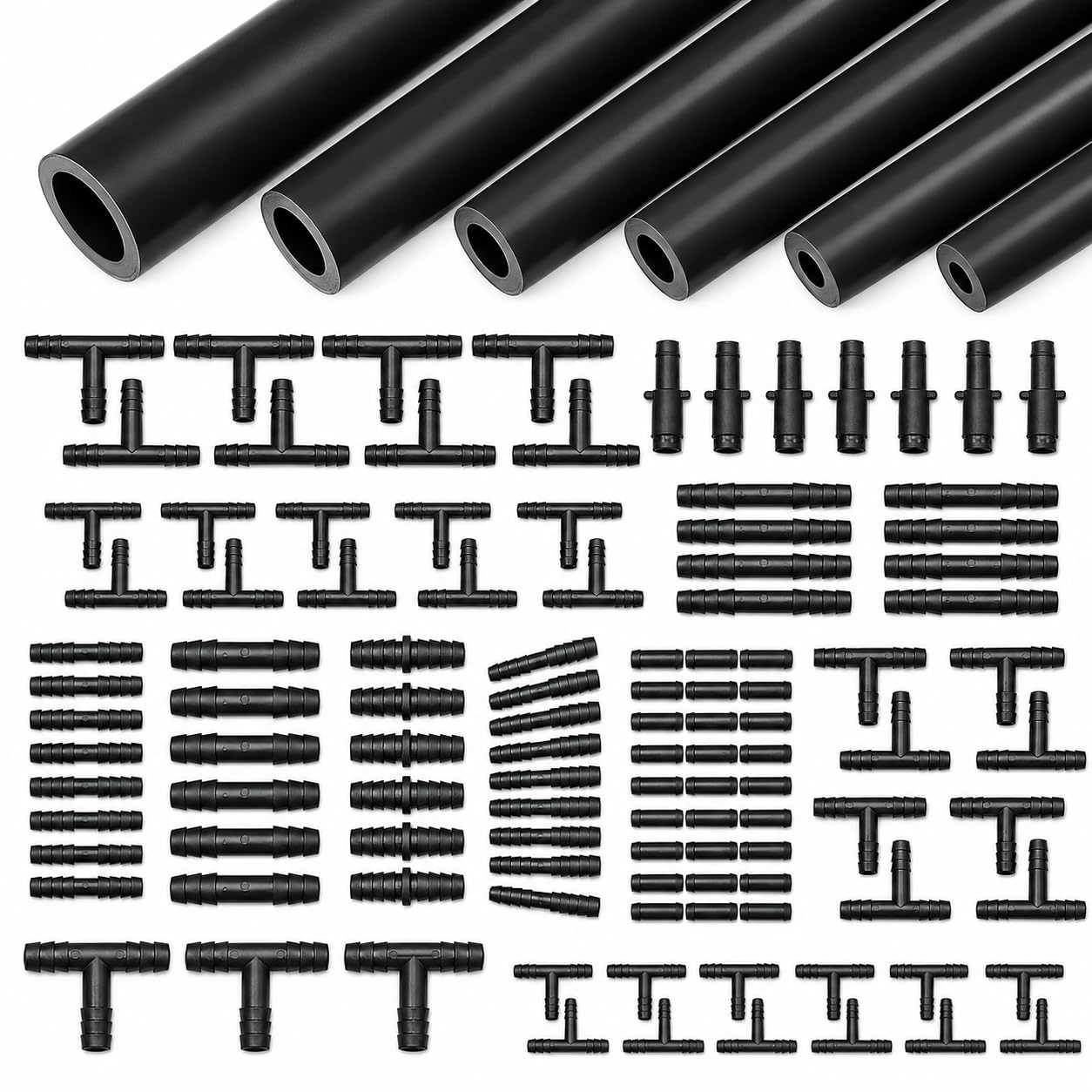
| Ucreative 6PCS 5FT Silicone Vacuum Hose KitMost Complete Kit | One box covering six sizes | 3, 4, 5, 6, 8, 10mm | 60 inches each | 130 psi | Amazon |
| LeLuv Silicone Vacuum Pump Hose 18″Quick-Connect Pick | Quick-connect pump setups | 1/4″ (6mm) | 18 inches | — | Amazon |
| Multipurpose Vacuum Line Kit (70PCS) | Full assortment with 64 connectors | 1/8″ to 3/8″ (six sizes) | 60 inches each | 130 psi | Amazon |
| 71Pcs Vacuum Line Kit (Tnisesm) | High-temp engine bay work | 1/8″ to 3/8″ (six sizes) | 5 feet each | 130 psi | Amazon |
| EVIL ENERGY Silicone Vacuum Hose Line Kit 5FT | Four-size kit for a single job | 5/32″ to 1/2″ (four sizes) | 5 feet | 130 psi | Amazon |
| Shineyoo Blue Silicone Vacuum Hose Kit | Big blue kit with clamps | 3, 4, 5, 6, 8, 10mm | 10 feet each | 130 psi | Amazon |
| Yellow Jacket 15660 Charging Vacuum Hose | Heavy-duty refrigerant charging | 3/8″ | 60 inches | 600 psi | Amazon |
| Fieldpiece HV1 HVAC Evacuation Hose | Fast professional HVAC pulls | 3/8″ | 5 feet | 4000 psi | Amazon |
Detailed Reviews
1. EVIL ENERGY 1/4″ Silicone Vacuum Tubing Hose 10FT
Our pick — 4.5+★ from 900+ verified ratings; the strongest balance of quality and price.
Ten feet of thick-walled silicone that holds its shape when the pump starts pulling.
If you keep one roll of hose in the toolbox, this is the roll to keep. The 3mm wall is the number that matters here — thick enough to stop the tube pancaking at a tight bend, so your gauge keeps climbing instead of stalling. It is 10 feet of 6mm inside diameter tube with a 12mm outside diameter, which slides onto the standard 1/4″ nipples found all over an engine bay. And at 0.4 kg for the whole roll, it coils small and rides in a bag without dragging it down.
The material is a pure silicone rated for food and drink contact, so it will not go brittle or shed an odor when it gets hot. The heat range runs from -40°F up to 428°F, which covers a cold winter startup and a hose resting near a hot manifold. Pressure-wise it handles 43 PSI working, with a 100 PSI burst at high temperature and 130 PSI at room temperature. Reviewers single out the wall itself — it stays soft and round rather than hardening into a kinked straw.
Here is the honest catch. This is air-and-water silicone built for automotive vacuum and boost lines, so it is not a refrigerant hose and has no quick-connect fitting on either end. If you are pulling a deep vacuum on an HVAC system, you want a 3/8″ hose with a real pressure rating — the Fieldpiece HV1 further down this list. The other thing to know is that this roll is longer and heavier than a compact fitting-ended hose like the LeLuv at 18 inches. Buy it for re-plumbing a car’s vacuum runs, not for a single short jumper.
bulk 10ft silicone length
- The 3mm wall resists collapse under vacuum — the failure that silently kills a pull
- Holds 43 PSI working pressure with a 130 PSI room-temp burst rating
- Food-grade silicone keeps its grip from -40°F to 428°F without cracking
- A 10-foot roll covers long runs that a short 18″ hose cannot reach
single size only
- No fittings included — you supply your own clamps or connectors
- Not rated for refrigerant or A2L work
- Bulky for a one-off short jumper job
go for it if: you are re-plumbing vacuum and boost lines on a car and want one roll that stays supple for years.
pass if: you need a fitting-ended hose for a pump with a quick-connect port.
2. Ucreative 6PCS 5FT Silicone Vacuum Hose
Six hose sizes and 113 connectors, so the right fit is already in the box.
Stop hunting through bins for the right size. This box gives you six 5-foot hoses with inside diameters of 3mm, 4mm, 5mm, 6mm, 8mm and 10mm — one of each — plus 113 nylon connectors to bridge them together. When a job needs a 4mm line and you only have 6mm on the shelf, the kit saves the trip. The hoses are 60 inches long each, and the whole set weighs in at 1.28 kg, so it is a proper kit rather than a pocket spare.
The silicone here is virgin material, not recycled, and Ucreative calls out that it stays odorless under high heat. Pressure handling matches the category: 43 PSI working, with a 100 PSI burst at high temperature and 130 PSI at room temperature. The useful side of a kit like this is variety — small-diameter lines for vacuum routing, larger ones for coolant-adjacent jobs. It is built for air and water only, so keep fuel and oil jobs away from it.
One thing to plan around: with all those loose connectors, you will want a small sorting tray to keep them from migrating around the drawer. And the six pieces are one of each size, so you cannot double up on a single diameter without buying a second kit. A one-year manufacturer warranty backs it up. For a home garage that handles a mix of sizes, though, this single box replaces a shelf of random tubing.
113 connector pieces included: six diameters of 5-foot hose plus 113 connectors covers nearly any vacuum or coolant plumbing job without a second order.
short 5ft runs: these are air-and-water hoses only, so do not route them for fuel or oil transfer.
best fit: the home mechanic who wants every common size on hand before the job starts.
look elsewhere if: you need several of one size rather than one of each.
3. LeLuv Silicone Vacuum Pump Hose 18″
The hose that arrives with its connector already snapped on and sealed.
Most hoses leave you to hunt down a fitting. This one shows up with a 1/4″ male disconnect fitting already installed, built on an engineering-grade POM body with a nitrile O-ring seal inside. That O-ring is the reason it seats without leaking and releases cleanly instead of stressing the pump’s port. The tube itself is thin and precise at a 0.05 inch wall and 0.35 inch outside diameter, and it stays soft rather than hardening like rubber or PVC. If your pump takes a quick-connect and you want a plug-and-play jumper, this is the obvious buy.
Length is the catch. The standard option is 18 inches, and against the Ucreative kit’s 60-inch hoses that is a deliberately compact reach — great for a tidy benchtop setup, less so if the pump sits across the garage. LeLuv also sells 12, 18, 24 and 36 inch versions, so size up if you want distance. It comes in nine color and two material option combinations, from coated silicone to clear PVC, and the whole hose weighs just 27.22 g.
Reviewers praise the O-ring seal at the quick-connect joint — no leaks where vacuum jobs usually fail. It is built to mate with LeLuv and Eyro cylinder systems and most vacuum pump accessories. Treat the fitting as the precision part it is: it locks firmly in use and pops out with a press, so there is no wrench-wrestling at the end of a job.
reach for this if: your pump uses a quick-connect port and you want a clean, leak-free connection with no assembly.
think twice if: you need a long run — 18 inches is short by design, so order the 36 inch version instead.
4. Multipurpose Vacuum Line Kit 6PCS 5Ft

Seventy pieces in one box — six hoses, sixty-four connectors, and every common diameter.
The most complete assortment on the list lands here. You get six 5-foot hoses in 1/8″, 5/32″, 3/16″, 1/4″, 5/16″ and 3/8″ inner diameters, plus 64 connectors across 12 sizes to join any of them. That spread covers the small vacuum lines around an intake manifold right up to the 3/8″ fittings. The hoses carry a 130 PSI maximum rating and a uniform 3mm wall, so they hold pressure steadily while moving air and water. It is the kit you buy once and stop thinking about.
These are built from a black silicone rated from -40°F to 392°F — a slightly narrower heat ceiling than the EVIL ENERGY roll above, which reaches 428°F. For normal engine-bay work that gap rarely matters. Any hose in the box can be cut to length as needed, which means one 5-foot piece can serve three short jumps. Reviewers report a steady fit on this kit, including older European cars like the Mercedes W211 where the metric sizes matter.
The trade-off is volume rather than precision: 70 loose pieces means you will want a compartment box to keep the connectors sorted, or the “which size was this” game gets old fast. And like every silicone kit here, it is air-and-water only — no fuel or oil. For a garage fixing a wide range of cars, the sheer spread of sizes makes this the least stressful box to reach into.
64 piece connector set: a 70-piece kit that quietly ends the “wrong size” problem, with six 5-foot hoses and 12 connector sizes for a steady 3mm-wall seal.
generic no-name kit: 130 PSI max and a 392°F ceiling make it a general-purpose kit, not a high-pressure or refinery-grade line.
ideal for: the two-bay home garage that works on several cars and wants every diameter ready.
not for: someone who only needs a single 1/4″ rerun and would rather keep the shelf lean.
5. 71Pcs Vacuum Line Kit, 6Pcs 5Ft Vacuum Hose with Connectors
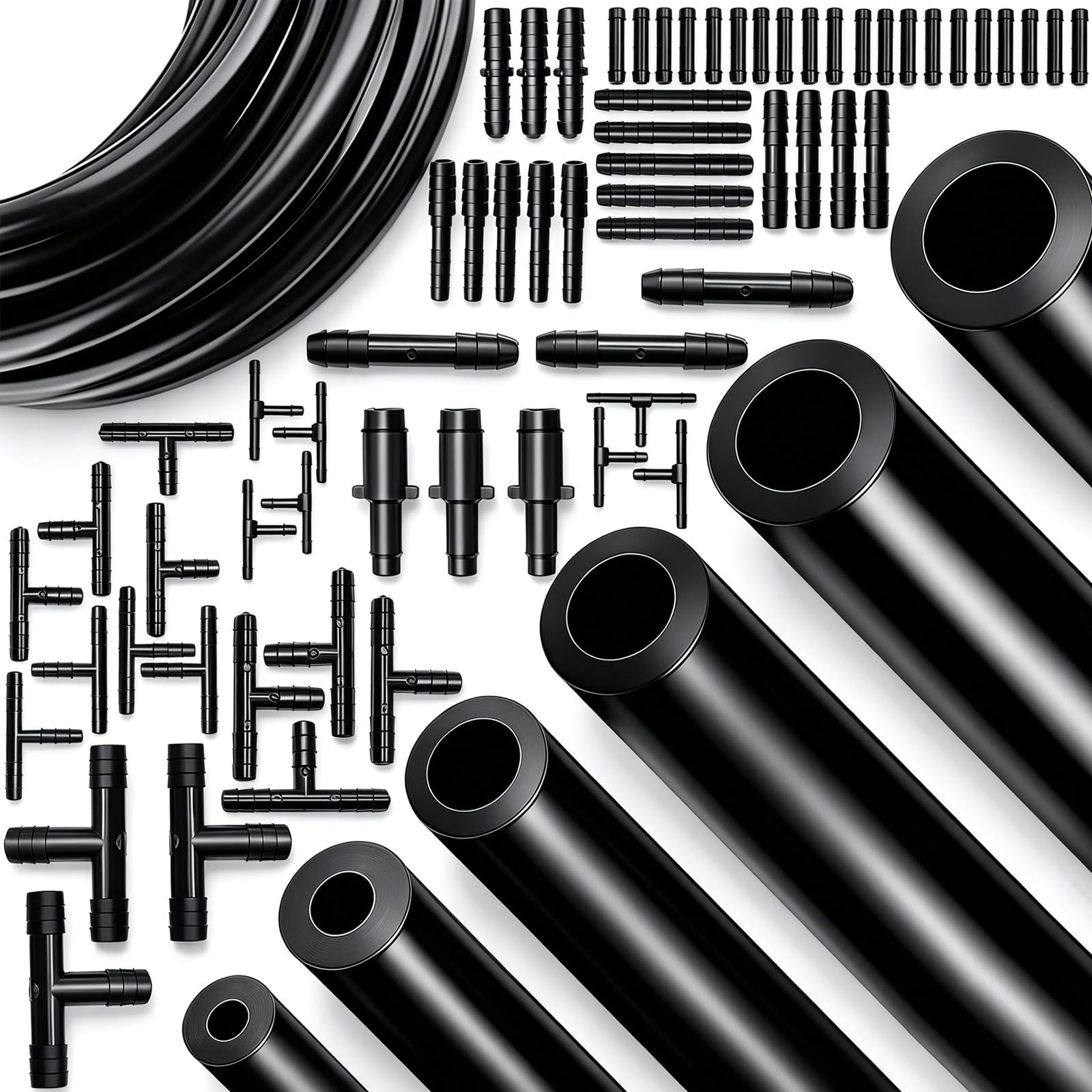
A heat-hardy kit whose connectors shrug off 460°F where cheaper plastic would go soft.
When the work sits close to hot metal, the connector material matters as much as the hose. The 65 connectors here are made from black nylon 66, heat-resistant to 240°C (460°F) — that is well above what the silicone lines themselves are rated for on the low end. The six hoses are 5 feet each in 1/8″, 5/32″, 3/16″, 1/4″, 5/16″ and 3/8″ inside diameters, with the 6mm size matching a 12mm outside diameter. Pressure sits at 43 PSI working, with a 130 PSI room-temperature burst.
The heat story is where this kit stands apart. The hose range runs from -76°F to 392°F, which is a wider cold floor than most of the field. And a 3mm wall means the tubing resists kinking on a tight routing job. Six sizes of tubing plus 12 connector sizes inside a single 71-piece set is a lot of coverage for one purchase.
What it will not do is handle fuel or oil, and it is not a refrigerant hose. It is built for air and water in the engine bay, good for marine and industrial work, DIY intake piping and radiator cooling systems too. The 16mm outside diameter on the largest hose is chunky enough that you should check clearance before you plan a tight bend with it. A one-year manufacturer warranty covers the kit.
choose this when: the routing passes near hot engine parts and you want connectors that will not soften at 460°F.
better pick elsewhere if: you need a refrigerant-rated hose — this one is strictly air and water.
6. EVIL ENERGY Silicone Vacuum Hose Line Kit 5FT
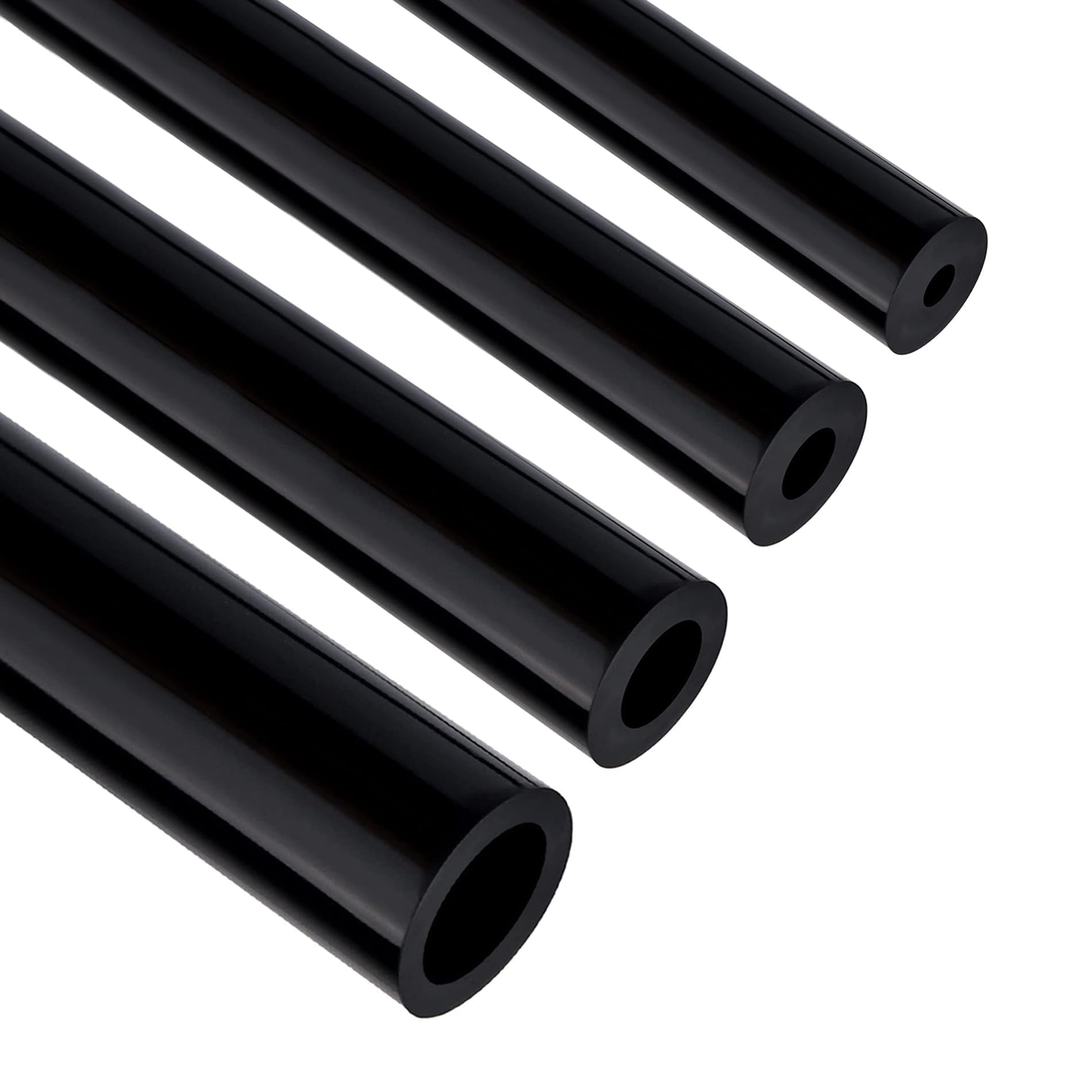
A four-size kit leaning on the same thick wall and food-grade silicone as the top pick.
This is EVIL ENERGY’s multi-size offering, and it keeps the family recipe: a 3mm wall that stays stiff enough to avoid collapsing under vacuum, and food-grade pure silicone throughout. The hose set comes in 5/32″, 1/4″, 5/16″ and 1/2″ sizes at 5 feet each — a short, warm-up-the-car kit rather than a full metric sweep. The pressure specs match the top pick exactly at 43 PSI working and a 130 PSI room-temperature burst, with a heat range of -40°F to 428°F.
Reviewers focus on the wall thickness and the fact that the tubing does not crack. Flexibility comes right behind it, because the tube bends without pinching shut. Fit is solid too, since the four sizes cover the common automotive vacuum diameters. If you already trust the single-roll EVIL ENERGY above, this kit gives you a spread of sizes without changing brand.
The honest limitation: four sizes is a shorter menu than the six-size kits elsewhere on this list, and there is no 3/8″ hose for the larger fittings. That is fine for standard vacuum and boost lines, less so if you need to reach the big ports. Treat it as the reliable mid-size kit for a specific job, not the universal box.
four size options: the thick, food-grade wall plus a -40°F to 428°F range means it bends without pinching and survives a hot engine bay.
kit sold as bundle: the four sizes stop at 1/2″, so there is no 3/8″ for bigger fittings.
right call for: a DIYer who wants four trusted sizes in one black kit and no brand change.
skip if: you need a full six-size metric assortment with 3/8″ coverage.
7. Shineyoo Silicone Vacuum Hose Kit 6PCS 10FT

The most pieces on the list, in blue, with long 10-foot runs and clamps included.
If you like to see your routing at a glance, the blue tubing here is the draw — color-matched connectors make it easy to spot which line is which under a hood. You get six 10-foot hoses in 3mm, 4mm, 5mm, 6mm, 8mm and 10mm inside diameters, 128 connectors across 12 sizes, and 24 spring clamps in 6 sizes. That clamp inclusion is unusual; most kits stop at connectors. Ten-foot runs mean fewer joints, which means fewer places to leak.
The specs stack up well: 43 PSI working pressure, a 130 PSI burst at room temperature and 100 PSI at high temperature, and a wide -76°F to 500°F heat range. A 3mm wall resists kinking and collapsing, and the silicone is built for water or air transport in the engine bay, intake piping, intercoolers and radiators. At 2.22 kg, this is a hefty box — it is a full installation kit rather than a spare roll.
The honest note: feedback on the thickness is mixed, with some calling it super thick and fit reports differing. That is a reminder to measure your ports before ordering rather than just trusting the range. On the whole, the long runs plus the clamps make this the most complete large job kit here — as long as you check the fit.
built for: a full re-line where long 10-foot runs and included clamps save you a second order.
watch the fit: measure your port sizes first, since fit reports differ and the tube is thick.
8. Yellow Jacket 15660 Charging Vacuum Hose 3/8″

A 3/8″ workhorse rated to hold 600 PSI where silicone car hose would blow out.
This is a different animal from every silicone line above. It is a 3/8″ refrigerant charging hose with a 600 PSI maximum working pressure and a 3000 PSI minimum burst. Those numbers belong to HVAC and refrigeration service, not to a car’s vacuum lines. The operating temperature runs -22°F to 176°F, and it bends down to an 8-inch minimum radius, so it can take a tight sweep without crimping. If you are pulling a vacuum on a system with real refrigerant pressure, this is the class of hose you need.
At 60 inches long and 1.1 pounds, it is a straight, heavy-duty charging hose rather than a coiled kit. It is a single purpose-built hose, not an assortment. For a professional charging or evacuation rig, the 600 PSI working rating is the reason to buy it.
The reality check: it is one hose, and it is not silicone, so it is not the flexible little tube for engine-bay vacuum rerouting. It is also not sold in a kit, so you will supply your own manifold and connectors. For HVAC charging work with a matching 3/8″ system, though, the high PSI rating is exactly what keeps the job safe and the pressure stable.
heavy duty brass pull: 600 PSI working and 3000 PSI burst ratings put this in professional HVAC territory, well beyond the 130 PSI silicone lines.
single hose only: it is a single non-silicone 3/8″ hose, so it is for charging rigs, not for replacing vacuum tubing on a car.
for the service tech: a single heavy-duty 3/8″ charging hose that handles refrigerant-grade pressures.
not the pick for: anyone re-plumbing engine vacuum lines who needs flexibility and a kit.
9. Fieldpiece HV1 Vacuum Hose 5 Ft
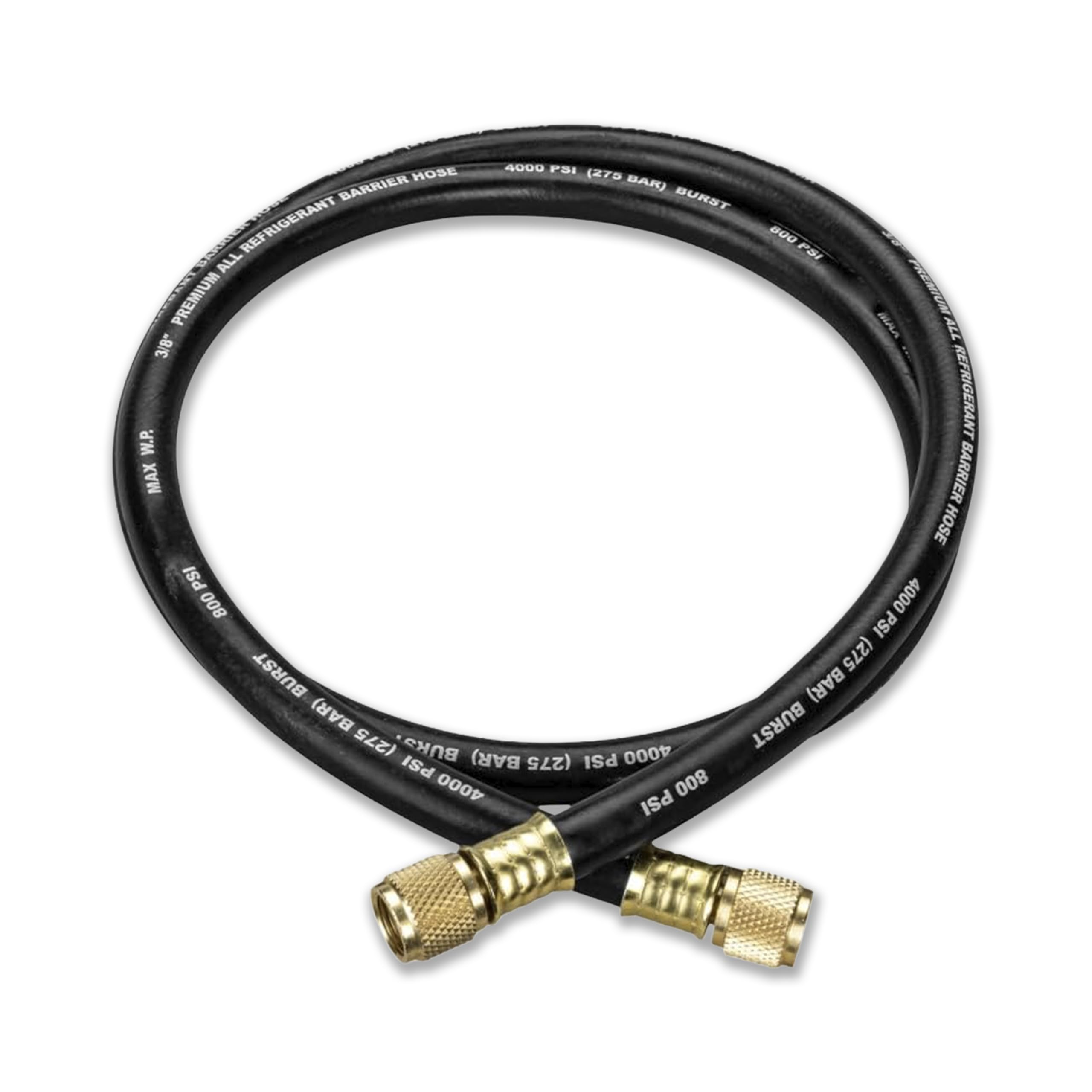
The high-flow HVAC hose built to pull a system down fast and hold the pressure.
Evacuation lives and dies on flow, and this hose opens it wide. The 3/8″ inside diameter moves high volume, while full-size 3/8″ x 3/8″ fittings on both ends connect straight to a vacuum pump and the system with no reducer in the way. The construction is a 4-layer build with a full-ring triple crimp, so the joints hold up to repeated service work. That makes it a genuinely professional evacuation hose rather than a general silicone line.
The pressure figures are the highest here: 800 PSI working and 4000 PSI burst, aimed at HVACR service. It is also designed for A2L refrigerants with a permeation barrier that meets SAE J2196 — the slow-leak-through-the-wall problem that matters with newer refrigerants. At 5 feet and 0.25 inch nominal wall, it is a substantial hose meant for a manifold rig. For the tech doing daily evacuations, the flow rate and the A2L barrier are what earn the purchase.
The one thing to know: this is a single 5-foot HVAC hose, not a kit, and its 3/8″ fittings will not suit a 1/4″ automotive vacuum port. It is specialist gear. If your work is engine-bay vacuum rerouting on a car, the silicone kits above are the right tools. If you pull vacuums on refrigerant systems for a living, this is the one that does the job without compromise.
pick it if: you are evacuating A2L or standard refrigerant systems and want a high-flow 3/8″ hose that meets SAE J2196 with a permeation barrier.
look elsewhere if: your setup is 1/4″ automotive vacuum lines, where this specialist hose simply will not fit.
Know the Specs
Wall Thickness (and why 3mm matters)
The wall thickness is how thick the tube’s wall is between the outside and the inside. Under vacuum, the pressure of the room pushes in on the tube from all sides, and a thin wall can flatten and shut off the flow. A 3mm wall resists that squeeze and keeps the bore open, which is why most of the silicone kits here quote 3mm. When you see a hose advertised without a wall figure, treat that as a gap in the information.
Working vs Burst Pressure
Working pressure is the safe everyday load — 43 PSI on most silicone vacuum lines, 600 PSI on the Yellow Jacket charging hose and 800 PSI on the Fieldpiece HV1. Burst pressure is the point where the hose actually fails, and it is always higher: 130 PSI at room temperature on the silicone kits, 3000 PSI minimum on the Yellow Jacket, 4000 PSI on the Fieldpiece. Never plan to run near the burst figure — it is a failure point, not a target.
Inside Diameter vs Outside Diameter
The inside diameter is the hole the air moves through — a 1/4″ line for automotive vacuum, a 3/8″ line for HVAC evacuation. The outside diameter is the whole tube including the wall; for a 6mm ID hose that is often 12mm. Match the inside diameter to your pump’s intake and your fittings, then use the outside diameter to check whether the hose will clear tight spots and slip into your clamps.
Silicone, Rubber and A2L Ratings
Silicone stays soft and stands up to heat, which is why it dominates engine-bay vacuum lines. Rubber and PVC can harden with age. For refrigerant work, the rating that matters is the A2L and SAE J2196 spec — the Fieldpiece HV1 meets it with a permeation barrier that slows refrigerant escaping through the hose wall. A general silicone hose is built for air and water only, so keep it away from refrigerant, fuel and oil.
Common Questions
What inside diameter do I need for a vacuum pump hose?
Will a 1/4″ silicone hose collapse under vacuum?
Can I use automotive silicone vacuum hose on an HVAC system?
What is the difference between working pressure and burst pressure?
Do I need clamps with a silicone vacuum hose?
What does A2L compatible mean on a vacuum hose?
Is silicone hose better than rubber for vacuum lines?
How long should a vacuum pump hose be?
What temperature can a silicone vacuum hose handle?
Can I cut a vacuum hose to length?
The Bottom Line
For most people working on a car, the vacuum pump hose to buy is the EVIL ENERGY 1/4″ Silicone Tubing Hose. Its 3mm wall holds its shape under pull, and the food-grade silicone tolerates -40°F to 428°F, so a single 10-foot roll covers engine-bay vacuum and boost lines for years. If you want every size in one box, the Multipurpose Vacuum Line Kit gives you six hoses and 64 connectors in one purchase.
And if you pull vacuums on refrigerant systems for a living, the Fieldpiece HV1 is the specialist to reach for — its 3/8″ inside diameter, 800 PSI working pressure and A2L-compatible barrier make it the right tool for that job. Pick the hose that matches your system’s inside diameter and pressure, and the pump will do the rest.
How we choose
We do not accept paid placement. Every pick is matched to a real buyer and a real use-case; we do not hands-on test units.
Sources
Specifications: manufacturer listings and product documentation. Review insights: verified customer reviews, as of November 2026. Pricing: not shown on this page (it changes often); check the current price via the retailer link.
As an Amazon Associate, Tactical Gear Guy earns from qualifying purchases. This does not affect which products we feature.