Specs are compiled from manufacturer listings and verified buyer reviews and can change over time — please confirm the key details on the product page before buying.
If you serve customers through an opening in a truck, trailer, or stand, the window is the part that gets used hundreds of times a day — propped open, slammed shut, rained on, and leaned across. The short answer: an aluminum-frame service window with hydraulic struts, a real lock, and a rain-guarding awning is the one you want, and the VEVOR 36 x 36 whole-piece unit is the pick that balances those features best. Below are the three that actually get the job done, what each one is good at, and the honest catch on each.
This guide is built by comparing the manufacturers’ published specifications and the patterns across verified customer reviews, so you get each pick’s real strengths and trade-offs instead of marketing spin.
A serving hatch that gets propped open for a lunch rush and one that slides sideways are built differently, and the panel, strut and lock details decide how long yours keeps working. Each pick below earns its spot as a serious contender for your ticket booth window.
Top Picks
How To Choose The Best Ticket Booth Window
A serving window is not a house window. It is a moving part, mounted on a vehicle or a temporary stand, and it takes far more abuse than the wall around it. The three things that decide whether you are happy with it a year from now are the frame material, the opening mechanism, and how the whole thing seals when it is closed.
Frame material and panel build
An aluminum alloy frame with galvanized components is the workhorse choice for a mobile booth — it holds its shape without rusting through like plain steel. A vinyl-framed utility window is a lighter build, and it suits a fixed, sheltered installation far better than a truck that bounces down a highway every weekend. Pick the material by where the window lives: aluminum for a truck or trailer, vinyl for a fixed, sheltered booth.
How the window opens
Hydraulic rods (gas struts that push the awning door up and hold it there) let you prop the window open with one hand while the other hand holds a customer’s order. A sliding pane moves sideways instead and needs clear travel room along the wall. Neither is wrong, but if you serve in a hurry, the strut-held awning door opens one-handed while a slide needs clear wall travel.
Locking and weather sealing
An integrated handle and lock means the window closes and secures with one motion, which matters when your booth sits in a lot overnight. Dual sealing strips and an awning that guards against rain and sun keep the serving gap usable in bad weather. Check both before you buy: a latch that locks from inside and dual sealing strips are what keep the hatch tight overnight and in rain.
Side-by-Side Comparison
| Model | Best For | Item Thickness | Item Weight | Frame Material | Amazon |
|---|---|---|---|---|---|
| VEVOR 36 x 36 Whole-Piece Awning Door★ Best Overall | All-round booth serving | 3 inches | 21.2 pounds | Aluminum | Amazon |
| Duo-Corp Agriclass Double Slide Vinyl | Fixed, sheltered utility openings | — | 22 pounds | Vinyl | Amazon |
| VEVOR 45×30 with 4 Sliding Screens | Busy street vending and drive-through | 4.33 inches | 28.2 pounds | Aluminum Alloy | Amazon |
Detailed Reviews
1. VEVOR Concession Window 36 x 36 in
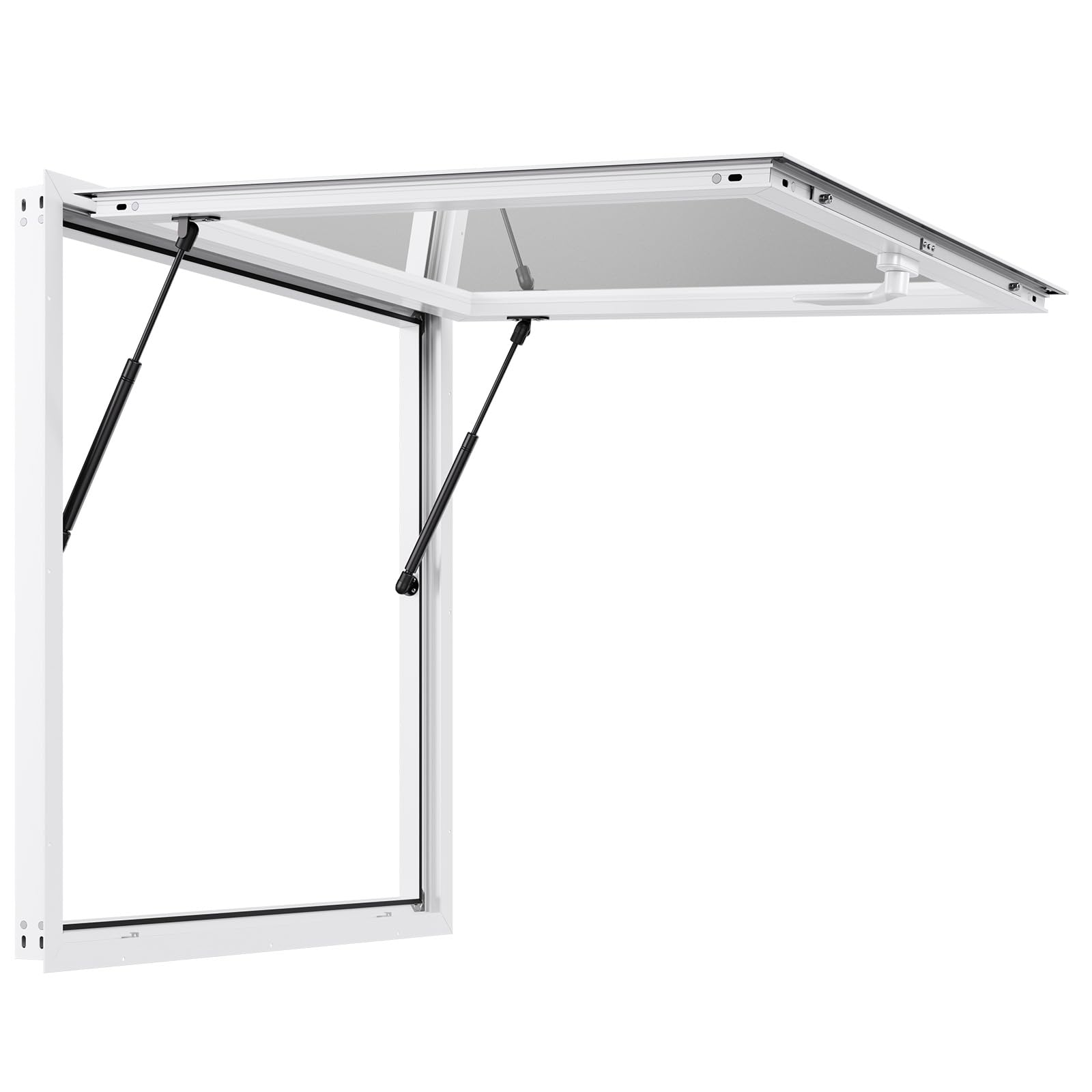
A square 36 x 36 serving hatch that swings up on gas struts and locks down solid.
You can lean across the counter and hand over a cup or a ticket without ducking your head, because the awning door opens 85 degrees. Two hydraulic rods (pressurised struts that hold the door up on their own) do the holding, so you are not propping it with a stick or balancing it on your shoulder during a rush.
Measured against the bigger VEVOR pick below, this one is the lighter, thinner build: 3 inches of item thickness versus 4.33 inches, and 21.2 pounds versus 28.2 pounds. That gap is your friend if one person has to lift the window into a cutout and hold it while a second person drives the screws. The frame is aluminum alloy with galvanized components and a baked-on paint finish, so the thing that faces the weather every day is metal, not timber or plastic trim.
It drops in without a custom cutout, because the sizing is standardised so it fabricates, installs and dismantles to a standard opening. You can also swap the glass style yourself, since glass is sold separately from the aluminum composite panels. The honest catch is that the glass is an extra purchase, and the unit arrives as a whole piece at 21.2 pounds, so plan a second pair of hands for the lift. The 4.0+ star standing across 10+ ratings is a thin sample, and it is the higher score of the two VEVOR windows even though the larger one carries 30+ ratings.
Why this one wins the shelf
- 85-degree opening on two hydraulic rods — the door stays up while both your hands work
- Integrated handle and lock closes and secures in one motion for overnight parking
- Aluminum alloy frame with galvanized parts and a baked-on paint finish
- Swappable panel styling, with glass sold separately so you choose the look
Where it asks something of you
- Glass is not included in the base unit
- At 21.2 pounds it is a two-person install job
- The 10+ rating sample is small, so long-term wear is not well documented yet
Reach for this if: you want a propped-open serving hatch with a real lock and a standard square cutout, without paying top-tier money.
Look elsewhere if: you need a screen between you and the customer, because this unit has no guard screen.
2. Duo-Corp Agriclass Double Slide Vinyl Tempered Utility Window 35-1/2″
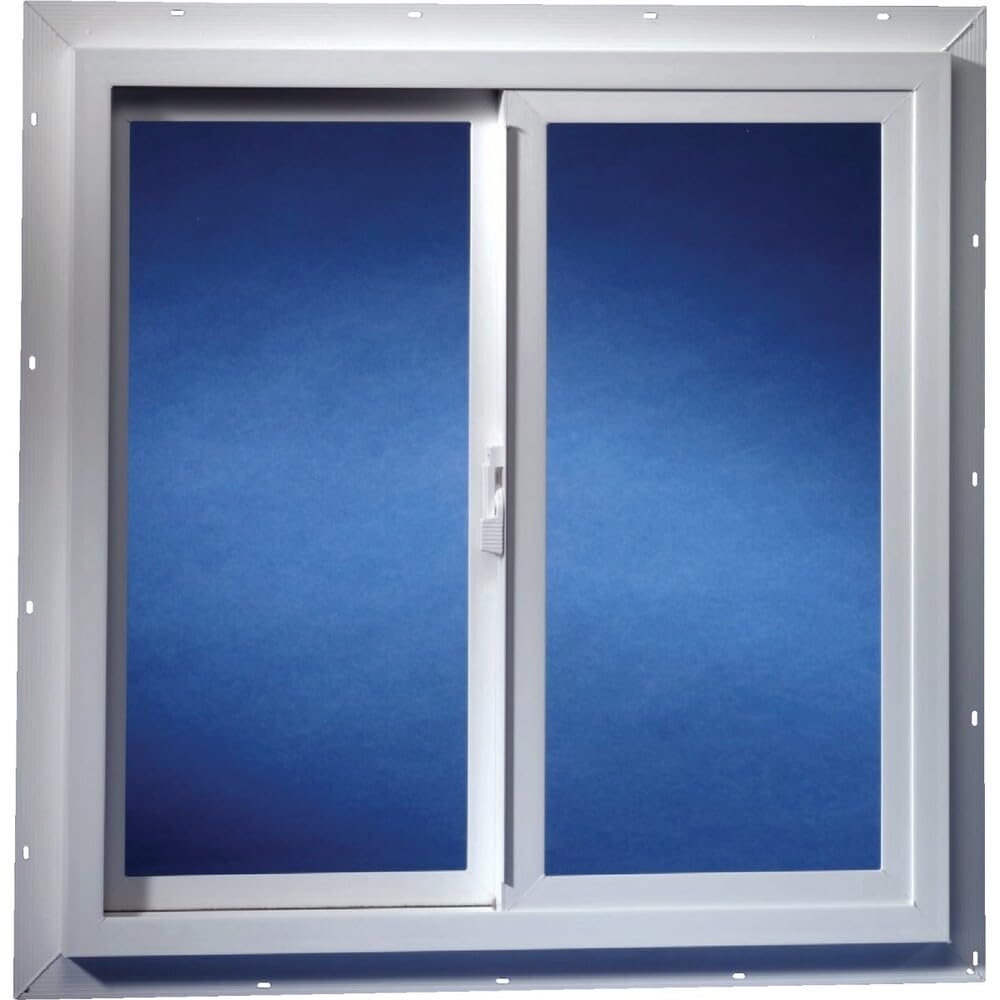
A sideways-sliding glass pane for a booth that never moves once it is set.
Start with the build, because it tells you exactly who this window is for. The frame is vinyl and the pane is tempered glass (heat-treated so it breaks into small pieces rather than shards), and it slides sideways in a double-slide layout rather than swinging up. That motion is quiet, simple, and needs no struts to hold it — you push the pane across and it stays put.
Install day is where it splits from the aluminum picks: the frame and glass arrive as a single unit at 22 pounds. That weight and that frame type are perfectly reasonable for a fixed kiosk, a shed conversion, or a permanent booth under a roof. If you are bolting it to the side of a food truck that hits potholes weekly, a vinyl frame is the wrong tool compared with an aluminum alloy shell.
Durability and overall build quality are the two things reviewers keep circling back to, with cracks and corner damage showing up in the feedback. So this is not the window to pick if it will be bumped by carts or swung on by staff. The trade-off is fair to state plainly: it is the weakest build of the three, and it suits a calm fixed location where the window is opened and shut gently. Buy it for that fixed, sheltered spot and it does its job: tempered glass, a clean white finish, and a slide with no gas struts to fail.
What it is good at: a fixed booth gets tempered glass and a simple sideways slide with no gas struts to fail, in a white vinyl frame that weighs 22 pounds.
The honest limit: durability is the recurring concern in the feedback, with cracks and broken corners mentioned, so treat it as a sheltered-location window rather than a road-going one.
Best fit: a permanent kiosk or indoor-facing service opening where the pane slides gently and never rides down a highway.
Not the one for: a truck-mounted booth that takes knocks, bumps and road vibration week after week.
3. VEVOR Concession Window 45×30 in
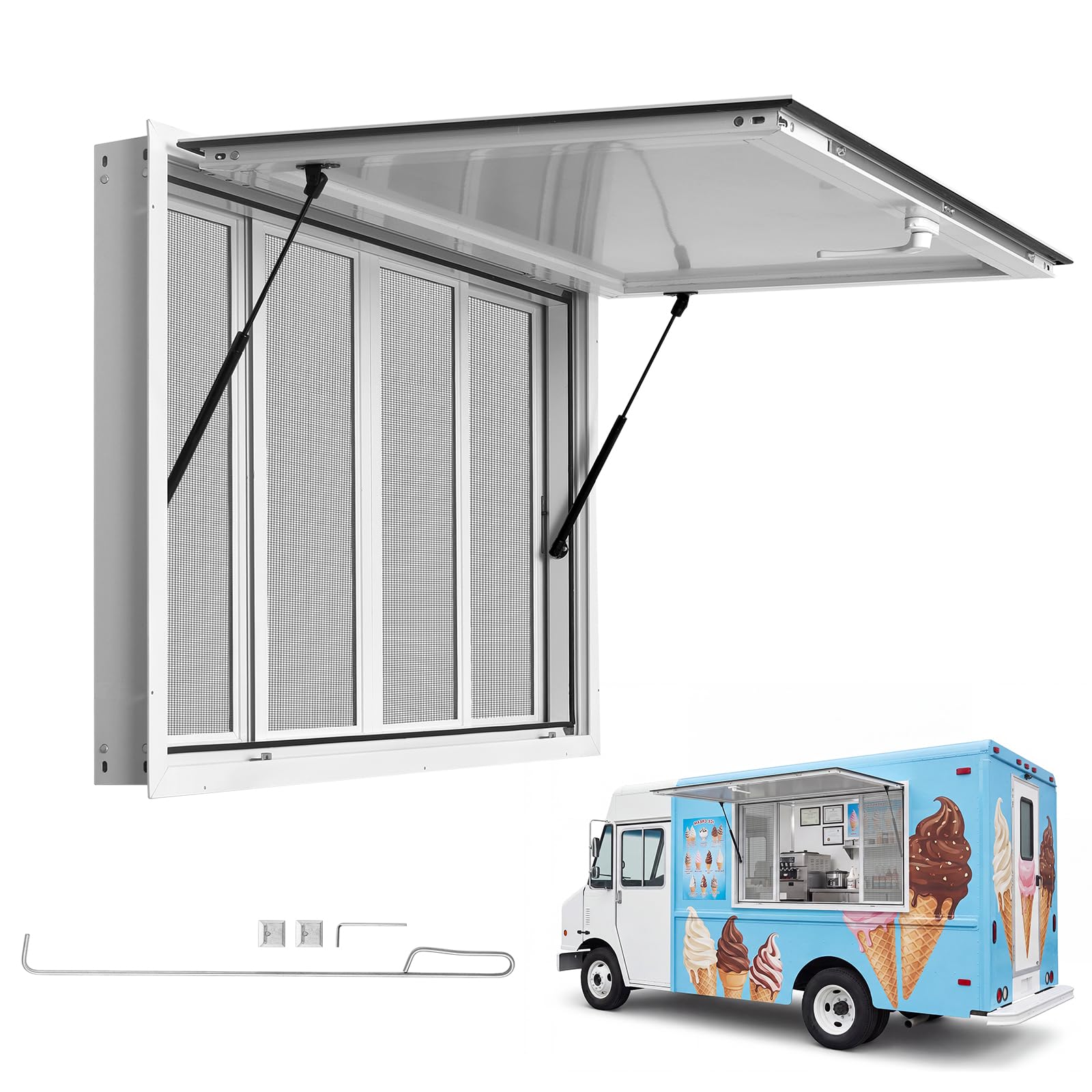
Four sliding screens between you and the queue, plus a strut-held awning for the weather.
A booth that serves all day, every day is what this one is built for. The 45×30 cutout gives you a wide serving gap, and the four sliding screen windows (mesh panels that slide across the opening and lift out for cleaning) let you hand food through a gap while the mesh keeps leaves, insects and reaching hands out. Detach them when the season changes and you want an open hatch again.
A passing shower does not shut your service down, because the struts are paired with dual sealing strips (two layers of weather seal around the closing edge) that resist sun and rain. The awning door swings up to the same 85 degrees as the 36 x 36 model. The item thickness is 4.33 inches against the 3 inches of the smaller VEVOR, and the weight is 28.2 pounds against 21.2 pounds — that extra metal buys you a beefier closing edge and a sturdier frame overall.
Security is handled with an integrated handle latch that locks from the inside of the concession stand, so you can close up during business hours and after closing without a separate padlock. The chamfered edges (the corners are angled smooth rather than left sharp) make installation kinder on your hands, and the standard cutout sizing means a new build or an upgrade uses the same opening. A 4.0+ star showing across 30+ ratings puts it a hair behind the smaller VEVOR on score, so weigh whether the four screens and the wider gap are worth the extra weight to you. For street vending, drive-through pickup and roadside sales, the four screens and wider 45×30 gap usually justify the extra 7 pounds.
Where it earns its keep: a 45×30 serving gap with four detachable sliding screens and an 85-degree awning on hydraulic struts, which means service keeps running in sun, rain, and bug season.
The one thing to plan for: at 28.2 pounds and 4.33 inches thick, it needs a solid mounting surface and a helper at install time. And the smaller VEVOR holds the higher score if that matters more to you than the screens.
The pick for: high-volume street vending, drive-through pickup or roadside sales where the window opens and closes dozens of times a shift.
Think twice if: your cutout is small or your mounting wall is light, since the 28.2-pound frame wants real support behind it.
Know the Specs
Opening Angle and Hydraulic Struts
The opening angle is how far the awning door lifts, and 85 degrees is a wide swing that clears your head and keeps the door out of your eyeline while you serve. Hydraulic struts (gas-filled rods that push the door up and hold it there) mean you do not need to prop the window open. On a busy counter this is the difference between serving one-handed and needing a free hand for the door all shift.
Item Thickness and Item Weight
Thickness describes how deep the window assembly sits, measured in inches, and weight is the whole piece in pounds. A thicker, heavier unit like 4.33 inches and 28.2 pounds carries more frame and a beefier closing edge, which helps in wind and rain. A thinner, lighter unit like 3 inches and 21.2 pounds is easier to lift into a cutout. Neither is better in the abstract: the 28.2-pound frame suits a fixed, high-wind install, and the 21.2-pound unit suits a booth you lift in and out.
Frame Material and Finish
Aluminum alloy with galvanized components and a baked-on paint finish is the durable route for anything that lives outdoors on a vehicle. Vinyl frames are lighter and simpler but do not take the same knocks. Whichever you choose, the frame is what you are really buying — the glass and panels are replaceable, the frame is not.
Locking and Sealing
An integrated handle and lock secures the window with one motion, and dual sealing strips keep the closing edge tight against sun and rain. Look for a latch that locks from the inside of the stand, so you can secure it while you are still working and again after closing. A guard screen or sliding mesh panel is a separate feature — check whether the window you want actually includes one.
Common Questions
What size cutout do I need for a ticket booth window?
Is an aluminum frame better than a vinyl frame for a service window?
Do these windows come with glass included?
How does a sliding screen window work on a concession hatch?
Can I lock a ticket booth window from the inside?
Will a service window keep rain out while I am serving?
How much does a 45×30 aluminum service window weigh?
What is the difference between an 85-degree awning door and a sliding pane?
Can I replace the glass or panel later to change the look of my booth?
Is a tempered glass utility window safe on a moving trailer?
The Bottom Line
For most booths, the ticket booth window that makes the most sense is the VEVOR 36 x 36 Whole-Piece Awning Door. Its 85-degree strut-held opening, integrated lock and standard square cutout cover a normal serving day at the lighter 21.2-pound weight. If your window opens and closes dozens of times a shift and you want mesh screens between you and the queue, step up to the VEVOR 45×30 with 4 Sliding Screens. And if the booth is a fixed, sheltered kiosk where a tempered glass pane slides gently, reach for the Duo-Corp Agriclass Double Slide. Whichever you pick, match the frame to where the window lives: aluminum for a road-going truck or trailer, vinyl for a fixed, sheltered kiosk.
How we choose
We do not accept paid placement. Every pick is matched to a real buyer and a real use-case; we do not hands-on test units.
Sources
Specifications: manufacturer listings and product documentation. Review insights: verified customer reviews, as of November 2026. Pricing: not shown on this page (it changes often); check the current price via the retailer link.
As an Amazon Associate, Tactical Gear Guy earns from qualifying purchases. This does not affect which products we feature.