Specs are compiled from manufacturer listings and verified buyer reviews and can change over time — please confirm the key details on the product page before buying.
If your ankles roll on loose rock and your feet ache by mile three, the fix is a shoe with real medial support and a rock plate under the forefoot. The four picks below all build in stability — not just cushioning — and each one suits a different runner, budget tier, and terrain. Start with the North Face Altamesa 500 V2 if you want plush cushioning without losing control on technical ground.
This guide is built by comparing the manufacturers’ published specifications and the patterns across verified customer reviews, so you get each pick’s real strengths and trade-offs instead of marketing spin.
Trail support is about how the shoe behaves when the ground shifts under you, not how soft it feels in the store. Below you will find the real differences between these four, sorted by how each one handles stability. This breakdown of supportive trail running shoes covers fit, grip, and protection in plain terms.
Top Picks
How To Choose The Best Supportive Trail Running Shoes
Support on the trail comes from three things working together: how the shoe holds your midfoot, what sits between your foot and the rock, and how the outsole grips when the ground tilts. Get one of those wrong and you feel it in your ankles and knees. Get all three right and the shoe disappears underfoot.
Look for a rock plate, not just thick foam
A rock plate is a thin stiff layer inside the midsole that spreads the point of a sharp stone across a wider area. It is the difference between feeling every sharp stone and running straight over gravel. Foam compresses under a pointed rock; a plate does not.
Understand what a stability feature really does
Medial support and chassis systems slow the inward roll of your foot when you land on uneven ground. They do not lock your foot in place — they guide it. Runners with flat arches or a history of rolled ankles feel the benefit most.
Weigh waterproofing against breathability
A waterproof membrane keeps stream water and mud out, which matters on wet, cold runs. The trade-off is a warmer, less breathable shoe in summer. If you run mostly dry singletrack, a non-waterproof upper dries faster after a creek crossing.
Size for swelling and toe room
Your feet expand over long miles, and a tight toe box turns a good run into a blister factory. A roomy toe box and a secure midfoot hold can coexist — that is the pairing to hunt for.
Side-by-Side Comparison
| Model | Best For | Stability Feature | Traction | Waterproofing | Amazon |
|---|---|---|---|---|---|
| North Face Altamesa 500 V2★ Best Overall | Cushioned control on technical dirt | Rock plate + Surface Control rubber | Surface Control rubber outsole | — | Amazon |
| Merrell Women’s Antora 4 | Everyday trail comfort with arch support | Arch support + toe lift | — | — | Amazon |
| Merrell Agility Peak 6 | Long rugged miles with energy return | Full-length FlexConnect + forefoot rock plate | Vibram Megagrip with Traction Lug | — | Amazon |
| Salomon XA PRO 3D Gore-Tex | Wet, cold, mixed-terrain adventures | Advanced 3D chassis | Wet Traction Contagrip | Gore-Tex membrane | Amazon |
Detailed Reviews
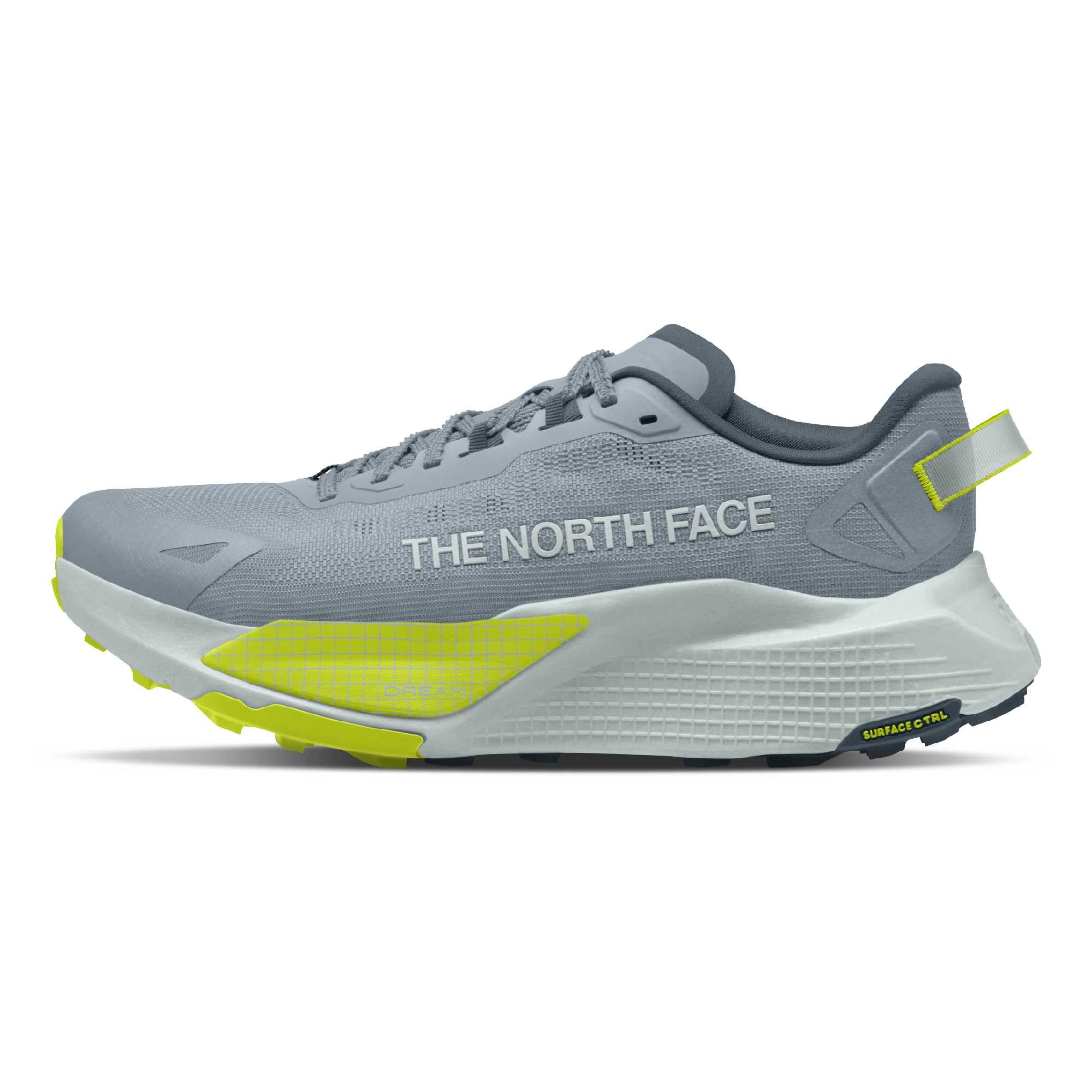
1. The North Face Men’s Altamesa 500 V2 Trail Running Shoe
Our pick — 4.5+★ from 70+ verified ratings; the strongest balance of quality and price.
The cushioned all-rounder that keeps a rock plate underfoot without turning stiff.
Two things do the heavy lifting here: a rock plate that shields your sole from sharp stones, and Surface Control rubber on the outsole that grips across mixed terrain. Both matter when you move between asphalt and dirt on the same run. The DREAM foam midsole adds plush cushioning that still pushes back, so long descents do not leave your legs flat.
Buyers talk about fit more than any other trait in the review pages, and by a wide margin. A lightweight, breathable upper with smooth overlays (smooth panels that cut down on seams) keeps the shoe from rubbing once your feet warm up. Hybrid-ready soles make the road-to-trail switch feel ordinary rather than clumsy. Owners also note the upper takes a runner’s knot (an extra top eyelet you lace through), so you can cinch the top of the lacing to lock your heel.
The honest catch: there is no waterproof membrane listed, so a wet, muddy day will soak straight through. If your trails are mostly dry dirt and rock, that is a fine trade for breathability. The cushioning is generous rather than race-firm, so speed-focused runners may want a firmer, lower-profile shoe.
What earns its spot
- Rock plate shields the forefoot from sharp gravel and roots
- DREAM foam gives plush cushioning that still rebounds
- Breathable smooth upper cuts friction over long miles
- Hybrid soles handle the road-to-trail transition
Where it gives ground
- No waterproof membrane listed, so wet runs soak through
- Cushioned rather than firm, less suited to race-day pace
Grab this one if: you want forgiving cushioning and a rock plate for rocky, rolling singletrack.
Think twice if: your runs are wet and muddy most of the year and dry feet matter more than breathability.
2. Merrell Women’s Antora 4 Trail Running Shoes
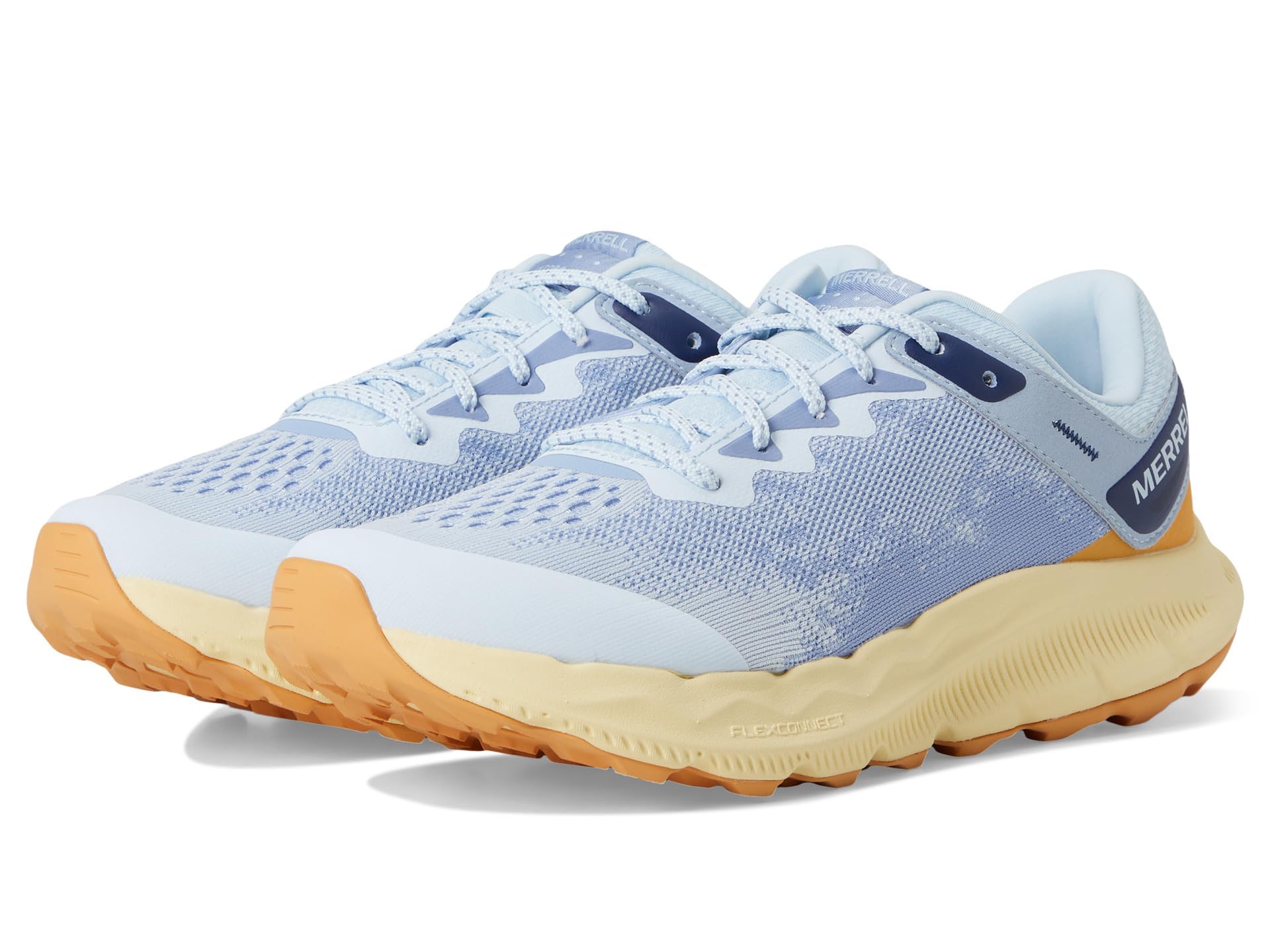
An everyday trail shoe that treats a roomy toe box as a feature, not an afterthought.
Comfort is the trait buyers bring up most here, and it holds up in use: feet that usually ache stay quiet through a full run. The toe lift at the front helps you clear rocks instead of catching on them. Arch support and stability add up to a shoe that guides your step on uneven ground rather than letting your foot slide.
Fit runs true to size with plenty of toe room — good news if your feet widen over distance. Merrell built this as a clean athletic design that carries off-trail as easily as it does on dirt.
What it does not give you is a waterproof upper or a named aggressive outsole compound. That makes it the better pick for dry, mild singletrack and light gravel than for wet, cold adventures. Women who want a supportive shoe with breathing room at the toes will find the fit does most of the convincing.
Toe room that pays off: a roomy box paired with a raised front edge lets you clear rocks while your toes spread out over long miles.
Fair on traction, not a mud specialist: the listing names no waterproof membrane or specific rubber compound, so treat it as a dry-weather trail companion.
Purpose-built for: women who want a true-to-size trail shoe with arch support and space for swelling feet.
Not the tool for: wet winter trails where a waterproof upper and dedicated mud outsole matter more than toe room.
3. Merrell Mens Agility Peak 6
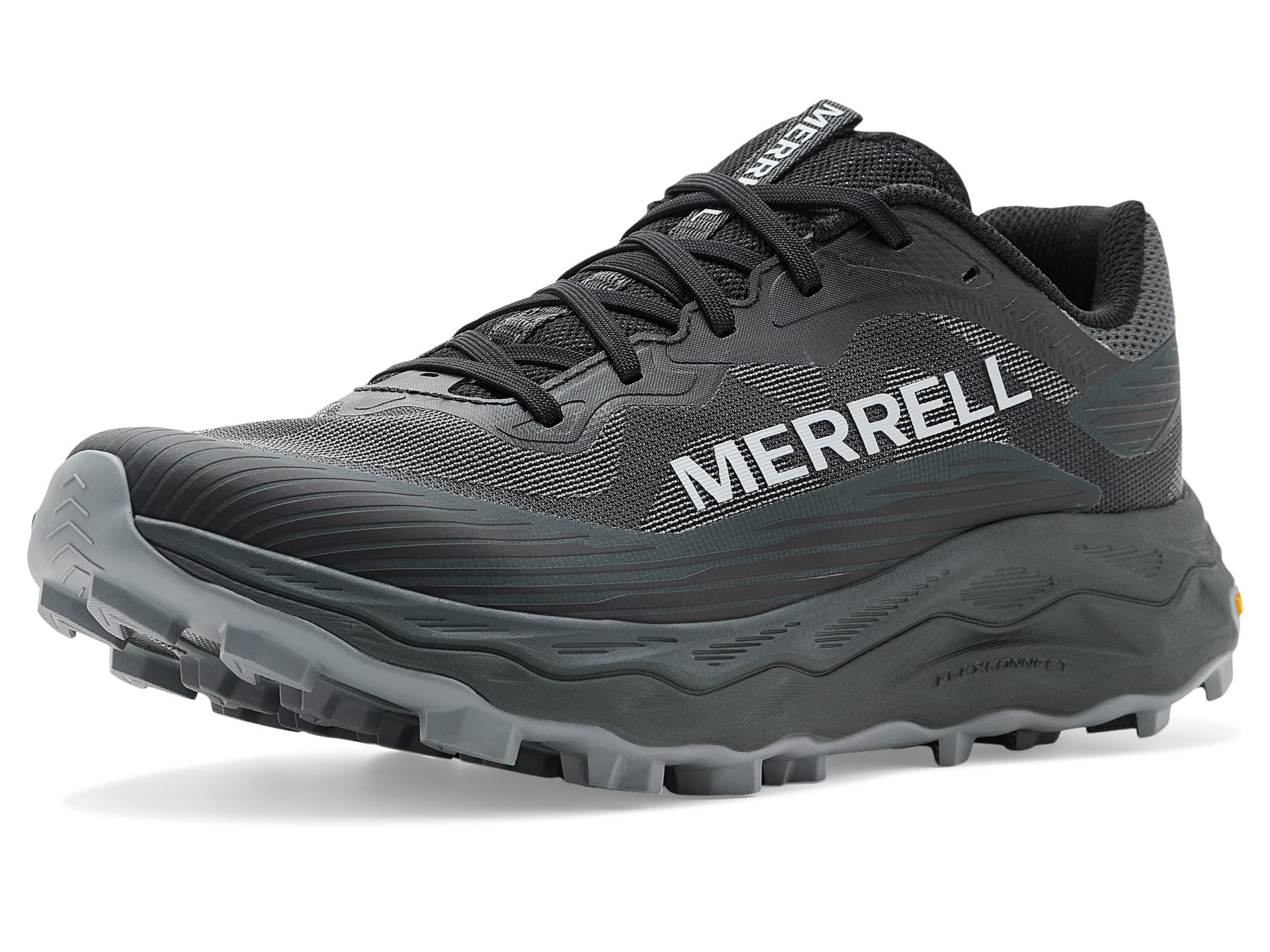
Built for the long haul on broken ground, with grip and a shield up front.
Two systems make this shoe’s case for rugged miles. A forefoot rock plate shields the front of your foot from erratic terrain, and the Vibram Megagrip outsole with Traction Lug gives you bite on surfaces that shift under you. If your trail is scree, roots, and loose rock, that pairing is exactly what you want.
The FloatPro foam midsole returns energy with each step, so long days feel less draining. Full-length FlexConnect technology adds stability across the whole foot rather than just the heel. That is a meaningful step up from a shoe like the Antora 4, which leans on arch support and toe lift rather than a full-length stability system.
The plain-language catch: fit and comfort are the traits buyers talk about, but on a smaller spread of feedback than the veteran models here. This is a newer release, so its track record is shorter. Men who run rough ground and want grip plus a rock plate will still find the spec sheet does the persuading.
The grip story: Vibram Megagrip with Traction Lug is the headline, and it is the reason this shoe belongs on loose, unpredictable terrain.
Newer to the party: a shorter history of owner feedback means you are trusting the design more than a long review trail.
Reach for it on: rugged, loose, and varied trails where toe protection and outsole grip decide your day.
Leave it for: runners who want years of owner consensus behind their purchase before committing.
4. Salomon Men’s XA PRO 3D Gore-Tex
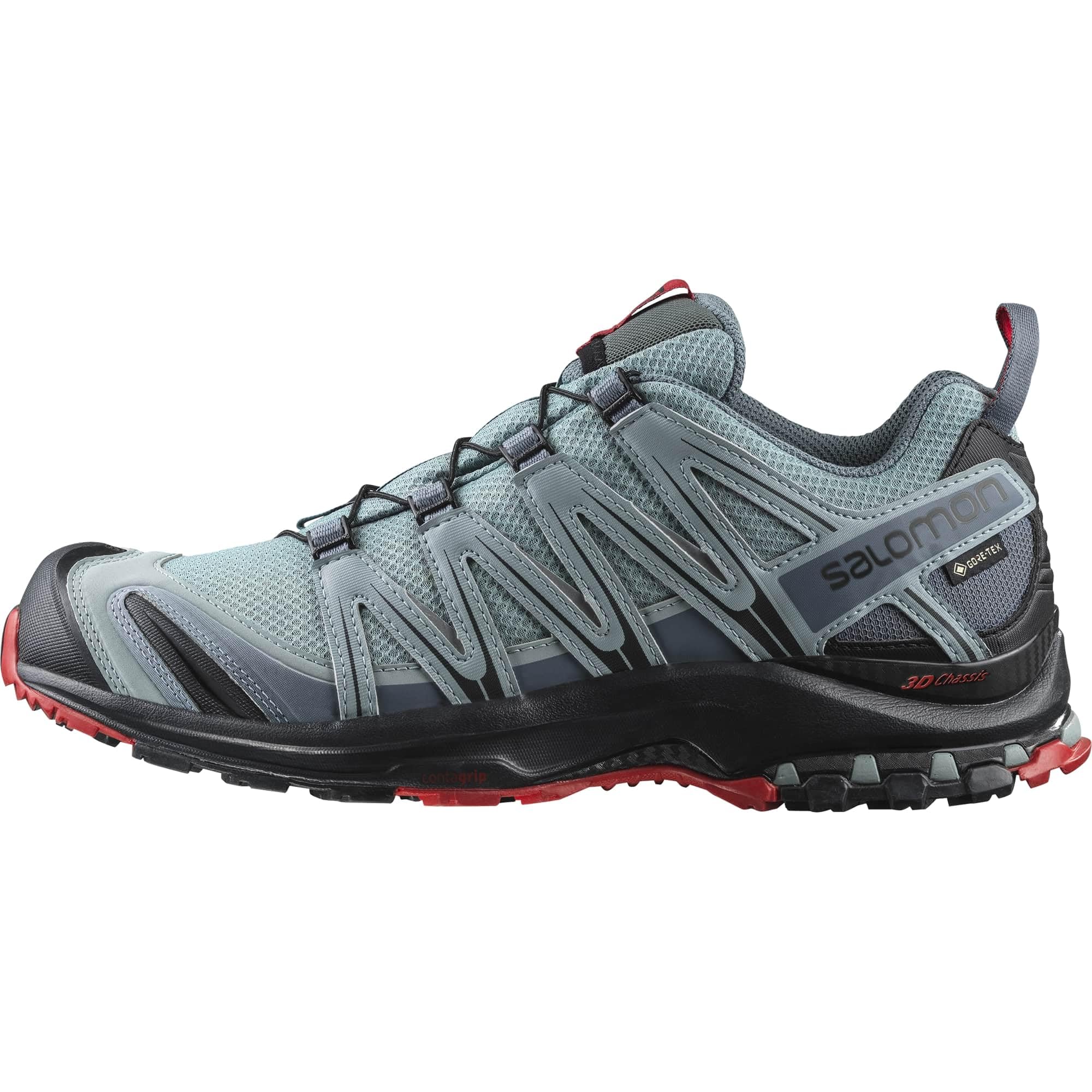
The one that keeps your feet dry and locked in when the trail turns mean.
A Gore-Tex membrane is the reason to buy this shoe: water stays out, so wet grass, shallow creeks, and cold mud do not end your run early. The Advanced 3D chassis adds lateral stability, which helps when the ground tilts and you need your ankle held steady. Wet Traction Contagrip rubber is built for grip on slick surfaces, so wet roots and rock are less of a gamble.
Fit is the trait that carries this model more than any other, and it is not close. The Sensifit system wraps the foot for a precise hold, while the Quicklace system lets you cinch the whole shoe with one pull and no knots to untie. Weight sits between 350 and 400 g, which keeps a waterproof trail shoe from feeling like a boot.
Here is the trade-off worth knowing: the durability of the soles draws mixed feedback, and the value for money is judged mixed as well. Some runners get long service; others see faster wear than they expected. This is a brand with a deep history, but the sole is the part to keep an eye on if you rack up heavy miles. Width is a fit question too — Sensifit holds precisely, so try your normal size first.
Why it stays in the rotation
- Gore-Tex keeps feet dry through creeks and wet grass
- Advanced 3D chassis steadies the foot on tilted ground
- Quicklace cinches in one pull with no knots
- Wet Traction Contagrip holds on slick rock and roots
The fine print
- Sole durability divides buyers, with some seeing faster wear
- Waterproof upper runs warmer in hot, dry conditions
Made for: wet, cold, mixed-terrain runs where dry feet and a locked-in hold are worth the extra coverage.
Skip if: you run hot, dry trails and want maximum breathability over water protection.
Know the Specs
Rock plate
A thin stiff layer inside the midsole that spreads the point of a sharp stone across a wider area. It is why a shoe with a forefoot rock plate lets you run over gravel instead of picking your way around it.
Gore-Tex membrane
A waterproof layer built into the upper that keeps water out while letting some vapor escape. It is the reason a wet-weather shoe keeps your feet dry through creeks and mud, at the cost of running warmer.
Advanced 3D chassis
A support structure that adds lateral stability around the foot. It helps hold your ankle steady when the trail tilts, which is what you feel on off-camber ground and loose descents.
Vibram Megagrip with Traction Lug
An outsole rubber paired with lug geometry built for grip. Lugs are the raised blocks under the sole that bite into loose dirt and rock, and Traction Lug shapes them for more contact on uneven ground.
Common Questions
Do I need a rock plate for rocky trails?
Is a Gore-Tex trail shoe too warm for summer running?
How do I know if a trail shoe gives enough support?
Should I size up in trail running shoes?
What is the difference between Quicklace and normal laces?
How long should a trail shoe’s outsole last?
Can I run on pavement in trail shoes?
Is a cushioned trail shoe less stable?
What is Traction Lug on a Vibram outsole?
The Bottom Line
For most runners, the pair of supportive trail running shoes worth buying is the North Face Altamesa 500 V2. Its rock plate (a stiff layer under the foot that blocks sharp stones) and Surface Control outsole handle both protection and grip, while the DREAM foam keeps long miles comfortable. If a true-to-size women’s fit with room at the toes matters most, the Merrell Antora 4 delivers it. Want maximum grip on rough, loose trails? The Agility Peak 6 brings Vibram Megagrip (a sticky rubber sole compound) and a forefoot shield. And on wet, cold days when dry feet decide the run, reach for the Salomon XA PRO 3D Gore-Tex.
How we choose
We do not accept paid placement. Every pick is matched to a real buyer and a real use-case; we do not hands-on test units.
Sources
Specifications: manufacturer listings and product documentation. Review insights: verified customer reviews, as of November 2026. Pricing: not shown on this page (it changes often); check the current price via the retailer link.
As an Amazon Associate, Tactical Gear Guy earns from qualifying purchases. This does not affect which products we feature.