Specs are compiled from manufacturer listings and verified buyer reviews and can change over time — please confirm the key details on the product page before buying.
If your basement floods, the culprit is usually a tired little switch, not the pump itself. A sump pump float senses rising water and triggers the pump — when it sticks, the pump stays off and your floor floods. The picks below are ranked by how they behave in a wet pit, not by marketing claims.
This guide is built by comparing the manufacturers’ published specifications and the patterns across verified customer reviews, so you get each pick’s real strengths and trade-offs instead of marketing spin.
You will see vertical and tethered designs side by side, plus the amp ratings and cord lengths that decide whether a switch matches your pump. Below is a straight read on the sump pump float options that hold up.
Top Picks

How To Choose The Best Sump Pump Float
Start with your pit’s shape, not the brand name. A float has to travel freely to switch the pump on and off, so the space around it matters as much as the switch itself. The same float can work in one pit and fail in another if a pipe crowds its travel path.
Vertical or tethered: pick by your basin
A vertical float (a float that slides up and down a fixed rod) needs a straight, clear column of space beside the pump. That makes it a neat fit for a narrow sump basin where a swinging tether would bump the walls. A tethered float (a float on a cord that swings with the water level) gives you more freedom to set the on and off points by adjusting how much cord hangs free — handy in a wider pit or a tank.
Match the amp rating to your pump
The amp rating is the amount of electrical current the switch can safely carry — think of it as the size of the doorway your pump’s power has to pass through. A switch rated for more amps than your pump draws leaves headroom, while one rated below your pump’s draw is the wrong part. Check the pump’s label before you buy, and remember the switch carries the pump’s running current, not just a trickle.
Check cord length and pumping range
Cord length decides how far the switch can sit from your outlet, and pumping range decides how much the water level has to rise before the pump starts. A longer cord gives you more mounting options in a deep pit. A wider pumping range means fewer, longer pump cycles; a tighter range means shorter, more frequent bursts.
Side-by-Side Comparison
| Model | Best For | Type | Cord Length | Current Rating | Amazon |
|---|---|---|---|---|---|
| 10 Foot Vertical Replacement Float Switch for Sump Pumps★ Best Overall | Hands-off automatic cycling | Vertical | 10 ft | 10 Amps @ 120VAC | Amazon |
| Float Switch with 10ft Cable (IP68, 16 Amp)Rugged Duty | Wet, messy sewage duty | Tethered | 10 ft | 16 Amp max | Amazon |
| Float Switch for Sump Pump with Honeywell MicroswitchMost Adjustable | Adjustable tether on a budget | Tethered | 10 ft | 13 Amps / 0.5 HP | Amazon |
| 15 Feet Water Level Float Switch with Mounting Bracket | Clean water and low-voltage jobs | Float with bracket | 15 ft | 1.5 A | Amazon |
| Vertical Sump Pump Float Switch, 10-ft Cord | Replacing a stuck vertical float | Vertical | 10 ft | — | Amazon |
| 10ft Piggyback Tethered Float Switch | Quick universal retrofit | Tethered | 10 ft | 10 Amps @ 120VAC | Amazon |
| Superior Pump 92005 25′ Tethered Float Switch | Deep pits and ejector pumps | Tethered | 25 ft | — | Amazon |
| Zoeller 10-0055 Switch-Mate | Converting a manual pump | Tethered, variable level | 10 ft | 13 A / 115 V | Amazon |
| Little Giant RFSN-9 Tethered Float Switch | High-cycle pump-down duty | Tethered | 15 ft | 13 A max run | Amazon |
Detailed Reviews
1. 10 Foot Vertical Replacement Float Switch for Sump Pumps
Our pick — 4.5+★ from 350+ verified ratings; the strongest balance of quality and price.
A vertical float built to cycle a million times and still answer the call.
The number that earns this pump switch its spot at the top is the cycle rating: it is built for up to one million on/off cycles. A cycle is simply one trip up and one trip back down as the water rises and falls. In a busy pit that fires several times a day, that rating is the difference between a part you forget about and one you are forever replacing.
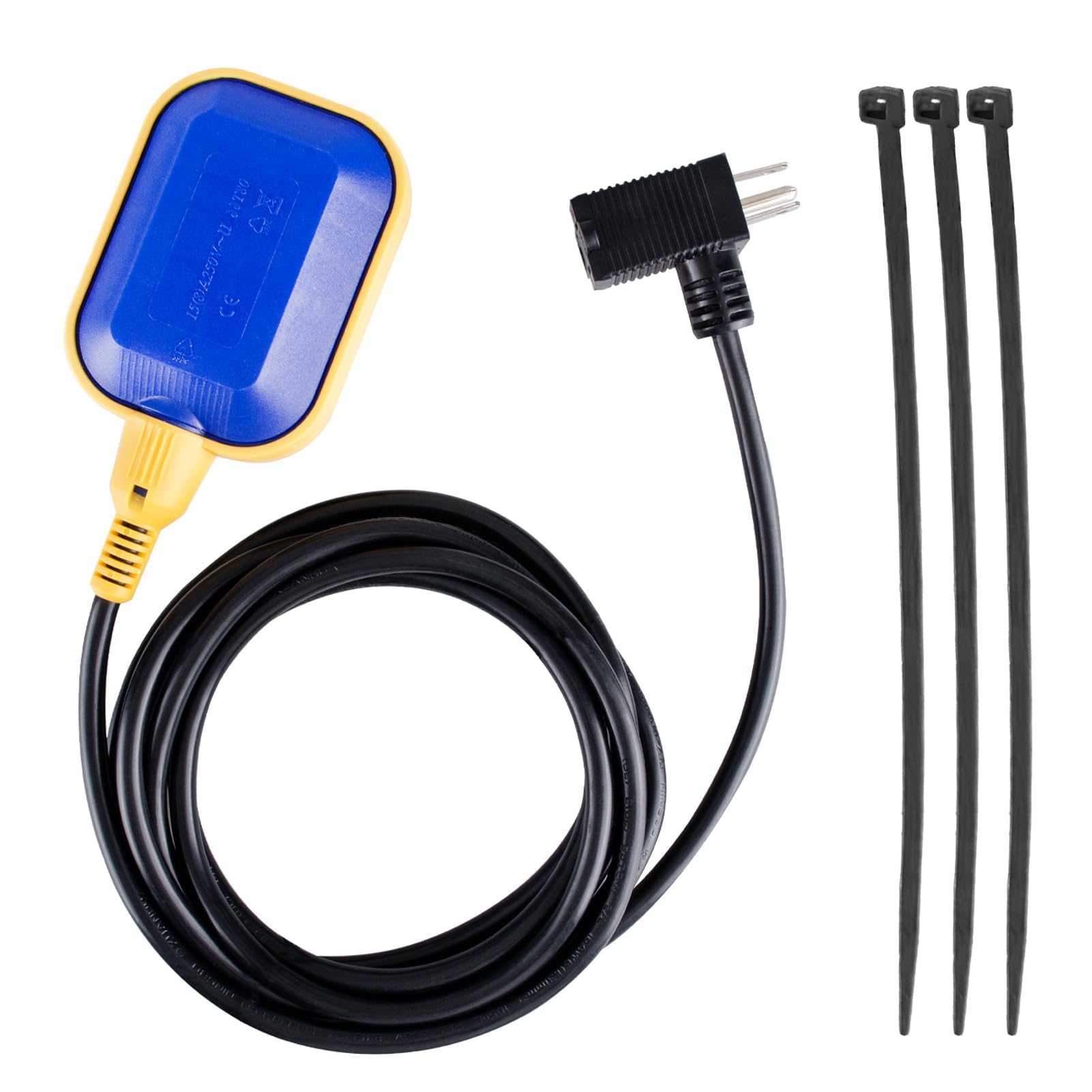
You get the easiest setup in this category: it arrives fully assembled, mounts to the pump’s discharge pipe, and includes a 10-foot power cord, a piggyback plug (the pass-through plug that lets the pump run through the switch), a mounting bracket, and a stainless steel hose clamp. The switch carries 10 Amps at 120VAC (standard household current) and is a normally open contact, meaning it stays off until the float tells it otherwise. Once it is in, the pump runs itself — no reaching into the pit to flip anything.
The gold-plated electrical contacts are the quiet hero here. Gold resists the pitting and wear that corrode plain contacts in a damp pit, and the material is designed to keep buildup from gluing the switch shut. What wins people over most is simply that it works — owners consistently report the switch firing the pump the way it should, and the install side draws plenty of praise too. The honest catch is lifespan, which is the one area where feedback splits: most units run for years, but an occasional one quits early. Treat it as a part worth keeping a spare of, the same way you would a fuse.
What earns it first place
- Rated for up to 1 million cycles, so frequent pump firing is not a worry
- Ships fully assembled with bracket, hose clamp, and piggyback plug — install is quick
- Gold-plated contacts resist the pitting and buildup that stick other floats
- 10 Amps at 120VAC fits a wide range of standard sump pumps
Where it asks for care
- Long-term reliability is the one split in feedback — a few units quit early
- Vertical design needs a clear straight path beside the pump, so a crowded pit may not fit
Reach for this if: you want a set-and-forget vertical float that handles frequent cycling and comes with everything to mount it.
Look elsewhere if: your pit is cramped and has no clear vertical column for the float to travel.
2. Float Switch with 10ft Cable — IP68 Waterproof, 16 Amp
The switch you buy when the pit runs dirty and the water sits deep.
Two specs tell you who this one is for. The first is IP68, a waterproof rating that means the housing is sealed to keep water out even when submerged, which matters in a tank or sewage pit where the switch spends time underwater. The second is the 16 Amp maximum pump run current, the highest ceiling of the picks here, so it can carry a beefier pump than the 13-amp and 10-amp switches. If you are pumping effluent or sewage rather than clean groundwater, this is the kind of switch you want in the pit.
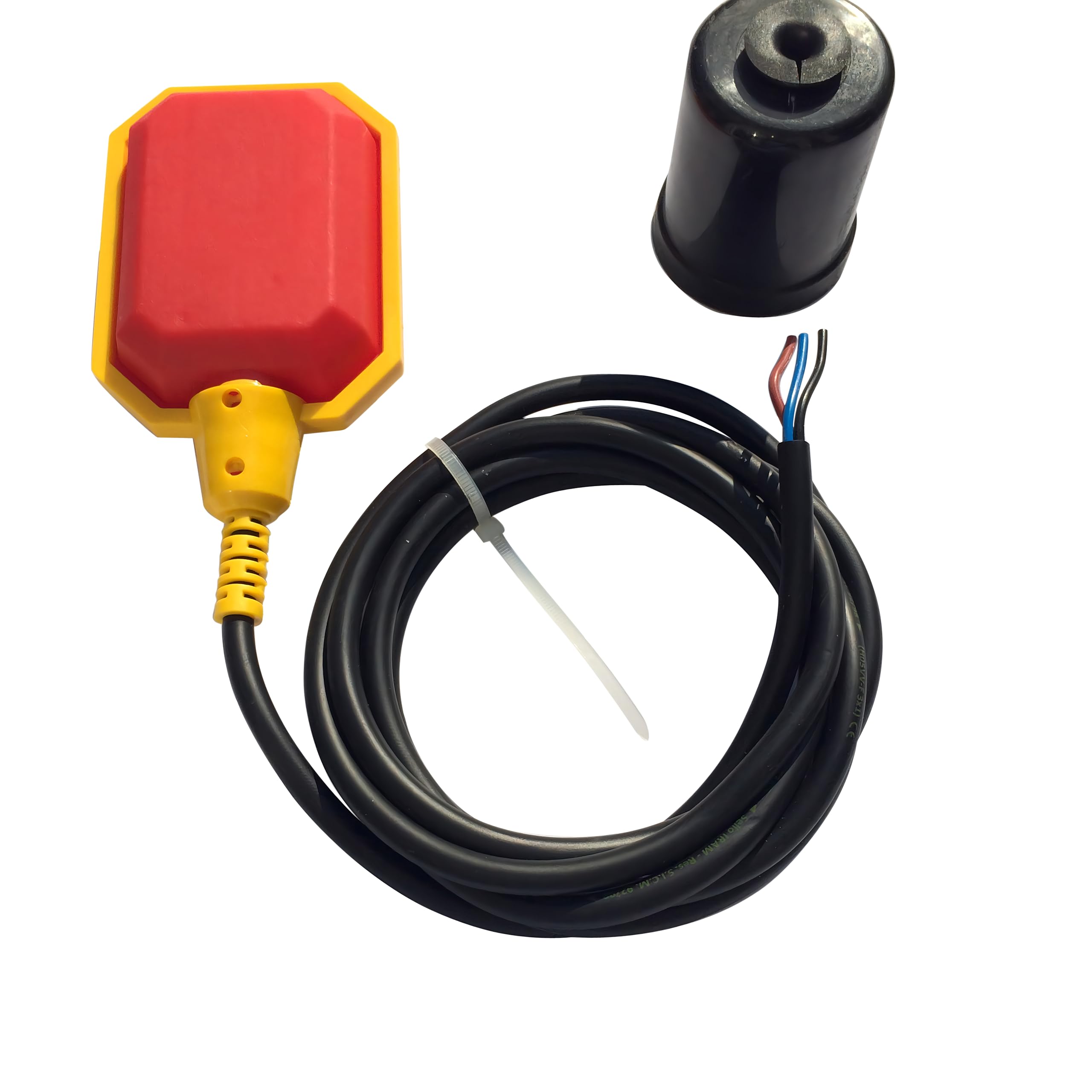
The cable is the other bragging point. It uses an SJEOW-standard jacket that is UL certified, with a maximum service temperature of 140°F, so it is built for both clean water and the tougher sewage side. Installation is deliberately simple: you plug it into the piggyback plug, secure it with nylon ties, and slide it to the height you want. There are no complex circuits inside — it is a mechanical tethered design that works by physical action, which is why it is less fussy than an electronic switch.
Here is the honest split. Quality and value land well — buyers describe it as exactly what was advertised. Durability is where this one earns its scrutiny, because a share of buyers report failures in a month or less. That does not make it a bad part; it means you weigh it as a value-tier switch with a wide amp ceiling versus a longer-lived premium one. The 10-foot cable also limits how far from the outlet you can mount it.
Best matched to: a messy sewage or holding-tank job that needs the higher 16 Amp headroom and a sealed, submersible housing.
Watch the lifespan: durability feedback is genuinely mixed, so buy with the expectation that this is a working part, not a forever one.
Fits the bill for: high-amp pumps in wet, dirty pits where you want a sealed mechanical switch.
Think twice if: you want the longest service history possible — this is the value play, not the longevity champ.
3. Float Switch for Sump Pump — Honeywell Microswitch, 13 Amps
A Honeywell microswitch inside, and an adjustable tether that lets you set the on point.
The heart of this switch is a Honeywell microswitch, a small precision component that snaps the contacts open and closed with accurate repeatability. That matters because the whole job of a float is to repeat the same on/off action thousands of times without drifting. It carries up to 13 amps or 1/2 HP and holds CE and IEC approvals. At 3.25″L x 1.5″W x 6.5″H it is the most compact pick on this list — note if your basin is tight and space is at a premium.
You control when the pump starts by adjusting how much of the 10-foot PVC jacketed cable hangs free — so you can tune it to your tank or bilge instead of accepting a fixed switch point. The polypropylene casing is non-corrosive and IP68 rated (dust-tight and protected against long immersion), and it holds up to temperatures from 32°F to 140°F. There is also a 5-year warranty against manufacturer defects, which is a real vote of confidence in a category where most parts come bare.
This is the crowd favorite of the group, and the praise centers on it just working — owners mention the switch firing faithfully for months at a stretch, and the wire-and-install side draws steady approval too. The fair caveat is long-term durability: the bulk of feedback is positive, but a minority report it not lasting past four months. A few note the instructions can be thin or partly non-English, so watch a wiring video if you are new to this. Given how many owners happily run it, the odds are on your side.
Go with this one for: a tunable, budget-friendly tether switch with a precision microswitch and a warranty behind it.
Keep in mind: the smallest footprint here, but a few units fall short on long-term life, so it suits routine sump duty rather than the heaviest cycles.
4. 15 Feet Water Level Float Switch with Mounting Bracket
Long reach, a pipe bracket, and one big rule: direct current only.
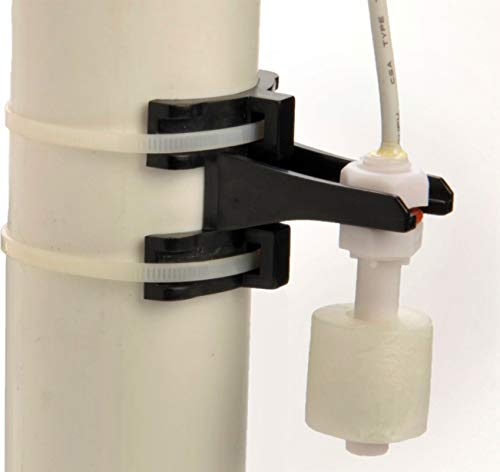
This one plays a different game than the others: it is a float with a mounting bracket that clamps to pipes from 1″ to 4″, so you can fix it in place on everything from a small feed line to a chunky 4-inch pipe. The 15-foot cord is the longest of the tether-style group — a full 5 feet more reach than the 10-foot PumpSpy and 10-foot Water Boss switches — which gives you real freedom to position it and still reach an outlet.
The critical spec is the current rating: 1.5 A, and DC only. This is not a heavy-duty AC pump switch that you plug straight into a 120V pump. It is meant to be used with a relay or contactor to control an AC pump, and it is recommended only for clean, clear water. That makes it a natural fit for hydroponics, aquariums, ponds, and boats — exactly the applications its compatibility list names — rather than a grimy sewage basin. The conductors are sealed and run internally to one jacketed cable, and it is IP67 rated for protection against water ingress.
What the feedback shows is a switch that, simply, is dependable — reliability is what comes up most, with clean-water jobs the clear fit. It can detect either a high or a low water level, so it works as a top-off trigger as easily as an overflow stopper. The limitation is built into the rating, not a flaw: the 1.5 A ceiling and DC-only use mean it will not shoulder a sump pump by itself. Pair it with a relay and it does its job without drama.
Where it shines: aquariums, ponds, boats, and hydroponic reservoirs that need a clean-water level trigger with a long 15-foot lead.
The rule to respect: 1.5 A and DC only — route it through a relay for AC pump control, and keep it out of dirty water.
Suits you if: you are triggering a clean-water system or a low-voltage setup and want a long-corded float with a solid bracket.
Not your part if: you need to switch a standard 120V sump pump directly — this one needs a relay in the chain.
5. Vertical Sump Pump Float Switch, 10-ft Cord, Piggyback Plug

A tidy vertical replacement with the hardware to mount it two ways.
If you are swapping out a worn vertical float and want a like-for-like replacement, this is built for exactly that. It is a mechanical vertical switch that rides a rod up and down to start and stop a compatible pump as the water level changes. The kit is unusually complete for the tier: it includes the float with a piggyback plug, two mounting brackets for a pump or pipe, a stainless steel hose clamp, and four screws. Having two bracket options means you are less likely to be stuck improvising a mount.
The practical detail is clearance. Because the float travels along its rod, you need a clear path around its full travel — so check your basin layout, the nearby pipes, and where the pump sits rather than assuming any pit will fit. It carries a 10-foot maximum lifting height and a 10-foot cord, so confirm the reach to your outlet before mounting. It is a control accessory, not a pump or an alarm, so it is meant to sit alongside your pump and dictate its on/off cycle.
Owners describe it as reliable and easy to fit — that combination is exactly what you want from a replacement part you are dropping into an existing setup. Fit and float control get satisfied nods, and it lands as an affordable option. Durability is the one area with split feedback, so treat it as a routine-duty replacement rather than the longest-lived choice. The bigger practical limit is that crowded vertical path — measure first.
What makes it easy: the two brackets, stainless hose clamp, and four screws mean the mounting hardware is already in the box.
Measure before you order: it needs a clear vertical column around its rod travel, so a packed basin may not cooperate.
Worth grabbing for: a straightforward vertical swap where you want the mounting hardware included and an affordable price.
Give it a pass if: your pit is tight around the pump and the float cannot travel freely on its rod.
6. 10ft Piggyback Tethered Float Switch

The fast swap for a dead tether float, hardware and all.
When your existing tether switch gives up, the fastest path back to a dry floor is a universal replacement that clamps on and plugs in. This is that part. It carries 10 Amps at 120VAC as a normally open contact, uses the same gold-plated electrical connections as the top pick to resist pitting and wear, and includes a hose clamp plus a cable grip for easy adjustment. You clamp it to the pump’s discharge line, plug the pump’s cord into the piggyback plug, and connect it to any 120V outlet.
The 10-foot cord gives you flexibility for the mount, and the modular design is meant to fit the widest range of sump, sewage, and effluent setups. It is a popular part and a good value — buyers call it a gem of a replacement and praise how straightforward the install is. Functionality and overall quality are the strong suits, which is why it sits high in this list. The 1.1-pound weight makes it light enough to handle without fighting it into place.
Where it gets real is durability and the float mechanism itself. Some units hold up to anything; others are reported failing within six weeks, and a few note the float getting hung up and not stopping the pump. The honest read: plenty of owners run this without trouble, but it is a value-tier switch with a genuine lifespan question mark. Check the float travels freely in your basin before you seal the deal, since a snagged float is the failure mode to watch.
Why owners reach for it
- Gold-plated contacts resist the wear that corrodes plain connections
- Hose clamp and cable grip included, so install is quick and adjustable
- 10 Amps at 120VAC fits a wide range of typical sump pumps
- Light 1.1-pound build that threads easily into a tight installation
What to weigh honestly
- Durability is mixed — some units go early, so it is a value-tier part
- The float can hang up in a crowded basin, so give it clear swinging room
Pick it when: you want a fast, universal tether replacement with hardware and gold-plated contacts included.
Second-guess it if: your basin is cramped enough that the float might snag — a vertical float may serve you better there.
7. Superior Pump 92005 25′ Tethered Float Switch

A 25-foot cord that reaches across a big basin or a deep pit.
In a large tank, a deep sewage pit, or a spot where the outlet is nowhere near the pump, that extra cord is the whole reason to pick it. It is a tethered design made of polypropylene, a tough, non-rusting plastic, and it fits sump and sewage pump setups including ejector pumps.
The retractable tether lets you set the pumping range by adjusting how much cord hangs free, so you get control over how high the water climbs before the pump fires. At 2.2 pounds it is the heaviest switch here, which is a sign of a solid float body rather than a flimsy one. This is a popular part and the feedback centers on it simply working — it fires the pump as it should, particularly with ejector setups, and it is easy to install and use.
The trade-off to weigh is durability and the switch action. Most units ride smoothly, but a minority report the switch needing extreme angles to trigger, and some note the unit lasting about a year. Those are honest limits, not a reason to skip it — the bulk of owners are happy. The trick to a long life is a clean tether path; if the cord can swing freely, the float does its job without straining the switch.
Its superpower: a 25-foot cord that solves the mounting-distance problem in deep or oversized basins.
Its check-and-balance: most units run reliably, but the switch can demand sharp angles to trigger and a few last only about a year.
The right call for: deep pits, large tanks, or ejector pumps where a 10-foot cord simply will not reach.
Overkill for: a standard shallow basin where a 10-foot switch already reaches — you are paying for cord length here.
8. Zoeller 10-0055 Switch-Mate Float Switch
Turn a manual pump into a hands-off one, with a switch point you set yourself.
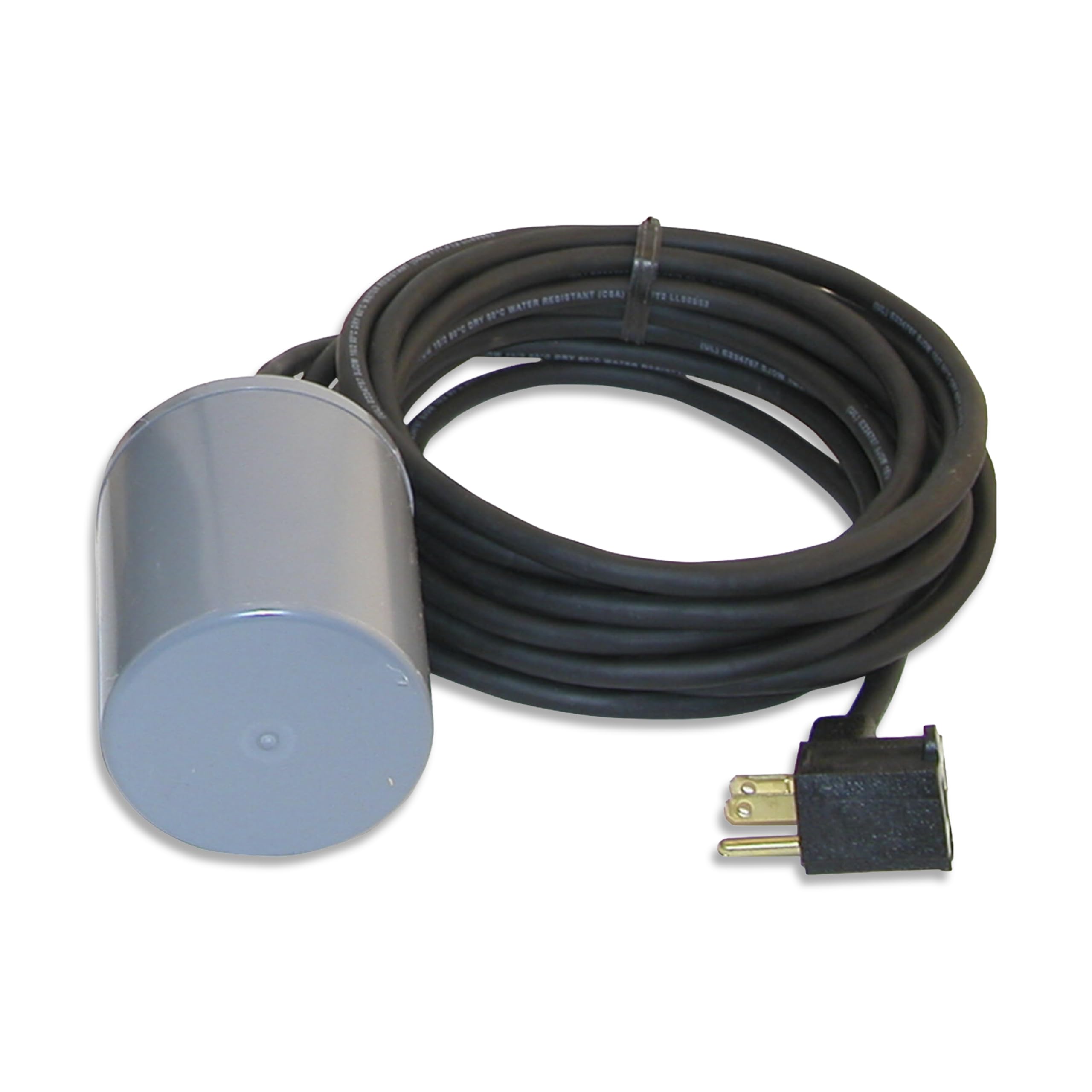
Its main job is conversion: if you have a non-automatic 115V pump that you switch by hand, this piggyback float turns it into an automatic system — you plug the float into the outlet, then plug the pump into the float, and it starts managing the on/off cycle for you. That makes it a smart fit for sump, sewage, effluent, and dewatering setups where the pump is fine but the switching is manual.
The variable-level control is the standout feature. You set the on and off activation points in the field to match your tank or basin depth, so a shallow basin and a deep one each get the pumping range they need. It carries 13 amps at 115 volts and works with a listed range of compatible Zoeller pump models. The float body is PVC and polypropylene and encases a mechanically activated switch with no mercury, which keeps the contents simple and sealed. At 3.25″L x 1.5″W x 6.5″H it is compact for a tether float.
What stands out in the feedback is reliability — the switch does what it is supposed to, as expected — along with quality as a replacement part and a genuinely easy install. It is a set-it-once part that keeps a manual pump from flooding you while you are not watching. The one thing to confirm before you buy is the compatibility: it is built around a specific list of pump models, so check your pump’s make and amp draw against it rather than assuming a fit.
Made for you if: you want to convert a manual 115V pump to automatic control with a switch point you can dial in.
Check first: its compatibility rests on a specific pump list and a 13-amp ceiling, so verify your pump matches before ordering.
9. Little Giant RFSN-9 Tethered Float Switch, 15′ Cord

The premium pick with a 7-to-36-inch pumping range and heavy electrical headroom.
You get a pumping range of 7 inches to 36 inches, which you set by adjusting the tether — a wide, precise window that lets you tune a shallow basin’s quick cycle or let a deeper tank fill further before firing. The 15-foot cord and piggyback plug give it a longer reach than the 10-foot tethers, and it is UR and CSA listed in the USA and made in the USA, details that matter if you like a known stamp on the part in your pit.
On electrical capacity it is a serious switch: a maximum of 0.5 HP, a 13 Amp maximum pump run current, and a hefty 85 Amp maximum pump start current. That start-current figure is the surge a pump pulls for the instant it kicks on, so having headroom there matters. The one rule to follow carefully is the limitation: use it only with pumps that have integral thermal overload protection — a built-in safety cutoff that protects the pump motor. The maximum liquid temperature is 140°F.
Customers note it working well with sump pumps, with some units running reliably for years, and the quality and easy install draw praise too. As with most switches in this category, durability is the split — most hold up heavy-duty, but a few note the case cracking and a life under a year. Given the range and electrical headroom, it is the pick for someone treating the switch as a critical part rather than an afterthought. Keep the float path clear and it does its job.
What the premium buys: a wide 7″–36″ adjustable pumping range and sturdy 13-amp run / 85-amp start electrical headroom (extra capacity to handle the pump’s startup surge).
The line to respect: it must pair with pumps that have integral thermal overload protection, and the case can crack in a rough pit.
The one to choose for: a pump-down system that needs a wide, adjustable pumping range and serious electrical capacity.
Only if it fits: your pump carries its own thermal overload protection and your basin gives the tether room to swing.
Know the Specs
Current Rating (Amps)
An amp rating tells you how much electrical current the switch can carry — picture it as the size of the pipe your pump’s power flows through. A switch rated above your pump’s draw leaves safe headroom; one rated below it is the wrong part. Check the pump’s label before you buy, and remember some floats are DC-only and need a relay to switch an AC pump.
Vertical vs. Tethered
A vertical float rides a fixed rod and needs a clear straight column of space beside the pump — neat for a narrow basin. A tethered float swings on a cord, and the length of free cord sets the pumping range, which gives you more control in a wider pit or tank. Match the float type to your basin’s shape, not the reverse.
Cord Length
Cord length decides how far the switch can sit from your outlet. A deep pit or a distant outlet may call for a longer cord, while a standard basin is served fine by a shorter one. Measure the run from switch to outlet before you mount anything.
IP Waterproof Rating
The IP rating shows how well the housing keeps water out — IP68 means sealed for submersion, while IP67 is protected against water ingress. If the switch spends time underwater in a tank or sewage pit, that seal is what keeps it working instead of shorting.
Common Questions
Will a vertical or a tethered float fit my sump basin better?
Can I connect a float switch straight to my pump’s power cord?
What amp rating does my float switch need for my pump?
Do I need a relay with the 1.5-amp float switch?
How do I set the pumping range on a tether float?
Can I use a sump pump float with a sewage or effluent pump?
What is the IP68 rating and why does it matter?
How long should a sump pump float switch last?
Does the Little Giant RFSN-9 work with any pump?
What is a normally open switch for a sump float?
The Bottom Line
For most buyers, the sump pump float worth trusting is the PumpSpy 10 Foot Vertical Switch because it is rated for up to a million cycles, ships fully assembled with hardware, and uses gold-plated contacts that resist sticking. If you want a tunable tether with a precision Honeywell microswitch and a warranty behind it, grab the Water Boss / Sump Alarm float. And for a deep pit or ejector setup where a standard cord will not reach, the Superior Pump 92005 with its 25-foot cord is the one to reach for.
How we choose
We do not accept paid placement. Every pick is matched to a real buyer and a real use-case; we do not hands-on test units.
Sources
Specifications: manufacturer listings and product documentation. Review insights: verified customer reviews, as of November 2026. Pricing: not shown on this page (it changes often); check the current price via the retailer link.
As an Amazon Associate, Tactical Gear Guy earns from qualifying purchases. This does not affect which products we feature.