Specs are compiled from manufacturer listings and verified buyer reviews and can change over time — please confirm the key details on the product page before buying.
Cold legs on a chairlift ruin a good snowboarding day faster than bad snow. The right long johns trap heat against your skin, wick sweat before it chills you, and sit flat under snow pants so nothing bunches at the knee. This guide sorts the real base-layer bottoms by warmth, fabric, and how they actually fit under riding gear, so you can pick one pair and get on with the season.
This guide is built by comparing the manufacturers’ published specifications and the patterns across verified customer reviews, so you get each pick’s real strengths and trade-offs instead of marketing spin.
Below you’ll find merino wool, wool blends, and synthetic fleece-lined options, each matched to a different kind of rider and budget tier. Every pick lists fabric weight, fit notes, and honest trade-offs so you can match a pair to your body and your riding style.
Top Picks


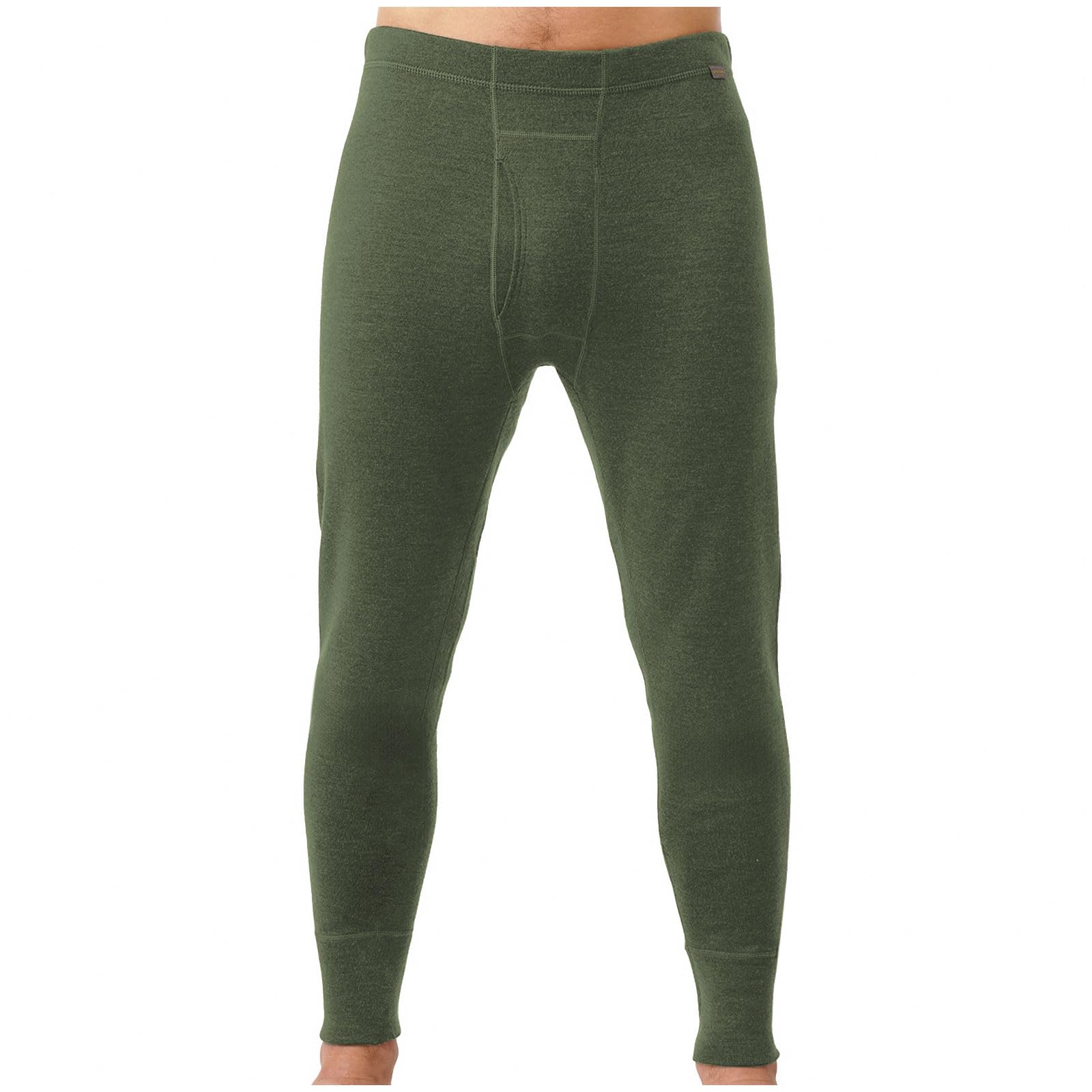
How To Choose The Best Snowboarding Long Johns
Your snow pants do the blocking. Your long johns do the drying. Pick the wrong fabric and you spend the ride in a damp, cold layer that never recovers, no matter how good the shell is. Here is what actually decides whether a pair works on the hill.
Fabric choice: merino wool vs synthetic
Merino wool is a fine natural fiber that regulates temperature and resists odor, which is why it dominates the premium end of this category. Synthetic blends dry fast and cost less, and many pair a synthetic outer face with a brushed fleece inside to hold heat. Wool keeps insulating even when damp; synthetics tend to feel clammy once sweat builds. Neither is wrong — it depends on how hard you ride and how much you want to spend.
Fabric weight and warmth
Base layers are graded by weight, usually in grams per square meter. A lightweight layer suits mild days and high-output riding; a heavyweight such as a 400g merino traps far more heat for bitter days and slow lift lines. Heavier fabric also adds bulk under snug snow pants, so match the weight to your coldest realistic day, not the worst storm you have ever seen.
Fit and layering under snow pants
Long johns should sit close to the skin with no loose folds, because wrinkles under snow pants turn into pressure points on the chair. Flatlock seams — stitching that lies flat instead of raised — cut friction at the knee and hip. Watch the size chart closely: several pairs here run small, and the maker’s own guidance is to size up for easier layering.
Side-by-Side Comparison
| Model | Best For | Fabric | Weight / Style | Fit Note | Amazon |
|---|---|---|---|---|---|
| Minus33 Merino Wool Bottoms★ Best Overall | All-day warmth and odor control | 100% Merino Wool | Lightweight | True-to-size, tall-friendly | Amazon |
| Under Armour Tac ColdGear InfraredTop Performer | High-output riders who sweat | Synthetic ColdGear | ColdGear Infrared | Runs tight — check waist | Amazon |
| MERIWOOL Heavyweight 400gPremium Pick | Bitter cold and slow lifts | 100% Merino Wool | 400g Heavyweight | Good base-layer fit | Amazon |
| Helly Hansen LIFA Merino Midweight | Trail-to-town versatility | 57% Merino / 43% Polypropylene | Midweight, two-layer | Pull-on design | Amazon |
| LAPASA Merino Wool Pants | Light packable warmth | 100% Merino Wool | Lightweight | Fits under other clothing | Amazon |
| Terramar Thermolator Pants | Moving between cold and indoors | Synthetic grid fleece | High loft grid channels | Good, doesn’t hinder movement | Amazon |
| ColdPruf Dual Layer Wool Plus Blend | Durable blend for cold-weather sport | Wool Plus Blend | Dual layer | — | Amazon |
| Spyder Fleece Lined Long Johns Set | Budget warmth with fleece lining | Synthetic fleece-lined | Two-piece set | Runs small — size up | Amazon |
| Men’s Thermal Underwear Long Johns | Big-and-tall sizing on a budget | Synthetic | Cold-weather base layer | Size chart isn’t accurate | Amazon |
Detailed Reviews
1. Minus33 Merino Wool Bottoms Men’s Base Layer Pants
Our pick — 4.5+★ from 950+ verified ratings; the strongest balance of quality and price.
Wool that dries fast, resists odor, and stays soft against the skin all day.
The single number that earns this pair the top slot is 100% — as in 100% merino wool, not a blend with a wool-sounding name. Merino is a fine natural fiber that regulates heat and absorbs sweat before it can chill you, and this pair is built from nothing else. On a snowboard that means you can ride hard, sweat, sit through a lift ride, and drop in again without the layer turning cold and damp. It also resists odor, so a multi-day trip doesn’t force a wash every night. The maker’s spec sheet lists a lightweight build rated UPF 25 for sun protection on bright days.
What wins riders over is the craftsmanship — the wool is soft rather than scratchy, and it stretches to fit tall frames without riding up. A light thermal like this sits so flat under snow pants that you forget it’s there, which is exactly what you want on the hill. The honest caveat is durability: a handful of buyers report wear over time, and value is the one place opinions split, so treat it as a premium wool layer rather than a bargain synthetic. The care routine matters too — merino rewards gentle washing and air drying if you want it to last.
Compared with the synthetic fleece-lined Spyder set below, this Minus33 is thinner against the skin and far less bulky under a shell, but it doesn’t hold trapped air the way a brushed fleece does. That trade makes it the better call for active riders who heat up fast; powder-day riders who sit in cold chairs may prefer the extra loft of a fleece-lined option.
What earns it the top spot
- 100% merino wool regulates temperature and stays warm even when damp.
- Naturally odor resistant for multi-day trips without a nightly wash.
- Soft, itch-free wool that fits tall frames without riding up.
- Lightweight build rated UPF 25 for sunny days on the snow.
Where it asks more of you
- A lighter wool layer than fleece-lined pairs, so it’s less cozy on slow cold lifts.
- Some owners see wear over time; value is the one split opinion.
- Merino prefers gentle washing and air drying.
Ride it if: you want one pair of pure merino that handles sweat, smell, and long days without bulk.
Look elsewhere if: you sit in cold chairs on bitter days and want the loft of a fleece-lined layer instead.
2. Under Armour Men’s Tac ColdGear Infrared Base Leggings
Built for riders who sweat on the bootpack and still want warm legs on the way down.
Under Armour’s ColdGear Infrared name describes a synthetic base layer engineered to reflect body heat back at you rather than trap lofted air the way wool does. That makes it a strong fit for snowboarders who hike a ridge or dig a booter and then stand still at the top. The fabric wicks moisture instead of holding it, so the wet phase after a climb passes faster than it would in cotton. It sits among the premium tiers here, and the build quality is the reason.
Warmth is the trait owners bring up most — this is a genuinely warm legging, warm enough to handle hard cold under a shell. It’s also built for function, not just warmth, with a cut that keeps up across running, walking, and riding in rough weather. The fit is the one thing to check carefully: the brand runs tight, with a 31″ waist cited as too snug by some owners, so if you’re between sizes or prefer room to move, size up. Bulk and warmth don’t cost you mobility, but they do make this a more substantial layer than a light merino pair.
Put it next to the Minus33 above and the split is clear. The wool layer is thinner and odor resistant, ideal for multi-day trips without washing. This UA legging is warmer and more synthetic in feel, so it doesn’t need the same gentle care but also doesn’t kill odor the way wool does. If warmth on the descent is your priority and you don’t mind checking the size chart twice, this is the stronger pick.
Why riders rate it: the warmth output is the headliner, and reviewers describe it as a go-to in genuine cold, not just cool weather. The synthetic build moves sweat and dries quick, which matters most when you’re alternating between effort and standing still.
The snag: sizing runs tight, with a 31″ waist called out as too snug by some — order a size up if you’re between sizes or want room under snow pants.
Reach for this if: you want maximum synthetic warmth and don’t mind a close, athletic fit.
Pass if: you prefer a looser silhouette or a layer that resists odor across several days without washing.
3. MERIWOOL 400g Thermal Pants
The 400g heavyweight merino that keeps slow, bitter lift lines from biting your legs.
The defining number here is 400g — the fabric weight in grams per square meter. That’s a heavyweight merino layer, and it means more wool packed into each inch of fabric to trap heat on the coldest days. If you ride in single-digit temps or spend a lot of time standing on the chair, this is the kind of bottom that keeps your legs from going numb between runs. It’s 100% merino wool, so it also regulates moisture and resists odor the way wool does.
Warmth and quality share the top of the praise here — owners say the 400g thickness makes a real difference when the mercury drops, and they describe these as the best thermal pants they’ve worn. It stays soft against the skin with a fit built to layer under other pants without restricting movement, and merino’s natural odor resistance lets you wear it repeatedly between washes. The two honest notes are thickness and value: heavier fabric adds bulk under snug snow pants, and some owners question whether the price matches the build.
Set it beside the lighter Minus33 at the top of this list and you can see the trade. The Minus33 is a lightweight all-rounder; this MERIWOOL is a specialist for cold. It’s also heavier than the fleece-lined Spyder set below, so the bulk equation is real. If your season is mostly cold storm days, the extra weight is worth every gram; if you tour and heat up fast, a lighter layer will suit you better.
Best for the deep freeze: this is a cold-weather specialist, the pick for riders whose legs go numb on slow chairs.
The trade-off: 400g bulk under tight snow pants, and value is the one point owners debate.
Buy it for: bitter cold days and slow lifts where maximum warmth beats minimal bulk.
Skip it for: warm spring slush or high-output touring where a lightweight merino would breathe better.
4. Helly Hansen LIFA Merino Midweight Pants

A merino-and-synthetic hybrid that moves sweat out fast and dries on the move.
Helly Hansen’s two-layer construction is the whole story here. The fabric is a specific blend — 57% merino wool, a soft natural fiber that regulates heat and resists odor, and 43% polypropylene, a synthetic that pushes moisture away from your skin. Because the merino is sandwiched with a wicking synthetic, the pants aim for the best of both: wool’s warmth and softness with a synthetic’s fast drying. ZQ-certified merino wool means the wool supply is third-party audited on welfare and land management, which is a quality signal for buyers who care where the fiber comes from.
For riding, the payoff is breathability — you stay dry whether you’re hiking a bootpack or standing still on a lift. The pull-on design means no fussy waistband getting in the way when you’re layering in a cold car, and flatlock seams keep the knees and hips irritation-free under snow pants. Non-itch fibers let you wear it all day, and it’s machine washable, which takes the care anxiety out of a wool layer. It’s midweight, so it sits in the mild-to-cold range rather than the extreme cold end of the category.
That midweight position separates it from the 400g MERIWOOL above. This Helly Hansen breathes better and dries faster in active use, making it the pick for a rider who alternates between hard riding and rest stops. The wool-heavy options win on raw cold-weather heat retention. It’s also smart for travel, since it works under regular pants as easily as under snow pants.
The two-layer advantage
- 57% merino paired with 43% polypropylene moves sweat out and dries fast.
- ZQ-certified merino wool and a non-itch fabric that wears all day.
- Pull-on design with flatlock seams for easy layering and irritation-free knees.
- Machine washable, trail-to-town ready under regular pants.
What to weigh
- Midweight only — not built for the deepest cold days.
- Less raw heat retention than the 400g merino option.
Ideal for: the rider who wants warmth and fast drying in one midweight layer that doubles as everyday winter wear.
Not for: extreme-cold days where you want maximum heavy wool heat under the shell.
5. LAPASA Merino Wool Pants
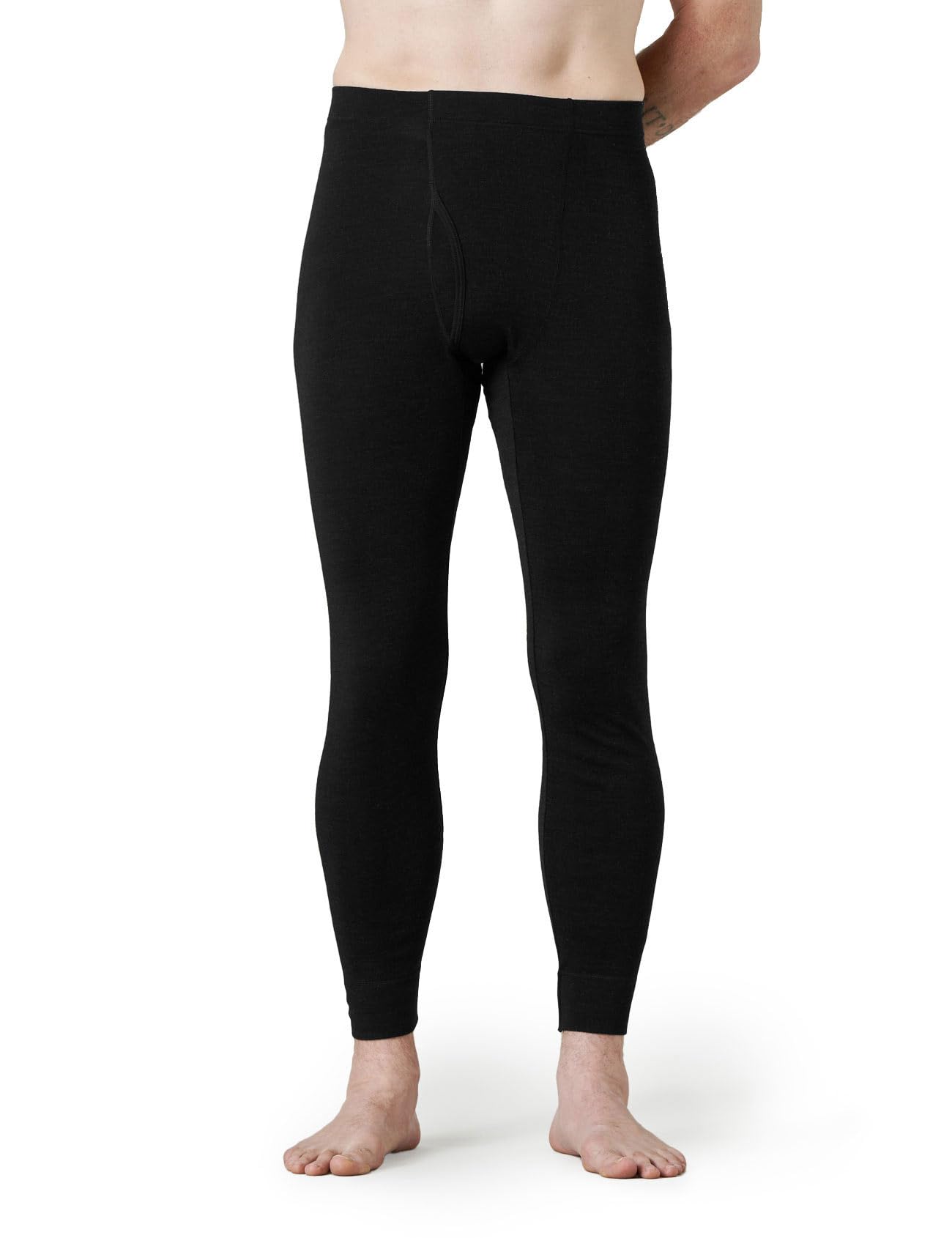
Full merino wool at a lighter weight, built for brisk days and easy layering.
Merino wool at 100% is what draws eyes here, and the lightweight build is aimed at cool and brisk weather rather than deep-winter extremes. You get wool’s natural warmth and breathability without a bulky feel, so it sits neatly under snow pants or regular trousers. The maker pitches it for outdoor winter sport — skiing, running, cycling — and for around-the-house wear, so it doubles as everyday base-layer warmth. If you want the feel of merino without committing to a heavyweight layer, this is the lighter option.
Owners value the combination of quality and warmth, and they note it breathes well without giving up warmth — an important balance on the hill, where a stuffy layer turns into a wet one fast. The softness is another point of praise; the fabric is soft without being scratchy, so it doesn’t irritate on long days. It fits well under other clothing, which is the exact job description for a good base layer.
The trade-off is real and worth knowing before you buy. This is a thin merino, and some owners mention it’s thin enough to see through and that the fabric doesn’t hold up as long as they’d like. That makes it a nicer match for layering under opaque pants than for wearing on its own. For the price tier it’s in, though, it delivers real merino warmth at a lower cost than the premium wool pairs here — a strong entry point into the category.
Merino benefits on a tighter budget: full wool construction, breathable warmth, and a soft, non-scratchy feel under clothing.
The caveat to own: the thin fabric can be see-through and less hard-wearing over time, so treat it as a base layer, not a standalone.
Worth grabbing if: you want genuine merino wool at a lower cost and plan to layer under opaque pants.
Rather not if: you need a tough, opaque pair you can wear without anything over it.
6. Terramar Men’s Thermolator Pants

Grid channels trap warmth and let it vent, so you don’t overheat on the bootpack.
The grid construction is the defining feature. Raised channels in the fleece trap air for warmth while letting moisture and heat escape at the same time — a design that suits the stop-start rhythm of snowboarding better than a solid fleece. Terramar adds ClimaSense thermal regulation, which adapts to your body’s temperature, plus a smooth face and a fleeced back for easy layering. It’s built for high-energy outdoor use, with four-way stretch and UPF protection for sunny days. Quick drying and moisture management round out the synthetic side of the feature list.
What owners bring up most is quality and warmth together — legs stay toasty in cold weather and the pants perform better than expected. The weight is a frequent compliment too: substantial enough to keep you warm but not so bulky that it bulges under snow pants. The fit gets credit for not hindering movement, and owners describe it as a good value. It’s also a good commuter pick, handling the jump from a cold street into an office without turning you into a sweatbox.
Next to the Helly Hansen merino midweight above, this Terramar leans fully synthetic: no wool, faster drying, and a grid structure aimed at active temperature control rather than raw heat. That makes it the better choice for a rider who alternates hard effort and rest on the mountain, but the wool pairs here still win on odor resistance over a long trip.
Why it earns a place: the grid fleece balances warmth and venting, and the fabric weight sits in a comfortable middle that disappears under snow pants.
One thing to note: a synthetic layer, so it doesn’t have wool’s natural odor resistance over multiple days — plan on washing between trips.
Choose this if: you run hot and cold on the hill and want a layer that vents as you work and warms as you rest.
Go another way if: multi-day trips without laundry matter and you want wool’s odor control.
7. ColdPruf Wool Plus Blend Pant

A wool blend with a dual-layer build aimed at trapping heat and moving sweat out.
ColdPruf’s dual-layer approach layers two fabrics to trap warmth close to the skin while letting moisture escape — the brand’s stated aim, and the reason it targets cold-weather sport over casual wear. The Wool Plus Blend pairs wool’s natural warmth with synthetic support, so you get some of the wool feel without an all-wool build. It’s built around durability and free movement, which fits the demands of a day on the mountain. It’s an entry point to wool blend layering without committing to a full 100% merino layer.
The brand builds its base layers to hold heat close while wicking sweat away, so you don’t freeze once you stop moving. The dual-layer construction gives it a bit more structure than a single thin knit, which helps it sit flat under snow pants. It’s not the warmest or thinnest option here, but it aims at the middle of the category — durable, cozy cold-weather thermals meant to keep you moving freely.
The honest limit is that this is a blend, not a heavyweight 100% merino layer, so on the very coldest days the specialists at the top of this list will out-warm it. It also isn’t the lightest option, since the dual-layer build adds a little thickness under tight pants. But for the price tier it sits in, it’s a sensible wool-blend pick for a rider who wants some wool benefits without the premium price.
What the dual layer buys you
- Two-layer construction traps heat close while letting moisture escape.
- Wool Plus Blend combines wool warmth with synthetic support.
- Built for durability and free movement in cold-weather sport.
Where it lands in the pack
- A blend, so less raw merino warmth than the 400g pure-wool picks.
- The dual-layer build adds a little thickness under snug snow pants.
Good match for: a rider who wants wool-blend warmth and durability without the price of pure merino.
Think twice if: you ride the deepest cold and want the maximum heat of a heavyweight wool layer.
8. Spyder Thermal Underwear Set
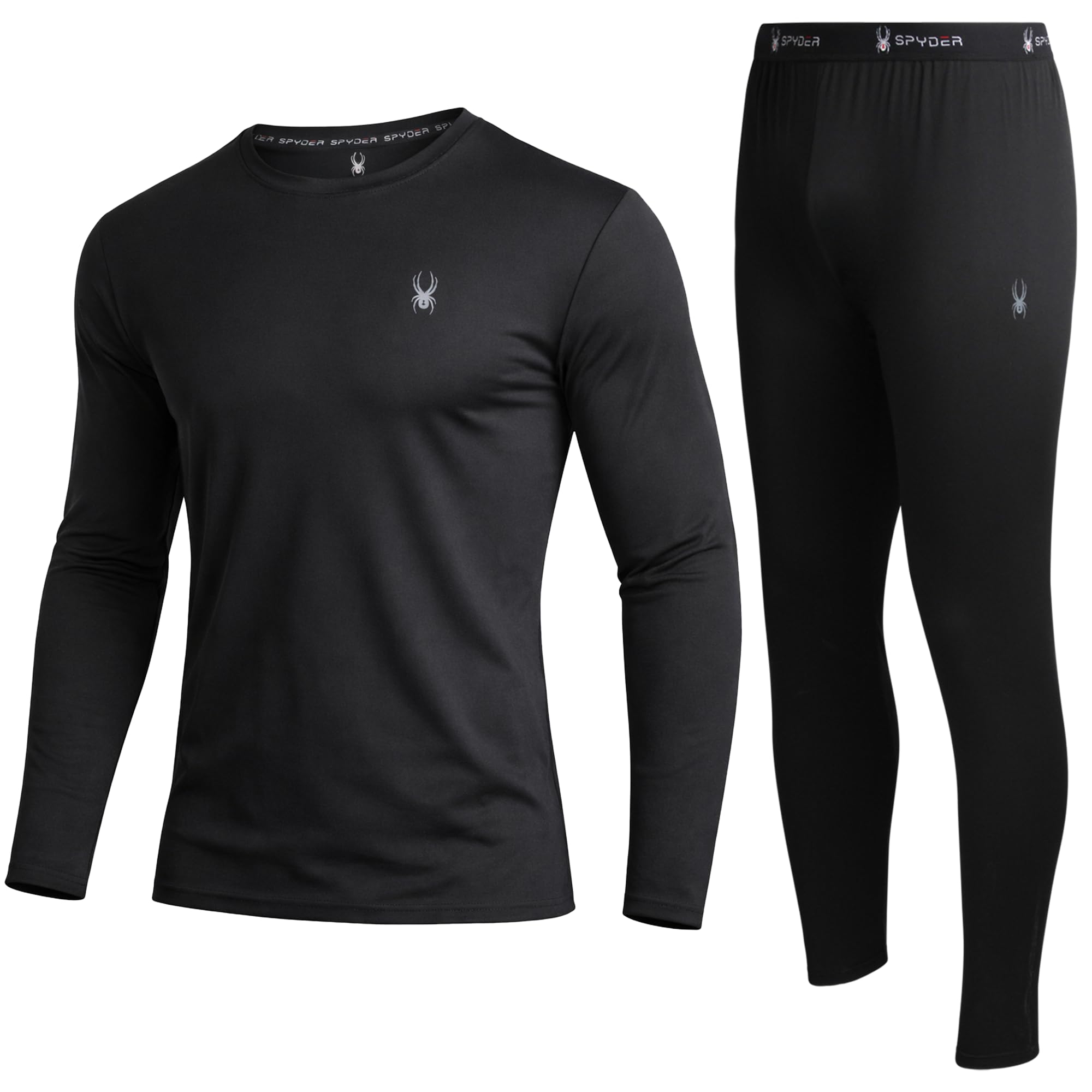
A full fleece-lined thermal set that traps heat for the price of one dedicated wool layer.
You get both top and bottom here, and the fleece lining is the warmth engine. The soft brushed interior holds trapped heat against your legs, so it feels warm the moment you pull it on. That lining makes it a great match for cold-weather layering under snow pants, jeans, or joggers, and the stretch construction keeps it close and flexible rather than stiff. For a budget-tier pick, a matching set is a compelling deal for anyone starting from zero on winter base layers.
Owners praise the quality and the warmth, with the fleece lining earning repeated credit for trapping heat. The elastic waistband holds the layers tucked in, which matters when you’re bending and strapping into a board, and the fit is described as true to size — though the maker explicitly warns it runs small and recommends sizing up for easier layering. Flatlock seams cut friction at the knees, and the fitted cuffs keep the bottoms from riding up inside your snow pants.
The main caution is that fleece lining is warmer but bulkier and less breathable than merino, so on a hard-charging day you can end up damp. It also lacks wool’s natural odor resistance. Compare it with the LAPASA merino above and the difference is clear: the wool layer breathes and resists smell, this Spyder set traps heat and costs less for a full two-piece. If you ride moderate cold and want a complete set, it’s a smart value.
The value read: a fleece-lined top-and-bottom set for the price of a single premium layer, with an elastic waistband that keeps everything tucked in.
The honest catch: runs small, so size up — and the fleece traps heat but breathes less than wool, which can leave you damp on hard-riding days.
Pick it up if: you want a complete fleece-lined set for moderate cold and want both pieces in one go.
Hold off if: you ride hard and sweat heavily, where a breathable merino layer will stay drier.
9. Men’s Thermal Long Johns
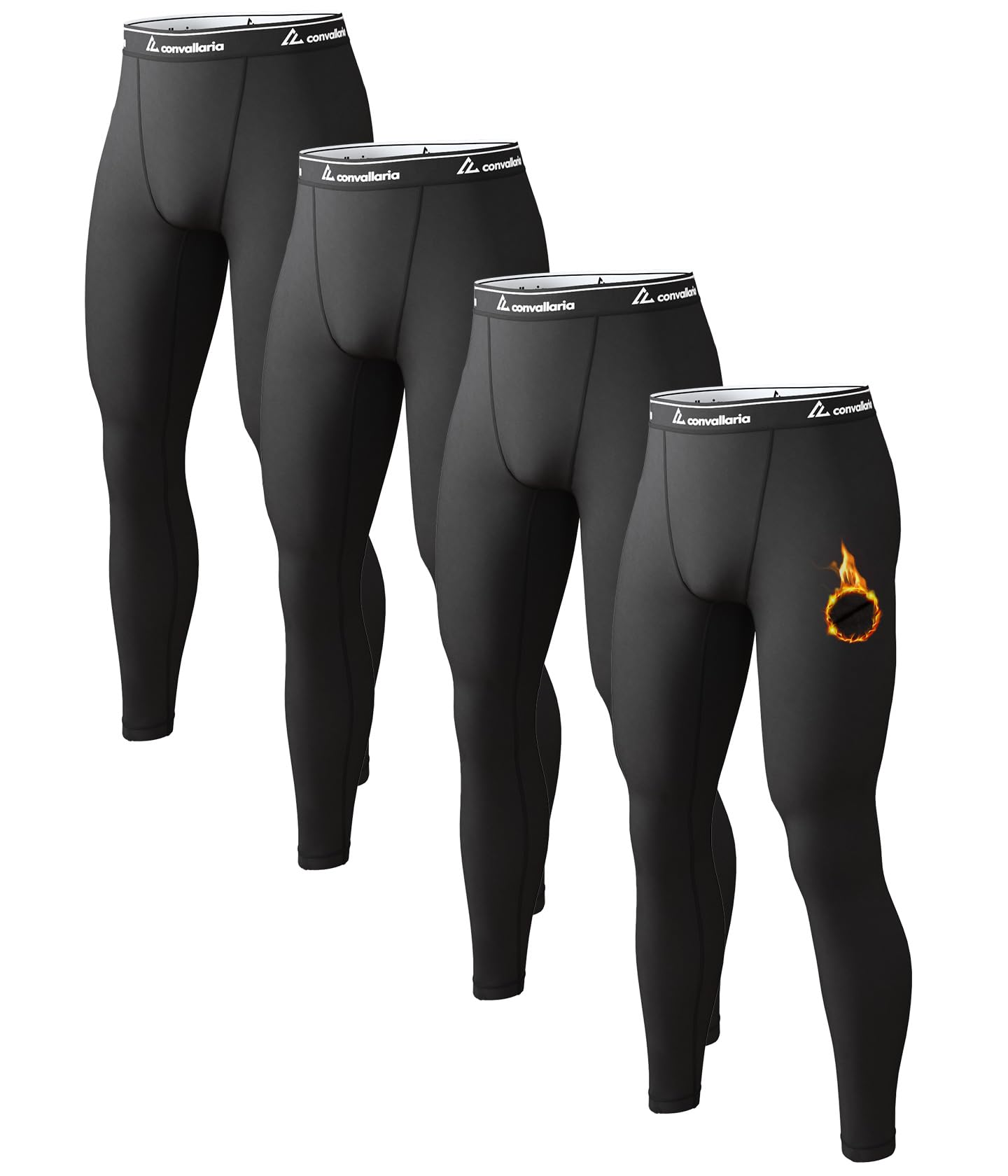
Extended sizing that runs from XS to 6XL, so a big frame isn’t stuck with the wrong fit.
The standout here is the size run: this bottom covers XS through 6XL across a long list of size labels, which is unusual in a category that often stops at XL. If your legs don’t fit the standard cut, that range alone makes it worth a look. The synthetic build is aimed at freezing temperatures, with a snug fit that stays put instead of riding up under snow pants. It comes in solid black, tactical camo, pure white, green, navy, and blue.
Customers note it keeps them warm through winter and holds a snug fit that doesn’t shift, with soft fabric inside and value that’s praised at the budget tier. The fit and comfort are what owners bring up most, and the close fit suits layering under snow pants without bunching at the knee. For a rider on a tight budget or a hard-to-fit build, it’s a practical cold-weather option that covers a whole lot of sizes.
Two things to know before you buy. The sizing gets mixed feedback — some find it true to size, others say the size chart isn’t accurate, so measure yourself and read the size notes carefully rather than trusting the label. The fabric quality also splits, so treat it as a budget synthetic rather than a premium wool. That puts it clearly below the merino picks on breathability and odor control, but the sizing range keeps it in the conversation for riders those picks leave out.
Where it wins: XS through 6XL sizing across six colorways, at a budget price, with a snug fit that doesn’t ride up.
Where to be careful: the size chart isn’t reliable for everyone and the synthetic fabric splits opinion — measure rather than guess.
Leans toward: big-and-tall riders or budget shoppers who need a size the standard merino pairs don’t offer.
Measure first if: you’re between sizes, since the size chart isn’t consistently accurate.
Know the Specs
Fabric weight (grams per square meter)
Fabric weight tells you how much material is packed into the layer, and weight drives warmth. A lightweight merino suits high-output riding and milder days. A heavyweight like a 400g merino traps far more heat and suits bitter cold and slow lift lines. Heavier fabric also adds bulk under snug snow pants, so match the weight to your coldest realistic riding day rather than the worst storm you’ve imagined.
Moisture control: wicking vs trapping
Moisture control is the difference between a warm leg and a cold one. Merino wool absorbs sweat and lets it evaporate, staying warm even when damp. Synthetic layers push moisture away and dry fast, though they can feel clammy if sweat builds. Grid fleece is a middle path — raised channels trap air for warmth while letting heat escape. Whichever you choose, a layer that keeps sweat against your skin will chill you the moment you stop moving.
Common Questions
Is merino wool or synthetic better for snowboarding long johns?
Do snowboarding long johns run small?
How should base layer long johns fit under snow pants?
Will 100% merino wool long johns feel itchy?
How much does fabric weight matter for cold-weather riding?
Can I wear the same long johns for multiple days?
Do these long johns double as everyday winter wear?
How do I wash merino wool long johns?
What is a dual layer base layer and is it worth it?
Are fleece-lined long johns too warm for spring riding?
The Bottom Line
The best snowboarding long johns for most riders is the Minus33 Merino Wool Bottoms — pure merino wool in a lightweight build that regulates heat, resists odor, and sits flat under snow pants while you ride hard and rest on the lifts. If you ride in genuine cold and want maximum warmth, lean toward the MERIWOOL 400g heavyweight pants, whose extra fabric weight traps far more heat. And for a complete fleece-lined top-and-bottom set at the budget tier, the Spyder fleece-lined set is the one to reach for — just size up. Whichever direction you go, match the fabric weight to how hard you ride and how cold you actually get, and your legs will stay warm from first chair to last run.
How we choose
We do not accept paid placement. Every pick is matched to a real buyer and a real use-case; we do not hands-on test units.
Sources
Specifications: manufacturer listings and product documentation. Review insights: verified customer reviews, as of November 2026. Pricing: not shown on this page (it changes often); check the current price via the retailer link.
As an Amazon Associate, Tactical Gear Guy earns from qualifying purchases. This does not affect which products we feature.