Specs are compiled from manufacturer listings and verified buyer reviews and can change over time — please confirm the key details on the product page before buying.
If you want genuinely high-quality images without carrying a bag full of lenses, the short answer is this: buy a small camera with a large sensor and a sharp fixed or short zoom lens. That combination is what separates a pocket camera that disappoints from one that quietly beats your phone in low light. Below you get ten real options, sorted by what each one is actually good at, so you can match the camera to the way you shoot.
This guide is built by comparing the manufacturers’ published specifications and the patterns across verified customer reviews, so you get each pick’s real strengths and trade-offs instead of marketing spin.
Sensor size, lens sharpness and true pocketability matter more than megapixel counts here, and every pick below is weighed on those three things. This is the shortlist for anyone shopping for a small high quality camera.
Top Picks


How To Choose The Best Small High Quality Camera
The mistake most first-time buyers make is chasing megapixels. A 24MP photo from a tiny sensor looks mushy next to a 20MP photo from a bigger one, especially indoors or after dark. Size of the sensor is the first thing to weigh, because it sets how much light the camera collects and how clean the picture stays.
Start with the sensor, not the megapixel number
A 1-inch sensor (the size class used by several picks here) gathers far more light than the tiny chip in a phone. An APS-C or Four Thirds sensor goes further still. If most of your shooting happens at dusk, indoors or at concerts, that larger chip is the difference between a usable frame and a grainy one.
Decide your lens reach before you fall in love with a body
You get two very different tools here. A fixed 40mm lens (a lens that does not zoom) frames a scene close to how your eye sees it, so portraits and street shots look natural. A 30x zoom, like a 24-720mm range, pulls in sweeping landscapes and distant stage performers in one body. Neither is better; they suit different days out. Decide up front if you want reach or sharpness in a small package.
Check what pocketable really means
A camera that slips into a coat pocket gets carried far more often than one left at home. Look for a body that slips into a jacket or a small pouch. That usually means a fixed lens or a compact retractable zoom, not a chunky interchangeable-lens rig.
Side-by-Side Comparison
| Model | Best For | Sensor | Lens | Video | Amazon |
|---|---|---|---|---|---|
| RICOH GR IIIx HDF★ Best Overall | Pocket detail and portraits | 24.2MP APS-C | 40mm f/2.8 | — | Amazon |
| Canon PowerShot V10Best Value | Vlogging on a budget | 15.2MP 1-inch | 19mm fixed | 4K at 30fps | Amazon |
| FUJIFILM X HalfMost Fun | Fun retro film look | 18MP | Fixed | Stills and video | Amazon |
| Panasonic LUMIX TZ/ZS99 | Travel and concerts | Compact sensor | 24-720mm (30x) | 4K at 30p | Amazon |
| Panasonic LUMIX ZS300S | Long zoom, low light | 20.1MP 1-inch | 24-360mm (15x) | 4K | Amazon |
| Sony ZV-1 II | Wide-angle video | 1-inch | 18-50mm, f/1.8-4.0 | 4K | Amazon |
| Leica V-LUX 20 | Reach with GPS tagging | 12.1MP | 25-300mm (12x) | 720p | Amazon |
| OM SYSTEM PEN | All-day carry, stabilised | 20.4MP Four Thirds | 14-42mm kit (28-84mm equiv.) | 4K and C4K | Amazon |
| Sony RX100 VII | Fast autofocus in a pocket | 20.1MP 1-inch stacked | 24-200mm | 4K | Amazon |
| Leica D-LUX 7 | Low light with a fast lens | 17MP Four Thirds | 24-75mm f/1.7-2.8 | — | Amazon |
Detailed Reviews
1. RICOH GR IIIx HDF Premium Compact Camera
Our pick — 4.5+★ from 50+ verified ratings; the strongest balance of quality and price.
A large APS-C sensor folded into a body that disappears into a jacket pocket.
The headline here is the sensor: a 24.2MP APS-C chip (the same size class used in much bigger cameras) sitting inside a truly pocketable body. That pairing is rare, and it is why this takes the top spot. You get more light gathered per shot than a small 1-inch sensor can manage, so indoor and evening frames come out cleaner with less grain.
The 40mm f/2.8 lens frames a scene close to how your own eye reads it — tight enough for portraits and street shots, loose enough for a small group. For reference, that is a longer reach than the 19mm fixed lens on the Canon PowerShot V10, so you stand back and fill the frame rather than shoot wide. The built-in Highlight Diffusion Filter softens bright spots for a filmic glow, and you flick it on or off with the Fn button.
What wins people over is the combination of sharpness and size — tack-sharp images from something that slips into a purse. The honest catch is the HDF: some owners find the diffusion effect too heavy and suggest buying the non-HDF version to add your own filter instead. That is a taste call, not a fault, and the core camera stands on its own. For a niche compact it holds a high rating from a small but devoted owner base.
Why It Leads The Pack
- 24.2MP APS-C sensor delivers large-camera detail from a pocket body
- 40mm f/2.8 lens is sharp and naturally framed for people
- Fn button flips the Highlight Diffusion Filter on and off instantly
- Small enough for a purse or coat pocket
What To Weigh
- The HDF effect divides opinion — some find it too strong
- Fixed lens means no zoom, so you frame with your feet
- No built-in flash
Buy it for: portrait and street shooters who want big-sensor detail in a pocket.
Think twice if: you rely on zoom or want the HDF filter baked in permanently.
2. Canon PowerShot V10 Compact Vlogging Camera
The build-in-a-stand vlogging body that points at you and gets out of the way.
For anyone whose main output is video of themselves talking, this is the simplest route into a 1-inch sensor. It records 4K at up to 30fps and Full HD at up to 60fps, with 14 movie color filters built in so you can set a mood without editing. A 15.2MP 1-inch back-illuminated sensor handles dim rooms better than a phone, and stereo microphones with a third center mic cut down background noise.
The clever part is the fold-out stand, which flips front or back for hands-free shooting at different angles. The fixed 19mm wide lens pulls in tight interiors and landscapes — wide enough for arm’s-length selfies, which is exactly the job. Reliable image stabilization has three modes in the updated firmware, so handheld walking shots stay steadier. Owners rank build quality highest of all its traits, with compactness close behind — it fits in a small bag and powers on fast.
The trade-off to know before you buy is battery life, which is the most-discussed weak point in owner feedback; a spare cell is worth carrying for a long shoot day. Some also wish you could zoom while filming, and the fixed focus lens makes framing less flexible than a zoom body. Neither stops it being an easy first video camera.
The everyday win: a 1-inch sensor and 4K at 30fps in a body that folds out into its own tripod — set it on a table and shoot hands-free.
Size it right: if your filming runs long, budget for a backup battery, because runtime is the one thing owners flag repeatedly.
Reach for this if: you want an inexpensive, self-contained vlogging camera with a stand built in.
Look elsewhere if: you need zoom control mid-clip or all-day battery on a single charge.
3. FUJIFILM X Half Premium Compact Camera
A dial-twirling nod to film cameras that turns snapshots into a hobby again.
This one is about the experience as much as the files. It packs 26 analog-inspired film and filter options, dial-based controls and a retro body that looks like the film cameras people still miss. An 18MP sensor and an ISO range of 100-3200 cover everyday light, and a 2-in-1 mode blends stills and video for a playful creative twist.
Portability is the everyday story: it slips into a coat pocket, and the reviews echo it — the fun factor leads everything, with owners calling it genuinely enjoyable to shoot. Picture quality comes next, with strong shots in good light and reasonable low-light performance. JPEG is the only file format, which is a limit if you edit heavily but a convenience if you want files straight off the camera.
The recurring hesitation is value — this camera asks a lot for its specs, and the picture quality lands in “good in skilled hands” territory rather than chart-topping. It prints straight to a compatible instax printer or shares via the app, which is the sort of thing that makes it a favorite for travel and gifting. Treat it as a creative companion, not a spec monster.
What Draws People In
- 26 film and filter looks for instant character
- Pocketable retro body with physical dials
- Prints to a compatible instax printer or shares via the app
Where It Asks Patience
- JPEG-only output, so no RAW for heavy editing
- Asks premium money for an 18MP sensor
Made for: shooters who want film-style fun and pocketability over pure specs.
Skip the leap if: you need RAW files or chart-topping low-light detail.
4. Panasonic LUMIX TZ/ZS99 Point and Shoot Camera

A 30x lens that pulls the stage toward you from a pocket-sized body.
If your shots happen across a distance — a concert, a stadium, a wildlife trail — this is the reach champion of the list. Its 24-720mm LEICA lens gives 30x optical zoom, double the 15x of the ZS300S below, so the far end of the field fills the frame. It records 4K video at 30p and can pull 4K PHOTO bursts at 30fps, plus HD slow-motion at 120fps for creative clips.
Travel practicality is baked in: a 1,840k-dot tiltable touchscreen lets you shoot from odd angles, and USB Type-C charging means you can top up from a power bank. Bluetooth v5.0 and a dedicated Send Image button push photos to your phone through the Panasonic Image App. Owners rate image quality and performance highest, and the PASM manual controls are a genuine surprise on a point-and-shoot, backed by a deep menu for tinkerers.
Be realistic about the small sensor — image quality is the most-mixed topic, and a few owners say the menu is not the most intuitive. It is a fantastically versatile travel camera, not a low-light specialist. For daylight reach and convenience, little else at this size does the job.
The reach advantage: 24-720mm in one body covers sweeping vistas and distant subjects without swapping lenses — the 30x optical is the reason to pick it.
The honest note: the small sensor limits low-light detail, so lean on daylight and the zoom rather than dim indoor rooms.
Go here for: travel, concerts and family trips where zoom reach is the whole point.
Pass if: most of your shooting happens after dark and you need clean high-ISO stills.
5. Panasonic LUMIX ZS300S Compact Travel Camera
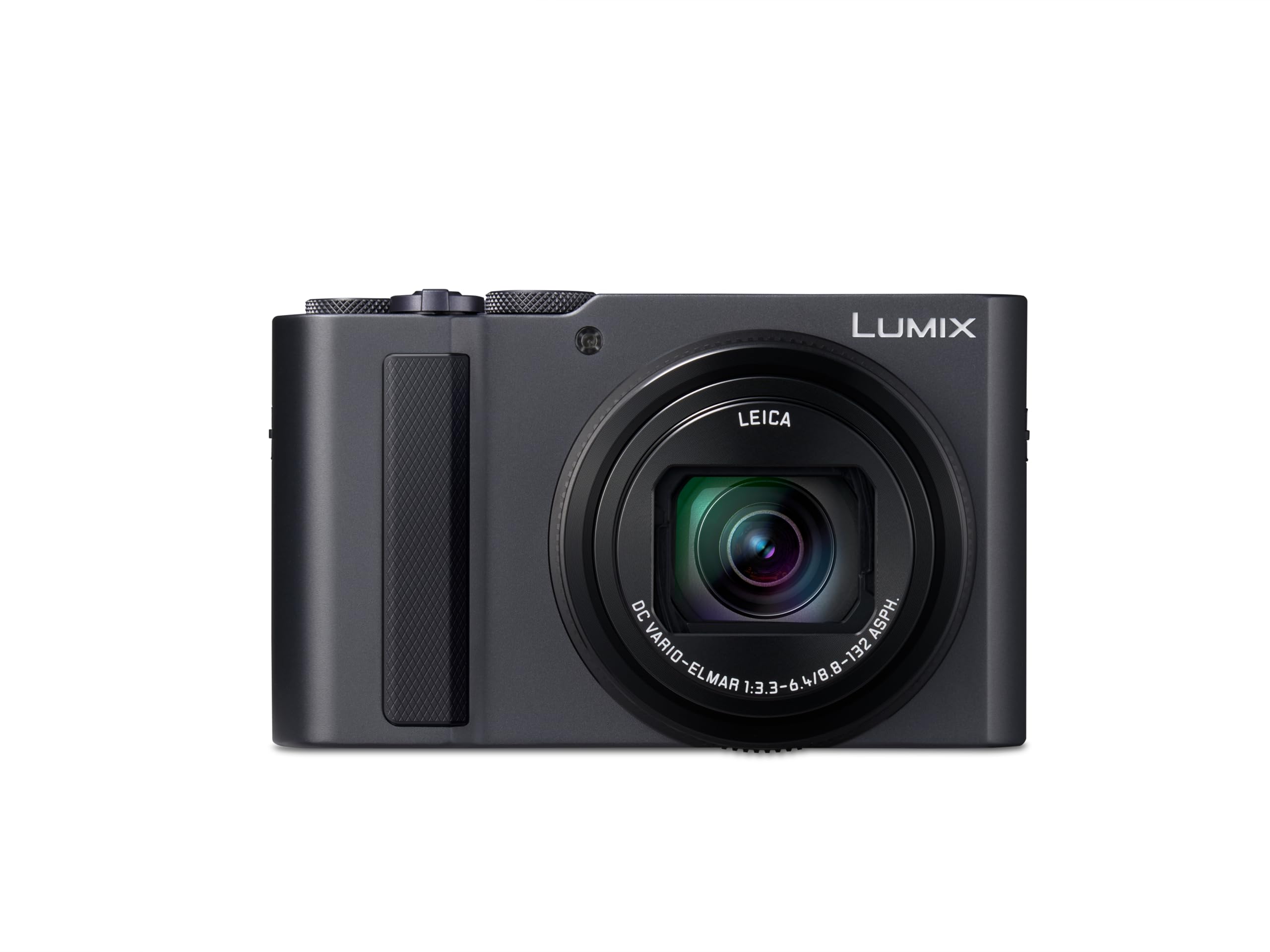
A larger 1-inch sensor that keeps the 15x zoom honest when the light drops.
The upgrade here over the ZS99 is the sensor: a 20.1MP 1-inch chip that captures more light and holds detail in dimmer rooms. You keep a 15x optical zoom covering 24-360mm, so you give up half the reach of the ZS99 but gain cleaner low-light frames. That is the core trade — reach versus light gathering — and it is why someone shooting indoor events should look here first.
Autofocus is a step up too, with 273 phase-detection points (the ZS99 uses 19). That is a big jump in how reliably the camera locks onto a moving subject, and it shows in faster, surer focus. Advanced image stabilization keeps handheld shots and clips free of blur, and AF macro focuses as close as 1.18 inches at the wide end for close-up detail. Bluetooth and Wi-Fi pairing share files to your phone, and USB Type-C charging works from a power bank.
The size is the thing owners single out most — a genuinely pocketable body with a full kit of controls, RAW support and a long zoom. The honest note is value and one missing feature: no viewfinder, and some find it on the pricier side. If you want big-sensor low light with zoom, though, this hits a useful middle.
The Case For It
- 20.1MP 1-inch sensor for brighter dim-light shots
- 273 phase-detection autofocus points lock on fast
- 15x zoom covering 24-360mm in a pocket body
- RAW support plus USB Type-C charging
Know Before You Buy
- No electronic viewfinder
- Asks a premium price, which some owners question
The natural fit: indoor-event and travel shooters who want light-gathering plus zoom.
Not for everyone because: a viewfinder fan will miss the framing window on bright days.
6. Sony ZV-1 II Premium Compact Digital Camera

An ultra-wide 18-50mm zoom built to keep your whole face in frame.
Sony aimed this squarely at creators. The 18-50mm ultra-wide zoom gets everything in the shot, and the f/1.8-4.0 aperture blurs the background for that polished vlog look. A 1.0-type sensor holds its own in low light, and Real-time autofocus with Eye-AF keeps a face sharp even as you move. The 3-capsule directional mic with a wind screen accessory captures clear audio without a separate mic for casual shooting.
The feel in the hand is light and quick — setup is fast, pairing to your phone over the app is straightforward, and it slips into a pocket. The larger sensor and wide aperture make it a strong step up from a phone for talking-head video. It records 4K with 24-bit depth, and Eye and Face detection autofocus across 315 points handles the keeps-you-sharp job.
The real talk: battery life is the most-flagged weak spot, running about an hour, so you want spares. Some owners also note the camera can turn itself on inside a bag, and a few find the stabilization soft for handheld walking shots. It is a lovely image machine that rewards a little care in how you carry and power it.
What it does beautifully: 18-50mm wide framing plus f/1.8-4.0 defocus — your face fills the frame and the background falls away.
The catch to plan around: roughly an hour of runtime and no lock switch, so carry spare batteries and keep it protected in transit.
Best matched to: solo creators filming wide, low-light talking-head video with clean built-in audio.
Consider another pick if: you shoot long sessions and want more than an hour per charge.
7. Leica V-LUX 20 Digital Camera
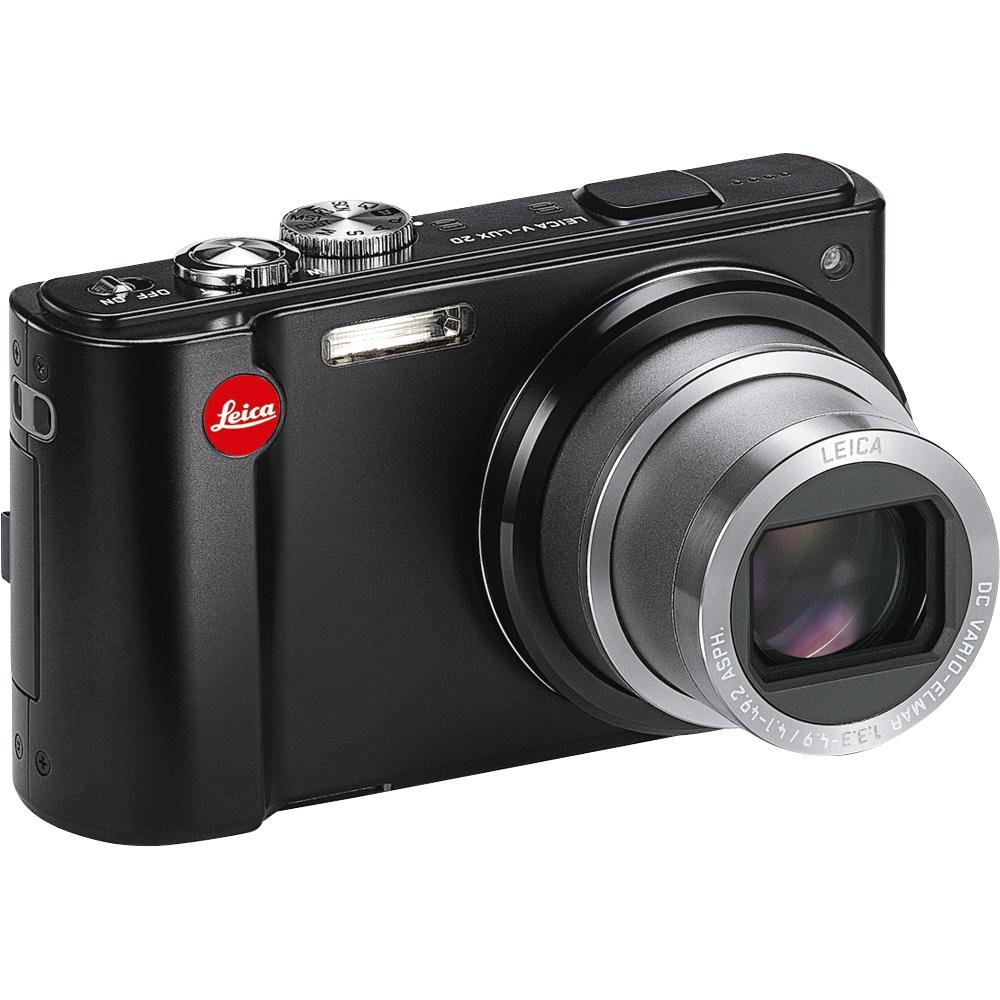
A Leica-badged travel zoom that stamps every shot with where you took it.
This is the old-school option, and it wears its age openly. A 12.1MP sensor pairs with a 12x Leica DC Vario-Elmar zoom covering 25-300mm, so you get from super-wide interiors to long telephoto in one glass. The stand-out feature is the GPS module, which tags each frame with its location — handy for travel logs and memory-keeping.
Video tops out at 720p HD, so this is a stills-first camera. It takes SD, SDHC and SDXC cards (not included) and carries the Leica name on a body that reviewers call well-built. The zoom range earns real praise for going from useful indoors to a long optical reach, with the lens staying sharp toward the tele end.
Be honest about the trade: image quality draws mixed notes, with some softness at times compared with newer compacts, and the asking price runs high for a point-and-shoot. This is for someone who wants a compact Leica lens and GPS tagging and understands that newer sensors beat it on detail. It is a characterful travel companion, not a cutting-edge performer.
Strengths In Hand
- 12x Leica DC Vario-Elmar zoom spans 25-300mm
- Built-in GPS tags each shot with its location
- Solidly built compact Leica body
Age Shows In Places
- 720p video only, no 4K
- Image quality trails newer sensors
- Asks premium money for its era
For the traveler: someone who wants a Leica lens and GPS tagging in a pocket body.
Not for the spec chaser: 720p video and a 12.1MP sensor will feel dated next to the newer picks.
8. OM SYSTEM Pen Mirrorless Camera with 14-42mm Lens

An interchangeable-lens body at 0.87lbs that swaps glass as your day changes.
The only pick here with a lens you can change, and it still weighs just 0.87lbs. Its 20.4MP Four Thirds sensor and the included 14-42mm kit lens (28-84mm equivalent) cover landscapes, portraits and travel moments. Built-in 5-axis stabilization compensates up to 5.5 stops to fight handheld shake, so slower shutter speeds stay sharp. A 121-point all-cross phase-detection autofocus system adds AI Human and Pet Detection to keep faces and animals in focus.
The controls feel like a real camera: a rangefinder-style electronic viewfinder, a physical shutter button and dials. A CP button jumps to five computational modes including Live ND and Focus Stacking, and four Color plus four Monochrome profiles let you style shots in-camera. It shoots 4K and C4K video, and IPX1-rated weather sealing gives it a bit of protection in rain.
Owners praise the performance as more capable and more fun than expected, and most count the size a plus, with one caveat that it runs a touch larger than the smallest compacts. If you want room to grow lenses, this is the one; if you want a fixed lens and nothing to swap, look at the RICOH above.
The growth path: interchangeable Micro Four Thirds mount, 0.87lb carry weight and 5.5 stops of stabilization — a system you build over time.
Size reality: it is slightly larger than the true pocket compacts, so a small bag helps rather than a snug jacket pocket.
Reach for this if: you want a light interchangeable-lens camera with stabilization and creative modes.
Look elsewhere if: you want the smallest possible fixed-lens pocket body.
9. Sony RX100 VII Premium Compact Camera
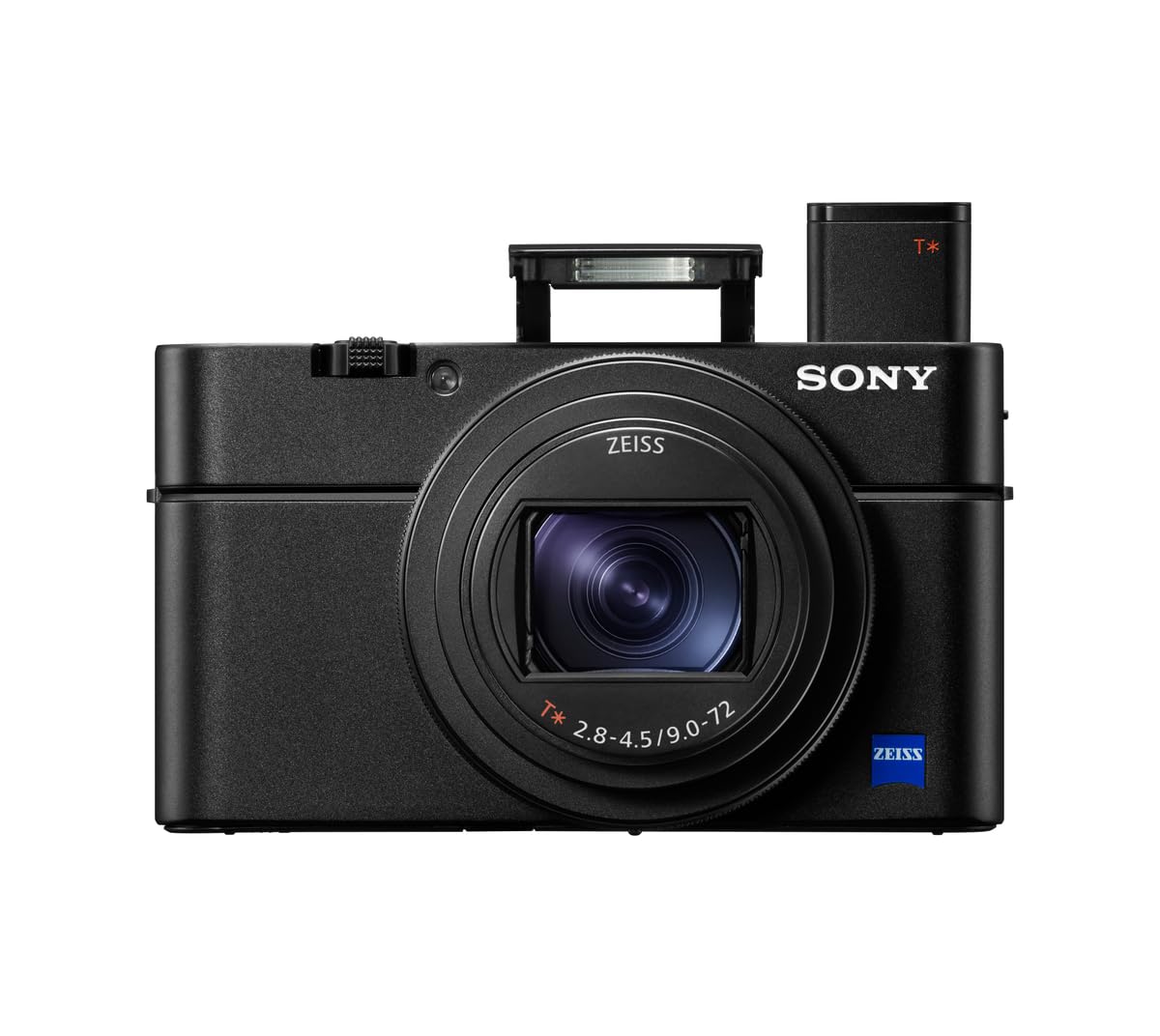
A pocket rocket built to catch fast subjects without missing the moment.
Speed is the whole story here. A 20.1MP 1-inch stacked CMOS sensor pairs with a Zeiss Vario-Sonnar T 24-200mm f/2.8-4.5 zoom. Autofocus locks in 0.02 seconds using 357 phase-detection plus 425 contrast-detection points, and blackout-free shooting runs up to 20fps with AF/AE calculations at up to 60 times per second. That is how you catch a running kid or a moving subject and still keep the frame.
AI-based Real-time Tracking follows stills and movies, with Real-time Eye AF for humans and for animals in stills. The lens reach outdistances the compact 19mm of the Canon V10 and the 18-50mm of the Sony ZV-1 II, so you frame tight from farther back. It records 4K with S-Log3, has a microphone jack, and adds Active Mode stabilization for video.
Owners agree image quality is the headline, with pocketable size close behind — it fits in a pocket and matches bigger rigs for stills and video. The honest trade is that it runs expensive and the controls are small for bigger hands. Both are size costs, not image flaws.
What Makes It Fast
- 0.02-second autofocus with 357 phase-detect and 425 contrast points
- Blackout-free shooting up to 20fps
- 24-200mm Zeiss zoom in a pocket body
- Real-time Eye AF for humans and animals
The Size Tax
- Controls are small for large hands
- Premium price for a compact
Pick it for: fast-moving subjects, travel and grab shots where autofocus speed decides the frame.
Weigh the cost if: you have large hands or only shoot slow, still scenes.
10. Leica D-LUX 7 Silver

A bright f/1.7 Leica lens that opens up dim rooms the small sensors can’t.
The lens is the argument. A 24-75mm f/1.7-2.8 Vario-Summilux with optical image stabilization lets in a lot of light, which is exactly what helps in low light. Behind it sits a 17MP Four Thirds sensor, sized well above a 1-inch chip, so dim shots stay cleaner. It shoots continuous bursts at up to 11fps and uses a 3-inch 1.24-million-dot touchscreen for quick focus changes.
The body has a full metal housing — it feels compact and sturdy in a way that reassures. USB charging works from a power bank or a PC, so topping up on the move is simple. For portraits and interiors, that f/1.7 aperture blurs background and gathers light where the small-sensor travel zooms struggle.
Know what you are buying: this is a stills camera for people who want a fast Leica lens in a pocketable metal body. It asks premium money and, being older, does not match the newest compact video features. If bright-glass low-light stills are your priority, few small cameras give you this much lens speed.
The light advantage: an f/1.7-2.8 lens on a Four Thirds sensor gathers plenty in dim rooms — the low-light reason to choose it.
Set expectations: it is a stills-first camera at a premium price, so video-first shooters should look at the Sony picks instead.
The right buyer: low-light stills shooters who value bright glass and a metal body.
Not the pick if: video features and modern connectivity are your priority.
Know the Specs
Sensor size (1-inch, APS-C, Four Thirds)
The sensor is the chip that catches light. A larger sensor like the APS-C in the RICOH or the Four Thirds in the OM SYSTEM gathers more light than a small one, so photos stay cleaner indoors and after dark. A 1-inch sensor sits in the middle — bigger than a phone, smaller than APS-C. When two cameras share a megapixel number, the one with the bigger sensor usually wins on detail and low light.
Focal length and zoom (mm and “x”)
A focal length in millimetres tells you how much of a scene the lens frames. Small numbers like 19mm or 24mm go wide and fit a whole room; larger numbers zoom in on distant subjects. A “30x” zoom means the long end is thirty times the wide end, like the 24-720mm on the ZS99. More zoom means more reach, but it can mean a smaller sensor to fit that range.
Aperture (f-numbers)
A lower f-number means a wider lens opening that lets in more light — f/1.7 gathers more than f/2.8. It also blurs the background more for portraits. A bright lens like the f/1.7-2.8 on the Leica D-LUX 7 is why it handles dim rooms well. A higher f-number like f/5.6 means less light and more of the scene in focus.
Autofocus points and image stabilization
Autofocus points are the spots the camera checks to lock focus; more points, such as the 273 on the ZS300S, tend to mean surer focus on moving subjects. Image stabilization counteracts hand shake so slower shutter speeds stay sharp — the OM SYSTEM’s 5-axis system compensates up to 5.5 stops. Both matter most for handheld shooting and video.
Common Questions
Is a 1-inch sensor good enough for low light indoors?
How much zoom do I need for concerts and travel?
Will a small camera actually fit in my pocket?
Do I need RAW files or is JPEG enough?
How long does the battery last on a compact camera?
Is a fixed lens or a zoom better for beginners?
What does image stabilization actually do for handheld shots?
Can these small cameras shoot 4K video?
How many autofocus points should I look for?
Is a smaller sensor worth it for travel convenience?
The Bottom Line
For most people shopping for a small high quality camera, the winner is the RICOH GR IIIx HDF because its 24.2MP APS-C sensor packs large-camera detail into a genuinely pocketable body. If video of yourself is the goal, grab the Canon PowerShot V10 for its 4K and built-in stand. And for reaching across a stadium or a scenic vista, the Panasonic LUMIX TZ/ZS99 is the one to reach for with its 30x zoom. Whichever you pick, match the sensor and lens to how you actually shoot, and you will carry it more often than a bigger rig.
How we choose
We do not accept paid placement. Every pick is matched to a real buyer and a real use-case; we do not hands-on test units.
Sources
Specifications: manufacturer listings and product documentation. Review insights: verified customer reviews, as of November 2026. Pricing: not shown on this page (it changes often); check the current price via the retailer link.
As an Amazon Associate, Tactical Gear Guy earns from qualifying purchases. This does not affect which products we feature.