Specs are compiled from manufacturer listings and verified buyer reviews and can change over time — please confirm the key details on the product page before buying.
You want a freezer that actually freezes, a fridge that fits the gap by your desk, and no ice sculpture growing on the back wall. That is the whole job of a small double door fridge, and it is harder to get right than the listings suggest. Two doors mean the freezer section keeps its own cold air instead of borrowing it from the fresh food side, which is why your ice cream stays solid and your lettuce does not turn to slush.
This guide is built by comparing the manufacturers’ published specifications and the patterns across verified customer reviews, so you get each pick’s real strengths and trade-offs instead of marketing spin.
Below you will find the capacity splits, the thermostat ranges, the noise figures and the defrost realities that decide whether a compact fridge suits your room or fights it. Every pick here is a genuine two-door compact unit, and each one is matched to the space and the job it does best. Here is the honest shortlist of the small double door fridge options worth measuring your gap for.
Top Picks
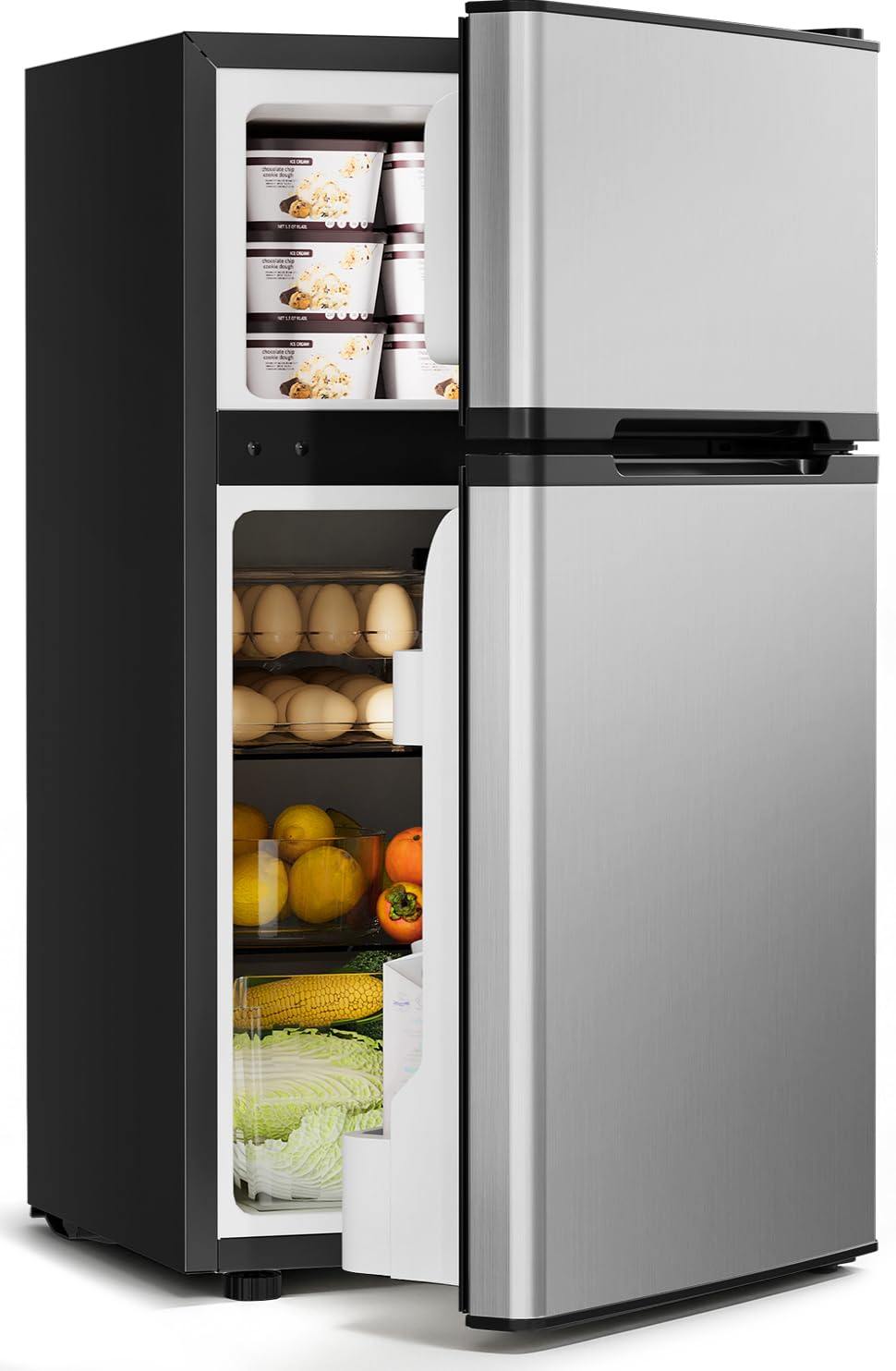
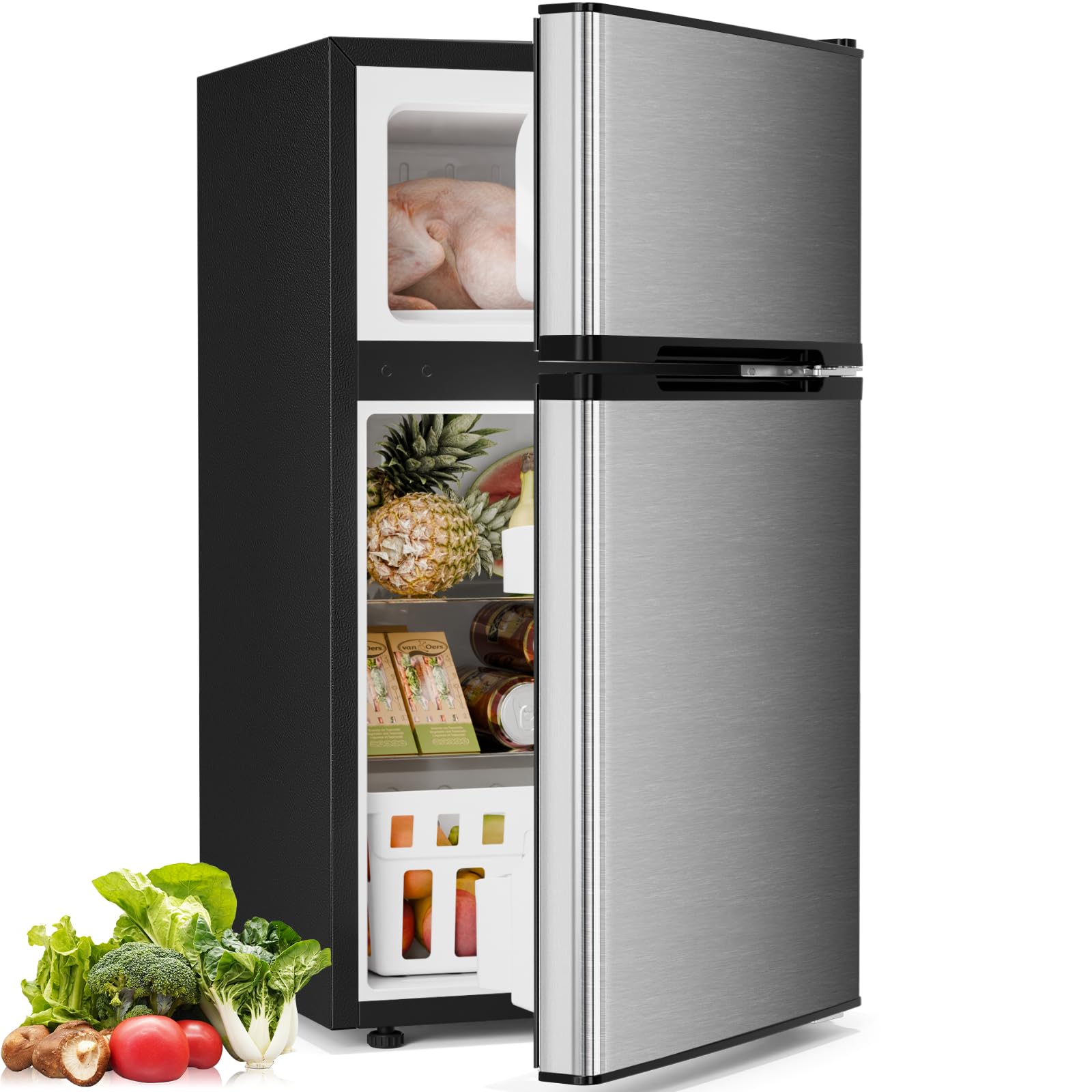

How To Choose The Best Small Double Door Fridge
Start with the hole you are filling. Measure the width, the depth and the height of the gap before you read a single listing, then check the fridge against those three numbers. A compact two-door unit can be anywhere from roughly 16 inches wide to over 19 inches, and that difference decides whether it slides under a counter or blocks a doorway. Depth matters just as much once the door swings open, so leave room for the arc.
Split the capacity, not just the total
A 3.2 cu. ft. total usually breaks into something close to 2.2 cu. ft. of fridge and 0.9 cu. ft. of freezer. That freezer number is the one people forget to check. If you store frozen meals, ice cream and a bag of frozen vegetables, a freezer near 1 cu. ft. fills fast. Units that step up to a 1.8 cu. ft. freezer give you real room for frozen goods, but they also grow taller and deeper, so the trade is space for space.
Know your defrost before you buy
Most compact two-door fridges use manual defrost, which means frost builds on the freezer walls and you clear it out periodically. A partial automatic defrost system keeps the fresh food section frost-free while the freezer still needs a manual cycle. If you hate scraping, that partial automatic setup on the GE pick is the feature to hunt for. If you can live with an occasional thaw-and-wipe, manual defrost keeps the cost and the complexity down.
Match the noise figure to the room
A fridge rated at or under 38 dB is quiet enough that most people stop noticing it in a bedroom or a small office. Anything described as simply “quiet” without a figure is a coin flip. The compressor brand and the refrigerant type also shape how quickly the unit pulls down to temperature, and a faster pull-down means less compressor run time and a lower annual energy figure. Check the yearly kilowatt-hour number when it is listed, because that is the running cost in plain sight.
Side-by-Side Comparison
| Model | Best For | Total / Freezer Capacity | Defrost System | Noise Rating | Amazon |
|---|---|---|---|---|---|
| Feelfunn 3.2 Cu.Ft★ Best Overall | All-round compact pick | 3.2 cu. ft. / 0.96 cu. ft. | Manual | ≤38 dB | Amazon |
| Antarctic Star 3.2 Cu.FtBest Value | Lowest yearly energy draw | 3.2 cu. ft. / 0.96 cu. ft. | Manual | Not listed | Amazon |
| Kismile 3.2 Cu.FtTop Performer | Separate zones on a budget | 3.2 cu. ft. / 0.9 cu. ft. | Manual | ≤38 dB | Amazon |
| Electactic 2.5 Cu.Ft | Tightest spaces | 2.5 cu. ft. / 0.65 cu. ft. | Manual | <38 dB | Amazon |
| Manastin 3.6 Cu.Ft | Seven-level thermostat control | 3.6 cu. ft. / 1 cu. ft. | Manual | Not listed | Amazon |
| Cucina Magica 4.2 Cu.Ft | Large capacity in a narrow column | 4.2 cu. ft. / 1.8 cu. ft. | Manual | Not listed | Amazon |
| Anypro 3.2 Cu.Ft Retro | Colour and style | 3.2 cu. ft. / 1.1 cu. ft. | Manual | 38 dB | Amazon |
| Manastin 4.5 Cu.Ft | Biggest fresh-food zone | 4.5 cu. ft. / 1 cu. ft. | Manual | Under 38 dB | Amazon |
| TACOOL 5.0 Cu.Ft | Tallest freezer space | 5.0 cu. ft. / 1.8 cu. ft. | Manual | Under 40 dB | Amazon |
| WANAI 5.0 Cu.Ft | Moving-day wheels | 5.0 cu. ft. / 1.8 cu. ft. | Manual | Not listed | Amazon |
| GE 3.1 Cu.Ft | Partial automatic defrost | 3.1 cu. ft. / 0.93 cu. ft. | Partial automatic | Not listed | Amazon |
Detailed Reviews
1. Feelfunn 3.2 Cu.Ft Mini Fridge
Our pick — 4.5+★ from 250+ verified ratings; the strongest balance of quality and price.
The two-door compact that splits 3.2 cu. ft. into a real fridge and a real freezer.
You get 2.24 cu. ft. of fresh food space and 0.96 cu. ft. of freezer in a body that takes up just 2.44 sq. ft. of floor. That footprint is the reason this one works in a dorm, a garage corner or an RV aisle where a wider unit simply will not go. The silver stainless-steel door and the reversible hinge mean you can hang it left or right to suit the wall your power outlet lives on.
Temperature runs on three thermostat levels, holding the fridge between 32°F and 50°F and the freezer between 21.2°F and -0.4°F. That freezer range is cold enough to keep ice cream solid and frozen meat safe, which is exactly where budget single-door units fall down. It draws 356 kilowatt hours per year, and the R600a compressor keeps the whole thing running at or under 38 dB — quiet enough that most people stop hearing it after the first night.
The 2.44 sq. ft. footprint is the draw: it slides into a dorm, garage corner or RV aisle while holding drinks, produce and frozen goods at once. Shelves are adjustable glass, there is a dedicated crisper drawer for produce, and the LED light comes on when you open the door for a late-night reach without the overhead light. What you should know going in is that this is a manual-defrost unit, and like most of the category it can build a little ice on the back wall even on a low setting. That is a periodic wipe-down job, not a flaw unique to this fridge.
two-door freezer split
- 0.96 cu. ft. freezer that genuinely holds frozen food, not just an ice tray
- Just 2.44 sq. ft. of floor space with a reversible door
- 32°F–50°F fridge and 21.2°F to -0.4°F freezer on a three-level dial
- Runs at or under 38 dB, so a bedroom placement is realistic
- Crisper drawer plus adjustable glass shelves for tall bottles
tight freezer space
- Manual defrost, so the back wall needs an occasional clear-out
- Needs 6–12 hours upright after delivery before you plug it in
- Fresh food capacity is the smaller share of the 3.2 cu. ft. total
dorm rooms: anyone who needs one fridge to do both jobs in a genuinely tight footprint — students, garage owners, RV travellers.
warm climates: you refuse to scrape frost ever; the manual defrost here is a task you own.
2. Antarctic Star 3.2 Cu.Ft Mini Fridge
Same 3.2 cu. ft. shell as the winner, with a lower yearly energy draw.
Here is the head-to-head worth knowing: this fridge sips 300 kilowatt hours per year against the Feelfunn’s 356, so over the life of the appliance you are feeding it less electricity. The capacity split is identical at 0.96 cu. ft. of freezer and 2.24 cu. ft. of fridge. It also claims room for 120 standard 330ml cans, which is the sort of number that matters when the fridge is really a drinks station for a game room or an office kitchen.
The thermostat is a simple three-position dial, running the fridge from 32°F to 50°F and the freezer from 3°F down to -1°F. A removable slide-out glass shelf lets you drop the divider to fit tall bottles — the lower shelves take a 33oz Smart Water bottle standing upright, which is a taller ask than it sounds. The finish is a sleek black exterior in the listing with recessed styling and no badge on the front, so it blends into a room rather than announcing itself as an appliance.
What you should plan for is the noise question. Owners are split on how loud it runs, and a fridge that sits a metre from your pillow is a different proposition from one in a dorm hallway. The freezer also sits at the shallower end of cold for some owners, and the door seal is the first thing to check on arrival. Buy this one for a kitchenette, a workshop or an office where the compressor hum is background noise.
low power draw: at 300 kilowatt hours per year it is the lightest running cost in the 3.2 cu. ft. group, and the capacity split matches the top pick exactly.
thin door seal: noise is the most argued-over point in this fridge’s reviews — it is a fine kitchenette unit and a risky bedside one.
garage use: a drinks-heavy setup where you want the lowest yearly energy figure in the compact class.
freezer-heavy use: the fridge has to share a wall with your headboard.
3. Kismile 3.2 Cu.Ft Mini Fridge
A counter-friendly double door that fits under the garage cabinets and keeps its cool.
The strongest argument for this fridge is the door separation itself. Because the freezer and the fridge run as independent zones, changing the freezer dial does not turn your drinks to ice — a problem that shows up constantly on single-door units. That split is what makes a 3.2 cu. ft. fridge usable for mixed storage: 0.9 cu. ft. of freezer up top for meat and frozen goods, 2.27 cu. ft. of fridge below with crisper drawers for produce and door racks with rails for bottles and cans.
The mechanical three-speed knob runs the freezer between -1°F and 3°F and the fridge between 32°F and 50°F. It draws 356 kilowatt hours per year, matching the Feelfunn, and runs at or under 38 dB. The body measures 18.9 inches deep, 18.1 inches wide and 33.5 inches tall, which is the sort of box that slides under a garage counter or into a semi-truck sleeper. LED lights inside come on with the door, so a night-time reach for a can does not need the room light.
This is a compact that people quietly park in unusual places — under garage cabinets, in truck cabs, on an outside table for camping. It is a workhorse rather than a showpiece, and the deep black finish keeps it neutral anywhere. The one thing to brace for is the same manual defrost routine as the rest of the class, plus the 6-to-12-hour upright settling period before first plug-in so the compressor oil can drop back down.
bedrooms: you want true zone separation — frozen food on top, drinks that stay liquid below — in a body that hides under a counter.
large families: you expect frost-free operation straight from the box.
4. Electactic 2.5 Cu.Ft Mini Fridge

The smallest package here, for a dorm room where every inch of floor is spoken for.
When the space is genuinely tiny, 2.5 cu. ft. total is the number that fits. The split is 0.65 cu. ft. of freezer and 1.85 cu. ft. of fridge, so this is a personal-sized unit for one person’s drinks, snacks and a couple of frozen meals rather than a household shop. Built-in leveling feet keep it steady on uneven dorm or garage floors, and it is designed to be shifted without heavy lifting.
The thermostat knob runs the fresh section from 32°F to 50°F and the freezer from -4°F to 32°F, with an R600 high-efficiency compressor pulling it down fast. Noise is listed at under 38 dB, which is the bedroom-safe end of the range. It draws 350 kilowatt hours per year. Adjustable glass shelves let you drop a divider for tall bottles, and the interior light means you can find things without turning on the room lights. The included ice tray is a small but welcome add-on for a fridge with a freezer this size.
Buyers tend to single out the build first and the performance second — this feels like a sturdier box than its size suggests, and it handles a garage-overflow role without complaint. What it is not is frost-free. There is no automatic defrost, so the freezer wall is your responsibility. Set expectations there and the rest is a quiet 2.5 cu. ft. second fridge for one person’s drinks and snacks.
compact footprint
- 2.5 cu. ft. total with a real 0.65 cu. ft. freezer section
- Under 38 dB — a realistic bedside or study candidate
- Leveling feet plus a light body for easy repositioning
- Ice tray included, which the larger picks here do not always bundle
limited shelving
- 0.65 cu. ft. of freezer fills fast if you buy frozen in bulk
- No auto defrost, so the freezer needs a manual clear-out
tight kitchens: one person, one room, one small corner — a dorm or studio where a bigger box is impossible.
bulk groceries: anyone feeding a family from the freezer compartment.
5. Manastin 3.6 Cu.Ft Mini Refrigerator
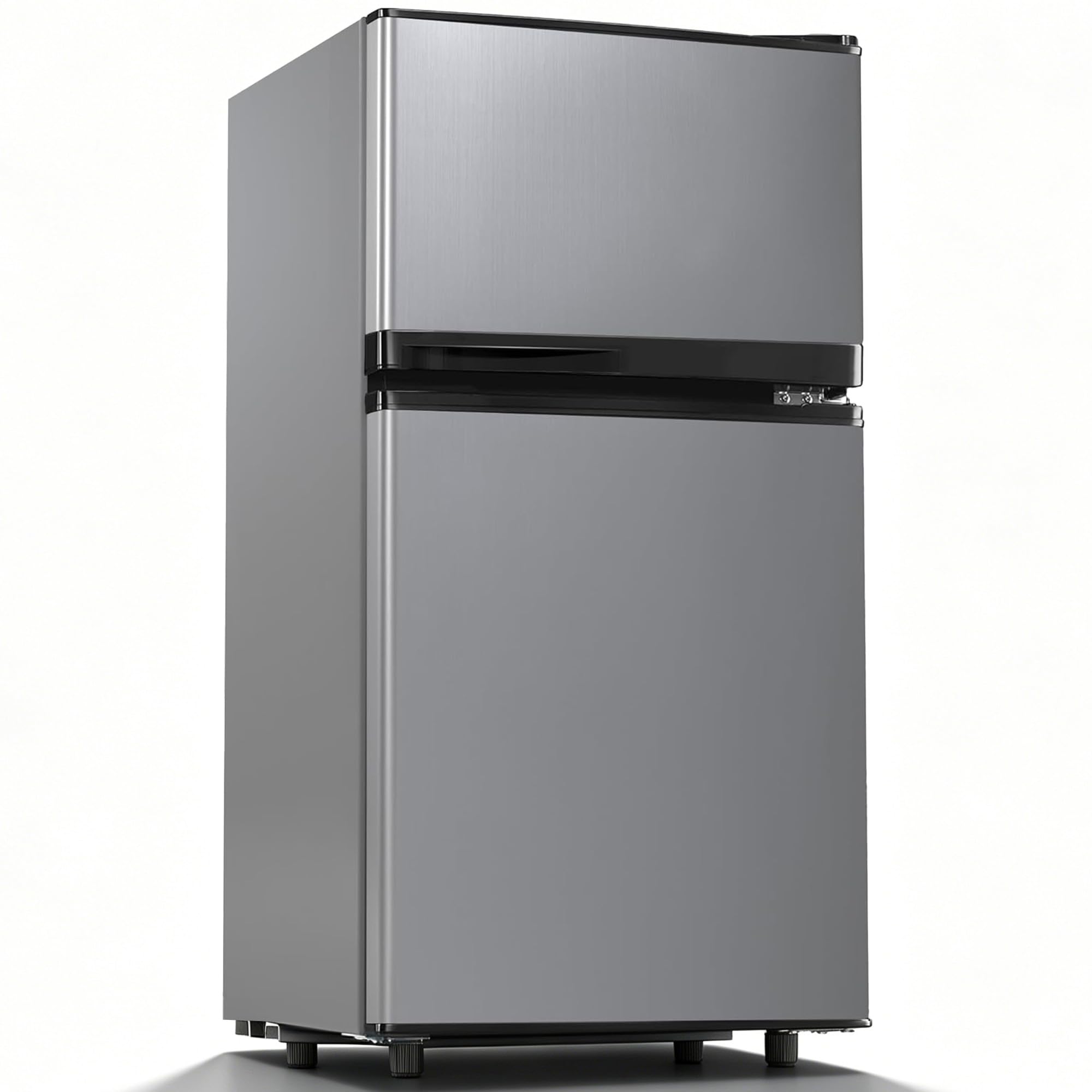
Step up in size and step up in control, with seven dial positions instead of the usual three.
A 3.6 cu. ft. total with a full 1 cu. ft. freezer is the calling card here — that is more frozen room than the 3.2 cu. ft. group gives you, and it means a boxed meal or a tub of ice cream does not eat the entire compartment. The seven-level thermostat is the feature that separates it from most of this list. Standard compact units run 3 or 5 positions; seven gives you finer steps between “barely cool” and “properly cold” for meat, drinks and daily essentials.
It is built with removable glass shelves and a transparent crisper drawer that holds moisture in for fruits and vegetables. The annual energy figure is 320 kilowatt hours per year, and a low-noise compressor keeps the hum under control for bedroom and office use. The door holds four shelves’ worth of bottles and jars. The unit is right-hinged, so plan your layout around a door that opens one way rather than either.
Owners here tend to lead with the build quality and the size — the phrase that keeps coming back is that it just feels like a proper small fridge rather than a toy. The honest caveat is delivery and setup: it ships direct from the maker, needs six hours standing upright before you plug it in, and a rare unit arrives with a fault or a dented panel. Inspect the door seal and panel the day it lands, since a rare unit arrives with a fault or a dent.
tall bottle room: a 1 cu. ft. freezer plus a seven-position dial is genuinely more control and more frozen space than the 3.2 cu. ft. picks, in a body that still fits a dorm or office footprint.
heavy when loaded: is it cold enough? That is the one point buyers argue about, so give it a full settling period and check the door seal on arrival.
office kitchens: you want more frozen room and finer temperature control than a three-dial compact offers.
carrying upstairs: you need a door you can hang either way, since this one is right-hinged.
6. Cucina Magica 4.2 Cu Ft Mini Fridge
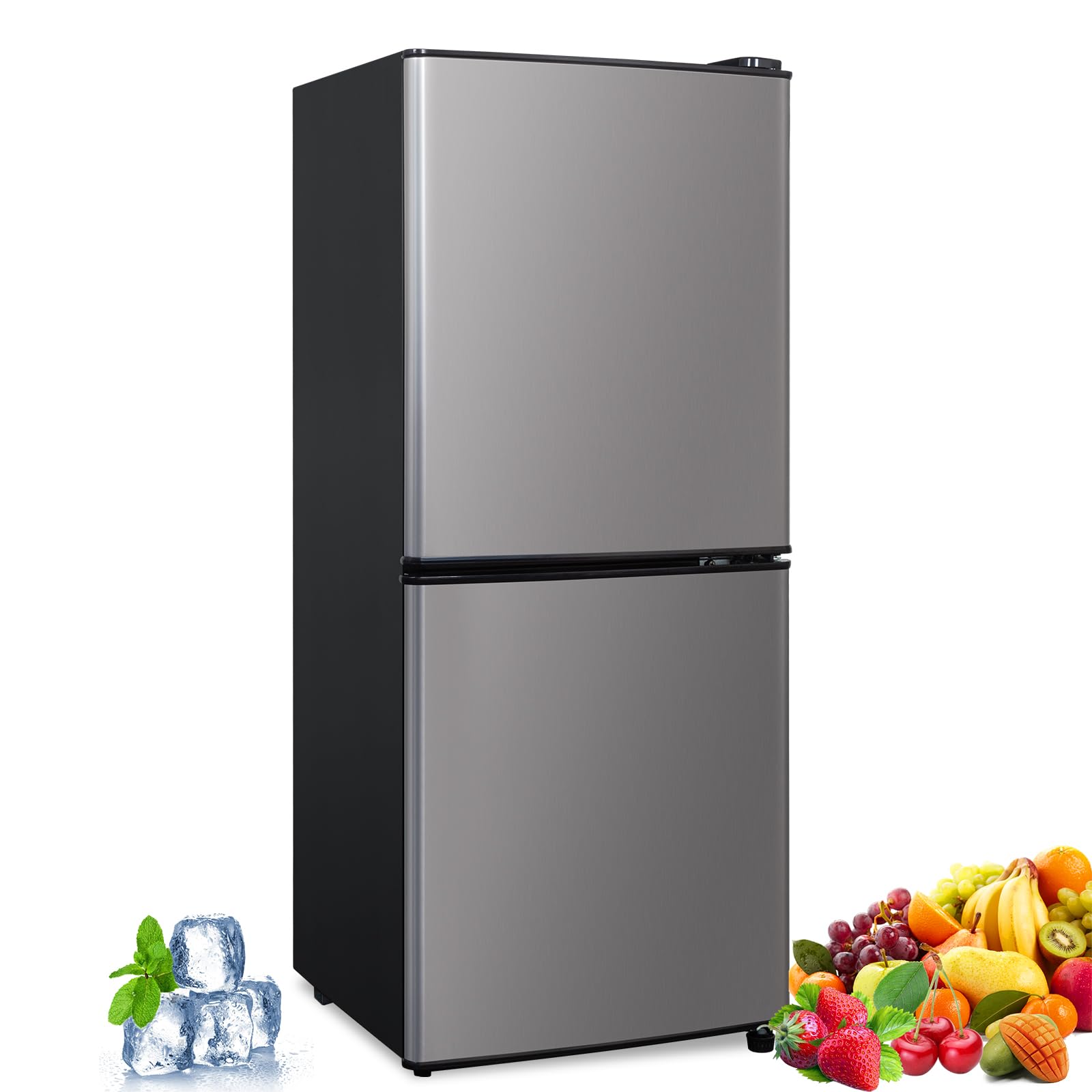
Serious freezer volume squeezed into a column barely 17 inches wide.
If frozen food is the main event, look at the split: 1.8 cu. ft. of freezer and 2.4 cu. ft. of fridge inside a 4.2 cu. ft. total. That 1.8 cu. ft. freezer is roughly double the frozen room of the 3.2 cu. ft. leaders, and it is why this fridge handles a dorm student who actually uses the freezer rather than just keeping a tray of ice. The footprint is genuinely slender at 16.2 inches deep and 16.6 inches wide, though it stands 39.4 inches tall, so it needs vertical clearance under a shelf or in an alcove.
The freezer holds at or below 6.8°F, and the fresh section runs 32°F to 41°F with seven variable settings and a ±1°F tolerance. That tight tolerance is what you want if you are storing meat and milk rather than just drinks. It is a freestanding unit with a right-hinged door and manual defrost, and the listing is explicit that proper ventilation is required to keep the cooling steady — do not box it in.
This is the fridge that suits a welding shop, a cargo van shelf, or a college room where the freezer needs to hold real food. It is quiet in normal running and the design is clean enough that it reads as a proper appliance. The recurring gripe is damage in transit — the odd unit lands with a dented front panel — so photograph the box before you open it and inspect the door face first. The broader point is that frost is a hands-on chore here, same as most manual-defrost locks in this class.
shared homes: frozen storage is what you actually use — 1.8 cu. ft. of it, in a column that is only 16.6 inches wide.
studio flats: you cannot give it breathing space; it needs airflow around the back to hold temperature.
7. Anypro 3.2 Cu.Ft Retro Fridge
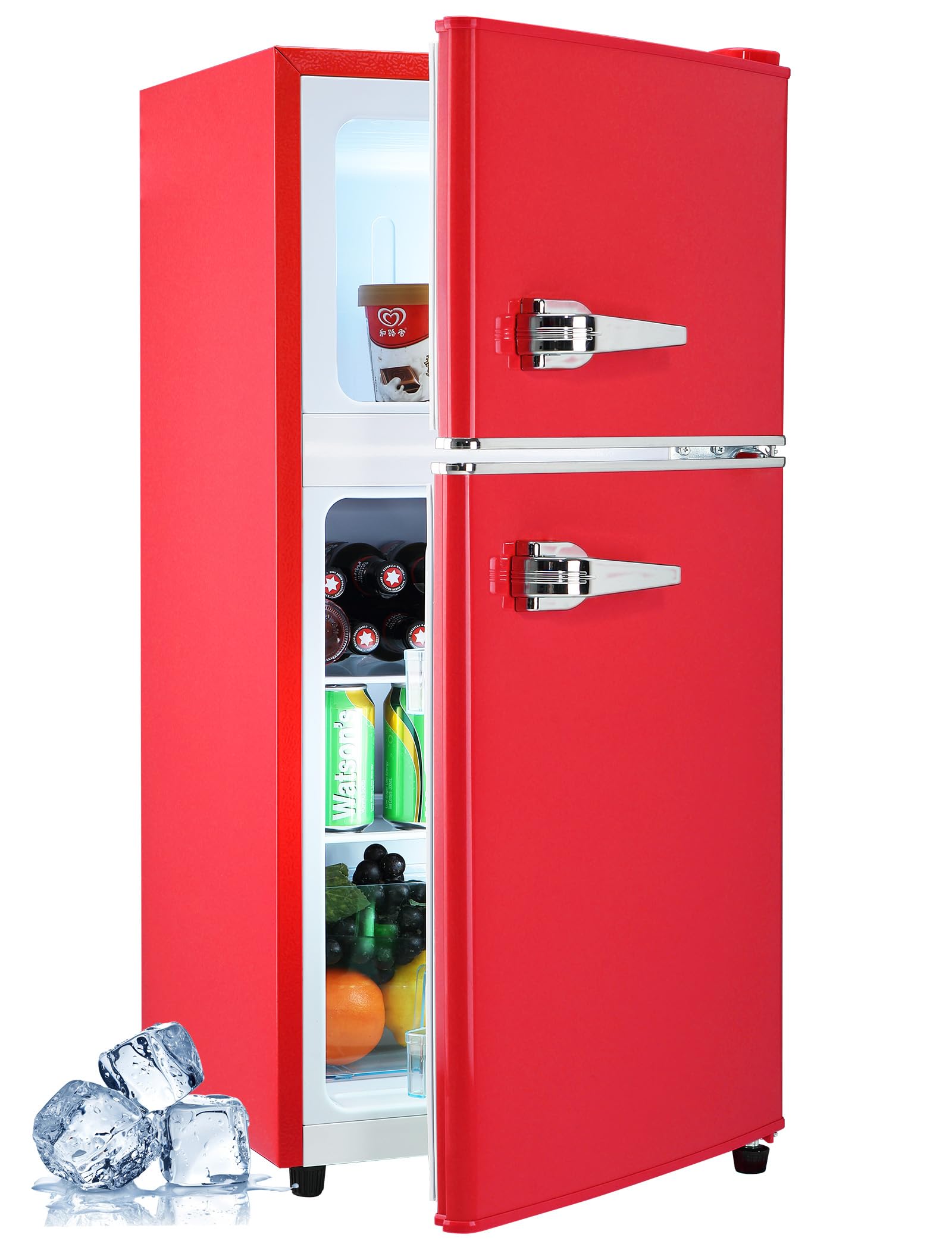
A red retro double-door that looks like decor and still keeps the beer fridge cold.
Very few compact fridges make you pause to look at them, and this is one. The retro body in gloss red sits 16.69 inches deep, 17.51 inches wide and 34.17 inches tall, so it tucks into a teen’s room or an apartment corner without shouting appliance. The capacity is 3.2 cu. ft. split into 2.1 cu. ft. of fridge and 1.1 cu. ft. of freezer — a slightly larger freezer share than the 3.2 cu. ft. leaders, which is why the frozen compartment feels roomy for one person.
Control is a seven-position thermostat running from -4°F to 32°F, with LED interior lighting so you can grab a late-night snack without switching on the room light. It uses R600a refrigerant and a rotary scroll compressor, runs on 110V/60Hz, and lists 300 kWh annual consumption and a noise figure of 38 dB. Two removable glass shelves adjust for tall items, and the side door has an egg rack and a drink rack plus a fenced produce area.
Most owners here are buying for the look — a teen’s downstairs room, a beer fridge for hosting, a kitchen accent — and on that front it delivers. The trade you are making is that temperature control is the contested area: some units hold beautifully, a few have run warm or had a seal issue that needed a replacement unit. Order it early enough that you can test the seal before you rely on it, and keep the door closed during the first cold pull-down.
retro red finish
- Retro gloss red finish that reads as furniture, not appliance
- 1.1 cu. ft. freezer — larger than most 3.2 cu. ft. rivals
- Seven thermostat positions from -4°F to 32°F
- Ice cube tray and defrost scoop included
noisy compressor
- Temperature consistency is the most debated point in this fridge’s reviews
- Manual defrost, and the door seal is worth checking on arrival
- Right-hinged door, so your layout has to work with that
style-first buyers: the fridge is visible and you want it to look good — a retro red accent that still holds 1.1 cu. ft. of frozen food.
light sleepers: you need lab-grade temperature certainty; give it a week of testing before you trust it.
8. Manastin 4.5 Cu.Ft Mini Fridge
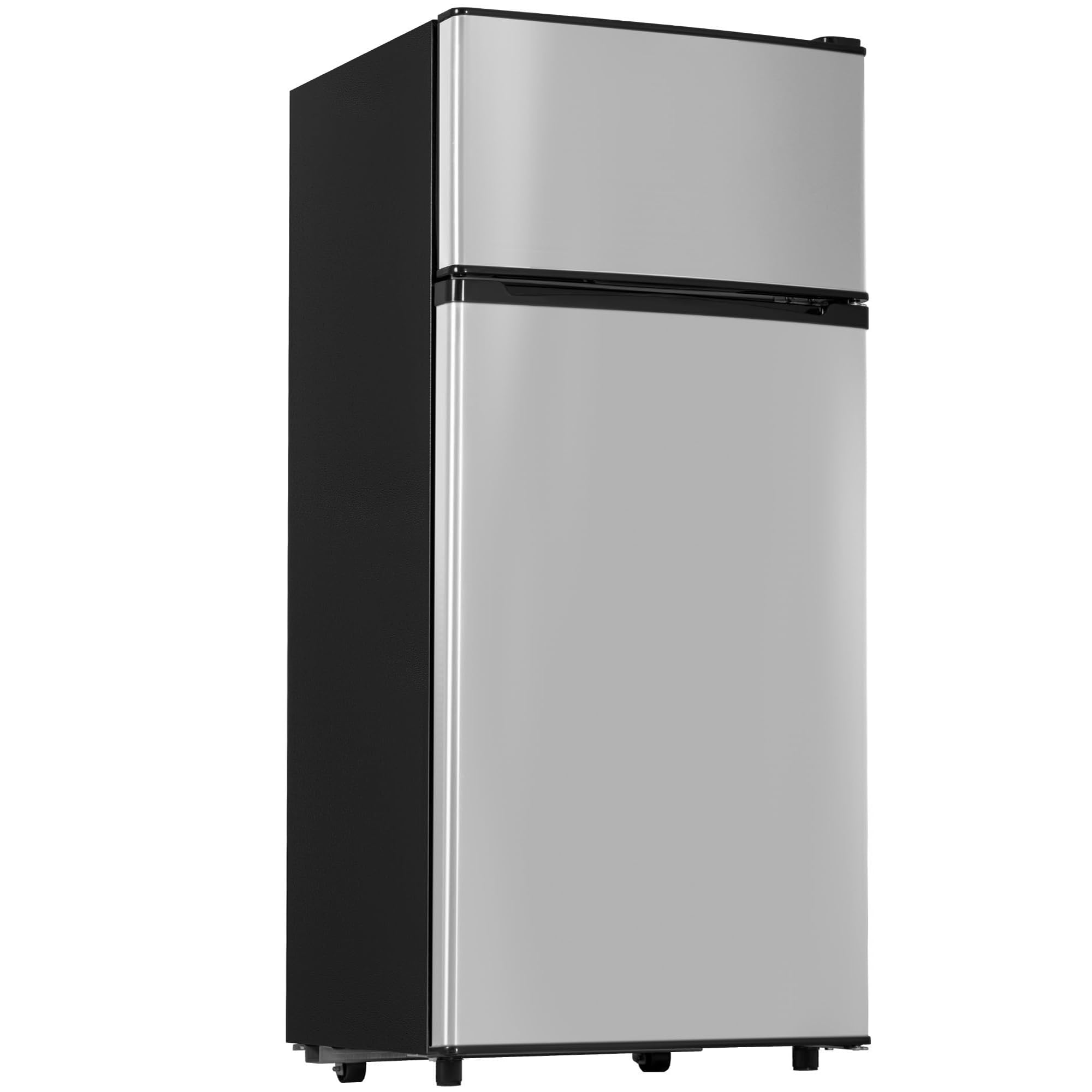
The fresh-food-heavy option: 3.5 cu. ft. of fridge to 1 cu. ft. of freezer.
Most double door compacts split roughly two-thirds fresh to one-third frozen. This one goes further — 4.5 cu. ft. total split into 3.5 cu. ft. of fridge and 1 cu. ft. of freezer. That means a full weekly shop of drinks, produce and leftovers fits in the fresh section while the freezer handles the frozen side separately. It draws just 181 kilowatt hours per year, which is the lowest annual figure on this list by a clear margin, and that matters if the fridge runs around the clock in a spare room.
The two-door layout keeps the freezer air away from the fridge air, so odours do not cross over — the reason a cut onion does not flavour your ice. Seven thermostat levels let you tune the chill, and three adjustable glass shelves plus a clear crisper drawer let you set the layout. The low-noise compressor runs under 38 dB. Door bins are structured for bottles and jars, and there is LED interior lighting. Leveling feet keep it flat on a garage or dorm floor.
For a small household, 3.5 cu. ft. of fresh food is enough for a full weekly shop of drinks, produce and leftovers. Some buyers use it for a parent’s assisted-living room, others for a dorm — the common thread is wanting fresh food volume, not just freezer space. The caveat is frost: this is not a self-defrosting unit, and ice can build up over weeks if you leave it. Plan a defrost day into your routine and it stays easy.
weekly shoppers: a couple or a student who keeps more fresh food than frozen and wants the lowest yearly energy draw here.
tiny apartments: you hate defrosting; frost builds over time on this manual unit.
9. TACOOL 5.0 Cu.Ft Small Refrigerator
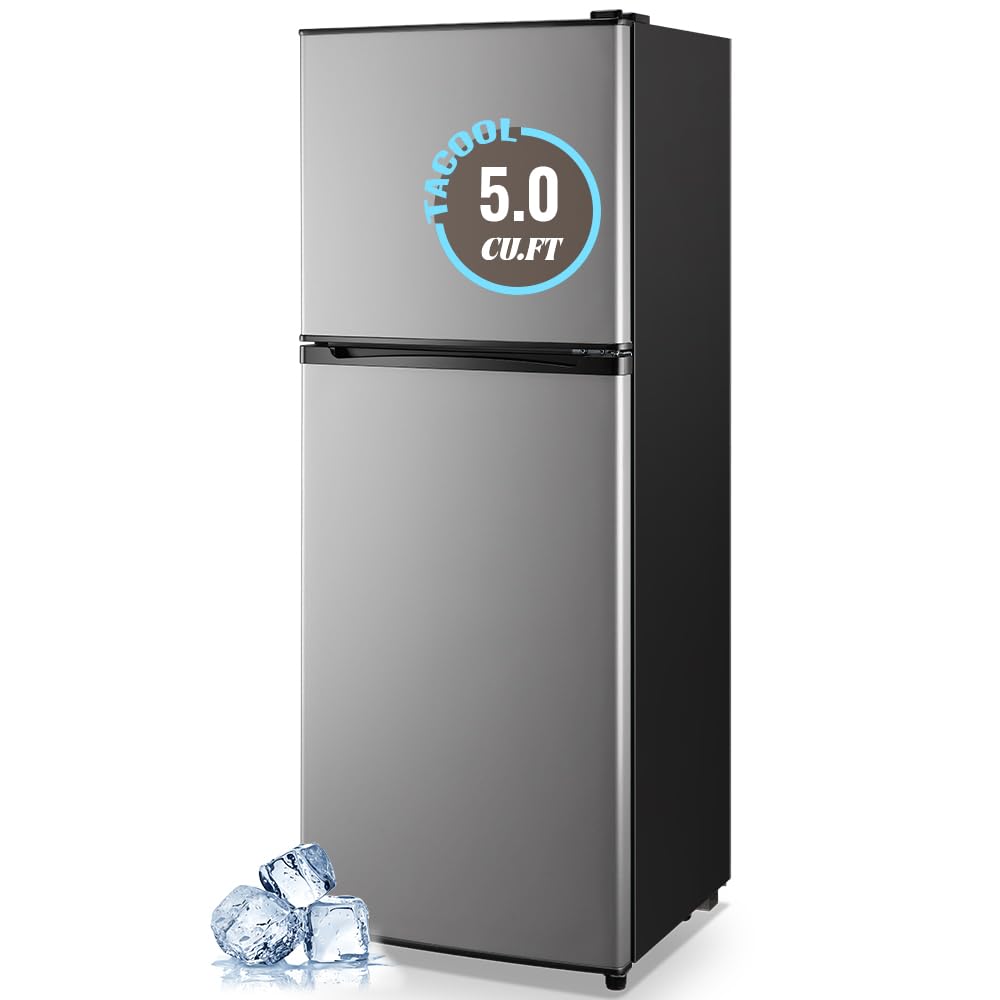
Five cubic feet, a 1.8 cu. ft. freezer and a footprint narrower than a doorway.
The headline is the top freezer: 1.8 cu. ft. of frozen space above a 3.2 cu. ft. fresh section, in a 5.0 cu. ft. total. That is the biggest freezer split here alongside the WANAI below, and it is the right shape for anyone who cooks from frozen. The 360° cold circulation system pushes air around so the temperature stays even across shelves rather than stratifying cold at the bottom.
Seven thermostat settings run the fridge from 41°F to 50°F and the freezer all the way down to -0.4°F. It holds a quiet profile under 40 dB, and there are four removable shelves plus door drink holders and a freshness drawer for produce. The body measures 17.72 inches deep, 17.52 inches wide and 47.64 inches tall, so measure ceiling clearance before you commit to a spot. Setup is simple — wheels help you push it into place.
What buyers like is the 1.8 cu. ft. freezer stacked over 3.2 cu. ft. of fridge in a 17.52-inch-wide column. Owners describe using it for a single person in a bedroom or camper, and the quiet running comes up again and again. The catch is the same manual defrost frost build-up, plus delivery packaging that occasionally leaves a dent in the door — check the box on arrival. Give it the recommended 24 hours upright before you plug it in.
five cubic feet: 1.8 cu. ft. of freezer in a 5.0 cu. ft. fridge, tall rather than wide — a 17.52-inch-wide column with real frozen capacity.
bulky door swing: it stands 47.64 inches tall, so plan for overhead clearance, and inspect the door for shipping dents on day one.
family kitchens: frozen food is a big part of your week and you have the height clearance for a tall, narrow column.
narrow hallways: your space is under a low counter; this one stands nearly four feet tall.
10. WANAI 5.0 Cu.Ft Small Refrigerator
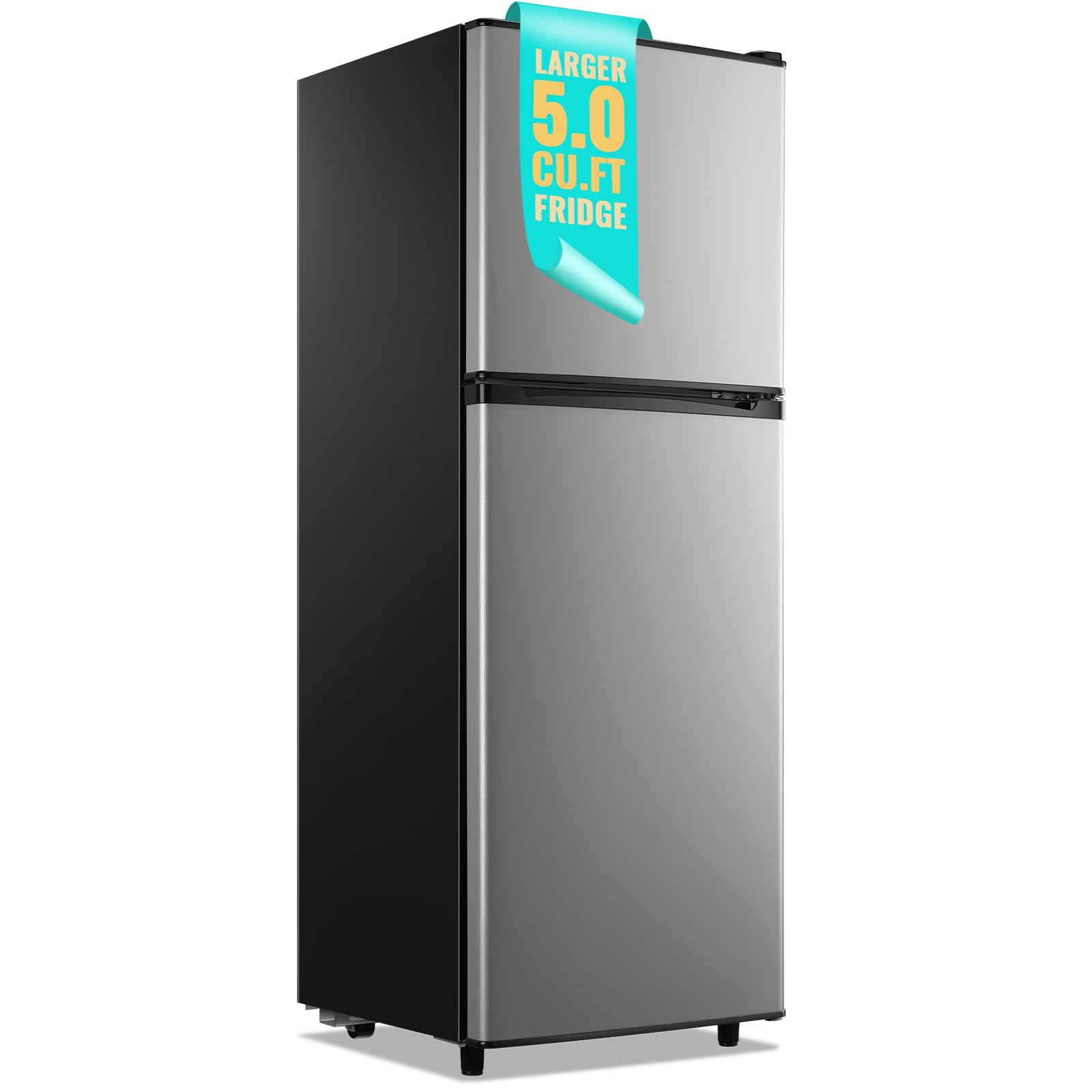
Two wheels and two leveling legs, so you can slide it around the kitchen without a helper.
Same 5.0 cu. ft. total and same 1.8 cu. ft. freezer as the TACOOL, but this one is built for people who move it. Two wheels at the back plus two adjustable leveling legs at the front mean you tilt and roll it into a new spot before setting it flat. That is a small design choice with a real payoff in a rented apartment or a workshop where you rearrange cabinets.
The seven-position thermostat swings from -0.4°F up to 50°F, with a built-in LED light and removable shelves plus a crisper drawer for produce. The silver body is a compact two-door with the freezer compartment on top and the fresh section on the bottom, so frozen and fresh air stay apart. Setup notes are the strictest on this list: the maker asks for 24 hours upright before plugging it in, so plan delivery like a piece of furniture rather than a gadget.
This is the value-minded big-capacity pick next to the TACOOL, with the wheel-and-leg pair as its practical edge. It suits someone who needs the frozen volume but whose kitchen layout shifts with the seasons. The one caution is the setup window: the machine must stand before it runs, and skipping that step risks the cooling performance you paid for. Check the cabinet and the door face for shipping damage on the same day it lands.
meal preppers: you want a 5.0 cu. ft. freezer-on-top you can roll to a new spot — good for renters and workshops.
neat freaks: you cannot leave it upright for 24 hours before first use.
11. GE 3.1 Cubic Ft. Mini Fridge
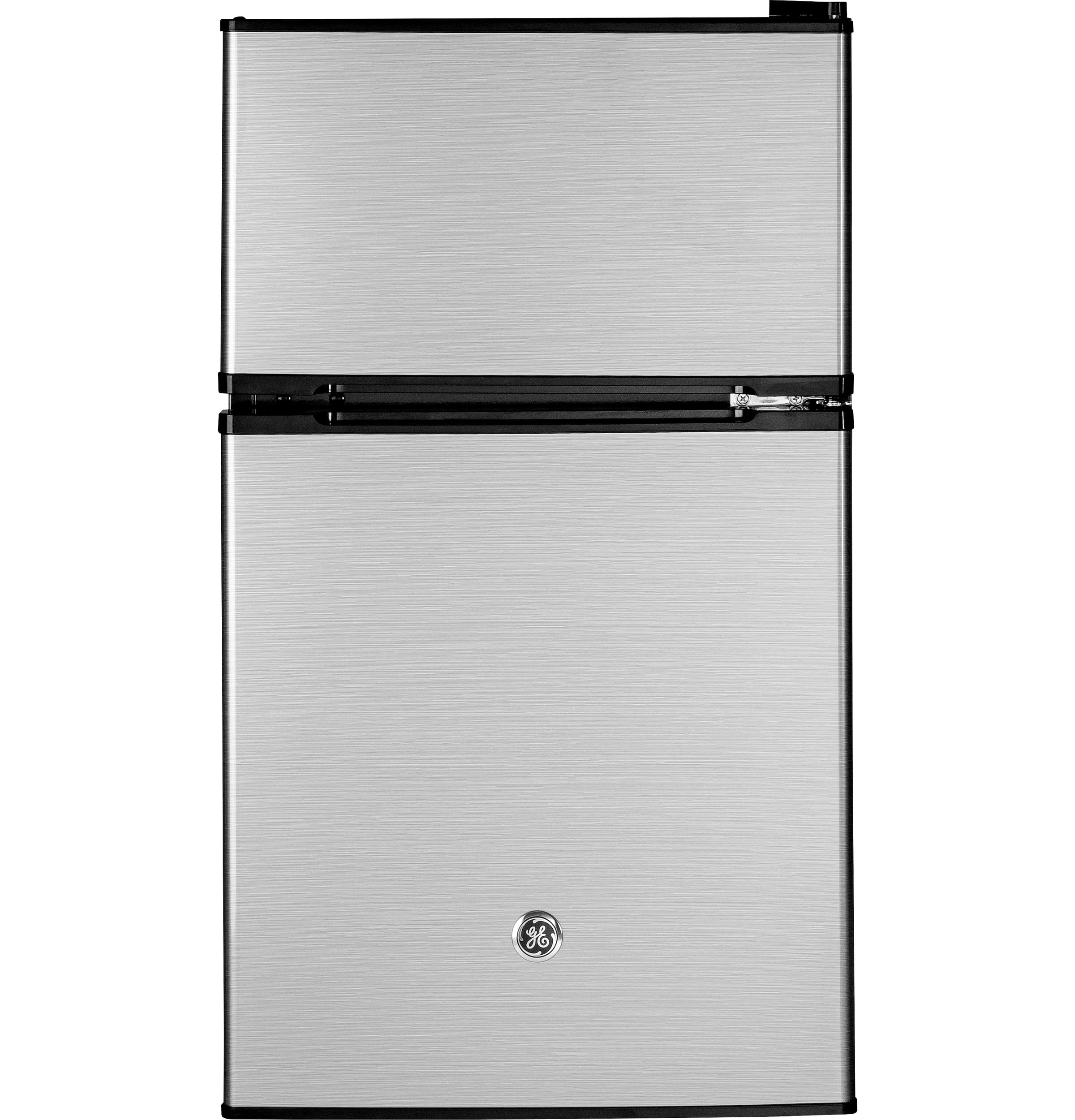
The one fridge here where the fresh-food side handles its own frost for you.
Here is the difference that changes daily life: this GE uses partial automatic defrost, so the fresh food section stays frost-free while only the freezer needs a manual cycle. Every other pick on this list is fully manual. If the idea of scraping the back wall is what puts you off a small double door fridge, this is the design that answers it. The 3.1 cu. ft. total splits into a 0.93 cu. ft. freezer and roughly 2.2 cu. ft. of fridge, and the freezer is a true compartment that holds an ice tray, boxed meals and frozen goods.
Inside, two glass shelves, door storage for tall bottles and a built-in can rack let you organize without stacking. A clear crisper drawer holds produce, and the recessed handles on both doors keep the profile clean. The durability-tested compressor has been tested for extremes, and it draws 321 kilowatt hours per year. It is the only pick here with a brand-name compressor and a long spare-part availability window.
What owners prize is how quiet and how solid it feels — several describe it as running like a proper large household fridge in miniature. If you want the frost-free fresh section and the brand reliability, this is the buy; if capacity per dollar is your only metric, the 3.2 cu. ft. compacts above win.
brand reliability
- Partial automatic defrost keeps the fresh section frost-free
- True 0.93 cu. ft. freezer that holds ice and boxed meals
- Can rack, tall-bottle door storage and a clear crisper drawer
- Durability-tested compressor with 321 kWh yearly draw
premium price tag
- The freezer still needs a manual defrost cycle
- Value is the most argued point — you pay for the brand and the defrost design
long-term owners: anyone who wants the fresh side to look after itself and trusts a known compressor brand.
budget shoppers: you want maximum cubic feet for the money; the compact picks give you more room.
Know the Specs
Why the freezer capacity number matters more than the total
Two fridges can both say 3.2 cu. ft. and hold wildly different amounts of frozen food. What you need is the freezer split — the number after the slash. A unit with a 0.9 cu. ft. freezer handles an ice tray, a tub of ice cream and a couple of frozen meals. A unit with 1.8 cu. ft. handles a week of cooking from frozen. Larger freezer shares usually mean a taller body, so measure your overhead clearance and your doorway before you choose. The fresh-food side is the remainder, so a bigger freezer always means a smaller fridge.
Manual versus partial automatic defrost
Manual defrost means frost builds on the freezer wall and the whole unit needs a thaw-and-wipe cycle when it thickens. Partial automatic defrost keeps the fresh food section frost-free and leaves only the freezer to clear. Most compact double door fridges on this list are manual, so factor that job into your routine — typically a periodic clear-out rather than a daily chore. If scraping is a deal-ender, pay for the partial automatic design and accept the smaller capacity that comes with it.
Reading the thermostat range in Fahrenheit
The fresh section usually runs 32°F to 50°F, which is the safe band for drinks, produce, dairy and cooked leftovers. The freezer needs to sit at or below 0°F to keep ice cream solid and frozen meat safe. A three-position dial gives you broad steps; a seven-position dial gives you finer control for things like meat and milk. Note that a low dial number is not always the coldest on every brand — set it, wait a day, and check with a thermometer rather than guessing.
Noise figures and annual energy draw
A fridge rated at or under 38 dB is quiet enough for a bedroom, a study or an office desk. Anything without a decibel figure is a coin flip. Annual energy consumption in kilowatt hours per year is the running-cost signal — lower is better if the unit runs constantly. A 181 kWh figure and a 356 kWh figure are meaningfully different over months of use. Both numbers should be on the spec panel for any fridge you are seriously comparing.
Common Questions
Does a small double door fridge need to stand before I plug it in?
Will a double door fridge keep ice cream solid?
How often do I have to defrost a manual defrost mini fridge?
Is a 38 dB mini fridge quiet enough for a bedroom?
What is the difference between a 3.2 and a 4.5 cubic foot double door fridge?
Can I put a double door mini fridge in a garage?
Do these fridges have a reversible door?
Will a 5.0 cubic foot fridge fit under a standard counter?
Is a name-brand compressor worth paying more for?
How much energy does a small double door fridge use per year?
The Bottom Line
For most people, the small double door fridge that gets the balance right is the Feelfunn 3.2 Cu.Ft. It splits 3.2 cu. ft. into 2.24 cu. ft. of fridge and 0.96 cu. ft. of freezer, uses just 2.44 sq. ft. of floor, runs at or under 38 dB, and hands you a reversible door. It is the pick that fits a dorm, a garage corner or an RV aisle without giving up freezer space for fridge space.
If you want the lowest yearly energy draw, the Antarctic Star 3.2 Cu.Ft runs at 300 kilowatt hours per year against the Feelfunn’s 356, with the same capacity split. If frozen food is the main event, the TACOOL 5.0 Cu.Ft gives you 1.8 cu. ft. of freezer, and the WANAI 5.0 Cu.Ft gives you the same 1.8 cu. ft. freezer plus wheels. And if you never want to scrape the fresh section again, the GE 3.1 Cu.Ft is the only partial automatic defrost design on the list.
One last point worth holding onto: the Feelfunn is the pick to trust here. It pairs a 0.96 cu. ft. true freezer with bedroom-quiet running and a footprint the size of a doormat, and the size is the reason it keeps landing in dorms, garages and RVs instead of a showroom. Measure your gap, set aside a few hours upright before first plug-in, and pick the capacity split that matches what you actually keep cold.
How we choose
We do not accept paid placement. Every pick is matched to a real buyer and a real use-case; we do not hands-on test units.
Sources
Specifications: manufacturer listings and product documentation. Review insights: verified customer reviews, as of November 2026. Pricing: not shown on this page (it changes often); check the current price via the retailer link.
As an Amazon Associate, Tactical Gear Guy earns from qualifying purchases. This does not affect which products we feature.