Specs are compiled from manufacturer listings and verified buyer reviews and can change over time — please confirm the key details on the product page before buying.
If your cabinet doors are sagging, swollen, or scarred, you don’t need a whole new kitchen — you need a single panel shaker door sized to your opening and ready for paint or stain. This guide sorts the real wood from the particle-board lookalikes and tells you exactly which door to buy for a small vanity fix, a two-door refresh, or a full room.
This guide is built by comparing the manufacturers’ published specifications and the patterns across verified customer reviews, so you get each pick’s real strengths and trade-offs instead of marketing spin.
The tricky part is measuring: a single panel shaker door ordered even a quarter inch off will rub the frame or leave a gap you can see. That measurement discipline is the whole game with any single panel shaker door, so every pick below names its exact size first. single panel shaker door, so every pick below names its exact size first.
Top Picks
How To Choose The Best Single Panel Shaker Door
A single panel shaker door is one flat recessed center framed by four rails — a five-piece construction, not a slab. The “single panel” part means one recessed opening, so the grain and the shadow lines stay clean and simple. Buy the wrong size and the door catches the frame; buy the wrong material and a corner peels after one humid summer or the finish blotches under stain.
Measure the opening, not the old door
Every size in this category is listed width by height in inches. A 14.5″ wide door fits a specific opening, and a 12″ wide door fits a different one — there is no universal size. Pull the old door off the hinge, measure the opening left in the frame, and match that number exactly. Buyers report the listed dimensions accurate down to the fraction, which is why a replacement lands flush instead of rubbing.
Unfinished solid wood versus painted MDF
Unfinished solid wood (oak, maple, pine) lets you stain for grain or paint for a flat look. The trade-off is labor — you sand, prime, and finish it yourself. MDF-faced doors are pre-primed or pre-painted and ready to hang, but they can’t accept a stained grain finish and can swell if moisture reaches an unprotected edge. If you want visible natural grain, unfinished hardwood is the only route — MDF can’t take a stained grain finish.
Confusing a door with a door front
A “door front” is a finished face you fit to your existing cabinet box; a full “door” includes the deeper construction and usually arrives bored for hinges. Check whether hinge holes and handles are pre-cut or unfitted. Unbored and undrilled doors give you full control over hinge placement — and a little more work.
Side-by-Side Comparison
Three specs decide most purchases here: width, height, and weight.
| Model | Best For | Width | Height | Weight | Amazon |
|---|---|---|---|---|---|
| ONESTOCK Unfinished Oak Shaker Door★ Best Overall | Small cabinet and vanity swaps | 14.5″ | 14″ | 3 lb | Amazon |
| ONESTOCK Unfinished Maple Shaker Door Front | Painting or staining to match a room | 12″ | 24″ | 4 lb | Amazon |
| COLORPAPA 2 Pack Pine Shaker Doors | Two-door kitchens and full hardware in one box | 12″ | 24″ | 7 lb | Amazon |
| Kimberly Bay 1-Panel White Primed Shaker | A full-height door that’s ready to paint | 18″ | 80″ | 34.4 lb | Amazon |
Detailed Reviews
1. ONESTOCK 14.5W x 14H Oak Cabinet Door
Our pick — 4.5+★ from 300+ verified ratings; the strongest balance of quality and price.
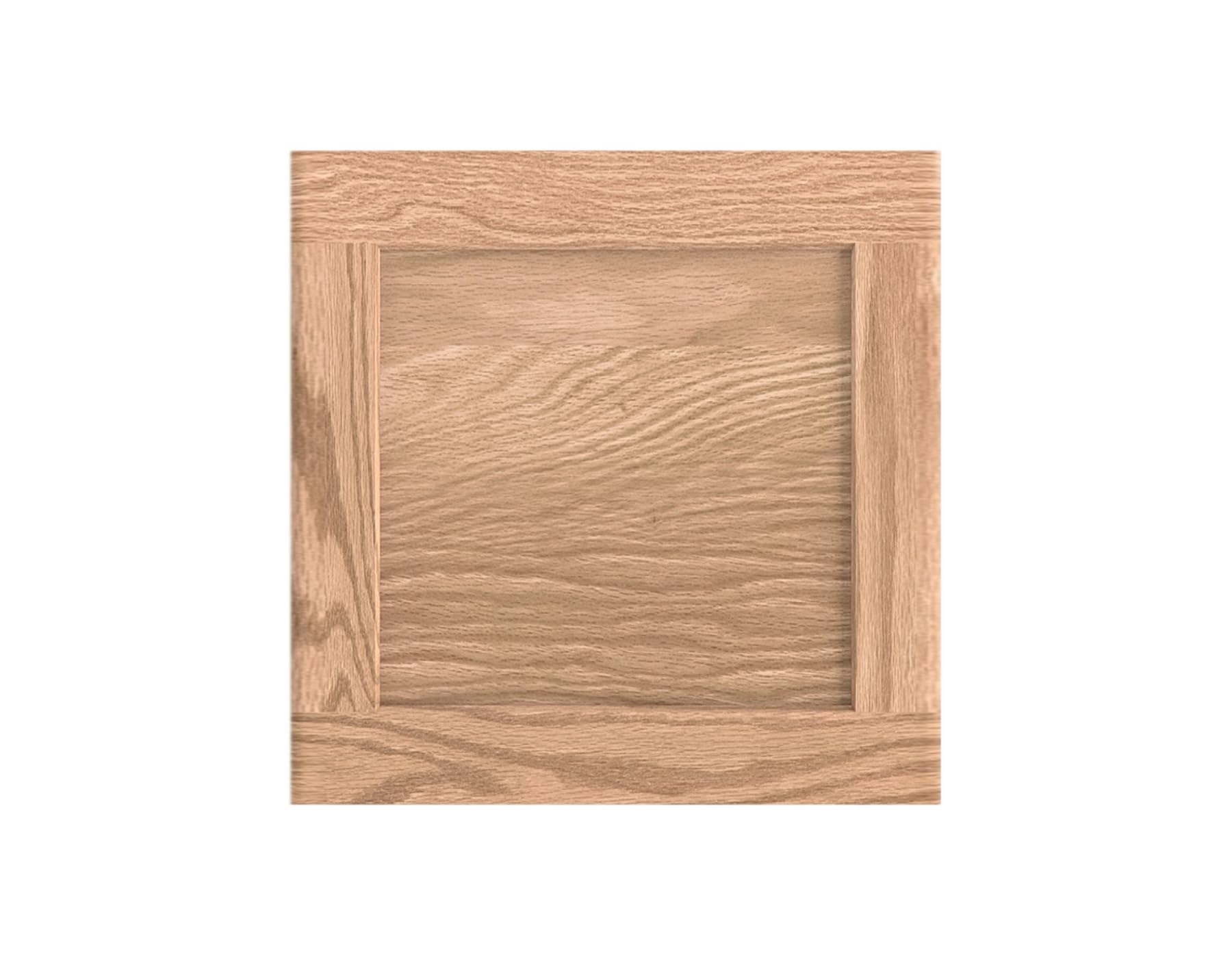
Real oak grain, a 3/4″ depth that hangs like a proper door, and a 14.5″ width that matches most vanity openings.
The number that decides this one is the depth: 3/4″. That’s the standard cabinet-door thickness, so it sits in your frame the way the old door did instead of rattling around in a thin slot. The 14.5″ width and 14″ height make it a small-door specialist — a bathroom vanity, a pantry, a laundry cupboard. At 3 pounds it carries across the room one-handed while you line up the hinges.
What wins people over is the wood itself: solid oak, not particle board, with a surface that takes primer and a light sand before cabinet paint. Staining is the better move if you want the grain to show, and owners mention it takes stain with no blotches. The doors arrive square and flat, which is what makes them easy to install — a warped door is the one thing that ruins a replacement job. It’s also made in the USA, which matters to buyers trying to keep the whole project domestic.
The catch is fit, not quality. This is a single 14.5″ x 14″ door, so if your opening is taller or wider you need one of the other picks — this one is deliberately small. Hardware is also your job: it comes unfinished and plain, so stain, paint, hinges, and a pull all come out of your own budget. Buyers who measured before ordering get an exact match; buyers who guessed get a return.
What holds up
- Solid oak with a 3/4″ depth that matches standard cabinet construction
- Stain takes evenly without blotching, per owner results
- Arrives square and flat, which makes hinge mounting straightforward
- Made in the USA and sold as a straight replacement piece
What to plan around
- A single 14.5″ x 14″ door — too small for full-height cabinet runs
- Unfinished and unbored, so finishing and hardware are extra work
Grab this for: a vanity or small cabinet opening that measures 14.5″ wide by 14″ tall and needs real oak grain.
Pass on it if: your opening is a different size — no amount of good wood fixes a door that doesn’t fit.
2. ONESTOCK 12W x 24H Maple Cabinet Door

A tall, narrow 12″ x 24″ maple front for the small openings a wider door simply can’t reach.
Where the oak pick above is a small square, this one is a tall rectangle: 12″ wide, 24″ high. That’s twice the height of the 14″ oak door, which turns it into the right answer for narrow, vertical openings — a bathroom vanity side, a laundry chase, a sliding-door rebuild. At 4 pounds of solid maple, it feels like a real cabinet face, not a veneer sheet.
The finish story is where it earns its keep. Maple is smooth-sanded and splinter-free, and it arrives unbored and undrilled so you decide where the hinges and pull go. Painting is the strong suit — owners say it primes and paints cleanly — and staining works too, though it usually takes a second coat. Owners describe the craftsmanship as tight and the dimensions as accurate to the listed 12″ x 24″, which matters when a fraction off means a door that won’t close.
The honest limit: this is a door front, and it’s a single 12″ wide piece. The 14.5″ oak door above is wider by a couple of inches, so if your opening is 14.5″ you can’t shoehorn this one in. It also arrives unfinished, so warp resistance is stated for the wood but the protective coat is on you to apply.
The real job: narrow vertical openings that need a tall piece of solid maple, not a wide slab. The 12″ x 24″ footprint and 4-pound weight make it feel substantial in the hand.
Before you order: confirm your opening matches 12″ wide by 24″ tall exactly, and budget time for priming, two coats of finish, and drilling your own hinge holes.
Suits the painter: anyone refreshing a narrow cabinet run who wants fine maple under their own paint or stain.
Not for: an opening wider than 12″ — check the measurement before you commit.
3. COLORPAPA 2 Pack Pine Cabinet Doors
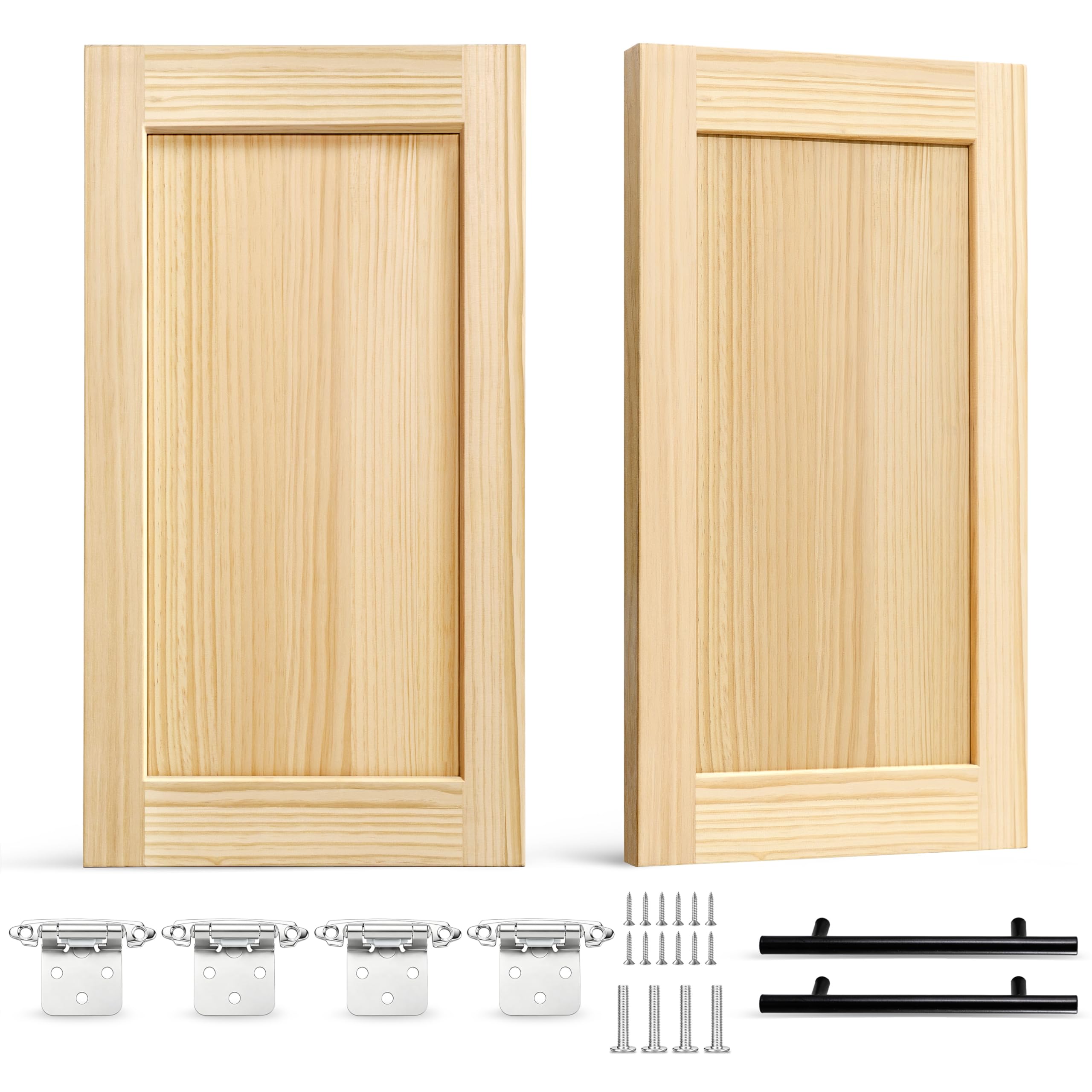
Two pine doors, four hinges, and two handles in one box — the hardware problem solved before you start.
Here’s the difference that jumps out: you get 2 doors where the maple front above ships 1. The pair doubles your coverage on a two-door cabinet, so a base cabinet with a left and right side gets refreshed in a single order instead of two. At 7 pounds for the set, the pine feels solid and slightly heavier per door than a thin front — and both measure 12″ wide by 24″ high at 0.79″ deep, so they align cleanly side by side.
The kit is the draw. Four hinges and two handles come in the box, which means no separate hardware run and no guessing whether your pulls will fit the pre-drilled pattern. Pine is a soft wood with real grain figure, and the 0.79″ depth gives it a proper cabinet-door heft. Unfinished means paint, stain, varnish, or polish are all open to you, and pine is forgiving under a stain if you want that warm farmhouse look.
What you should know before ordering: the 12″ x 24″ size is fixed, and pine dents more readily than oak or maple if a pot catches a corner. It’s also a smaller order overall — these doors have been around long enough to build a track record but not the mountain of feedback the oak door has. The 24″ height does line up with the maple front, both taller than the 14″ oak door, so the two 24″ picks make a natural pair for a matching small-kitchen run.
Where the value sits
- Two doors in one order, matching a left-right cabinet pair
- Includes 4 hinges and 2 handles — nothing else to buy for hanging
- Solid pine at 0.79″ depth with a 12″ x 24″ footprint
- Unfinished surface takes paint, stain, varnish, or polish
Worth knowing first
- Fixed 12″ x 24″ size, so measure your opening precisely
- Pine is softer than oak or maple and dents more easily
Pick it when: you’re replacing both sides of one cabinet and want hinges and handles in the same box.
Skip only if: you need a full-height or wider door, or you want hardwood grain instead of pine.
4. Kimberly Bay White Primed Shaker Door

An 80-inch door with a solid wood core and a smooth MDF face, already primed white and ready for paint.
This is the outlier in the group, and the height is why: 80 inches tall by 18 inches wide. That’s a full door, not a cabinet front — think pantry, closet, or a tall utility cabinet. At 34.4 pounds it’s a two-hand lift and a door you want a helper for. Compare that to the 3-pound oak door above, and you see immediately that these serve entirely different openings.
Construction is solid wood core with an MDF face, which gives you a smooth surface that takes paint without telegraphing grain — the reason it ships white primed. The doors arrive full and square, and they’re FSC certified, which means the wood comes from responsibly managed sources. Hardware isn’t included, so the hinge and handle choice stays yours, and the maker backs it with a one-year limited warranty. Expect to run a light sand and a finish coat before it looks truly finished.
The real consideration is weight and finish labor. MDF faces are smooth and stable, but a deep dent or an exposed edge needs care — this isn’t a natural-grain door you can sand back to bare wood. And 34.4 pounds means hanging it is a two-person job; plan the hinge placement before you lift it.
Where it fits: an 80″ x 18″ full-height opening that needs a primed, smooth-faced door rather than an unfinished cabinet front.
Plan around: the 34.4-pound weight and the separate hinge purchase — hang it with help.
Reach for it if: you’re covering a tall pantry or closet opening and want a primed shaker door that paints clean.
Look elsewhere for: small cabinet openings — this door’s 80″ height is built for full doorways, not cabinetry runs.
Know the Specs
Width and Height (in inches)
These two numbers are the make-or-break fit spec. Cabinet doors are listed width first, height second — so a 12″ x 24″ door is narrow and tall, while a 14.5″ x 14″ door is a small square. Measure the opening in your frame, not the old door, and match both figures exactly. A quarter inch off and the door rubs or leaves a gap.
Depth (in inches)
Depth is door thickness. A 3/4″ door is the standard cabinet thickness, so it sits flush in a standard frame. The pine set lists 0.79″, close to that standard. Thinner fronts can leave a gap at the frame edge; thicker ones may not clear a tight reveal.
Weight (in pounds)
Weight is a proxy for construction substance. A 3-pound door is a small cabinet front; a 34.4-pound door is a full-height solid-core door. Heavier isn’t automatically better — it just tells you the door is thicker, larger, or built with a solid core that handles full-height duty.
Finish: Primed, Unfinished, or Unbored
Primed means a base coat is applied and you’re one finish coat from done. Unfinished means bare wood: you paint or stain it yourself. Unbored means no hinge holes are cut, so you place the hinges where your cabinet frame needs them — more control, more drilling.
Common Questions
How do I measure for a single panel shaker door replacement?
Is a single panel door the same as a shaker door?
Do I need to buy hinges and handles separately?
Can I stain an unfinished cabinet door to match my kitchen?
What’s the difference between a door and a door front?
How much does a single panel shaker door weigh?
Will a 12″ wide door fit a standard cabinet frame?
Is solid wood better than MDF for a cabinet door?
Can I paint an unfinished door without sanding first?
What does unbored mean on a cabinet door?
The Bottom Line
For a small cabinet or vanity refresh, the ONESTOCK Unfinished Oak Shaker Door is the one to grab — real oak, the standard 3/4″ depth, and the most consistent owner feedback in the group. If you’re painting a narrow vertical opening, the ONESTOCK Maple Shaker Door Front gives you a tall 12″ x 24″ piece that takes a finish beautifully. For a two-door pair with hinges and handles already in the box, the COLORPAPA 2 Pack saves you the hardware run. And when the opening is a full 80″ tall doorway, the Kimberly Bay primed shaker is built for that job. Order the right size once and the rest is paint and patience.
How we choose
We do not accept paid placement. Every pick is matched to a real buyer and a real use-case; we do not hands-on test units.
Sources
Specifications: manufacturer listings and product documentation. Review insights: verified customer reviews, as of November 2026. Pricing: not shown on this page (it changes often); check the current price via the retailer link.
As an Amazon Associate, Tactical Gear Guy earns from qualifying purchases. This does not affect which products we feature.