Specs are compiled from manufacturer listings and verified buyer reviews and can change over time — please confirm the key details on the product page before buying.
Replacing a bathroom fan is a swap job, not a renovation — and the one number that decides whether it goes smoothly is the size of the hole already in your ceiling. Get the cutout and the duct right and a new fan slides in from the room side in an afternoon, with no ladder in the attic. Get them wrong and you are patching drywall. This guide lines up the picks that actually fit real-world openings, and flags the ones that are louder or fussier than their labels suggest.
This guide is built by comparing the manufacturers’ published specifications and the patterns across verified customer reviews, so you get each pick’s real strengths and trade-offs instead of marketing spin.
Airflow rating, sone level and cutout size do most of the deciding, so every pick below is sorted by what it does in a real bathroom. Here are the strongest options for the replacement bathroom fan job, from whisper-quiet swaps to sensor-driven upgrades.
Top Picks


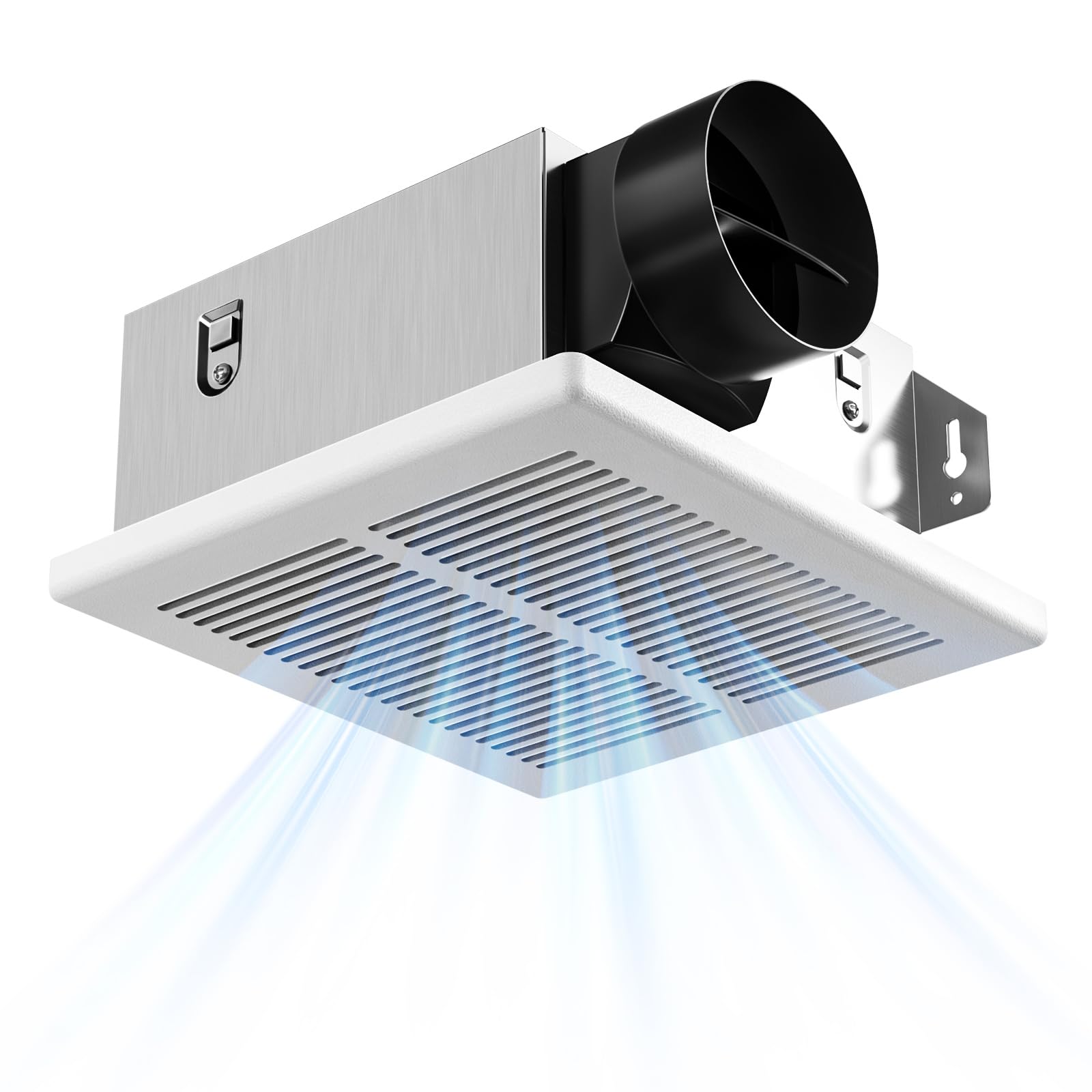
How To Choose The Best Replacement Bathroom Fan
You are not shopping for a fan in the abstract — you are shopping for a fan that fits an opening you already own. Measure twice before you open a single listing.
Measure the hole, not the grille
The grille you see is the cover plate. The housing behind it is what has to drop into your ceiling opening. Write down your opening’s length, width and depth, plus your duct diameter. Most units here run on a 4-inch round duct, which is the common household size and lets you reuse the old pipe. A fan built for a smaller or larger cutout will not seat, no matter how good its airflow number is.
Match CFM to your bathroom’s square footage
CFM stands for cubic feet per minute — how much air the fan pushes out. Manufacturers publish a recommended room size for each unit, and that ceiling is your real filter. A 50 CFM fan is rated for spaces up to 50 square feet; a 110 CFM unit covers far more. Undersize it and the mirror stays foggy after a long shower.
Decode the sone rating
A sone measures perceived loudness. Lower is quieter, and the drop is not linear — a 1.0 sone fan is a background hum, while a 0.3 sone model is close to inaudible. If your bathroom sits next to a bedroom, spend the extra on the lower number.
Check if you need attic access
Room-side retrofit fans install entirely from below the ceiling. That is the difference between a one-person afternoon and a two-person job with insulation in your hair. Several picks here are explicitly built for that kind of swap.
Side-by-Side Comparison
| Model | Best For | Airflow | Noise | Cutout / Fit | Amazon |
|---|---|---|---|---|---|
| Homewerks 7140-50★ Best Overall | Small baths on a tight budget | 50 cfm | 1.0 sones | 7.75 x 7.5 x 6 in opening | Amazon |
| JOEAONZ 110 CFMBest Airflow Value | Big airflow for the money | 110 cfm | 1.0 sones | 7.75 W x 7.5 L x 5.7 H in | Amazon |
| Amico 80 CFMBest Drop-In Fit | Dropping into an existing hole | 80 cfm | 1.0 sones | 7.5 x 7.2 x 4 in housing | Amazon |
| Gopper 120 CFM with Light | Steam control plus a ceiling light | 120 cfm | 1.0 sones | 9.8 x 9.8 in mounting hole | Amazon |
| Fitop with Light | Adjustable light temperature | 109.98 cfm | 1.0 sone | 7.75 x 7.5 x 5.75 in opening | Amazon |
| KAZE SNP100 | Room-side retrofit with hanger bars | 100 cfm | 0.8 sones | 9.5 x 9.5 in opening | Amazon |
| Broan-NuTone AE110L | Over-tub mounting with LED light | 110 cfm | 1.0 sones | 9-1/4 x 10 x 5-3/4 in housing | Amazon |
| Broan-NuTone CCT Retrofit | No-attic swaps with color tuning | 110 cfm | 1.0 sones | 9-1/4 x 10 x 5-3/4 in housing | Amazon |
| Panasonic FV-0511VQC1 | Hands-off humidity and motion sensing | 50 / 80 / 110 cfm | < 0.3 sone | Flex-Z fast bracket | Amazon |
Detailed Reviews
1. Homewerks 7140-50 Bathroom Fan
Our pick — 4.5+★ from 600+ verified ratings; the strongest balance of quality and price.
The no-cut swap for a modest bathroom that just needs the steam gone quietly.
This is the pick where the specs line up neatly: 50 cfm, 1.0 sone and a 4-inch duct. It moves 50 cfm (cubic feet per minute — the volume of air it evacuates) at 1.0 sone, so it is a low hum, not a jet engine. The manufacturer rates it for spaces up to 50 square feet, which covers a standard hall bath without overspending on airflow you will never use.
Quiet operation is what sells this one, and the install story is close behind. The no-cut design and ceiling-mount housing mean the opening stays put: the listed ceiling opening is 7.75 inches long by 7.5 inches wide by 6 inches deep, with a 4-inch round duct connector. That is the common household duct size, so your old pipe usually stays exactly where it is. The housing is galvanized steel with a corrosion-resistant finish, and it carries HVI, ETL and Energy Star certification.
Here is the honest limit. The steady drip of complaints centers on long-term durability, and the 3-year limited warranty is the backstop — so this is a fit for a guest bath or a low-traffic bathroom, not the steamiest shower in the house. A family of four hammering it twice a day will want more headroom on airflow.
What earns its keep
- 1.0 sone at 50 cfm keeps the room calm while it clears
- No-cut, ceiling-mount install reuses your existing 4-inch duct
- Galvanized steel housing with HVI, ETL and Energy Star certification
- Rated for bathrooms up to 50 square feet
Where it gives ground
- Durability is the weak spot in the feedback, softened by a 3-year limited warranty
- 50 cfm is modest — a large or heavily used bathroom will want more
Reach for this if: you have a compact bathroom and want quiet, certified ventilation without cutting new drywall.
Look elsewhere if: your bathroom is roomy or gets hammered daily and you need airflow closer to triple digits.
2. JOEAONZ Bathroom Exhaust Fan 110 CFM
Double the airflow of the budget Homewerks, on the same 4-inch duct you already have.
Read the airflow figures side by side and the gap is hard to miss: this JOEAONZ pushes 110 cfm against the Homewerks unit’s 50 cfm. For a busy family bathroom, that headroom is the whole reason to buy it. The maker rates it for enclosed rooms up to 107 square feet, and it holds the same 1.0 sone quiet level — quieter than a library, as the listing puts it.
The retrofit details are friendly to an existing install. The suggested opening is 7.75 inches wide by 7.5 inches long by 5.7 inches high, which matches the layout most older fans use. The 4-inch detachable polymeric duct connector is the most common ventilation duct size, so in most cases you can reuse the old exhaust pipe without buying extra materials. The housing is metal; the grille is white plastic and painted.
Steam is where opinions split. Some find it moves much more air than expected, while others say it is not very powerful — the same 110 cfm number, read two ways depending on room size. If your bathroom is on the large side, size up your expectations accordingly.
Where the money goes: metal housing, 110 cfm and a detachable 4-inch duct in one package — this is the pick that trades a small jump in price for real ventilation muscle and an easy swap.
The catch worth knowing: that 110 cfm reads as strong in a small bath and weak in a large one.
Suits you if: you want noticeably more airflow than an entry-level fan without paying a premium price.
Not your fit if: your bathroom runs well past 107 square feet or you need the airflow to be unquestionably strong.
3. Amico Bathroom Exhaust Fan 80 CFM
Built around the hole you already have — and it needs no attic trip at all.
This Amico fits tighter ceiling spaces than the Gopper fan. Its housing measures 7.5 inches deep by 7.2 inches wide by 4 inches high, while the Gopper fan’s housing is 12 by 12 by 6.7 inches. That smaller housing means it seats into tighter ceiling spaces. The recommended ceiling cutout is 7.6 by 7.3 inches, and the grille cover reaches 9.4 by 8.6 inches.
What wins people over is how quietly it disappears into the ceiling. It runs at 1.0 sones and moves 80 cfm, rated for bathrooms up to 80 square feet, and it mounts between ceiling joists with the included brackets or screws straight to a joist. If your duct is 3 inches instead of the standard 4, Amico will send a free reducer. It is UL listed for electrical safety and built from metal and polycarbonate at 4.3 pounds.
The recurring gripe is small: a few bathrooms that push past the 80 square feet rating find the pull weaker than they want. Keep the fan matched to its stated room size and that concern fades away.
The retrofit case: bracket mounting from below the ceiling, a 4-inch duct, and an available free reducer for 3-inch pipe — a genuine no-attic swap for a homeowner working alone.
Size honestly first: measure your opening and your square footage. This fan is excellent inside its envelope and merely adequate beyond it.
Take this one if: your ceiling opening is roughly 7.6 by 7.3 inches and you want a no-attic install.
Pass it by if: your bathroom sprawls past 80 square feet or your cutout is a different size entirely.
4. Ultra Quiet Bathroom Exhaust Fan with Light
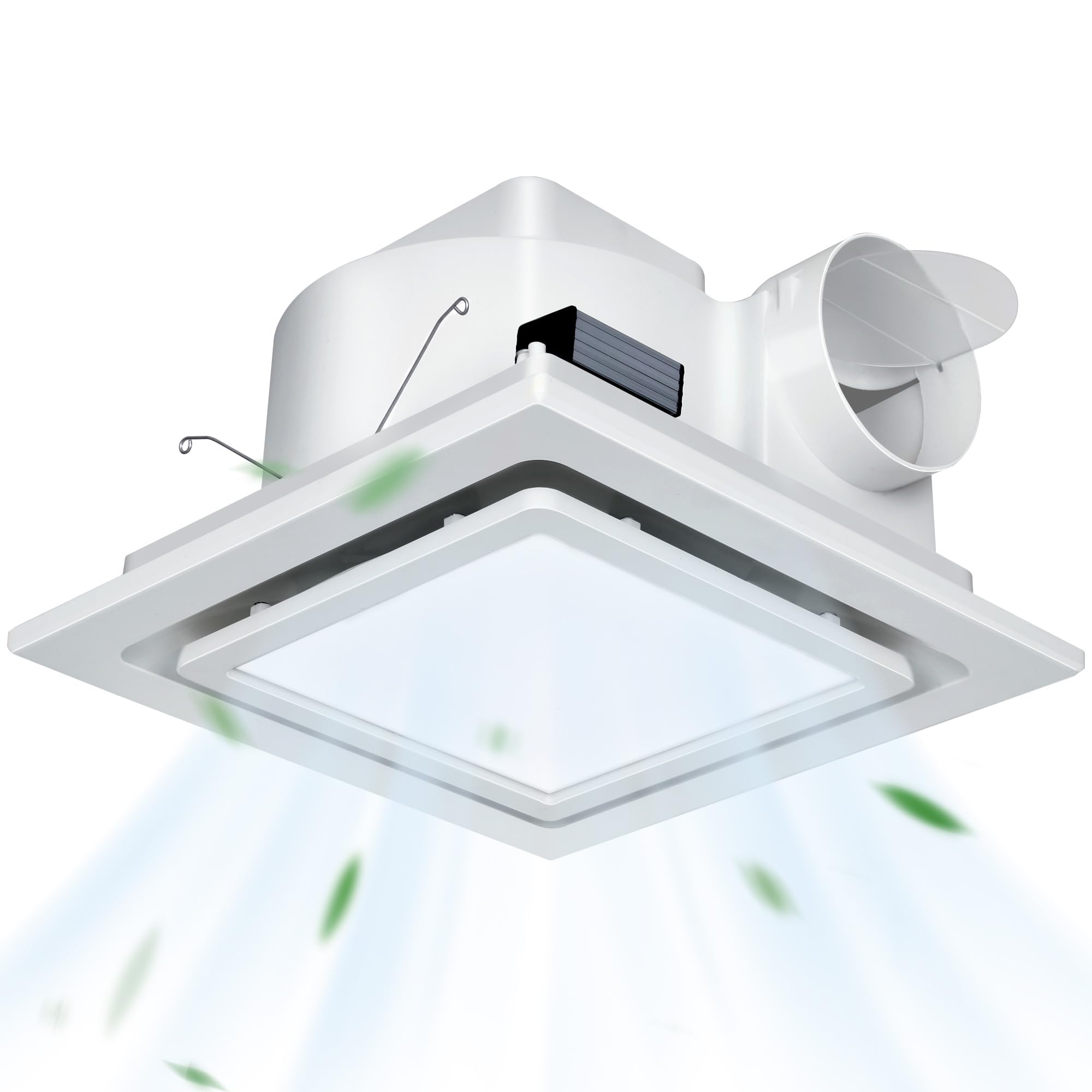
The biggest air mover on this list, with a 12-inch LED panel bolted on.
Airflow is the headline: 120 cfm at 1.0 sone, rated for spaces up to 100 square feet. That beats the Amico and the Homewerks on raw volume, and it beats several rivals’ panel size too. The integrated 12-inch LED light is a single-color, non-dimmable panel — bright enough to light a bathroom ceiling, but you cannot tune its warmth.
Fitment is where you need to be careful. The panel measures 11.8 by 11.8 inches, but the mounting hole must be 9.8 by 9.8 inches, with a 4.0-inch duct. That is a bigger cutout than the 7.75-inch openings several other picks here use. Check your ceiling before you buy, because this one is not a drop-in for a small legacy hole.
Honest trade-off: the LED and the overall quality draw split verdicts, with some owners finding the light failing earlier than expected and others finding it fine. The fan-and-light combo is convenient when it works. If a fan that outlasts its light matters to you, the Broan AE110L is a steadier call.
Why it pulls ahead
- 120 cfm at a quiet 1.0 sone — the highest airflow on this list
- 12-inch LED panel lights the whole bathroom
- Rated for rooms up to 100 square feet
What you should weigh
- 9.8-inch mounting hole is larger than many legacy openings
- LED durability and air movement both see mixed feedback
- Single-color light, non-dimmable
Worth it when: you are cutting a fresh 9.8-inch opening and want maximum airflow plus a ceiling light in one unit.
Think twice when: you are trying to drop a new fan into a small existing hole — this one will not squeeze in.
5. Fitop Bathroom Exhaust Fan with Light

Three light colors on one switch, so the fan matches your mirror bulbs.
Most fan-and-light combos lock you into one color temperature. This one hands you three: 3000K soft white, 4000K bright white and 5000K daylight, flicked from a switch. Turn it off for more than 7 seconds and it remembers your last choice. The 1200LM LED throws a lot of light across the whole bathroom, and it moves 110 cfm at 1.0 sone.
This fan drops into the same opening style as several other picks. The ceiling opening is 7.75 inches long by 7.5 inches wide by 5.75 inches deep, the lampshade measures 10.25 by 10.25 inches, and the duct is 4 inches. The housing is galvanized steel with a corrosion-resistant finish, so it resists rust in a damp bathroom.
Humidity is the one thing to watch. Some find it moves a lot of air and clears the room, while others find it does not cut humidity as much as they hoped. In a small bathroom it earns its place; in a large, steamy one, match the fan to the room size before you buy.
The color-temp advantage: 3000K, 4000K and 5000K on one switch, with automatic memory, is a genuinely practical upgrade if you have ever hated the harsh white of a fixed LED.
The humidity caveat: airflow reaches mixed verdicts. Match it to its room rating and it clears fine; ask it to dry a huge bathroom and it will disappoint.
Your pick when: you want a light you can tune and a fan that fits a 7.75-inch opening.
Skip when: you have a sprawling bathroom and only care about raw air movement.
6. KAZE APPLIANCE SNP100 Bathroom Fan
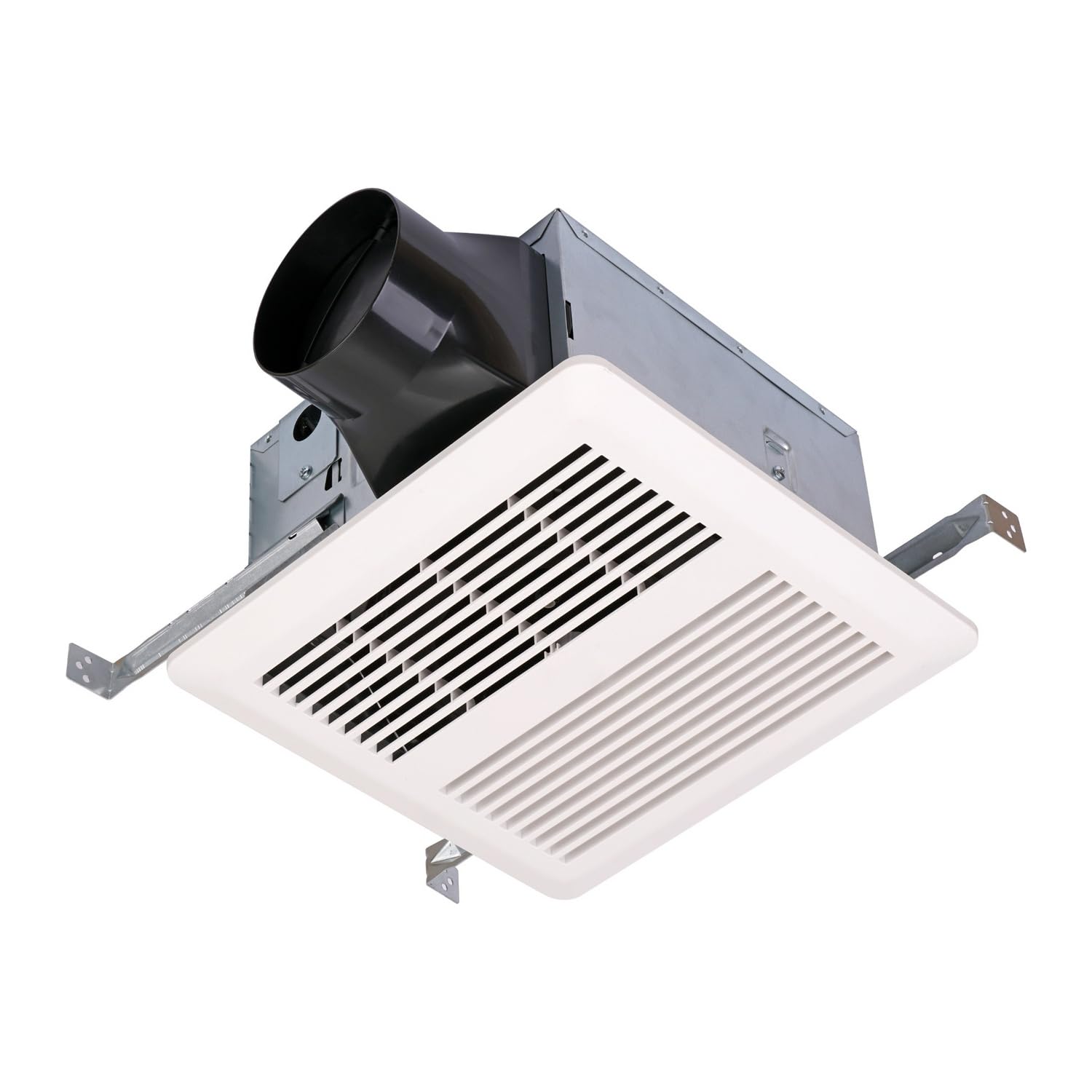
A quieter-than-most 0.8 sone swap that goes in from the room side.
Stop and look at the sound number first. This KAZE runs at 0.8 sones, lower than the 1.0 sone level most picks here share, while still moving 100 cfm. The maker says 100 cfm turns over an 8 by 5 foot bathroom with an 8 foot ceiling in roughly 3.2 minutes. It is rated for rooms up to 100 square feet.
The retrofit mechanics are the real draw. It installs from the room side without attic access for replacement projects, and the one-piece removable blower assembly gives you access to the housing, wiring and duct connection. It needs a 9.5 by 9.5 inch ceiling opening, connects to a 4-inch duct, and uses a painted 26-gauge galvanized steel housing with a permanently lubricated motor and a backdraft damper. It is HVI certified, Energy Star certified, ETL listed and backed by a three-year warranty.
One expectation to reset: the 100 cfm unit is not universally seen as quiet. Some find it pretty quiet next to their old fan, while others say it makes a real noise. It is also a lighter-duty call than a top-tier unit on airflow. Set the expectation at “quieter than average, not silent,” and you will be happy.
Built for a swap: room-side install, a removable blower for wiring access, and the certifications that tell you the fan earned its spot. This is the pick that behaves like a proper retrofit.
Noise is personal: 0.8 sones is quieter than most, but the airflow is a moderate 100 cfm — perfect for a standard bath, light for a big one.
Choose this if: you are replacing a legacy fan from below the ceiling and want a certified, quieter-than-average unit.
Reconsider if: you need maximum airflow or insist on near-silence.
7. Broan-NuTone AE110L Bathroom Exhaust Fan
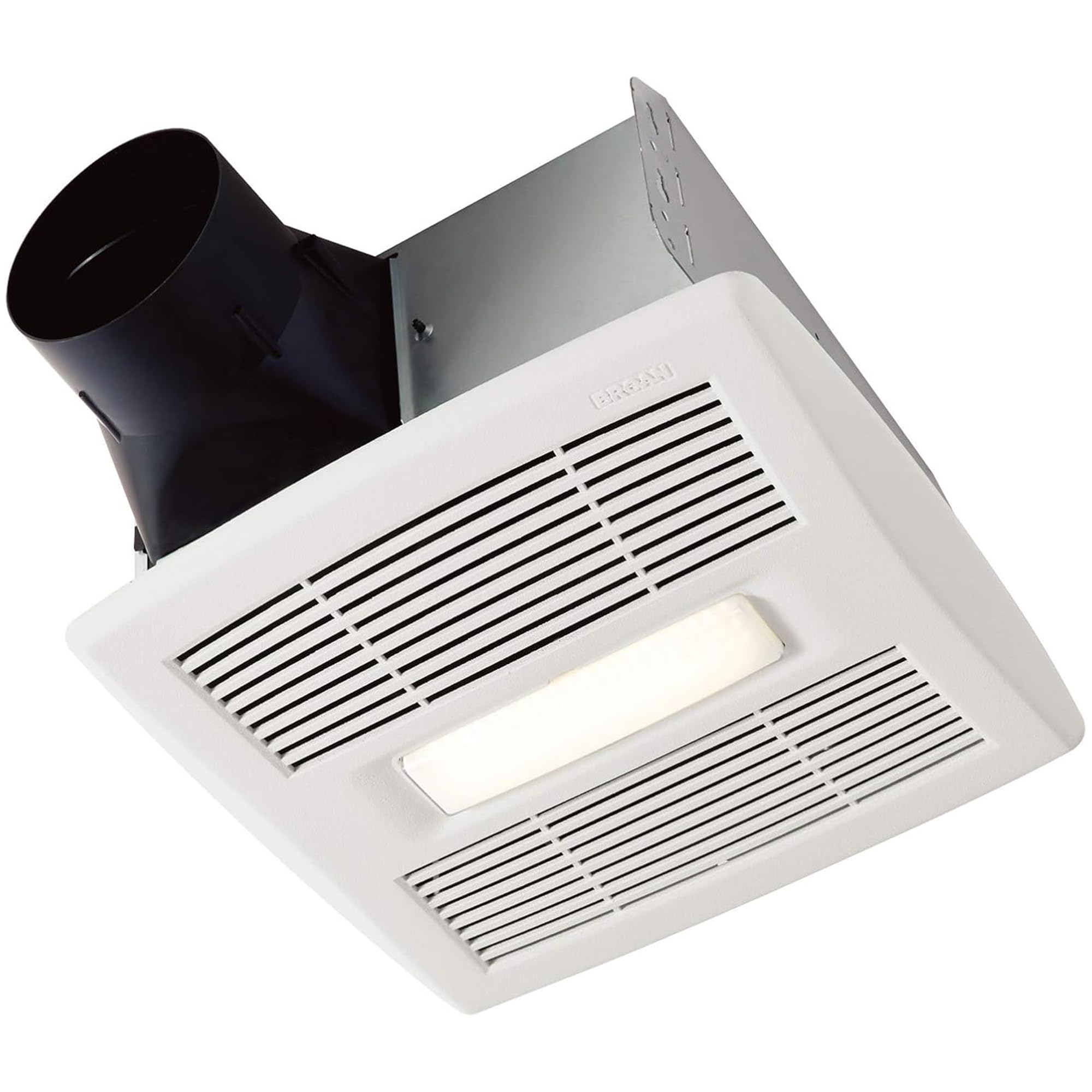
The steady, trusted workhorse — 110 cfm, an LED light and a damper that keeps cold air out.
Performance is what carries this one. It moves 110 cfm at 1.0 sone, rated for rooms up to 105 square feet, with a bright 3500K LED light built in. The TrueSeal Damper Technology cuts air leakage by up to 50% versus competitive models per the manufacturer, so heated room air stays out of the duct in winter.
It is also built for a straightforward replacement. Room-side retrofit installation means it goes in without attic access, and the housing measures 9-1/4 by 10 by 5-3/4 inches with a grille of 11-3/4 by 12-1/2 inches. It is UL Listed for use over tubs and showers with a GFCI circuit, so you can put the fan exactly where the steam starts.
The honest split: the light and the fan do not please everyone equally. Some love the brightness and the appearance, while others find the LED color less appealing or the noise higher than the 1.0 sone label implies. For most bathrooms this is a solid, dependable fan, and the ratings reward it for exactly that.
Where it shines
- 110 cfm at a very quiet 1.0 sones, rated to 105 square feet
- TrueSeal Damper reduces air leakage
- UL Listed for over-tub use with a GFCI circuit
- 3500K LED light included
The honest split
- Some find the LED light color less appealing
- Noise is not universally as quiet as the 1.0 sone figure suggests
Lean this way if: you want a proven over-tub fan with a light and a leakage-reducing damper.
Look past it if: color-tunable lighting or near-silence is your top priority.
8. Broan-NuTone Retrofit Bathroom Exhaust Fan

Four light colors and a room-side swap, but read the install notes closely.
The light flexibility is the differentiator. You get four selectable color temperatures — 3000K warm white, 3500K bright white, 4000K cool white and 5000K daylight — with the last setting remembered automatically. That is one more warmth option than the Fitop unit offers. Airflow is 110 cfm at 1.0 sone, rated for spaces up to 105 square feet.
The retrofit story is the same room-side idea as its AE110L sibling: it replaces an existing fan without attic access, and its cover measures 12-1/4 by 12-1/4 inches while the housing measures 9-1/4 by 10 by 5-3/4 inches. The CleanCover grille is designed for full-perimeter air intake that reduces dust buildup. It fits between 2-by-6 framing.
Here is the honest catch, sized fairly: installation draws a mixed reaction. Some say it is easy, while others report the cover is tough to seat and the attic-access requirement is underplayed. A handful also find it louder than advertised. The fan and light quality are solid for most. Just confirm your opening before you order.
Why the CCT matters: four light temperatures that lock in the last choice beat a fixed-color panel if you have ever mismatched a bathroom light to your mirror bulbs.
Where the confidence dips: the installation experience is not uniform, and the noise is not universally as low as the 1.0 sone rating suggests.
Great match if: you want four light colors and a no-attic swap with a fitting cover and housing.
Not the one if: you want the simplest possible install or near-silent running.
9. Panasonic FV-0511VQC1 WhisperSense Fan
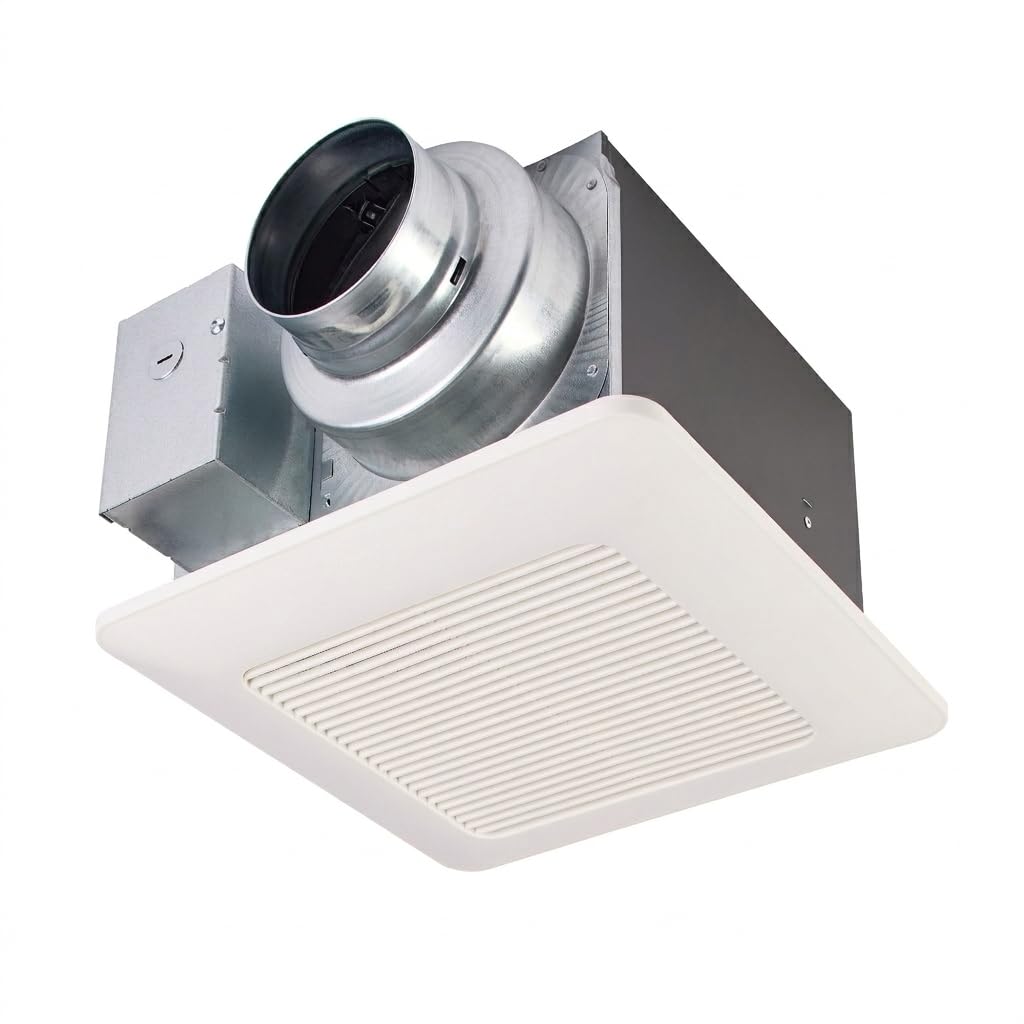
It senses you walk in and senses the steam rise — you never touch a switch.
This is the fan that runs itself. Motion and humidity sensors trigger it, an adjustable delay timer keeps it going after you leave, and a Pick-A-Flow selector lets you choose 50, 80 or 110 cfm to fit your room. The ECM motor drives it down to under 0.3 sone — a near-silent level far below the 1.0 sone rating most picks here share.
The sensor combination is the feature that earns its keep. It clears humidity before it builds and eliminates bathroom fog, and the Flex-Z fast installation bracket speeds the drop-in mount. It is the premium pick here, and the price reflects the sensing hardware and the very low noise number — but for a lot of people the hands-off operation is the reason to spend more.
The one limit to size up honestly: a sensor-driven fan is smart, but it is not a super-powered one. It maxes at 110 cfm, the same as several cheaper picks. Buy it for the automation and the near-inaudible motor, not for airflow beyond everything else here.
The hands-off win: motion plus humidity sensing with an adjustable delay means the fan turns on and off without you. No more forgetting to switch it off.
The premium trade: you pay the most here, and the airflow ceiling of 110 cfm is no higher than the mid-range picks.
Set-and-forget buy: the fan for anyone who wants the bathroom ventilated automatically and as close to silent as it gets.
Not for you if: you want the strongest airflow for the money and do not need sensors.
Know the Specs
CFM (airflow volume)
CFM is cubic feet per minute — the volume of air the fan pushes out each minute. It is the single number that decides whether a bathroom clears. Match it to your room’s square footage using the manufacturer’s rating. A 50 cfm fan rated for 50 square feet is fine in a hall bath; a 110 cfm fan rated for 105 square feet suits a bigger room. Undersize it and the steam lingers.
Sones (perceived loudness)
A sone measures how loud the fan sounds to the ear. Lower is quieter, and the drop is not linear. A 1.0 sone fan is a gentle hum; a 0.8 sone is noticeably softer; an under-0.3 sone unit is close to inaudible. If the bathroom shares a wall with a bedroom, that low number is worth paying for.
Cutout and duct size
The cutout is the hole in your ceiling the housing drops into. The duct diameter is the pipe the air exits through, and 4 inches is the common household size. Measure both before you buy. A fan built for a 7.75-inch opening will not drop into a 9.8-inch hole without work, and vice versa.
Room-side retrofit
A room-side fan installs entirely from below the ceiling, so you never crawl into the attic for a replacement. That is a major labor saver. Look for the words “no attic access” or “room-side installation” if you are swapping an old fan yourself.
Common Questions
Will a new replacement fan fit the hole my old one left?
How do I know what CFM my bathroom needs?
Is 1.0 sone quiet enough for a bathroom next to a bedroom?
Can I install a replacement fan without attic access?
What duct diameter do most replacement bathroom fans use?
Is a fan with an LED light worth it over a separate light fixture?
How long should a bathroom fan last?
Do motion and humidity sensors actually help?
Can I mount a replacement fan over the tub or shower?
What is the difference between the two Broan-NuTone fans here?
The Bottom Line
Start with the hole you already have. For most small bathrooms, the Homewerks 7140-50 is the pick to beat: it installs without cutting a new hole, has a 4-inch duct connector, runs at 1.0 sone (a measure of sound; lower is quieter) at 50 cfm (cubic feet per minute, the airflow rate), and carries the certifications to back it. Buyers rate it 4.5+ stars across 600+ ratings, with quiet operation the most repeated praise.
If you want more airflow without a big jump in spend, the JOEAONZ 110 CFM nearly doubles the Homewerks’ capacity on the same duct. If a drop-in fit is your priority, the Amico 80 CFM seats into tight openings without an attic trip. And if you want the fan to run itself, the Panasonic WhisSense brings motion and humidity sensing at the quietest sone level on the list.
One honest nudge: measure your cutout and duct first, then confirm the fan’s rated square footage against your bathroom. That two-minute check is what keeps a swap to an afternoon instead of a drywall project.
How we choose
We do not accept paid placement. Every pick is matched to a real buyer and a real use-case; we do not hands-on test units.
Sources
Specifications: manufacturer listings and product documentation. Review insights: verified customer reviews, as of November 2026. Pricing: not shown on this page (it changes often); check the current price via the retailer link.
As an Amazon Associate, Tactical Gear Guy earns from qualifying purchases. This does not affect which products we feature.