Specs are compiled from manufacturer listings and verified buyer reviews and can change over time — please confirm the key details on the product page before buying.
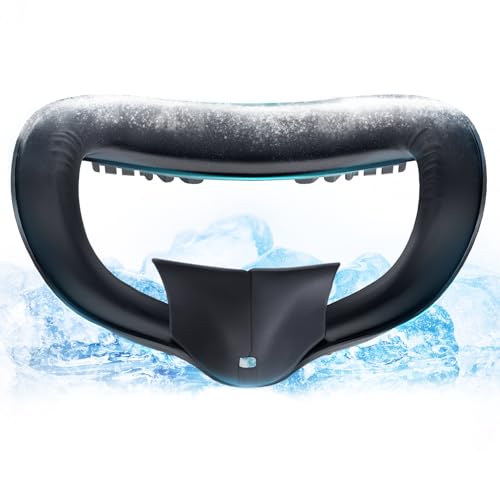
The stock foam pad on your Quest 2 traps heat and soaks up sweat within a half hour. It traps heat, soaks up sweat within a half hour, and presses a red ring into your face. A replacement facial interface fixes it for less than the cost of a game. These are the Quest 2 interfaces worth your money, starting with the best overall.
This guide is built by comparing the manufacturers’ published specifications and the patterns across verified customer reviews, so you get each pick’s real strengths and trade-offs instead of marketing spin.
Every pick below is confirmed to fit the Quest 2 and nothing else, so you are not guessing at compatibility. Here is what actually separates the good pads from the sweaty ones in a quest 2 facial interface.
Top Picks

How To Choose The Best Quest 2 Facial Interface
Start with the material against your skin, because that single choice decides whether you finish a session comfortable or peeling the pad off. The stock pad is foam wrapped in a thin cover. Almost every upgrade swaps that for PU leather (a smooth synthetic leather that wipes clean) or a cooling gel layer.
Cooling gel versus plain PU leather
A cooling gel pad holds a chill for roughly the length the maker states, then warms to skin temperature. That suits short, intense sessions. Plain PU leather does not cool you, but it wipes clean in seconds and lasts longer between washes. Pick gel if heat is your main problem; pick leather if sweat cleanup is.
Pad thickness and your field of view
The cushion thickness sets how far your eyes sit from the lenses. Thinner pads push your face closer and widen the field of view, but can let your eyelashes brush the lens. Thicker pads relieve pressure on your cheekbones. Some kits ship two or three thicknesses so you can test both.
Vents, nose guards, and light leaks
A ventilation grille or passive air vent moves warm air away from the lens, which is what stops fogging mid-game. A nose guard or nose pad blocks light coming in under the headset. Both are worth having; neither costs much to include.
Side-by-Side Comparison
| Model | Best For | Pad Material | Ventilation | Extras Included | Amazon |
|---|---|---|---|---|---|
| DESTEK Cooling Face Pad★ Best Overall | Hot rooms and sweaty sessions | Cooling gel + memory foam | Ventilation holes | Nose pad | Amazon |
| AMVR Multi-Cushion KitMost Versatile | Tuning fit and field of view | PU leather + sponge foam | Vent holes in pad and bracket | 3 cushions, nose pad, lens cover | Amazon |
| RCstyle Fan Cooling Mask | Fogging and long sessions | Silicone Lycra surface | Battery fan, 2 speeds | Fan unit | Amazon |
| VIBOSIK Face Pad | Nose-bridge comfort | PU leather + sponge foam | Passive air vents | Velcro-mounted pad | Amazon |
| DTianSir Interface Set | Full replacement kit on a budget | PU leather foam | Vent and exhaust holes | Bracket, lens cover, nose pad | Amazon |
| AMZDM Face Pad Set | Sharing the headset with others | PU leather foam (2 cushions) | — | Lens cover, thumbstick caps, 5 eye covers | Amazon |
| SOULWIT Cooling Face Pad | Two pads for one headset | Cooling gel + protein leather | Airflow grilles top and bottom | Two covers, glasses spacer | Amazon |
Detailed Reviews
1. DESTEK Cooling Face Pad for Meta/Oculus Quest 2
Our pick — 4.5+★ from 300+ verified ratings; the strongest balance of quality and price.
A gel layer that chills your face instead of a warm foam sponge.
The gel layer is the whole point here. DESTEK rates the cooling effect at roughly 20 minutes under typical conditions, which covers most rounds of a fast game before the pad settles to skin temperature. Ten seconds of installation means it goes on without tools and comes off the same way, so you can swap back to stock whenever you like.
What wins people over is how the pad holds up build-wise, and comfort runs right behind it. The memory foam plus bouncy gel has a jelly-like give, so it does not dig into your cheekbones the way a firm foam ring can. Its moisture-wicking fabric and ventilation holes keep the surface drier than the PU leather pads here, and the reshaped nose piece has proven to adapt across different face shapes and sizes.
Your cooling window is short: about 20 minutes is the realistic limit. The maker’s own tip is to chill it in the fridge first for a longer cold stretch, so treat it as a reset between matches, not an all-evening chill. It also fits the Quest 2 only, with no compatibility for Quest 3 or 3S, and there is no glasses ring spacer in the box.
What earns the top slot
- Gel cooling rated at roughly 20 minutes per charge of cold, refreshable in the fridge
- Memory foam and gel combination that does not feel heavy on the face
- Ventilation holes and moisture-wicking fabric fight sweat build-up
- Installation takes under 10 seconds with no tools
Where it asks something of you
- Cooling fades after the stated window and needs re-chilling
- Quest 2 only, and no glasses ring spacer included
- Highest price in this group
Reach for it if: your sessions end with a hot, damp face and you want a genuine chill against your skin.
Look elsewhere if: you play marathon sessions and need something that stays cold for hours rather than minutes.
2. AMVR Face Pad Meta Quest 2
Three cushion depths in one box, so you can dial in your own field of view.
This is the only kit here that lets you change the distance between your eyes and the lenses. You get a 12 mm cushion, an 8 mm cushion, and two 4 mm side wedges, plus the interface bracket, an updated nose pad, and a lens protector. AMVR’s own testing puts 8 mm as the thickness that relieves face pressure while sitting closest to the lens without your eyelashes pressing against it.
Build quality is the thing buyers talk about most, with comfort close behind. The PU leather and sponge foam feels softer than the hard stock ring, and the ventilation structure is designed around air circulation to keep your face cooler and cut lens fogging. With thousands of owners behind it, it is comfortably the most-reviewed pad on this list.
The honest trade-off is fit consistency. Some owners find it does not clamp onto the headset as tightly as they would like, and light blocking splits both ways — effective for many, yet a few report fogging inside half a minute. Those are the two things to watch for. Everything else here, from the swappable cushions to the high-density EVA lens cover, is a genuine upgrade over stock.
Why the tinkerers pick it: You can quickly find out whether you prefer a wider view or softer cheek pressure by swapping between the 12 mm and 8 mm cushions, and the 4 mm side wedges fine-tune the corners.
Worth knowing: The set is built for Meta Quest 2 and Oculus Quest 2 only, and does not fit Quest 3, 3S, Quest Pro, or Quest 1.
Best fit for: anyone who wants to experiment with pad thickness rather than accept one fixed depth.
Think twice if: you want a pad that snaps on and never moves — the fit is the fiddly part here.
3. RCstyle Fan Cooling Mask for Meta/Oculus Quest 2

The only pad here that moves air on purpose, with a fan built into the mask.
You get two turbo blades that push air across the lens area in two adjustable speeds, so you stop waiting for fog to clear and never let it form in the first place. The 700 mAh battery runs for a stated 3.5 hours, which covers a long evening of play before you need to recharge, and the fan noise sits between 43 and 50.6 dB — quiet enough to sit under game audio.
Functionality is what buyers rate highest, with fog reduction following close behind. The mask surface is a skin-friendly silicone Lycra that wipes clean, and at 59.7 g the fan unit does not drag the headset forward. The 6.93-inch pad width leaves room for myopia lenses too, so glasses wearers are not squeezed.
Where it stumbles is comfort. Some find the mask comfortable and the airflow welcome, while others feel discomfort within a few minutes and want more air movement than the fan delivers. It is a fair fit-note, not a flaw — this one rewards people who prioritize a clear lens over a plush cushion.
The fan is the pitch: Two speeds, a stated 3.5 hours from the 700 mAh battery, and noise between 43 and 50.6 dB — an active defogger rather than a passive vent.
Where it asks patience: The comfort verdict is split. If the shape of the mask does not match your face, the airflow will not make up for it.
Pick this one if: fog is your enemy and you would trade a little cushion softness for a clear view all session.
Pass on it if: you dislike any weight or bulk on the front of the headset.
4. VIBOSIK Face Pad for Oculus Quest 2
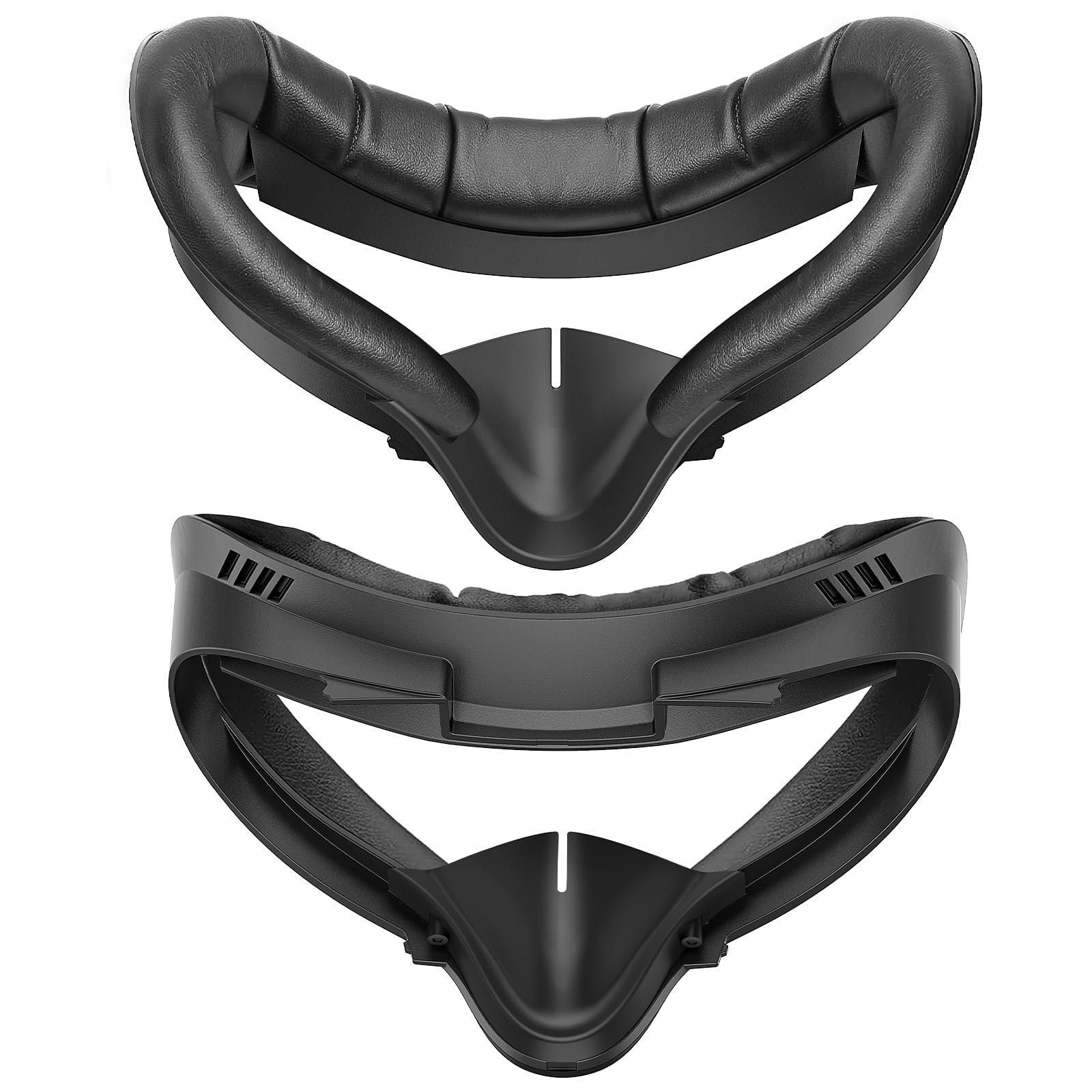
A nose-bridge cut that seals the light leak under your nose.
Fit is where this pad earns its keep, and the nose bridge is the reason. The ergonomic streamline shape is cut to sit flush against the face, which is what keeps stray light out and pushes your view closer to the lens. Its passive air vents do the fog-fighting work without a fan, moving warm air up and out through the pad itself.
The PU leather surface is sweat-proof and wipes clean with a cloth or wipe in seconds, then airs out before the next session. Velcro mounting means the pad lifts off for washing without you fighting the interface frame, and the whole cover clicks back into place when you are done. It is a simple, well-made piece rather than a gadget-laden kit.
What it does not do is give you options. There is one cushion, one thickness, and no lens cover or thumbstick caps in the box — unlike the AMVR kit, which swaps between three cushion depths. If you want to tune your field of view or kit out the whole headset, this is not the set for that.
What it gets right
- Ergonomic shape fitted to reduce pressure and red marks across the nose and cheeks
- Passive air vents improve circulation and cut fogging without a battery
- Sweat-proof PU leather wipes clean and the Velcro pad detaches for washing
- Simple click-in frame installs without tools
The limits worth knowing
- One cushion only, with no thickness options to tune your field of view
- No lens cover or thumbstick extras in the set
Suits you when: the stock pad leaves a gap at your nose that lets light through and ruins the picture.
Not for you if: you want a full accessory kit with lens protection and spare cushions.
5. DTianSir VR Facial Interface Set for Oculus Quest 2

Bracket, foam pad, lens cover and nose pad in one box.
You get the full replacement stack here: a facial interface bracket, a soft foam face cover, a VR lens cover pad, and an anti-leakage nose pad. That lens cover earns its place — it sits over the lenses when the headset is idle so dust and scratches stay off the part you cannot replace.
Quality is the aspect buyers single out most, with fit right behind it. The PU leather wraps around the face and is meant to reduce the indentations that prolonged play leaves on your cheeks. Vent holes at the top and bottom of the interface push heat away, which does double duty: it keeps your face cooler and helps stop the lenses fogging up. Wiping the cushion down after a session keeps sweaty odors from settling in, and the leak-proof nose pad fits a range of nose sizes to keep outside light out.
The caveat sits at the edges of the set. Some owners question how long the foam will hold its shape over the long run, and value opinions split both ways.
What stands out: The interface frame adds its own exhaust holes on top of the pad vents, so heat has somewhere to go instead of sitting against the lens.
The honest limit: Durability is the open question — the foam and bracket are the parts to keep an eye on.
The right call for: a first-time replacement buyer who wants the bracket, lens cover and nose pad together in one order.
Keep looking if: you expect the foam to see years of daily use without softening.
6. AMZDM VR Facial Interface Oculus Quest 2

Two cushions and five disposable eye covers for shared headsets.
Two PU leather foam replacements come in this set — one standard, one comfort — so you can swap the cushion to change how much support you want under your face. The hygiene angle is the real draw: five disposable eye covers lay over the pad and keep sweat off the headset itself, which is exactly what you want when friends or family cycle through.
Quality is the strongest thread in the feedback, with value running second. The faux leather surface is sweat-proof and wipes down, and the removable nose guard blocks light leaking around the nose. You also get a lens cover, a pair of thumbstick covers for extra grip, Velcro for mounting, and a cleaning cloth. At 0.18 kg the set stays light on the headset.
Fit is the split point. Some owners find it perfect; others say it does not seat properly, and the face band has been known to pop off in use. That is the risk a multi-cushion Velcro design carries. Choose it for the hygiene extras and the two cushion options, not for a rock-solid single-mount fit.
What it brings to the table
- Two PU leather cushions — standard and comfort — for different support levels
- Five disposable eye covers keep sweat off the headset when sharing
- Lens cover, thumbstick covers and cleaning cloth in one order
- Removable nose guard cuts light leakage around the nose
What to keep an eye on
- Seating is hit-and-miss; the face band can pop off
- Velcro mounting is less secure than a click-in bracket
Made for: a household or party setup where several people wear the headset in one night.
Consider another pad if: you want a single cushion that locks on and never shifts.
7. SOULWIT Cooling Face Pad for Meta (Oculus) Quest 2
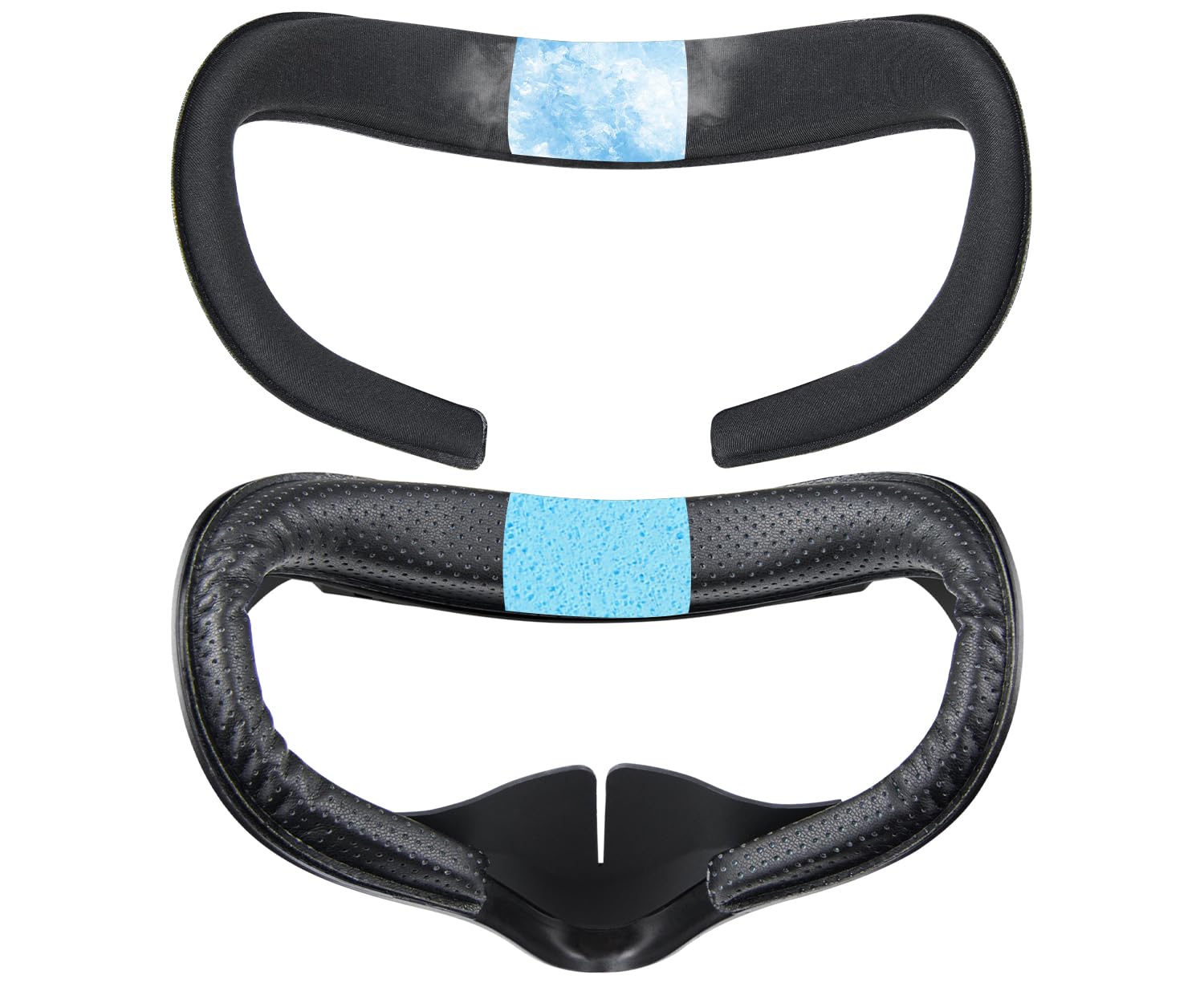
A cooling gel cover and a protein leather cover in one box.
Two covers arrive in the box. One is a soft cooling gel layer under breathable ice-silk fabric, made to wick sweat and keep your forehead cool through hot-summer sessions. The other is a protein leather cover for when you want a straightforward wipe-clean pad. Airflow grilles at the top and bottom move air across the face, and the nose flap blocks light and cuts interference.
Build quality takes the top spot in the feedback, with fit close behind. The covers are stitched and glued to resist splitting, which matters because a peeling pad is the most annoying failure in this category. Both fit the Quest 2 with the glasses spacer installed, and neither needs tools to swap.
Reliability is the one split note. Some owners see the cooling layer keep working over time, while others report it stopping entirely. That is the reason to treat the gel cover as the bonus and the leather cover as the workhorse — you still have one good pad even if the gel gives out.
The value read: Two full covers and a glasses spacer give you a gel-cushion option and a leather option for roughly what a single gel pad costs elsewhere.
The realistic downside: Gel performance is not guaranteed to last, so buy this for the pair, not for the cooling alone.
Great fit for: someone who wants to try cooling on hot days and a plain leather pad on the rest.
Better to skip if: your main reason to buy is cooling and you need it to work reliably, not as a secondary option.
Know the Specs
Pad material: gel versus PU leather
A cooling gel layer holds a chill for a set window — one maker rates it around 20 minutes — which suits short, hard sessions. PU leather (smooth synthetic leather) does not cool you, but it wipes clean and resists sweat odor. If heat is your problem, go gel. If cleanup is, go leather.
Cushion thickness and field of view
A thinner cushion puts your eyes closer to the lens and widens the field of view, while a thicker one takes pressure off your cheekbones. Pad thicknesses in these kits run from 4 mm to 12 mm, and multi-cushion sets let you try more than one before you decide.
Ventilation: passive vents versus a fan
Passive vents are holes in the pad or bracket that let warm air escape; they cost no battery and add no weight. A powered fan moves air continuously and can stop fog from forming at all, but adds a battery, a charge to manage, and some noise.
Light blocking and the nose seal
A nose pad or nose guard closes the gap under the headset so outside light does not wash out the screen. A poor seal shows up as a gray haze around the edges of your view. A good one sharpens contrast and makes the headset feel more enclosed.
Common Questions
Will a Quest 2 facial interface fit the Quest 3?
Does a cooling gel pad actually stay cold through a session?
How do I stop my lenses fogging up while I play?
Will a PU leather pad make me sweat more than the stock foam?
Can I wear glasses with these facial interfaces?
Why does a thinner cushion give me a wider view?
How do I clean a Quest 2 face pad without damaging it?
Is a fan cooling mask worth it over a vented pad?
Do these pads work with the official Quest 2 glasses spacer?
The Bottom Line
The strongest all-round upgrade for most people is the DESTEK Cooling Face Pad, because a gel layer against your skin plus memory foam and vents fixes the heat and sweat problem in one swap. Want to tune your viewing distance instead? The AMVR kit hands you three cushion depths to experiment with. And if fog is what keeps cutting your sessions short, the RCstyle fan mask is the only pad here that blows air to clear it.
How we choose
We do not accept paid placement. Every pick is matched to a real buyer and a real use-case; we do not hands-on test units.
Sources
Specifications: manufacturer listings and product documentation. Review insights: verified customer reviews, as of November 2026. Pricing: not shown on this page (it changes often); check the current price via the retailer link.
As an Amazon Associate, Tactical Gear Guy earns from qualifying purchases. This does not affect which products we feature.