Specs are compiled from manufacturer listings and verified buyer reviews and can change over time — please confirm the key details on the product page before buying.
Buying a solo tent is mostly a fight against two things: a wet sleeping bag and a pack that suddenly weighs too much. This guide covers nine solo tents that actually sleep one person, from a pop-up that pitches in 3 seconds to a four-season dome built for snow, and every pick here has been checked against its own published specs and owner experience.
This guide is built by comparing the manufacturers’ published specifications and the patterns across verified customer reviews, so you get each pick’s real strengths and trade-offs instead of marketing spin.
You will see how floor length, peak height, waterproof coating and packed weight decide whether a shelter works for your body and your route. The best one-person camping tent is the one whose floor length, coating rating and packed weight match the trip you actually take.
Top Picks


How To Choose The Best One Person Camping Tent
Most solo tent mistakes are made before you leave the house, in the shop. A shelter that is two inches too short or a pound too heavy is a problem you carry all night and all day. Here is what actually matters.
Start with your own body length, not the tent name
A tent labeled one-person can still leave your head pressed against the wall. Check the floor length in inches against your height and add room for a sleeping pad. The ALPS Lynx 1 lists a 90-inch floor, while the Naturehike solo lists 80.7 inches — that gap is the difference between stretching out and curling up. Peak height matters too, because 3 feet of headroom lets most adults sit up, while a 24-inch peak means you change clothes lying down.
Read the waterproof number, not the word “waterproof”
A coating rating in millimeters (shown as PU plus a number) tells you how much water pressure the fabric resists before it seeps. Higher numbers mean more protection in sustained rain. The GEERTOP bivy lists a PU5000mm rainfly and a PU8000mm floor. The Night Cat pop-up lists PU2000mm. Both are described as waterproof, but those are very different fabrics, and the second number — the floor coating — is the one that saves your sleeping bag when water pools under you.
Weigh the total against the trail weight
Manufacturers often list two weights: total weight with everything in the bag, and a lighter trail or minimum weight used when you leave certain parts behind. The North Face Stormbreak 1 lists a 3 lbs 7 oz total, a 3 lbs 1.4 oz trail weight and a 2 lbs 4.6 oz fastpack weight. Compare like with like — a “2 lb” tent claim usually refers to the stripped-down figure, not the bag you actually carry.
Match the season rating to your worst night
A three-season tent is built for spring through fall. A four-season design adds a snow skirt or a fuller fly to block wind-driven snow. Buy for the coldest, wettest night you realistically expect, not the average one. If you camp in summer only, a four-season tent can run hot and stuffy — a trade-off several buyers of the Clostnature and Underwood Aggregator shelters note on warm nights.
Side-by-Side Comparison
| Model | Best For | Floor Area | Stated Weight | Waterproofing | Amazon |
|---|---|---|---|---|---|
| ALPS Mountaineering Lynx 1★ Best Overall | Solo backpackers who want an easy pitch | 20 sq ft | 4 lbs 1 oz | 1500 mm fly / 2000 mm floor | Amazon |
| Night Cat Pop-up TentInstant Pitch | Fast pitches and car-camp weekends | 25.31 sq ft | 1.5 kg | PU 2000 mm | Amazon |
| Underwood Aggregator 4 SeasonFour-Season Value | Cold-weather camping on a budget | 2748.08 sq in | 4.4 lb | PU5000 mm | Amazon |
| Clostnature 4 Season | Winter trips with gear inside | 87 x 32 in floor | 4.44 lbs | PU coated, sealed seams | Amazon |
| GEERTOP Ultralight Bivy | Minimalist fast-and-light trips | 7 x 30 in floor | 2.9 lb | PU5000 mm fly / PU8000 mm floor | Amazon |
| Naturehike Solo with Footprint | Backpackers who want a footprint included | 80.7 in floor length | 3.63 lb | PU4000 mm fly | Amazon |
| Night Cat Lanshan Bivvy | Trekking-pole backpackers going light | 0.5 sq m | 2 lbs | Waterproof rainfly | Amazon |
| OneTigris Stella | Four-season camping in humid weather | 28.39 sq ft | 4.2 lb / 1.9 kg | 3000 mm | Amazon |
| The North Face Stormbreak 1 | Multi-day backpacking with a big brand | 18.13 sq ft | 3 lbs 1.4 oz trail | DWR finish, seam-taped floor | Amazon |
Detailed Reviews
1. ALPS Mountaineering Backpacking-Tents Lynx 1
Our pick — 4.5+★ from 900+ verified ratings; the strongest balance of quality and price.
A 90-inch floor and a two-pole pitch that most people learn on night one.
The reason this dome earns the top slot is simple: it is the easiest tent here to get right on the first try. The Lynx 1 sets up with aluminum two-pole construction, so there is no puzzle to solve in the dark. Owners describe a pitch of about 15 minutes with no experience. It stands freestanding, which means you can pick it up and shift it if your first site turns out to be on a root.
Its 20 square feet of floor measures 90 inches long by 32 inches wide, with 3 feet of center height. That length beats the Underwood Aggregator solo’s 86.6-inch floor and the Naturehike’s 80.7-inch floor, so a tall sleeper gains real stretch-out room. The trade-off to know before you buy is width. Set against the Night Cat pop-up’s 25.31 square feet, this is the leaner interior — that floor area gap works out to 27% more room in the pop-up. You sleep in the Lynx 1, you do not sprawl in it.
Weather protection is the other half of the story. A factory-sealed 75D 185T rainfly carries a 1500 mm coating, and the 75D 185T poly taffeta floor carries 2000 mm. In plain terms, those are the fabrics that keep rain from soaking through while you sleep. Half-mesh walls move air so condensation does not build on the ceiling. The brand’s published weights split into 4 lbs 1 oz total and 3 lbs 5 oz minimum, with a packed size of 17 inches long by 5 inches across. A vestibule and mesh pockets give your pack and boots a spot out of the sleeping zone.
What earns its keep
- 90-inch floor length is the longest in this lineup, which pays off for tall sleepers.
- Two aluminum poles and a freestanding dome mean a straightforward pitch.
- Factory-sealed rainfly at 1500 mm and a 2000 mm floor keep weather out.
- Half-mesh walls cut condensation on warm nights.
- Vestibule, gear loft and mesh pockets organize your kit.
Where it asks you to compromise
- At 4 lbs 1 oz total, it sits heavier than the bivy-style picks here.
- The 20 square feet of floor is the tightest interior in this group.
- Width of 32 inches leaves little room for a wide pad plus gear.
Solid first tent: Pick this if you want the simplest pitch and the longest floor without paying premium money.
Think about width: If you carry a wide pad and want to spread out, the roomier pop-up suits you better.
2. Night Cat Pop-up Camping Tent
Throw it on the ground, spread the pole, and you are inside before the kettle boils.
If your camping is car-camp weekends, festival fields, or a quick roadside stop, this is the pick to beat. You throw the tent to the ground and spread the pole, and it opens in 3 seconds. That is the whole pitch. Its 25.31 square feet of floor measures 7.7 by 3.3 feet with 2.95 feet of height, and it fits a twin-size air mattress according to the maker.
The fun part ends when you have to pack it. The fold-back method asks you to shape the tent like the number 8 and repeat that twice. Practice it in your yard before you travel, and packed size drops to 21 by 21 by 2 inches with a hand strap and two back straps. Buyers report that the folding gets fast with repetition and awkward the first couple of times. The 190T polyester taffeta carries a PU 2000 mm coating with taped seams on every join, and 6mm stretched poles with pegs and guylines hold it steady in wind.
Ventilation is built in with one large door and two wide windows, and the door can be propped open with your own trekking poles to form a small porch. Be realistic about rain, though. Wet weather is the most split topic on this tent — plenty of owners stay dry, and some report water finding its way in during light rain. A seam-seal spray on the fly is cheap insurance. Height is the other honest limit: a 6’4″ owner found it snug, and the maker’s roomy-for-one claim fits a 5’6″ camper far better than a very tall one.
The quickest shelter here: No other tent in this group opens in 3 seconds, and the 25.31 square feet of floor makes it the roomiest per dollar of setup speed.
The honest catch: Folding it back down is a learned skill, and water resistance is the most debated point — treat the fly to a fresh coat if you camp in real rain.
Best for car campers: Short trips where pitching speed beats shaving ounces.
Look elsewhere if: You stand over 6 feet or plan to sleep through a storm.
3. 1/2 Person 4 Season Backpacking Tent
A snow skirt and a 5000 mm coating for the backpacker who camps past the first frost.
When the forecast turns cold and wet, this is the shelter that steps forward. The snow skirt around the base blocks spindrift (wind-blown snow) from creeping in, and it rolls away when there is no snow on the ground. A full-cover rainfly with a PU5000 mm coating and aircraft-grade aluminum poles cover the winter side of the job, while the mesh body and double-layer door keep bugs out in warmer months. That dual personality is why the maker calls it a four-season tent.
Size is where you have to be honest with yourself. The floor runs 86.6 inches by 31.8 inches, and that length is 4% shorter than the ALPS Lynx 1’s 90 inches while the width comes within 1% of the Lynx 1’s 32 inches. In practice, it is a solo shelter with a little spare room. A 6’4″, 225 lb owner describes being comfortable once inside, and a buyer who took it on two five-day Rockies trips reports it kept them dry. The 4.4 lb packed weight stores down to 5.1 by 15 inches, which slides into a pack side pocket.
Warmth is a genuine strength and also the point to think about. The full fly and snow skirt hold heat well, which is exactly what you want on a freezing night. On a muggy summer evening, that same envelope can feel close. A camping light hook and a mesh pocket keep the interior usable, and the two-way zipper is a small touch that matters at 2 a.m. The recurring honest note is material thickness — the fabric is light, so pack a patch kit and treat the corners gently.
Built for the shoulder season: The snow skirt plus PU5000 mm fly earns its place when camping stretches into winter.
Where it runs warm: That same sealed-up design makes July nights stuffier — a summer-only camper loses the benefit.
Reach for this one: Late-season backpackers who need one tent for cold, rain and bugs.
Pass it by: Hot-weather campers who want maximum airflow.
4. Clostnature 4 Season Backpacking Tent

Two D-shaped doors and two vestibules in a winter tent most people can carry solo.
Interior space is what wins people over on this one, and the numbers back it up. The floor measures 87 inches by 32 inches with 3 feet of peak height, and the interior runs 7’3″ by 2’8″ by 3′. Owners single out that room more than any other quality, and a 6’0″ camper describes fitting a sleeping pad and a pile of paddling gear without a fight. The weight lands at 4.44 lbs with a packed size of 15 by 5.1 by 5.1 inches.
What separates it from the Underwood Aggregator model above is the layout. This one carries 2 D-shaped doors and 2 vestibules, so you enter from either side and stash a pack in one while you sleep in the other. Snow flaps seal out spindrift, and a mesh-and-fabric double-layer door lets you vent when the air inside gets heavy. The maker lists setup at 3 minutes with two aluminum poles, freestanding and simple enough for someone with no experience, and includes a pole emergency repair kit in the bag.
The fabric story is a polyester rainfly, groundsheet and bathtub floor all with a PU coating and factory-sealed seams. That is a real four-season build, and the one-year guarantee on material and workmanship is a fair safety net. The honest note is the same one every winter tent faces — sealed seams mean limited breathability when it is warm and humid, so on a mild night you will want the door cracked. Trail weight stays lean enough for a multi-day haul if you split gear.
Why solo campers gravitate here
- 87 x 32 inches of floor with 3 feet of headroom gives a genuine sit-up-and-spread-out space.
- Two doors and two vestibules keep gear out of the sleeping area.
- Snow flaps and a PU-coated, seam-sealed body handle cold weather.
- A pole repair kit ships in the bag.
The fine print worth reading
- At 4.44 lbs it is not the lightest solo option in this lineup.
- A closed winter body can get muggy on a warm night.
Pick it for the layout: Two doors and two vestibules make it the friendliest solo winter tent here for managing gear.
Weigh the load: Ultralight purists should look at the bivy picks instead.
5. GEERTOP Ultralight Bivy Tent
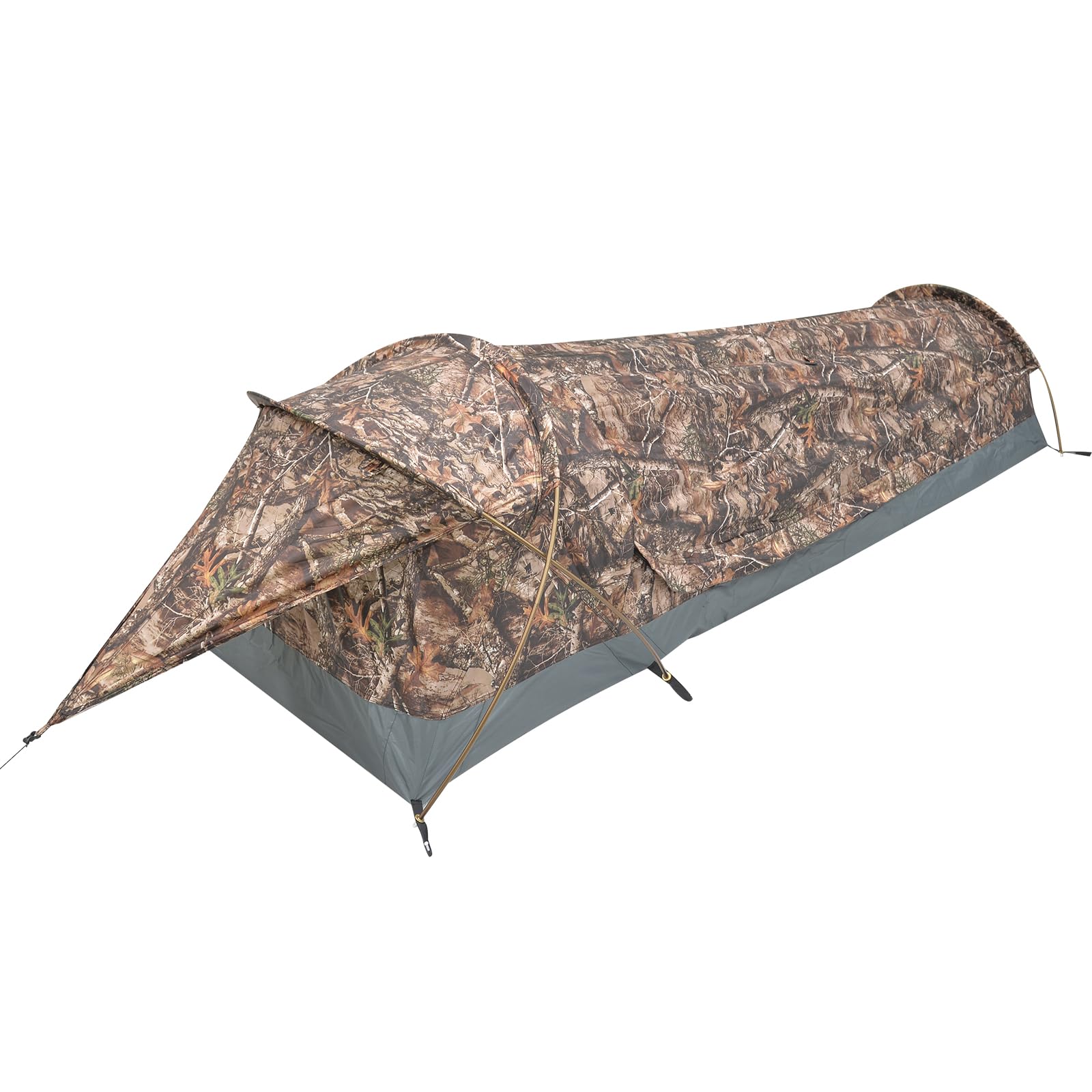
The lightest floor coating in the group paired with a pack that carries like a water bottle.
Two numbers make this bivy interesting. It weighs 2.9 lbs and packs to 17 by 5 by 5 inches, so it disappears into a daypack. And its floor carries a PU8000 mm coating with a PU5000 mm rainfly, both fully seam-taped and double-stitched. That 8000 mm floor rating is the highest waterproof figure in this whole list, which matters because the floor is what sits in the puddle.
The catch is that a bivy is a sleeping pod, not a room. Interior space runs 84.6 by 29.5 inches with a 24-inch peak, and setup takes about 2 minutes with a three-pole frame and shock-corded aluminum poles. You sleep and you eat in it, and you do not sit up. Anyone taller than six feet should measure before ordering, because head and foot clearance is tight in a 29.5-inch-wide shell. The 24-inch height also removes any chance of changing clothes upright.
Where this tent splits opinion is the weather and the airflow. Some owners call it rainproof through a night of weather, and others report puddles of water inside after heavy rain, which points at seam care rather than the coating itself. Ventilation is similarly mixed — the top mesh panel and two windows help, yet a narrow pod traps warm, damp air. Carry a waterproofing spray and treat the seams before your first wet trip. A head-area air vent helps and the top flap can stay open with the bug screen closed.
Lightest footprint: At 2.9 lbs with a PU8000 mm floor, it is the fast-and-light pick for a solo hiker who counts ounces.
Know the shape: A 24-inch peak and 29.5-inch width mean this is a sleep pod — great on the trail, cramped for lounging.
Choose it for the trail: Minimalist backpackers who value a light pack and a fast pitch.
Not for sitters: If you want to sit up and read, this is the wrong shape.
6. Naturehike Backpacking Tent for 1 Person

The only tent on this list that ships with its own ground sheet in the bag.
A footprint is the sacrificial sheet that sits under the floor of your tent and takes the abrasion from rocks and roots. Most makers sell one separately, which is a hidden extra cost. This Naturehike solo includes it. Add a 43.3-inch interior height — the tallest headroom in this group — and a 3.63 lb weight, and solo backpackers get a lot of walking-around-the-tent value for a mid-range shelter.
The 20D silicone-coated nylon rainfly carries a PU4000 mm coating, and the floor uses 150D rip-stop oxford with a PU3000 mm coating, with taped corners and seams. The 7001 aluminum alloy is described as holding firm in heavy wind and rain. Setup uses a free-standing two-pole design the maker rates at under 5 minutes, and it lists tent dimensions of 80.7 by 12 plus 37.4 plus 12 inches wide by 43.3 tall. A 5’10”, 270 lb owner reports plenty of room without going overboard for one person.
Two layers of fabric create an air gap between fly and inner tent, and a high-density B3 mesh inner with windows moves airflow. The D-shaped two-way zipper door makes entry easy. Size is the honest limit — a backpacker found no room for a pack inside and kept it in the vestibule, so plan on your bag living outside the sleeping zone. The floor length of 80.7 inches is the shortest of the dome tents here, so a very tall sleeper should look up the list.
Worth the extra over entry-level: A footprint plus the tallest headroom on this list makes it an easy solo choice for backpacking.
The limit to weigh: Stow your pack in the vestibule, because the interior leaves no floor space for gear.
7. Night Cat Ultralight Tent 1 Person

Two pounds of nylon for the hiker who already carries trekking poles.
This is the ultralight end of the list, and the name says why: 2 lbs packed. It uses a bivy form factor with a waterproof nylon rainfly and a nylon base, and it comes with stakes and ropes for pitching. One crucial point before you buy — the trekking pole that holds up the shelter is not in the box, so this tent assumes you already carry one. If you do, you save the weight of a dedicated pole. If you do not, add one to the cost.
The maker lists stakes and ropes as included parts and describes setup as quick and simple. Real-world pitches run around 10 minutes for one person, with some owners folding it back down without trouble. The trade-off to watch is durability at the pole connections — the grommets can be delicate, and one owner had two pull out on a single night. Treat that hardware gently, seat the pole tips fully, and this shelter holds up for repeated trips, with one buyer running half a dozen outings without issue.
The bivy shape is inherently stable and low to the ground, so wind barely gets under it. That said, the stability write-ups are the weakest aspect and the inner net can sag toward your face, with some noting zipper gaps that let insects in. Rain performance splits the room too — some buyers come through thunderstorms dry, and others find gear soaked. Cut a couple of guyline anchor points and seal the zips, and you get the 2 lb benefit without the sag. It also carries more interior room than the spec sheet suggests, with two people fitting per several accounts.
For the gram counter: 2 lbs packed makes this the lightest full-coverage option here, ideal for long treks.
The pole caveat: No trekking pole is included, so this tent only makes sense if you already hike with one.
Pick it if you are already pole-equipped: Thru-hikers and long-trek backpackers who count every ounce.
skip it if you are new: A first-time camper without a trekking pole gains nothing here.
8. OneTigris Stella 4 Season Camping Tent
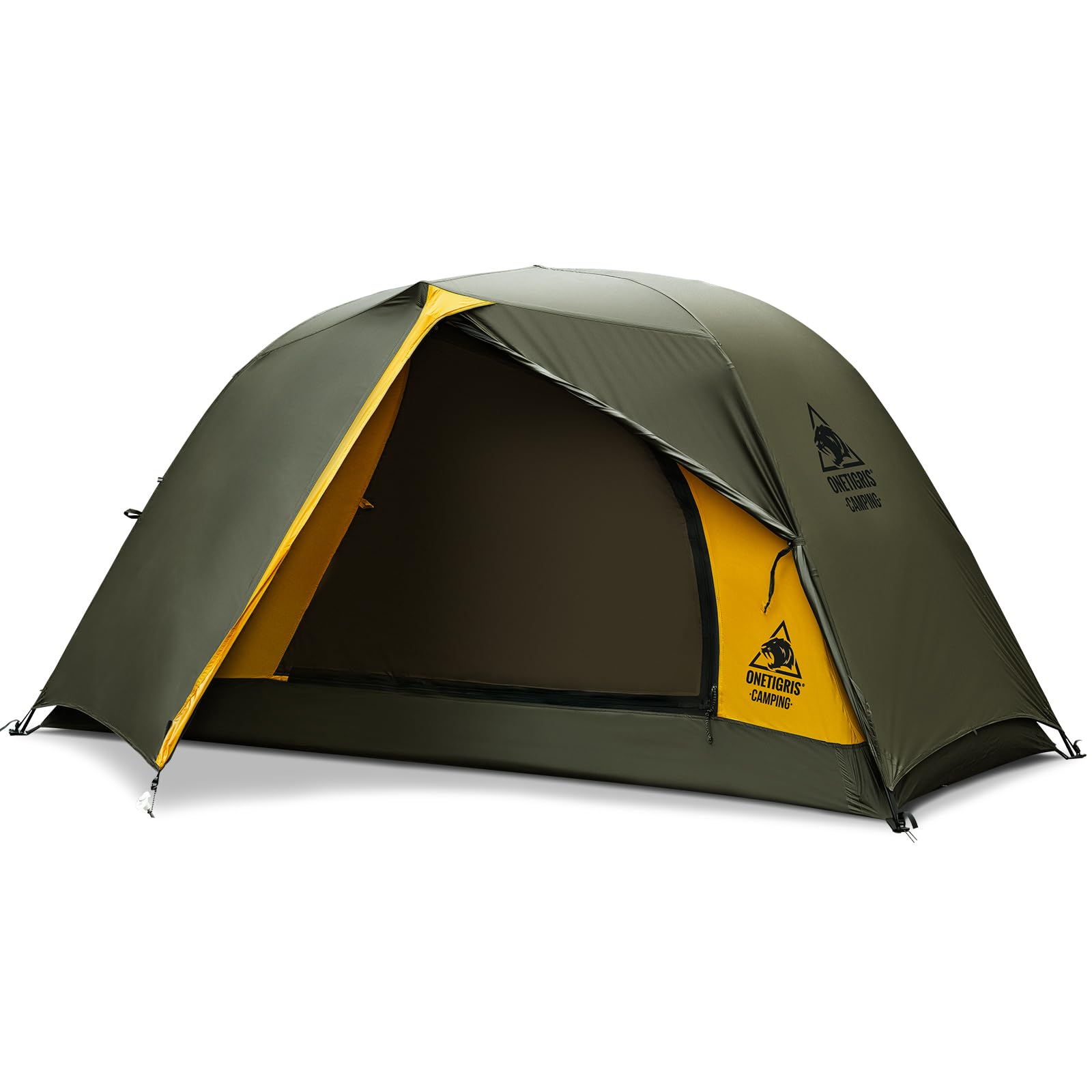
A four-season tent with a removable outer layer that keeps a humid night from turning into a sauna.
Most winter tents make you choose between warmth and airflow. The Stella tries to give you both with a removable blackout outer tent that comes off when you want open mesh. The 20D nylon body with a single-layer silicone coating carries a 3000 mm waterproof rating, and there is a 40D nylon bottom. In everyday terms, that is a fabric rated to shrug off steady rain while the mesh inner keeps air moving.
Interior room lands at 28.39 square feet with a 84.65-inch floor and 45.2-inch peak height, and the packed bag is 20.4 by 5.9 inches. Setup uses flexible poles that cross at the top and anchor at all four corners, and owners consistently clock it under five minutes. Where buyers disagree is the size label — some find it very roomy for one person, while others say it is tighter than expected. One comfortable test: it fits one person, a dog, and a pack, and two people is a stretch.
The warmth angle is what makes it a four-season pick. Buyers describe it staying dry and warm in cool weather and performing well in cold, dry high deserts. That warmth does come with a summer penalty, because limited ventilation can make a warm night uncomfortably hot, so plan to strip the outer layer when the temperature climbs. Weight lands at 4.2 lb / 1.9 kg with a full setup kit of poles, ten stakes, four guy-lines and a storage bag. One owner notes it is a little heavy for backpacking but worth the weight for the warmth.
Choose it for shoulder season: Campers who want a warm, waterproof winter tent that can open up in mild weather.
The limit to know: Warm nights can get hot inside, and the pack weight suits shorter hauls.
9. The North Face Tents Stormbreak 1 One-Person Camping Tent
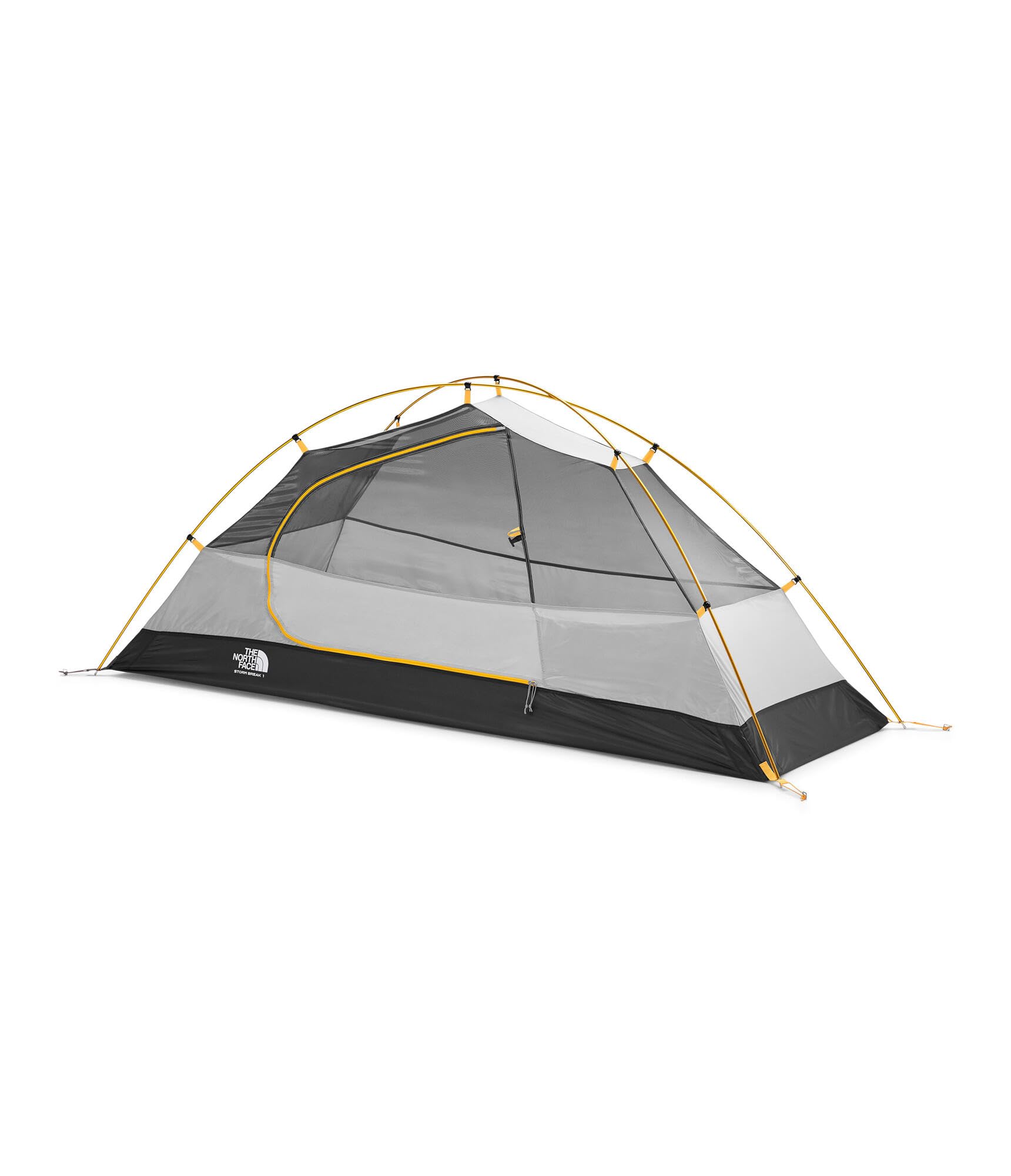
Three pounds, a storm-ready fly, and seams taped the way a big brand does it.
This is the classic one-person shelter, and its selling point is the build. The Stormbreak 1 lists a 3 lbs 1.4 oz trail weight, a 3 lbs 7 oz total weight and a 2 lbs 4.6 oz fastpack weight, so you can strip it down for a fast day out. The rainfly is waterproof with a non-PFC DWR finish and the floor is seam-taped, which together fend off the kind of steady rain that soaks a cheap tent.
The ventilation design is worth understanding. It uses breathable mesh walls with high-low openings, which pull fresh air in low and let damp air out high, so the fly can stay on and condensation still clears. A large door stuffs into an adjacent mesh pocket, and 34 inches of headroom lets an average adult sit up and change clothes. The floor measures 87 by 34 inches across 18.13 square feet, and the large vestibule gives your pack and muddy boots a covered spot.
Here is the honest part. That 18.13 square feet is the smallest floor in this entire group, smaller than the ALPS Lynx 1’s 20 square feet, and short sleepers may love the snug fit while 6-foot-plus campers should measure carefully. Buyers also note the tent is very small inside with no gear room, so the vestibule does the heavy lifting. The footprint that protects the floor sells separately. If you want a big brand with proven weather protection and you are not tall, this is a solid, lightweight backpacking pick.
The weatherproofing you pay for: A waterproof rainfly, seam-taped floor and high-low mesh ventilation are the core strengths of this design.
The size reality: At 18.13 square feet it is the tightest floor on the list, so it suits shorter campers best.
Best for average-height backpackers: Solo hikers who want proven rain protection and quality stitching.
Check your height first: Campers over 6 feet and gear-heavy trips should look wider.
Know the Specs
Waterproof Coating Ratings (mm)
The PU number in millimeters tells you how much water pressure a fabric resists before moisture pushes through. Higher figures mean better protection in sustained rain. The GEERTOP bivy lists an PU8000 mm floor and gets the most protection at ground level; the Night Cat pop-up lists PU2000 mm on its taffeta body. Look at the floor number specifically, because pooled water and the pressure of your body bearing down on a wet floor is where seams fail first.
Floor Area and Floor Length
Floor area in square feet tells you how much space there is overall, while floor length and width tell you whether your body fits. The OneTigris Stella lists 28.39 square feet; the ALPS Lynx 1 lists 20 square feet with a 90-inch length. A long, narrow floor suits one tall sleeper; a wide floor suits a person plus a sleeping pad plus a change of clothes. Measure your body and your pad before you choose.
Total Weight vs Trail Weight
Total weight includes everything in the bag. Trail or minimum weight is what you carry when you leave out certain pieces. The ALPS Lynx 1 lists 4 lbs 1 oz total and 3 lbs 5 oz minimum; the North Face lists three figures down to a 2 lbs 4.6 oz fastpack weight. A tent only genuinely weighs its stripped figure if you are willing to leave those parts behind, so compare like with like.
Peak Height and Sit-Up Room
Peak interior height decides whether you can sit upright. The Naturehike lists 43.3 inches; the GEERTOP bivy lists 24 inches. Below roughly 3 feet you will change clothes lying down. Above that you can sit up, read, and dress without fighting the walls. If you value a room-like feel, weight and height often trade off against each other, so it is worth deciding which you need most.
Season Rating and Snow Skirts
A three-season tent is built for spring through fall. A four-season tent adds a fuller fly, solid panels or a snow skirt to block wind-driven snow, which is why the Underwood Aggregator and Clostnature models include snow flaps. The flip side is airflow — a sealed-up winter body runs hotter in summer. Buy for the worst night you expect, not the average one.
Pop-Up, Freestanding and Pole Designs
Mesh walls and interior fabric breathe, while solid panels and sealed seams hold heat and stop wind. Freestanding domes with aluminum poles pitch with stakes optional. The ALPS Lynx 1 uses two aluminum poles; the GEERTOP uses a three-pole frame; the Night Cat pop-up opens in 3 seconds. Airflow matters most in humid conditions, where condensation builds on the ceiling if air is not moving.
Common Questions
Will a one-person tent fit a tall sleeper?
Can a one-person tent fit two people if needed?
How much waterproofing do I actually need?
Is a bivy the same as a one-person tent?
Do I need a trekking pole to pitch a bivy tent?
How long does it take to set up a solo tent?
Is a four-season tent too hot for summer?
What packed size should I look for in a solo backpacking tent?
Do I need a footprint under my solo tent?
How do I stop condensation inside a solo tent?
The Bottom Line
For most people, the one person camping tent winner is the ALPS Mountaineering Lynx 1 because it pairs the longest 90-inch floor in this lineup with a freestanding two-pole pitch almost anyone can manage on the first try. It holds 4.5+ stars across 900+ owners, and its half-mesh walls and sealed rainfly handle a wet night without drama. If pitching speed matters more than floor length, grab the Night Cat Pop-up Camping Tent with its 3-second setup and 25.31 square feet of floor. And for cold-weather trips where snow is on the ground, the Underwood Aggregator 4 Season Tent with its snow skirt and PU5000 mm coating is the one to reach for.
A fast-and-light hiker saves real weight with the GEERTOP bivy at 2.9 lbs. A winter camper who wants gear room finds it in the Clostnature’s two doors. A humid-weather camper gets the breathable four-season build of the OneTigris Stella.
One last nudge: the ALPS Lynx 1 holds the highest score of the nine picks, so a first-time solo camper can buy it with confidence and learn the ropes on a shelter that will not let a drizzle ruin the night. Whichever you choose, seam-seal it once before you trust it in a storm.
How we choose
We do not accept paid placement. Every pick is matched to a real buyer and a real use-case; we do not hands-on test units.
Sources
Specifications: manufacturer listings and product documentation. Review insights: verified customer reviews, as of November 2026. Pricing: not shown on this page (it changes often); check the current price via the retailer link.
As an Amazon Associate, Tactical Gear Guy earns from qualifying purchases. This does not affect which products we feature.