Specs are compiled from manufacturer listings and verified buyer reviews and can change over time — please confirm the key details on the product page before buying.
A slippery floor is the whole reason you are reading this — and the honest answer is that the outsole, not the brand name, is what keeps you upright. Below are nine boots whose makers explicitly state a non-slip or slip-resistant outsole, sorted by what each one is genuinely best at. Use this as a shortlist: read the outsole description first, then the toe type, then the fit notes.
This guide is built by comparing the manufacturers’ published specifications and the patterns across verified customer reviews, so you get each pick’s real strengths and trade-offs instead of marketing spin.
You will see which outsoles are rated for wet and oily ground, which toe boxes protect against impact, and where fit complaints cluster. The goal is simple: pick the pair that matches your floor, your shift length, and your foot shape — the practical way to shop for non-slip work boots without guessing.
Top Picks
How To Choose The Best Non-Slip Work Boots
“Non-slip” is not one standard — each maker words the claim differently. Some name a specific tread technology, some cite a lab rating, and some just call the sole “slip-resistant.” Your job is to match that claim to the surface you actually stand on: wet concrete, greasy kitchen tile, muddy yard, or icy loading dock.
Read the outsole claim before anything else
The outsole is the bottom layer that touches the floor, and it is the only part that stops a fall. A lug outsole has deep raised blocks for mud and loose ground, while a wedge outsole is a flat continuous slab that spreads weight across a hard floor. If your work is wet and greasy, look for wording like “SR” or a named grip system rather than a generic “rubber sole.”
Decide if you need a safety toe
A steel safety toe is a metal cap over your toes that absorbs impact and compression from dropped or rolling loads. Soft-toe boots skip that cap, which makes them lighter and more flexible but leaves your toes unprotected. Check whether the listing names a standard such as ASTM F2413 — that is the benchmark for impact and compression protection in the US.
Match the upper to your wet conditions
Full-grain leather is the tough outer hide, and it resists abrasion and takes a waterproof treatment well. Neoprene is a soft synthetic rubber that stays flexible in cold and wipes clean in seconds, which suits mud and washdown work. Rubber shells are fully sealed, so they shrug off standing water but trap heat more than leather with a breathable lining.
Size for the socks you actually wear
Most fit complaints in this category come from width, not length. If you wear thick wool socks in winter, size up or look for a boot whose reviews mention room in the toe box. A too-narrow boot rubs the shin and ankle over a long shift, and no outsole grip can fix that.
Side-by-Side Comparison
| Model | Best For | Outsole Claim | Toe Type | Upper Material | Amazon |
|---|---|---|---|---|---|
| Trudave 6mm Neoprene Mid Calf★ Best Overall | Wet yard and garden work | Non-slip, built-in steel shank | Reinforced protective toe | 6mm neoprene and natural rubber | Amazon |
| Timberland PRO Direct Attach MaxTRAXBest for Wet Industrial Floors | Long shifts on wet mixed ground | MaxTRAX SRO tread, TPU outsole | Soft toe | Waterproof leather | Amazon |
| NINGO Waterproof EH Steel ToeBest Certified Protection | Construction and oil-and-gas sites | TPU SR lug outsole | Steel toe (ASTM F2413-24) | Full-grain leather | Amazon |
| KAM-LITE Slip On Chelsea | Fast on-and-off shifts | Slip resistant | Steel toe | Leather with elastic sides | Amazon |
| Moc Soft Toe 6 Inch | All-day construction comfort | Slip-resistant wedge outsole | Soft toe | Full-grain leather | Amazon |
| Saltwater Ankle Rain Boot | Chemical and mud exposure | Pro non-slip outsole | Not stated | Rubber with cushioned sole | Amazon |
| Steel Toe 6 Inch Moc Western | Budget steel-toe protection | Non-slip | Steel toe (ASTM 2413-2024) | Leather | Amazon |
| Shoes For Crews Voyager II | Greasy kitchen and industrial floors | GLADIATOR outsole with 4HD tech | Soft toe | Water-resistant leather and mesh | Amazon |
| Bekina Steplite EasyGrip | Food processing and brewery floors | SRC approved EasyGrip | Steel safety toe | NEOTANE polyurethane | Amazon |
Detailed Reviews
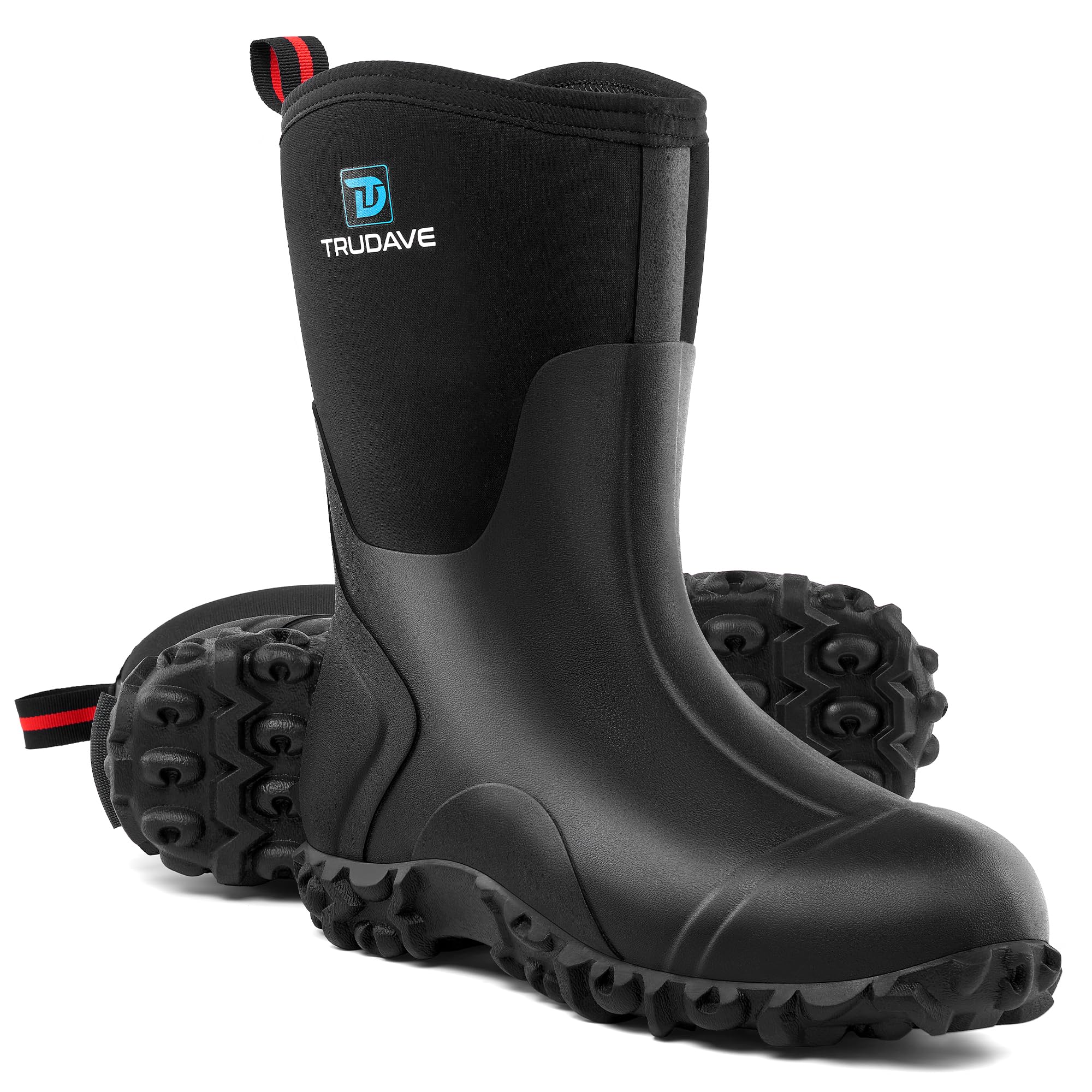
1. Trudave Rubber Boots 6mm Neoprene
Our pick — 4.5+★ from 950+ verified ratings; the strongest balance of quality and price.
A mid-calf rubber boot that wipes clean and holds grip on mud, snow, and ice.
If your work happens outdoors in wet ground rather than on a concrete slab, start here. These boots are made from 6mm neoprene — a soft synthetic rubber that stays flexible when it is cold — paired with natural rubber. The whole thing is built as a 100% waterproof shell you hose off in seconds. The sole carries a non-slip design and hides a built-in steel shank, a stiff strip under your arch that stops the sole flexing flat over muck and gravel.
Buyers consistently rank build quality first and fit second. Owners describe them fitting comfortably whether they are in thin socks or thick winter socks, which is the exact problem most rubber boots get wrong. They also go on and come off without a fight, and the tread has been trusted on snow and ice as well as muddy paths.
The honest catch is sizing and heat. “Superior fit” here means a strict US size chart, so measure before you order rather than assuming your sneaker size carries over. Being a sealed rubber shell, they run warmer than a breathable leather boot — great for winter, less fun in a humid summer barn. The crowd verdict sits at 4.5+ stars from 900+ ratings, which makes it the strongest-graded pick on this list.
What earns the top spot
- 6mm neoprene shell keeps feet dry and flexible in cold, wet conditions
- Built-in steel shank keeps the sole from folding flat on uneven mud
- Non-slip tread trusted on snow, ice and muddy paths
- Pull tabs make them easy to get on and off
Things to plan around
- Strict US sizing means you should measure before ordering
- Sealed rubber traps heat, so they are a winter-first boot
Reach for these if: your day is mud, muck, snow and washdown, and you want grip plus a dry foot without laces.
Think again if: you need a steel safety toe for dropped loads — this is a reinforced toe, not a certified cap.
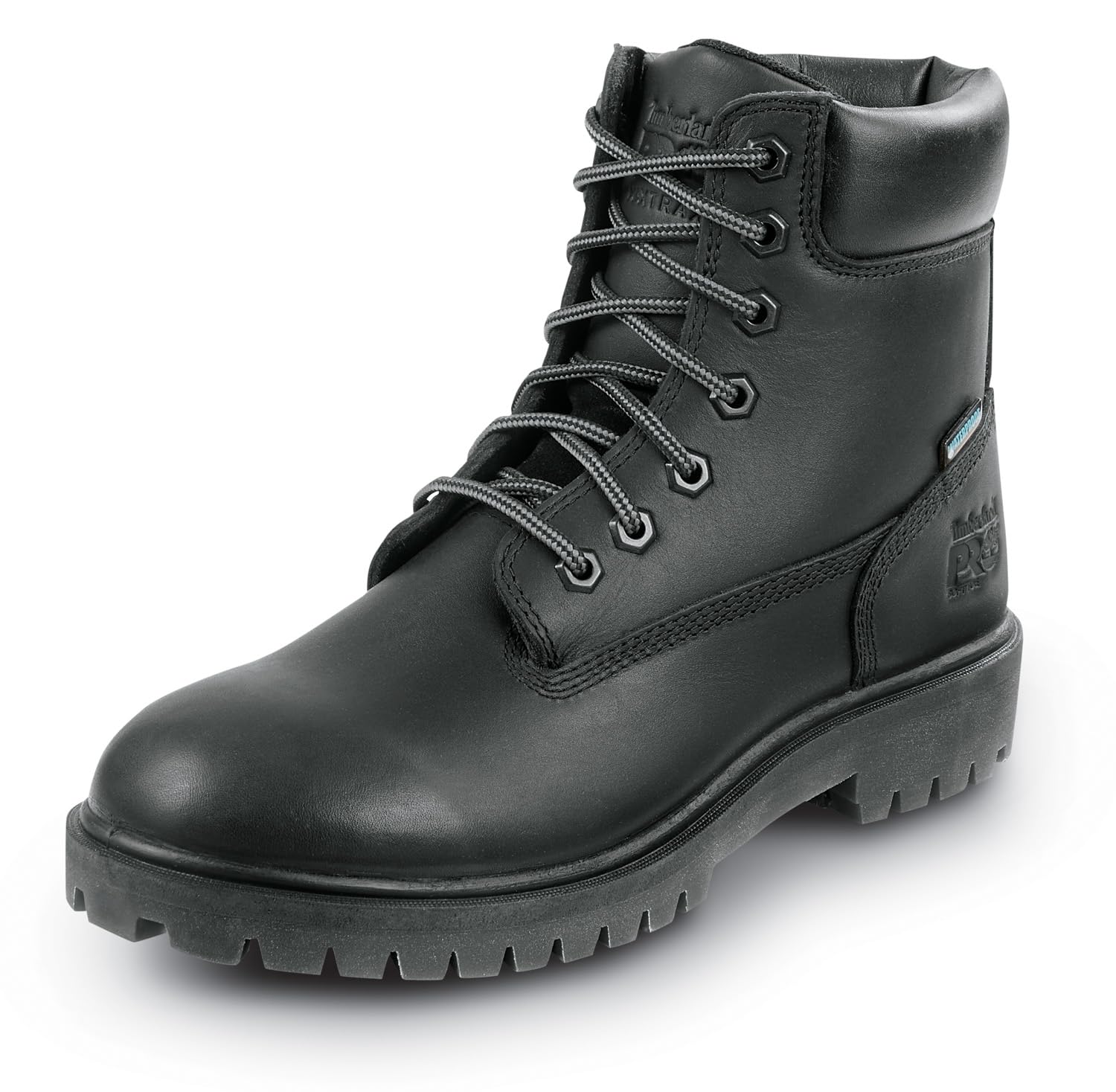
2. Timberland PRO Womens 6″ Direct Attach
The most deliberately engineered grip here, built around an oil, slip and abrasion resistant outsole.
Where the Trudave above is a rubber shell for mud, this is a leather work boot aimed squarely at slippery man-made floors. The outsole is a TPU (a tough, springy plastic) with the SR Max MaxTRAX patented tread design, and it is rated oil, slip and abrasion resistant. The upper is seam-sealed waterproof leather with a breathable lining, so water stays out while sweat can move away — the opposite trade-off to a sealed rubber boot.
Comfort is the second pillar. There is a 200 gram insulation layer for cold days, a single-density open-cell PU footbed that cushions each step, and a PU midsole, all tied to Timberland PRO’s 24/7 comfort system. Buyers describe them as worth the money and not too heavy, which matters when you are on your feet through a full shift. It meets ASTM F2892-24 EH SRO — that is the electrical hazard and slip-resistance benchmark for soft-toe footwear.
The one point to weigh honestly: this is a soft toe with no safety toe cap, so it is a comfort-and-traction boot rather than an impact-protection boot. Fit also runs narrow for some, with buyers noting they do not cater well to wide feet. For a slip-critical indoor or mixed job in a standard width, though, the tread is the best-specified here.
Editor’s read: the MaxTRAX outsole is the reason to pay premium — it is the only pick here with a named, patented slip-resistant tread plus a published ASTM slip rating. If your floor is wet tile or oily concrete, that combination does more for you than any amount of cushioning.
The verdict: buy these when grip on greasy, wet flooring is the whole reason you are shopping, and a soft toe is acceptable.
The trade-off: no safety toe cap and a narrower fit — wide feet should look at the roomier options instead.
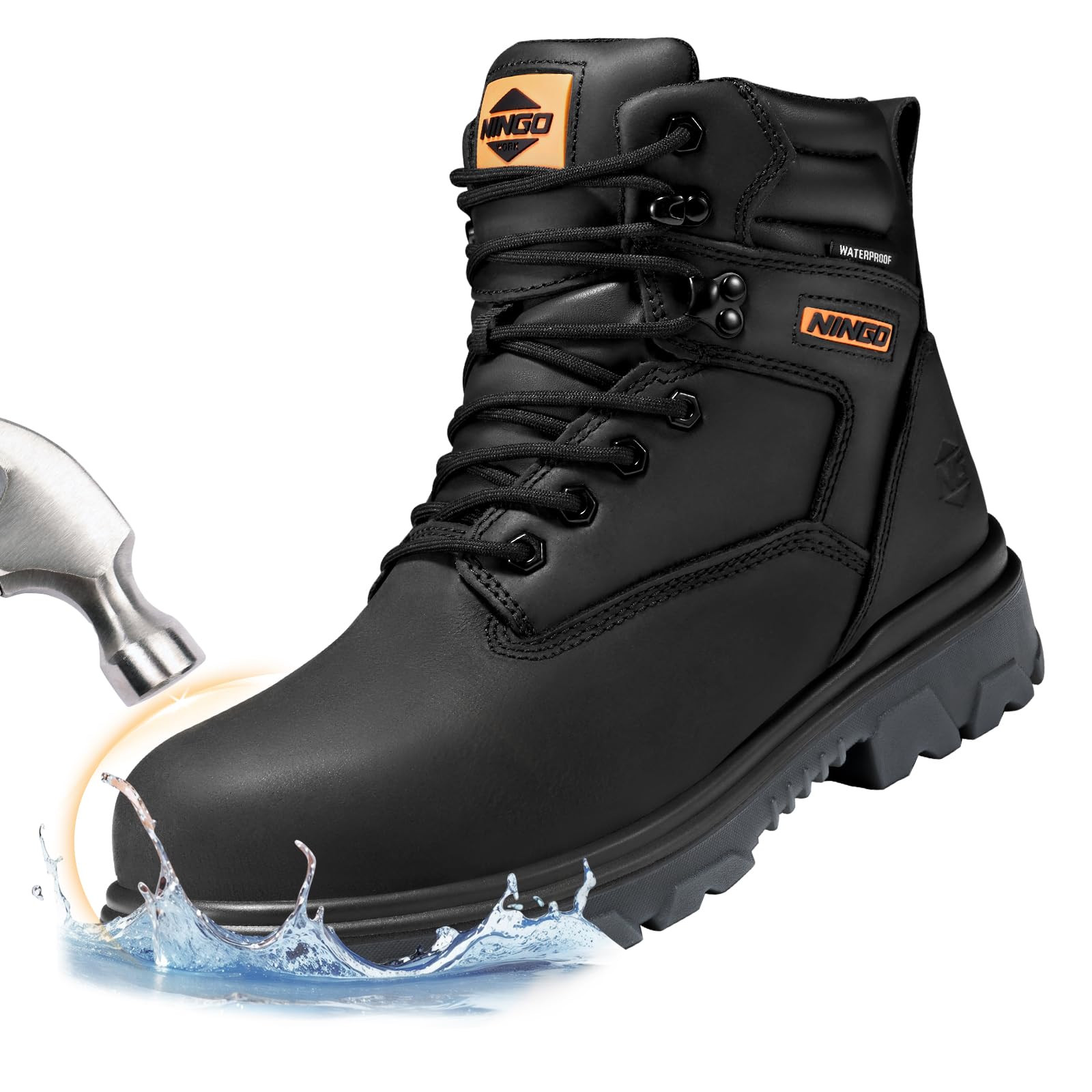
3. NINGO Steel Toe Work Boots
Steel toe, puncture resistance and a lab-rated grip in one leather boot.
This is the pick for the site that checks your boots at the gate. The steel safety toe meets or exceeds ASTM F2413-24 (the safety-toe standard) for impact (I-75), compression (C-75) and Electrical Hazard protection. I-75 means the toe is rated to withstand a 75 foot-pound impact, and C-75 the same figure for compression. The outsole is a TPU SR lug design (a molded rubber sole with deep tread blocks) that the maker says offers up to three times greater abrasion resistance than traditional rubber.
Full-grain leather makes up the upper, and the direct attach construction bonds the sole to the upper so it resists separating over time. Underfoot there is a removable high-rebound insole with gel heel padding to soak up shock on hard ground. Owners put comfort first — walking without foot pain through a full day comes up repeatedly — and the boot is widely reported as not needing a break-in period.
The catch is weight: opinions split on how heavy they feel, and a steel toe plus a lug sole is never going to feel like a sneaker. It also runs as a men’s boot, so women should check the size conversion carefully. For a certified, puncture-proof site boot with a grip rating, it is the most complete protection package in this group.
The safety case
- Steel toe rated to ASTM F2413-24 for impact and compression
- Puncture resistant and Electrical Hazard rated
- TPU SR lug outsole for wet, oily and uneven ground
- Gel heel insole and removable high-rebound footbed
The cost of all that armor
- Steel toe and lug sole add weight that some find heavy
- Men’s sizing means women need to convert carefully
Buy it when: your job requires a certified steel toe plus puncture and electrical protection.
Skip it when: you are chasing a light, flexible boot — this one is built like armor on purpose.
4. Moc Soft Toe Work Boots 6 Inch for Men

A wedge-sole leather boot that trades the steel cap for cushioned hours on your feet.
The moc toe shape is the stitched U-shaped seam across the front, and here it sits on a 6″ shaft that wraps your ankle for stability. That height is the difference between a low shoe and a boot that holds your ankle on uneven ground. It comes with a slip-resistant wedge outsole — a flat, continuous sole that spreads your weight across hard surfaces instead of concentrating it in lugs. Full-grain leather forms the upper, with a cushioned insole and soft lining underneath.
Reviewers repeatedly call it a boot that looks far more expensive than it is. The leather reads thick and well-made, and the moc styling holds up as something you would wear off the clock too. The fit notes skew snug around the ankle, which keeps the boot secure without slop.
Be clear about what you are buying: it is a soft toe, so there is no impact cap protecting you from dropped loads. Durability opinions divide sharply — some pairs hold up well past a couple of months, others have owners doubting a full year. Treat it as a comfort-and-looks boot for lighter construction and warehouse duty rather than a demolition-site boot.
Where it wins: the wedge sole and leather upper are the right pairing for someone who walks concrete all day and wants a boot that looks sharp after hours.
Best match for: warehouse and light-construction workers who prize comfort and a clean moc-toe look, not a safety cap.
Not your boot if: you need certified toe protection or expect years of hard service out of one pair.
5. Men’s Rubber Boots Insulated

A short rubber boot built to shrug off saltwater, acid and alkali alike.
Most boots here protect your feet from water and impact. This one adds a third layer: the maker states it is saltwater, acid and alkali corrosion resistant, which makes it the pick for chemical-prone work rather than a plain rain boot. The pro non-slip outsole is a skidproof rubber compound designed to prevent falls on muddy or slippery ground and to block out winter slush and wet dew. The cushioned sole is meant to stay comfortable through wet, cold work.
Buyers call out the look first: these read as a proper work boot, not a floppy rubber bootie. Waterproofing and drying both come up positively, alongside easy on-and-off for quick changes at the door.
The recurring fit note is real, though: sizing runs small and narrow for some. Order with that in mind, or size up if you wear thick socks. A few pairs have had the neoprene tear, so treat the upper as a working boot rather than an armored one. For yard chores, fishing, and chemical or mud exposure, it does the job the leather boots can’t.
Pick these up if: your work puts you near saltwater, acid or alkali, and you want a short boot that wipes clean.
Check the size twice if: you have wide feet — this boot runs small and narrow for some owners.
6. KAM-LITE Slip On Steel Toe Chelsea Safety Boots

No laces, no fuss — a steel-toe Chelsea you kick on and walk out the door.
The Chelsea design with elastic sides is the whole idea here: no laces to tie, so you are in and out of the boot in one motion at the start and end of a shift. It carries a steel toe cap and a slip-resistant outsole, and the upper repels water and stains, so mud and grease wipe off rather than soaking in. Buyers repeatedly praise two things: genuine light weight and the look.
Where you need to be careful is fit. Comfort and width feedback pull in both directions, with reports of rubbing on the lower shin and back ankle for some feet, and tightness across the width for others. That is a shape issue, not a defect — a Chelsea boot hugs the ankle by design, so it suits a narrower, average-arch foot far better than a wide one.
The durability and slip ratings sit in mixed territory too, so treat these as a fast-on convenience boot for lighter duty rather than a heavy civil-engineering boot. If quick changes and a steel toe matter more than plush padding, they earn their spot.
Made for: workers who change footwear constantly and want a steel toe with zero lacing.
Look elsewhere if: you have wide feet or sensitive shins — the elastic Chelsea fit and rubbing reports work against you.
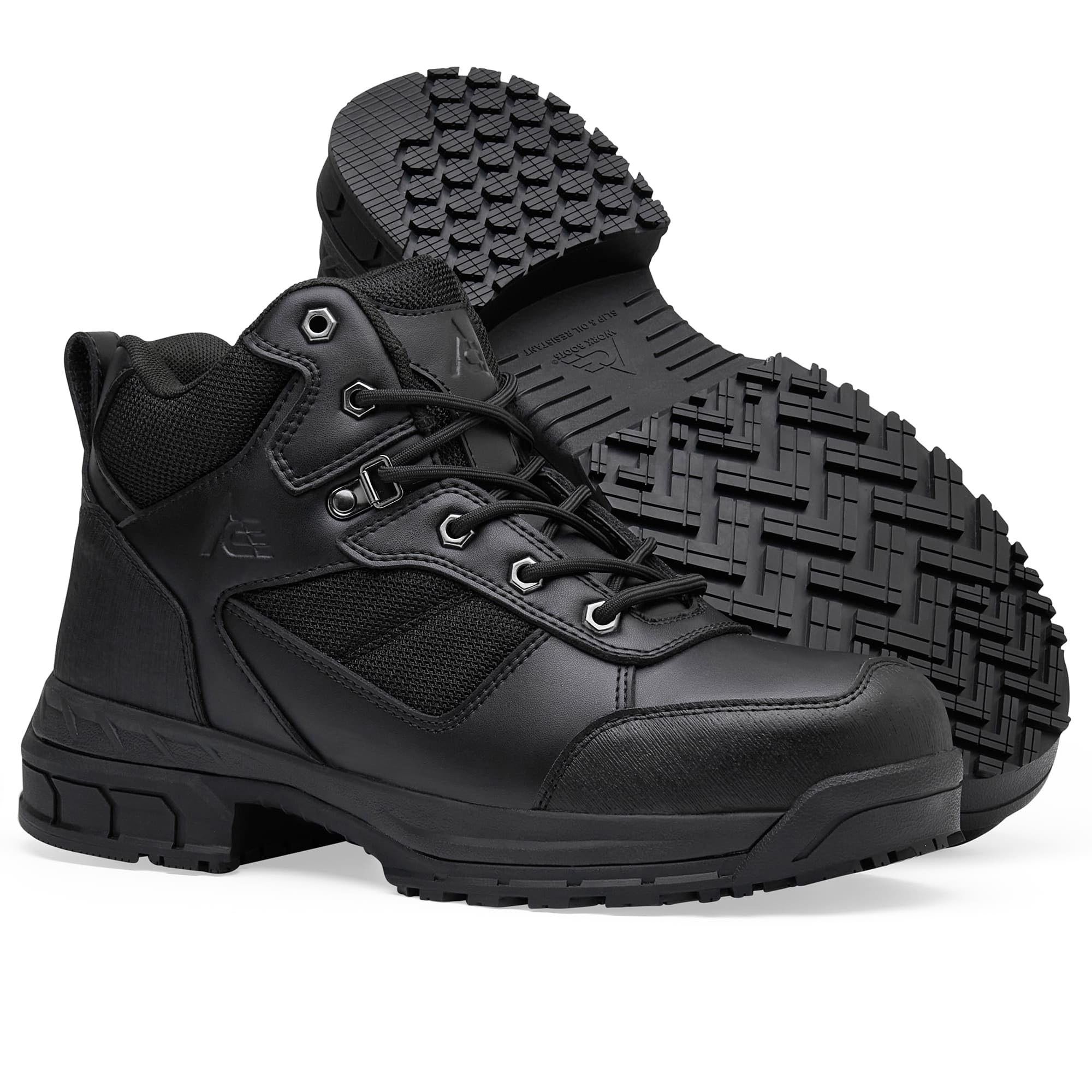
7. Shoes For Crews Voyager II
Built specifically for greasy, wet floors — the tread is the headline, not the leather.
This is the boot for the back-of-house, the wet aisle, and the grease-slick floor. The GLADIATOR outsole with 4HD tech is designed for traction on wet, greasy, uneven or unpredictable surfaces, and it resists abrasion and debris picking up in the tread. The upper pairs water-resistant leather with a breathable mesh, so it handles splashes without cooking your feet the way a sealed rubber shell would.
Underfoot, PU comfort insoles work with padded collars and tongues to cushion each step and support all-day wear. It is explicitly a unisex boot for men and women, which makes it one of only two picks here that is designed for both. The consensus is that it delivers good comfort and functionality for the price.
Now the honest part. Durability feedback is split, with some pairs going strong for around a year and others showing laces that come undone. The slip resistance also draws both praise and doubt, and fit opinions vary. Read that as a boot that needs a snug, correct fit to perform — it is a workhorse for greasy floors, not a bombproof boot.
Traction-first thinking: if the floor is the enemy rather than the load, the GLADIATOR tread is built for exactly that condition.
The right buy for: kitchen, food-service and wet-industrial floors where grease is the main slip risk.
Pass it by if: you need a safety toe or long-term armor — this is a soft-toe comfort boot with mixed reports on lifespan.
8. Bekina Steplite EasyGrip S4 Safety Toe Wellington Boots

An SRC-rated Wellington that keeps its grip on the slickest processing floor.
If your job happens in a food plant, a brewery, or an agricultural shed, this is the specialist pick. The grip carries SRC approval — a specific slip-resistance rating tested on both ceramic tile with a soapy solution and steel flooring with glycerin, so it covers the exact wet, oily conditions that a generic “non-slip” claim skips over. The boots are fully waterproof, feather-light by the maker’s own description, and insulated down to -4°F.
They are built from NEOTANE, Bekina’s own polyurethane technology, which is a lightweight synthetic that keeps its flexibility in cold. There is a steel safety toe for sharp tools and heavy machinery, plus an extra-high roomy toe cap so you can move quickly without your toes jammed. The wide legs are deliberately cut for pulling on over work trousers, and moisture-absorbing ergonomic footbeds come included.
Buyers value the build quality and light weight most, with the ergonomic shape drawing its own praise. The fit is where you should be careful: some find it true, others find it too small, so measure against the size chart. A few mention concerns about structural integrity over time. If you need an SRC-rated boot for a wet, cold workplace, this is the one that names its rating.
Why the specialists like it
- SRC-approved grip, tested on both wet ceramic and oily steel
- Feather-light NEOTANE build keeps all-day wear easy
- Steel safety toe with an extra-roomy toe cap
- Insulated down to -4°F for cold processing floors
What to watch for
- Fit runs small for some buyers — check the size chart first
- A few report structural concerns over long-term use
Buy it if: you work in food processing, brewing or agriculture and need a documented SRC slip rating.
skip it if: you want an everyday construction boot — its wide-leg Wellington shape is purpose-built for washdown work.
9. Steel Toe Boots 6 Inch Moc Toe
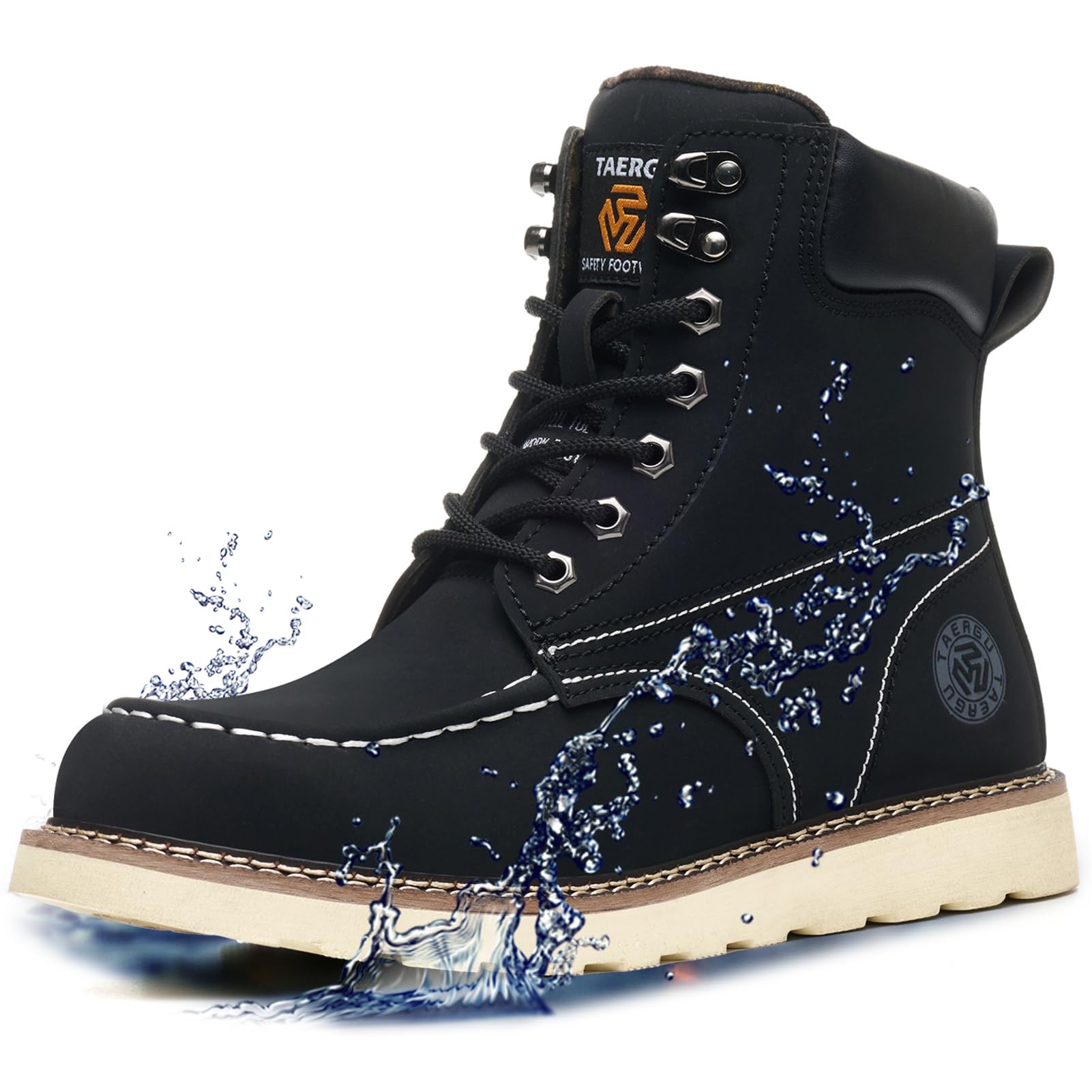
A low-cost steel toe that still checks the textbook safety boxes.
On paper, this boot brings the same shortlist of features as boots costing much more: an ASTM 2413-2024 steel toe rating, puncture resistance, waterproofing, a non-slip outsole and heat resistance. If a certified toe and a slip-resistant sole are the two non-negotiables for your site and the budget is tight, this covers both.
Buyers describe them as comfortable enough to wear all day without discomfort, and the look gets a warm reception — several note they pass for a more expensive boot. Appearance is the strongest signal in the feedback: the styling punches above its price tier.
Set your expectations accordingly, though. This is the most lightly reviewed boot on the list and the lowest-rated of the nine, so the track record is thinner than the proven picks above. Treat the fit and long-term durability as unknowns to test on your own feet rather than a sure thing. It is a sensible first steel-toe boot or a spare pair — not the boot you bet a career on.
The plain truth: great safety specs at an entry-level spot, with a shorter record of real-world wear than the boots above it.
Reach for it if: you need a certified steel toe and non-slip sole on a tight budget, and can accept a lighter track record.
Hold off if: you want a proven, long-tested boot — save up for one of the higher-rated picks instead.
Know the Specs
What “slip-resistant” and “SRC” really mean
“Slip-resistant” is a broad claim a maker can apply to many outsoles, while SRC is a specific rating tested on both wet ceramic tile and oily steel floor. If your work surface is greasy or wet, look for a named tread or a rating like SRC or SR rather than a generic rubber sole. The tread pattern matters too: lug soles bite into mud, wedge soles spread weight on hard floors.
ASTM F2413 and what the numbers measure
ASTM F2413 is the US safety standard for protective footwear, and the figures beside it tell you what the toe cap endures. I-75 means a 75 foot-pound impact rating and C-75 a 75 foot-pound compression rating on the toe. EH means electrical hazard protection. A boot without this label may have a toe cap but no tested protection behind it.
Steel shank versus no shank
A steel shank is a stiff strip hidden inside the sole under your arch. It stops the sole folding flat when you step on uneven ground, which is why mud and gravel boots use one. On flat concrete the shank matters less, and the cushioning in the insole does more of the work.
Upper materials and how they handle water
Full-grain leather is the toughest part of the hide and takes a waterproof treatment well, but it needs care to stay supple. Neoprene is a soft synthetic rubber that stays flexible when cold and wipes clean fast. Polyurethane shells like NEOTANE are light and sealed. Each choice trades breathability for water resistance in a different way.
Common Questions
What does SRC slip resistance actually test?
Do I need a steel toe or can I get away with a soft toe?
What does ASTM F2413-24 I-75 C-75 mean on a work boot?
Will rubber boots keep my feet dry all day in the rain?
How should non-slip work boots fit for a full shift?
Can I wear neoprene boots in summer or are they winter-only?
What kind of outsole grips best on an oily kitchen floor?
Is a full-grain leather boot harder to break in than a rubber boot?
Are non-slip work boots heavier than regular work boots?
What is the difference between a wedge outsole and a lug outsole?
The Bottom Line
For most people shopping for non-slip work boots, the Trudave Mid Calf Rubber Boots are the strongest all-round pick — a waterproof 6mm neoprene shell, a built-in steel shank and a non-slip tread that handles mud, snow and ice, all backed by the highest rating on this list. If the floor is wet or oily and you want the most deliberately engineered grip, reach for the Timberland PRO Voyager MaxTRAX. And when certified toe protection is the requirement, the NINGO EH Steel Toe carries the full ASTM F2413-24 package. Match the outsole to your floor first, then the toe type, then the width.
How we choose
We do not accept paid placement. Every pick is matched to a real buyer and a real use-case; we do not hands-on test units.
Sources
Specifications: manufacturer listings and product documentation. Review insights: verified customer reviews, as of November 2026. Pricing: not shown on this page (it changes often); check the current price via the retailer link.
As an Amazon Associate, Tactical Gear Guy earns from qualifying purchases. This does not affect which products we feature.