Specs are compiled from manufacturer listings and verified buyer reviews and can change over time — please confirm the key details on the product page before buying.
Most kite disappointment happens before you leave the house — a flimsy frame, a line that tangles into a bird’s nest, or a sail that rips on its first hard landing. This guide cuts straight to the nine kites worth your time: single-line deltas for lazy park afternoons, dual-line stunt foils for adults who want to carve the sky, and family sets built to survive kids. Every pick below is backed by verified owner reviews, and the standout is the Prism Zenith 5, a 4.5+ star delta with a 60-inch wingspan that folds to 21 inches.
This guide is built by comparing the manufacturers’ published specifications and the patterns across verified customer reviews, so you get each pick’s real strengths and trade-offs instead of marketing spin.
Frame material, line strength, and wind range decide how a kite behaves on a breezy afternoon. The picks below split beginner-friendly single-liners from hard-pulling stunt foils, so you can match a kite to your wind and skill level.
Top Picks

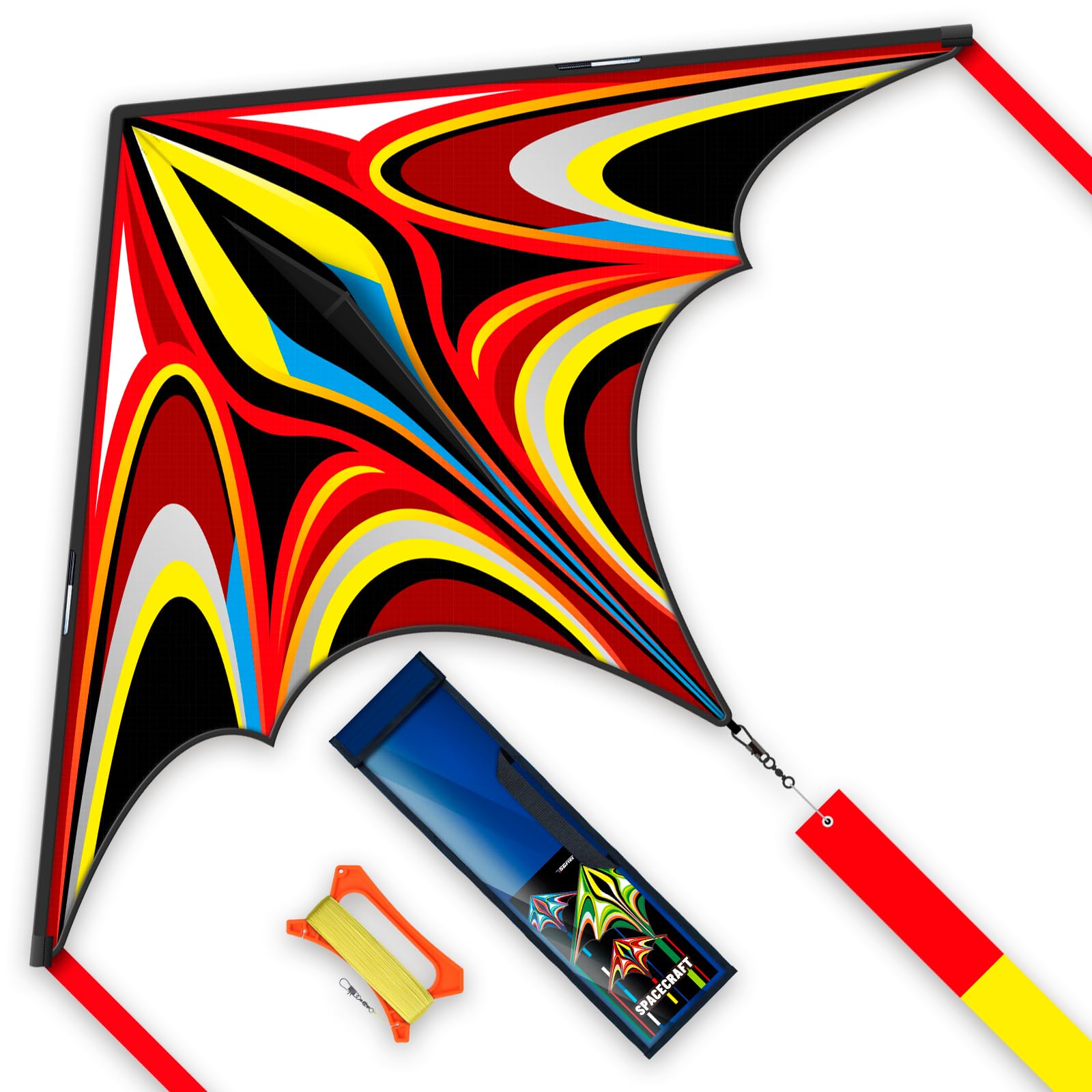

How To Choose The Best Kites to Fly
The first decision is not brand or color — it is how many lines you want to hold. A single-line kite goes up and stays up while you stand still. A dual-line kite puts a handle in each hand and turns the whole thing into steering, spins, and dives. Pick the wrong one and you either get bored in ten minutes or spend an hour fighting a kite that is too fast for you.
Single-line or dual-line?
A single-line delta is the classic park kite — one string, one winder, and almost no learning curve. Look at the Prism Zenith 5: one line, a 60-inch wingspan, and it packs into a 21-inch bag. Dual-line kites like the Jazz 2.0 and the Symphony Beach III give you two straps and real control, but they demand more from the pilot. If you have never flown before and want a calm afternoon, stay single-line. If you want speed and tricks, go dual.
Match the wind range to your field
Every kite has a wind window in mph, and flying outside it is the number one reason a kite will not launch or gets shredded. The In the Breeze diamond is rated for 6 to 20 mph, while the Symphony Beach III runs from 5 to 31 mph. A wide range like 5 to 31 mph means more usable days. A narrow range like 6 to 20 mph means waiting for the right breeze. Check your local forecast before you commit to a foil that needs strong wind to inflate.
Side-by-Side Comparison
| Model | Best For | Line Type | Wingspan | Line Weight | Amazon |
|---|---|---|---|---|---|
| Prism Kite Technology Zenith 5★ Best Overall | All-round flying | Single line | 60″ | 50 lbs | Amazon |
| Kite, Large Delta RainbowBest Value | Family starter | Single line | 52″ x 35″ | 50 lbs | Amazon |
| In The Breeze Diamond 30-inchLight-Wind Pick | Low-wind days | Single line | 30″ | 100 lbs | Amazon |
| Butterflys for Kids Doinfly | Gifting and looks | Single line | 55″ x 27″ | — | Amazon |
| 3 Piece Set Butterfly Octopus | Multiple kids | Single line | 55″ / 39″ / 28″ | 75 lbs | Amazon |
| In the Breeze Tie Dye Stunt | Frameless toughness | Dual line | 62″ x 27″ | 100 lbs | Amazon |
| Prism Jazz 2.0 | First stunt kite | Dual line | 62″ x 28″ | 55 lbs | Amazon |
| Prism Synapse 140 | Travel and packs small | Dual line | 53″ x 20″ | 80 lbs | Amazon |
| HQ Symphony Beach III 1.8 | Strong-wind pull | Dual line | 71″ x 24″ | 150 lbs | Amazon |
Detailed Reviews
1. Prism Kite Technology Zenith 5 Single Line Delta Kite
Our pick — 4.5+★ from 200+ verified ratings; the strongest balance of quality and price.
The delta that folds to 21 inches yet flies like a full-size park kite
For the person who wants one kite that handles a light breeze and a stiff gust without changing anything, the Zenith 5 is the pick. Its 60-inch wingspan gives it real presence in the sky, but the frame collapses down to 21 inches for travel. It comes fully ready — 200 feet of braided polyester line, a hoop winder, and a travel case all in the box. Nothing to buy separately.
What wins people over is the build quality, and it shows in the fiberglass frame and the bungee cords that snap the whole thing together in seconds. Assembly is genuinely quick, and the dual wingtip ribbon tails add stability in gusty air. The delta shape is a steady flyer that works across a wide range of wind conditions, so you are not stuck waiting for perfect weather. It also flies noticeably heavier than the In The Breeze diamond — 9.6 ounces against 1.6 ounces — which is exactly why it holds its line in stronger wind instead of getting tossed around. The trade-off to that weight is that it feels more substantial in the bag than a featherweight beginner kite, and the 50-lb line is lighter than the 100-lb line on some cheaper options, so you keep it out of the roughest gusts.
Owners rate it 4.5+ stars across 240+ reviews, one of the strongest ratings in this category. The recurring minor gripe is not flight at all but the price, which sits in the mid-range tier for a single-line kite. Still, the tangle-resistant braided line and the ready-to-fly kit mean you are not buying upgrades on top. For a first serious kite that does not feel like a toy, this is the one to start with.
Where it shines
- 60-inch wingspan folds to 21 inches for the car or a backpack
- Bungee-cord frame assembles in seconds with no loose parts to lose
- 200 feet of braided polyester line plus hoop winder and case included
- Steady delta shape handles light breeze through strong gusts
What to weigh
- The 50-lb line is lighter than 100-lb options, so skip the roughest gusts
- At 9.6 ounces it is the heaviest single-line pick here
- Mid-range tier cost for a single-line kite
Reach for this if: you want one ready-to-fly delta that handles varied wind and packs into a car trunk.
Look elsewhere if: you fly in very exposed coastal gusts and want the strongest line in the bunch.
2. Kite Large Delta
A big, bright delta that gets anyone airborne in minutes
If the goal is a family afternoon with zero fuss, this large delta delivers. It measures 52 by 35 inches, so it puts a big shape in the sky that kids can spot from the ground. The classic delta profile is aerodynamic and forgiving, and it comes with a 328-foot string and handle ready to go. That is a lot of line for open-field flying.
Owners rate its flight performance highly — it reaches high altitudes and works in both heavy and light wind. The tangle-free line and handle are a real difference-maker for beginners, because a tangled line is what ends most first outings early. Assembly is quick, and the fiberglass rods keep it light to carry. Compared to the Prism Zenith 5 above, it flies a bigger footprint at a fraction of the build weight, so it is less steady in a stiff gust but far easier to stuff in a backpack.
Where it stumbles is durability under hard crashes — a few buyers report tears, and the high-end materials do not match the premium delta’s frame. This is a first kite, not a lifetime kite. For a starter you can hand a ten-year-old without wincing, that is the right trade.
The honest read: a big, easy, affordable delta that shines in family use and open fields. The one caveat: treat it gently on rocky ground, and pick the heavier Prism if you fly rough terrain often.
Grab it when: you want a large, bright kite at an entry-level tier to teach a kid.
Choose differently if: your field is full of rocks and you crash hard on the regular.
3. In The Breeze Solid Color Diamond Kite, 30-inch
Featherweight that floats up on nearly nothing
This is the kite for the calmest days, when heavier deltas sit on the ground. At 1.6 ounces it is the lightest pick in this whole list — versus the 9.6-ounce Prism Zenith 5 — and that low weight lets it lift in just a whisper of wind. The rated range is 6 to 20 mph, and owners mention it flying in little wind and climbing high. It is 30 inches wide by 30 inches high with three 12-foot tails for stability.
The construction uses ripstop polyester that is weather and fade resistant, and the fiberglass frame assembles in seconds. A winder with 130 feet of twisted polyester line plus a reusable bag come included, and the line is rated to 100 lbs — double the Prism’s 50-lb line, which gives it more headroom if the wind picks up. Quality is the thing that builds its reputation, and it earns it as a simple, dependable first kite.
The honest limit is durability. Some customers note it breaking on arrival or during first use, and the very light build is the likely culprit. Treat this as a gentle-wind companion kite for a kid or a spare, not the one you fly in a gale.
Why it earns a spot
- 1.6 ounces gets it airborne in the lightest breeze
- 100-lb line gives more strength headroom than the Prism’s 50-lb
- Ripstop polyester resists weather and fading
- Three 12-foot tails steady the flight
The fit note
- Mixed reports on durability — a light build means it can tear on a hard crash
- Small 30-inch frame, so it is a gentle-wind kite, not a high-wind one
Made for: calm-afternoon flights and first kites for kids on a light breeze.
Not ideal for: gusty coastal fields where a stronger, heavier kite holds up better.
4. Butterflys for Kids

A painted butterfly that turns heads before it even leaves the ground
The reason to pick this one is the look. The butterfly wings are painted with colorful patterns that read as lifelike against the sky, and the 55 by 27-inch frame gives it a graceful, dance-like flight path. It comes with a storage bag, a handle, and string, so it is gift-ready from the start. If you are buying for a child who cares how their kite looks, this lands differently than a plain delta.
The build quality is where owners are most satisfied, and the fiberglass frame with polyester sails feels sturdy in the hand. Assembly is easy and quick, which matters when a kid wants to fly right now. That said, this is a decorative butterfly shape, not a stable delta, and the flyability and stability are the mixed points — some owners get it up easily, while others find it hard to control in shifting air.
The catch worth naming: this is a looks-first kite. Give it steady wind and clear open space and it is lovely. Hand it to a first-timer in choppy, changeable breeze and it asks more of the pilot than a classic delta would.
What you are buying: a beautiful, well-built butterfly kite that doubles as a gift. Where it asks more: handling in shifting wind is less forgiving than a delta, so start it on a steady day.
Pick it for: gifting a child who loves butterflies and steady-wind flying.
Think twice if: you need a dead-simple trainer for a total beginner in unpredictable wind.
5. 3 Piece Set Butterfly Delta Octopus Kites

Three kites, three kids, no arguing over whose turn it is
For a family with more than one child, this set solves the real problem: everyone wants a kite at once. You get three kites — a 55 by 26-inch delta, a 39 by 20-inch butterfly, and a 28 by 158-inch octopus — in bright gradient colors. That is three times the kites a single unit gets you, and the octopus alone is a long, showy shape that gets noticed. Each comes with a tangle-free line and fiberglass rods.
Owners find them fun to fly and easy to assemble, with clear directions. The 75-lb line is stronger than the Prism Zenith 5’s 50-lb, so it handles firmer wind, and they perform well in high winds per owner reports. The high-wind ability and the three-kite value are what make this set compelling for a group. The lighter fiberglass frame means they are easy to carry, but not as rigid as the premium picks.
Durability is the mixed part — some owners find them stable and well-built, while others report breaking easily. This tracks with the build: three kites for a family-set tier is a value play, not a buy-it-for-life one. If you can accept that these are seasonal, kid-friendly fliers, the value is hard to argue with.
The case for it: three functional, colorful kites that let a family fly together right away. The catch: durability is the soft spot, so treat the rods gently on the ground.
Best for: a family that needs three kites for three flyers without overspending.
skip it if: you want one kite that lasts many seasons rather than three that share the wear.
6. In the Breeze Tie Dye Sport Kite – Dual Line Stunt Parafoil

No sticks to snap — a stunt foil that shrugs off crashes
This is a dual-line parafoil with no frame rods at all, which is its biggest advantage. There is nothing to break when it nose-dives, and reviewers point out it staying undamaged after repeated crashes and performing across a range of winds from around 7 mph up through strong gusts. It measures 62 by 27 inches and ships with 100 feet of 100-lb braided line, a winder with straps, and a tie-dye bag. Recommended range is 6 to 25 mph.
It is quick to set up — owners describe flying within a couple of minutes of unpacking — and the wind range and fun factor are what keep people flying it. Compared to the Prism Jazz 2.0 below, the frameless foil is more forgiving on hard landings but gives you a different feel in the turns. The 100-lb line is a strength bump over the Jazz’s 55-lb.
Setup is the one split opinion — most put it together fast, while a few find the first assembly puzzling if you are new to dual-line launches. Once you have the double-point landing dialed, it is a forgiving introduction to two-line flying.
What flies well
- Frameless design means no rods to break on crashes
- 100-lb line and 6-25 mph range handle real wind
- Set up in about two minutes and fly
- Holds up to repeated crashes per owners
Before you commit
- Initial assembly takes figuring out if you are new to dual-line rigging
- A stunt foil demands two-hand control — not a set-and-forget single-liner
Go for this if: you want two-line stunt flying with the least risk of snapping a frame.
Pass if: you want a hands-off single-line kite to lounge behind.
7. Prism Jazz 2.0 Dual-line Sport Kite Ready to Fly

The speedy two-line trainer built to teach an adult to steer
Where the single-line picks are about floating, the Jazz 2.0 is about control. It is a dual-line sport kite with a durable carbon and fiberglass frame, a 62-inch wingspan, and a 28-inch height, and it folds down to 26 by 5 by 2 inches for travel. It comes ready to fly with 85 feet of 55-lb polyester line, wrist straps, a winder, instructions, and a storage case. Manufacturer recommends it for ages 14 and up.
Owners praise the material quality most — they call the construction strong — and the speed keeps experienced pilots engaged. It is made to be responsive and stable for student pilots, so you feel the kite answer your hands. Compared with the frameless Tie Dye foil above, the Jazz has a rigid frame and lighter 55-lb lines, which gives it a sharper, faster feel but a little less forgiveness on a hard crash.
Durability is the honest question mark — some shoppers say strings breaking during normal use, and the lighter line is the likely weak point. If you are gentle and learn the turns without slamming it, it holds up; if you fly aggressively every outing, budget for a spare line set.
What it does best: teach a 14-plus pilot two-line steering with real speed and response. Where to be careful: the lighter lines are the first thing to wear, so start gentle.
Buy it if: you want a fast, responsive first stunt kite with a real frame.
Leave it if: you want crash-proof flying — the frameless foil suits that better.
8. Prism Kite Technology Synapse Dual-line Parafoil Kite

A foil that stuffs into a glove compartment and shrugs off crashes
Frameless means packable, and this one takes it to the extreme. The Synapse 140 measures about 53 by 20 inches in the air but packs down to 10 by 5 by 2.5 inches — small enough to live in a backpack or a glove box so you are always ready. It ships with 60 feet of 80-lb polyester line, a winder, instructions, and a storage bag. There is no frame to lose or break.
Owners find it easy to learn for a beginner and rewarding for intermediate and advanced foil flyers, and they note it survives full-speed crashes without damage. That durability and portability are its real selling points. The catch is wind — it needs a decent breeze to inflate and get moving, and some buyers report it struggling in light air. The dual-line layout also means it is not a hands-off kite; you steer it.
Its 80-lb line sits between the Jazz’s 55-lb and the Tie Dye’s 100-lb, and the 60-foot line is shorter than the larger foils. That shorter line keeps the kite close and manageable on a smaller field. For camping, travel, or a beach bag, the tiny packed size is the whole argument.
The standout: frameless and packs to 10 by 5 by 2.5 inches, so it travels anywhere. The limit: it wants real wind to inflate — a light-air day leaves it sitting.
Ideal for: travelers and campers who want a crash-proof stunt kite in a small bag.
Skip if: your local field is usually calm — this foil needs a breeze.
9. HQ Symphony Beach III 1.8 Stunt Kite

The strongest-wind foil here, with a 150-lb line to prove it
When the forecast says gusty and you still want to fly, this is the kite. The Symphony Beach III is a dual-line foil rated for 5 to 31 mph — the widest wind window on this list — and it runs a 150-lb line, the strongest of any pick here and triple the Prism Zenith 5’s 50-lb. It measures 71 by 24 inches, is made from ripstop polyester, and fills with air to form a wing. No parts to assemble or lose.
Owners describe it as fun and easy to control, with durability that handles crashes well. It is aimed at adults and kids 12 and up, and it makes a good intro to soft foils for anyone moving past single-line kites. Compared to the Synapse above, it gives you more pull and a wider wind range but packs larger — there is no 10-inch travel bag story here.
The honest catch is the pull itself. This foil grabs wind and tugs hard in stronger gusts, which is thrilling for an adult and can be a handful for a smaller pilot. It is a power kite first, a trainer second, so match it to the pilot’s size and the day’s wind.
Why the pull matters
- 150-lb line and 5-31 mph range handle the windiest days
- Frameless foil fills with air — no rods to lose or break
- Handles crashes well per owners
- Good step up from single-line into soft foils
Where it pushes back
- Strong tug in gusts can overpower smaller pilots
- Packs larger than the travel foils — no compact bag story
Choose this for: strong-wind days and adults who want pull and speed from a foil.
Leave it for: small kids or very light-air fields where the pull is too much and the breeze too little.
Know the Specs
Line weight in pounds
The line weight is how much pull the string is rated to hold before it snaps — for example, a 50-lb line versus a 150-lb line. Heavier line means more safety margin in strong gusts but adds a little drag. Match line weight to your typical wind: light lines for gentle days, heavier lines like the 150-lb Symphony line for gusty fields.
Wind range in mph
The wind range tells you the breeze the kite is designed to fly in, like 6 to 20 mph or 5 to 31 mph. A wider range like the Symphony’s 5 to 31 mph means more flyable days and fewer no-launch afternoons. A narrow range means you wait for the right conditions. Check your local forecast against the range before you commit.
Frame material
Fiberglass rods are light, springy, and cheap to replace. Carbon and composite frames are stiffer and faster but cost more. Frameless foils have no rods at all — the kite fills with air to hold its shape — so there is nothing to snap on a hard landing, which is why they suit beginners and travelers.
Wingspan and packed size
Wingspan is the width of the kite in the air — bigger kites read better from a distance and catch more wind. Packed size is what matters for the car and the closet. A 60-inch delta that folds to 21 inches, or a foil that packs to 10 inches, travels far more easily than a fixed large frame.
Common Questions
What wind speed do I need to fly a kite?
Is a single-line or dual-line kite better for a beginner?
How long should a kite line be?
Can kids fly a dual-line stunt kite?
Will a frameless foil kite break easily?
How do I stop a kite line from tangling?
What is the difference between a delta and a parafoil kite?
Can I fly these kites at the beach?
How much pull can a strong-wind foil put on the line?
Do these kites come ready to fly?
The Bottom Line
For most people, the kites to fly winner is the Prism Zenith 5 because it combines a 60-inch wingspan, a 21-inch packed size, and a ready-to-fly kit that handles a wide range of wind. If you want frameless toughness that survives crashes, grab the In the Breeze Tie Dye foil. And for strong-wind pull with a 150-lb line, the HQ Symphony Beach III is the one to reach for. Its 4.5+ stars across 240+ owner reviews make it the easy first pick.
How we choose
We do not accept paid placement. Every pick is matched to a real buyer and a real use-case; we do not hands-on test units.
Sources
Specifications: manufacturer listings and product documentation. Review insights: verified customer reviews, as of November 2026. Pricing: not shown on this page (it changes often); check the current price via the retailer link.
As an Amazon Associate, Tactical Gear Guy earns from qualifying purchases. This does not affect which products we feature.