Specs are compiled from manufacturer listings and verified buyer reviews and can change over time — please confirm the key details on the product page before buying.
You want a 75-inch TV that looks like a cinema wall, not a washed-out window. The short answer: buy for panel technology and brightness control before you buy for brand. A 75-inch screen magnifies every weakness — weak backlighting turns dark scenes grey, and a slow panel smears a football pass into a trail. The picks below are sorted so that the strongest all-rounder sits first, and each one tells you plainly what it does well and where it asks you to compromise.
This guide is built by comparing the manufacturers’ published specifications and the patterns across verified customer reviews, so you get each pick’s real strengths and trade-offs instead of marketing spin.
On a 75-inch panel, the backlight type and native refresh rate matter more than the brand badge on the bezel. Below you’ll find how each set handles motion, glare, and gaming before you commit to 75 inch tvs that hang on your wall for the next several years.
Top Picks

How To Choose The Best 75 Inch TVs
A 75-inch TV takes up real wall space, so measure the room before you fall for the picture. An edge-lit backlight leaks light into dark scenes, turning blacks into a grey haze. A 60Hz panel smears fast pans, so look for a native 144Hz or 165Hz refresh rate.
Backlight type decides your black levels
A standard edge-lit LED TV lights the whole screen from the edges, so dark scenes leak light. Mini-LED sets use thousands of tiny LEDs behind the panel, grouped into dimming zones that switch off individually. More zones and higher peak brightness mean deeper blacks next to bright highlights — the thing that makes a stadium at night look real instead of washed out.
Refresh rate is not the same as the marketing number
Look for the native refresh rate, written as 144Hz or 165Hz. That is how many times per second the panel genuinely redraws the image. Numbers like “Motion Rate 480” describe processing that smooths motion between frames, not the panel itself. For sports and console gaming, the native figure is the one that reduces blur.
Your room decides how much brightness you need
A wall of windows or a lamp beside the screen will wash out a low-brightness panel. An anti-glare or matte coating, plus higher peak brightness in nits (the standard unit for screen brightness), keeps the picture readable in daylight. In a dark room, a set that gets extremely bright can even feel harsh at full power.
Check the stand footprint and the connections
Base widths in this category range from 15.3 to 57.64 inches, so measure your cabinet or plan a wall mount. Base widths vary enormously across this category, so measure your furniture before you buy. Also count your HDMI ports — a console, a soundbar, and a streaming stick can eat three of them fast.
Side-by-Side Comparison
| Model | Best For | Panel Tech | Native Refresh | HDR Support | Amazon |
|---|---|---|---|---|---|
| Samsung QN70F Neo QLED★ Best Overall | Best overall balance | Neo QLED Mini-LED | 144Hz | HDR-like conversion | Amazon |
| Roku Plus SeriesEasiest Setup | Easiest to live with | QLED Mini-LED | — | Dolby Vision | Amazon |
| Panasonic W70 SeriesFire TV Native | Fire TV fans | LED | — | HDR10+, HDR10, HLG | Amazon |
| TCL T7 Series | Gamers on a budget | QLED | 144Hz | Dolby Vision, HDR10+, HLG | Amazon |
| Toshiba Z670 Series | Sound without a soundbar | QLED Mini-LED | 144Hz | Dolby Vision IQ, HDR10+ | Amazon |
| Sony BRAVIA 2 II | PlayStation 5 owners | LED | — | Dolby Atmos audio | Amazon |
| Hisense U7 Series | Bright, glare-heavy rooms | Hi-QLED Mini-LED | 165Hz | Dolby Vision IQ, HDR10+ | Amazon |
| Hisense U8 Series | Maximum brightness | Mini-LED ULED | 165Hz | Dolby Vision IQ, HDR10+ | Amazon |
| TCL QM8L Series | Contrast purists | SQD-Mini LED | 144Hz | Complete HDR | Amazon |
| Sony BRAVIA 5 | Filmmaker-accurate picture | Mini-LED | — | Dolby Vision, IMAX Enhanced | Amazon |
| Samsung The Frame Pro | Art-first living rooms | Neo QLED Mini-LED | — | — | Amazon |
Detailed Reviews
1. Samsung 75-Inch Class Neo QLED QN70F 4K Mini LED Smart TV
Our pick — 4.5+★ from 600+ verified ratings; the strongest balance of quality and price.
Precision Mini-LED lighting that keeps a 75-inch picture sharp in the dark.
This is the 75-inch set to buy if you want flagship panel technology without climbing to the top of the price ladder. Its Neo QLED backlight uses precision-controlled Mini LEDs (thousands of small lights behind the screen that dim in groups), so dark scenes hold their depth instead of glowing grey. The picture quality is what wins people over — Amazon’s own summary calls the clarity and the “super dark blacks” the headline, and the consensus ranks quality as the thing buyers praise most.
The processing side is just as deliberate. Samsung’s NQ4 AI Gen2 chip runs 20 neural networks (layers of picture analysis) to upscale older content toward 4K and to brighten each scene on the fly. Motion Xcelerator carries the panel to a native 144Hz refresh rate, meaning it redraws the image 144 times a second, and variable refresh rate holds up to 4K at 144Hz for console gaming. Football and racing stay clean, and the controller lag that ruins a shooter largely disappears.
What buyers notice in daily life is how little fuss the set demands. Setup is straightforward, it pairs with a surround system without argument, and the smarter touches — 2,700+ free channels including 400+ Samsung TV Plus options — mean you are watching within minutes of unboxing. The honest catch sits with the tuner and the Wi-Fi. A minority of buyers report the tuner failing after several weeks and sets that drop their wireless connection, so buy from a seller with a clear return window and keep the box for the first month.
What earns its keep
- Mini-LED local dimming delivers inky blacks beside bold highlights on a 75-inch panel
- Native 144Hz with 4K variable refresh rate keeps sports and console games smooth
- 20-neural-network processing upscales older shows toward 4K
- Thin, modern build that mounts cleanly
Where it asks patience
- Tuner and Wi-Fi reports are mixed — keep the return window open
- Alexa setup can fight you even with support on the line
Worth your wall: anyone who wants Mini-LED contrast and 144Hz gaming without paying flagship money.
Look elsewhere: if you rely on an over-the-air tuner as your main source, the mixed tuner reports are a fair reason to hesitate.
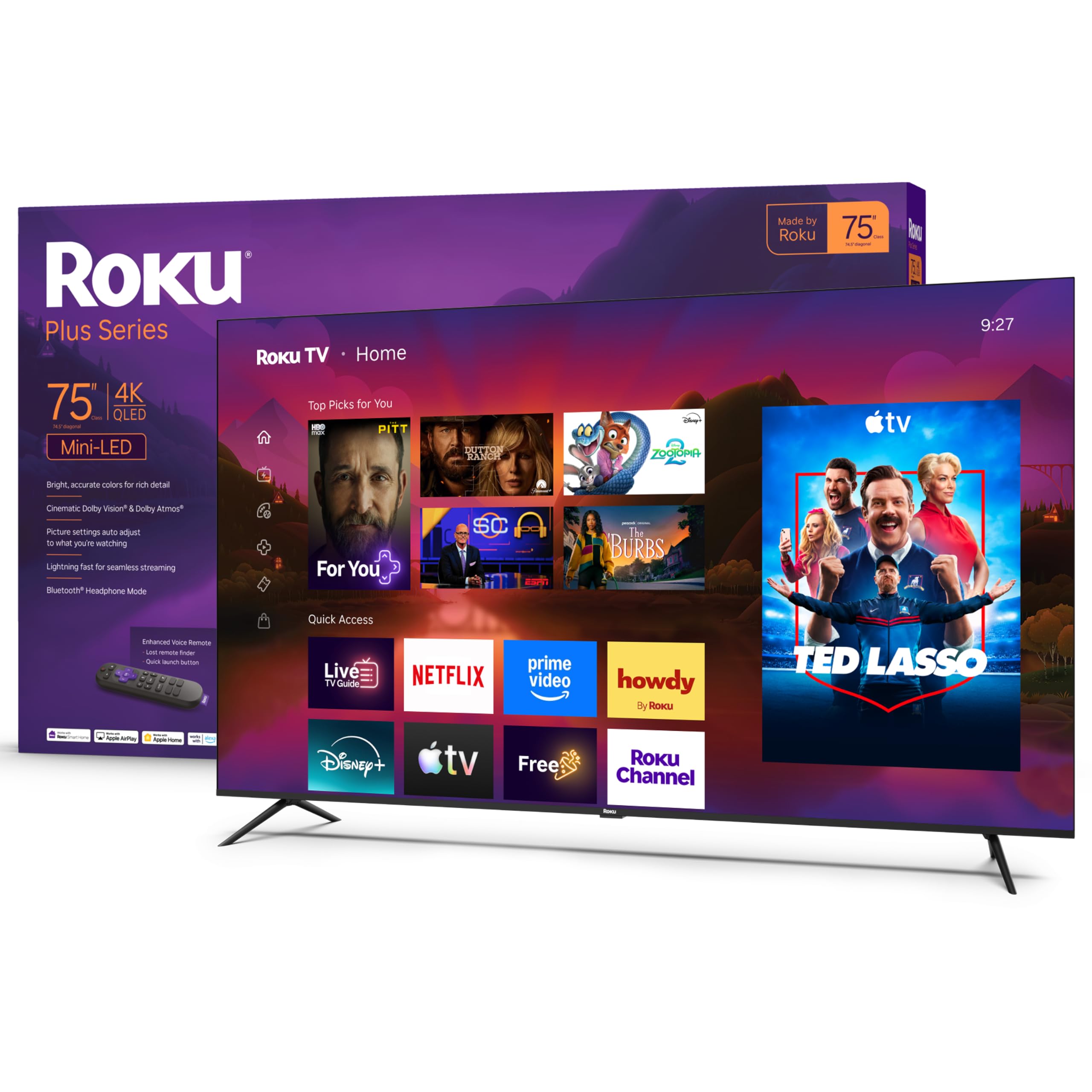
2. Roku 75-Inch Plus Series Smart TV
The 75-inch that makes its own case for being the least annoying TV in the house.
Start with the number that decides whether this set fits your room: its base is just 15.3 inches wide. The Panasonic W70 below needs a stand footprint of 57.64 inches, so if your furniture is narrow, the Roku is the one that actually sits down. It also draws 270 kilowatt hours per 1,000 hours of viewing against Panasonic’s 365 kilowatt hours per year, which makes it the lighter load on your power bill.
Roku built this around its own operating system, and that is the real draw. Setup takes minutes, the Home Screen is uncluttered, and one remote runs the whole thing — the relief of retiring a second controller is what buyers talk about most after the picture. Mini-LED backlighting sits behind a QLED layer for rich color, and Dolby Vision plus Dolby Atmos with a built-in subwoofer means you can skip the soundbar for a while. A lost-remote finder is a small thing that saves a genuinely annoying evening.
Picture quality lands with the crowd — the review pages rave about crisp 4K and blacks that read truly black. Reliability is the part to watch: as owners mention, “while some say it performs as advertised, others report it stopped working after 32 days.” That is a fair warning to register the set and keep your receipt, not a reason to walk away from a 75-inch Mini-LED that does this much for a value-tier budget.
The daily-use read: a QLED Mini-LED panel with Dolby Vision, a 15.3-inch base, and the least fiddly smart interface in this lineup.
The honest caveat: reliability is mixed, and one buyer returned theirs over a picture that looked fuzzy at the edges of faces.
Reach for this if: you want a big Mini-LED screen that a single person can lift onto a stand and set up in an afternoon.
Think twice if: you need a narrow-footprint set for a tight cabinet but also want the highest possible motion handling for gaming.
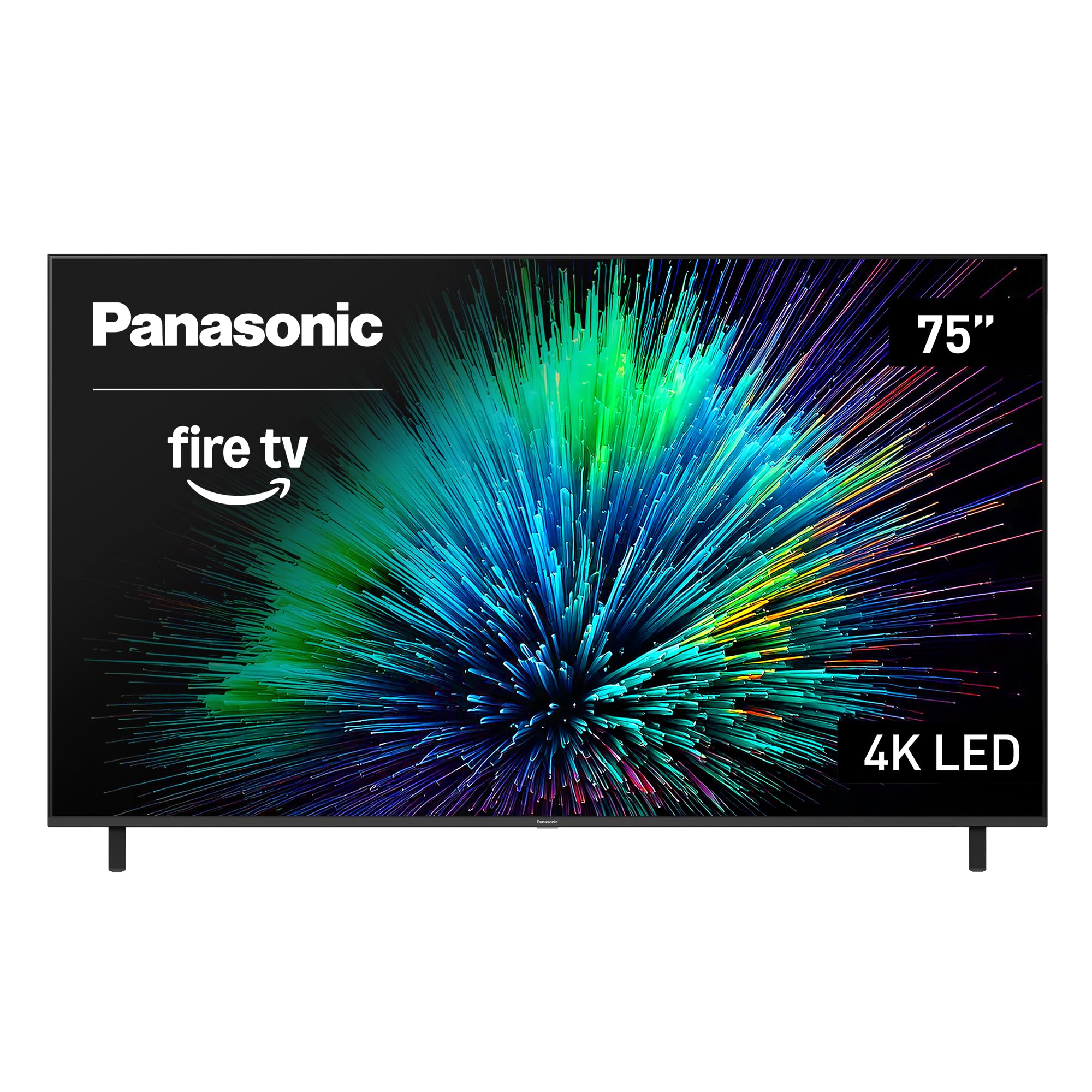
3. Panasonic W70 Series 75″ LED 4K Ultra HD Smart Fire TV
Fire TV baked in, and a picture panel that earns the space it takes up.
If you already live inside the Alexa ecosystem, this Panasonic saves you a streaming stick. Fire TV is built in, the voice remote finds shows by asking, and the set doubles as a smart home hub for camera feeds, lights, and a thermostat. The HDR Bright Panel works with HDR10+, HDR10, and HLG alongside the 4K Studio Color Engine, and MEMC motion smoothing keeps fast action readable. Four HDMI ports — one of them HDMI 2.1 — leave room for a console, a soundbar, and a spare.
Picture quality is where it holds up: the consensus is crisp and clear, with easy setup and a fair value read. The thing to plan around is the stand. Its base spans 57.64 inches, so it needs a genuinely wide TV cabinet, and its framing means you may end up wall-mounting anyway. Panasonic also lists 365 kilowatt hours per year of energy use, which is worth knowing if the set runs all evening.
The sound is the recurring gripe — several owners pair it with a soundbar from day one, and one bluntly calls the audio “awful.” Reliability is the second honest note: customers note mixed experiences, with some units working great while others quit working after a month. Buy it for the Fire TV integration and the picture, then budget for a soundbar and a careful returns window.
Strong points worth naming
- Fire TV and Alexa built in — no extra stick needed
- HDR10+ support plus HDMI 2.1 on one of four ports
- AirPlay and Bluetooth for headphones or wireless speakers
Plan around these
- Built-in audio is weak enough that many add a soundbar
- 57.64-inch base needs a wide cabinet
- Some units quit after a month, so keep the receipt
Buy it for: Fire TV loyalists who want Alexa and HDR10+ on a 75-inch screen without a separate streaming box.
Pass if: your TV stand is on the narrow side, or you expect built-in sound to carry a movie night.
4. TCL 75 Inch T7 Series 4K 144Hz QLED Smart Google TV
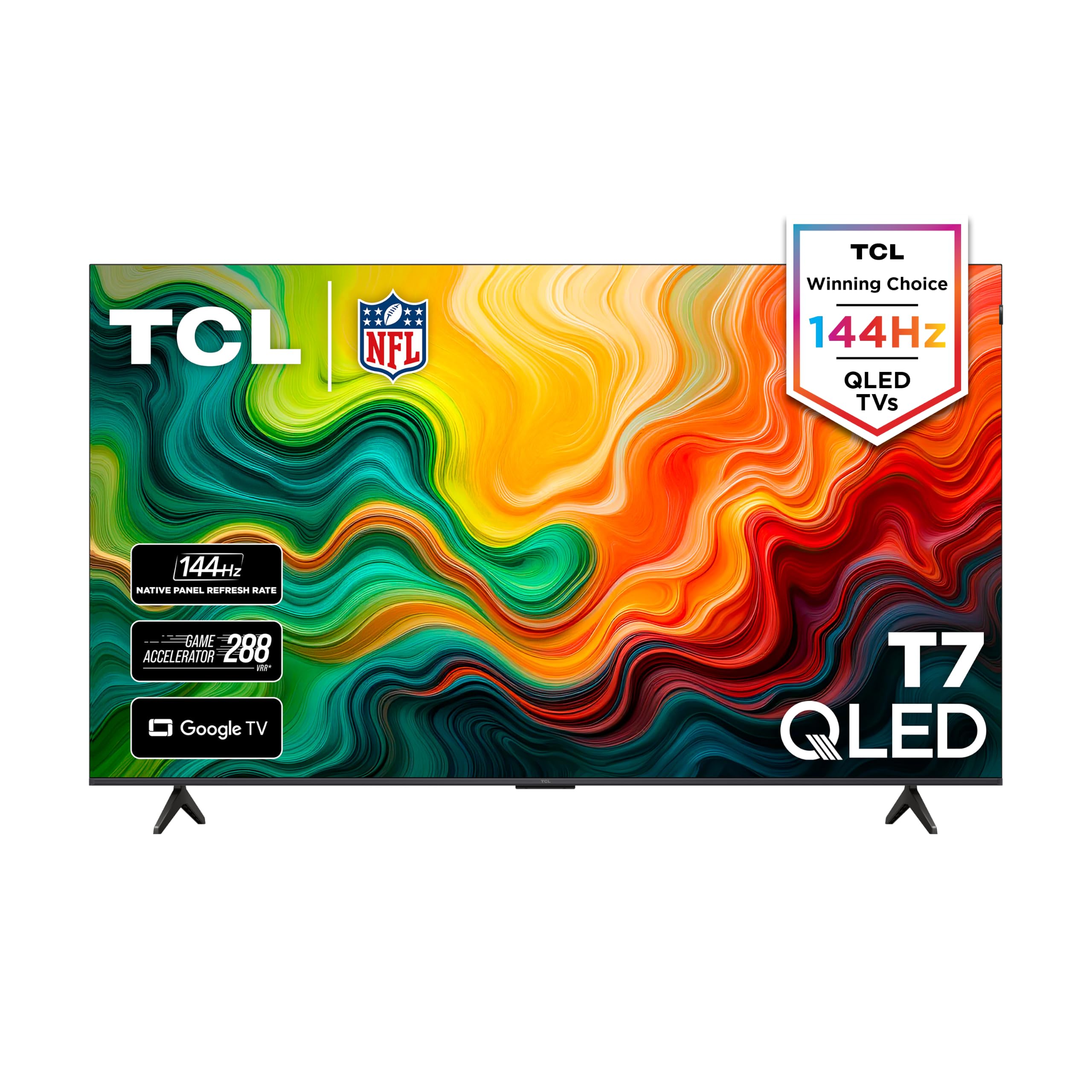
A 144Hz QLED panel that turns a console into the reason to stay home.
Console owners should start here. The T7 runs a native 144Hz panel and a 288Hz variable gaming refresh rate, which means the screen redraws fast enough that a fast turn in a shooter does not blur. It handles 4K at four times the detail of 1080p, and QLED quantum dot color covers nearly the entire DCI-P3 color space — the industry color range that decides whether a sunset looks orange or muddy. One PS5 owner in the review set reports it works well, and gaming performance earns its own positive thread.
TCL’s AIPQ Pro processor tunes color, contrast, and clarity scene by scene, and Dolby Vision plus HDR10+ and HLG cover the major HDR formats. Audio runs Dolby Atmos. The FullView 360 bezel-less design has width-adjustable feet, which means you can raise the panel to clear a soundbar without a wall mount — a small detail that saves real frustration.
What buyers keep returning to is the value read: premium-feeling performance without the premium outlay. Setup is quick, Google Home integration works, and the color earns its own praise. The catch is durability. At least one set stopped powering on after four months, so registering the warranty and buying from a seller with a solid return policy is the smart move on any 75-inch at this tier.
The gamer’s case: 144Hz native, 288Hz variable refresh, Dolby Vision, and four HDMI ports including one with eARC.
Fair warning: a small number of sets have failed within months, so treat the warranty as part of the purchase.
Best for: PS5 and Xbox owners who want smooth 144Hz motion on a 75-inch screen without flagship pricing.
Skip if: you need the deepest possible blacks — this is a QLED panel, not a Mini-LED one.
5. Toshiba 75″ Z670 Series Mini-LED 4K UHD Smart Fire TV
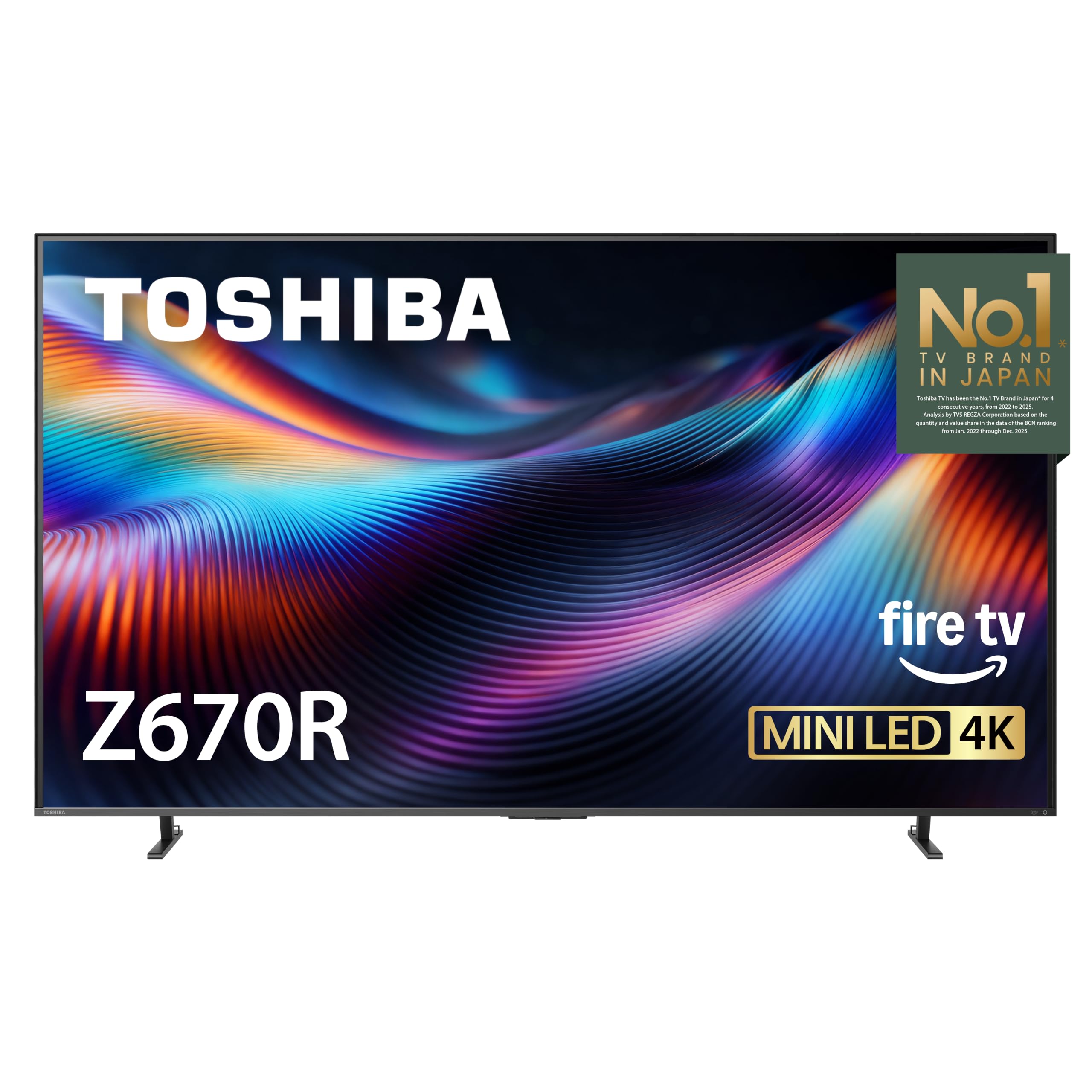
The 75-inch that makes you question whether you still need that soundbar.
Audio is usually the first thing a flat 75-inch set gets wrong, and Toshiba aimed straight at that weakness. REGZA Power Audio Pro pairs a dedicated bass woofer with tuned amplifiers and dual clear direct speakers, so dialogue stays intelligible and explosions carry weight without extra gear. The consensus backs it up: sound quality is repeatedly called out as better than expected, and plenty of owners run this set with nothing else attached.
The picture side is no afterthought. A Mini-LED backlight with Full Array Local Dimming (zones that switch off independently behind the panel) gives deep blacks and bright highlights, and the REGZA Engine ZRi Gen3 processor tunes clarity and contrast scene by scene. Native 144Hz with AMD FreeSync Premium, VRR at 144Hz, and ALLM covers next-gen consoles, and Dolby Vision IQ with HDR10+ handles the major HDR formats. The AI Light Sensor Pro adjusts brightness to your room, which is a genuine comfort point for late-night viewing.
Two things to weigh honestly. The smart interface is Fire TV, and at least one owner found the app limit tighter than a Fire stick or Roku setup allows, so plug-in streamers are worth considering. Reliability has a mixed thread, so keep the return window handy. Otherwise this is the rare big-screen set that arrives with its own soundtrack.
Pick it when: you want a 75-inch Mini-LED set that sounds good enough to skip the soundbar entirely.
Consider a different set if: you install a long list of niche streaming apps and need more headroom than Fire TV offers.
6. Sony 75 Inch BRAVIA 2 II LED 4K HDR Smart Google TV

Sony’s entry point into 75 inches, tuned with the PS5 in mind.
PlayStation owners get a specific reason to choose Sony: Auto HDR Tone Mapping and Auto Genre Picture Mode adjust the picture for a PS5 automatically, and a Game Menu gathers every gaming setting on one screen. The 4K Processor X1 handles the rest, sharpening detail and color, while 4K XR-Reality PRO upscales older content toward near-4K. Motionflow XR fights blur in fast sports and action scenes.
This is an LED set, not a Mini-LED one, so its blacks will not match the Samsung above or the Hisense U8 later in this list. What it does well is consistency and usability. Setup is quick — a Google account gets you through the basics — and the color quality holds up, with the crowd calling it vivid and clear. Sony Pictures CORE adds a bundle of movies, and Google TV gathers your apps in one place with AirPlay 2 and Google Cast support.
The honest notes are worth hearing. Some reviewers point out needing to reboot the set often, and Wi-Fi disconnections show up as a recurring theme — one owner describes repeated reboots just to get back online. A wired Ethernet connection where possible is the easy fix. Overall this is a polished, easy-to-live-with 75-inch set for PlayStation households that value the Sony processing over the deepest black levels.
Reasons it earns a spot
- Auto HDR Tone Mapping and Auto Genre Picture Mode for PS5
- 4K Processor X1 with 4K XR-Reality PRO upscaling
- Google TV with AirPlay 2 and Google Cast
- Sony Pictures CORE movie bundle included
The trade-offs
- LED backlight — not Mini-LED, so blacks are shallower
- Wi-Fi and reboot complaints appear in the reviews
- Google account required for more than basic setup
Ideal for: a PS5 household that wants simple, polished Sony picture handling without Mini-LED pricing.
Hold off if: you expect deep blacks and a flawless wireless connection — plan on Ethernet here.
7. Hisense 75″ U7 Mini-LED ULED 4K Smart Fire TV
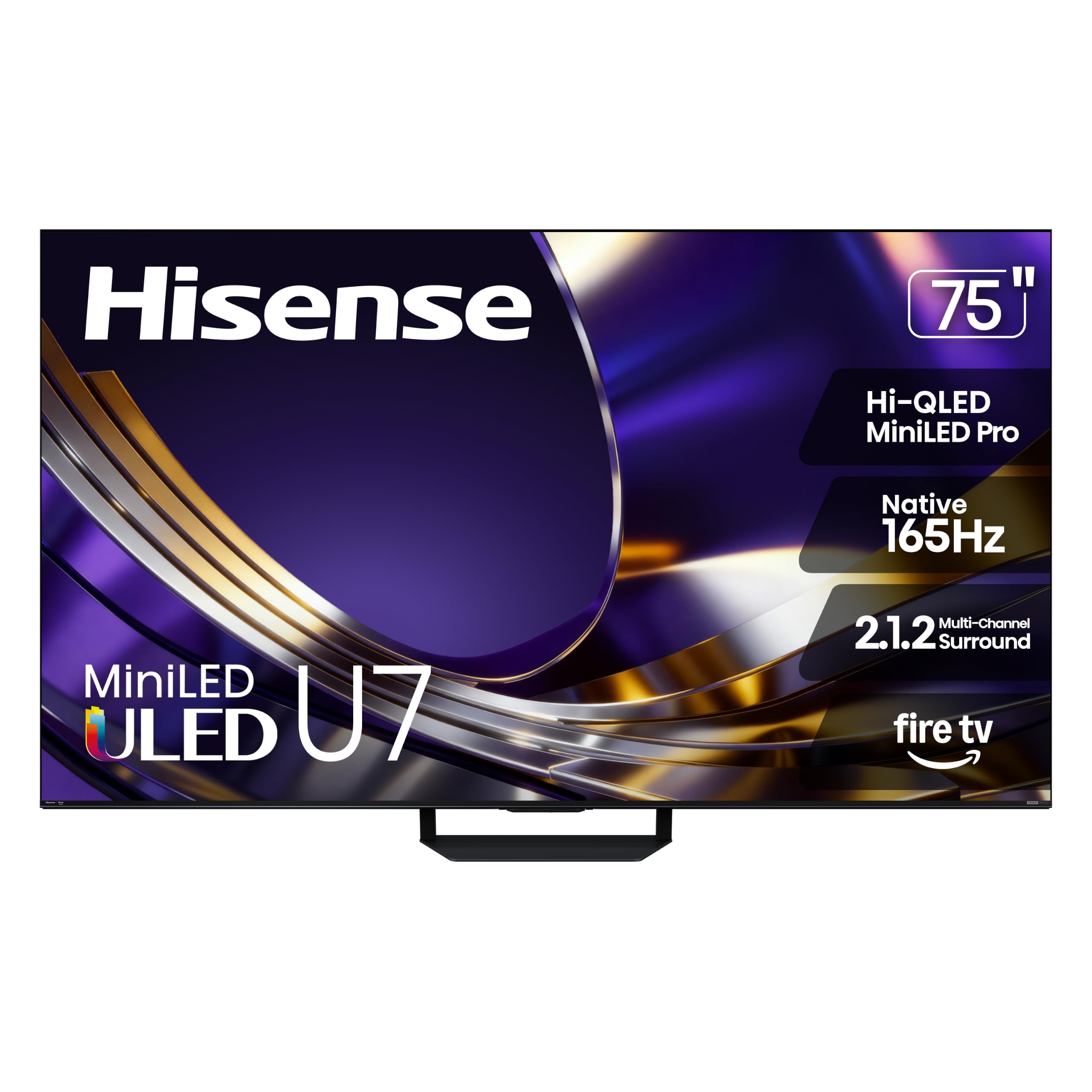
Built for a room with windows, where other screens turn into mirrors.
The anti-glare layer is the reason to buy this one. Bright windows, overhead lights, afternoon sun — the dual-layer screen treatment cuts reflections so the picture stays readable when the room does not cooperate. One owner uses theirs as a patio TV and reports the anti-reflective screen keeps the picture sharp and bright; another likes the matte finish for the same reason. That is the real-world payoff of a screen coating you would otherwise ignore on a spec sheet.
Behind that layer sits a Hi-QLED Mini-LED Pro backlight with thousands of dimmable Mini LEDs and up to 3000 local dimming zones at up to 3000 nits of peak brightness. A native 165Hz refresh rate handles fast games and sports, and the Hi-View AI Engine Pro continuously adjusts color, contrast, and detail. Dolby Vision IQ and Dolby Atmos round out the feature list, and 2.1.2 channel audio adds an up-firing element that puts some sound above the screen.
The picture quality is consistently praised as bright and clean across the reviews, with deep blacks and smooth motion that makes sports look good. The catch is oversaturation: one owner finds the colors can run a touch strong at times, which is a two-minute settings tweak rather than a problem. Buy this set if natural light is your enemy.
The bright-room answer: an anti-glare coating, up to 3000 nits peak, and a 165Hz panel make daylight viewing feel normal.
The honest quibble: colors can look over-saturated from the start, so plan a little calibration.
Made for: a room with big windows or a patio setup where glare would otherwise ruin the picture.
Not the one if: you want a pre-tuned, accurate color picture and never want to touch the settings menu.
8. Hisense 75″ U8 Series ULED Mini-LED 4K Smart Google TV

Peak brightness that makes a wall of windows look like a minor inconvenience.
The headline here is light output: up to 5000 nits peak brightness and up to 5600 local dimming zones. In plain terms, thousands of tiny LEDs light the screen in small switchable groups, so a stadium floodlight stays brilliant while the shadow beside it stays deep. Hisense’s Anti-Reflection Pro coating is built into the liquid crystal layer, which minimizes glare on bright daytime viewing. If your last TV washed out every afternoon, this is a direct fix.
Gaming gets serious attention too. A native 165Hz panel runs variable refresh from 48Hz to 165Hz, with AMD FreeSync Premium Pro, Auto Low Latency Mode, and Low Latency MEMC to cut tearing and controller lag. The enhanced Game Bar lets you adjust settings and watch performance data straight from the remote. Audio runs a 4.1.2 channel surround system with a built-in subwoofer and two up-firing speakers, and QLED color is Pantone validated for accuracy.
The picture is what owners rave about — clear, bright, with vivid color and deep blacks — and one buyer specifically credits the brightness for a room with a wall of windows. The caveat worth knowing is a small thread of units that periodically stop working, and power-saving mode occasionally darkening the screen. Buy from a seller with a strong return policy and this is a serious performer.
Where it delivers
- Up to 5000 nits peak brightness with up to 5600 dimming zones
- Anti-Reflection Pro integrated into the panel layer
- Native 165Hz with FreeSync Premium Pro and a Game Bar
- 4.1.2 channel audio with up-firing speakers
What to keep in mind
- A minority report sets that periodically stop working
- Power-saving mode can dim the picture unexpectedly
- Brightness can feel intense in a dark room at full power
The right call for: a sunlit living room where you need every bit of brightness you can get.
Second thoughts if: your viewing room is dark and you want a gentler, softer picture at night.
9. TCL 75 Inch QM8L Series SQD-Mini LED QLED 4K Smart Google TV
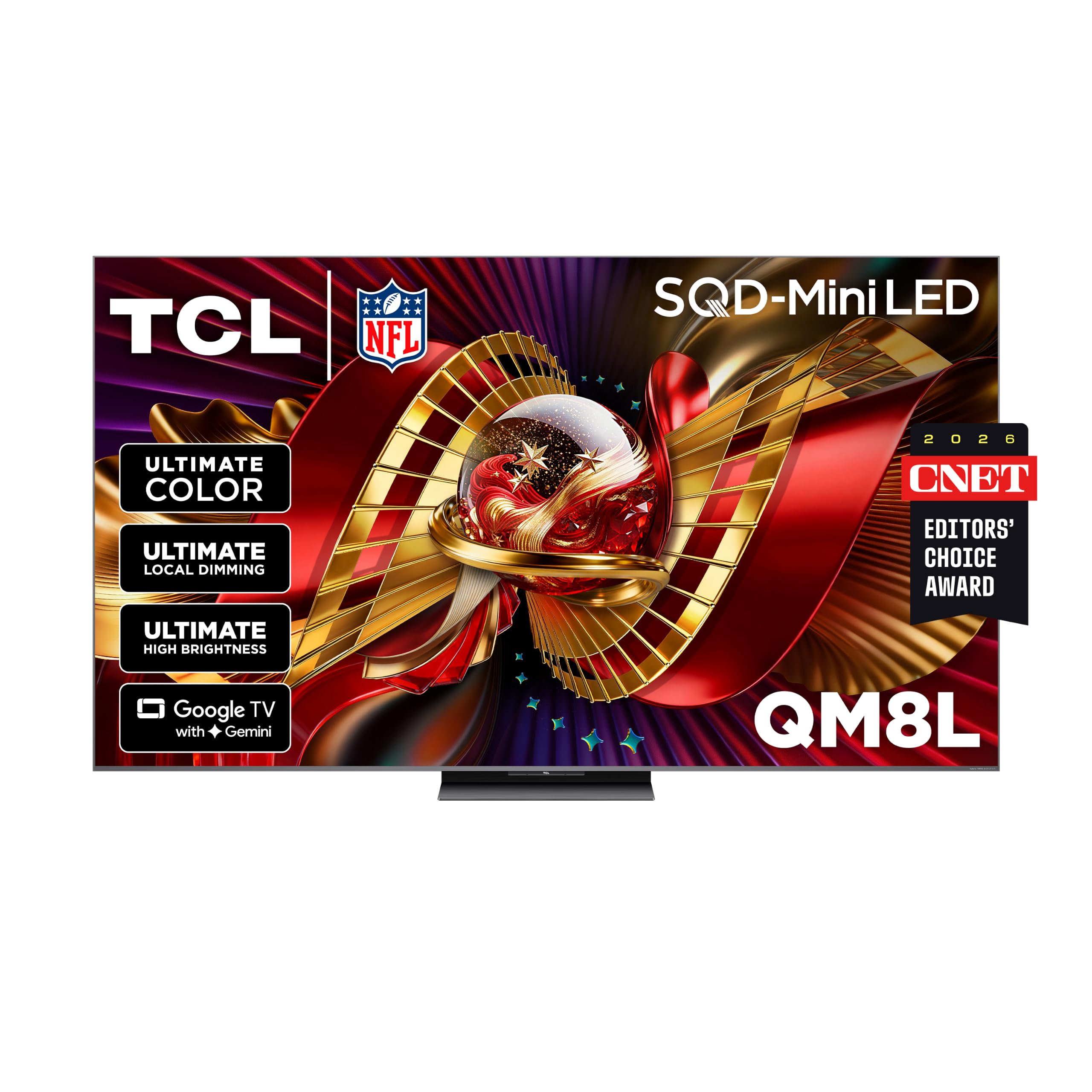
Zone depth and 6,000 nits for the buyer who cares about black-level purity above all.
Numbers first, because they tell the whole story: up to 4000+ discrete dimming zones, up to 6,000 peak nits, and a 7000:1 static contrast ratio. In use that means a starfield sits against genuinely black space, and a single bright object does not bleed light across the rest of the screen. TCL’s Ultra Color Filter uses 5 nanometer particles instead of the standard 60 nanometer ones, which sharpens color accuracy at the pixel level, and the Halo Control System keeps bright objects from glowing into the dark around them.
Google TV with Gemini built in lets you describe what you want to watch rather than scroll for it, which changes how fast you actually get to a show. Audio comes from Bang & Olufsen, with optional wireless subwoofer and satellite speakers for a fuller setup. For gaming, the Game Accelerator 288 VRR, Game Bar, and AMD FreeSync Premium Pro handle motion and latency. All HDMI ports being full-spec is a small detail that matters when every input carries a device.
The picture is called stunning by buyers, and the brightness is adjustable straight from the remote when a scene needs softening. What you are paying for is contrast purity, and it delivers. The trade-off is that this sits at the higher end of the range, so it earns its place on picture performance rather than on feature count alone.
Why this one: 4000+ zones, 6,000 peak nits, and a 7000:1 native contrast ratio for near-zero halo around bright objects.
What it costs you: it asks for more than the mid-tier sets, and you are paying for panel purity rather than a broader grid of features.
Choose it for: movie nights in a dark room where black levels and halo control are the thing you notice most.
Not essential if: your room is bright and you mostly watch sports — the anti-glare sets here will serve you just as well.
10. Sony 75 Inch BRAVIA 5 Mini LED 4K HDR Smart Google TV

Sony’s Mini-LED upgrade, tuned to show movies the way directors graded them.
Studio calibrated picture modes are the draw here. Netflix, Prime Video, and Sony Pictures CORE each have a dedicated mode set to the creator’s intent, so a film looks like the graded master rather than a vivid showroom demo. XR Backlight Master Drive controls thousands of Mini LEDs for genuine contrast, XR Triluminos Pro adds billions of accurate colors, and the XR Processor with AI enhances color, contrast, and clarity in real time.
Movie fans also get Dolby Vision and Dolby Atmos alongside IMAX Enhanced and DTS:X, and the Sony Pictures CORE app open up the largest IMAX Enhanced collection. PlayStation owners are covered with Auto HDR Tone Mapping and Auto Genre Picture Mode. Motion processing runs through XR Motion Clarity for blur-free sports and action, and the set reads 476 kilowatt hours per 1,000 hours of use — worth knowing if it runs through an evening routine.
Picture quality is the headline across the crowd, with vivid colors, good sound, and a notable nod to the Dolby Vision HDR handling. The honest notes are around durability and brightness. At least one panel stopped working within weeks, and the peak brightness tops out enough for low-light rooms but is not a bright-room specialist. The remote also skips backlighting, a small annoyance after dark.
Standout features
- Studio calibrated modes for Netflix, Prime Video, and Sony Pictures CORE
- XR Backlight Master Drive with Mini-LED contrast
- Dolby Vision, Atmos, IMAX Enhanced, and DTS:X support
- PS5-exclusive Auto HDR Tone Mapping
Worth knowing
- Not a bright-room specialist compared to the higher-nit sets
- Remote lacks backlighting for dark viewing
- A minority report panels failing within weeks
Right for: movie-first buyers who want a creator-accurate Sony picture and IMAX Enhanced content in one place.
Rethink if: your living room is flooded with daylight or you hate using a remote without backlit keys.
11. Samsung 75-Inch Class The Frame Pro LS03HW Series Smart TV
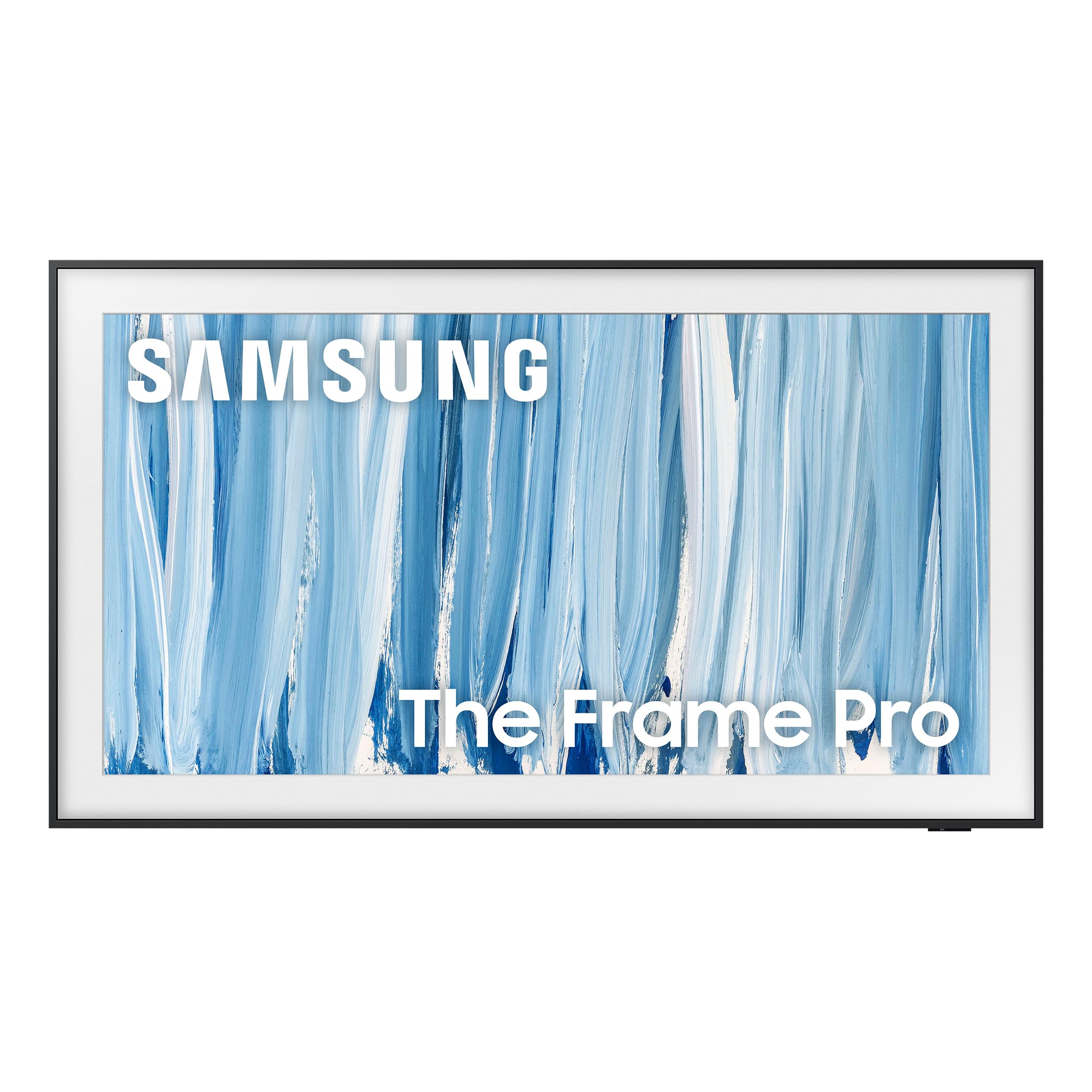
A 75-inch panel that spends most of its day pretending to be a painting.
This set exists for the wall it hangs on. Art Mode turns the screen into a gallery, with access to over 5,000 artworks from museums and artists, and a matte finish plus motion sensors keep the image looking believable when nobody is in the room. Pantone Validated ArtfulColor handles the color accuracy that makes a painting feel real, and the Slim Fit wall mount is included so the set sits nearly flush. One owner puts it simply: paintings look real during the day.
When you actually watch something, a Glare Free Neo QLED panel with mini LEDs takes over, keeping reflections off the screen whether the sun is out or a lamp is on. Wireless One Connect moves the connections to a separate hub, so no cables run down the wall — that is the feature that lets the set pass as art. Customizable magnetic bezels let you change the frame to match the room.
Two honest notes. Art Mode’s best images lean on a subscription, and adding your own photos is not as simple as it sounds. More importantly, owners are unhappy with the wireless connectivity on the Pro series — one praises the picture but calls the wireless connection the weak point, and another would not have bought it having learned the hub needs its own power and placement. Plan the hub’s position before the box leaves the driveway.
The aesthetic win: a Glare Free Neo QLED panel, an included Slim Fit wall mount, and over 5,000 artworks in Art Mode.
The real catch: the Wireless One Connect hub still needs power and placement, and owners find that wireless link the weakest part of the experience.
Ideal for: a living room where the TV has to look like decor most of the day, not a black rectangle.
Pick another set if: you want a simple cabled install and cannot accommodate a separate powered hub.
Know the Specs
Mini-LED and local dimming zones
Mini-LED is a backlight made from thousands of very small LEDs arranged behind the screen. Local dimming splits those lights into zones that can dim or switch off on their own. More zones means a bright object sits against a truly black background instead of a glowing halo. It is one of the biggest visual differences between a mid-range 75-inch set and a premium one, and it matters most in dark scenes and letterboxed movies.
Nits and peak brightness
A nit is the standard unit for screen brightness. Higher peak brightness keeps the picture readable in a bright room and gives HDR content its punch. The catch is that a very bright set can feel harsh in a dark room at full power, which is why sets with an ambient light sensor that dims automatically are easier to live with day to day.
Native refresh rate vs motion processing
The native refresh rate — 144Hz or 165Hz — is how often per second the panel truly redraws the image. Marketing numbers like “Motion Rate 480” describe motion smoothing added between frames, not the panel itself. For sports, live TV, and console gaming, the native figure is the one to compare, and it is usually the number that shows up right next to the panel description.
HDR formats explained
HDR (high dynamic range) lets a screen show brighter highlights and deeper shadows at once. Dolby Vision, HDR10+, HDR10, and HLG are different versions of that standard, and a set that supports several covers more of what streaming services and discs actually send. Many sets also upconvert standard content to look closer to HDR, which changes how older shows and broadcast TV look.
Common Questions
Is a 75-inch TV too big for a normal living room?
Does a 75-inch TV need a soundbar?
What is the difference between 144Hz and 165Hz refresh rates?
Will a 75-inch TV fit on my existing TV stand?
Do I need Mini-LED or is regular LED good enough?
Which 75-inch TV is best for a bright room with lots of windows?
How much energy does a 75-inch TV use?
Is Dolby Vision better than HDR10+ on a 75-inch TV?
Can I use a 75-inch TV as a monitor for a gaming PC?
Do these 75-inch TVs work with Alexa, Google Assistant, and Apple AirPlay?
How long should a 75-inch TV last before it needs replacing?
The Bottom Line
The strongest all-around pick for most rooms is the Samsung QN70F. It pairs precision Mini-LED lighting with a native 144Hz panel and 4K variable refresh rate, so dark scenes hold their depth and fast action stays clean — the combination that matters most on a screen this large. If your room is flooded with daylight, the Hisense U7 anti-glare coating and up to 3000-nit brightness are the direct answer. And if the TV has to look like decor most of the day, the Samsung The Frame Pro with its Glare Free Neo QLED panel and included Slim Fit mount is the one to hang.
How we choose
We do not accept paid placement. Every pick is matched to a real buyer and a real use-case; we do not hands-on test units.
Sources
Specifications: manufacturer listings and product documentation. Review insights: verified customer reviews, as of November 2026. Pricing: not shown on this page (it changes often); check the current price via the retailer link.
As an Amazon Associate, Tactical Gear Guy earns from qualifying purchases. This does not affect which products we feature.