Specs are compiled from manufacturer listings and verified buyer reviews and can change over time — please confirm the key details on the product page before buying.
If you want one wood mortar and pestle that most people should buy, get the Urth Spirit Wooden Pentagram set — it is the crowd favorite at 4.5+ stars across 600+ ratings, and its 3.75-inch bowl suits everyday spice and herb work. The rest of this list splits by job: a compact grinder for small batches, a wide bowl for guacamole and mofongo, and premium olive-wood pieces for cooks who want the bowl on the counter as decor. Wood matters here because it is softer than stone, so it crushes spices and pills without the harsh, dusty grind a granite set delivers — but it also means you clean and oil it differently.
This guide is built by comparing the manufacturers’ published specifications and the patterns across verified customer reviews, so you get each pick’s real strengths and trade-offs instead of marketing spin.
Wood bowls vary wildly in diameter, weight, and interior depth, and those three numbers decide whether a set handles a pinch of peppercorns or a whole batch of salsa. Below you’ll find the models that actually earn counter space, sorted by what each one does best — the practical shortlist for the best wood mortar and pestle.
Top Picks

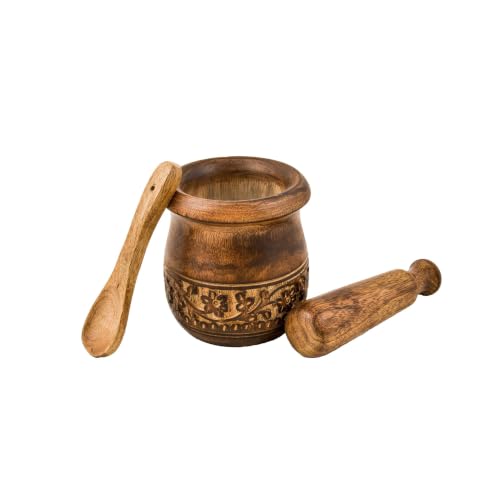

How To Choose The Best Wood Mortar and Pestle
Wood changes the job. A wooden bowl grips soft ingredients instead of sliding them around, and it never chips flecks of stone into your food the way a hard granite set can. The trade-off is that wood needs a rinse-and-dry routine, and a small bowl fills up fast once you add liquid. Start with the size that matches what you actually cook.
Match the bowl diameter to your batch size
A 3.5-inch bowl is a spice-and-garlic tool — good for a pinch of peppercorns, a clove of garlic, or a pill you need to crush. A 5-inch bowl or larger is where guacamole, mofongo, salsa, and pesto start to make sense, because you need floor area and high walls to keep wet ingredients from climbing out. If you cook for one, the smaller bowl wastes less; if you make dips for a crowd, go wide.
Interior depth and wall height decide the mess
Depth is the number most shoppers skip. A shallow bowl with a wide opening lets ingredients fly over the rim the moment you press hard. A deeper bowl with high walls keeps crushed herbs and wet pastes where they belong. Check the interior depth spec where a listing gives one, and prefer a bowl that sits inside a stable base so it does not skid across the counter mid-grind.
Wood species: hardness, weight, and grain
Olive wood is dense and hard, which makes it a favorite for grinding without shedding fibers. Acacia brings bold contrasting grain and a one-of-a-kind look. Mango wood is lighter and easier to handle. Rosewood gives a warm brown tone. Harder woods like olive and acacia hold their shape longer, while softer mango feels kinder on the wrist but needs gentler pressure.
Finish, oiling, and everyday care
Look for a food-grade finish, and expect to re-oil the bowl now and then to keep the grain sealed. Wash with warm soapy water and air dry — never soak a wooden mortar or run it through a dishwasher, because water swells the grain and cracks the bowl. A well-oiled wooden set lasts for years and absorbs less odor than you might fear.
Side-by-Side Comparison
| Model | Best For | Bowl Diameter | Material | Weight | Amazon |
|---|---|---|---|---|---|
| Urth Spirit Wooden Pentagram★ Best Overall | Everyday all-rounder | 3.75 inches | Wood | 8.64 oz | Amazon |
| GoCraft Mango Wood CarvedTop Performer | Small batches & decor | 3.5 inches | Mango wood | — | Amazon |
| Vrinda Tree of LifeBest Design | Herbalists & altars | 5 inches | Wood | — | Amazon |
| The Great Indian Bazaar Handmade | Gifting & rosewood warmth | 4 inches | Rosewood | 0.29 kg | Amazon |
| IMUSA Chinaberry XL | Big dips & mofongo | 5 inches | Chinaberry wood | 0.77 kg | Amazon |
| Jean-Patrique Pestle & Mortar | Extended grinding sessions | — | Wood | 0.7 kg | Amazon |
| Ironwood Gourmet Olmec | Powders & pastes | 3.25 inches | Acacia wood | 16 oz | Amazon |
| Naturally Med Olive Wood Rustic | Large rustic batches | 5.5 inches | Olive wood | 1.6 lb | Amazon |
| Forest Decor Olivewood | Premium handmade finish | — | Olive wood | — | Amazon |
Detailed Reviews
1. Wooden Pentagram Mortar and Pestle Set
Our pick — 4.5+★ from 600+ verified ratings; the strongest balance of quality and price.
The carved pentagram bowl that buyers keep out on display, not tucked in a drawer.
Start with the size, because it defines the job: a 3.75-inch diameter bowl standing 3.5 inches tall, with 2.5 inches of interior depth. That depth is the part that counts — it holds a couple of garlic cloves or a spoonful of peppercorns without them hopping over the rim while you press. At 8.64 ounces it stays put on the counter instead of skating around.
What wins people over is the look. The wood carving gives it a character that plain kitchen tools do not have, and owners use it on altars as often as in the kitchen. It works for practical jobs too, including mixing ink. For a piece that sits in view, that matters as much as the grind.
The one honest catch is that the bowl is smaller than some buyers picture. If you plan to mash a full batch of guacamole or a wide pesto, this is not the pick — the deeper XL bowls in this list are built for that. But for herbs, spices, and small craft work, the proportions are right.
What holds up
- 2.5-inch interior depth keeps small batches contained
- Carved design doubles as display piece
- 8.64-ounce weight stays stable while grinding
- Holds up for craft work like mixing ink
Where it runs short
- 3.75-inch bowl is tight for wet pastes and dips
- Smaller than some shoppers expect from photos
Right call for: cooks who want one handsome, dependable bowl for spices, herbs, and small grinding jobs.
Think twice if: your main recipe is guacamole or a big batch of salsa — go wide instead.
2. GoCraft Wooden Carved Mortar and Pestle
A compact carved mango-wood grinder built for quick pinches, not marathon batches.
At 3.5 inches across, this bowl is the smallest serious pick in the lineup — noticeably tighter than the 5-inch IMUSA below. That makes it a fast-reach tool for garlic, ginger, seeds, and a quick spice blend. The included 5-inch spoon is a nice bonus, and the whole set fits in a drawer or on a crowded counter without hogging space.
What people talk about most is the quality of the carving. The natural mango grain and engraved exterior read like a crafted piece, and the finish is food-grade, so it works as hard as it looks. The non-skid base is the sleeper feature — it keeps the bowl planted when you lean into a grind.
Be clear on the trade-off: the size is the thing most likely to disappoint if you misjudge it. A 3.5-inch bowl is for small quantities, so a full batch of chutney or a wide paste will feel cramped. Treat it as a precision tool and it earns its place.
Reach for this if: you grind small amounts often and want the bowl to stay put while you work.
Look elsewhere if: your recipes call for volume — the diameter caps how much you can make at once.
3. Vrinda Wooden Mortar & Pestle Set – Tree of Life
A 5-inch carved bowl with spiritual character and a wide working floor.
The number that stands out is 5 inches in diameter against 3 inches of height — a wide, low bowl that gives you room to work a real handful of herbs or seeds. That footprint is the pick’s whole argument: it stores easily on a shelf yet opens up enough floor to grind without fighting the walls.
The craftsmanship is what wins people over. Each set is hand-carved from wood, and the tree of life carving gives it a spiritual weight that herbalists and altar keepers respond to. It is built for grinding herbs, spices, grains, and seeds, and the natural wood keeps the whole thing eco-friendly and traditional.
The honest note: hand-carving means no two bowls are exactly alike, so expect small variations in grain and tone. That is the charm as much as the caveat — but if you want matched, machine-perfect pieces, this is the wrong lane.
Why it earns the shelf: a 5-inch bowl with a hand-carved tree of life design marries real grinding capacity to a piece worth leaving out.
Best suited to: herbalists and cooks who want a wide bowl with a meaningful design on it.
skip it if: you need exact matching pieces — the hand-carving makes every bowl unique.
4. The Great Indian Bazaar Handmade Wooden Mortar & Pestle Set

The lightest bowl on the list — 0.29 kg of rosewood you can pass around with one hand.
Here is the contrast worth knowing: it weighs 0.29 kg, while the IMUSA XL weighs 0.77 kg. That gap is the whole personality of this set. It is a graceful, easy-to-lift bowl for a 4-inch diameter, which makes it comfortable for quick jobs and simple to move between counter and table.
It is built from rosewood with a rustic finish and a purely hand-crafted construction — no machine line, no chemicals. The listing calls out no BPA, no lead, and no mercury, and the natural wood is meant to lock in freshness while keeping odors away. It is sized to crush spices, herbs, garlic, ginger, and even pills, so it covers both kitchen and home use.
Because it is light, it will not sit as heavy and immovable as the denser bowls when you press hard — a fair point to weigh if you grind tough spices daily. As a gift it is a strong pick: the listing frames it for birthdays, housewarmings, and anniversaries, and it arrives packed securely from the artisan workshop.
Where the value lands: rosewood warmth and hand-crafted character in a bowl light enough to use comfortably, with a 4-inch diameter that suits spice-and-herb work.
Pick it for: a handsome gift or a lighter rosewood bowl for everyday crushing.
Weigh this first: at 0.29 kg it gives less planted stability under heavy grinding than the denser picks.
5. IMUSA Chinaberry Wood Mortar & Pestle, XL

The jumbo bowl that turns a whole batch of guacamole into a two-minute job.
This is the volume pick, and the specs say so plainly: a 5-inch diameter with high walls, weighing 0.77 kg. Compare that to the 0.29 kg rosewood set above and you see the difference — this one is built heavy and wide so you can work a large quantity without it climbing out. That combination of width and high walls is exactly what mofongo, mangu, guacamole, and salsa demand.
The polished chinaberry wood finish is smooth and easy to wipe down, and the sturdy construction is meant for daily use. It also handles the everyday tasks — spices, marinades, pesto, curries — so it is not a one-trick bowl. Owners gravitate to how it looks and how much it holds, and the large size is repeatedly the reason they reach for it.
The fair caveat is quality consistency: the crowd is split, with plenty calling it excellent value and a smaller group finding the finish below their expectations. On balance it is a capable large bowl for the money — go in knowing it is a workhorse, not a display piece.
Strengths that matter
- 5-inch diameter with high walls holds big batches
- 0.77 kg weight gives planted, stable grinding
- Polished finish wipes clean quickly
The honest drawback
- Quality reviews split between excellent and below-expectation
- Heavier and bulkier to store than compact bowls
Made for: anyone whose recipes start with a whole head of garlic and a pile of herbs rather than a pinch.
Consider the compact bowls instead: if you grind single servings and want a light, easy-to-store set.
6. Jean-Patrique Pestle & Mortar Set
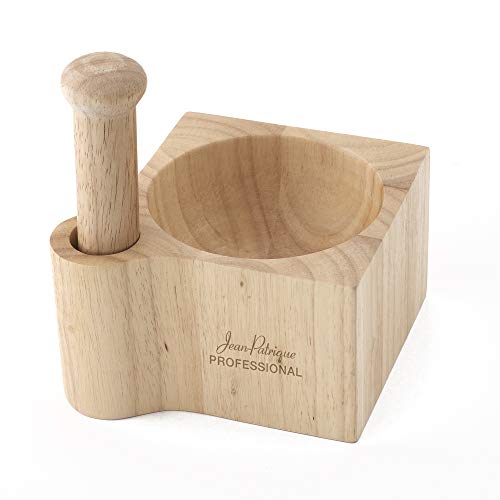
A square-based bowl with a home for the pestle — engineered to sit still and store neat.
Most wooden mortars wobble when you lean in. This one answers that with a sturdy square base that gives the bowl a wide, planted footprint at 0.7 kg. The concave grinding bowl sits inside that base, so the whole thing resists tipping when you press hard for a fine powder.
The second clever touch is a circular pestle holder built into the corner of the mortar. The pestle drops into it for compact, secure storage, so you are not hunting for the grinder in a drawer. The pestle itself matches the bowl’s wood and has an ergonomic handle, which helps during extended grinding sessions.
The skillset it fits is broad: herbs, spices, and even pill and tablet crushing. The trade-off is that the listing does not publish a bowl diameter, so you are choosing this for the stable square base and built-in holder rather than a stated capacity. If exact volume matters to you, weigh that gap.
The stability story: a square base and 0.7 kg of wood keep the bowl planted, while the corner pestle holder keeps the set together — a genuinely practical pair of design choices.
This suits: cooks who grind hard and hate a bowl that slides, plus anyone tired of losing the pestle.
One thing to note: no bowl diameter is published, so confirm capacity against your recipes before you commit.
7. Ironwood Gourmet Olmec Mortar and Pestle, Acacia Wood

An acacia bowl carved in a pre-Columbian profile, built to reduce spices to fine powder.
Notice the working size first: a 3.25-inch diameter and 16 ounces of acacia wood. It is a dense, decorative piece with a distinctive Olmec silhouette — the kind of bowl that reads as art on the counter. Acacia’s natural contrasting grain means every one is genuinely one of a kind, so yours will not match the photo exactly.
Performance is the reason it belongs here. What people praise most is how well it functions, and specifically its talent for reducing herbs, spices, and nuts to powders or pastes. That dense acacia grain is the muscle behind it. Upkeep is simple too — warm soapy water and a quick air dry, and the bowl is ready again.
Where it splits opinion is size. A 3.25-inch floor is small for making Spanish alioli or other thin sauces, and some buyers find it tighter than they want for wet work. It is a powder-and-paste tool, not a sauce bowl — size your expectations to that.
The right buyer: someone who grinds spices and nuts down to a fine powder and wants a bowl handsome enough to display.
Not your bowl if: you are making thin sauces or alioli — the 3.25-inch floor is built for dry reduction, not liquid volume.
8. Naturally Med Olive Wood Rustic Mortar and Pestle
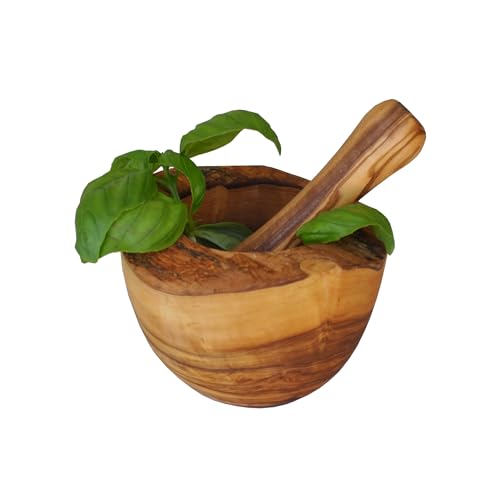
The widest bowl in the lineup at 5.5 inches, hand-carved from dense Mediterranean olive wood.
Olive wood is the hard, tight-grained timber that serious grinders reach for, and this set gives it a 5.5-inch diameter — the biggest opening here, wider than the 5-inch IMUSA and the 3.5-inch GoCraft. It weighs 1.6 pounds, so it sits planted while you work. That width and weight together make it the pick for grinding herbs and spices in real quantity.
The rustic, natural-edged style is the charm: each set is handmade from Mediterranean olive wood, and the listing is upfront that every piece varies in height and finish. Buyers mostly talk about how beautiful it looks and how solid the quality feels — it is a bowl that earns its spot on an open shelf. The depth and size make it useful for salsa and herb grinding alike.
Expect variation rather than uniformity. The photo is an example, not the exact bowl you receive, so the height and natural edges will differ. If you want a predictable, matched set, this rustic approach is not for you — but if you want character and size, it delivers both.
What you are really buying: a 5.5-inch hand-carved olive-wood bowl that prioritizes width, hard grain, and one-of-a-kind rustic character over matched uniformity.
Choose it when: you want a large, hard-working olive-wood bowl with a natural hand-made look.
Look past it when: you need a consistent size and shape — no two are alike and the height varies.
9. Forest Decor Olivewood Mortar and Pestle Set
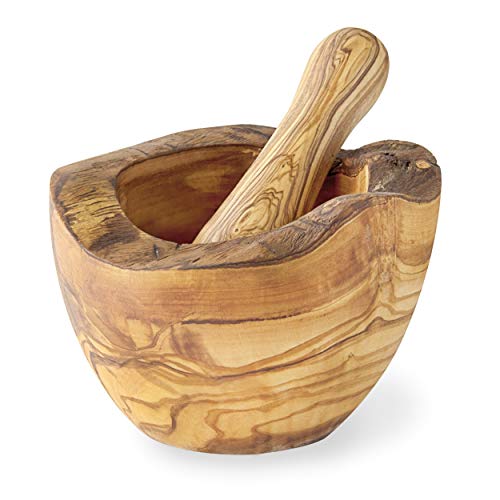
Olive wood with raised walls, shaped so spices stay in the bowl instead of on the counter.
The design detail that stands out is the deeper bowl with higher sides. The maker raised the walls to stop contents spilling during crushing — that cuts the mess and keeps more of your herbs and spices where you want them. It is a small change that shows the set was designed by people who actually grind.
The pestle matches that intent: a thick, durable piece with a wide grip for control while crushing, stirring, and mixing, and a round wide head that presses more evenly against the bowl floor. The whole thing is hand-carved from selected olive wood by a family-run operation, so every set differs in color, pattern, texture, and even size. That handmade variance is the point.
Its job is broad — fresh spices and herbs for dinner, or guacamole for a quick snack. The trade-off is that the listing does not publish a diameter, and handmade variance means the bowl you get is genuinely unique in size. Buyers respond to how well-made and beautiful it is; just go in expecting a one-of-a-kind piece, not a spec-sheet match.
What sets the feel: higher walls to contain the grind and a wide-grip pestle with a rounded head — quiet design choices that make daily use tidier.
What you give up: no published diameter and honest handmade variation in size and tone.
Built for: cooks who want tidy, contained grinding in a genuine olive-wood set with a handmade soul.
Pass if: you need a precise, standardized bowl size — the handmade nature makes each one different.
Know the Specs
Bowl Diameter and Interior Depth
Diameter is the width of the opening, and depth is how far down the bowl goes inside. A wide-and-shallow bowl spreads ingredients out for wet pastes like guacamole, while a narrower, deeper bowl keeps a pinch of peppercorns or a garlic clove contained while you press. Check both numbers where a listing gives them, because a wide bowl with shallow depth lets ingredients climb over the rim.
Wood Species and Finish
The wood species decides hardness and feel. Olive wood and acacia are dense and hard, so they resist shedding fibers while grinding. Mango wood is lighter and easier on the wrist. Rosewood gives a warm brown tone. The finish should be food-grade, and a sealed grain means you can wipe it clean after use. A wooden mortar never goes in a dishwasher — wash by hand and air dry to keep the grain from cracking.
Common Questions
Is a wood mortar and pestle better than stone?
How do I clean and season a wooden mortar and pestle?
What bowl size do I need for guacamole or salsa?
Can a wooden mortar and pestle crush pills?
Will the wood absorb odors or flavors over time?
What is the difference between olive wood and acacia wood bowls?
How heavy should a wood mortar and pestle be?
Why do handmade wooden mortars vary in size and color?
Can I use a wooden mortar for wet pastes like pesto?
How long does a wooden mortar and pestle last?
The Bottom Line
For most buyers, the winner in this search for the Best Wood Mortar and Pestle is the Urth Spirit Wooden Pentagram set — a 3.75-inch carved bowl with 2.5 inches of interior depth that handles everyday herbs, spices, and small grinding jobs while looking good enough to leave out. If your kitchen runs on big batches of guacamole, mofongo, or salsa, the wide 5-inch IMUSA Chinaberry XL gives you the volume and high walls to get there in one go. And if a hand-carved rustic bowl matters as much as the grind, the 5.5-inch Naturally Med olive wood set is the one to reach for — and with that many owners behind the top pick, it is the safe bet you will not regret.
How we choose
We do not accept paid placement. Every pick is matched to a real buyer and a real use-case; we do not hands-on test units.
Sources
Specifications: manufacturer listings and product documentation. Review insights: verified customer reviews, as of November 2026. Pricing: not shown on this page (it changes often); check the current price via the retailer link.
As an Amazon Associate, Tactical Gear Guy earns from qualifying purchases. This does not affect which products we feature.