Specs are compiled from manufacturer listings and verified buyer reviews and can change over time — please confirm the key details on the product page before buying.
Short answer: buy the Pet Lodge Small Animal Nest. At 18.5 inches deep and 5.5 pounds of rust-resistant galvanized steel (steel dipped in zinc so it does not rust), it gives a pregnant doe the most room and the steadiest floor of the three. A nesting box for a rabbit has one job — give the doe a dark, enclosed, chew-safe corner where she feels safe enough to kindle (give birth) and nurse. Too small and the doe refuses to kindle in it. A bare metal floor chills newborn kits in a cold shed. Bare wood in a damp hutch warps and needs replacing within a year. The three boxes below cover small-breed hutches, large does and dry indoor sheds at three price points.
This guide is built by comparing the manufacturers’ published specifications and the patterns across verified customer reviews, so you get each pick’s real strengths and trade-offs instead of marketing spin.
Two of these are metal, one is bare plywood, and the gap between them matters more than any label on the box. Here is how each one actually behaves on kindling night in a real hutch. If you are shopping for the best nesting box for rabbit setups, start with depth and floor material before anything else.
Top Picks

How To Choose The Best Nesting Box for Rabbit
The mistake most new breeders make is buying a box that looks right on the shelf but is the wrong depth for their doe. A nesting box is not a hideout you leave in all year. It is a temporary den you drop in about a week before the due date, and it has to be deep enough that the doe can stretch out and lie alongside her kits instead of crouching over them. Too shallow and she will kindle on the wire instead. Too tall and she cannot see out, so she panics and abandons it.
Depth and height beat everything else
Look for a box long enough that your doe can lie down fully, which is usually her body length plus a little, and low enough that she can hop in and out without a ramp. A box in the 14 to 18.5 inch length range fits most medium does. Height matters for a different reason: a low entry lip keeps newborn kits from being dragged out when the doe exits. If the box is much taller than your doe’s shoulder, she will hesitate at the opening and you will lose days of nest-building time.
Floor material decides your cleaning life
A removable floor is the single most useful feature on a rabbit nesting box. Kits soil the nest fast, and a design where the bottom lifts out means you can scrape and rinse without wrestling the whole box out of the hutch. Metal floors with a lift-out tray handle urine better than solid wood, which absorbs it and starts to smell. Wood wins on warmth for the kits, though, so think about your climate and your shed before you decide.
Chewing: assume it will happen
Every doe tests the edges of a new box with her teeth. Galvanized steel resists that completely, while unvarnished wood gives her something safe and natural to gnaw. What you want to avoid is anything stapled together with thin fasteners that come loose once a rabbit works at a corner. Rolled edges on metal and non-toxic binders in plywood are the two quality marks worth checking before you buy.
Where the box will sit
Indoors in a spare room, outdoors in a covered hutch, or in a shed that gets damp — the location changes the answer. Metal and acrylic designs cope with weather and hose-downs. Bare wood does not like standing water, so keep it under cover. Steel in a damp shed and wood under cover each last several litters.
Side-by-Side Comparison
| Model | Best For | Length | Weight | Floor / Material | Amazon |
|---|---|---|---|---|---|
| Pet Lodge Small Animal Nest★ Best Overall | Most does, biggest den | 18.5 in | 5.5 lb | Removable wood floor, galvanized steel | Amazon |
| Maxcheck Galvanized Metal Rabbit Nesting Box | Tight hutches and easy cleanup | 14.49 in | 2.8 lb | Removable acrylic floor, galvanized metal | Amazon |
| Prevue Pet Products Wood Rabbit Hut 1123 | Year-round hideout in a dry shed | 14 in | 16 oz | Solid unvarnished plywood | Amazon |
Detailed Reviews
1. Pet Lodge Small Animal Nest
Our pick — 4.5+★ from 200+ verified ratings; the strongest balance of quality and price.
The deepest den here by a wide margin, and the one a heavy doe settles into fastest.
This is the roomiest box of the three at 18.5 inches deep, 10 inches wide and 10.5 inches high, and that extra length is exactly what a full-grown doe needs to lie flat beside her litter. It is also the heaviest at 5.5 pounds, which sounds like a drawback until you have watched a doe dig at a lightweight box and shove it across the hutch floor. The weight keeps the nest where you put it on kindling night. Compared with the Maxcheck box, it runs 8.4 inches longer and adds 3.6 inches of width, and it stands 2.63 inches taller than that box — all of which adds up to a genuine burrow rather than a shallow tray.
The construction is rust-resistant galvanized steel with rolled edges, so a nervous doe pacing the rim does not cut herself on a raw sheet-metal lip. Underneath sits a removable wood floor, which is the feature that keeps this thing usable. Lift the floor out, scrape the soiled bedding, rinse, and drop it back in without hauling the whole frame through the hutch door. The wood also gives kits a warmer surface than bare metal in a cold shed, and it gives the doe something to chew at the edges of the nest, which is normal pre-kindling behavior.
What wins people over here is the build quality — that is the thing buyers talk about more than anything else, and the phrase that keeps coming up is simply that it is a solid, well-made den. But the honest picture is split on the floor. Some owners have had theirs going strong for years, while others have found dents and holes developing in that wood base over time. It is also the priciest of the three, and a few owners find it larger than their hutch really wants. Treat it as a long-term buy for a standard or large doe, and check your hutch door width before you order, because a box this deep needs an opening a full 10 inches wide to slide through.
What earns its keep
- 18.5 inches deep — the most lying-down room of the three, so a doe can stretch out beside her kits.
- Rolled steel edges mean no sharp lip for a pacing doe to catch herself on.
- The lift-out wood floor makes nest changes a rinse-and-replace job instead of a scrub.
- 5.5 pounds of steel stays put when a doe digs hard at the bedding.
Worth knowing before you order
- The wood floor is the weak point over years — a few buyers report dents and holes forming.
- It is the costliest of the three, and the size overwhelms a small hutch.
- You need a 10-inch-wide hutch door to get it inside.
Go for it when: you have a standard or large doe, a hutch door that clears 10 inches, and you want the deepest den on this page.
Think twice if: your hutch is tight or you want a box you can hose down outdoors — the wood floor will not thank you for standing water.
2. Maxcheck Galvanized Metal Rabbit Nesting Box
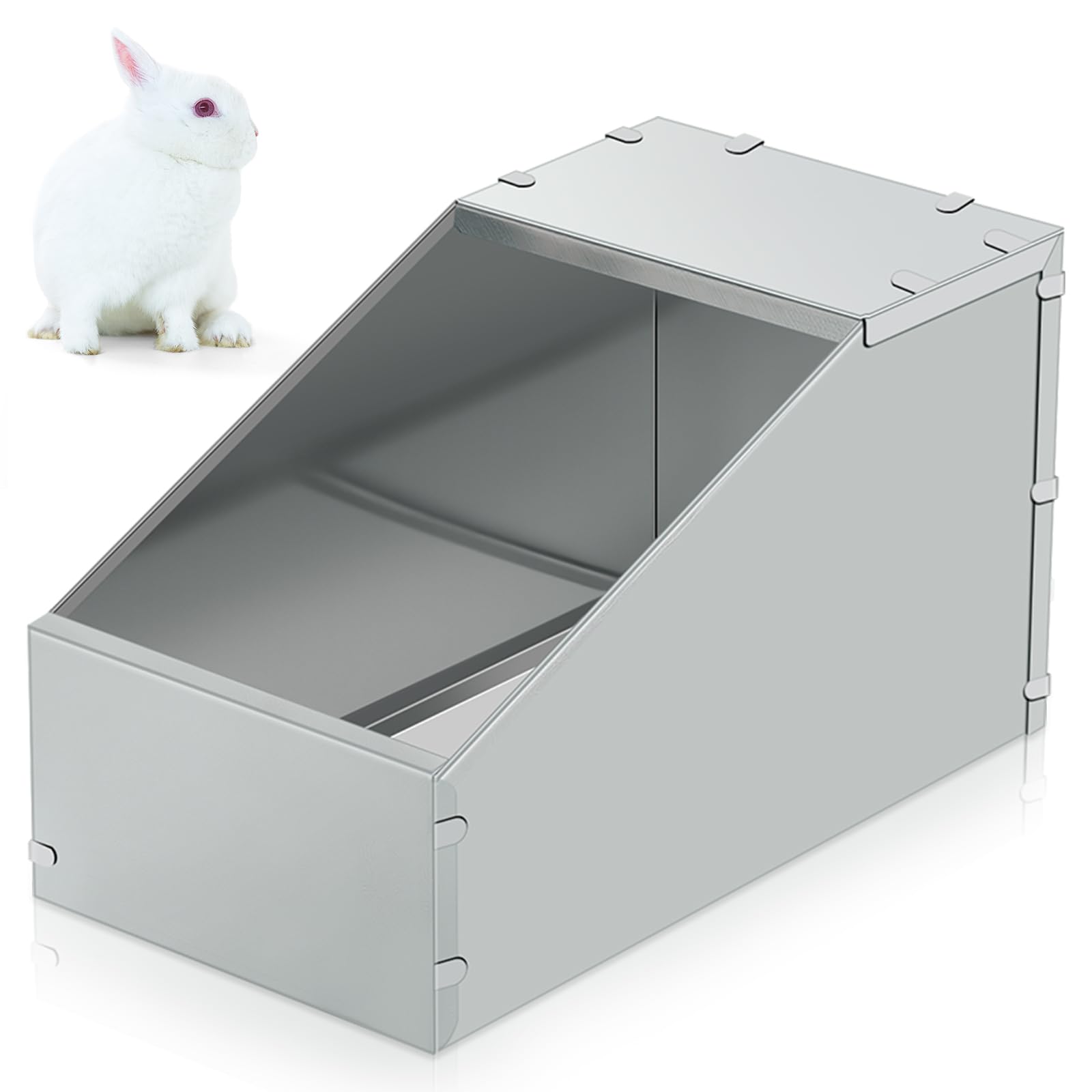
The box that flat-packs, wipes clean and shrugs off a hose-down without a second thought.
Here is the trade you are making: this box gives up size for weight and cleaning speed. At 14.49 inches long, 8.5 inches wide and 7.87 inches high, it is a compact den that suits small-breed does and tight hutches. It weighs just 2.8 pounds, so it moves easily in and out for kindling, and it will not collapse your hutch shelf the way a heavier steel frame can. Size is the feature buyers talk about most here, and it lands as a good fit for most rabbits rather than a squeeze.
Assembly is the other standout — it arrives as flat metal plates you put together yourself, and the process is quick enough that it does not eat your evening. Once built, the acrylic bottom is the clever part. It lifts out for cleaning, resists animal urine, and because it is a smooth sheet rather than a wooden panel, a wipe is genuinely a wipe. There is one thing you must do first: peel the protective film off that acrylic plate before the rabbit goes near it, or you will spend a week wondering why the floor looks scratched. The galvanized metal is rated chewproof, rust resistant and weather resistant, so it holds up indoors or under a covered outdoor hutch through damp weather.
The catch is material thickness. The metal plates are thin, and a fair share of owners mention so — this is a box that does its job, not one you will hand down to your grandchildren. Set it up properly, keep the fasteners snug, and it behaves. There is also assembly to do before kindling day, so order ahead rather than the night before your doe is due. One more note on sizing: at 7.87 inches of height this sits noticeably lower than the Pet Lodge box, which is fine for a small doe but cramped for a large one.
The cleaning advantage: a removable acrylic plate that wipes clean and stands up to urine is the difference between a five-minute job and a twenty-minute one on a busy morning.
The honest limit: thin panels mean this is a replace-in-a-few-seasons box, not a legacy purchase — and you build it yourself when it arrives.
The right call if: you keep small-breed rabbits, want a hygienic wipe-clean floor, and value a light box you can lift out one-handed.
Look elsewhere if: your doe is on the large side — the 7.87-inch height leaves her little headroom compared with the deeper Pet Lodge den.
3. Prevue Pet Products Wood Rabbit Hut 1123
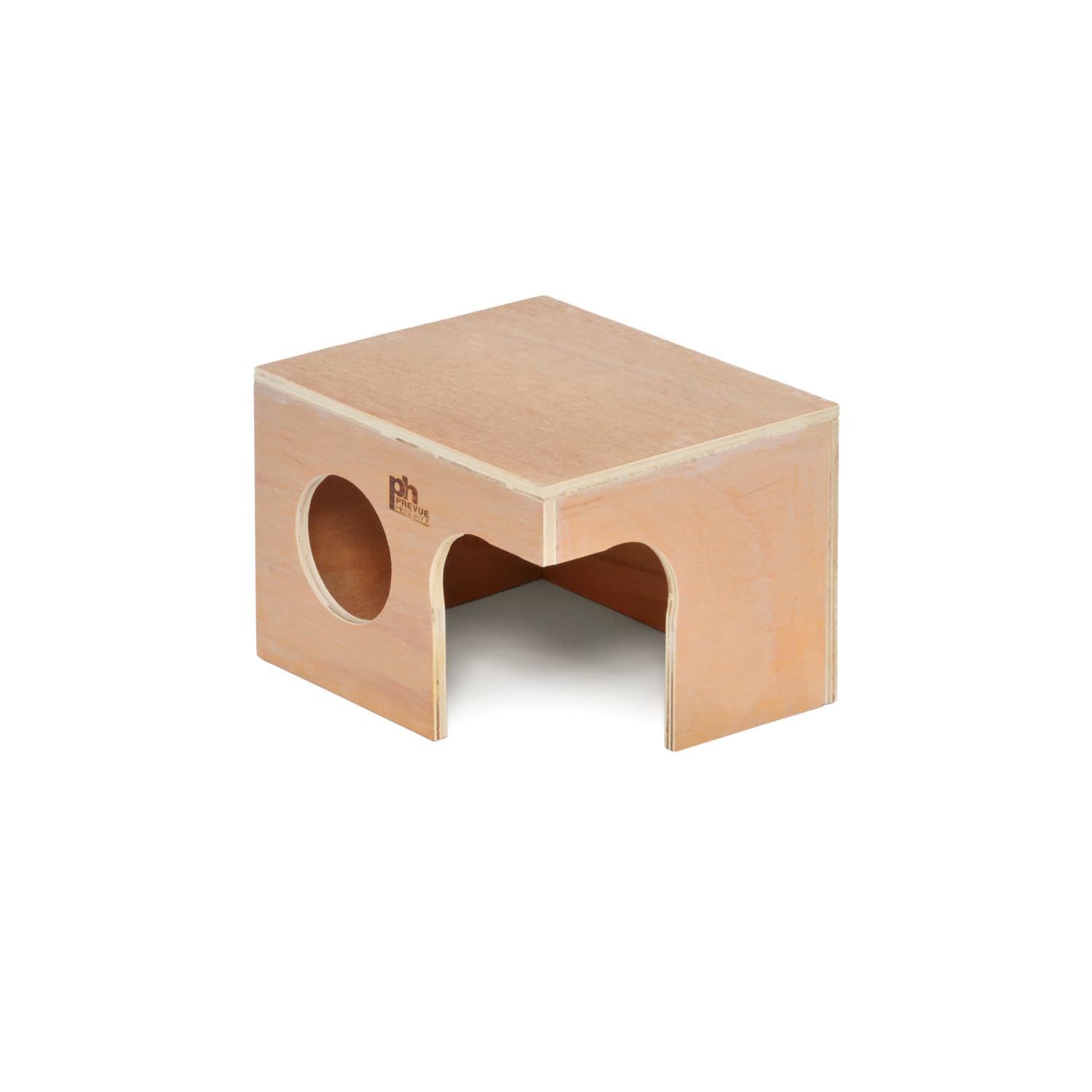
A bare-wood hut your rabbit will claim as its own — just measure before you fall for it.
This one is not really a kindling tray in the same sense as the metal boxes. It is a wooden hideout with one crawl hole plus a larger corner opening, built from pet-safe plywood with non-toxic binders, sized 14 inches long, 9.75 inches wide and 8.25 inches high. At 16 ounces it is feather-light compared with the 5.5-pound Pet Lodge, which makes it trivial to move around the run when you want to shift a rabbit’s territory. Note that the Pet Lodge runs 4.5 inches longer, so if your doe is on the big side the wood hut is the tighter fit.
What gets rabbits into it is simple curiosity and the natural pull of a wooden den. Rabbits take to this hut readily — it is the aspect owners bring up most by far — and Holland lop keepers in particular report their bunnies claiming it as a favorite hanging-out spot. The unvarnished wood is chew-friendly too, so a rabbit that likes to work at the edges gets a safe outlet instead of turning to the hutch bars. Because it is bare wood, it also stays warm and dry feeling inside, which helps a nervous doe settle in a chilly shed.
The trade-off is precision. The size reads smaller in person than the listing suggests, so a medium or large breed will fill it completely rather than lounge in it. It is also assembled wood rather than a molded panel, and a few buyers find it comes apart at the joints over time, especially when a rabbit treats it as a chew toy. One more thing to know: this is bare wood with no base tray, so it does not handle urine or a hose-down the way acrylic and galvanized steel do. Keep it under cover, use bedding inside it, and it will do its job as a nest or a rest spot for years.
Why rabbits take to it: an unvarnished wood den with a crawl hole mimics the natural burrow rabbits look for, and the chew-friendly plywood gives a bored rabbit something legitimate to gnaw.
The measure-twice note: this reads smaller than the listing photos suggest, it has no removable base for urine, and the joints on a few units come loose over time.
Best matched to: small and medium breeds like Holland lops, plus anyone who wants a permanent wooden hideout rather than a temporary kindling box.
Not for you if: you need a removable floor for heavy soiling or a box that lives outdoors in the rain.
Know the Specs
Length, width and height
These three numbers decide whether the box actually works. Length is how much room a doe has to lie down flat beside her kits, so a short box forces her to crouch and risks crushed kits. Width lets her turn around inside without stepping on the litter. Height is the one beginners ignore: a very tall box stops her seeing out, and she may refuse to use it. Aim for a box long enough that she can stretch out, and low enough that she can hop in without a ramp.
Weight and how it stays put
A nesting box takes a beating. A doe digs at the bedding for hours before kindling, and a light box slides across the floor. Heavier galvanized steel — the Pet Lodge at 5.5 pounds, for example — resists that digging. Lighter designs like the 2.8-pound Maxcheck are easier to lift in and out for cleaning. Pick the 5.5-pound steel box if it stays put, the 2.8-pound Maxcheck if you lift it out weekly.
Floor material
The floor is where hygiene lives. Wood adds warmth under kits but absorbs urine and can develop dents over time. A removable acrylic plate wipes clean and resists urine, which makes daily maintenance fast. Both the Pet Lodge wood floor and the Maxcheck acrylic plate lift out for scraping and rinsing.
Metal versus wood
Galvanized steel handles damp, chewing and hose-downs without complaint. Unvarnished wood gives rabbits a natural den feel and something safe to chew, but it does not like standing water. Galvanized steel suits a covered outdoor hutch; unvarnished plywood suits a dry indoor shed.
Common Questions
When should I put a nesting box in with my pregnant doe?
Will a nesting box work for a Holland lop?
Do I need a removable floor in a rabbit nesting box?
Is galvanized steel or wood better for a rabbit nesting box?
How big should the box be for a full-grown doe?
Can I use a wooden rabbit hut as a nesting box?
How long will a rabbit nesting box last?
Do I leave the nesting box in the hutch all year?
Why does my rabbit dig at the nesting box floor?
The Bottom Line
For most does, the nesting box for rabbit winner is the Pet Lodge Small Animal Nest, because 18.5 inches of length, rolled steel edges and a lift-out wood floor give a doe the room and stability she needs on kindling night. If your hutch is tight and you want a wipe-clean, light box you can lift one-handed, the Maxcheck Galvanized Metal Rabbit Nesting Box is the sensible budget-friendly call. And for a Holland lop or a smaller breed that needs a permanent wooden hideout in a dry shed, the Prevue Pet Products Wood Rabbit Hut 1123 is the one rabbits claim for themselves.
How we choose
We do not accept paid placement. Every pick is matched to a real buyer and a real use-case; we do not hands-on test units.
Sources
Specifications: manufacturer listings and product documentation. Review insights: verified customer reviews, as of November 2026. Pricing: not shown on this page (it changes often); check the current price via the retailer link.
As an Amazon Associate, Tactical Gear Guy earns from qualifying purchases. This does not affect which products we feature.