Specs are compiled from manufacturer listings and verified buyer reviews and can change over time — please confirm the key details on the product page before buying.
If you want one answer fast: the Mammut 4 Slide is the harness to buy. It is the strongest combination of adjustability and buyer satisfaction on this list, and it works on a gym wall and a multi-pitch route without a second thought. Everything below explains why the other seven picks might suit you better, but that one is the safe default.
This guide is built by comparing the manufacturers’ published specifications and the patterns across verified customer reviews, so you get each pick’s real strengths and trade-offs instead of marketing spin.
A light harness lives or dies on how its padding spreads load on a hanging belay, not on the gram count. Below you will find weight, fit notes, and gear-loop layouts compared side by side to find the lightweight climbing harness that matches your climbing day. The pick for most people is clear within the first few picks, and the rest of the list covers specific body types and specific terrain.
Top Picks
How To Choose The Best Lightweight Climbing Harness
The trap most first-time buyers fall into is chasing the lowest gram count and ending up with a harness that digs into the hips on a hanging belay. Lightweight construction is worth having, but it only pays off when the padding still spreads your weight properly. Weigh the three things below before you commit.
Leg loop adjustability: fixed, elastic, or buckled
Fixed elastic leg loops are the lightest option, because there is no buckle hardware to carry. The trade-off is that they stretch to fit your thighs rather than being adjusted to them, so they suit a narrow range of body shapes. Buckled leg loops cost a few grams and give you a fit you can dial in for different layers — worth it if you climb in cold weather or share the harness. A harness with adjustable loops is the more forgiving buy if you are between sizes.
Padding and load spread on the waistbelt
Your waistbelt is where the whole load lands when you hang, so it deserves more of your attention than the total weight. Wider foam spreads the pressure over more surface, which matters on long routes. Lighter harnesses cut padding to save grams, and some replace foam entirely with structural webbing. That construction distributes load through the material itself rather than cushioning it, so hanging comfort changes and you should test it before a long route.
Gear loops: how many you actually need
Gym climbers need two front loops for quickdraws and little else. Trad and multi-pitch climbers need more, and they need loops rigid enough that a rack stays readable when you reach for it. Flexible rear loops sit flatter under a pack, which helps on alpine approaches. Count the loops against the climbing you actually do, not the climbing you plan to do someday.
Side-by-Side Comparison
| Model | Best For | Stated Weight | Leg Loops | Gear Loops | Amazon |
|---|---|---|---|---|---|
| Mammut 4 Slide★ Best Overall | All-around default | — | Adjustable | — | Amazon |
| Black Diamond MomentumGym Starter | Gym starters | — | Adjustable | — | Amazon |
| KAILAS AiroBuilt For Long Days | Multi-pitch and ice | — | Adjustable | — | Amazon |
| Mammut Ophir 3 Slide | Alpine and rock | 380 g | Adjustable | — | Amazon |
| PETZL CORAX LT Women’s | Gym and sport days | — | — | 4 | Amazon |
| PETZL Luna Women’s | Trad and alpine | — | Adjustable | 5 | Amazon |
Detailed Reviews
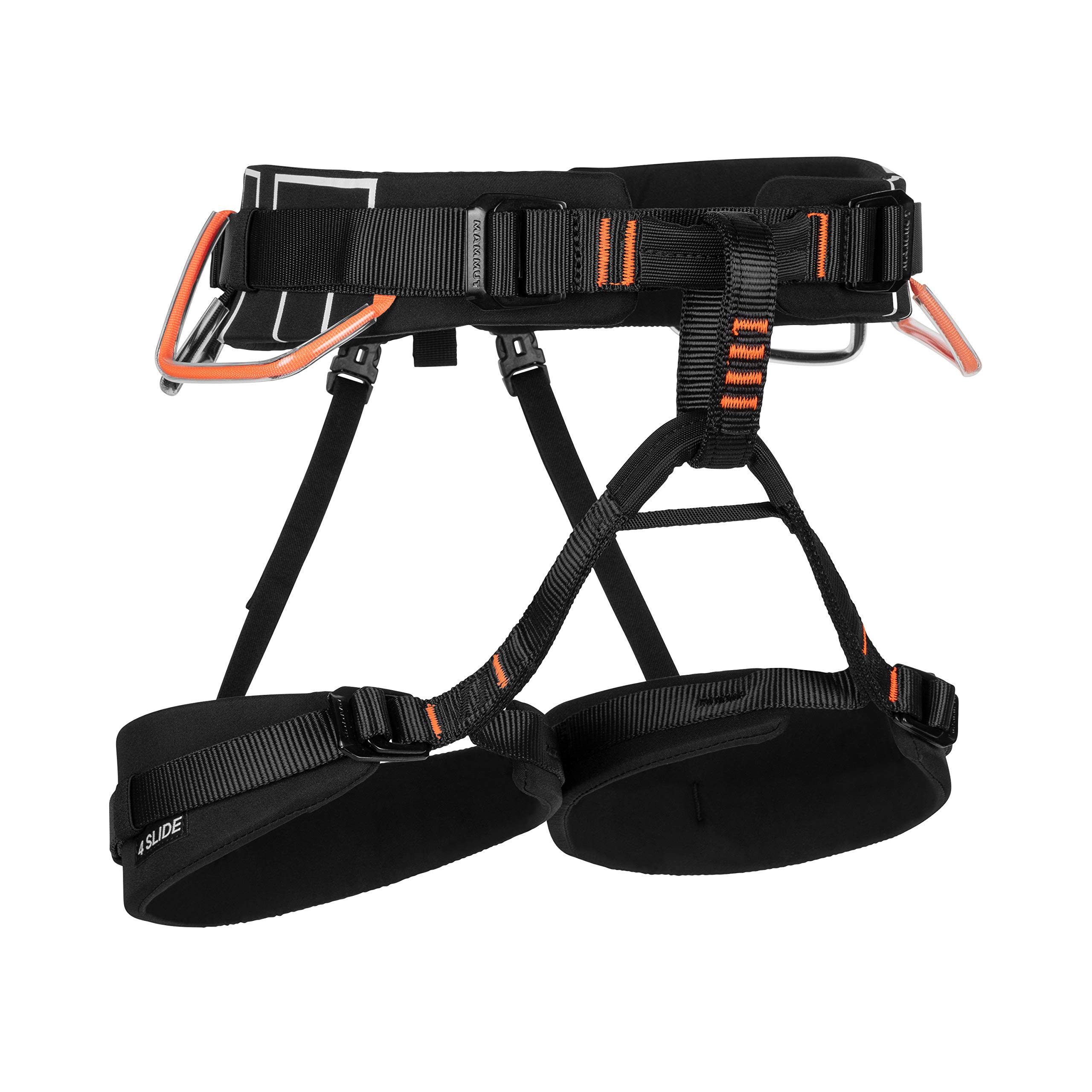
1. Mammut 4 Slide Harness
Our pick — 4.5+★ from 300+ verified ratings; the strongest balance of quality and price.
Four buckles instead of two, so the fit stops being a compromise.
The four Slide-Bloc buckles are the reason this harness takes the top spot. Slide-Bloc buckles are the clamp-style adjusters Mammut uses, and having four of them means you can center the waistbelt on your hips and then tighten each leg loop independently. If you have ever spent a cold minute yanking a two-buckle harness into place, that difference is obvious. It also means one harness handles a wide range of body shapes, which is why it works for a first-season climber and a regular alike.
Comfort holds up past the approach. The cushioning is described as effective rather than maximal, which is the right trade for a lightweight build — enough structure that a long session on the rock still feels supported. The detail I rate highest is the safety one: a red material is woven into the tie-in loop, so wear shows through as a warning before the webbing fails. A tie-in loop is the part you thread your rope through, and it is the last place you want a surprise.
What holds it back is honesty rather than a flaw. This is not the lightest harness on this list — the PETZL ALTITUDE is the serious gram-counter’s pick at a stated 150 g. The 4 Slide earns its place on fit and adaptability instead, and the crowd backs that call: 4.5+ stars across 300+ ratings. It is the one harness you can buy for gym, sport, and trad without re-shopping later.
Where the 4 Slide delivers
- Four Slide-Bloc buckles let you set waist and each leg loop separately
- Red wear-indicator material woven into the tie-in loop
- Cushioning balanced for long days without bulk
- Works for beginners and experienced climbers on the same harness
What to know before you buy
- Heavier than the dedicated alpine options on this list
- Listed as unisex, so try the sizing against the women’s-specific picks below
Buy this one: if you want one harness for gym sessions, sport routes, and the occasional trad day without agonizing over the spec sheet.
Look past it: if every gram is measured — the ALTITUDE below is built for exactly that buyer.
2. BLACK DIAMOND Men’s Momentum Rock Climbing Harness
A beginner package that covers harness, belay device, and chalk bag in one buy.
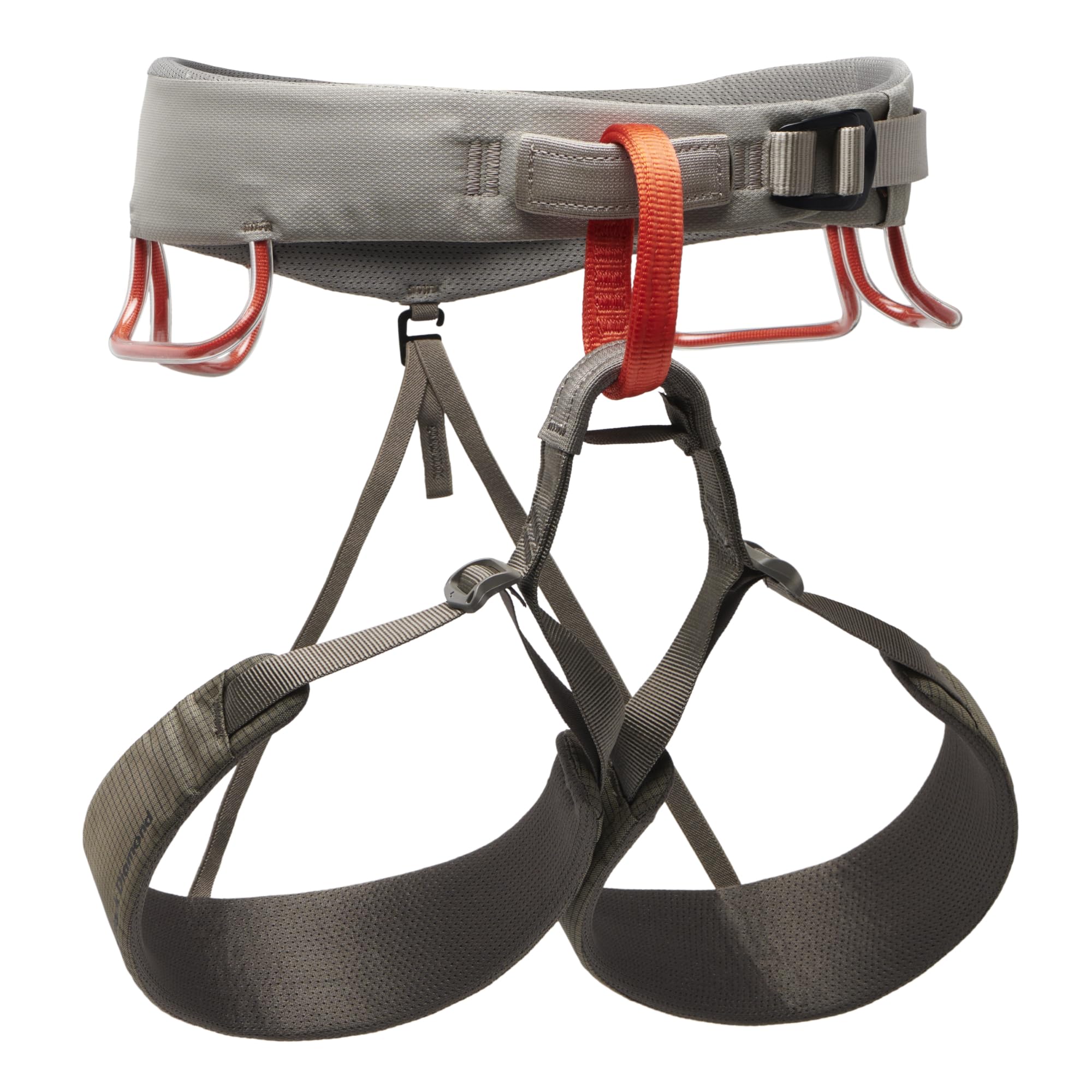
Black Diamond sells the Momentum as a package, and that framing is the whole pitch: everything you need to get started in the gym or at the crag in one buy. If you are new to climbing and do not yet know the difference between a belay loop and a gear loop, that removes a decision. The harness itself is the brand’s most popular all-around model, designed to do a bit of everything rather than excel at one discipline.
Build quality is what wins people over here — it is the single thing buyers return to most in the feedback, and comfort follows close behind. The adjustable leg loops mean you can set the fit for thin summer shorts or a layer of trousers, which is more useful than it sounds when you climb year-round. Adjustable leg loops let you fit thin summer shorts or a winter trouser layer.
The catch is sizing. Fit splits opinion, and the recurring note is that it runs a little large. Measure your waist against the size chart before ordering, and do not assume you size up if you sit between sizes. Worth knowing before you commit, because a loose waistbelt on a hanging belay gets uncomfortable fast.
The honest read: a solid first harness with a fit question attached. Measure your waist against the size chart before you order, and it will serve you through your first season and well past it.
The right call for: a newer climber who wants one package and a brand they recognize on the gym wall.
Skip the guesswork: order it against a real measurement — the sizing tends generous, and a sloppy waistbelt ruins hanging rests.
3. KAILAS Airo Rock Mountaineering Climbing Durable Harness
Mesh padding that breathes on the thigh, so long hanging pitches stop being a slog.
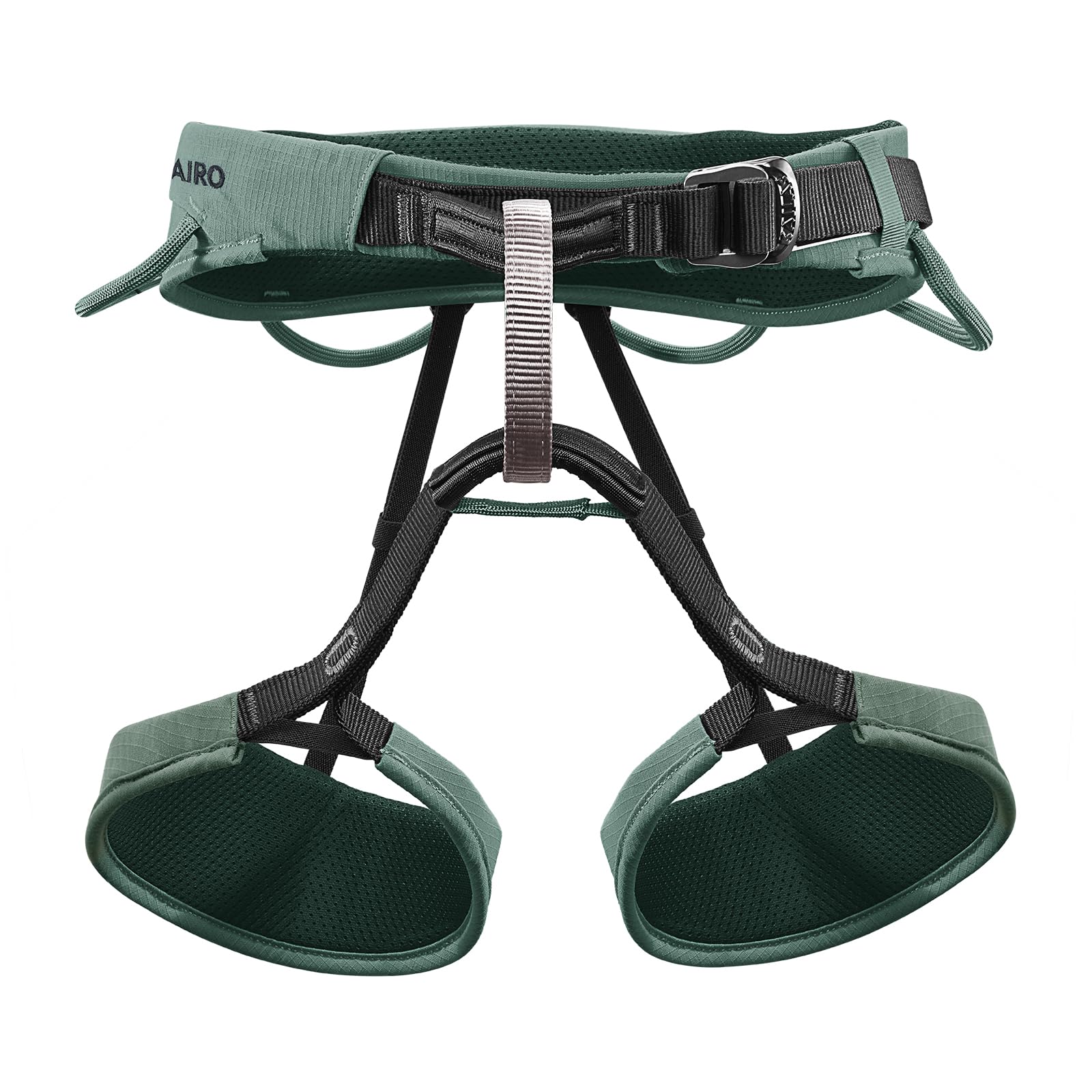
Start with the paperwork, because this is safety gear. The Airo is certified to CE and UIAA standards — the two international benchmarks for climbing equipment — so it meets the recognized safety requirements for rock and mountaineering use. That matters more than any comfort feature on this page. Around it, KAILAS builds breathable 3D mesh padding into the thighs, with moisture-wicking fabric to cut the pressure and sweat on long climbs.
The design is dual-adjustable at the leg loops and waistbelt, and it is cut to fit both men and women across a size range from XS to XL. That combination of a breathable pad and an adjustable fit is what makes it a genuinely good multi-pitch and ice harness. The maker claims the nylon shell is abrasion-resistant and five times stronger than standard harnesses, but that is unverified marketing language. The breathability and adjustability, by contrast, are design facts you can check.
Fit is the one place opinion splits. Quality is what the feedback leans on most, and comfort and function both land positive, but sizing draws mixed notes — the medium earns praise, and the small draws complaints from buyers it does not suit. Sizing complaints cluster on the small end of the XS-to-XL run, while the medium draws praise. Just buy the size you measure into, not the size you are used to.
Why it stands out: breathability where you need it. The 3D mesh padding is the differentiator — on a hot multi-pitch or a sweaty indoor session, a thigh that can breathe is a comfort you notice within the first hour.
Where it asks for care: hand wash only. That is a normal requirement for climbing harnesses, but it does rule out throwing it in the machine after a muddy day.
Pick it if: you climb multi-pitch or ice and want breathable padding on a certified harness.
Think twice if: you have been burned by size runs before — measure carefully across that XS-to-XL spread.
4. Mammut Ophir 3 Slide Climbing Harness for Men
A stated 380 g of harness for rock, ice, gym, and alpine — the do-everything Mammut.
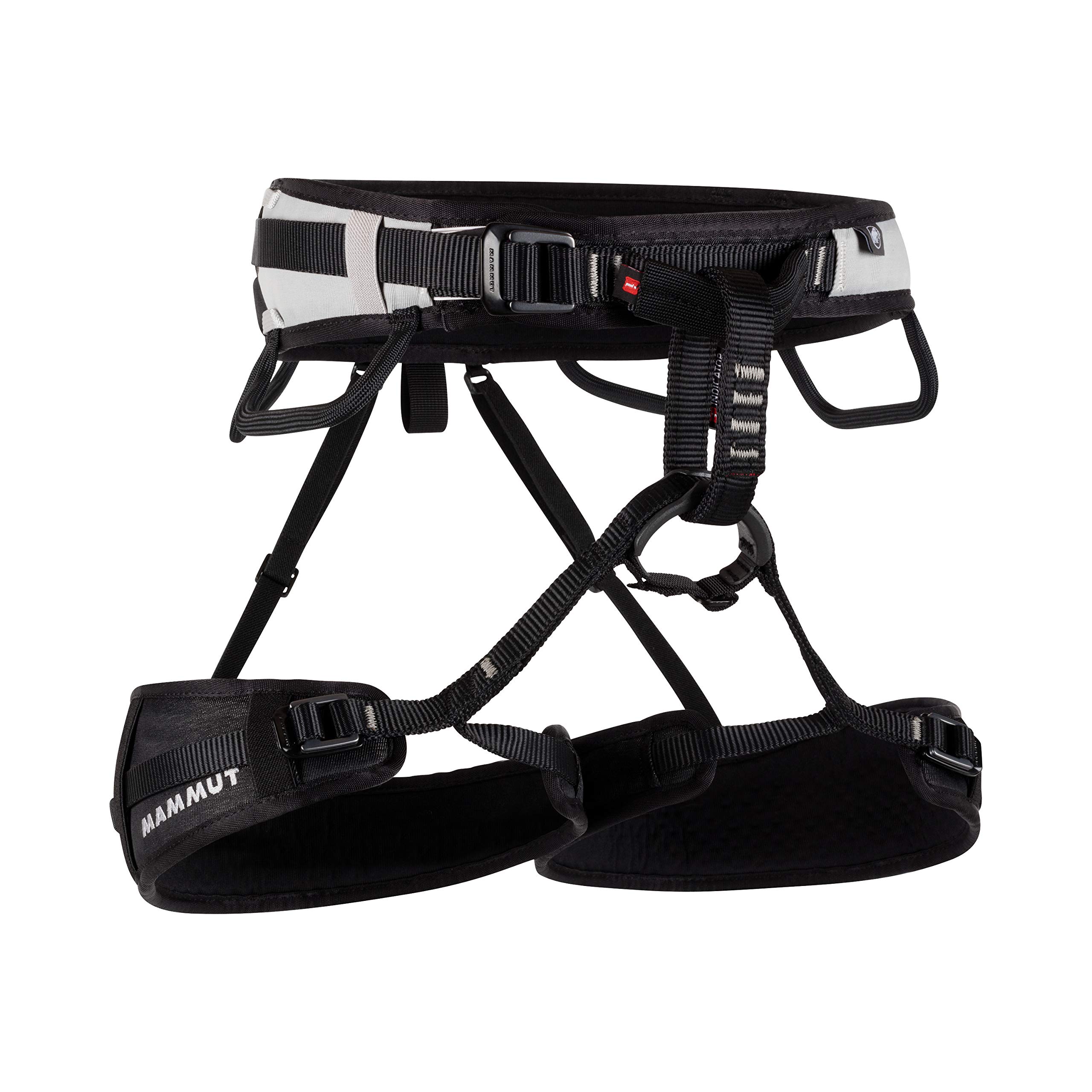
Here is a number you can work with: 380 g stated weight. That is the Ophir 3 Slide’s own figure, and it puts it in the lightweight class without going to the stripped-down extreme of the ALTITUDE further down. For a harness meant to handle rock, ice, sport, and mountaineering from one bag, that is the balance most climbers actually want.
The fit hardware is the other half of the story. Slide Bloc buckles do the adjusting on the waist and the leg loops, and the two-part webbing construction is built to spread load without a heavy slab of foam. There is abrasion protection where the rock bites and a synthetic tie-in loop that will not soak up water the way a fabric one can. Compared with the 4 Slide above, this one is more a specialized all-rounder and less a fit-for-anyone harness — you get a men’s-specific cut rather than a unisex one.
Mammut also lists it as a bluesign product with Fair Wear garment certification, which tells you how the fabric and the labor side were handled. For a piece of gear you will wear against your body for years, that is a reasonable thing to weigh. The one thing to plan for is the sizing — a men’s-specific cut is exactly what some buyers want and the wrong shape for others.
The Ophir’s strengths
- Stated 380 g weight keeps it in the lightweight class
- Slide Bloc buckles on waist and leg loops for a dialed fit
- Two-part webbing and abrasion protection for mixed terrain
- Synthetic tie-in loop resists soaking up moisture
The trade-offs
- Men’s-specific cut will not suit every body shape
- Not the lightest alpine option — the ALTITUDE undercuts it with a stated 150 g
Reach for this if: you want one men’s-cut harness for rock, ice, and gym without carrying excess padding.
skip it if: you need a women’s contoured waistbelt — the Selena and Luna below were cut for that.
5. PETZL CORAX LT Women’s Rock Climbing Harness
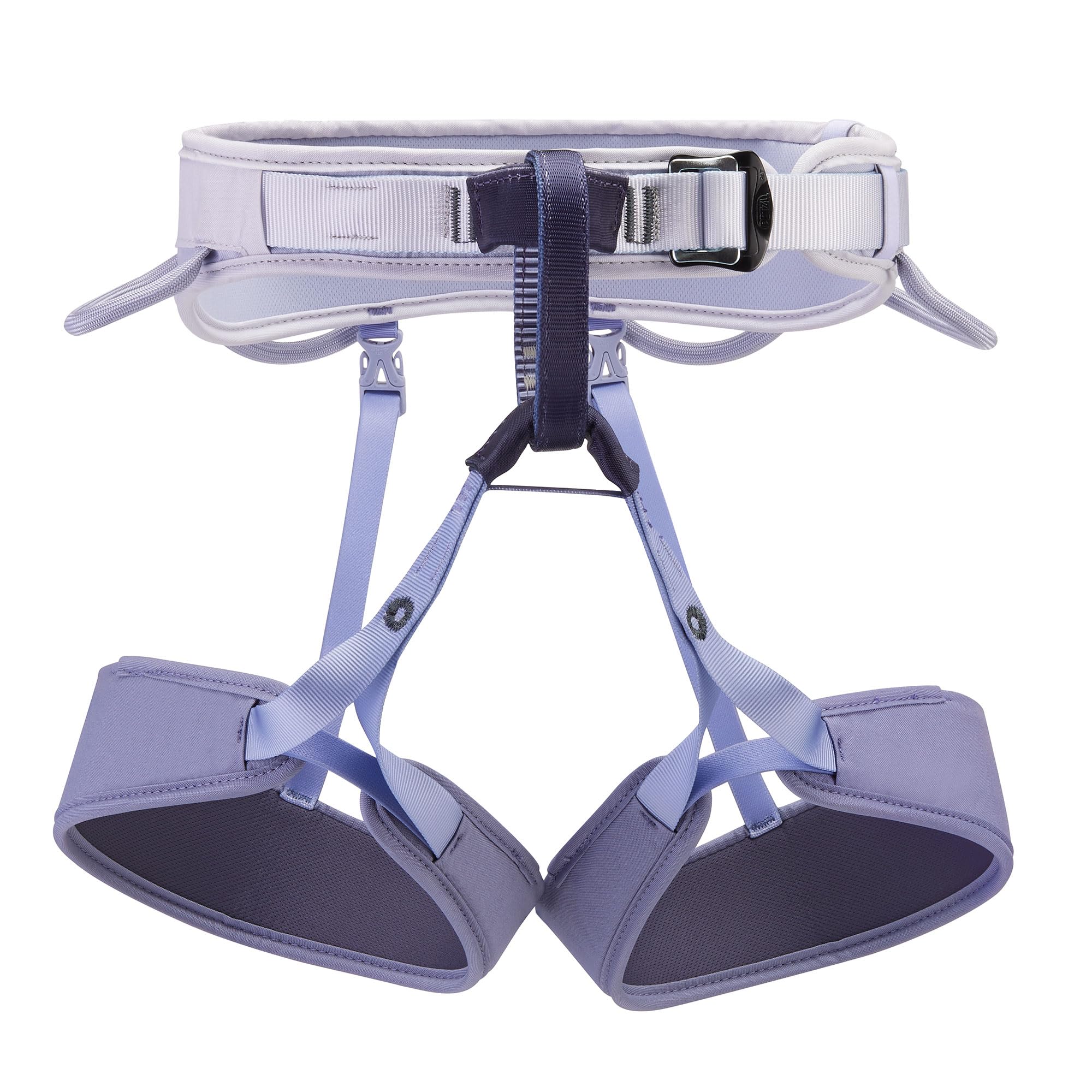
Four gear loops and a comfort-first cut for the woman who climbs gym and rock all year.
PETZL positions the CORAX LT Women as the easy harness — easy to put on, comfortable to wear, good for gym or outdoor days. Four gear loops give you enough racking space for sport climbing without the extra loops a trad rack would demand. It comes in five sizes, which is a wider size spread than most harnesses on this list, and that matters more than any single feature here.
What the fit looks like in practice is the rub. Comfort gets praised and the colour draws a lot of love, but sizing is the recurring complaint — buyers describe it as running extremely small and the size labeling as unusual. That is a real sizing caution, not a quality problem. Quality itself comes away clean. Read the size chart twice and you are likely fine; assume your street size and you may not be.
Outside of sizing, this is a comfortable women’s harness for a wide range of users. The four gear loops cover sport climbing, and the build is comfortable enough for a long gym session. Order up if you sit between sizes, since the feedback points that direction. If your body sits between two sizes, order up rather than down — that is the direction the feedback points.
Where it shines: comfort and the five-size spread. A harness that feels good on hour three of a session is the one you keep reaching for.
Good match for: a female climber doing gym and sport climbing who wants four gear loops and a comfortable cut.
Careful with: sizing — it runs small and the labels confuse people, so measure and size up if in doubt.
6. PETZL Selena Women’s Climbing Harness

Five gear loops and adjustable legs — the women’s harness built for a full trad rack.
Where the Selena trims everything for sport, the Luna goes the other way. It is built with a contoured waistbelt for a women’s body, and it is aimed at technical alpine excursions, trad climbing, and multi-pitch routes. The number that tells you what it is for is five gear loops. A five-loop layout is what you need to carry a trad rack and keep it within reach on the wall, and it is one more than either the Selena or the CORAX LT.
Adjustable leg loops are the second decision-maker here. Unlike the Selena’s elastic loops, the Luna’s can be buckled to size for different body types and different layers. That adjustability plus the padding gives you comfort while preserving freedom of movement. For multi-pitch climbing where you might climb in different layers over the course of a day, that matters — a fixed loop cannot accommodate an extra layer.
What buyers actually notice is the quality and the fit. Both land firmly positive — the harness simply does what it was built to do, and it fits well. That is a quiet endorsement rather than a dramatic one, but for trad and alpine gear, quiet is the right review. It is not the harness for a gym-only climber who will never use five loops, but that is a mismatch of purpose, not a weakness.
The defining trait: five gear loops on a women’s-specific, adjustable harness. That combination is what makes it the trad and alpine choice here.
The catch: with more loops and adjustable legs comes more weight and bulk than the sport-focused Selena.
Built for: a woman climbing trad, multi-pitch, or alpine who needs five loops and adjustable leg cinches.
Not the one for: a gym-only climber — the extra loops and padding are weight you will never use indoors.
Know the Specs
Stated weight and why it matters
Weight matters most on the approach and in the pack, not on the wall. A harness like the ALTITUDE at a stated 150 g barely registers in a daypack, while the Ophir 3 Slide at a stated 380 g is still light enough for all-day use. Both are lightweight; they just trade differently. Pick the lighter one if you haul your gear up long approaches and the heavier one if you want more padding under you. A harness with no stated weight still has a feel on the hips that tells you more than the scale does.
CE and UIAA certification
CE and UIAA are the recognized international safety standards for climbing equipment. A harness carrying both meets those benchmarks, which is the one thing on any spec sheet worth checking first. If a harness does not state a certification, ask before you trust it with your body weight. Note that certification confirms the harness meets the standard — it does not tell you how comfortable it is on hour five, so weigh that separately.
Common Questions
How do I size a climbing harness correctly?
Are fixed and elastic leg loops less adjustable than buckled ones?
How many gear loops do I actually need?
Can I adjust a harness while wearing winter gloves?
Is a foam-free harness less comfortable for long hangs?
How do I tell when my harness is worn out?
Should a woman buy a women’s-specific harness or a unisex one?
Can I put a harness on over skis or crampons?
Do I need CE and UIAA certification on a harness?
Can one harness cover gym, sport, and multi-pitch climbing?
The Bottom Line
For most people, the lightweight climbing harness winner is the Mammut 4 Slide, because its four Slide-Bloc buckles give you a fit you can dial in on any body shape, and the red wear indicator in the tie-in loop is the kind of safety detail worth paying attention to. One honest note on ratings: the KAILAS Airo carries more total ratings, but the 4 Slide holds the higher score, which is why it stays on top. If you want a lightweight women’s harness built for sport, the PETZL Selena is the one to reach for. And if you are heading for glacier travel or ski touring, the PETZL ALTITUDE at a stated 150 g is the lightest harness on this list, and the one designed to go on with your boots already laced.
How we choose
We do not accept paid placement. Every pick is matched to a real buyer and a real use-case; we do not hands-on test units.
Sources
Specifications: manufacturer listings and product documentation. Review insights: verified customer reviews, as of November 2026. Pricing: not shown on this page (it changes often); check the current price via the retailer link.
As an Amazon Associate, Tactical Gear Guy earns from qualifying purchases. This does not affect which products we feature.