Specs are compiled from manufacturer listings and verified buyer reviews and can change over time — please confirm the key details on the product page before buying.
You already know the sinking feeling: you are hovering over a reef, your trim is off, and a nylon belt loaded with hard lead is digging into your hip. The fix is almost never more lead — it is a belt that stays put and a weight shape that sits where your body wants it. It is the right belt and the right weight shape working together. This guide separates the belts from the ballast so you can pair a strap and a weight shape that hold your trim, spare your hip, and still dump with one pull.
This guide is built by comparing the manufacturers’ published specifications and the patterns across verified customer reviews, so you get each pick’s real strengths and trade-offs instead of marketing spin.
A belt that slips, a buckle that jams, or a pouch that tears turns a calm dive into a wrestling match. Below, every pick is matched to a real diver, a real depth, and a real budget tier so you can land the scuba weights and belts setup that stays put.
Top Picks
How To Choose Scuba Weights and Belts
Most new divers over-think the weight number and under-think the belt. A belt that will not compress with your wetsuit will feel loose at the surface and cinch tight at the bottom — and that shifting is what wrecks your trim. Start with the belt material, then pick the weight shape that fits how you dive.
Rubber belts versus nylon belts
A rubber belt (a stretchy strap that squeezes back down as your wetsuit compresses at depth) keeps constant tension on your hips. That means it does not ride up or slide around when you descend. A nylon belt (a firm woven strap that does not stretch) is simpler and cheaper, but you have to re-tighten it as your suit squashes. Freedivers and spearfishers almost always want rubber. Casual warm-water divers can run nylon happily.
Weight shape: blocks, pouches, and shot
Lace-thru blocks are solid coated lead with a channel through the middle; you thread the belt through them. Soft shot pouches are nylon bags filled with lead shot, which mold to your body better but can sag. Solid coated blocks slide onto the belt and hold a fixed shape. If you dive a weight-integrated BCD (buoyancy compensator — the vest that holds air), you want weights that drop cleanly into the pouches rather than ones you thread.
The buckle is a safety part
A quick-release buckle lets you dump the whole belt with one pull if you need to surface fast. Cam-lock and lever buckles hold more firmly but need a firm pull to ditch. Check that the buckle is stainless steel or glass-filled nylon — those two resist salt water far better than plain plastic over time.
Side-by-Side Comparison
| Model | Best For | Type | Weight / Length | Buckle | Amazon |
|---|---|---|---|---|---|
| Sea Pearls Vinyl Coated Lace-Thru Weight★ Best Overall | Protecting deck and pool, threading onto a belt | Solid coated lead block | 4 lb | — | Amazon |
| DIVJINGHAO Diving Weight BeltBudget Rubber Pick | Budget rubber belt for freediving and spearfishing | Rubber belt | 53 inches waist | Marseillaise stainless steel | Amazon |
| Scuba Choice Soft Mesh Shot WeightPouch Filler | Weight pouches and BCD pockets | Soft mesh shot pouch | 5 lb | — | Amazon |
| Cressi Nylon Weight Belt | All-around nylon belt with a fast-ditch buckle | Nylon belt | — | Quick-release stainless steel | Amazon |
| Riffe Rubber Weight Belt | Freediving and spearfishing with precise load control | Rubber belt | 54 inches | Glass-filled nylon cam-lock | Amazon |
| Mares Elastic Belt | Comfort-fit elastic belt for warm-water divers | 3mm elastic belt | 140 cm | Quick-release nylon | Amazon |
| Scuba Choice Rubber Free Dive Weight Belt | Self-compensating fit at depth | Rubber belt | 61 inches (1.5m) | Stainless steel | Amazon |
| MOPHOEXII Dive Weights Belt Kit | Buyers who want a complete rubber-coated kit | Nylon belt + 4 weights | Each weight 1 kg (2.2 lb) | Quick-release metal | Amazon |
Detailed Reviews
1. Vinyl Coated Lace-Thru Weight
Our pick — 4.5+★ from 650+ verified ratings; the strongest balance of quality and price.
A 4-pound coated block that keeps bare lead off your hands and your boat deck.
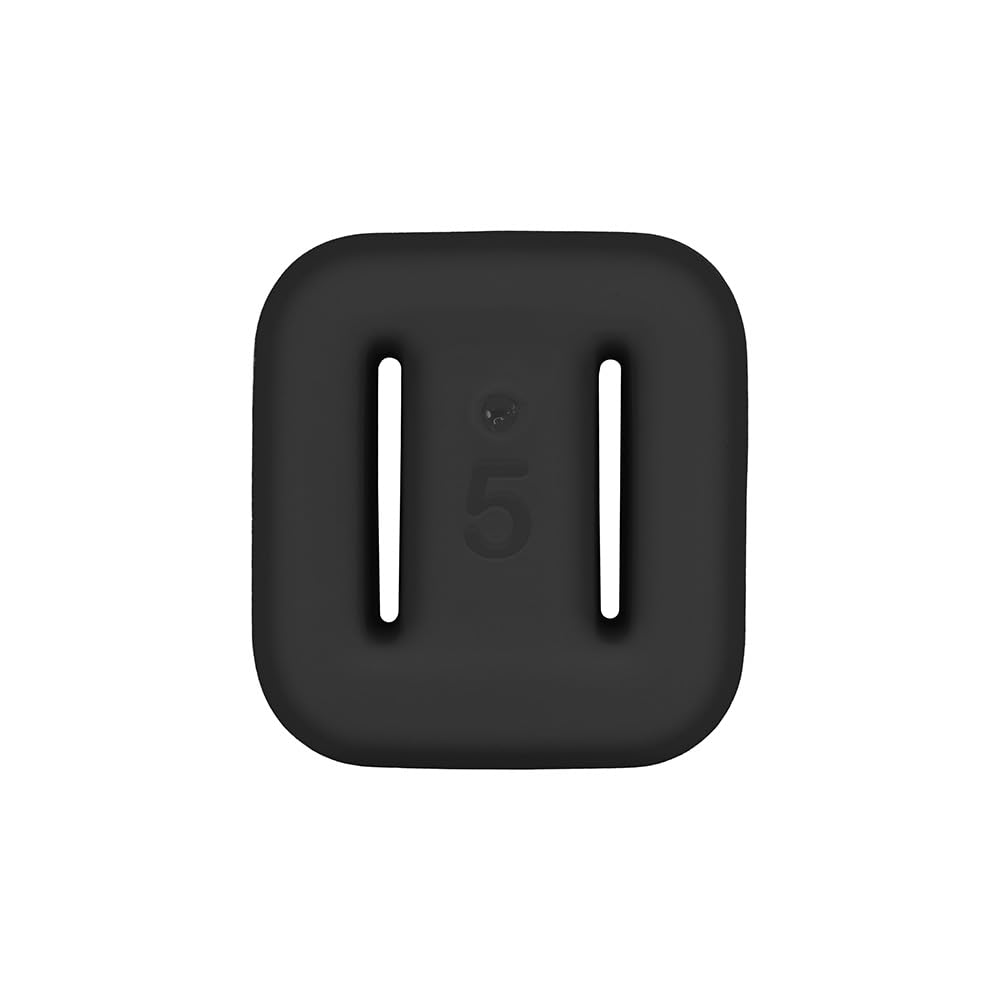
If you have ever watched a bare lead block drag across a boat deck or the tile edge of a pool, you know why the vinyl skin matters. This is a solid 4-pound block of coated lead with a channel through the middle, so you lace your belt straight through it. That coating keeps lead off your fingers entirely — you load up and your hands stay clean.
The matte vinyl coating resists scratching and fading, so the block still looks new after a season of boat rides. It resists scratching and fading, so the block does not look chewed up after a season of boat rides. It also grips a vinyl belt firmly instead of skating along the strap as you move. The shape works beyond the belt, too: these drop into weight-integrated BCD pouches without drama.
What wins people over is the build — owners constantly describe it as exactly what was advertised, sold and solid. A handful find the price steep for a single block, and a rare few report the vinyl can crack or tear if you are rough with it on hard surfaces. Treat it like the weight it is and it holds up. For a diver who wants one reliable block for a threaded belt or a BCD pocket, this is the benchmark: this 4-pound vinyl-coated lace-thru weight keeps lead off your hands and your deck free of scratches.
Why Divers Keep Buying It
- Vinyl coating keeps bare lead away from your hands and your deck
- Matte finish resists scratching and fading over seasons
- Sits stable on vinyl belts instead of sliding around
- Threads onto nylon or rubber belts and drops into BCD pouches
Where It Falls Short
- Sold as a single block, so a full belt adds up fast
- The vinyl can crack or tear if you are careless with it on hard surfaces
Reach for this if: you thread weights onto a belt or load BCD pouches and want coated lead that protects your gear.
Look elsewhere if: you want a soft pouch that molds to your hip — a shot bag suits that better than a fixed block.
2. DIVJINGHAO Diving Weight Belt
A 53-inch rubber strap with a stainless Marseillaise lever buckle, priced for a starter kit.
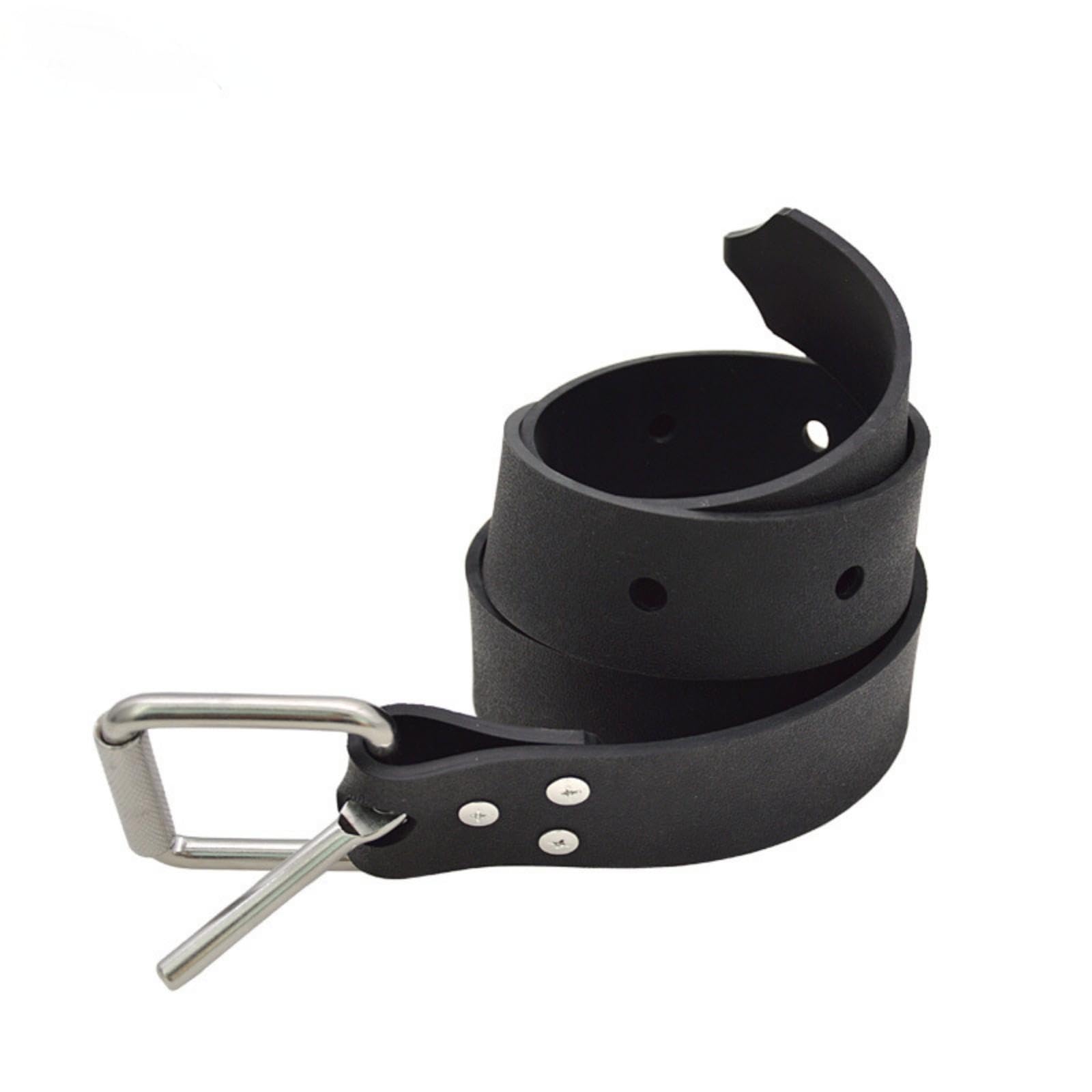
Here is the belt for the spearfisher on a starter kit. It is a rubber strap that stretches to 53 inches at the waist, so it squeezes back as your wetsuit compresses at depth and keeps constant tension on your hips. That self-adjusting grip is the whole reason freedivers reach for rubber over nylon — no re-tightening mid-dive.
The closure is a Marseillaise-style stainless steel buckle, the classic lever latch you pull to release. Stainless means salt water will not chew through it the way it eats plain plastic. The belt holds weight plates or pouches you add separately, so you choose your own load instead of inheriting a fixed one.
The trade-off is simple: the weights are sold on their own, so this is the belt only. You supply the lead. Check that 53 inches covers your waist over a thick suit before you commit. A no-nonsense belt for a diver building a kit piece by piece, and easy on the wallet.
Best fit for: warm-water and freedive setups where a stretchy strap and a stainless lever buckle do the job.
The honest catch: it ships as the strap alone — budget for your weights separately.
Pick it when: you want a rubber belt with a real stainless buckle and will add your own weights.
Pass if: you want a kit that arrives ready to dive with lead included.
3. Scuba Choice Soft Mesh Shot Weight
Five pounds of hardened #4 lead shot in a mesh bag that molds to your hip and drains fast.
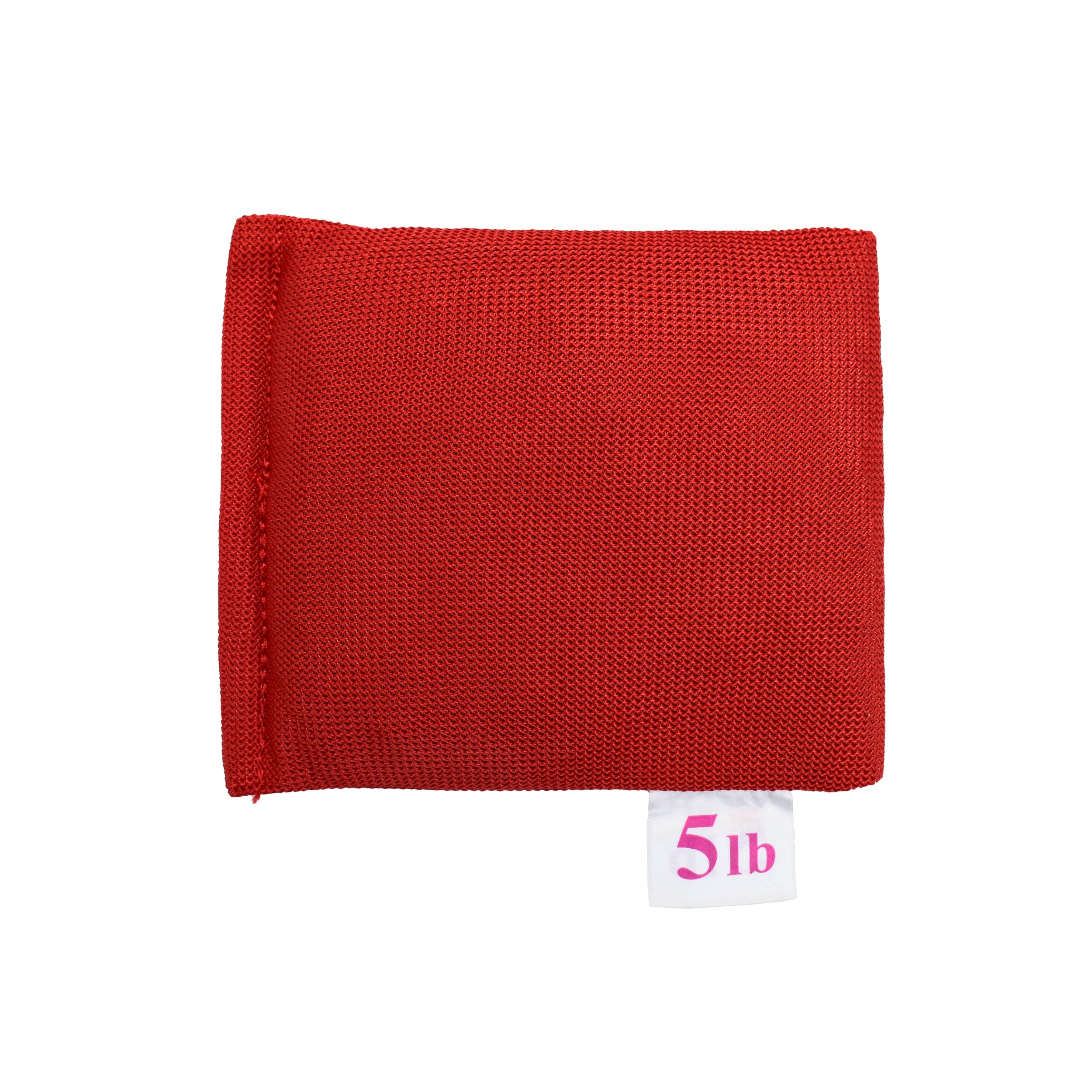
Hard blocks have edges. This pouch does not. It packs 5 pounds of lead shot into a heavy-duty nylon mesh bag that molds to your body, drains fast, and dries quickly between dives. Drop it into a BCD weight pocket or slide it onto a belt and it settles where your body wants it.
The shot itself is engineered, not just loose pellets. Larger #4 shot means less surface area and better weight control, and it is hardened with antimony to resist deforming over time. The graphite-free build keeps your gear and hands clean, so nothing smears on your wetsuit or in your dive bag. It is made in the USA.
Buyers split on size and shape. Some find the pouch fine for their purpose. Others say the description led them to expect something rounder and larger than what arrives. Check the actual dimensions before you buy, and you get a well-made, comfortable way to hit your target buoyancy. Compared with the 4-pound lace-thru block in this guide, the pouch carries 5 pounds — more ballast in a softer package.
What it brings: comfortable, body-hugging ballast that fits BCD pockets and belt pouches and drains fast.
Watch the spec: the pouch reads smaller and less round than some shoppers expect, so check the size before ordering.
Suits you if: you load BCD pockets or belt pouches and want soft ballast that follows your body.
Not ideal if: you need a hard, fixed-shape block that slides onto a threaded belt.
4. Cressi Nylon Weight Belt w/Metal Buckle

A firm woven nylon belt with a quick-release stainless buckle whose pin is riveted at both ends.
The buckle is the reason to buy this one. It is a quick-release stainless steel latch with a pin riveted at both ends — meaning the pin is locked in place at each tip, so it will not work loose. In an emergency you pull and the belt drops. That is a safety feature, not a luxury.
The strap is strong woven nylon, firm enough to hold its shape when threaded with blocks or pouches. The nylon does not stretch, so it is simple and predictable — you set it once and thread on your weight. Salt water is hard on hardware, and stainless is the right choice for the buckle here.
Owners praise the overall quality and the firm latch that stays put when fastened, and the belt earns the most credit for holding a full load of weights, knives, and lanyards without fuss. One thing to weigh: at 8.47 ounces it is heavier on the scale than the Riffe rubber belt at 4.8 ounces, though that gap is trivial once it is around your waist. For a recreational diver who wants a dependable threaded belt with a fast-ditch buckle, this is the safe, sensible pick.
The Case For It
- Quick-release stainless buckle with a pin riveted at both ends
- Firm woven nylon holds its shape under load
- Carries weights, knives, and lanyards without complaint
The Consideration
- Not a stretch belt — you re-tighten it yourself as your wetsuit compresses
Made for you if: you want a threaded nylon belt with a firm, fast-ditch stainless buckle.
Think twice if: you dive a thick suit and prefer the self-tightening of a rubber strap.
5. Riffe Rubber Weight Belt with Glass Filled Nylon Buckle

A 54-inch rubber belt you cut to size, rated to 20 lbs, with a glass-filled nylon cam-lock you release with one pull.
The spec that matters here is the load control. This is a 54-inch, 2mm-thick rubber belt you can cut down to your exact size — so you get a snug, custom fit instead of excess tail flapping behind you. Riffe rates it to hold up to 20 lbs of weight, distributed wherever you want it on your hips.
That matters when you are finning hard at depth; less dead weight fighting you. The glass-filled nylon cam-lock buckle holds firmly, and an inner ribbed 2-inch band keeps the belt from shifting while the weights stay put. The quick-release lever gives you the fast-ditch safety freedivers train for.
The buckle is the one recurring split in the reviews — most praise its strength, while a few report a belt arriving without one. Open the package and check before your dive day. Past that, what earns the loyalty is the build and the fit: owners call it the best product in its price range and rave that weights slide on easily and stay put. For spearfishing and freediving, this is a serious, trusted belt.
The defining strength: an adjustable rubber belt rated to 20 lbs, cut to fit and secured by a firm cam-lock.
One thing to verify: confirm the buckle is in the box when it arrives, since a few shipments reportedly came incomplete.
Your belt if: you freedive or spearfish and want a rubber belt you can trim, load to 20 lbs, and ditch fast.
Skip if: you want a pre-set nylon belt and would rather not cut anything to size.
6. Mares Elastic Belt with Quick-Release Nylon Buckle
An elastic strap for the diver who wants a snug fit that gives with every breath.
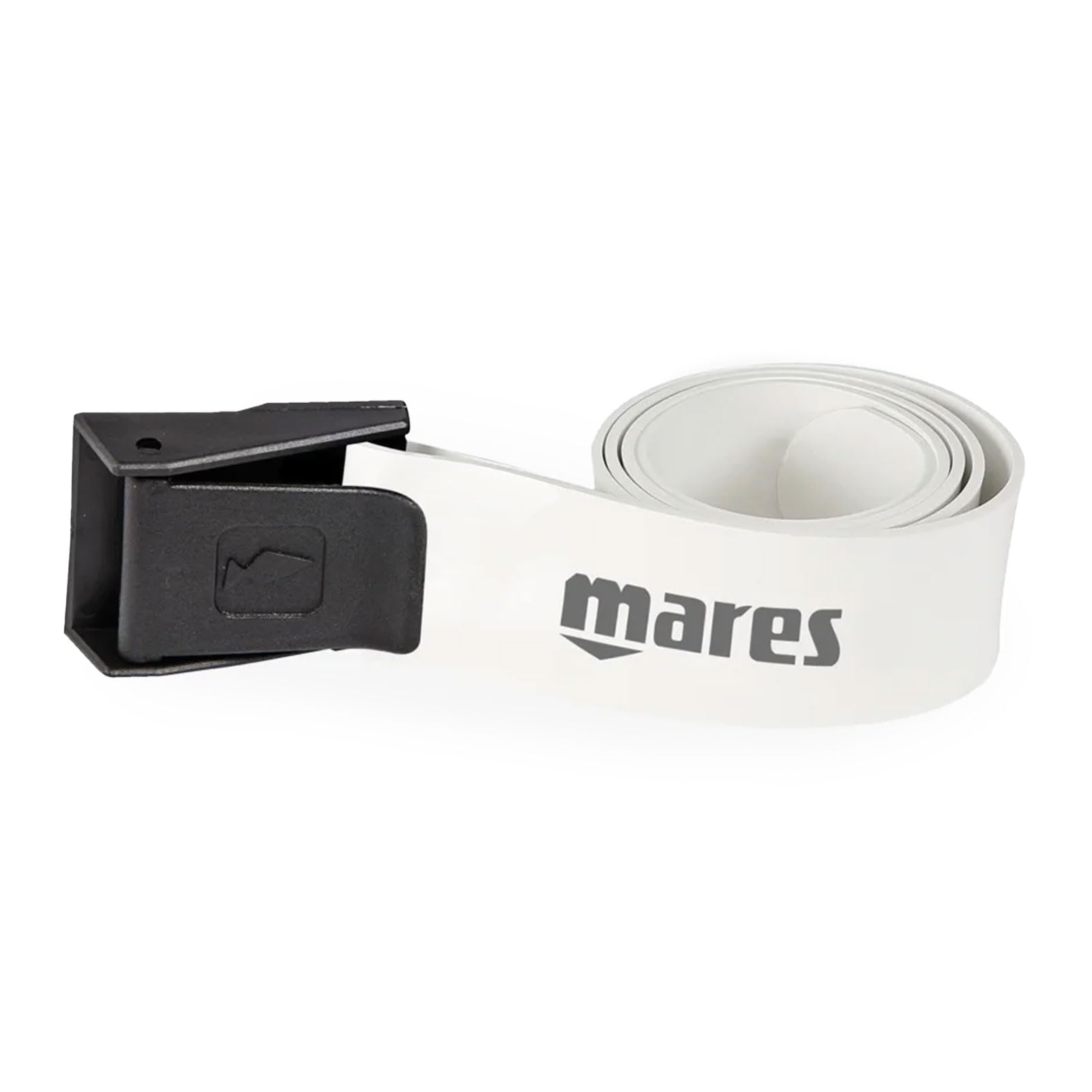
This belt leans into comfort. The strap is 3mm elastic tape that stretches to 140 cm, so it adapts to different body shapes rather than digging into one fixed line. When you inhale and your torso expands, an elastic belt gives a little instead of cutting in — that is the comfort edge here.
The buckle is nylon with a quick-release mechanism, so you can pull it free or adjust the fit in the water. The belt works as a weight-carrying dive belt or as an accessory strap with a buckle, keeping your weights stable without restricting your movement.
Weigh it against your style of diving. Elastic — even 3mm of it — is not the same as thick rubber for holding heavy loads at depth, and it is best matched to warm-water setups with moderate ballast. As a light, flexible belt for a diver who values comfort over a heavy freedive load, it earns its place.
Best matched to: warm-water divers who want a flexible, adjustable belt that moves with them.
Less suited to: heavy-ballast freedivers who want the firm, thick rubber a deeper load demands.
7. Scuba Choice Rubber Free Dive Weight Belt

Rubber that reads your wetsuit and adjusts itself as you descend.
This belt solves the compression problem for you. It is a self-compensating rubber strap — as your wetsuit thins out at depth, the belt tightens itself to hold the same grip. You set it once at the surface and it stays put on the way down. For a freediver who hates fussing with a buckle at 60 feet, that is the whole point.
The build is the draw. It is high-quality, heavy-duty rubber 5 cm wide and 3 mm thick — thin enough to flex, strong enough to hang serious weight. The stainless steel buckle gives you a firm, adjustable closure that resists salt water. It runs 61 inches (1.5m), so it trims to a wide range of waist sizes.
The recurring note is the material feel: some divers find the rubber stiff straight from the start, which softens with use. What earns the loyalty is the grip — owners trust it to hold weights in place without creeping. That reputation for stability is why freedivers keep this one on the dive bag. If rubber is your material, this is a strong, dependable strap.
Strengths Worth The Money
- Self-compensating rubber keeps tension as your wetsuit compresses
- Heavy-duty rubber retains weights securely in place
- Stainless steel buckle holds up in salt water
What to Expect
- The rubber can feel stiff at first and softens over time
For the freediver who: wants a belt that tightens itself at depth and holds weights rock steady.
Consider the alternative if: you prefer a soft strap that needs no break-in from day one.
8. MOPHOEXII Dive Weights Belt Kit

A ready-to-dive kit that lets you pick your per-weight load before you order.
You get belt and lead in one order: four rubber-coated weights plus a nylon belt with a quick-release metal buckle (a buckle that opens with one push). The choice is what separates it. This model runs 1 kg (2.2 lbs) per weight, and the listing offers other sizes. That lets you tune your total load to your body and suit before you buy.
The materials are chosen for salt water. The weights are resilient metal under a rubber coat — corrosion-resistant, compact, and easy to carry, with rounded edges that sit comfortably against you. The belt is tough nylon with a quick-release metal buckle, so it holds up to the rigors of repeated dives.
Owners find the belt does what it is asked, with the buoyancy control and general performance getting the nod. The weights themselves are the honest split: some divers find them spot on, others have their preferences about the exact feel. For a diver who wants a complete kit and cares about customizing the per-weight load, having that size choice up front is worth plenty.
Worth a look if: you want a full kit and value picking your per-weight load before ordering.
Choose another if: you want fixed, known blocks and would rather not weigh options on drop weights.
Know the Specs
Belt material: rubber versus nylon
Rubber belts stretch and spring back, so they keep tension as your wetsuit compresses at depth — that is why freedivers and spearfishers favor them. Nylon belts are firm and predictable but do not self-adjust, so you re-tighten them yourself. Match the material to your suit thickness and how much you move.
Buckle type and quick-release safety
A quick-release buckle lets you drop the whole belt with a pull if you must surface fast. Stainless steel and glass-filled nylon resist salt water far better than plain plastic. Cam-lock and lever styles hold firmly but need a deliberate pull — know the feel of yours before a dive.
Weight form: blocks versus shot pouches
Lace-thru blocks thread onto the belt and hold a fixed shape; soft shot pouches mold to your body and drain fast. Hard blocks are easier to load and more predictable in a BCD pocket. Pouches feel more comfortable against the hip but can sag with heavy loads.
Load and length
Belt lengths run from a 53-inch waist to a 61-inch strap you can trim down. Weights range from a 1.1 lb coated block to a 5 lb shot pouch, and the Riffe belt is rated to carry up to 20 lbs. Pick a length that fits over your thickest suit and a per-weight size that lets you dial in total ballast.
Common Questions
Is a rubber weight belt better than a nylon belt for scuba diving?
How do I know what weight belt length to buy?
Should I choose solid weights or soft shot pouches?
What does a quick-release buckle do on a weight belt?
Can I use these weights in a weight-integrated BCD?
How much weight can the Riffe rubber belt hold?
Do the lead weights come with a warning I should know about?
Will a rubber belt feel stiff at first?
Is a complete kit better than buying belt and weights separately?
The Bottom Line
For most divers building a belt, the scuba weights and belts winner is the Vinyl Coated Lace-Thru Weight. Its vinyl skin keeps lead off your hands and off your deck, and it sits stable on a threaded belt or in a BCD pouch (the pocket on your buoyancy vest). Want a self-adjusting rubber strap that holds firm at depth? Reach for the Riffe Rubber Weight Belt, which trims to fit and is rated to 20 lbs. And if you want belt and lead in one order, the Quaocens kit gets a new diver diving without the extra shopping.
How we choose
We do not accept paid placement. Every pick is matched to a real buyer and a real use-case; we do not hands-on test units.
Sources
Specifications: manufacturer listings and product documentation. Review insights: verified customer reviews, as of November 2026. Pricing: not shown on this page (it changes often); check the current price via the retailer link.
As an Amazon Associate, Tactical Gear Guy earns from qualifying purchases. This does not affect which products we feature.