Specs are compiled from manufacturer listings and verified buyer reviews and can change over time — please confirm the key details on the product page before buying.
If your current saddle rubs, tilts, or leaves you numb halfway through a ride, the fix is usually a slimmer, flatter seat — not more padding. A low profile bicycle seat stays narrow through the middle so your thighs clear the shell, and its flat rear puts your weight on your sit bones instead of soft tissue. Below you’ll find nine flat-profile saddles, sorted by what each one actually does well, so you can pick the right shape for the way you ride rather than guessing from a photo.
This guide is built by comparing the manufacturers’ published specifications and the patterns across verified customer reviews, so you get each pick’s real strengths and trade-offs instead of marketing spin.
Shape matters more than cushioning here: a flat top and a narrow waist decide whether you can move around on the bike. Each pick below is described in plain terms, with the numbers that actually change your ride. This is the practical shortlist for anyone hunting a low profile bicycle seat that stops the rubbing instead of hiding it under foam.
Top Picks


How To Choose The Best Low Profile Bicycle Seat
A low profile saddle is a shape decision first and a comfort decision second. Get the shape wrong and no amount of gel saves a 50-mile ride. Get it right and a thin, flat seat outlasts a thick pillow once you pass the first hour.
Measure your sit bones before anything else
The two bony points you actually sit on set your saddle width. A rear that is too narrow lets you roll forward onto soft tissue; one that is too wide rubs the inner thigh with every pedal stroke. Several saddles here publish their rear width, and the BiSaddle SRT even adjusts across a sit-bone range of 100–175mm, so you can dial it in rather than hope.
Decide if you want a cutout, a channel, or no nose at all
A center cutout is an opening through the middle of the shell that drops pressure on soft tissue and lets air through. A channel is a shallower groove running rear to front. A noseless design removes the front entirely. All three cut pressure where you don’t want it, but each changes how the bike feels between your thighs, so pick the one that matches your riding position.
Match the profile to how you actually sit
A flat top lets you tilt your pelvis and move fore and aft. A curved or swooped shape locks you into one spot. If you ride upright and rarely leave the saddle, a wider rear with more cushion supports you. If you shift around, sprint, or ride technical ground, a flat, slim saddle lets you move fore and aft.
Weigh the rails, not just the padding
Rails are the metal bars underneath that clamp into your seat post. Steel rails are tough and forgiving; titanium and chromoly versions shave grams. Carbon shells are the lightest but want careful torque — one maker here specifically warns that over-tightening can crack the shell. Match the rail material to how hard you ride, not to a weight target.
Side-by-Side Comparison
| Model | Best For | Profile / Shape | Length × Width | Weight | Amazon |
|---|---|---|---|---|---|
| Wittkop Bike Seat 5-Zone★ Best Overall | Everyday comfort on road and mountain bikes | Memory foam, waterproof, 5-zone concept | 10.8″L × 6.7″W | — | Amazon |
| GORIX GX-C19Best Value | Budget-friendly cutout relief | Center cutout, wide rear, tapered nose | 10.8″L × 5.9″W | 0.2 kg | Amazon |
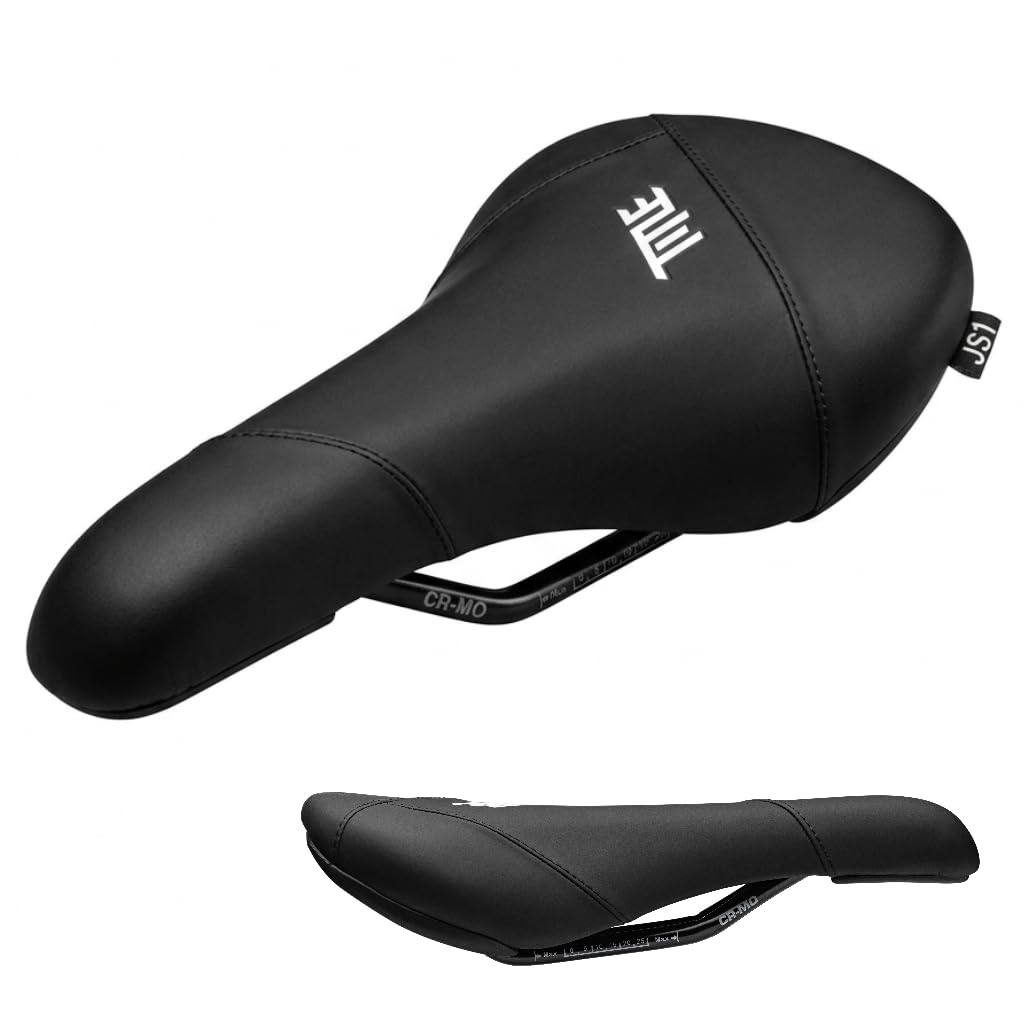
| Title JS1 MTBTop Performer | Dirt jump, downhill and freeride | Flat, grippy, reinforced 8mm chromoly rails | 246mm × 137mm | 282 g | Amazon |
| WTB Koda | Gravel, trail and bikepacking | Flat profile, love channel, flat nose | 11″L × 8″W | 315 g | Amazon |
| Terry Cite Y Gel | Upright recreational riders | Full nose cutaway, wider rear, gel + foam | — | 6.08 oz | Amazon |
| KOOTU Road Saddle | Light road and MTB builds | Central hollow, CR-MO shock-absorbing rails | 10.62″L × 5.51″W | 0.26 kg | Amazon |
| RXL SL Carbon | Weight-focused road and XC riders | T800 carbon shell, center hollow, 3K matte | 275mm × 143mm | ~110 g | Amazon |
| ISM PR 2.0 | Long-mile road, triathlon and TT | Noseless, 40-Series foam and gel | 250mm × 130mm | 0.35 kg | Amazon |
| BiSaddle SRT | Riders with uneven sit bones | Adjustable split, noseless, titanium rails | 198mm long | 375 g | Amazon |
Detailed Reviews
1. Wittkop Bike Seat 5-Zone Concept
Our pick — 4.5+★ from 6,500+ verified ratings; the strongest balance of quality and price.
The memory-foam saddle that quietly became the default answer for riders tired of guessing.
The Wittkop earns its spot at the top for a simple reason: it is the one saddle here with a cushion layer that presses back into shape rather than flattening out. That memory foam top sits under a waterproof cover, so a rainy commute or a sweaty ride doesn’t soak through into the padding. It measures 10.8″ long by 6.7″ wide, and the rear carries a maximum weight capacity of 300 pounds — a genuinely load-bearing seat rather than a thin race shell.
What wins people over is the cushioning. Across thousands of owners the comfort read dominates by a wide margin, and the quality rating trails just behind it — this is a saddle people describe as soft yet firm rather than mushy. Setup is another consistent plus: the hardware matches old seat post clamps, and owners note it drops straight onto the original clamp system on foldable bikes too. The 5-zone concept spreads support across the saddle rather than concentrating it in one pad.
The honest catch is the tilt. Ergonomics is the one mixed area in the feedback, with a share of owners finding the seat angles forward in a way they have to correct at the clamp. Worth knowing: the 6.7″ width is generous for a low profile seat, so riders who want a true race-thin platform may find it broader than expected.
What earns the top spot
- Memory foam top that recovers its shape instead of packing down
- Waterproof cover keeps rain and sweat out of the padding
- 300-pound max weight capacity gives real structural headroom
- Drops onto standard seat post clamps without new hardware
Where it asks a little of you
- Some owners find it tilts forward and needs re-levelling at the clamp
- At 6.7″ wide it is broader than a true race-profile shell
Go for it if: you want one saddle that handles commuting, e-bike miles, and weekend trail riding without fuss.
Look elsewhere if: you need the thinnest possible race shell and count every gram.
2. GORIX GX-C19 Memory Foam Saddle
Thick foam and a center cutout for the price of a couple of coffee-shop stops.
You get a full cushion layer without much weight: the GORIX comes in at 0.2 kg, the lightest saddle here that still has one. The shape does the work. A 5.9-inch (150 mm) wide rear supports your sit bones, so you sit on bone rather than soft tissue. A tapered front leaves room for your thighs to swing, and a center cutout runs through the middle to ease pressure and let air through on long rides. A PU leather and polyester cover sits over the foam. The steel rails carry position markings, so you can set fore-aft adjustment the same way every time.
Comfort is what the GORIX is known for, and owners specifically call out long rides as the place it shines — the foam takes the edge off road buzz without turning the saddle into a couch. Appearance gets strong nods too, and the price-to-comfort ratio is a recurring theme: this is the saddle people buy when they want relief without spending race money. The 10.8″ × 5.9″ footprint fits standard saddle rail clamps on road, mountain, hybrid and commuter bikes.
Two things to weigh. Durability splits opinion — some buyers report it holding up well over time, others see early signs of wear, so treat the cover with normal care. Colour is also inconsistent: the white version doesn’t read as true white, and the blue arrives less bright than the listing suggests. Neither affects how it rides, but if a specific colour matters, order with that in mind.
Where the money goes: into a thick foam pad and a real cutout rather than lightweight materials — the steel rails and PU cover are the budget trade, and they hold up fine for recreational miles.
The weight angle: at 0.2 kg it undercuts the KOOTU road saddle at 0.26 kg and the WTB Koda at 315 g, which matters if you are counting grams on a hybrid or commuter build.
Reach for this if: you want cutout relief and thick padding on a tight budget and ride mostly for fitness or errands.
Think twice if: you need a colour-matched white saddle or plan to log heavy daily mileage where cover wear would show.
3. Title JS1 MTB Bike Saddle
Built for riders who land jumps, not riders who settle into a coffee-shop cruise.
The JS1 is the only saddle in this group aimed squarely at dirt jump, downhill, freeride and skatepark riding — and it shows in the build. Reinforced 8mm chromoly rails carry the load through harsh landings, and the whole saddle weighs 282 g so it doesn’t drag on the bike’s agility. At 137mm wide and 246mm long, it gives you a compact, grippy platform that keeps you planted when you shift weight mid-air rather than a wide perch to lounge on.
The soft, grippy surface is the piece that makes the JS1 work off-road: it lets your body move without sliding out from under you, and the shell flexes to blunt pinch points on hard landings. The quality read here is clean — owners consistently rate the build as solid, and comfort gets the same top billing. It’s the highest-rated saddle in this lineup and the one that feels purpose-built rather than adapted.
What you give up: the same flat, firm, narrow shape that helps you control a jump bike does not coddle you on a long road ride. If your idea of a good ride is three hours in the saddle on tarmac, this is the wrong tool. It’s also the pricier end of the mid-range here — you’re paying for the reinforced rail build and the purpose-specific shell.
For the dirt-jump crowd: 8mm chromoly rails plus a 282 g weight means you can throw the bike around without the saddle flexing under you — a build made for impact, not distance.
Fit check: at 137mm wide it’s noticeably narrower than the GORIX at 150mm, so sit-bone width should decide between them before anything else.
Suits you if: your riding is downhill, freeride, or skatepark and you need a seat that survives hard landings.
Pass if: your miles are long and flat-out — the narrow, firm profile is not made for distance comfort.
4. WTB Koda Bike Saddle
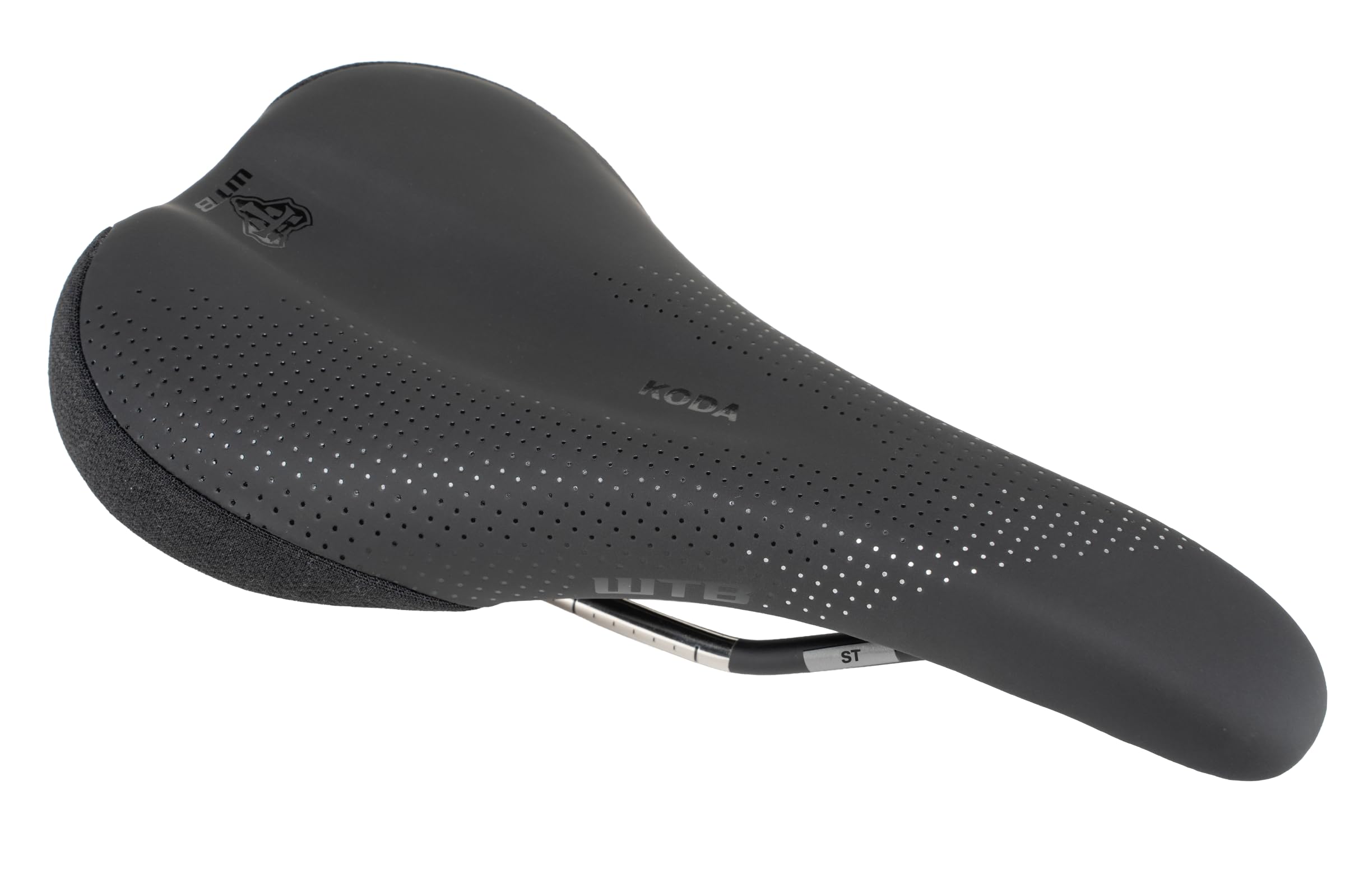
A flat-top saddle that lets your pelvis tilt and your legs get on with the job.
Koda is designed around one idea: a flat profile so you can rotate your pelvis forward and use your flexibility instead of fighting the saddle. The flat nose makes sliding forward and back on technical ground feel natural, and a slightly swooped tail gives you something to brace against when you’re torquing uphill. A love channel runs down the top center from the rear to roughly 50 mm from the nose tip, giving soft tissue somewhere to go, and medium padding balances support with cushion.
Comfort is where the WTB Koda earns its place: owners mention it as the best saddle they’ve used and say it doesn’t leave them sore the next day. That matters more than grams if you ride gravel or trail. At 315 g with steel rails, it sits heavier than the lightest picks here, but that weight buys durability and a steady ride. Durability ranks second in owner feedback, which tracks for a saddle built to survive gravel and trail grit. Fit feedback is strong too, with the medium/wide width landing where riders expect it.
The one split is firmness. Some riders find it super cushy; others want something firmer still. That’s usually a sit-bone and riding-position question rather than a defect — if you’re heavy-set or ride fully upright, this leaner foam may feel soft, while aggressive riders may want the firmer build. Worth checking your position before you commit.
Why trail riders keep coming back
- Flat profile lets you tilt the pelvis and use your own flexibility
- Love channel runs from the rear toward the nose for soft-tissue relief
- Flat nose design aids on-off transitions on technical ground
- Steel rails and 315 g build hold up to gravel and trail use
The trade to know about
- Firmness sits in a middle zone some riders find too soft, others too firm
- Heavier than the KOOTU and RXL SL options in this lineup
The right seat for: gravel, bikepacking, and trail riders who want a flat platform with a real relief channel.
Not the one for: weight weenies building a race bike, or anyone who wants a very firm, upright-supported saddle.
5. Terry Cite Y Gel Bike Saddle
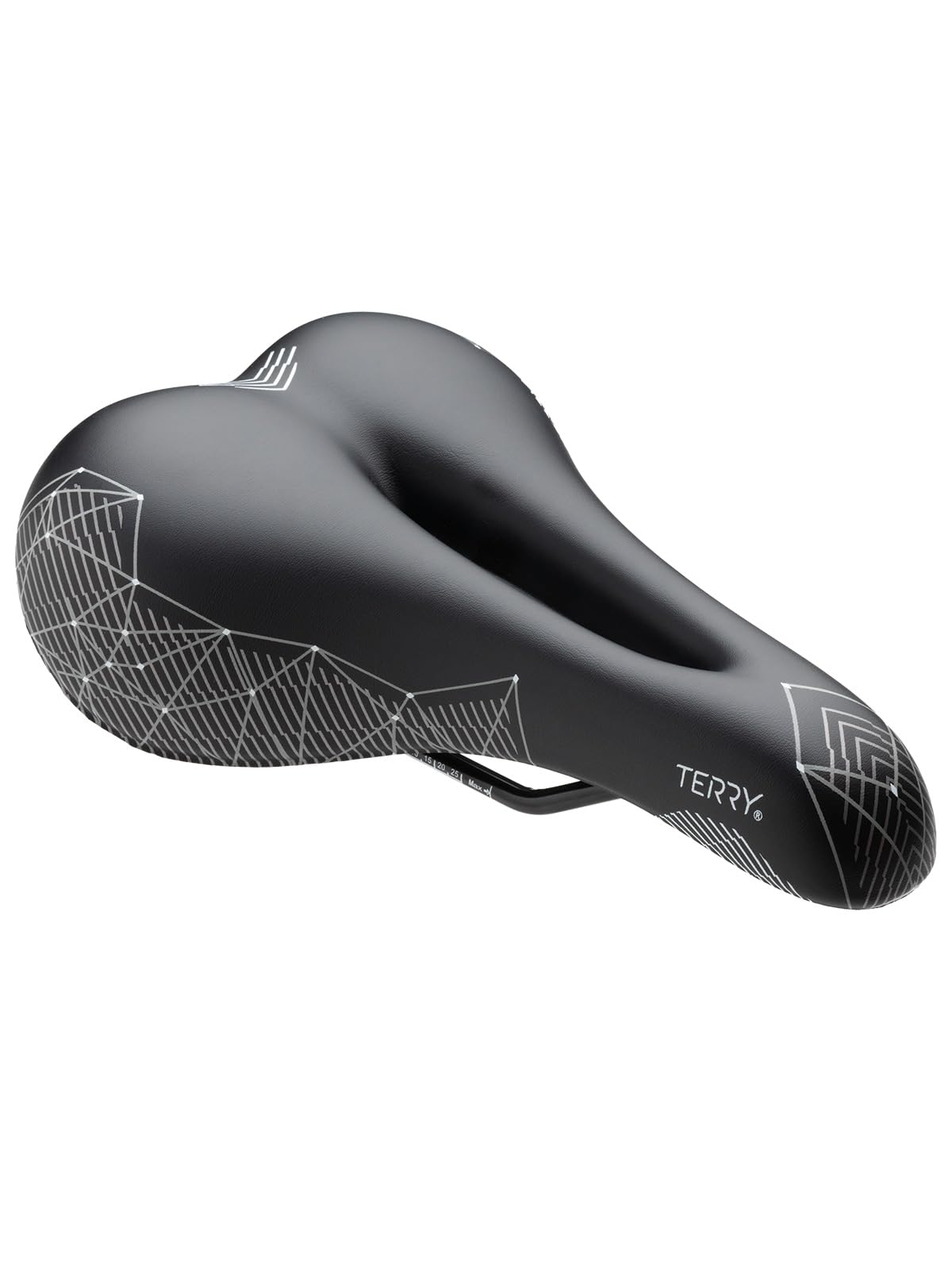
A cutaway nose and a wider rear for riders who spend their time upright, not in the drops.
The Cite Y takes a different route to low profile: instead of a slim shell, it cuts away the nose and mid-section completely so there’s no pressure point running forward at all. The rear is wider than other Terry saddles, built for riders in a more upright position — the recreational crowd who spend a half day on the bike or less. A layer of gel sits over the foam for shock absorption, and the rails are steel under a synthetic vinyl cover with a screen-printed graphic.
Build quality is where this one shines. Owners consistently call it well made, and installation is clean — the standard clamp setup goes on without drama. At 6.08 ounces it’s light, and the 300-pound max weight capacity gives it more structural margin than its slim looks suggest. The long-wearing vinyl top is designed to stay looking fresh over time, which matters if the saddle lives outside or gets parked at a rack.
Be honest about the comfort: this is a firmer interpretation of a comfort saddle. The padding feedback is split roughly down the middle, with a share of riders finding it not soft enough for their taste. That’s a fit mismatch — the shape rewards upright recreational riders, and the same firm support that keeps you stable all afternoon won’t feel pillowy under a heavier or more tender rider. Match it to the right rider and it’s excellent; force it onto a plush-seat expectation and it disappoints.
The design bet: a fully cutaway nose means no forward pressure at all — the trade is that you gain some rear width, which is exactly what upright riders need and what aggressive riders don’t.
Built to last: synthetic vinyl cover and 300-pound capacity put it closer to a long-term utility saddle than a throwaway comfort pad.
Fits your ride if: you’re a recreational rider who sits upright and wants relief through the middle more than plush padding.
Not ideal if: you want a heavily cushioned feel or ride in a forward, aggressive position.
6. KOOTU Road Bike Saddle

A 0.26 kg road seat with a hollow middle and rails that flex with the road.
The KOOTU keeps things lean — 0.26 kg, a 10.62″ × 5.51″ footprint, and a central hollow that lets air move through the middle and eases pressure where it counts. The rails are CR-MO chrome molybdenum steel, shaped into a curved shock-absorbing arch so the saddle flexes over rough surfaces instead of transmitting every bump. A waterproof fabric top covers built-in slow-rebound memory foam that follows your movement rather than fighting it.
Most of the draw here is comfort and value. Owners rate the cushioning as the standout and call it a great choice for the money, and the cutout design gets specific praise for accommodating the perineum. It’s also light enough for a road build, with the small footprint slipping onto most standard seat posts on mountain, road, trekking, cross and racing bikes. The 10.62″ length runs half an inch shorter than the RXL SL’s listed 10.83″ — a minor difference, but it does change how much real estate you have to move on.
Temper your expectations on durability. Feedback here is genuinely split, and the maker itself describes the seat as prioritising lightweight construction and high strength — this is a saddle better used with padded cycling shorts, not a rugged load-bearing platform. Owners who expect it to shrug off rigorous abuse are the ones who come away unhappy. Treat it as a performance part, not a bombproof commuter seat, and it delivers.
What the hollow buys you: a cutout through the center that owners specifically rate for perineum clearance, plus a 0.26 kg weight that keeps a road build feeling fast.
The honest limit: this is built for speed and light duty — padded shorts are recommended, and heavy abuse is outside its design brief.
Pick it if: you want a light, hollow-center road saddle and already ride in padded shorts.
skip it if: you want bombproof durability for daily commuting or rugged off-road use.
7. RXL SL Carbon Road Bike Seat

Carbon at roughly 110 grams — the saddle you notice because you forget it’s there.
There’s no softer way to say it: this is a carbon race shell, and it asks you to ride like one. The weight lands around 110 g thanks to a T800 carbon fiber body in a 3K matte finish, and the shell is built to resist flex and soak up vibration through its own elasticity rather than through foam. A center hollow runs through the middle for ventilation and perineum relief on long-distance efforts. The size is 275mm by 143mm, which puts its listed width in the same neighbourhood as the KOOTU’s 5.51″ — but on a far thinner, harder platform.
Build quality is what separates this saddle from the rest. Owners consistently rate the quality as high, and several say it performs better than far more expensive saddles, with weight cited as a clean win across the board. For a road or cross-country rider chasing a lighter bike, that saving is one you can feel: going from the WTB Koda’s 315 g to a shell around 110 g is a meaningful drop on a bike where every gram counts. The aerodynamic shape also reads as pure race hardware on the bike.
Two cautions matter here. First, carbon demands care at the clamp — the maker specifically advises tightening by hand to support the shell, and warns that strong tension can crack it. Second, this is not a comfort saddle. There’s no foam cushion, so a rider used to the Wittkop’s memory foam will feel the difference on ride one. It rewards a rider who knows their sit bones and wants stiffness, not anyone hoping to soften a harsh ride.
Where the carbon wins
- Around 110 g — the lightest saddle in this group by a wide margin
- T800 carbon fiber shell resists flex and damps road vibration
- Center hollow vents air and eases pressure on long efforts
- 3K matte finish reads as serious race hardware
What carbon demands
- Shell can crack under strong clamp tension — tighten by hand
- No foam cushion, so there’s no soft landing for comfort riders
Your saddle if: you’re a road or XC rider chasing grams and can live with a firm carbon platform.
Wrong choice if: you want padding under you or aren’t comfortable handling a torque-sensitive carbon shell.
8. ISM PR 2.0 Noseless Bicycle Seat

No nose at all — the saddle for riders who want the front pressure gone entirely.
ISM’s approach is to remove the problem rather than pad around it. The PR 2.0 is a noseless saddle, so there’s no traditional nose pressing into soft tissue and no forward pressure point to fight. It measures 250mm long by 130mm wide and sits on satin steel rails with a rear transition hook. The padding is the differentiator: this is the only PR model built with 40-Series foam-and-gel padding, and the added gel spreads pressure across the saddle rather than letting foam alone take the load.
Comfort is the reason riders pay for this one. The noseless geometry delivers thigh clearance that works on road, hybrid, triathlon, mountain and indoor bikes, and owners who stick with it report riding without the numbness the nose used to cause. It’s a performance-oriented saddle on the PS chassis, designed to keep a streamlined profile while giving soft tissue somewhere to go. For long-mile riders and triathletes who have tried padded saddles without solving the problem, the shape is the fix.
The catch is fit, and it’s real. Several riders find the PR 2.0 runs too wide, particularly in the nose-free area between the thighs, and the value and performance feedback splits both ways as a result. A noseless saddle changes how you grip the bike between your legs, and if that new stance doesn’t suit you, no amount of gel helps. It’s also a premium saddle — the price reflects the foam-and-gel exclusivity, so try the shape before committing if you can.
What the nose-free shape solves: pressure control and numbness through the front — the reason triathletes and long-mile road riders gravitate to it.
The fit warning: it runs wide between the thighs for some riders, and switching to noseless changes your leg position — a shape you need to be sure of before spending premium money.
Worth it if: numbness through the nose is your main problem and you ride road, triathlon, or indoor training.
Hesitate if: you have narrow thighs or want a traditional nosed feel between your legs.
9. BiSaddle SRT Adjustable Noseless Saddle
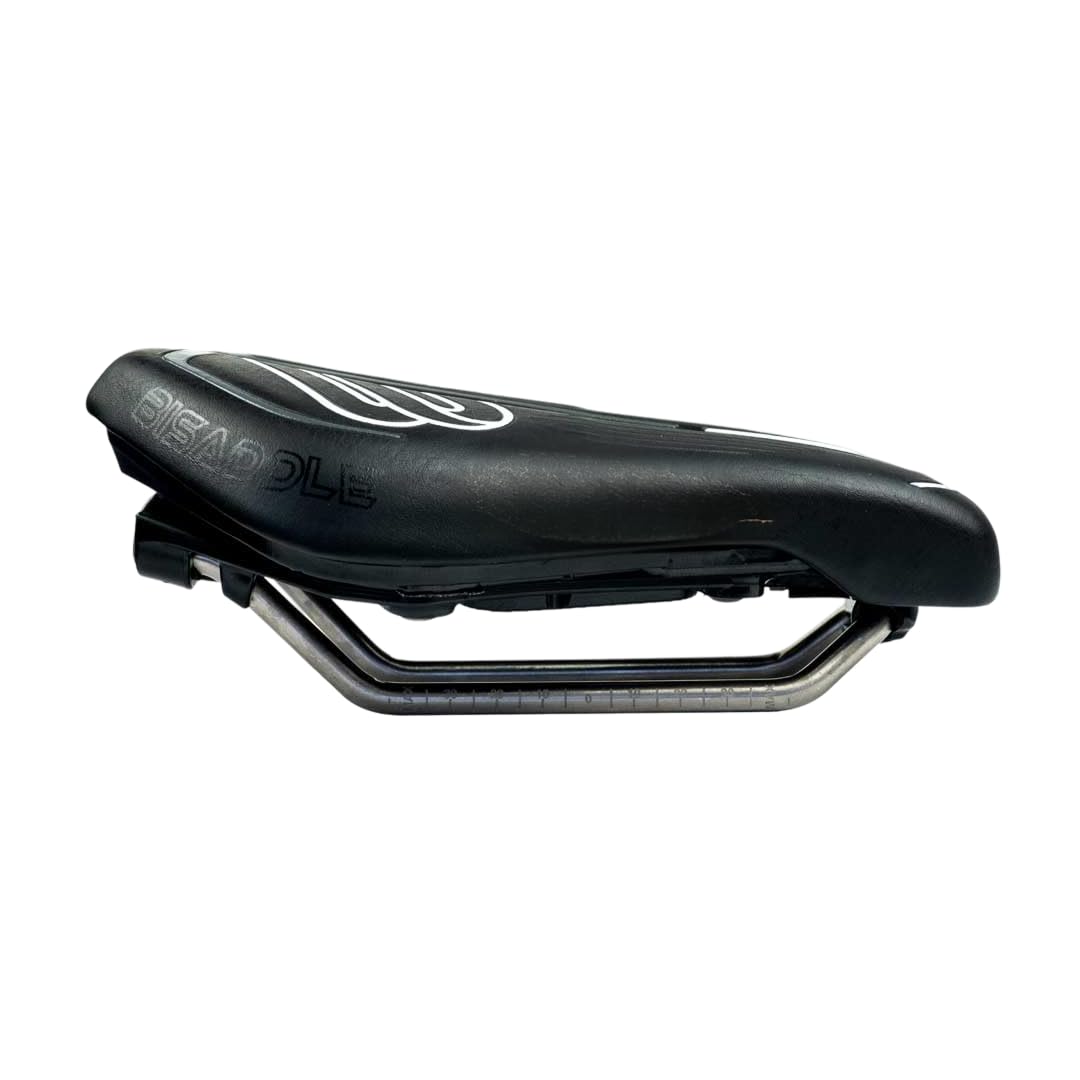
The only saddle here that lets you dial the width to your own sit bones.
If off-the-shelf saddles never fit, the SRT lets you set the width yourself instead of shopping by guesswork. Its split design adjusts the two halves to your sit-bone width anywhere from 100mm to 175mm, so riders with asymmetry or an unusual stance get a real fit. At 198mm it’s the shortest saddle in this lineup, genuinely noseless, with no nose to press where you don’t want it. It weighs 375 g on titanium rails. Medium-firm padding supports sit-bone comfort on extended rides, and the smooth surface cuts chafing.
Serviceability is what sets the SRT apart from the ISM: it’s fully serviceable with replaceable parts, so the fit isn’t a one-time decision. It also includes a sit-bone measuring kit plus the Allen wrench for adjustment, so you can dial in width at home. Titanium rails keep weight down, and the smooth surface reduces rubbing on long-distance efforts. If nothing off the shelf ever felt quite right, matching the width yourself is the feature that changes the outcome.
There’s one setup rule you must follow, and getting it wrong will make the saddle feel terrible. Because the aerodynamic profile is so different, the maker says never to align the SRT by measuring from the nose of your old saddle. Measure the widest rear point of your current saddle and match that location to the new one. It’s also a premium price and the heaviest saddle here at 375 g — a deliberate trade for adjustability and titanium.
The fit-first approach: adjustable width from 100mm to 175mm and a sit-bone measuring kit mean you solve fit at home rather than buying three saddles hoping one works.
Mind the setup: align from the widest rear point of your old saddle, never the nose — the aero profile makes the usual method misleading.
Made for you if: off-the-shelf saddles keep missing because your sit bones don’t fit standard widths.
Not the pick if: you want a light race saddle, or you won’t take the time to set the width and alignment correctly.
Know the Specs
Saddle Width
Width is measured across the rear where your sit bones rest, and it’s the number that decides whether a saddle supports you or punishes you. A rear that’s too narrow lets you sink onto soft tissue; one that’s too wide rubs the inner thighs. Rear widths here range from the RXL SL’s 143mm to the WTB Koda’s 8-inch span, with the BiSaddle SRT adjustable from 100mm to 175mm. Match the width to your sit bones, not to the look of the bike.
Cutout and Channel
A cutout is an opening through the shell’s middle; a channel is a shallower groove running toward the nose. Both relieve pressure on soft tissue and let air through. A noseless design like the ISM PR 2.0 or BiSaddle SRT goes further by removing the front entirely. If numbness is your issue, the shape of the middle matters more than the amount of foam on top.
Rail Material
Rails are the bars that clamp into your seat post. Steel is tough and forgiving, as on the GORIX and WTB Koda. CR-MO chrome molybdenum steel, as on the KOOTU, is shaped for flex. Titanium on the BiSaddle SRT cuts weight. Carbon shells like the RXL SL demand hand-tightening — over-tension can crack them. Match rail material to how hard you ride, then tighten to the maker’s guidance.
Weight
Saddle weight runs from roughly 110 g on the carbon RXL SL up to 375 g on the adjustable BiSaddle SRT. Lighter saddles usually mean less padding or a stiffer shell; heavier ones carry more material for cushioning and durability. Decide whether you’re optimising for a lighter bike or for a forgiving ride — those two goals pull in opposite directions here.
Common Questions
Will a low profile saddle fit my existing seat post?
Is a noseless saddle better than one with a cutout?
How do I measure my sit bones for saddle width?
Can I put a low profile saddle on a mountain bike?
How tight should I tighten the saddle rails?
Will a thin saddle be less comfortable on long rides?
Do I need padded cycling shorts with a low profile saddle?
What is a love channel on a bike saddle?
Will a wider rear saddle rub my thighs while pedaling?
Can a saddle reduce numbness on long rides?
The Bottom Line
For most riders, the low profile bicycle seat winner is the Wittkop 5-Zone — its memory foam recovers instead of packing down, and it fits standard clamps without new hardware. If you want a purpose-built freeride platform, the Title JS1 is the highest-rated pick here, with reinforced rails built for hard landings. And if you need to solve fit at home, the BiSaddle SRT lets you set width to your own sit bones.
Whatever you choose, set the nose level first and adjust width to your sit bones before you blame the saddle — most comfort problems start at the clamp, not in the foam.
How we choose
We do not accept paid placement. Every pick is matched to a real buyer and a real use-case; we do not hands-on test units.
Sources
Specifications: manufacturer listings and product documentation. Review insights: verified customer reviews, as of November 2026. Pricing: not shown on this page (it changes often); check the current price via the retailer link.
As an Amazon Associate, Tactical Gear Guy earns from qualifying purchases. This does not affect which products we feature.