Specs are compiled from manufacturer listings and verified buyer reviews and can change over time — please confirm the key details on the product page before buying.
Most kids’ balance beams fail the same way: they slide on the floor the moment your child leans into a cartwheel, or the foam squashes flat after a month. The fix is simple — buy one with a wide rubber base, a firm core, and a grippy top surface. Below you’ll find nine kid-size beams that hold up to real practice, from a fold-flat floor model for toddlers to a height-adjustable beam that grows with a serious young gymnast.
This guide is built by comparing the manufacturers’ published specifications and the patterns across verified customer reviews, so you get each pick’s real strengths and trade-offs instead of marketing spin.
You’ll see why base width, foam density, and beam length matter more than color — and which beams actually stay put on carpet and hardwood. The short answer: a wide base and a firm core beat a soft landing every time, and the right kids balance beam stays put on carpet and hardwood instead of sliding.
Top Picks
How To Choose The Best Kids Balance Beam
A kids balance beam is a low padded rail your child walks, turns, and cartwheels on at home. To pick one, focus on three things: how wide the base is, how firm the foam is, and how long the beam needs to be for the skills your child is learning. Get those three right and the color is the only thing left to argue about.
Base width and the anti-slip bottom
The base is the footprint that touches your floor. A 6-inch base is common on folding foam beams, while the Tumbl Trak sectional beam uses an 8-inch base. Wider footprint plus a rubber bottom means the beam resists tipping when your child lands off-center. If your floor is hardwood or tile, look specifically for a non-slip rubber base — bare foam or fabric will skate.
Foam density and top surface
High-density EVA foam holds its shape and gives a firm, competition-like feel. Softer EPE foam gives a cushier landing but can feel too squishy for precise footwork. The top cover matters too: faux suede grips bare feet and stays warm, while PU leather wipes clean faster. For a first beam, many parents prefer a slightly softer core; for a child working on walkovers and handsprings, firm wins.
Length: 4 feet vs 6, 8, 9 feet
A 4-foot beam is short — fine for toddlers learning to walk the line, but tight for cartwheels. Six feet gives room for turns and basic skills. Eight, nine, and ten feet approach competition length and suit kids practicing handsprings and leaps. Some sectional beams connect end-to-end with Velcro so you can start short and extend later.
Folding, storage, and height adjustment
Most foam beams fold in half and tuck into a closet or under a bed, and several ship with a carry bag. If you want one beam to last from toddler to pre-teen, a height-adjustable model with legs is worth considering — it can go from floor level up to competition-style height as skills progress.
Side-by-Side Comparison
| Model | Best For | Length | Top Width | Weight | Amazon |
|---|---|---|---|---|---|
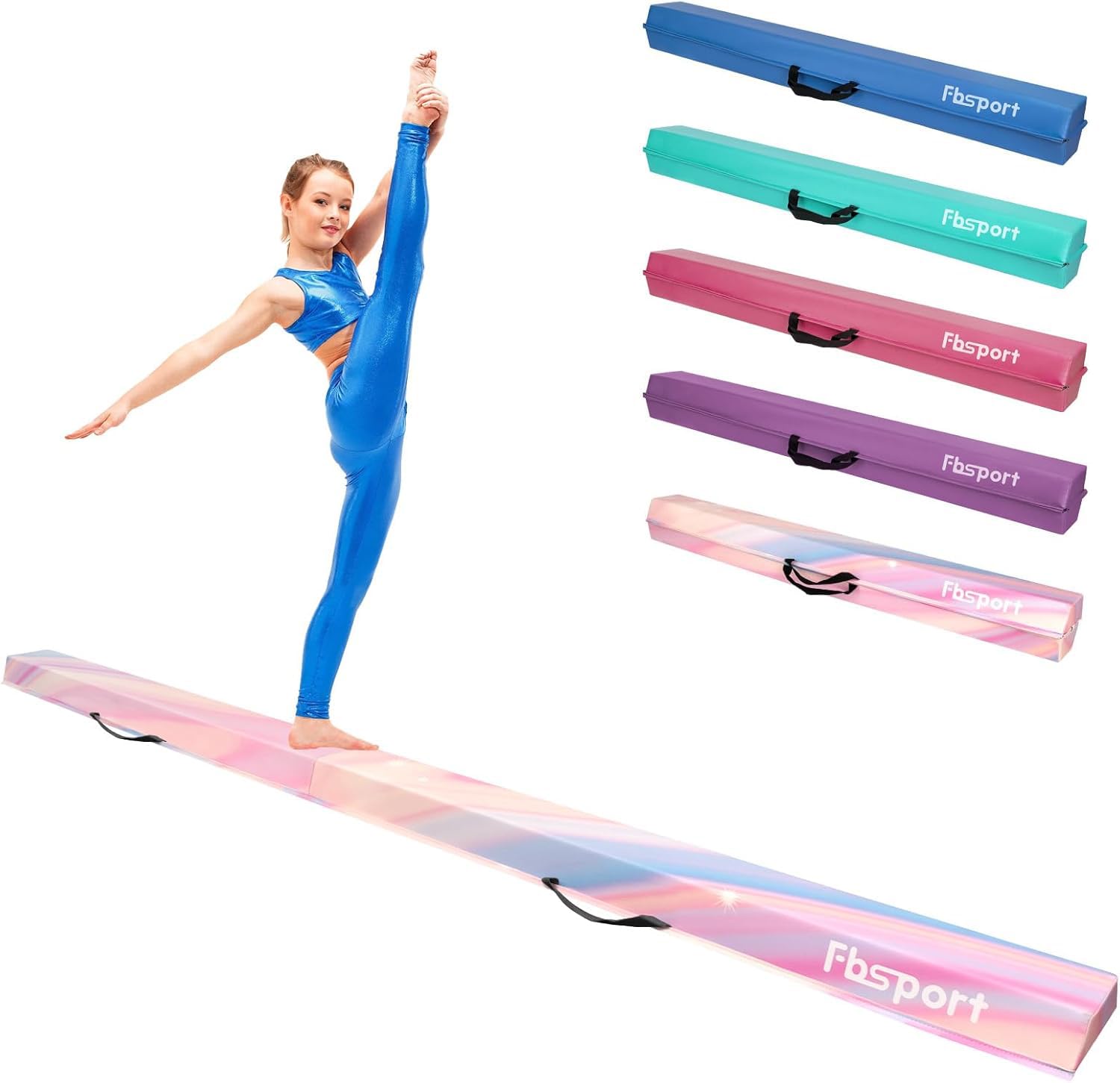
| FBSPORT 8/10ft Folding Balance Beam★ Best Overall | All-around home practice | 8 ft | 4 in | 5 lbs | Amazon |
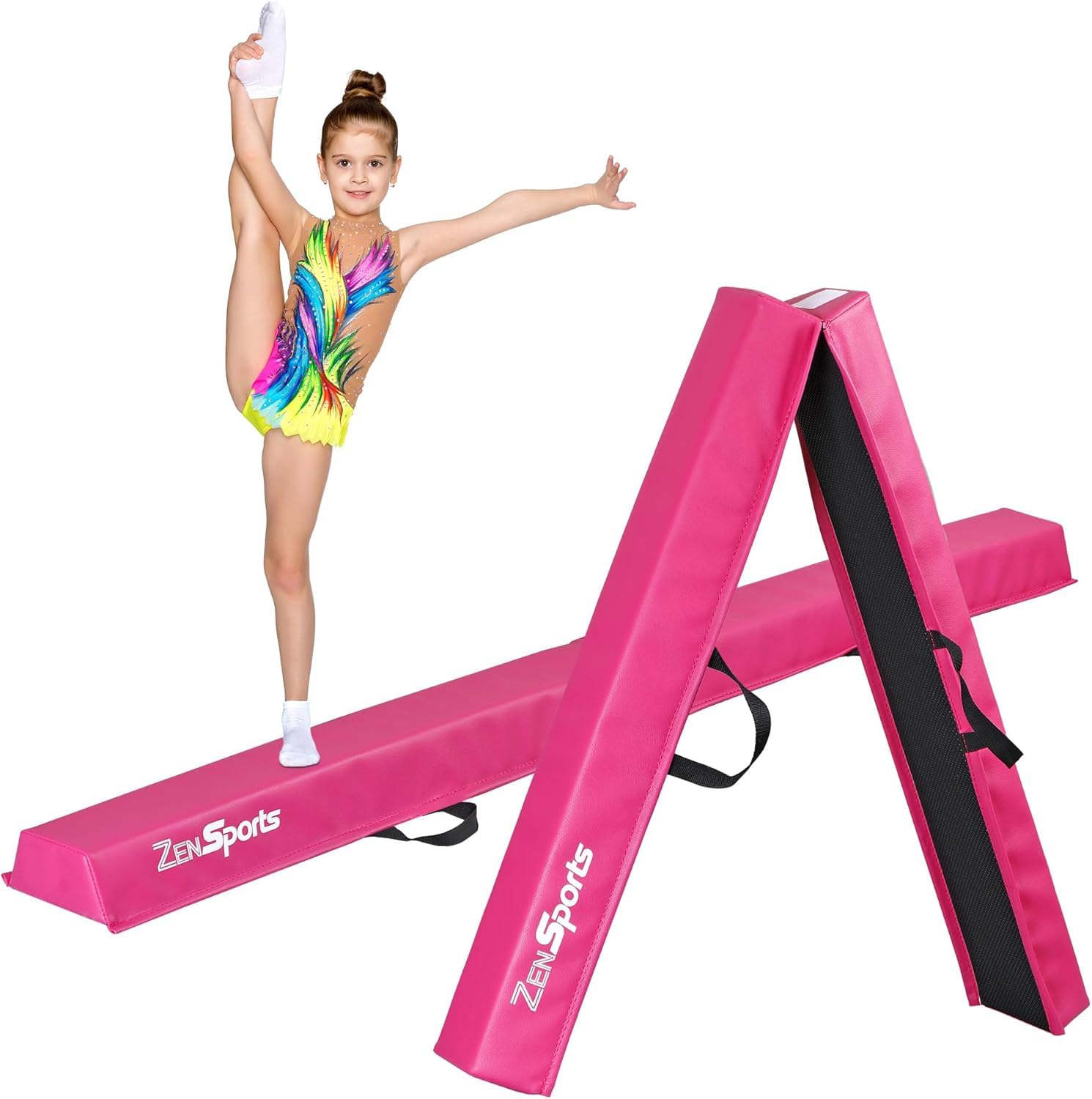
| ZENY 6FT Folding Gymnastics Balance BeamBest for Beginners | Beginners and toddlers | 6 ft | 4 in | 1.9 lbs | Amazon |
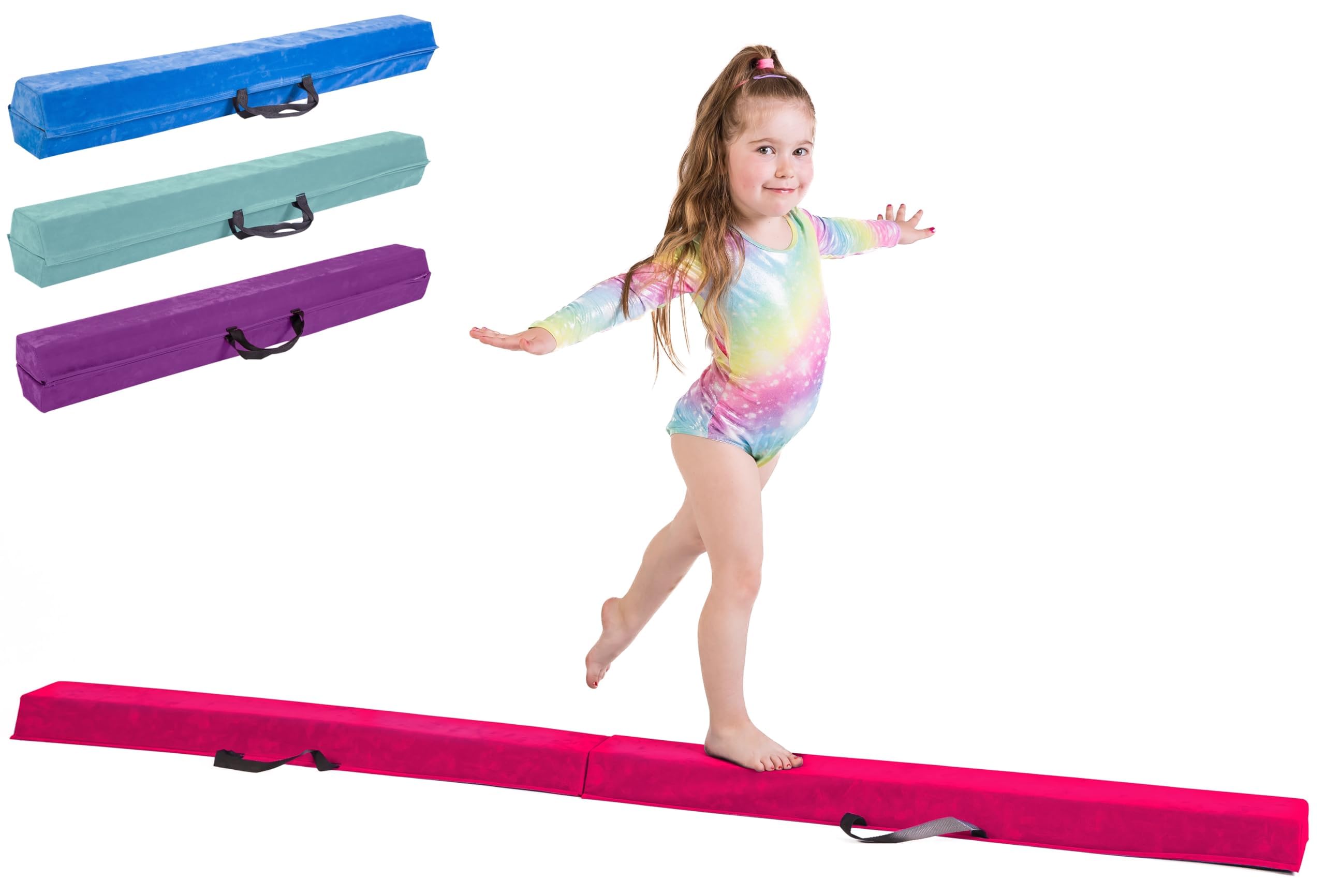
| Tiny Tumblers Home Balance BeamLongest at Home | Growing kids, long beam | 9 ft (270 cm) | 3.94 in | 4 lbs | Amazon |
| Antsy Pants Balance Beam | Toddlers and imaginative play | 4 ft | 4 in | 4 lbs | Amazon |
| FBSPORT Folding Balance Beam 6FT/8FT | Beginners under 9 | 8 ft | 4 in | 5 lbs | Amazon |
| FC FUNCHEER 6FT/9FT Folding Beam | Kids 3-15, longer training | 9 ft | 4 in | — | Amazon |
| Peakpath 8FT Adjustable Foldable Beam | Height-adjustable training | 8 ft | 4 in | — | Amazon |
| Tumbl Trak Sectional Floor Beam | Connecting sections | 4 ft per section | 4 in | 4 lbs per section | Amazon |
| FC FUNCHEER Adjustable Beam | Growing gymnasts, 3 heights | 8 ft | 4 in | — | Amazon |
Detailed Reviews
1. FBSPORT 8/10ft Balance Beam
Our pick — 4.5+★ from 400+ verified ratings; the strongest balance of quality and price.
The beam that mimics a real competition surface without needing a gym membership
What makes this FBSPORT the strongest all-rounder is its 4-inch top — the same width as a competition beam. That matters because muscle memory built on a 4-inch surface transfers straight to the gym beam. The 6-inch base is what stops it toppling when your child lands a cartwheel crooked.
The padded top is PU leather over EVA foam, which wipes down with a damp cloth and does not go slick under sweaty feet. The base is a non-slip rubber bottom, so it grips hardwood and carpet instead of skating. It weighs 5 lbs and folds, so carrying it from the living room to the closet is a one-hand job.
Kids actually ask to use it, which is rare for a piece of practice equipment. Size options run up to 10 ft, which gives older kids enough runway for handsprings and leaps. The trade-off is that PU leather is less warm and grippy on bare feet than faux suede, so tiny toddlers may prefer a softer-topped beam while this one suits kids ready for real skills.
What makes it the pick
- 4-inch top width matches competition beams
- Non-slip rubber base resists sliding
- 5 lbs and folds flat for easy storage
- Sizes up to 10 ft for older kids
Worth knowing
- PU leather is not as warm as suede on bare feet
- A very soft first beam for tiny toddlers
Reach for this if: your child is working on cartwheels, walkovers, and leaps and needs a beam with a realistic 4-inch surface.
Consider a softer beam if: you have a toddler just starting to walk the line.
2. ZENY 6FT Folding Balance Beam
A featherweight starter beam that even a toddler can drag across the room
At 1.9 lbs, this is 4.1 lbs lighter than the FBSPORT above, and that gap is the whole point — a young child can pick it up and move it without help. A dense EPE foam core (a firmer foam than plain packing-grade foam) keeps the top from sinking under daily use, and the 6-inch base adds tip resistance.
For a first real beam, the 6-foot length with a 4-inch walking surface hits the balance. That gives enough room for walking, turns, and basic cartwheels, but it is not so long that it takes over the living room. It folds in half for storage and comes in Purple, Pink, and Mint Green.
Reviewers keep coming back to beginners. Parents of toddlers and eight-year-olds report the beam feels approachable and non-intimidating, and the firmness keeps it from feeling like a mattress. The honest caveat: this is a soft beam by design, so some kids find it a little cushier than a gym beam. Sturdiness scores are split between owners who love it and a few who found theirs less solid. That is normal for a foam starter beam; it is not meant to replace a competition rail.
The weight advantage: at 1.9 lbs it is the lightest beam here, which is the deciding factor if your child wants to set it up without adult help.
Fit check: a firmer beam like the FBSPORT above will suit older kids working on handsprings better than this softer starter.
You’ll love it if: you want a light, foldable first beam for a toddler or early beginner.
Look elsewhere if: your child is already working on skills that need a firm, competition-feel surface.
3. Tiny Tumblers Home Balance Beam
A 9-foot runway that supports 550 lbs and still weighs less than a gallon of milk
The headliner here is the max load: 550 pounds. That is far beyond any child’s weight, so the EVA core holds its shape even when a parent practices alongside a kid. The 9-foot (270 cm) length gives real runway for cartwheels and handsprings, and it stands 2.4 inches tall — noticeably lower to the floor than the Antsy Pants beam, which makes it less intimidating for the first go.
The foam is 100% high-density EVA wrapped in faux suede that grips bare feet and stays warm in a cold room. Unlike leather covers, this suede surface does not chill the soles. Hinges are Velcro straps rather than metal, which removes the pinch risk on little fingers.
The extras are genuinely useful. There are carry straps on the beam itself plus an extra carry cover, and a set of gymnastics flash cards split into balance, walking, and skill prompts. Different sizes cover different ages — the shorter sizes for starters, the longer ones for bigger kids doing cartwheels on the beam. The catch is that the tall 2.4-inch profile and full 9-foot length take up more floor space than a 4-foot sectional, so measure your room before committing.
Why kids stick with it
- 550 lb max load on a dense EVA core
- 9 ft length for cartwheels and handsprings
- Warm faux suede grip for bare feet
- Carry straps, carry cover, and flash cards included
Space and surface notes
- 9 ft length needs a longer clear floor area
- 2.4 in height is taller than the lowest beams here
The smart buy for: families with room for a longer beam who want one that supports a parent and child at once.
Think twice if: you are working with a narrow hallway or a small bedroom floor.
4. Antsy Pants Balance Beam

A short, grippy starter that clips onto other play mats for bigger builds
This one leads with its height — 3.5 inches from the floor, the tallest profile in this lineup. That extra lift makes it feel like a genuine first beam rather than a squashed pad, while the soft foam core keeps landings gentle. A vinyl surface resists tearing and scratching and wipes clean, which matters when a toddler treats it as a play mat.
The feature that separates it is the hook-and-loop fastener on the ends. It attaches to other gym mats and beams so you can build a longer training run instead of buying a bigger beam. Dimensions are 48 inches long with a 4-inch top and a 6-inch base, so it is a starter length.
Quality and durability are what buyers praise most here, with parents saying their kids love it and report the beam holds up to constant use. The honest fit note is size: the 4-foot length is short for cartwheels, and a few owners found it too short for their older kids. For toddlers and imaginative play, though, the 4-foot length is a feature, not a bug.
Where it earns its spot: the anti-slip base plus the ability to connect to other mats makes this the most flexible starter in the group.
The size reality: at 48 inches long it is a toddler-and-preschool beam, not a pre-teen training beam — plan on a longer beam later.
Pick it for: a toddler or preschooler who needs a short, grippy beam that links into a play setup.
skip it if: your child is already doing cartwheels and needs an 8-foot runway.
5. FBSPORT Folding Balance Beam 6FT/8FT
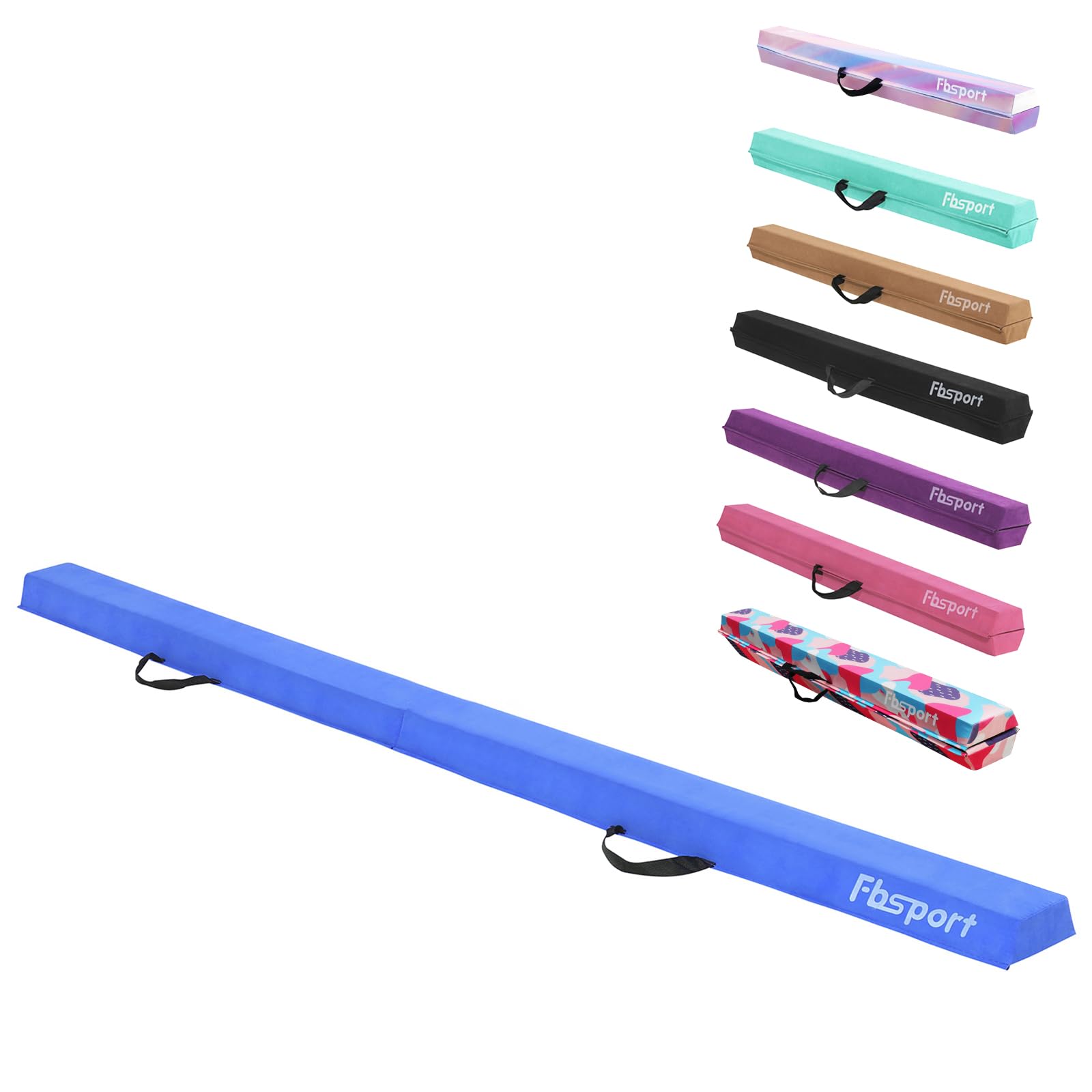
The 8-footer aimed squarely at beginners under nine, with edges built to survive them
FBSPORT is explicit about who this is for: beginners under 9 years old. That is reflected in the build — a 4-inch top and 6-inch base that mirror competition beams, but with a suede-like cover and EVA-plus-EPE foam that lands softer for small bodies. The double stitching on all sides is a thoughtful touch, because the seam is usually the first thing a kid shreds after months of daily use.
At 8 ft it gives a child real runway for walkovers, leaps, and cartwheels, and the anti-slip rubber bottom keeps it planted. It weighs 5 lbs and folds, so it lives in a closet between practice sessions.
Enjoyment is the dominant note in reviews — kids love it, and it is frequently described as a favorite gift. Lightweight portability and easy folding are also called out repeatedly. The honest caveat is softness: some owners find it cushier than expected, with a few saying it is too squishy for precise footwork. If your child craves a firm, competition-feel surface, the denser FBSPORT at the top of this list is the better match.
Strong points
- 4-inch top and 6-inch base for stability
- Double-stitched edges resist tearing
- 5 lbs, folds for closet storage
- Aimed at beginners under 9
Watch-outs
- Softer feel than a firm competition beam
- Firmness preferences vary — check with your child
Best matched to: a kid under nine who wants a forgiving 8-foot beam for daily practice at home.
Not for you if: your gymnast is already working at a level that demands a rigid surface.
6. FC FUNCHEER 6FT/9FT Folding Beam
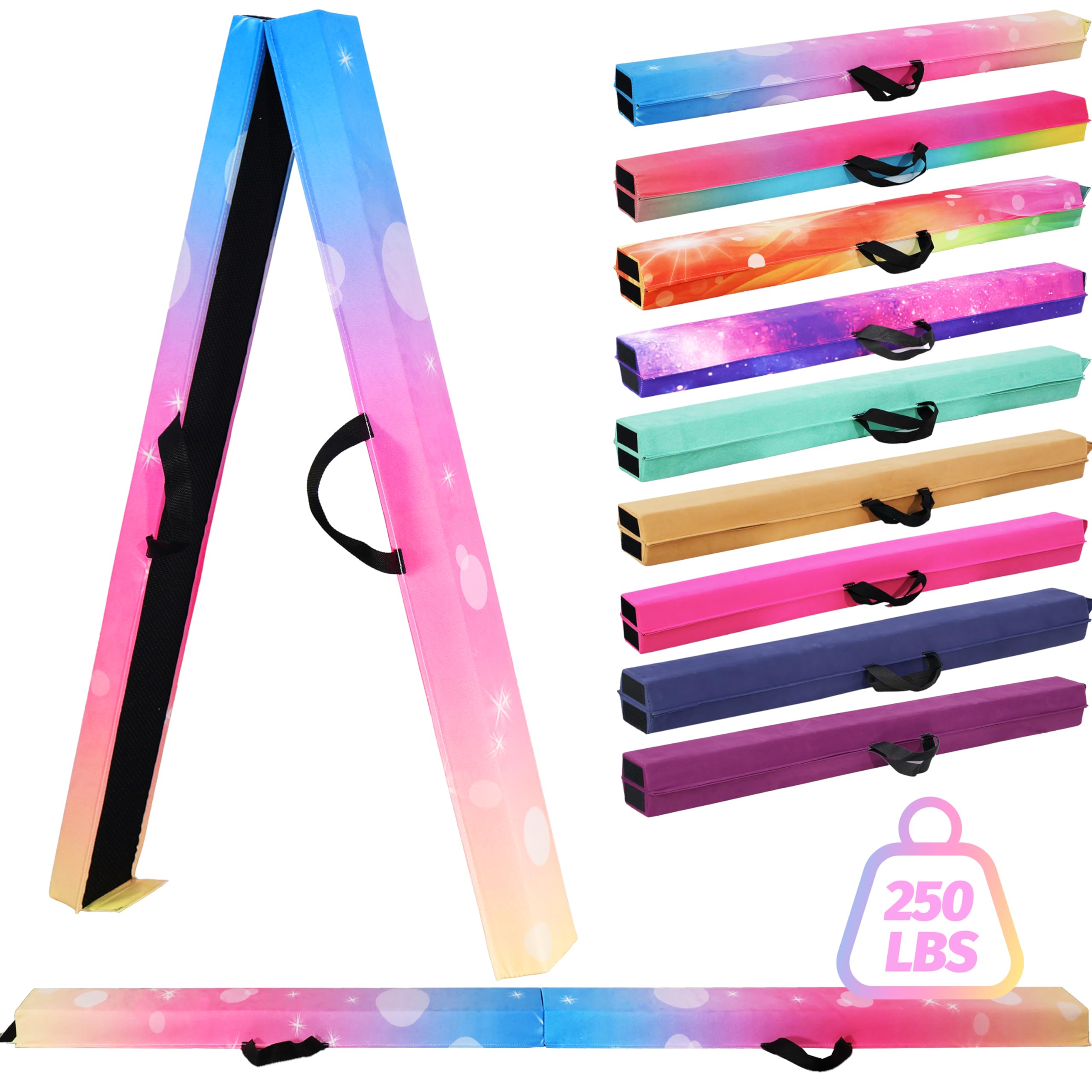
A 9-foot rainbow beam built to stretch as skills climb
The standout feature is the two-velcro system. A middle velcro adds stability and reduces missteps at the seam, while the end velcro lets you join two beams into a longer run. That turns a 9-foot beam into an adjustable training tool instead of a fixed pad. The 4-inch top and 6-inch base give it the same stable footprint as the FBSPORT beams, and that wide base adds what the maker calls extra firm stability.
The core is 100% EVA foam rated for 150 lbs, which covers kids and teenagers. The faux suede cover is grippy and soft underfoot, and the anti-slip bottom keeps it anchored on carpet or wood floors. It folds in seconds and comes with a carrying bag.
Quality is the most-praised characteristic, and buyers describe it as matching the listing. It handles children aged 3 to 15, which is a wider age span than most foam beams claim. The Colorful Rainbow finish is also a decided hit with kids. The trade-off you should plan for is that the EVA core tops out at 150 lbs, so an adult standing on it is outside its rated load.
Why it stretches further: middle and end velcros let you lock the beam solid and then extend it, so one purchase can grow with two or three years of skill progression.
Know the limit: 150 lb capacity is generous for kids but not meant for adult body weight.
Top choice for: a family with multiple kids across a wide age range who want one beam that adjusts and extends.
Look elsewhere if: you want a beam rated for adults to practice alongside your child.
7. Peakpath 8FT Adjustable Foldable Beam
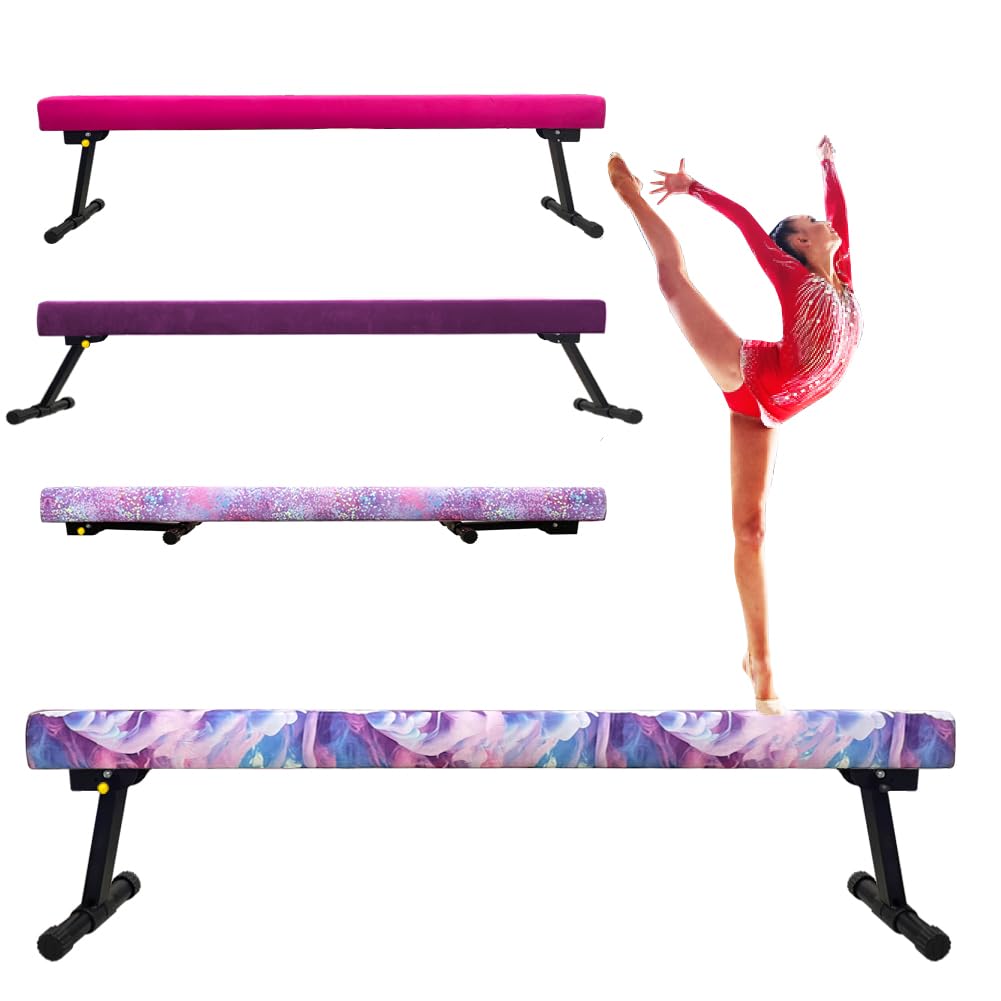
A wooden beam that rises from floor level to competition height as your child grows
This is a different animal from the foam beams: a high-density solid wood frame with heavy iron legs and a foot base. The inclined support structure is what gives it extra stability. It arrives fully pre-assembled — your child just adjusts the height, locks it with a hand bolt, and practices.
Heights are the big story. The floor setting sits at 7.5 inches, and the adjustable settings go to 13.4, 18.5, and 22.5 inches. That covers floor-level balance work up through competition-style height, and it is rated for training up to level 7. The 8-foot length with a 4-inch width handles turns, walkovers, leaps, and handsprings.
The cover is a suede-like material over solid wood with a non-slip rubber bottom, so it feels firm underfoot — much firmer than the foam beams. Quality and gift-worthiness are the recurring themes in reviews, and granddaughters are a frequent mention. The honest catch is stability: reviews are split, with some owners calling it rock-solid and others finding it less stable at the highest setting. If your child is tall and practicing advanced skills, plan to use the lower settings more.
Where it shines
- Four heights from 7.5 in to 22.5 in
- Solid wood frame with iron legs
- Arrives fully pre-assembled
- Non-slip rubber base on the wood
Honest notes
- Stability opinions are split at the highest setting
- Heavier and bulkier than a foam folding beam
Right for: a child training toward competition who needs a firm beam that rises through four heights.
Not ideal if: you want a super-light beam to shuttle between rooms daily.
8. Tumbl Trak Sectional Floor Balance Beam

A 4-foot suede section you buy once and extend end-to-end with Velcro
This is the beam with the widest base in the group: 8 inches, which is more footprint than the 6-inch base on the foam folding beams. The extra width is what makes the section feel planted when a young gymnast practices on it. A smooth synthetic suede cover wraps a 2-layer foam core that is tuned for practice firmness. Each section weighs about 4 lbs, so your child can move it room to room.
The design is built around connections. Velcro on both ends lets you join two or more sections for a longer training run, and the sections are meant to be combined rather than used solo. Each section measures 48 inches long with a 4-inch top, and it stands 4 inches tall.
Quality is the calling card here, with owners calling it well-constructed with regulation specifications and ideal for beginning gymnasts. Sturdiness and value are also cited. The honest trade-off is length: at 4 feet per section, one piece is too short for cartwheels, and owners who bought just one section often find it too short for their needs. The smart move is to buy at least two sections up front.
The sectional advantage: buying two or more pieces gives you an 8-foot-plus beam that stores as compact pieces, which suits small homes better than one long beam.
Buying advice: one section alone is too short for anything beyond basic walking, so budget for at least two.
Made for: families who want a modular beam that breaks down for storage and grows as skills do.
Pass if: you only want a single-piece beam and cannot commit to buying two sections.
9. FC FUNCHEER Adjustable Beam
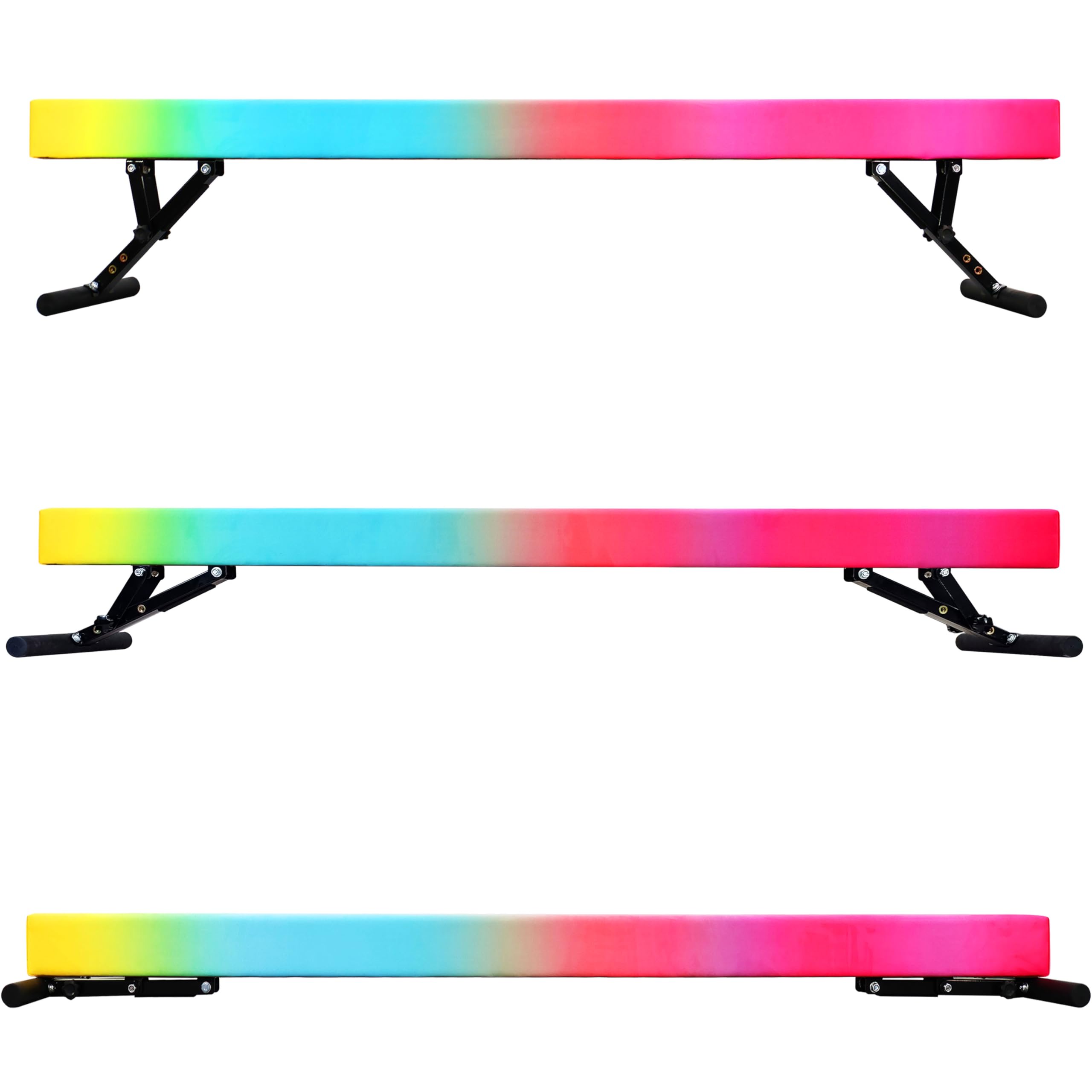
Three factory heights, a rubber-wrapped steel leg on every corner, and a wood core
The 4-knob quick-adjust sets this apart from the Peakpath wood beam — height changes happen by hand, no tools required, between 17 cm, 32 cm, and 42 cm. That is a floor level for first steps, a mid level for new skills, and a competition-style height, all on the same 8-foot beam. The 4-inch top matches official competition dimensions, which matters for building muscle memory.
The stability story is built around a triangular support design plus fully rubber-wrapped steel legs. That rubber wrapping is what protects your floors while keeping the beam planted on carpet, wood, or tile. The core is a triple-layer build: solid wood, then shock-absorbing EVA foam, then a 3 mm soft foam wrap under a faux suede cover.
Stability is the most-praised trait here, and the 350 lb capacity is the highest among the leg-supported beams in this group. Buyers also note it assembles easily and has held up over a year of use. The trade-off is weight: it needs to be sturdy, so it is a beam you set up once and leave in place rather than carry from room to room like a foam folding beam.
What earns the premium
- Rubber-wrapped steel legs grip without scratching floors
- 350 lb capacity — highest of the leg-supported beams here
- Three heights from 17 cm to 42 cm
- 8 ft length at competition width
Weigh before you buy
- Heavier than a foam folding beam to move around
- Best kept in one spot rather than shuttled daily
Best for: a serious young gymnast ready to practice at competition height at home.
Skip if: you need a beam you can fold and carry daily.
Know the Specs
Base width and anti-slip bottom
The base is the part of the beam that touches your floor. A 6-inch base is standard on most foam folding beams; the Tumbl Trak sectional uses an 8-inch base for a wider footprint. A rubber or non-slip bottom is what stops the beam sliding when your child leans into a turn. On hardwood or tile, this matters more than anything else on the spec sheet.
Foam core: EVA vs EPE
EVA foam is denser and holds its shape better under constant use, giving a firmer, more competition-like feel. EPE foam is lighter and slightly softer, which suits lighter kids and softer landings. Neither is “better” in isolation — the right choice depends on whether your child is learning basic balance or pushing toward handsprings and leaps.
Length: 4 ft, 6 ft, 8-10 ft
A 4-foot beam suits toddlers and basic walking; it is short for cartwheels. Six feet covers turns and basic skills for early beginners. Eight, nine, and ten feet approach competition length and give kids room for walkovers, leaps, and handsprings. Buy longer than you think you need only if your child is already practicing on a gym beam.
Height adjustment and folding
Foam beams sit low — often 2.4 to 4 inches from the floor. A leg-supported adjustable beam can go from floor level up to around 22 inches, mimicking competition height. Folding beams are usually lighter and easier to store, while leg-supported beams are heavier but mimic a gym setup more closely. Decide whether portability or height realism matters more to your child.
Common Questions
Will a kids balance beam slide on hardwood floors?
What length balance beam is best for a toddler?
Can two balance beams be joined together?
How firm should a kids balance beam be?
Is a foam beam or a wooden beam better for home practice?
What is the weight limit on these kids balance beams?
How do you store a kids balance beam in a small room?
Is faux suede or PU leather better on a balance beam?
At what age should a child move up to an 8-foot beam?
Do these balance beams need assembly?
The Bottom Line
The winner among these kids balance beams is the FBSPORT 8/10ft Balance Beam — a realistic 4-inch competition-style top over a non-slip rubber base, with sizes up to 10 ft. If you want a light starter your toddler can move, the ZENY 6FT Folding Balance Beam at 1.9 lbs is the easy pick. And for a young gymnast ready to practice at competition height, the FC FUNCHEER Adjustable Beam with its three heights and rubber-wrapped steel legs is the one to reach for.
How we choose
We do not accept paid placement. Every pick is matched to a real buyer and a real use-case; we do not hands-on test units.
Sources
Specifications: manufacturer listings and product documentation. Review insights: verified customer reviews, as of November 2026. Pricing: not shown on this page (it changes often); check the current price via the retailer link.
As an Amazon Associate, Tactical Gear Guy earns from qualifying purchases. This does not affect which products we feature.