Specs are compiled from manufacturer listings and verified buyer reviews and can change over time — please confirm the key details on the product page before buying.
If your ankle rolls inward with every step, the fix isn’t a softer shoe — it’s a shoe built to hold your foot in line. That’s what separates this shortlist from the neutral trainers stacked on most shelves. Every pick here is a stability or motion-control design, meaning the midsole is engineered to check inward roll rather than let it happen. Each pick here was matched by support type and intended purpose, so a given shoe may be the nearest same-type match rather than the exact model number you searched for. Check the named support system and the offset figures, not just the stability label.
This guide is built by comparing the manufacturers’ published specifications and the patterns across verified customer reviews, so you get each pick’s real strengths and trade-offs instead of marketing spin.
Below you’ll find the support system each shoe uses explained in plain terms, where each one genuinely helps, and where it asks something of you in return, all so you can land on the best Running Shoes for Ankle Problems without guessing.
Top Picks
How To Choose The Best Running Shoes for Ankle Problems
The wrong shoe for a rolling ankle is usually a soft, neutral cushion shoe — the kind that feels plush in the store and lets your arch collapse a mile into the run. What you want instead is a shoe with a mechanical system that limits inward roll and a midfoot wrap that keeps your heel from sliding off the platform. Here’s what actually decides whether a pair will help you.
Look for a named guidance system, not just the word “stable”
A guidance system is the physical structure built into the midsole to steer your foot. On the Saucony Guide 18 it’s Center Path Technology — a raised sidewall that keeps the foot centered. On the Altra Paradigm 8 it’s GuideRail, a medial rail that only engages when your foot drifts. On the Nike Structure 26 it’s a midfoot support system that wraps the arch and heel. Each is a physical midsole component, and each engages differently once your foot loads and drifts.
Check the heel hold before you check the cushioning
A shoe that lets your heel lift is a shoe that can’t control your ankle, no matter how thick the foam. Look for a plush, secure heel fit and a midfoot wrap that holds the arch. Several of the shoes here build that in directly, and it’s the difference between a platform that steers your stride and one that just sits under it.
Read the offset and stack height, because they change how the shoe feels
Offset is the height difference between the heel and the toe; stack height is how much foam sits under your foot. A 6mm offset with a 38/32mm stack, as on the Saucony Hurricane 24, gives a more level, grounded feel. A 0mm drop, as on the Altra Paradigm 8 with its 30mm stack, puts your heel and toe at the same height so your foot lands flat. Neither is better in the abstract — but a flatter platform tends to feel more stable if you’re sensitive to rolling.
Side-by-Side Comparison
| Model | Best For | Support System | Offset / Stack | Listed Weight | Amazon |
|---|---|---|---|---|---|
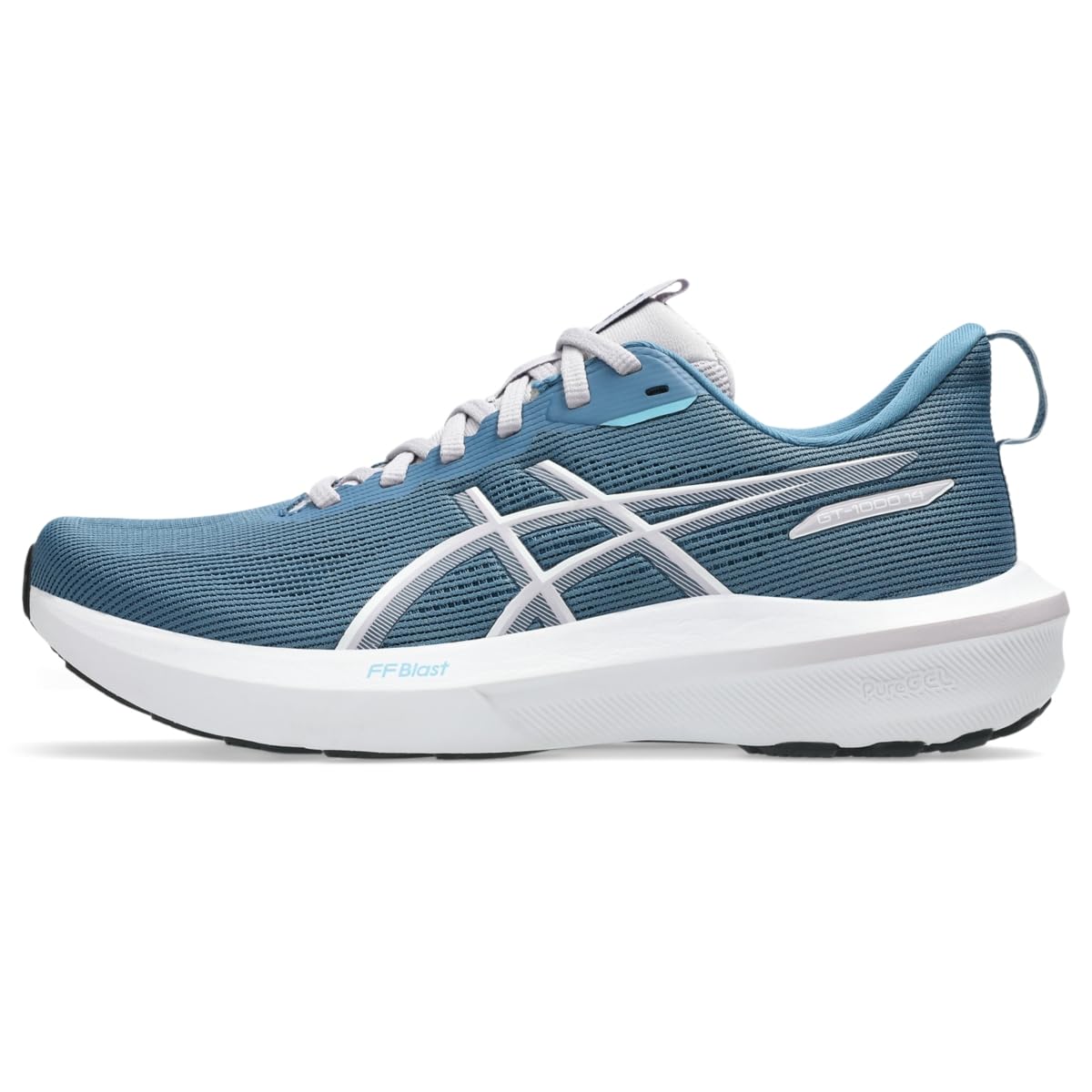
| ASICS Women’s GT-1000 14★ Best Overall | Everyday miles on a budget | 3D GUIDANCE SYSTEM | — | 1.44 lbs | Amazon |
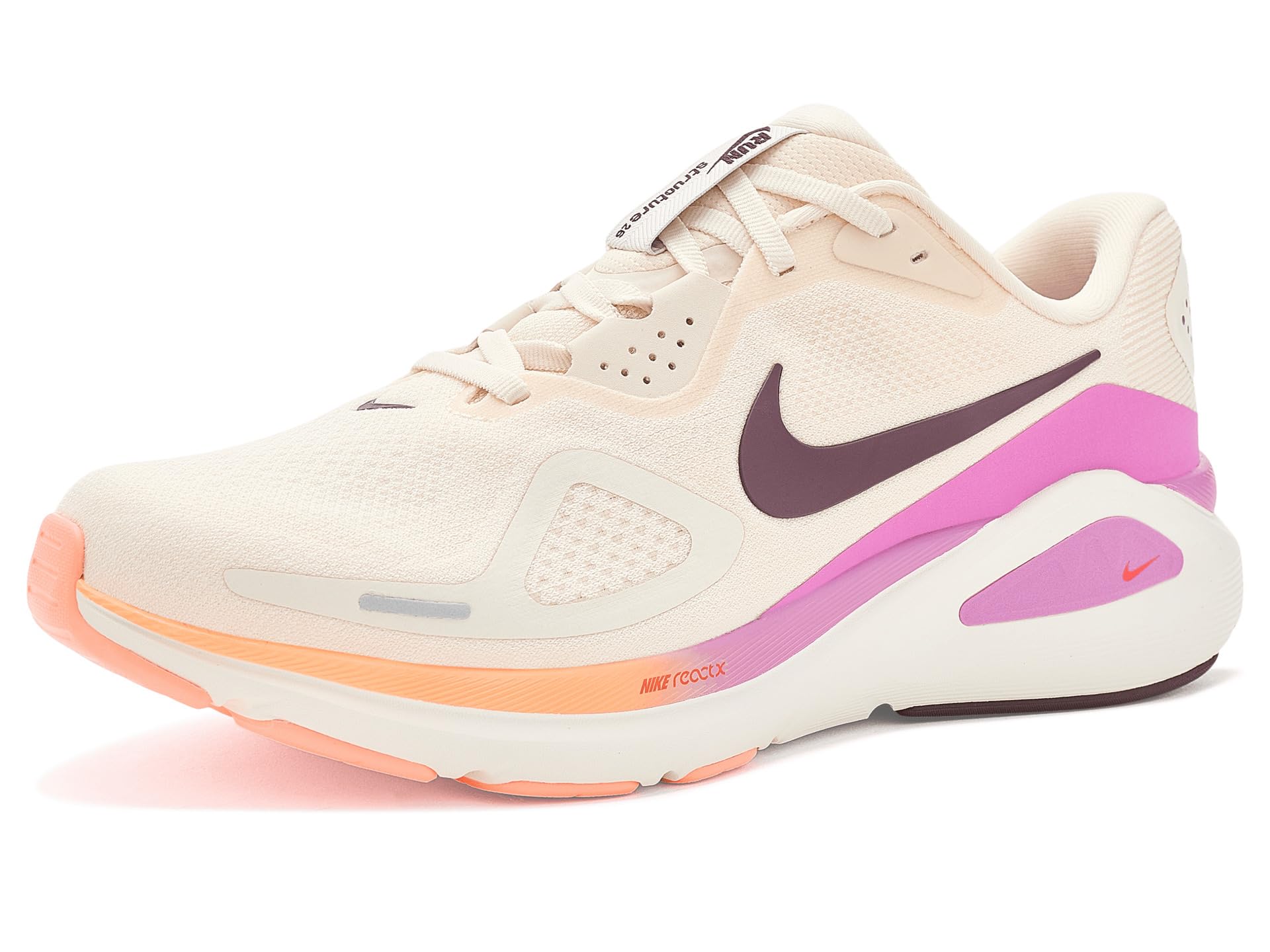
| Nike Womens Structure 26Arch Wrap Pick | Arch-and-heel wrap | Midfoot support system | — | — | Amazon |
| Saucony Men’s Guide 18Centered Ride | Centered, cushioned trainer | Center Path Technology | — | 1.87 lbs | Amazon |
| Saucony Men’s Hurricane 24 | Max cushion with stability | Center Path Technology | 6mm (38/32mm) | 10.6oz (302g) | Amazon |
| ALTRA Women’s Paradigm 8 | Zero-drop natural stride | GuideRail | 0mm / 30mm | 8.6 oz / 10.9 oz | Amazon |
| New Balance Womens Fresh Foam X 860v15 | Wide-foot support | Stability Plane | — | 2.1 lbs | Amazon |
| New Balance Men’s Fresh Foam X 860 V15 | Long-haul stability | Stability Plane | — | 2.1 lbs | Amazon |
Detailed Reviews
1. ASICS Women’s GT-1000 14 Running Shoes
Our pick — 4.5+★ from 750+ verified ratings; the strongest balance of quality and price.
The everyday stability trainer that keeps a rolling ankle on a straight line
The GT-1000 14 is the crowd favorite here, and it earns the top spot on support per dollar. What does the work is the 3D GUIDANCE SYSTEM — a built-in structure that boosts stability so your stride stays smooth instead of wobbling. Underfoot sits an FF BLAST midsole, which is the foam layer that gives a cushioned, springy ride. Together they make a shoe that feels soft when you step in and firm when your ankle tries to drift.
Comfort is what wins most people over, and it’s the thing buyers bring up more than anything else. The shoe simply doesn’t hurt their feet on daily miles. Fit runs toward narrow feet with a decent toe box, and the arch support holds good stability and secure foot placement.
The honest catch is durability. The upper and outsole hold up well for plenty of owners, but the mixed reports are real — the heel pull tag has been known to rip, and some pairs look rougher sooner than expected. It’s the one area worth watching if you plan to run high weekly mileage. Trim the tag carefully and treat the upper kindly, and you’ll get the miles most owners do.
Where the GT-1000 Earns Its Keep
- The 3D GUIDANCE SYSTEM puts a real stability structure under the midfoot, not just a firmer foam.
- FF BLAST midsole gives a cushioned, energized feel that doesn’t flatten out early in the run.
- Arch support that owners describe as secure — the foot stays planted instead of sliding.
- At 1.44 pounds it’s the lighter of the two shoes weighed here, and that lighter carry shows over long distances.
What to Weigh Before You Buy
- Durability is the mixed signal — the heel pull tag is the weak point owners name.
- Less room in the toe on some pairs, so try your usual size first if you have a wide forefoot.
Go for this if: you want proven stability for everyday pavement miles without stepping into premium pricing.
Pause if: you put in heavy weekly mileage or want a shoe built to shrug off hard wear — the upper is the softer point here.
2. Nike Womens Structure 26
The one that wraps your arch and heel in a firm, steadying hug
Nike’s answer to ankle control is mechanical. A midfoot support system wraps around your arch and heel to give a firm platform, and that wrap is specifically designed to slow the rate of ankle eversion — the inward roll that sets off trouble in the first place. A full-length ReactX midsole delivers a cushioned yet stable transition from heel strike to toe-off, so the softness doesn’t come at the cost of control.
The upper is engineered mesh with a plush collar and tongue, which is the padded material around your ankle and the tongue area. That padding matters: it cushions the ankle bone without letting the heel swim. High-abrasion rubber sits in the heel for wear resistance, while lighter rubber in the forefoot keeps the front flexible.
The one thing to size around is fit. Owners split on it — some find it excellent, others report it runs a bit snug. If you’re between sizes or have a fuller midfoot, err toward trying it on or going up. Comfort is otherwise the consistent note, and the look gets plenty of appreciation too.
Why the wrap works: that arch-and-heel support system is the reason to pick this shoe for a rolling ankle — it’s a physical cradle, not just a stiffer foam.
The fit caveat: the snug sizing isn’t universal, but the split is real enough that you should treat the Structure 26 as a shoe to size carefully rather than order blind.
Worth it for: a runner whose ankle rolls inward and wants a firm arch-and-heel wrap with a stable heel-to-toe transition.
Think twice if: you have a wide midfoot and want a roomy fit from the start — this one leans snug for some.
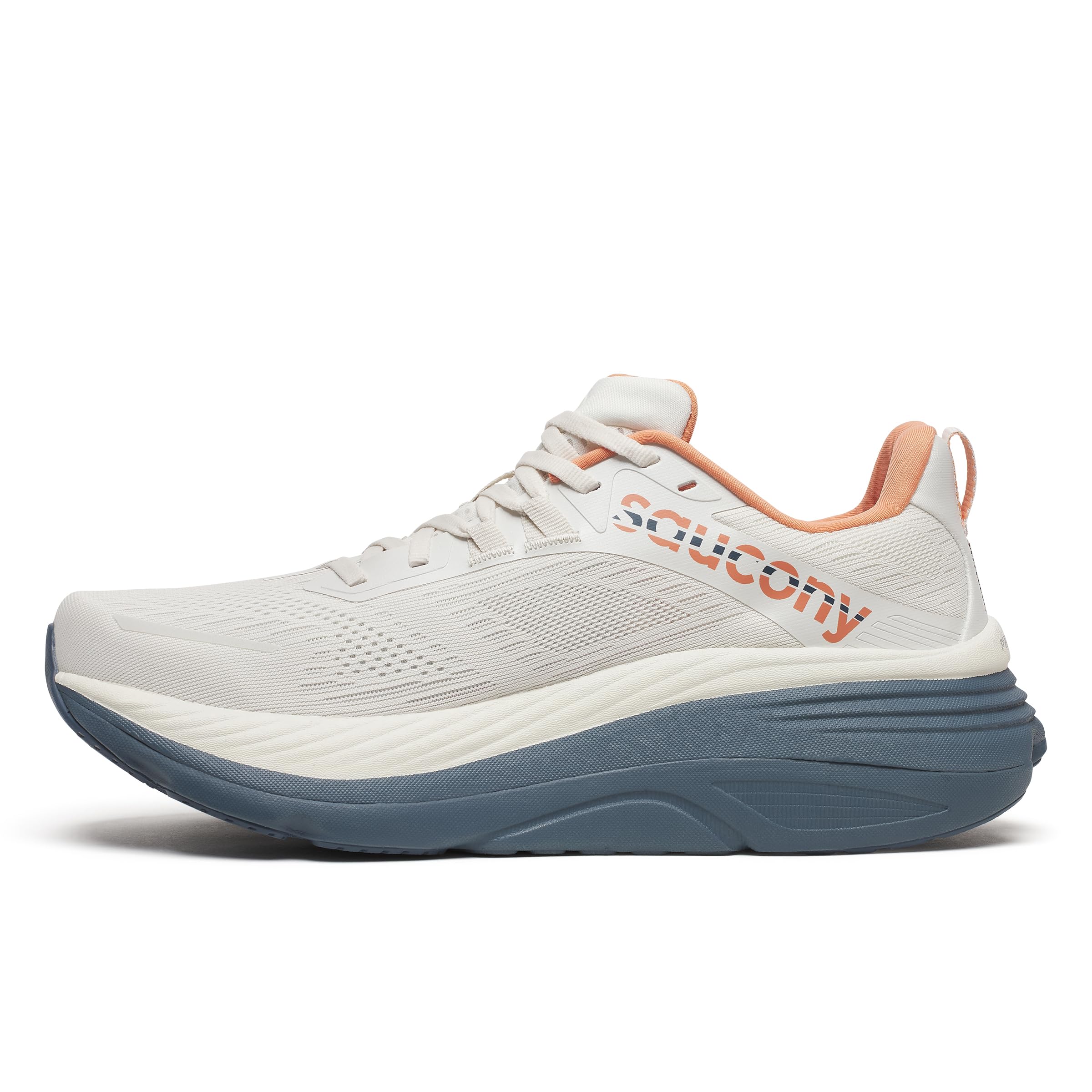
3. Saucony Men’s Guide 18 Sneaker
Center Path engineering that steers the foot back to the midline
The Guide 18 is Saucony’s core maximum-cushioning trainer, and the support comes from Center Path Technology. That system maintains a standard centerline, raises the sidewalls, and builds the shoe on a rocker shape to ease toe-off. In plain terms: the shoe has a raised edge that keeps your foot centered and a curved sole that rolls you forward. The soft, responsive PWRRUN foam handles the cushioning side.
What the review pages rave about is comfort and stability together. The shoe is soft underfoot but doesn’t let you wander, and users of all ages call out the steadiness. There’s a wide toe box that gives your forefoot room, which helps if a tighter shoe has aggravated your ankle before. The roomy midfoot and true-to-size fit make it an easy first order.
The trade-off is wear. The soles wear out quickly by some accounts, even though other owners get good mileage. This is the lighter-wearing side of a cushioned trainer, so rotate it rather than run it into the ground. If you split your miles across two pairs, the Guide 18 stays fresh longer.
The Case for the Guide 18
- Center Path Technology genuinely raises the sidewalls and centers the foot — stability you can feel under the arch.
- Wide toe box and roomy midfoot reduce pressure on a sensitive ankle and forefoot.
- The PWRRUN foam rides soft without turning mushy, so support stays intact through the run.
The Honest Counterweight
- Outsole wear is the recurring gripe — soles can wear quickly for some runners.
- At 1.87 pounds it’s a sturdier carry than the Guide’s lighter rivals, though that heft feeds the planted feel.
My read: a cushioned stability trainer built for runners who want their foot centered every stride and a roomy toe box for comfort.
One caution: the outsole is the wear point — if you already burn through soles fast, plan on rotating this pair.
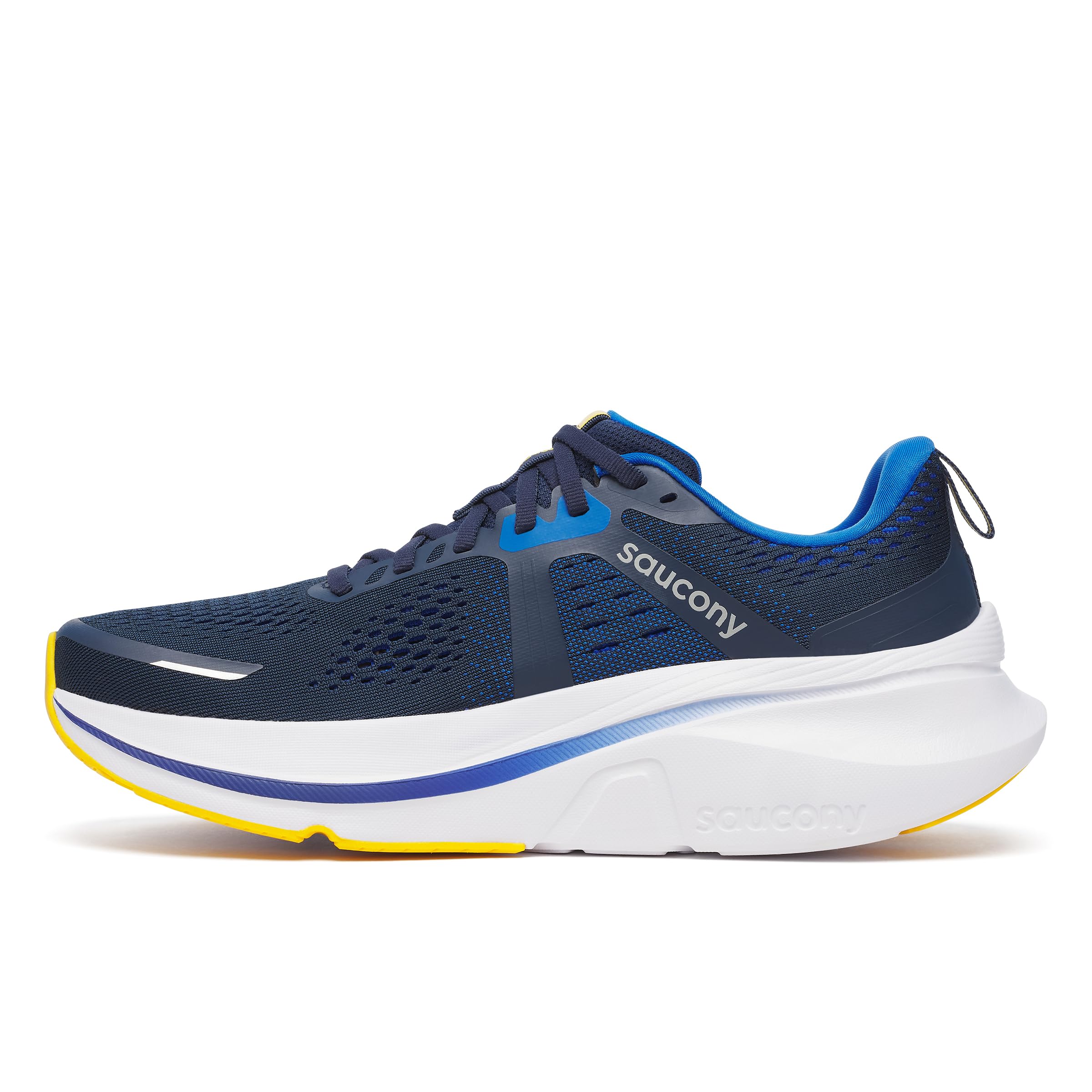
4. Saucony Men’s Hurricane 24 Sneaker
A double layer of foam that still holds your foot on a broad base
The Hurricane 24 pairs plush, energy-returning PWRRUN PB foam with a supportive PWRRUN foam frame — two layers working together, one for bounce and one for structure. The protective geometry uses a broader base with increased ground contact and higher sidewalls, which is how you get a stable base without a stiff brick. CenterPath Technology keeps your foot centered over the top of that broad platform.
It sits at a 6mm offset with a 38/32mm stack and weighs 10.6oz (302g) — a level, grounded stance that helps if you feel tipsy in taller shoes. For overpronators, this is a standout. Cushioning is ample, standing up to Saucony’s own Triumph in feel, and stability gets its own nod. Comfort is the loudest note, and it’s the kind that holds up on long runs and half marathons.
Two things to know. Sizing runs mixed — some find it true to size with room for toes and bunions, others find it small or tight in wide widths. And durability split too, with a few reports of the shoe breaking down early. Both are the exceptions, but sizing is worth checking before you rely on it.
What defines it: the dual-cushioning system plus broader base gives max-foam comfort on a stable footing — the combination a rolling ankle actually needs.
Size to be sure: the fit splits enough that ordering your true size may not be enough — think about the shape of your foot.
Best matched to: overpronators who want maximum cushioning but still need a broad, stable platform underfoot.
Read the fit notes first if: you need a wide width — some report tightness in wide sizes.
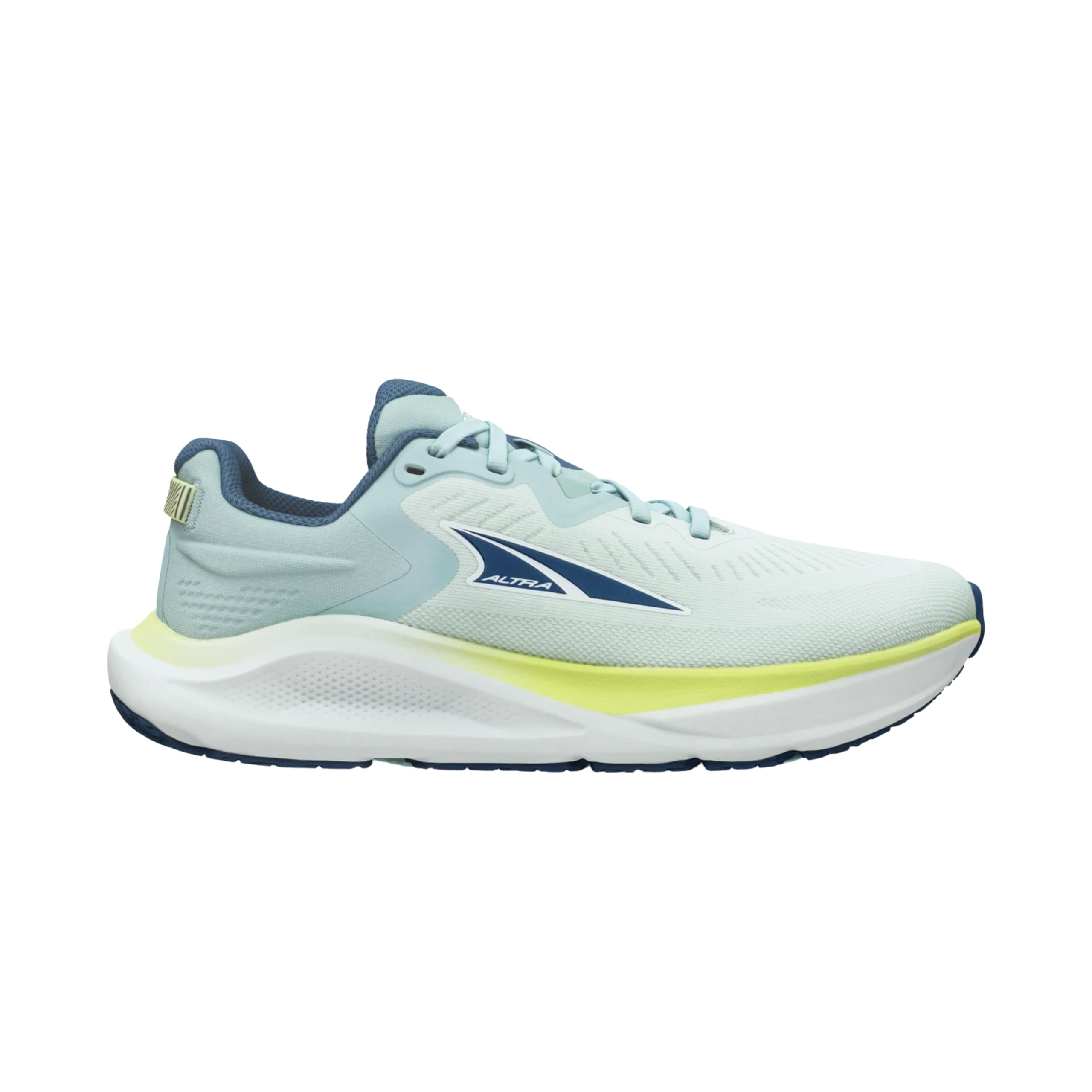
5. ALTRA Women’s Paradigm 8 Road Running Shoe
A flat, zero-drop platform that guides only when your stride needs it
Here’s a different approach to ankle control. The Paradigm 8 uses GuideRail technology — a gentle medial rail that engages only when your foot drifts, then lets it move freely when it doesn’t. There’s a 0mm drop and 30mm of stack height, which puts heel and toe at the same level so your foot lands flat. The updated Altra EGO MAX midsole adds cushioning without the extra weight, and the roomy toe box lets your toes spread.
Foot comfort is what the review pages praise — specifically the way it helps with pronation and toe issues, with plenty of room in the toe area for wide feet. The upper is engineered mesh, and the ghillie lacing system tightens the fit across the midfoot. A premium molded heel collar cushions the ankle on first step-in and on through the run.
Zero drop is a real adjustment, not a marketing line. The fit also splits — some find it runs small or too narrow, others say it’s generous. Get the sizing right and the guidance does its job; get it wrong and the flat platform will feel unforgiving. Try before you commit if you can.
The flat-platform logic: 0mm drop with a 30mm stack trains you to land centered — helpful if a heel-lifted shoe makes your ankle roll.
The sizing catch: mixed reports on how small or narrow it runs make this one worth a careful fit check first.
Seek it out if: you want a roomy, zero-drop road shoe with a guide that only steps in when your foot needs correction.
Look elsewhere if: you’d rather stay on a familiar heel-to-toe lift — the flat platform is an adjustment, and the fit is divided.
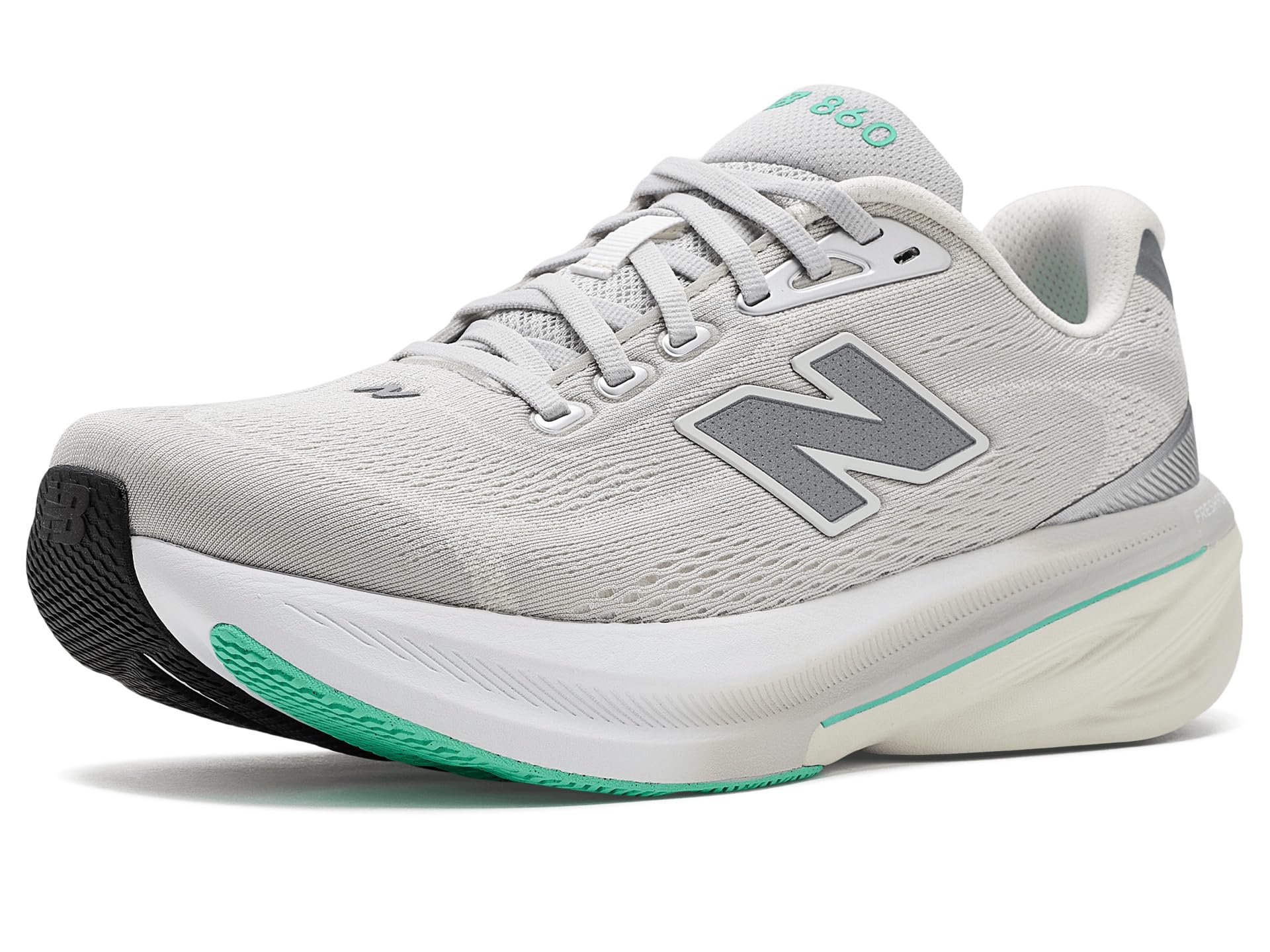
6. New Balance Womens Fresh Foam X 860v15
Stability Plane engineering for a foot that needs arch support and room
The 860 line is New Balance’s go-to stability shoe, and this version combines Stability Plane technology with Fresh Foam X cushioning. Stability Plane is the structure that keeps the foot on an even plane through the stride; Fresh Foam X is the plush underfoot layer. Owners praise the support most, particularly for wide feet and good arch support, with the cushioning drawing warm notes too. For a wider foot that rolls, that pairing is the reason to look here.
Fit is the dividing line, and it’s the most-discussed subject in the feedback. Some find it true to size with a wide toe box that works for them; others report it feels narrow and constrictive. Quality and comfort split similarly — plenty love it, and a few find it uncomfortable at the toes or heels. The shoe has a clear constituency: the wide-foot runner who gets the right size.
Where it lands for you depends almost entirely on fit. Get the width right and the support is excellent and the cushioning plush. Get it wrong and the constriction will undercut the whole experience. This one is worth trying in your true width rather than guessing, and the heel and toe are where a wrong size shows first.
What it delivers: Stability Plane structure plus Fresh Foam X gives supportive, cushioned miles for a wide-foot runner who needs arch help.
The fit split: width and comfort draw divided reports, so the right size is the whole game here.
Suits you if: you have a wider foot that needs arch support and a stable plane under the stride.
Only if you can size right: the fit divides sharply, so a narrow or uncertain width makes this a riskier pick.
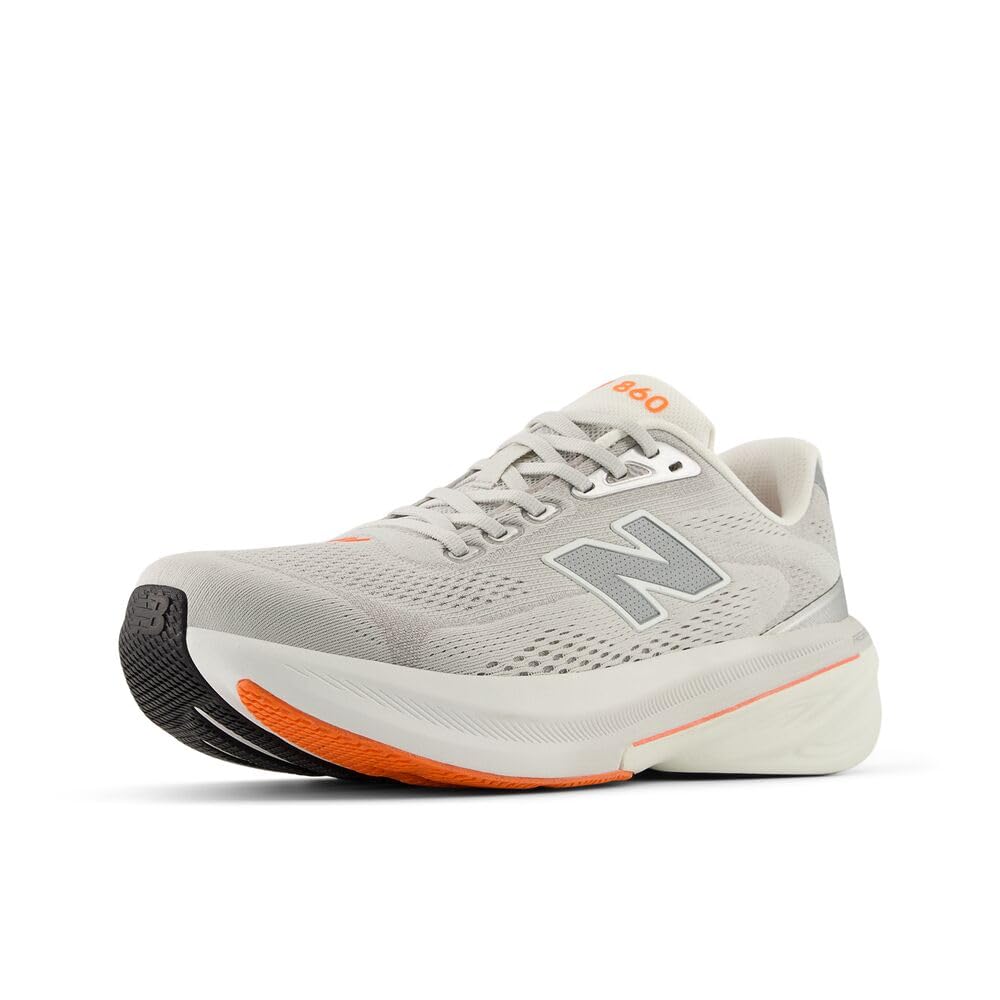
7. New Balance Men’s Fresh Foam X 860 V15 Running Shoe
The men’s 860 that puts thick cushioning on a stable plane
New Balance built the men’s 860 V15 for reliability over the long haul, pairing Stability Plane technology with the premium underfoot feel of Fresh Foam X. A lightweight synthetic upper wraps the foot with breathable support across all distances. What stands out in owner experience is the stability for fallen arches and flat feet, plus the thick cushioning that keeps a sensitive foot comfortable. Comfort and quality both draw consistent praise.
This is the men’s counterpart to the women’s 860v15, and the support story repeats: firm plane, plush foam, and a design meant for all distances. If a rolling ankle pairs with a flat arch, this is the shoe built to meet both at once.
Sizing is the catch. Reports say it runs slightly smaller than expected, and some note it’s shorter in length, while others find it wonderful for large, wide feet. The 860 rewards you for checking the length before you rely on it. Order with a little room and the support and cushioning do exactly what they should.
The angle worth knowing: Stability Plane plus thick Fresh Foam X is a deliberate pairing — comfort for a flat-arched foot that also needs steering.
The sizing warning: short-in-length reports are common enough to warrant sizing up or trying on first.
Made for: the runner with a flat arch or fallen arch who wants plush cushioning on a steady, stable base over long distances.
Before you order: check the length — this one can run shorter than expected, so sizing up is the safer bet.
Know the Specs
Guidance and Stability Systems
A guidance system is the built-in structure that steers your foot through each step. Center Path Technology raises the sidewalls to keep you centered; GuideRail nudges only on the medial side when your foot drifts; Stability Plane keeps the foot on an even plane through the stride; and a midfoot support system wraps the arch and heel. Each is a molded midsole structure, distinct from foam depth alone. These are the midsole structures that check inward roll at the source.
Offset, Stack Height, and Drop
Offset — sometimes called drop — is the height difference between the heel and the toe, measured in millimeters. Stack height is how much foam sits under your foot, also in millimeters. A 6mm offset with a 38/32mm stack, as on the Hurricane 24, sits flatter than a taller shoe; a 0mm drop with a 30mm stack, as on the Paradigm 8, puts heel and toe at the same level. Flatter tends to feel more stable if you’re prone to rolling.
Common Questions
What kind of shoe should I wear if my ankle rolls inward?
Does a higher stack height make a shoe less stable for a rolling ankle?
Is zero drop better for an unstable ankle?
Should I size up in stability running shoes?
How do I know if a shoe actually supports my arch?
Do max-cushioned shoes still work for overpronation?
How long should stability running shoes last?
Is a wide toe box helpful if my ankle needs support?
What is a midfoot support system, and why does it matter?
Can I run long distances in a stability shoe?
The Bottom Line
The pick that makes the most sense for most ankles is the ASICS Women’s GT-1000 14, with its 3D GUIDANCE SYSTEM and cushioned FF BLAST midsole holding a rolling foot on a straight line at a budget-friendly tier. If you want a firm arch-and-heel wrap, the Nike Structure 26 is built exactly for that. For a flat arch paired with a rolling ankle, the New Balance Men’s 860 V15 puts thick cushioning on a stable plane. Start with the shoe whose guidance system matches how your ankle rolls, then confirm the fit.
How we choose
We do not accept paid placement. Every pick is matched to a real buyer and a real use-case; we do not hands-on test units.
Sources
Specifications: manufacturer listings and product documentation. Review insights: verified customer reviews, as of November 2026. Pricing: not shown on this page (it changes often); check the current price via the retailer link.
As an Amazon Associate, Tactical Gear Guy earns from qualifying purchases. This does not affect which products we feature.