Specs are compiled from manufacturer listings and verified buyer reviews and can change over time — please confirm the key details on the product page before buying.
You want a platform you can jump on without it wandering under your feet or biting your shins. Step-up boxes for exercise split into two very different families — steel frames with a hard top, and foam cubes wrapped in a vinyl or PVC cover — and the right answer depends on how hard you land and how much you need a softer edge. Height options and storage are details you settle after you pick a family.
This guide is built by comparing the manufacturers’ published specifications and the patterns across verified customer reviews, so you get each pick’s real strengths and trade-offs instead of marketing spin.
The list below runs from steel workhorses you will never worry about to lighter foam platforms you can tuck away in a corner. Step-up boxes for exercise are judged here on what actually matters: height range, weight capacity, top grip, and whether the base stays put when you land.
Top Picks


How To Choose A Step-Up Box For Exercise
Settle material first: it decides how the top feels underfoot and how a missed landing feels on your shin. Steel boxes with a hard top are the most stable and the least forgiving. Foam boxes wrapped in a vinyl or PVC cover soften the edge, so a missed landing is a bruise rather than a gash. Neither is better; steel solves sliding, foam solves shin contact.
Steel frame or foam core
A steel box sits heavy and does not slide, and you can stack or disassemble the pieces for storage. The trade-off is that hard top: catch a shin on it and you will know about it. A high-density foam box, by contrast, gives you a padded landing and weighs far less, which makes it easy to move between rooms. The catch is that lighter foam can rock if the floor is uneven or you land off-center.
The 3-in-1 height trick
Most boxes in this category give you three heights from one unit by rotating it onto a different face. That beats owning three separate boxes if space is tight, because one cube does the work of a whole set. Check which three heights you actually get, though — a 16/20/24 box suits most home training, while a 20/24/30 box is aimed at taller athletes or people already jumping high.
Weight capacity and grip
Capacity is the listed limit for the whole platform, so leave yourself some headroom rather than matching it to your bodyweight exactly. Grip matters just as much: a hex-pattern wooden top, a textured silicone surface, or a rubber-stoppered base all stop your foot skating on the landing. Look for a non-slip top and rubber feet together — the top stops your foot sliding, the feet stop the box sliding.
Side-by-Side Comparison
| Model | Best For | Material | Heights | Weight Capacity | Amazon |
|---|---|---|---|---|---|
| Retrospec Leap Plyo Box★ Best Overall | Step-ups and steady jumps | Steel frame | 12″, 18″, 24″, 30″ | 350 lbs | Amazon |
| Yes4All 3 in 1 Wooden Plyo BoxStackable Build | Building a stack over time | Wood (plywood) | 4″, 6″, 8″, 12″, 16″ | 400 lbs | Amazon |
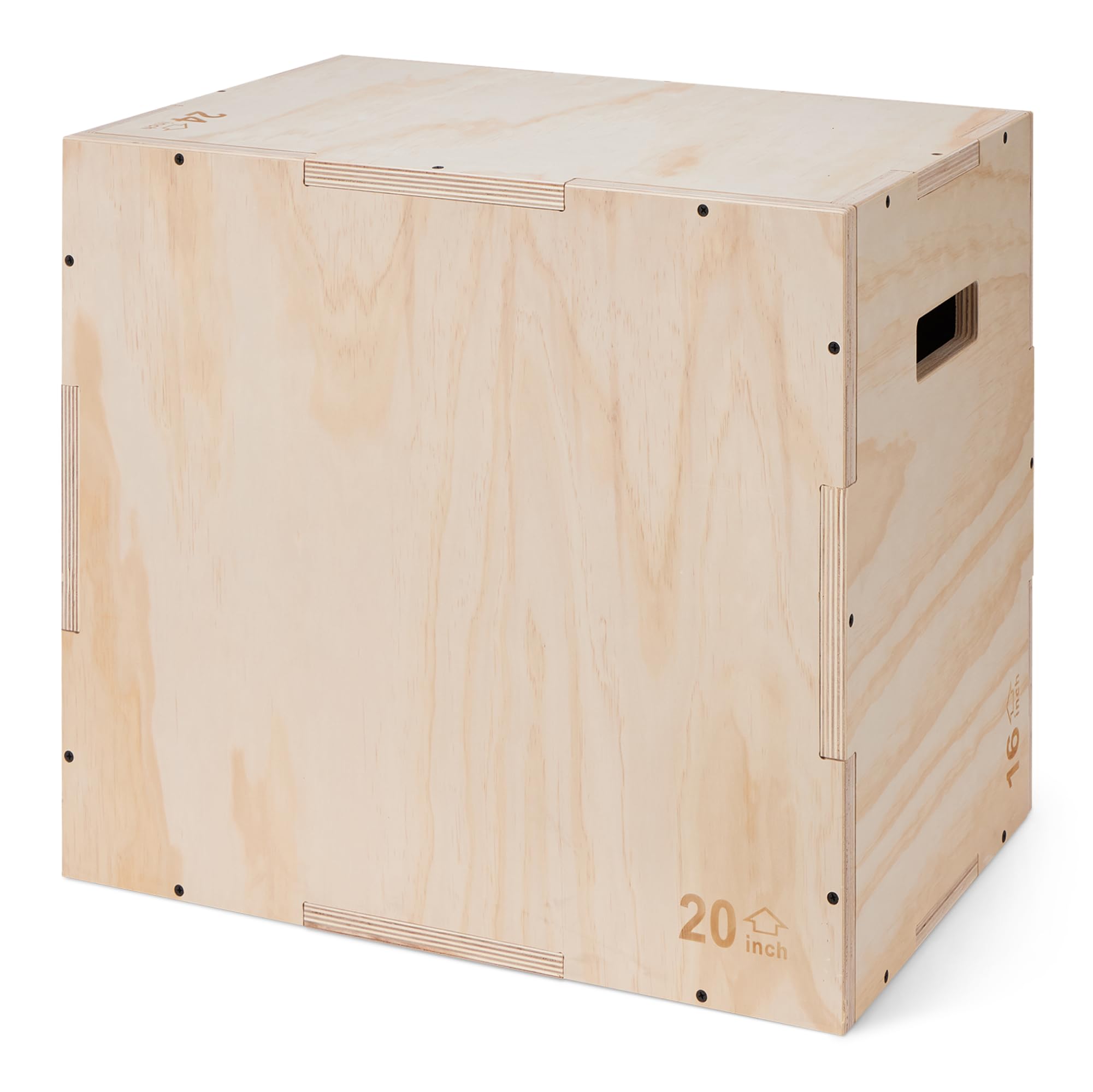
| Amazon Basics 3-in-1 Wooden Plyo BoxBeginner Friendly | Beginners who want three heights | Wood | 24″, 20″, 16″ | 450 lbs | Amazon |
| RitFit 3 in 1 Soft Plyo Box | Shin-friendly soft landings | High-density foam | 20″, 18″, 16″ (small) | 200 lbs (small) | Amazon |
| VEVOR Plyometric Jump Box | Heavy athletes, high capacity | Alloy steel | 12″, 18″, 24″ | 500 lbs | Amazon |
| REP Soft Plyo Box | Home gyms with limited space | PVC-covered foam | 16″, 20″, 24″ | 400 lbs | Amazon |
| 3-in-1 Foam Plyometric Jump Box | Tall box jumps with soft edges | EPE foam, faux leather | 20″, 24″, 30″ | — | Amazon |
| Titan Fitness Adjustable Steel Plyo Box | Progressive height training | Alloy steel | 12″, 16″, 20″, 24″ | 300 lbs | Amazon |
| Stamina X Adjustable Plyo Box | Set-and-forget garage gyms | Alloy steel | 12″, 16″, 20″, 24″ | 300 lbs | Amazon |
Detailed Reviews
1. Retrospec Leap Plyo Box Jump Platform
Our pick — 4.5+★ from 550+ verified ratings; the strongest balance of quality and price.
Four separate heights in one set — the platform that grows with your jump instead of boxing you in.
The set hands you 12″, 18″, 24″, and 30″ as four individual boxes rather than one cube you flip. That is a real advantage for step-ups: you can pull out the 18″ for a warm-up set and push it aside when you move up to 30″, without re-engineering the whole platform mid-workout. Each box rides on a tapered steel frame, meaning the sides slant inward toward a wide footprint at the floor — that shape is why it sits so planted.
Buyers keep coming back to the welded joints and smooth corners. The welded joints and smooth corners are the recurring theme in the feedback, and the thing genuinely does not tip when you load it. Rubber stoppers under each box and a non-slip top handle the two separate sliding problems — foot skating and box wandering. The taper matters next to something like the Yes4All wooden stacker, which asks you to build and level your own base; this one arrives as a solid unit.
The honest catch is footprint. Several buyers mention the platform feels smaller than the picture makes it look, so measure your landing zone before you commit, and note that the listed 350 lb limit is the lowest of the steel group here — the VEVOR at 500 lbs carries noticeably more margin. Stackability is the quiet bonus: the four boxes nest together for storage, so a set that would normally eat a wall collapses into one tuckable pile.
Where It Earns Its Place
- Four real boxes — 12″, 18″, 24″, 30″ — instead of one rotating cube
- Tapered steel base with rubber stoppers keeps it from walking on the landing
- No assembly, and the set stacks away flat
- Non-slip top surface for confident step-ups
What To Weigh First
- 350 lb limit is the lowest of the steel-frame picks here
- Landing surface reads smaller than photos suggest — check your stance width
Reach for this if: you want one purchase that covers a full height ladder from beginner step-ups to 30″ box jumps, and you value a base that will not shift.
Look elsewhere if: you are a heavier athlete who wants a big capacity cushion — the steel set from VEVOR gives you more headroom.
2. Yes4All 3 in 1 Wooden Plyo Box
Buy one short box now and add the next height when you outgrow it.
The design idea is genuinely clever: you buy a single low box from a range of 4″, 6″, 8″, 12″, and 16″ heights, then stack more on top as your training progresses. Two colors, black and red, let you mix and match for a ladder that is easy to eyeball. At 4″ this is barely a step — which is exactly right for someone coming off an injury or learning the movement pattern before adding height.
The 22″ x 22″ wooden footprint is wide for the height, and that wide base is what gives you stability. A hexagon pattern on the top surface adds grip so your foot plants instead of creeping.
Here is the honest read, and it matters more on this pick than any other on the list: this is a self-assembly wooden box, and the build experience is genuinely split. Some units go together cleanly and feel rock solid; others arrive with holes that are not pre-drilled or are misaligned, and the included screws and hex wrench can fall short of what you need. It is also built from plywood, and a portion of the wood does crack under repeated hard landings. None of that makes it a bad box — it makes it a box for someone willing to bring their own drill bits and check the hardware before starting.
The stacking payoff: five height options in one product line means you can grow from 4″ to 16″ without buying a whole new platform, and the wide 22″ x 22″ base keeps the taller stacks honest.
Budget your afternoon: plan on assembly, and have a proper driver and spare screws on hand — the hardware is the weak link in an otherwise sturdy wooden design.
Worth it when: you want the cheapest way into a height ladder and do not mind turning a screwdriver to get there.
Think twice if: you want something you can unbox and jump on today, or you plan to land hard and often on the same face.
3. Amazon Basics 3-in-1 Wooden Plyo Box
Three heights, pre-drilled holes, and a 450 lb wood platform that will not wobble under a beginner.
One wooden cube, three faces, three heights: 24″, 20″, and 16″, each marked with a clear indicator so you know which side is up. The whole unit is rated to 450 lbs, the highest wood capacity on this list and 50 lbs above the Yes4All. For a home gym where one box has to serve a warm-up step-up and a full box jump, that range covers it.
The detail that earns this pick its spot is assembly. Amazon Basics ships it with pre-drilled holes, pilot holes, and clear instructions, so the build is a short job rather than an afternoon project — a real contrast with the self-drilling setup the Yes4All wooden box sometimes demands. Wide built-in handles let you flip it to a new height without skinning your knuckles, and sanded edges cut down on scrapes when you catch a shin.
Reviewers single out the sturdiness: the wood feels solid rather than hollow. If there is a gripe, it is that the footprint reads snug to some buyers while feeling spot-on to others — a stance-width question, not a defect. It is also FSC-certified, made from well-managed and recycled wood sources, if that matters to how you stock your gym. Not the cheapest wood box here, but the one with the fewest assembly headaches.
Why It Sells Itself
- 450 lbs capacity — the strongest wood box on this list
- Pre-drilled and pilot holes make setup genuinely quick
- Sanded edges and wide handles for easier repositioning
- Three clearly marked heights: 24″, 20″, 16″
Room To Think
- Footprint is snug for some stance widths — check before jumping
- Top height of 24″ leaves little room to progress beyond it
The sensible default: a wood 3-in-1 that assembles cleanly and carries a bigger rating than most of the field.
Only skip if: you already jump above 24″ and need a taller top face to keep progressing.
4. RitFit 3 in 1 Extra Firm Soft Plyo Box

For anyone who has caught a shin on a steel edge and never wants to again.
This is a foam cube, not a steel frame, and that changes the whole experience. The entire box is filled with firm high-density foam, so when you clip the edge you get feedback rather than a bruise. Its zippered PVC cover peels off for wiping down, which matters when a foam box lives in a garage. Rotate it to three heights and start training — no assembly, no bolts.
Note the size tiers before ordering, because capacity moves with them: the small is 16″ x 18″ x 20″ at 26 lbs with a 200 lb limit, the medium is 16″ x 20″ x 24″ at 35 lbs with 300 lbs, and the large is 20″ x 24″ x 30″ at 60 lbs with 440 lbs. The large gives you the biggest span here — a 24″ x 30″ landing face compared with the Retrospec’s 24″ length, so more room to plant a foot on a soft-step.
The foam’s weight is a double-edged thing. Buyers consistently find it heavier than expected, and that heft is exactly what keeps it planted — one of the reasons this box stays put and does not slip. The catch is landing feel: some find the cushioning just right, others find it too soft to get a crisp push-off on a fast rebound. If you land off-center on an uneven floor, foam can also rock a touch more than steel. Choose it for the soft edge, not for maximum stiffness.
Choose your size carefully: capacity scales with the cube — 200 lbs on small, 300 on medium, 440 on large — so pick the tier that matches you rather than the smallest that fits the corner.
The trade-off in one line: foam forgives a missed landing, but it will never feel as rigid underfoot as a steel platform.
Made for: athletes who train near their limit and want a forgiving edge under the shins.
Skip the small: its 200 lb limit will not suit most adult jumpers — go medium or large.
5. VEVOR Plyometric Jump Box Set
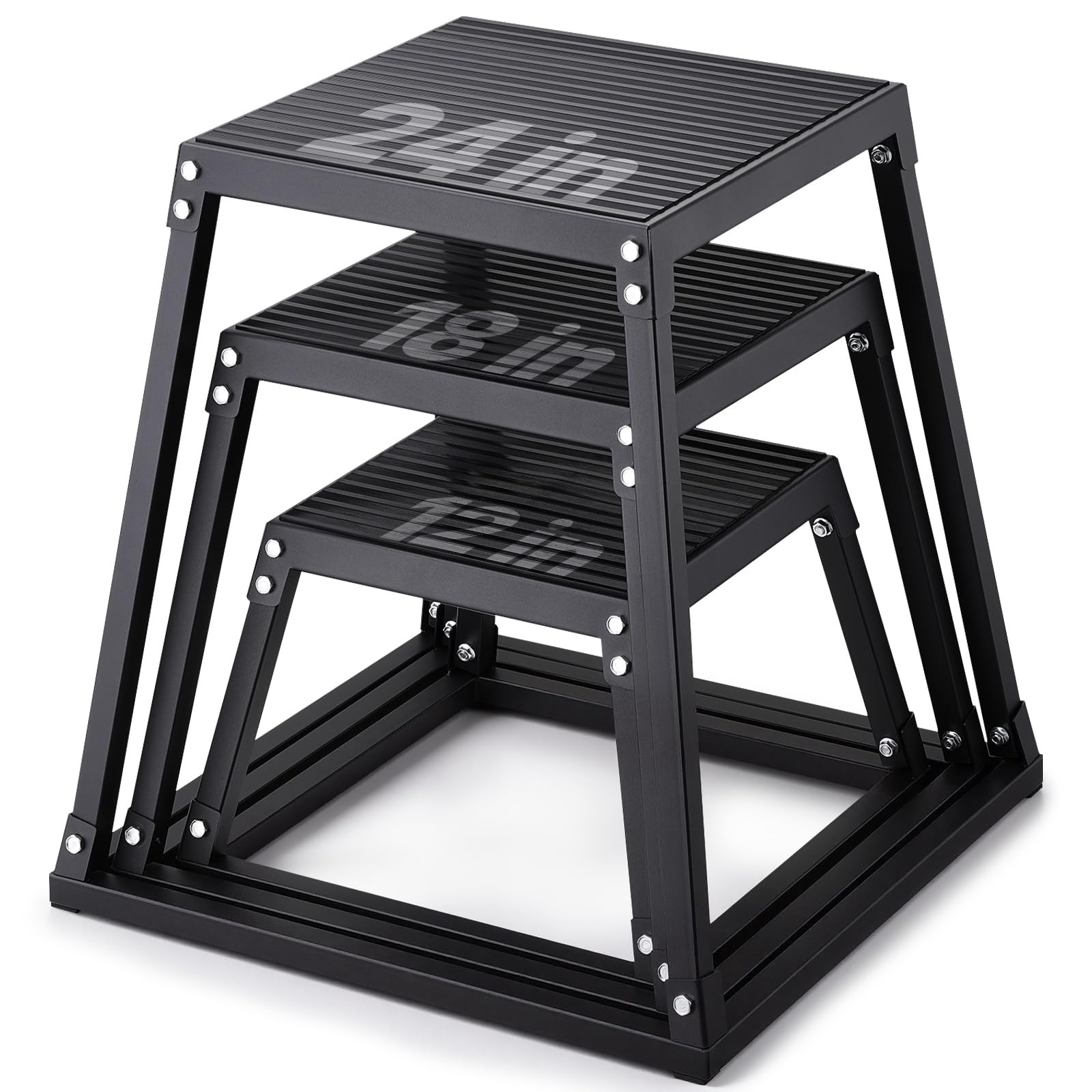
500 lbs of rated steel — the box you trust when there is real weight landing on it.
For a heavier athlete or a trainer putting clients through jump work, that margin is the whole point. You get three separate boxes at 12″, 18″, and 24″, each built on a trapezoidal steel frame with solid welds. A powder-coated finish resists corrosion, so a damp garage will not eat through it.
Grip is handled at both ends. Four rubber pads sit under each box, and a textured silicone surface covers the top, so your foot sticks and the box holds its place. The set spans a 22.6″ width across the platform compared with the Retrospec’s 18″ width, giving you a broader landing face on the taller steps. When you are done, the boxes stack or disassemble for storage.
Assembly is the recurring story, and it is a mixed one. Getting all the pieces tightened is straightforward for some and a genuine chore for others, so budget a little patience and a decent wrench. A handful of units have shown up with paint chipping or a seam splitting over time, though the framing itself holds its stability under hard sessions. Weigh the 39.7 lb total against the size of your space — this is not a set you tuck into a closet shelf.
The capacity leader: nothing else here touches its 500 lbs, and the steel framing stays rock steady through high-intensity work.
Plan for setup: the three boxes take real assembly time, and the finish is not indestructible — keep a touch-up pen handy.
Best for: bigger athletes and anyone who wants a set with serious capacity headroom.
Not for: a tight apartment — three steel boxes need real floor space and a spot to stack them.
6. REP Soft Plyo Box

The foam cube that arrives ready to jump on, with 400 lbs of rated capacity behind it.
Three faces give you 16″, 20″, and 24″ from one cube — rotate it and you are at a new height in seconds. What makes this one stand out against other foam boxes is the 400 lb capacity, which is twice the RitFit’s small-box limit and more in line with a serious home lifter. The core is high-density foam with a textured vinyl cover that adds grip and resists wear.
Two things make it pleasant to live with. First, it ships fully assembled, so there are no tools and no bolts — uncommon among the foam picks here, where the RitFit also skips assembly but the steel sets do not. Second, it is light enough to move out of the way and stack in a corner, which is what you want in a small home gym rather than a dedicated box that owns permanent floor space.
The firmness is the bit people appreciate — it holds its shape under a jump without feeling like a brick. Paired with the padded top, it is easy on the knees. The trade-off is the same as any foam box: it will not have the planted, immovable feel of a heavy steel set, so if you want zero give underfoot, look to the steel options instead. For most home setups, though, that compromise is the whole reason you buy foam.
The Case For It
- Ships ready to use — no assembly at all
- 400 lbs capacity, high for a foam cube
- Light enough to move and stack away
- Textured vinyl cover adds grip and durability
The Honest Limits
- Foam top gives a little — you will not get steel-like rigidity
- Top height of 24″ is the ceiling; no 30″ face here
Pick this when: your gym is a corner of a room and you want to unbox and train, then stash it.
Pass if: your training has moved to a 30″ jump and you need the higher face.
7. 3-in-1 Foam Plyometric Jump Box
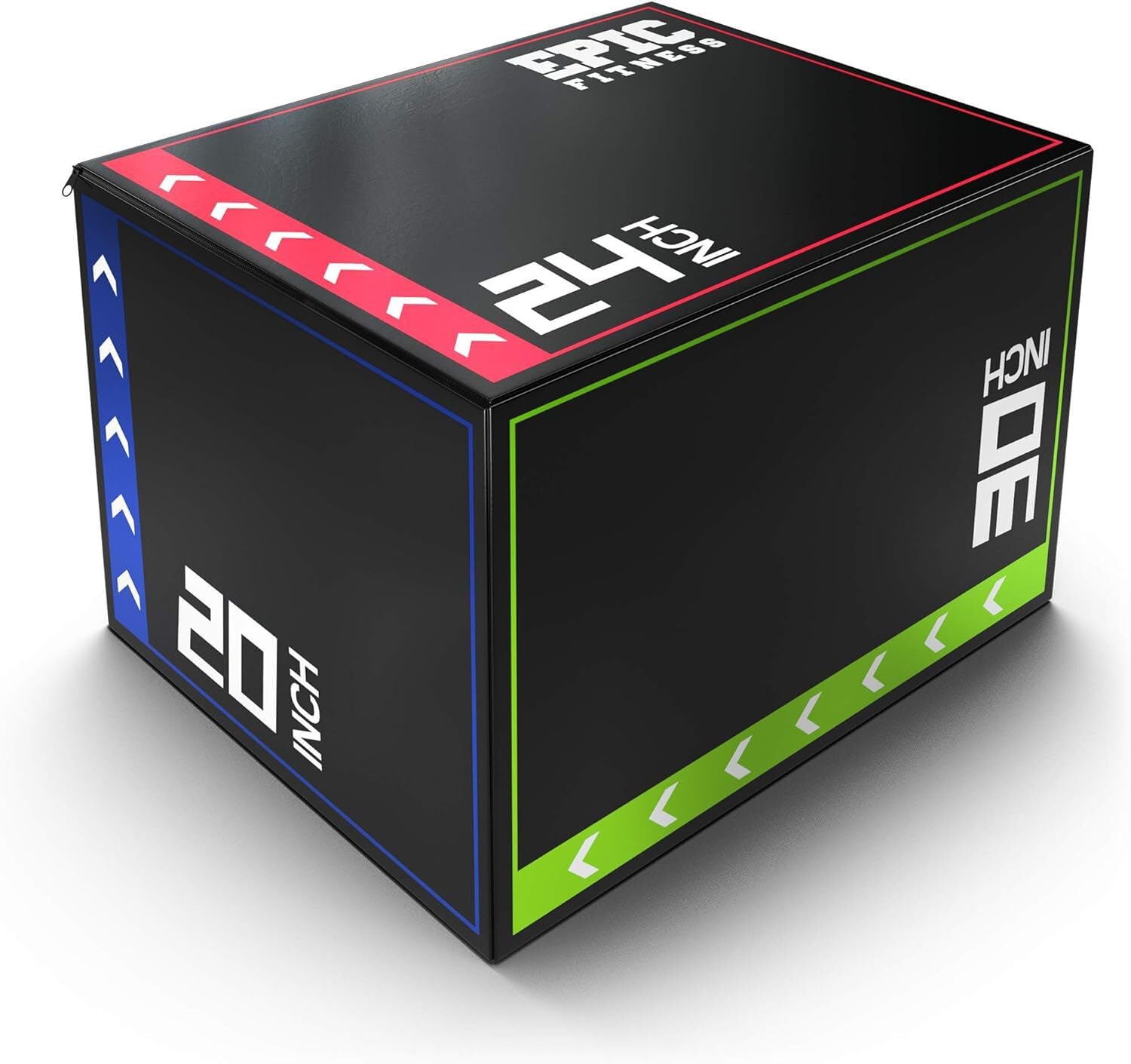
A 30″ top face in soft foam — for the jumper who wants height without the hard edges.
Most foam boxes cap out at 24″, but this one runs 20″, 24″, and 30″, so a taller athlete keeps progressing. The core is high-density EPE foam wrapped in a faux-leather cover that wipes clean. At 16 pounds it is far lighter than the steel sets, which makes it easy to drag across the garage floor when you need floor space.
The foam’s real selling point is confidence. On a wooden or steel top you flinch at the edge; here the padding means clipping a shin or knee is a soft hit rather than a hard one. People use it for more than jumping too — the 20″ face adds height under your hands for improve push-ups, and it handles knee touches and core work as well as step-ups.
Now the honest part, because this box asks more of you than the others: at 16 pounds it moves, and on a fast, aggressive landing a lighter foam cube can feel unstable or shift a little. Some find the firmness exactly right; others find it too soft or too springy for a powerful rebound. If you land hard and often, plant it against a wall or corner to keep it steady. If you want a stable, jump-on-it-anywhere platform, a steel or heavier foam box is the safer bet.
Height without the hard edge: a 30″ face you can reach in the softest material on this list, and a 20″ face that doubles as a raised push-up platform.
The stability trade: light foam is easy to move — which is also why it can shift under an explosive landing. Secure it to a wall for big jumps.
Right for: the athlete pushing past 24″ who still wants foam under the landing zone.
Think hard if: your sessions are max-effort and you want the box to feel welded to the floor.
8. Titan Fitness Adjustable Steel Plyo Box
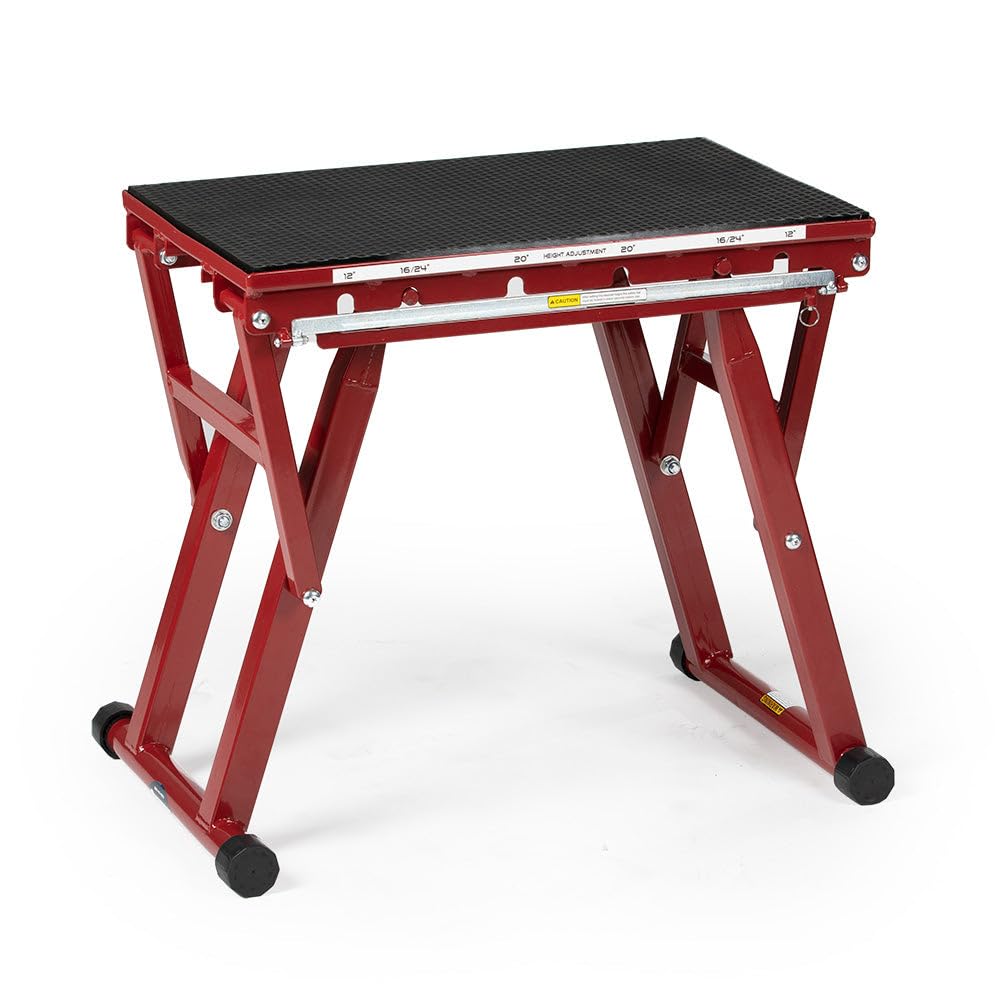
One steel frame that clicks through four heights, from a low step-up to a full 24″ jump.
Where the 3-in-1 cubes force you to flip the whole box, this one adjusts in place with a locking mechanism across 12″, 16″, 20″, and 24″. That makes it the pick for progressive training — you warm up low, raise the setting, and keep going without touching a second piece of equipment. It weighs 40 lbs and rides on a 25.5″ x 16″ jumping platform with a slip-resistant surface and rubber feet.
Sturdiness is the reason it earns its place, and it is the thing the design team got right. The steel framing sits fully stable under hard explosive work, and the 300 lb capacity holds up for most home lifters who are not pushing the extreme. Combined with the rubber feet, the box stays put through fast sets.
The recurring gripe is the adjustment itself. Some owners find the height changes quick and clean; a fair number find it fiddly and, on incline work, some report the setting slips down under load. Then there is the weight — at 40 lbs it is a genuine lift to reposition, which is fine for a permanent spot and less fun if you move it every session. If easy, instantaneous height changes on the fly are your priority, a lighter foam cube serves that better.
Why It Earns A Slot
- Four heights in one frame — 12″, 16″, 20″, 24″
- Slip-resistant top and rubber feet for a planted landing
- Heavy steel build that stays stable under hard jumps
- Locking mechanism keeps the setting secure for flat work
The Real Caveats
- Adjusting the height can be fiddly, and the setting can slip on incline
- At 40 lbs it is a chore to move each workout
- 300 lb capacity caps heavier users
A solid bet for: someone who wants a permanent steel station and values four distinct heights in one spot.
Better to skip if: you change height constantly mid-session or need portability.
9. Stamina X Adjustable Plyo Box

The steel box that arrives assembled and never blinks — if you can lift it to where it lives.
Four heights live inside one steel frame here: 12″, 16″, 20″, and 24″, each quick to set. The top platform is a generous 15.5″ x 25.5″ with a non-slip surface, and rubber-backed construction keeps it planted. It also comes with access to muuv, a training app that builds workouts around the equipment you own, with no subscription required. That is a genuine extra for someone who does not want to plan sessions from scratch.
Two details make this the premium steel pick. It arrives assembly-free — no bolts, no wrench, no afternoon lost — which is a real difference from the VEVOR or Titan boxes that require setup. And it is almost absurdly sturdy; the description built like a tank is not hype. The stability is the point: it does not wobble or drift during a set, so the adjustment from 12″ to 24″ is the only component that moves.
The trade-off is weight, and it is real. At 40 lbs this is a heavy box, and while the adjustment itself is quick to change, you are hauling mass between positions. The 300 lb capacity is also the same ceiling as the Titan, so a heavier athlete should look at the 500 lb VEVOR instead. For a permanent garage-gym station, though, the weight is the reason it feels so planted.
Zero-fuss setup: assembly-free steel plus the muuv app makes this the lowest-friction start of the premium picks.
The weight is the deal: 40 lbs of steel means it will not wobble, but it also will not follow you easily around the room.
Choose it for: a fixed garage station where you want a steel box that arrives ready and holds dead still.
Rule it out if: you move your setup around, or you exceed the 300 lb limit.
Know the Specs
Weight Capacity (lbs)
This number is the listed limit for the whole platform — the total load it is rated to hold. Leave yourself some headroom rather than matching it exactly to your bodyweight, because a hard landing sends more force through the box than standing still does. Steel sets here range from 300 lbs up to 500 lbs; wood boxes run 400 to 450 lbs; foam boxes vary most, from 200 lbs on a small cube up to 440 lbs on a large one. Pick a box whose limit sits comfortably above you.
Height Range and Adjustability
Boxes come as a 3-in-1 cube you rotate, or a stacked set of separate boxes, or a single adjustable frame. Three heights from one cube (often 16″, 20″, 24″) covers most home training. A taller athlete wanting to push past 24″ needs a box with a 30″ face. Adjustable frames let you progress in place but sometimes feel fiddly to change, while rotating cubes are instant but require you to flip the whole unit.
Top Surface Grip
Grip stops your foot sliding on the landing, and it comes in a few forms: a hexagon texture on wood, a textured silicone or vinyl surface on steel and foam, or rubber stoppers under the base. The best boxes handle both problems — a non-slip top for your foot and rubber feet for the box itself. If you train on a smooth garage floor, prioritise the rubber-footed steel options.
Material: Steel vs Foam vs Wood
Steel is the most planted and the least forgiving — great for stability, hard on a missed shin. Foam wrapped in vinyl or PVC forgives a bad landing and is light enough to move, but a lighter cube can shift under a fast jump. Wood sits in between: stable and solid, with a hard edge like steel, but often the most assembly-heavy of the three. Match the material to how hard you land and how much floor space you have, not to the price.
Common Questions
Will a foam plyo box tip over when I land on it?
How do I choose between a 24-inch box and a 30-inch box?
Can I use a step-up box on a carpeted floor?
What does the weight capacity number actually include?
Is a wooden plyo box harder on the shins than foam?
Do 3-in-1 plyo boxes need assembly?
How much space do I need around a step-up box?
Can I use a plyo box for step-ups as well as box jumps?
Which is easier to store, a stackable set or a 3-in-1 cube?
The Bottom Line
For most people, the step-up boxes for exercise pick that covers the widest range of training is the Retrospec Leap Plyo Box — four heights, a tapered steel base that will not tip, and a rubber-stoppered footing that holds its place. If ease of setup is your priority, grab the Amazon Basics 3-in-1 Wooden Plyo Box, which assembles with pre-drilled holes and carries a wood-leading 450 lbs. And for shin-friendly soft landings, the REP Soft Plyo Box arrives assembled and gives you 400 lbs of padded foam underfoot. Pick the material that matches how hard you land, then choose the height range from how high you jump today.
How we choose
We do not accept paid placement. Every pick is matched to a real buyer and a real use-case; we do not hands-on test units.
Sources
Specifications: manufacturer listings and product documentation. Review insights: verified customer reviews, as of November 2026. Pricing: not shown on this page (it changes often); check the current price via the retailer link.
As an Amazon Associate, Tactical Gear Guy earns from qualifying purchases. This does not affect which products we feature.