Specs are compiled from manufacturer listings and verified buyer reviews and can change over time — please confirm the key details on the product page before buying.
Here is the short answer: buy the Women’s Winter Down Puffer Jacket with Faux Fur Lined Hood if you want the warmest jacket that still fits in a day bag, because it packs 650 fill power down into a cut that does not swallow you. A lightweight down jacket for women lives or dies on two numbers — fill power, which sets how much warmth each ounce of down traps, and packed volume, which sets how small it crushes into a bag.
This guide is built by comparing the manufacturers’ published specifications and the patterns across verified customer reviews, so you get each pick’s real strengths and trade-offs instead of marketing spin.
You will see fill power, packability, hood design and honest sizing notes for every pick below, so you can match a jacket to your own winter rather than guess. Read on for the best lightweight down jacket for women.
Top Picks

How To Choose The Best Lightweight Down Jacket for Women
Start with where you will actually wear it. A jacket that lives in a city bag and comes out on cold mornings needs different things than one that rides in a hiking pack for six hours before you put it on. Work out your real winter temperature range first, then let the specs below narrow the field.
Fill Power And What It Really Tells You
Fill power is a measure of how much space one ounce of down fluffs up to — a higher number means the same weight of down traps more air, and trapped air is what keeps you warm. You will see 650 fill power on the budget-friendly picks here and 700 fill power on the premium options. That gap is real, but it is not the whole story: the amount of down stuffed into the jacket matters just as much as its quality.
Down Versus Down Blend
Pure down is the lightest insulation for the warmth it gives. A down blend mixes the down with synthetic fibres, usually to keep cost down or to keep some warmth working when the jacket gets damp. Both are legitimate choices — a blend simply behaves a little differently in wet weather than a pure down fill.
Packability And Travel Weight
If the jacket is going in a carry-on or a day pack, look for a model that stuffs into its own pocket or comes with a travel pouch. Some jackets crush down easily and others fight you the whole way in — the product descriptions below tell you which is which, and the review patterns confirm it.
Sizing On Women’s Down Jackets
This is the single most common source of disappointment. Sizing runs differently across brands, and a jacket that is perfect in one letter size can be snug in another. Read the fit notes for each pick carefully, and if you plan to layer a chunky sweater underneath, size accordingly rather than assuming your usual letter will be roomy.
Side-by-Side Comparison
| Model | Best For | Down Fill | Hood | Packability | Amazon |
|---|---|---|---|---|---|
| Women’s Winter Down Puffer with Faux Fur Hood★ Best Overall | Cold mornings and city wear | 650 fill power, 80% duck down | Detachable, faux fur lined | — | Amazon |
| CAMELSPORTS Women’s Down JacketBest Value | Mild fall and travel layering | — | Hooded | — | Amazon |
| SLOW DOWN Women’s Down Puffer Jacket | Packing in a travel pouch | — | Elastic hood | Attached travel pouch | Amazon |
| Orolay Women’s Packable Down Jacket | Adventure travel and hiking | RDS down | Stand collar | Packable bag included | Amazon |
| Marmot Women’s Jena Down Jacket | Midwinter warmth, low weight | 700 fill power goose down | Hooded | — | Amazon |
| The North Face Aconcagua Down Hoodie | Cold-weather exploring in wind | 50% 600 fill recycled down, 50% recycled polyester | Adjustable hood | — | Amazon |
| Rab Women’s Microlight Alpine Down Jacket | All-mountain performance | Recycled 700 fill down | Hooded | Packs into pocket | Amazon |
Detailed Reviews
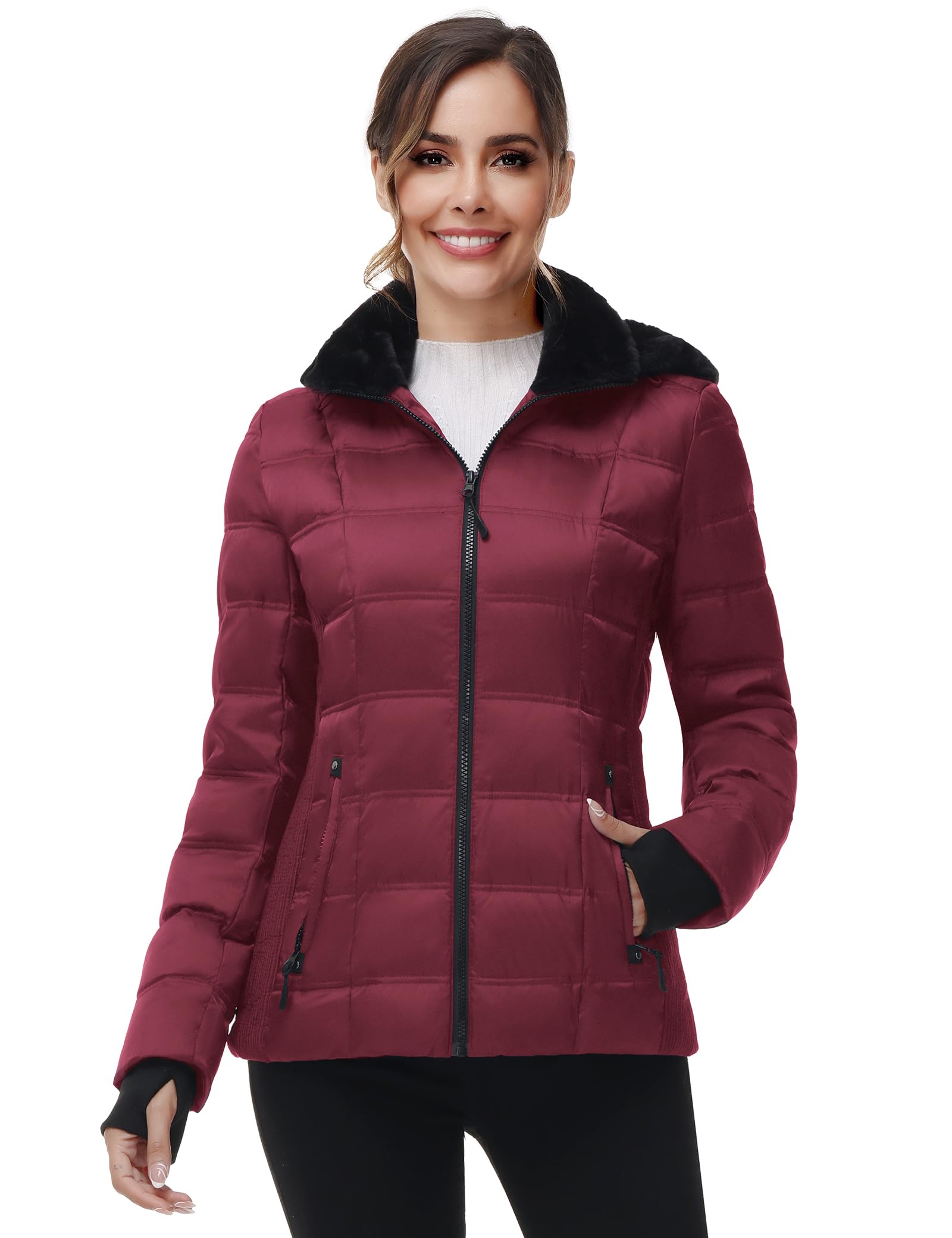
1. Women’s Winter Down Puffer Jacket with Faux Fur Lined Hood
Our pick — 4.5+★ from 900+ verified ratings; the strongest balance of quality and price.
The warmest jacket here that still slips into a tote bag
Start with the number that sets this jacket apart: 650 fill power from 80% duck down. In plain terms, that means each ounce of down fluffs up enough to trap serious air, so you get real warmth from a jacket that weighs about 1.8 lbs. At about 1.8 lbs with 650 fill power, that is a light package for the warmth it holds, and it is why this one sits at the top of the list. Unboxing it, you may think it looks thin — it ships compressed, and the loft returns once it airs out.
The fit is where this jacket quietly wins people over. Precision quilting plus side stretch panels give it a shaped, non-bulky line that still lets you move freely, and the water-resistant outer shell handles cold days and light snow. The hood detaches if you want a cleaner collar, and its soft faux fur lines both the hood and the collar for a warm band against your face. Ribbed cuffs with thumb-holes seal the gap at your wrists so wind has no route in. For a mid-weight city puffer, that combination of 650 fill warmth and a shaped, non-bulky cut is unusual at this price.
Two things to know before you order. This is a mid-weight layer, not a sub-zero expedition shell — think California cold mornings and nights, breezy city days, light snow. And the size chart is worth a close look, because the stretch panels forgive some fit variance but the letter sizes still run their own course. Sizing is the one area where a small group of buyers landed on the wrong side of the fit.
Where it earns its keep
- 650 fill power, 80% duck down — genuine down warmth in a mid-weight jacket
- About 1.8 lbs, so it rides in a bag without dragging on your shoulder
- Side stretch panels and precision quilting hold a flattering, non-bulky shape
- Ribbed cuffs with thumb-holes lock out cold wind at the wrist
- Water-resistant shell covers cold days and light snow
- Detachable, faux fur lined hood gives you two collar styles
Honest notes before you buy
- Built for mild-to-moderate winter, not deep sub-zero conditions
- Sizing can catch you out if you order your usual letter without checking the chart
- The loft looks thin on arrival because it ships compressed
Go for it when: you want a genuinely warm, shapely down jacket for cold mornings, city days and light snow, and you will check the size chart before ordering.
Think twice when: you need a deep-winter expedition layer — this is a mid-weight jacket, and the loft you see on arrival is not the whole story once it airs out.
2. CAMELSPORTS Women’s Down Jacket
Your fall jacket, not your January jacket
The CAMELSPORTS is the right call for the in-between season. It runs warm enough that people wear it for fall weather and through temperatures that are not super freezing, and it does not weigh you down doing it. The specification to keep in mind is the shell: the windproof fabric and elastic-bound cuffs let you seal off the neck and wrists, and the adjustable hem pulls in at the bottom. On a breezy city afternoon, that is the difference between a comfortable walk and a cold one.
Where the money goes here is straightforward: it is a short puffer with a smooth zipper, side zip pockets and a large inner pocket, plus a packable design. The lightweight build is the thing people appreciate most — for a jacket this warm, it carries easily if you are on your feet a lot. The short-puffer cut and clean quilting read as more considered than the budget price suggests.
Now the honest part. Two things clearly mark it as the budget-friendly pick. The fill is notably thin, so do not expect this to hold you through real cold. And the fit is genuinely mixed — some buyers find it runs small, others find it roomy enough to layer underneath. Both readings are consistent with a jacket that is snug through some of the body and generous through others, so decide which size you want on purpose. The packability is earnestly packable but takes effort to squash into the little bag.
The value read: a windproof, hooded, adjustable-hem down puffer that gets you through fall and mild winter for a modest spend. The adjustable hem and elastic cuffs are the two details you will use most.
Fair warning on thickness: the fill is deliberately light, so if the temperature drops hard, you will want the next entry up rather than this one.
Your jacket is calling if: your winters are mild, you want a windproof hooded layer with an adjustable hem for fall and travel, and you will size deliberately rather than automatically.
Pick another if: the temperatures you face are truly freezing — the fill here is light and the warmth stops short of deep winter.
3. SLOW DOWN Women’s Down Puffer Jacket
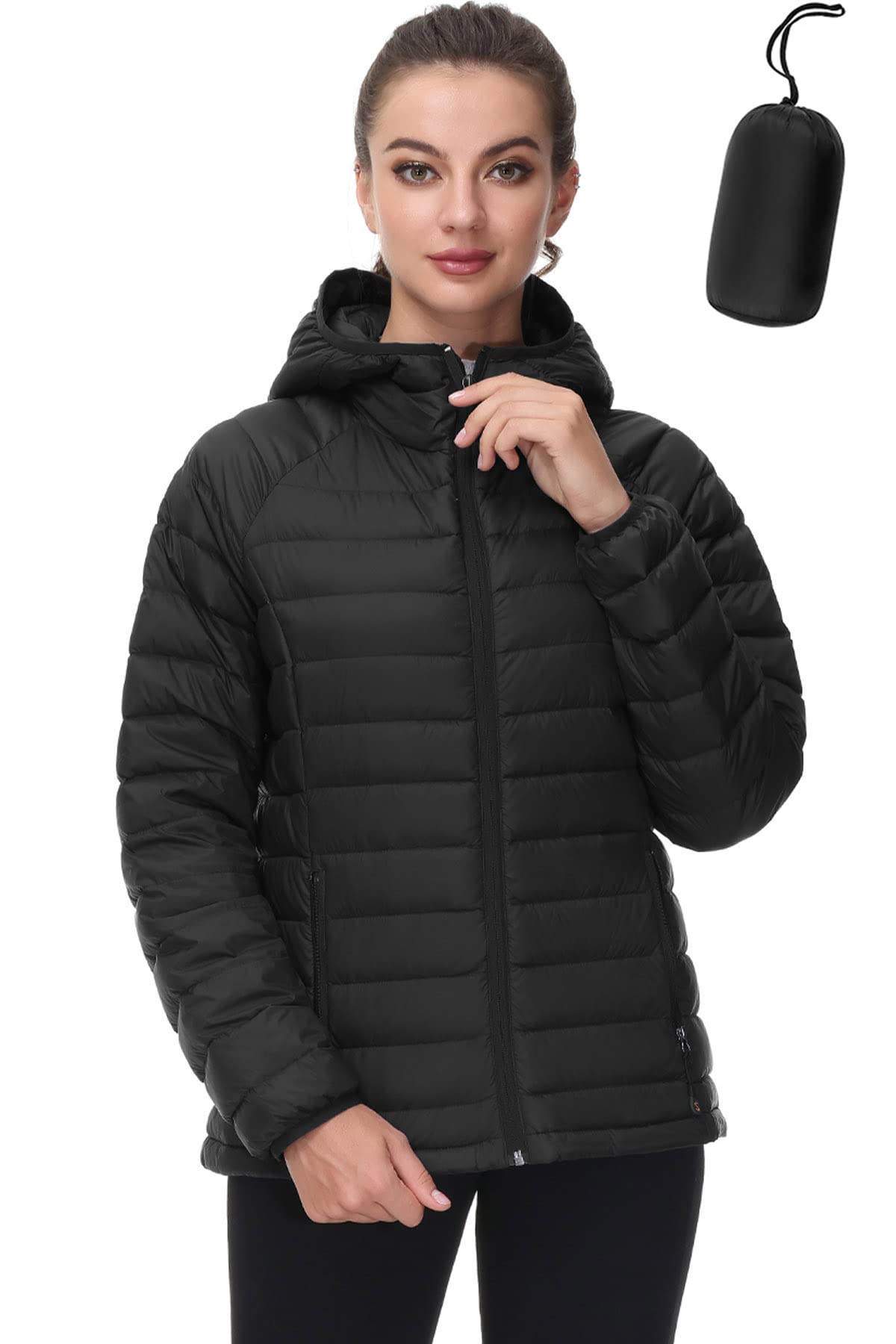
An attached travel pouch turns this into a jacket you can carry, not wear
The standout here is the portability, and it is structural rather than marketing: this jacket has its own attached travel pouch, so it folds up into itself instead of haunting your luggage. That is the difference between a puffer that stays home and one that rides in a carry-on. The foldability holds up — people pack it away for travel and report it lives neatly in the pouch without a fight, which is more than you can say for most down jackets.
What you get in the way of build is straightforward and dependable. The elastic hood sits close without a cord to fiddle with, there is a full-length zip, elastic cuffs to keep the draught off your wrists, and inner pockets for valuables. It is a warm enough layer for chilly days and nights, and the fit is generous enough to take a sweater underneath — that is the layering you actually want from a lightweight jacket. The elastic hood and full zipper are the two pieces of hardware you will notice every time you put it on.
The one fit note: sizing is inconsistent across the range, with some finding their size perfect and others finding it runs much too big. That is a fit mismatch rather than a flaw, but it does mean your usual letter may not be your letter here. If you want a close fit, go down; if you want to layer a chunky sweater or another down vest, the generous cut is working as intended.
For the perpetually packed: an attached travel pouch, elastic hood and inner pockets make this the one to fold into a carry-on and forget about until you need it.
The sizing caveat: the cut is generous — good for layering a sweater, less good if you like a close fit next to the body.
Take this one if: you travel and want a down jacket with an attached travel pouch, a roomy cut for layering, and enough warmth for chilly days and nights.
Skip if: a trim silhouette is the priority — the sizing runs generous and the roomy cut is the point.
4. Orolay Women’s Packable Down Jacket
Built for the hike, then built to disappear into a bag
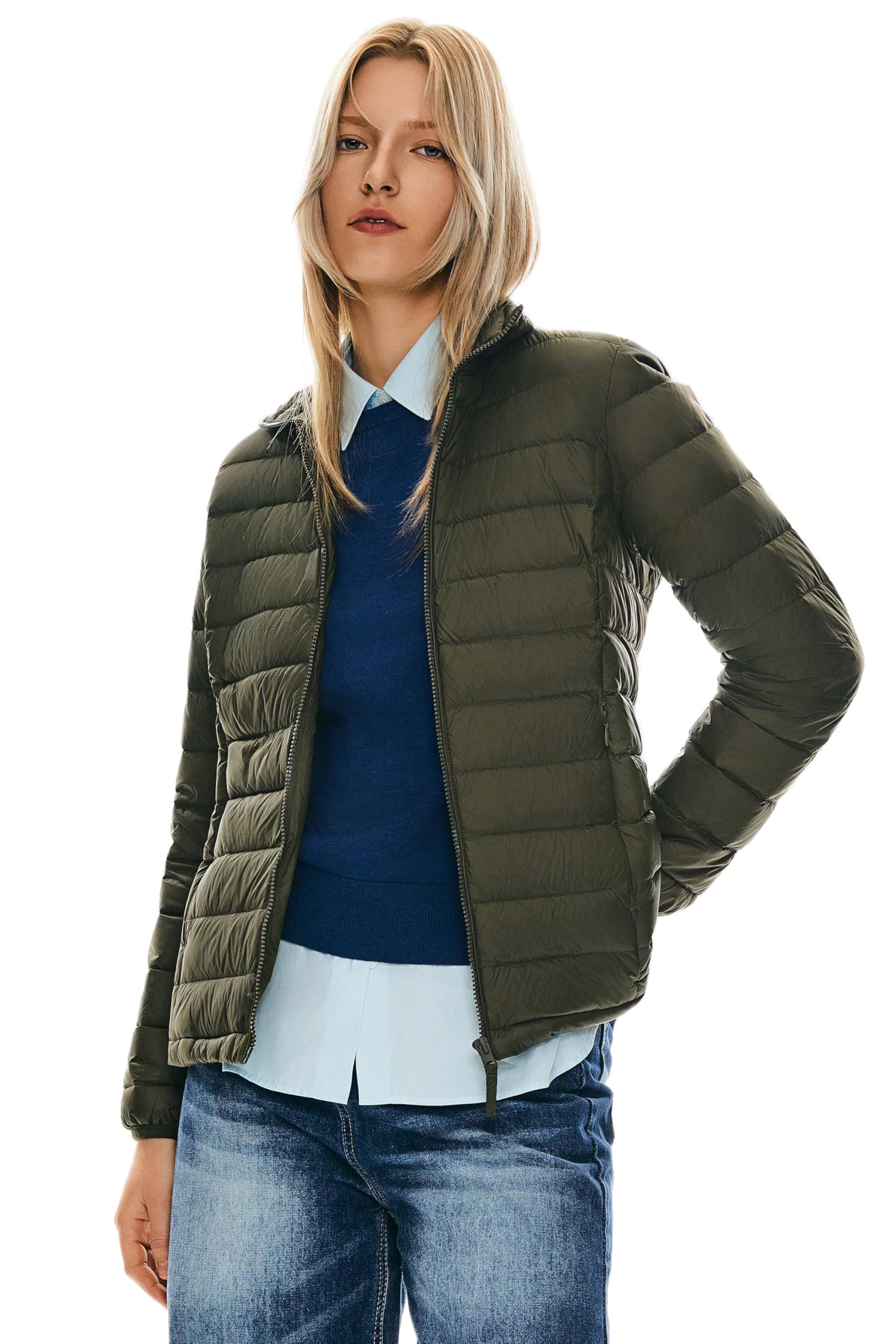
If you are carrying your jacket more than wearing it, this is your entry. The design brief is adventure: an ultra-lightweight women’s packable down jacket for travel and hiking, RDS down fill, precision stitching and a leakage-proof down construction.
The hardware list is short and practical. You get a windproof stand collar that deflects wind off the neck, hand-warming side pockets, and an inner pocket for your phone or keys. A packable bag comes with it for storage and carrying. Buyers notice the weight first — it is genuinely feathery in the hand, which is what makes the packable travel design work in practice.
On fit, there is a real split in experience. Some find it exactly true to size; others, especially in the XL, report it running snug like a small. It is worth measuring rather than assuming. And while the warmth is real, it is a spring and fall layer rather than a deep midwinter coat — the down is there, but the cut is built to be thin and packable, not to trap maximum heat.
What the design delivers
- RDS down with leakage-proof construction keeps the fill where it belongs
- Packable bag included for storage, carrying and travel
- Windproof stand collar keeps the draught off your neck
- Inner and side pockets cover valuables and hands
What to plan around
- Sizing splits sharply — some find it true to size, and the XL can run snug
- Best for spring and fall temperatures rather than hard winter
- No hood, so the stand collar is your only neck protection
The right call when: you want a genuinely feathery down jacket that folds into its own bag for hiking and travel, with a windproof collar for exposed trails.
Look elsewhere when: you need a hood or deep-winter heat — this is a packable spring and fall layer.
5. Marmot Women’s Jena Lightweight Down Jacket
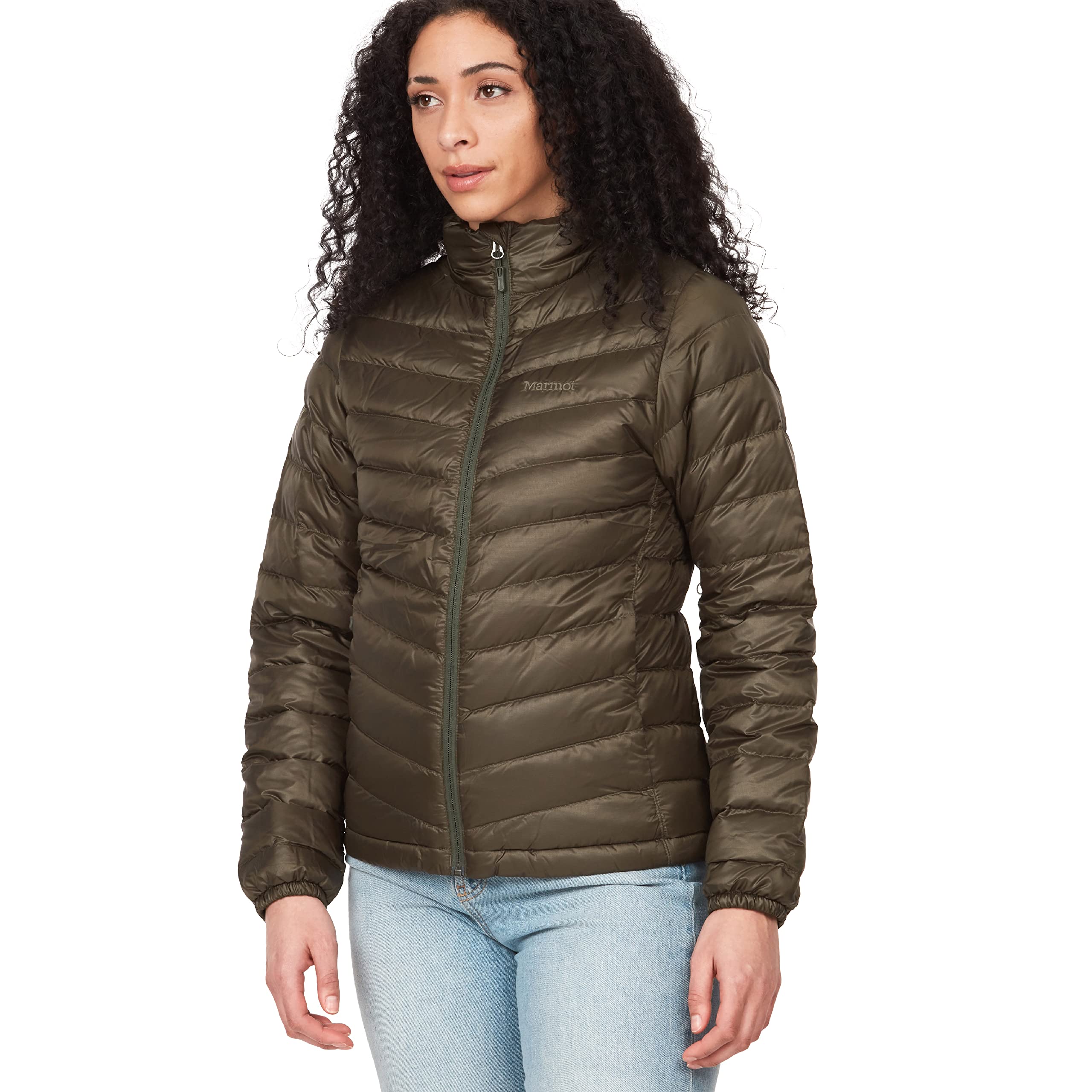
700 fill power goose down in a jacket that barely registers on your shoulders
This is the one where the fill quality steps up. The Marmot Jena is built around 700 fill power goose down — a notch above the 650 fill power on the budget picks here, and the reason it can be this warm and this light at the same time. Marmot’s own line is that it is so light and warm you have to wear it to believe it, and the reputation for warmth and weight backs that up.
Its strength is midwinter classic comfort at a low carry weight. People wear this as their serious cold-weather jacket and find the warmth consistent and the quality solid. It is the pick for someone who wants a little more down quality and does not want the bulk of a heavier parka. For a midwinter layer that does not look or feel like a duvet, the 700 fill goose down earns it a place near the top.
The fit and the zip are the two things to be aware of. Sizing is genuinely mixed — some find it well-fitting, but the jacket runs small for a fair share of wearers, and that is noticeably worse for shorter people, where the length can sit wrong. Then there is the zipper: a small but real group struggle to get it zipped, and zipping is the one thing you do every single time you put the jacket on. Try it on with the zip done up if you can, or order with the option to return.
Why it earns top performer status: 700 fill power goose down is the best fill on this list, delivering genuine midwinter warmth in a light package.
The two-fit problem: sizing runs small for some and shorter wearers can find the length off — while the zipper is the recurring friction point, so give it a real trial run.
Go here if: you want the best down fill on the list — 700 fill power goose down — for real midwinter cold without the bulk of a heavier jacket.
Be careful if: you are between sizes or on the shorter side, and check the zip yourself, because that is where the friction shows up.
6. The North Face Women’s Aconcagua Down Insulated Hoodie
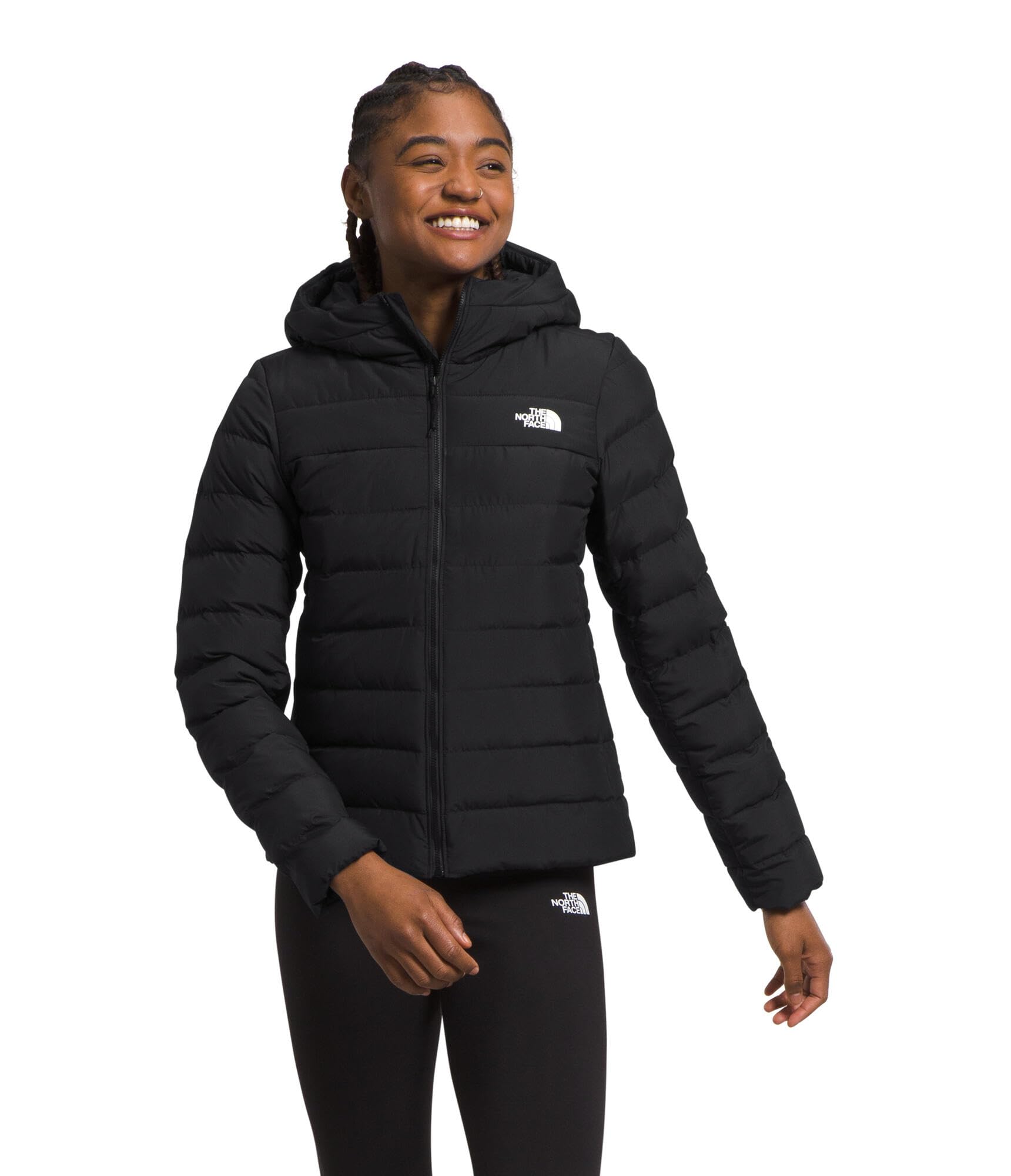
The one built to fight wind and wet, not just cold
The Aconcagua is the most weather-aware jacket here. Where the Marmot leads on pure fill quality, this one leads on protection: a 50/50 blend of 600 fill recycled down and recycled polyester, plus recycled WindWall fabric and a non-PFC Durable Water-Repellent finish (a coating that makes light rain bead up and roll off). It also zones the insulation — down in the body, recycled sheet insulation in the hood and sides — so the warmth sits where you need it and the seams stay thinner where you move.
That makes it the one to reach for when the forecast is cold and wet rather than cold and dry. The hood is adjustable, the handwarmer pockets zip shut, and the cuffs are elastic-bound. The zip gets an internal draft flap and a chin guard — small things that make a real difference when there is wind driving into your chest. The silhouette is quilted with a regular fit and low stretch, and the weather protection is listed as insulated, waterproof and windproof.
Two caveats. The sizing runs small for a meaningful share of wearers, so consider sizing up if you plan to wear a mid-layer underneath. And some find the value mixed — this is a premium-label jacket, and that premium is baked into the label as much as the fill. If you want maximum specifications for your spend, the lower-tier picks stretch the value further; if you want weather protection and a familiar brand on the sleeve, this delivers.
Where this one pulls ahead
- WindWall fabric plus non-PFC DWR finish handles cold, wind and light rain together
- Zoned insulation — 600 fill recycled down in the body, recycled sheet insulation in hood and sides
- Adjustable hood, secure-zip handwarmer pockets and elastic-bound cuffs
- Internal draft flap and chin guard cut wind at the chest
The fair trade-offs
- Sizing runs small for some — size up if you want to layer
- Value is the most contested point, since you pay for the premium label
- The insulation is a blend, not pure down
Worth it for: cold, windy and wet days when you want the most weather protection of any jacket here — windproof fabric, DWR finish and zoned insulation.
Not for: pure-down purists or anyone watching the budget — the fill is a blend and the premium label is part of what you pay for.
7. Rab Women’s Microlight Alpine Down Jacket
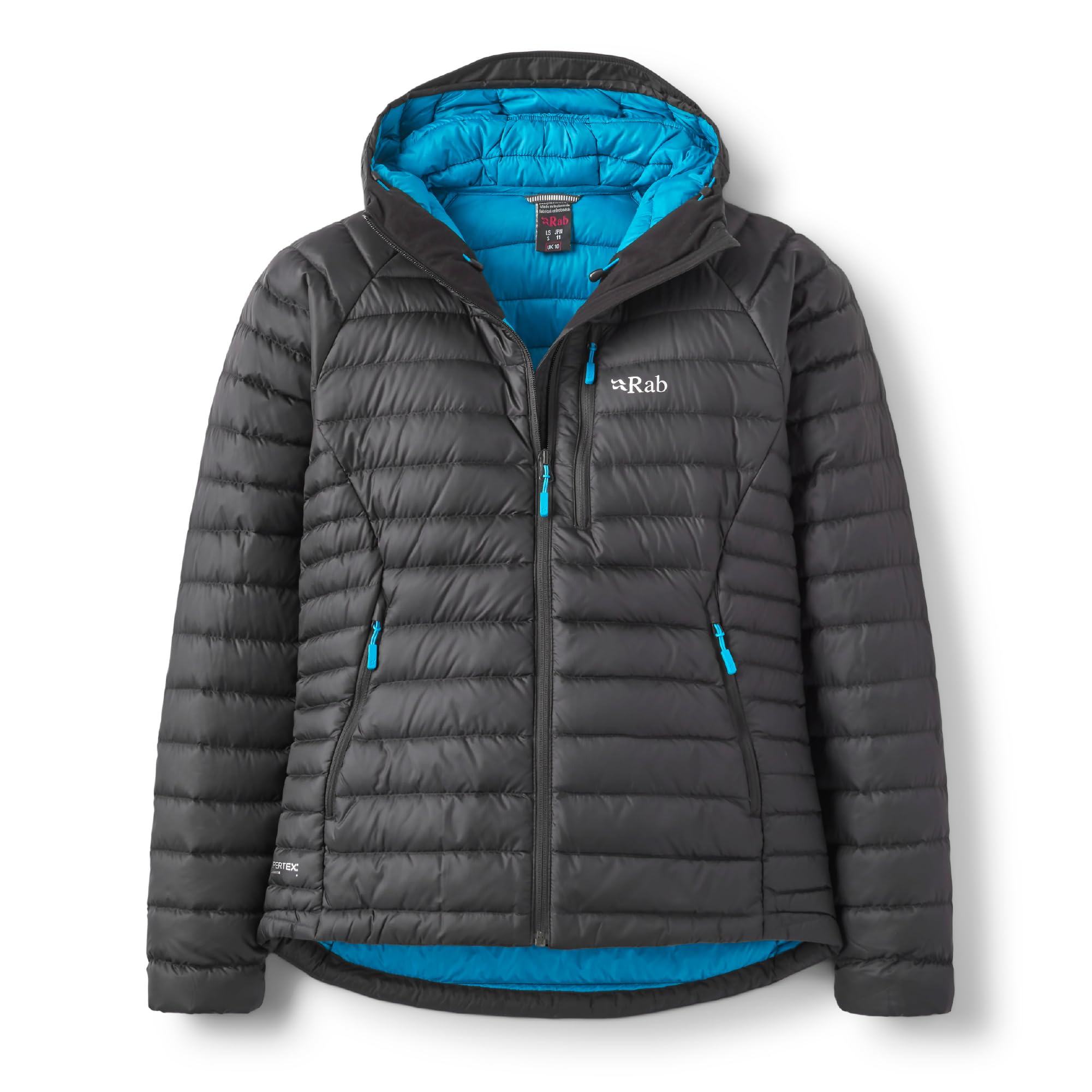
Zoned baffling and a hydrophobic down finish for year-round mountain use
The Rab is the most technically specified jacket here, and it shows in the construction. It uses recycled 700 fill down with a Grangers hydrophobic finish — meaning the down is treated to resist moisture — inside a Pertex Quantum shell made with NetPlus, a fabric produced from post-consumer recycled fishing nets. In practical terms, you get a windproof, breathable outer that shrugs off the crag and a fill that traps heat and dries quickly if it gets damp.
The baffling is where the engineering lives. Micro baffles run around the body and shoulders, and smaller nano baffles sit under the arms for better breathability. That zoning means more warmth where you need it and more airflow where you sweat, without adding bulk. It packs into its own pocket, so it crushes down small enough to live at the bottom of a pack until the summit gets cold. If you hike, climb or just want one jacket for every season, this is the one built for it.
On fit, the cut is roomy and people like how it sits. But the recurring sizing note is real: this jacket runs small for a fair number of wearers, so measure rather than assume. It is the premium-priced pick of the bunch, and the technical fabric and fill are why — you are paying for the Pertex shell, the recycled hydrophobic down and the zoned baffle construction rather than label alone.
The mountaineer’s case: zoned micro and nano baffles put warmth at the body and shoulders and breathability under the arms, inside a windproof Pertex Quantum shell.
The sizing catch: it runs small for a share of wearers, so treat the size chart as essential rather than advisory.
Made for you if: you want all-mountain performance from a jacket that packs into its own pocket, with hydrophobic recycled down and a breathable Pertex shell.
Think again if: your sizing needs are uncertain or your winter is city-level — this is a technical layer built for real mountain use.
Know the Specs
Fill Power, Explained
Fill power measures how much space a single ounce of down fluffs up to. A higher number means the same weight of down traps more air, and trapped air is your insulation. The budget picks here run 650 fill power; the premium options step up to 700 fill power. That is a meaningful gap in quality per ounce, but the total amount of down in the jacket still matters — a generous amount of 650 can be warmer than a stingy amount of 700.
Packability
Packability is about how small the jacket crushes down, which matters if it is going in a carry-on, a day pack or under a seat. Some jackets here stuff into their own pocket or arrive with a travel pouch; others are simply light enough to fold. A packable jacket is usually built thinner and with lighter hardware, which is the trade-off against maximum warmth.
Shell And Weather Resistance
A lightweight down jacket needs a shell that keeps wind and light rain off the down, because wet down loses loft. Look for windproof fabric, a water-resistant finish and sealed cuffs — elastic or ribbed — where the wind finds its way in. The more weather-resistant the shell, the better the jacket handles cold and wet together rather than cold alone.
Layering And Fit
A lightweight down jacket is often worn under or over another layer, so the fit has to leave room without looking baggy. Sizing varies across brands — some here run small, some generous — so the fit notes matter as much as the fill numbers. If you want to layer a chunky sweater, pick the roomier cut; if you want a shaped silhouette, look for stretch panels and precision quilting.
Common Questions
How warm is a lightweight down jacket compared with a heavier puffer?
What fill power should I look for in a women’s down jacket?
Do these down jackets run true to size?
Can a lightweight down jacket get wet?
Is down better than synthetic fill for a lightweight jacket?
How do I wash a lightweight down jacket without ruining the loft?
Will a packable down jacket fit in a carry-on bag?
Is a hood necessary on a lightweight down jacket?
How should a lightweight down jacket fit for layering?
Will a lightweight down jacket last more than a season?
The Bottom Line
For most women, the lightweight down jacket for women that gets the whole balance right is the Women’s Winter Down Puffer Jacket with Faux Fur Lined Hood — 650 fill power down, a shaped cut with stretch panels, a detachable faux fur hood and about 1.8 lbs of carry weight. That mix of warmth and fit is what most people actually need from this category.
If you want the best fill on the list, the Marmot Women’s Jena Lightweight Down Jacket steps up to 700 fill power goose down. For mountains and wet weather, the Rab Women’s Microlight Alpine with its Pertex shell and zoned baffles is the technical choice, and the The North Face Aconcagua adds WindWall fabric and a water-repellent finish.
And if you travel, the SLOW DOWN Women’s Down Puffer Jacket folds into its attached travel pouch, so it goes in the bag and stays there until the temperature drops.
How we choose
We do not accept paid placement. Every pick is matched to a real buyer and a real use-case; we do not hands-on test units.
Sources
Specifications: manufacturer listings and product documentation. Review insights: verified customer reviews, as of November 2026. Pricing: not shown on this page (it changes often); check the current price via the retailer link.
As an Amazon Associate, Tactical Gear Guy earns from qualifying purchases. This does not affect which products we feature.